Materia Medica
Feverfew
Tanacetum parthenium
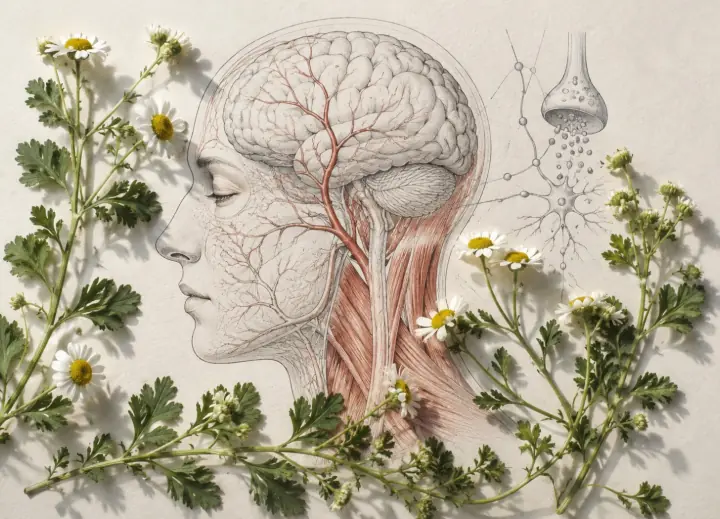
Feverfew is a small, aromatic plant of the daisy family, taken daily to prevent migraine. Its leaves contain parthenolide, a sesquiterpene lactone studied for its anti-inflammatory activity.
What Is Feverfew?
Feverfew is a small, bushy, strongly aromatic plant of the daisy family, taken daily to prevent migraine. The EU recognises it as a traditional herbal medicine for that purpose 30Reference 30ReviewEuropean Union herbal monograph on Tanacetum parthenium (L.) Schultz Bip., herba — Final, Revision 1 (EMA/HMPC/48715/2017) — regulatory monographView study →. Its name comes from the Latin febrifugia, “fever reducer” 8Reference 8Systematic reviewFeverfew (Tanacetum parthenium L.): A systematic reviewView study →.
Tanacetum parthenium is native to southeastern Europe and western and central Asia, and has spread from gardens across much of the world 31Reference 31Tanacetum parthenium (feverfew) — description, native and introduced range, plant traits and cultural conditions — species profileView study →. It has been used in European medicine since at least the time of Dioscorides 8Reference 8Systematic reviewFeverfew (Tanacetum parthenium L.): A systematic reviewView study →.
Its leaves carry parthenolide, a sesquiterpene lactone that blocks a key switch in inflammatory signalling 8,
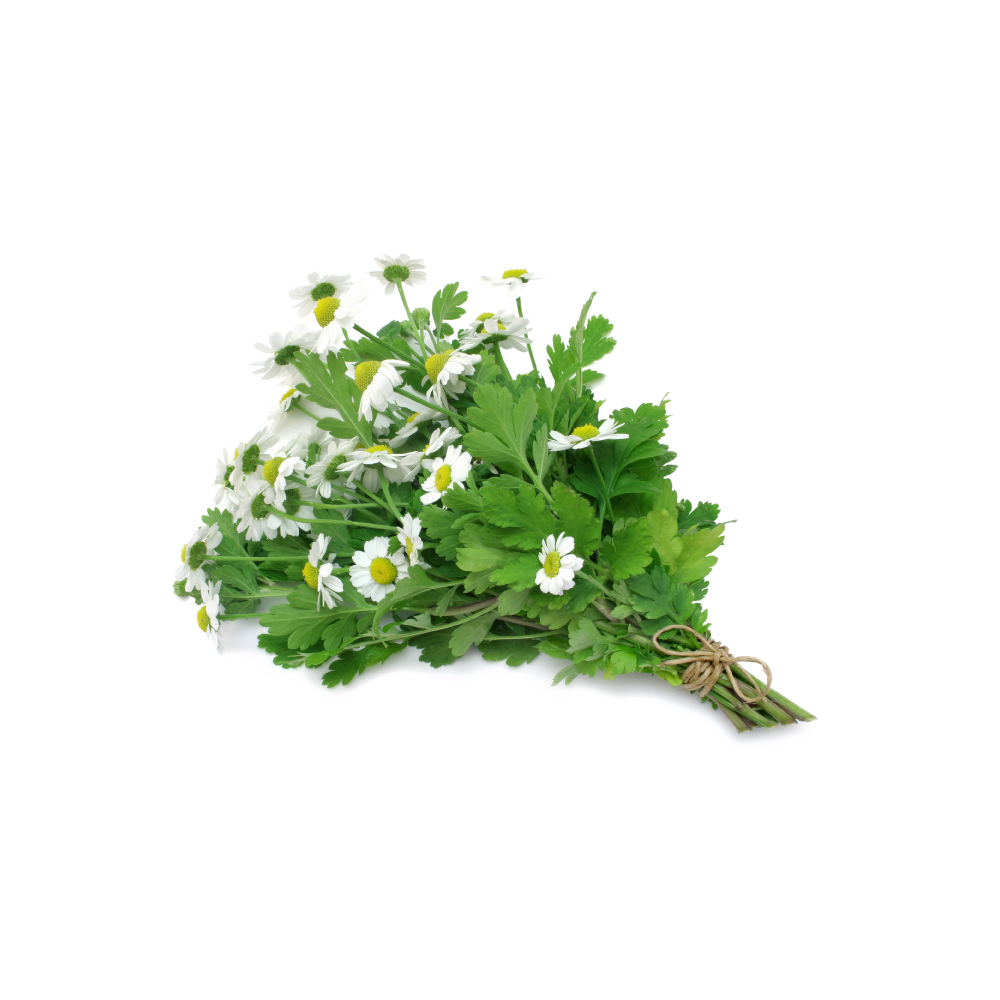
Feverfew’s small white-and-yellow flowers resemble those of chamomile, and the two are sometimes confused 8Reference 8Systematic reviewFeverfew (Tanacetum parthenium L.): A systematic reviewView study →.
How Is Feverfew Used?
Feverfew is taken mainly to prevent migraine. It is used daily over a long period rather than during an attack, and the usual time to see an effect is about two months 30Reference 30ReviewEuropean Union herbal monograph on Tanacetum parthenium (L.) Schultz Bip., herba — Final, Revision 1 (EMA/HMPC/48715/2017) — regulatory monographView study →.
- Dried leaf or powdered herb — in capsules or tablets. This is the form tested in most trials and the one the EU monograph covers 8,
30Reference 8Systematic reviewFeverfew (Tanacetum parthenium L.): A systematic reviewView study →Reference 30ReviewEuropean Union herbal monograph on Tanacetum parthenium (L.) Schultz Bip., herba — Final, Revision 1 (EMA/HMPC/48715/2017) — regulatory monographView study → . - Fresh leaf — traditionally two or three leaves a day, often sweetened because of their bitterness 8Reference 8Systematic reviewFeverfew (Tanacetum parthenium L.): A systematic reviewView study →. Chewing the fresh leaf can cause mouth ulcers.
- CO₂ extract — a concentrated, stable extract used in the later migraine trials 2,
3Reference 2RCTEfficacy and safety of 6.25 mg t.i.d. feverfew CO2-extract (MIG-99) in migraine prevention — randomized, double-blind, placebo-controlled studyView study →Reference 3RCTThe efficacy and safety of Tanacetum parthenium (feverfew) in migraine prophylaxis — a double-blind, multicentre, randomized placebo-controlled dose-response studyView study → . - Infusion and tincture — the traditional forms for colds, fever, menstrual complaints and insect bites 23,
24Reference 23Feverfew. http://www.botanical.com/botanical/mgmh/f/feverf10.htmlView study →Reference 24Principles and Practice of Phytotherapy .
Traditional Uses
Feverfew belongs to the European herbal tradition, where the leaf and aerial parts have been used since antiquity for fever, inflammation and menstrual complaints 8,
Classical Greek Medicine
The first-century Greek physician Dioscorides prescribed feverfew for “all hot inflammations” and used it to reduce fever 8Reference 8Systematic reviewFeverfew (Tanacetum parthenium L.): A systematic reviewView study →.
Western Herbal Medicine
A decoction with sugar or honey was taken for coughs, wheezing and difficult breathing 23Reference 23Feverfew. http://www.botanical.com/botanical/mgmh/f/feverf10.htmlView study →. A warm infusion was used to “purge choler”, to treat colds, flu and fever, to cleanse the kidneys, to bring on menstruation and to expel worms 24Reference 24Principles and Practice of Phytotherapy.
A cold infusion served as a tonic, and the herb was given for overindulgence in opium 8,
Applied externally, the herb was bruised and warmed with a little wine and oil for wind and colic. A tincture was used to relieve the pain and swelling of insect bites 23Reference 23Feverfew. http://www.botanical.com/botanical/mgmh/f/feverf10.htmlView study →.
The fresh or dried leaves were also eaten directly, two or three a day, often sweetened because of their bitterness 8Reference 8Systematic reviewFeverfew (Tanacetum parthenium L.): A systematic reviewView study →.
The older herbals say little about migraine, the use for which feverfew is now best known 24Reference 24Principles and Practice of Phytotherapy. The first modern public account of feverfew as a migraine preventive appeared in a British health magazine in 1978 8Reference 8Systematic reviewFeverfew (Tanacetum parthenium L.): A systematic reviewView study →.
Latin American Folk Medicine
Kallawaya healers of the Andes use feverfew for colic, kidney pain, morning sickness and stomach ache 8Reference 8Systematic reviewFeverfew (Tanacetum parthenium L.): A systematic reviewView study →.
In Costa Rica a decoction is taken to aid digestion, as a heart tonic and to bring on menstruation, and as an enema for worms. In Mexico it is used as an antispasmodic and a menstrual tonic, and in Venezuela for earache 8,
Indications
- Migraine prevention [leaf; Western herbal medicine, EU traditional use] Caution: Trials are mixed. The largest found about 0.6 fewer attacks a month than placebo, and Cochrane rated the evidence as low quality 1,
2 . - Tension headaches [leaf; Western herbal medicine]
- Dizziness and tinnitus [leaf; Western herbal medicine]
- Fever, coughs and colds [herb infusion; Western herbal medicine]
- Painful periods and scanty menstrual flow [herb; Western herbal medicine, Latin American folk use]
- Arthritis [leaf; folk use] Caution: A double-blind trial in 41 women with rheumatoid arthritis found no benefit from dried feverfew over six weeks 17.
- Sluggish digestion, colic and stomach ache [herb; Western herbal medicine, Andean folk use]
- Intestinal worms [herb; Western herbal medicine, Latin American folk use]
- Nervous debility [herb; Western herbal medicine]
- Insect bites [tincture, topical; Western herbal medicine]
Botany
Feverfew is a mounding, aromatic herbaceous perennial in the daisy family (Asteraceae). It grows in erect clumps about 30–90 cm tall 31Reference 31Tanacetum parthenium (feverfew) — description, native and introduced range, plant traits and cultural conditions — species profileView study →.
Its leaves are yellow-green, fern-like and strongly scented, pinnately or bipinnately divided with toothed lobes 8,
The flower heads are about 2 cm across, with a single ring of white ray florets around a yellow disc, arranged in flat-topped clusters 8,
The plant has been placed in several genera over time, including Chrysanthemum, Pyrethrum and Matricaria, and older names such as Chrysanthemum parthenium are still seen in commerce 8Reference 8Systematic reviewFeverfew (Tanacetum parthenium L.): A systematic reviewView study →. It now sits in Tanacetum, the genus of tansy 13Reference 13In vitroThe flavonoids of Tanacetum parthenium and T. vulgare and their anti-inflammatory properties — in vitroView study →.
Distribution
Feverfew grows wild from southeastern Europe through Turkey, the Caucasus, Iran and Iraq to Central Asia, Afghanistan, Pakistan and the western Himalaya 31Reference 31Tanacetum parthenium (feverfew) — description, native and introduced range, plant traits and cultural conditions — species profileView study →.
It has been grown for centuries as a medicinal and ornamental herb, and has escaped from gardens across most of Europe, North and South America, parts of Asia and Africa, Australia and New Zealand 31Reference 31Tanacetum parthenium (feverfew) — description, native and introduced range, plant traits and cultural conditions — species profileView study →. It grows along roadsides, in fields and on waste ground 8Reference 8Systematic reviewFeverfew (Tanacetum parthenium L.): A systematic reviewView study →.
Growing Conditions
Cultivation snapshot for Feverfew
Feverfew is hardy in USDA zones 5–8 31Reference 31Tanacetum parthenium (feverfew) — description, native and introduced range, plant traits and cultural conditions — species profileView study →. It grows in full sun to partial shade, in well-drained, moist soil of almost any texture or pH 31Reference 31Tanacetum parthenium (feverfew) — description, native and introduced range, plant traits and cultural conditions — species profileView study →.
It self-seeds freely and can become aggressive in good conditions. Cutting off spent flowers straight away keeps it in check 31Reference 31Tanacetum parthenium (feverfew) — description, native and introduced range, plant traits and cultural conditions — species profileView study →. It does poorly in hot, humid summers 31Reference 31Tanacetum parthenium (feverfew) — description, native and introduced range, plant traits and cultural conditions — species profileView study →.
Grow it yourself
Farm Wiki is our cultivation-focused sister site, also run by Justin Cooke.
Harvesting, Collection & Preparation
The leaves, and sometimes the stems, are collected during or after flowering 24Reference 24Principles and Practice of Phytotherapy.
Parthenolide content varies greatly with growing conditions. It is reported to be higher in plants harvested in the afternoon, after a single period of water stress, and in varieties with light green or yellow leaves 24Reference 24Principles and Practice of Phytotherapy.
For this reason a standardised preparation is recommended. Canada’s Health Protection Branch recommended 125 mg a day of dried leaf from authenticated T. parthenium containing at least 0.2% parthenolide 8,
Pharmacology & Research
Most of the human research on feverfew concerns migraine prevention. Six double-blind, placebo-controlled trials with 561 patients met Cochrane’s criteria, with mixed results, and Cochrane rated the evidence as low quality 1,
The rest is mechanistic and preclinical. Parthenolide binds and inhibits IKKβ, which switches off NF-κB signalling 9Reference 9In vitroThe anti-inflammatory natural product parthenolide from the medicinal herb feverfew directly binds to and inhibits IκB kinase — in vitroView study →, and feverfew extracts block secretion from platelets, white cells and mast cells 10,
A separate line of work shows that isolated parthenolide and a synthetic analogue kill leukaemia stem cells in the laboratory and in mice 14,
-
Best-supported: migraine prevention, with a modest reduction in attack frequency in the largest rigorous trial, though results across trials are inconsistent 1,
2, .7Reference 1Systematic reviewFeverfew for preventing migraine — systematic reviewView study →Reference 2RCTEfficacy and safety of 6.25 mg t.i.d. feverfew CO2-extract (MIG-99) in migraine prevention — randomized, double-blind, placebo-controlled studyView study →Reference 7Meta-analysisSystematic review and meta-analysis of Tanacetum parthenium: evaluating its efficacy in migraine relief — meta-analysisView study → -
Emerging, worth watching: parthenolide’s selective killing of acute myeloid leukaemia stem cells, and its oral analogue DMAPT, which is preclinical but replicated 14,
15Reference 14In vitroThe sesquiterpene lactone parthenolide induces apoptosis of human acute myelogenous leukemia stem and progenitor cells — in vitro / animal modelView study →Reference 15In vitroAn orally bioavailable parthenolide analog selectively eradicates acute myelogenous leukemia stem and progenitor cells — in vitro / animal modelView study → ; and protection of the stomach lining by the whole extract in rodents 32Reference 32AnimalTanacetum parthenium and parthenolide increase defensive agents and promote antisecretory activity supporting their gastroprotective actions in rodentsView study →. -
Mechanistically thin: anti-allergic and topical skin-protective uses rest on animal, cell-line and modified-extract data with no clinical confirmation 12,
20Reference 12AnimalThe activity of compounds extracted from feverfew on histamine release from rat mast cells — animal modelView study →Reference 20In vitroA purified feverfew extract protects from oxidative damage by inducing DNA repair in skin cells via a PI3-kinase-dependent Nrf2/ARE pathway — in vitroView study → . - The caveat: the one trial in an inflammatory disease, rheumatoid arthritis, found no benefit 17Reference 17RCTFeverfew in rheumatoid arthritis: a double-blind, placebo-controlled study — randomised controlled trialView study →.
Parthenolide content varies widely with the plant, the harvest and the preparation. A result with one standardised extract does not transfer to another form, and the anticancer results come from the isolated molecule or a synthetic analogue, not from feverfew as it is taken.
1. Migraine Prophylaxis
Cochrane’s 2015 review found three small positive trials (17–60 participants) and two rigorous trials (50 and 147 participants) that found no significant difference from placebo 1Reference 1Systematic reviewFeverfew for preventing migraine — systematic reviewView study →.
Two of the positive trials enrolled people who had already had good results with feverfew 6Reference 6RCTHerbal medicines in migraine prevention — randomized double-blind placebo-controlled crossover trial of a feverfew preparationView study →. In the 1985 trial, 17 patients who were already eating the fresh leaves were given capsules. Those switched to placebo had more frequent and more severe headaches, while those kept on feverfew showed no change 5Reference 5RCTEfficacy of feverfew as prophylactic treatment of migraine — randomised placebo-controlled trialView study →.
In the 1988 crossover trial, 72 volunteers took one capsule of dried leaf a day or placebo for four months each, and 59 were analysed. Feverfew reduced the number and severity of attacks and the degree of vomiting, but not the length of attacks 4Reference 4RCTRandomised double-blind placebo-controlled trial of feverfew in migraine preventionView study →.
In a 1996 crossover trial in 50 people who had never used feverfew, an alcoholic extract containing 0.5 mg parthenolide a day had no effect on the number of attacks 6Reference 6RCTHerbal medicines in migraine prevention — randomized double-blind placebo-controlled crossover trial of a feverfew preparationView study →.
A 2002 dose-finding trial of a stable supercritical-CO₂ extract (MIG-99) in 147 patients found no overall effect. A benefit appeared only in a predefined subgroup of 49 patients with at least four attacks a month, and was largest at 6.25 mg three times daily 3Reference 3RCTThe efficacy and safety of Tanacetum parthenium (feverfew) in migraine prophylaxis — a double-blind, multicentre, randomized placebo-controlled dose-response studyView study →.
A 16-week trial then tested that dose in 170 patients. Attacks fell from about 4.8 a month by 1.9 on feverfew and by 1.3 on placebo, a difference of about 0.6 attacks a month, with no difference in the intensity or length of attacks 1,
Cochrane concluded that this adds some positive evidence but that the evidence is low quality and needs confirming in larger trials 1Reference 1Systematic reviewFeverfew for preventing migraine — systematic reviewView study →. A 2025 meta-analysis of nine trials with 899 participants found fewer and shorter attacks but no significant effect on pain severity, and judged the benefit modest 7Reference 7Meta-analysisSystematic review and meta-analysis of Tanacetum parthenium: evaluating its efficacy in migraine relief — meta-analysisView study →. A 2020 systematic review of single-herb migraine trials also found the feverfew results mixed 33Reference 33Systematic reviewHerbal treatments for migraine: A systematic review of randomised-controlled studies — systematic reviewView study →.
In hypothalamic cells, a commercial feverfew water extract reduced dopamine release, which the authors put down to parthenolide binding the dopamine transporter. In the same study it damped inflammatory signals in mouse cortex exposed to a model of cortical spreading depression, the brain event behind migraine aura 34Reference 34In vitroAnti-Inflammatory and Neuromodulatory Effects Induced by Tanacetum parthenium Water Extract: Results from In Silico, In Vitro and Ex Vivo StudiesView study →.
Gap: no trial has replicated the MIG-99 result at scale; the effect is small and extract-specific, and does not transfer to teas, whole-leaf powder or other extracts.
2. Anti-Inflammatory
Parthenolide binds directly to cysteine-179 of IKKβ and inhibits it, which blocks NF-κB-driven inflammatory signalling. Its anti-inflammatory activity in vitro and in vivo depends on the α-methylene-γ-lactone group that it shares with other sesquiterpene lactones 9Reference 9In vitroThe anti-inflammatory natural product parthenolide from the medicinal herb feverfew directly binds to and inhibits IκB kinase — in vitroView study →.
Feverfew extracts also inhibit secretion from platelets and neutrophils. They block serotonin release and platelet aggregation, but not thromboxane synthesis 10Reference 10In vitroExtracts of feverfew inhibit granule secretion in blood platelets and polymorphonuclear leucocytes — in vitroView study →.
The lipophilic flavonoids of feverfew, methyl ethers of 6-hydroxykaempferol and quercetagetin such as tanetin, inhibit cyclo-oxygenase and 5-lipoxygenase in white cells 13Reference 13In vitroThe flavonoids of Tanacetum parthenium and T. vulgare and their anti-inflammatory properties — in vitroView study →.
A commercial water extract, a preparation close to the traditional infusion, lowered prostaglandin E2 release and interleukin-1β expression and raised interleukin-10 and BDNF expression in isolated mouse cortex 34Reference 34In vitroAnti-Inflammatory and Neuromodulatory Effects Induced by Tanacetum parthenium Water Extract: Results from In Silico, In Vitro and Ex Vivo StudiesView study →.
The one clinical test in an inflammatory disease was negative. In a double-blind trial, 70–86 mg of dried feverfew daily for six weeks gave no benefit on any clinical or laboratory measure in 41 women with rheumatoid arthritis 17Reference 17RCTFeverfew in rheumatoid arthritis: a double-blind, placebo-controlled study — randomised controlled trialView study →.
Gap: rich in vitro and mechanistic data, but a negative human trial in the one inflammatory disease tested.
3. Anticancer
Parthenolide induced apoptosis in primary human acute myeloid leukaemia (AML) and blast-crisis CML cells while sparing normal blood cells. In colony assays and a NOD/SCID mouse xenograft model it preferentially targeted leukaemia stem and progenitor cells, and it was far more specific to leukaemia cells than the standard drug cytarabine 14Reference 14In vitroThe sesquiterpene lactone parthenolide induces apoptosis of human acute myelogenous leukemia stem and progenitor cells — in vitro / animal modelView study →.
Native parthenolide has poor pharmacological properties, so an analogue, dimethylamino-parthenolide (DMAPT), was developed. It has about 70% oral bioavailability, kills leukaemia stem cells through oxidative stress, NF-κB inhibition and p53 activation, and was active in mouse xenografts and in dogs with spontaneous leukaemia 15Reference 15In vitroAn orally bioavailable parthenolide analog selectively eradicates acute myelogenous leukemia stem and progenitor cells — in vitro / animal modelView study →.
Parthenolide has also reduced proliferation and invasion and induced apoptosis in colorectal cancer cell lines, through NF-κB 16Reference 16In vitroParthenolide inhibits proliferation and invasion, promotes apoptosis, and reverts cell–cell adhesion loss through downregulation of the TNF-α-activated NF-κB pathway in colorectal cancer cells — in vitroView study →.
Gap: entirely preclinical, and it is isolated parthenolide or a synthetic analogue that produces these effects, not feverfew tea, tincture or leaf; no clinical oncology use is supported.
4. Antiallergic / Antihistamine
A feverfew extract produced a dose-dependent inhibition of histamine release from rat mast cells stimulated with anti-IgE. It acted differently from cromoglycate and quercetin, and the authors described it as a new type of mast-cell inhibitor 12Reference 12AnimalThe activity of compounds extracted from feverfew on histamine release from rat mast cells — animal modelView study →.
Feverfew extracts also inhibit serotonin release and granule secretion from platelets and neutrophils. The effect on neutrophils was stronger than that of very high concentrations of NSAIDs 10Reference 10In vitroExtracts of feverfew inhibit granule secretion in blood platelets and polymorphonuclear leucocytes — in vitroView study →.
In human platelets, crude extract and isolated parthenolide had closely similar effects on serotonin secretion and aggregation, which suggests that parthenolide or related compounds carry the activity, possibly through the protein kinase C pathway 35Reference 35In vitroA comparison of the effects of an extract of feverfew and parthenolide, a component of feverfew, on human platelet activity in-vitro — in vitroView study →.
Gap: animal and cell data only, with no human trials of feverfew for allergy, rhinitis or urticaria.
5. Skin-Protective (Topical)
A purified, parthenolide-depleted feverfew extract activated the Nrf2/ARE antioxidant pathway in human skin cells through PI3-kinase, and reduced UV-induced DNA damage in vitro 20Reference 20In vitroA purified feverfew extract protects from oxidative damage by inducing DNA repair in skin cells via a PI3-kinase-dependent Nrf2/ARE pathway — in vitroView study →.
This is the basis of feverfew’s use in cosmetics. The ingredient is stripped of parthenolide, the compound behind both the migraine activity and the herb’s contact allergy.
Gap: one in vitro study of a modified extract, with no clinical skin outcomes.
6. Gastroprotective
In rodents, a hydroalcoholic feverfew extract (10–100 mg/kg) and isolated parthenolide (5 and 50 mg/kg) reduced stomach ulcers caused by ethanol and by the painkiller piroxicam, which was confirmed under the microscope. The extract also reduced acid secretion in the pylorus-ligation model 32Reference 32AnimalTanacetum parthenium and parthenolide increase defensive agents and promote antisecretory activity supporting their gastroprotective actions in rodentsView study →.
The protection disappeared when nitric oxide, adrenergic receptors or prostaglandins were blocked. The extract and parthenolide also preserved the antioxidant enzymes superoxide dismutase and catalase and lowered myeloperoxidase activity 32Reference 32AnimalTanacetum parthenium and parthenolide increase defensive agents and promote antisecretory activity supporting their gastroprotective actions in rodentsView study →.
This fits the plant’s traditional use for colic, stomach ache and sluggish digestion 8Reference 8Systematic reviewFeverfew (Tanacetum parthenium L.): A systematic reviewView study →.
Gap: rodent data only; feverfew has not been tested for stomach or digestive complaints in people.
Mechanisms
Parthenolide is a germacranolide sesquiterpene lactone whose α-methylene-γ-lactone group reacts with cysteine residues in proteins. It has been studied mainly as an inhibitor of IKKβ and NF-κB signalling, and feverfew extracts have been studied for blocking secretion from platelets, white cells and mast cells. Extracts and parthenolide also irreversibly inhibited contraction of rabbit aorta, an effect the authors described as non-specific 11Reference 11In vitroFeverfew extracts and parthenolide irreversibly inhibit vascular responses of the rabbit aorta — in vitroView study →.
The methylated flavonols of the leaf inhibit cyclo-oxygenase and 5-lipoxygenase separately from parthenolide 13Reference 13In vitroThe flavonoids of Tanacetum parthenium and T. vulgare and their anti-inflammatory properties — in vitroView study →. A water extract also lowered prostaglandin E2 in mouse cortex, and parthenolide interacted with the dopamine transporter 34Reference 34In vitroAnti-Inflammatory and Neuromodulatory Effects Induced by Tanacetum parthenium Water Extract: Results from In Silico, In Vitro and Ex Vivo StudiesView study →.
| Mechanism | Drives | Key compounds |
|---|---|---|
| IKKβ binding → NF-κB ↓ | anti-inflammatoryanticancer | parthenolide |
| Cyclo-oxygenase and 5-lipoxygenase ↓ | anti-inflammatory | methylated flavonols, tanetin, santin |
| Serotonin and granule release from platelets and neutrophils ↓; platelet aggregation ↓ | migrainebleeding risk | feverfew extract, parthenolide |
| Prostaglandin E2 ↓, IL-1β ↓; dopamine-transporter binding | migraine | water extract, parthenolide |
| Nitric-oxide- and prostaglandin-dependent stomach protection; antioxidant enzymes preserved | gastroprotective | feverfew extract, parthenolide |
| Mast-cell histamine release ↓ | antiallergic | feverfew extract |
| Irreversible inhibition of vascular smooth-muscle contraction | migraine | parthenolide |
| Nrf2/ARE antioxidant pathway ↑ (topical) | skin-protective | parthenolide-depleted extract |
Pharmacokinetics
In a Caco-2 cell model of the human gut wall, parthenolide crossed the cell layer steadily by passive diffusion, and its transport was not changed by MK-571, an inhibitor of a multidrug-resistance efflux pump 36Reference 36In vitroTransport of parthenolide across human intestinal cells (Caco-2) — in vitroView study →. The authors concluded that it is well absorbed from the intestine.
How much parthenolide a product delivers depends on the preparation, because the leaf glands hold about 0.2–0.5% and the stems none 8Reference 8Systematic reviewFeverfew (Tanacetum parthenium L.): A systematic reviewView study →. Peak blood levels, half-life and metabolites have not been measured in people.
Clinical Trials
Human trials are almost all migraine-prevention trials, with six placebo-controlled trials (561 patients) in the Cochrane review, plus one negative rheumatoid arthritis trial. The parthenolide cancer work has not reached a trial of the herb.
The migraine trials registered on ClinicalTrials.gov test combination products, with magnesium, riboflavin or coenzyme Q10, rather than feverfew alone.
| Completed | Planned | Terminated | Preclinical |
|---|---|---|---|
| 7 | 0 | 0 | ~40+ |
Last checked: October 2026.
Phytochemistry
Feverfew’s main active constituents are sesquiterpene lactones, and more than 30 have been identified 8Reference 8Systematic reviewFeverfew (Tanacetum parthenium L.): A systematic reviewView study →. The principal one is parthenolide, a germacranolide found in the glands on the leaf surface at about 0.2–0.5%, but not in the stems. It makes up as much as 85% of the total sesquiterpene lactone content 8Reference 8Systematic reviewFeverfew (Tanacetum parthenium L.): A systematic reviewView study →.
Parthenolide’s α-methylene-γ-lactone group reacts with cysteine residues, which is the basis of its binding to IKKβ 9Reference 9In vitroThe anti-inflammatory natural product parthenolide from the medicinal herb feverfew directly binds to and inhibits IκB kinase — in vitroView study →. Related lactones include costunolide, canin, artecanin, secotanapartholide A and isosecotanapartholide. Sesquiterpene lactones of this type have been tested for anti-inflammatory activity 29Reference 29Anti-inflammatory activity sesquiterpene lactones and related compounds.
The lipophilic flavonoids on the leaf and flower surface are methyl ethers of 6-hydroxykaempferol and quercetagetin, among them tanetin (6-hydroxykaempferol 3,6,4′-trimethyl ether) and santin 13,
The aerial parts also yield a volatile oil. In a Turkish sample, 23 compounds made up at least 90% of the oil, led by camphor (56.9%), camphene (12.7%), p-cymene (5.2%) and bornyl acetate (4.6%) 8,
Parthenolide content varies greatly between plants and with growing conditions, so products differ widely in what they deliver 8,
Constituent Summary
Amounts vary with the plant, the harvest and the growing conditions.
Sesquiterpene Lactone7 compounds7 with data
Monoterpene5 compounds5 with data
Flavonoid5 compounds5 with data
Dosage
The migraine trials used either a stable, concentrated CO₂ extract or capsules of dried leaf. The EU traditional-use monograph sets a dose for the powdered herb.
| Indication | Preparation | Dose | Est. dried-herb equivalent | Source |
|---|---|---|---|---|
| Migraine prevention | Stable supercritical-CO₂ extract (MIG-99) | 6.25 mg three times daily (18.75 mg/day) | — (concentrated extract) | 2, |
| Migraine prevention | Dried or freeze-dried leaf capsules | 50–100 mg once daily | 50–100 mg | 8Reference 8Systematic reviewFeverfew (Tanacetum parthenium L.): A systematic reviewView study → |
| Migraine prevention | Powdered herb (EU traditional use) | 100 mg once daily, raised gradually if needed; up to 200 mg three times daily, no more than 600 mg/day | 100–600 mg | 30Reference 30ReviewEuropean Union herbal monograph on Tanacetum parthenium (L.) Schultz Bip., herba — Final, Revision 1 (EMA/HMPC/48715/2017) — regulatory monographView study → |
Traditional Dosage
| System | Preparation | Dose |
|---|---|---|
| Western herbal | Liquid extract (1:5) | 1–3 mL |
| Western herbal | Fresh leaf (chewed) | 2–3 leaves daily 8Reference 8Systematic reviewFeverfew (Tanacetum parthenium L.): A systematic reviewView study → |
| Western herbal | Warm infusion or decoction | Not quantified |
Safety & Pregnancy
Feverfew is generally well tolerated; side effects in trials were mild and passing, most often stomach upset and mouth ulcers 1Reference 1Systematic reviewFeverfew for preventing migraine — systematic reviewView study →.
- Well tolerated in trials. Side effects were mild and passing, and in the largest trial no more common than on placebo (8.4% vs 10.2%) 1,
2Reference 1Systematic reviewFeverfew for preventing migraine — systematic reviewView study →Reference 2RCTEfficacy and safety of 6.25 mg t.i.d. feverfew CO2-extract (MIG-99) in migraine prevention — randomized, double-blind, placebo-controlled studyView study → . - Not recommended in pregnancy or while breastfeeding. Safety has not been established, and a rat study showed embryotoxicity at a high dose 30Reference 30ReviewEuropean Union herbal monograph on Tanacetum parthenium (L.) Schultz Bip., herba — Final, Revision 1 (EMA/HMPC/48715/2017) — regulatory monographView study →.
- Daisy-family allergy. Do not use with an allergy to feverfew or other plants of the daisy family, such as ragweed, chrysanthemum or marigold 30Reference 30ReviewEuropean Union herbal monograph on Tanacetum parthenium (L.) Schultz Bip., herba — Final, Revision 1 (EMA/HMPC/48715/2017) — regulatory monographView study →.
- Bleeding. Feverfew inhibits platelet function; take care with anticoagulant or antiplatelet drugs, and stop before surgery 10,
18Reference 10In vitroExtracts of feverfew inhibit granule secretion in blood platelets and polymorphonuclear leucocytes — in vitroView study →Reference 18Case reportAlteration of coagulation test results and vaginal bleeding associated with the use of feverfew (Tanacetum parthenium) — case reportView study → . - Mouth ulcers from chewing the fresh leaf 8Reference 8Systematic reviewFeverfew (Tanacetum parthenium L.): A systematic reviewView study →.
- Not for under-18s. Use in children and adolescents has not been established 30Reference 30ReviewEuropean Union herbal monograph on Tanacetum parthenium (L.) Schultz Bip., herba — Final, Revision 1 (EMA/HMPC/48715/2017) — regulatory monographView study →.
- Stopping suddenly after long-term use can bring a rebound of headaches and other symptoms 8Reference 8Systematic reviewFeverfew (Tanacetum parthenium L.): A systematic reviewView study →.
Full Safety Detail
General tolerance. In the six migraine trials reviewed by Cochrane, side effects were mild and passing, most often stomach upset and mouth ulcers 1Reference 1Systematic reviewFeverfew for preventing migraine — systematic reviewView study →. In the largest trial, side effects possibly related to treatment occurred in 8.4% on feverfew and 10.2% on placebo 2Reference 2RCTEfficacy and safety of 6.25 mg t.i.d. feverfew CO2-extract (MIG-99) in migraine prevention — randomized, double-blind, placebo-controlled studyView study →.
Mouth ulcers. Chewing the fresh leaf can inflame the mouth and tongue. In one series of feverfew users, 18% reported side effects, the most serious being mouth ulcers in 11% 8Reference 8Systematic reviewFeverfew (Tanacetum parthenium L.): A systematic reviewView study →.
Allergy. Feverfew is contraindicated in anyone allergic to it or to other plants of the daisy family 30Reference 30ReviewEuropean Union herbal monograph on Tanacetum parthenium (L.) Schultz Bip., herba — Final, Revision 1 (EMA/HMPC/48715/2017) — regulatory monographView study →. Its sesquiterpene lactones can cause contact dermatitis: two women developed dermatitis from a moisturiser containing feverfew, and both reacted to daisy-family allergens on patch testing 19Reference 19Case reportTwo cases of compositae dermatitis exacerbated by moisturizer containing feverfew — case reportView study →.
Bleeding and blood thinners. Feverfew extracts inhibit platelet aggregation and secretion in the laboratory, and isolated parthenolide acts in the same way 10,
Drug metabolism. The only data are from the laboratory. In a screen against a mixture of six human CYP enzymes (CYP1A2, 2C8, 2C9, 2C19, 2D6 and 3A4), a feverfew herb extract was among the herbal extracts that inhibited the enzymes, but the published summary does not say which ones 37Reference 37In vitroSimultaneous determination of the inhibitory potency of herbal extracts on the activity of six major cytochrome P450 enzymes using liquid chromatography/mass spectrometry and automated online extraction — in vitroView study →. Nothing has been tested in people, and the EU monograph lists no known interactions 30Reference 30ReviewEuropean Union herbal monograph on Tanacetum parthenium (L.) Schultz Bip., herba — Final, Revision 1 (EMA/HMPC/48715/2017) — regulatory monographView study →.
Stopping feverfew. People who switched to placebo after taking feverfew for several years reported headaches, insomnia, nervousness, tiredness and joint and muscle stiffness, often called “post-feverfew syndrome” 8Reference 8Systematic reviewFeverfew (Tanacetum parthenium L.): A systematic reviewView study →.
Children. The EU monograph does not recommend feverfew under the age of 18, because there are not enough data 30Reference 30ReviewEuropean Union herbal monograph on Tanacetum parthenium (L.) Schultz Bip., herba — Final, Revision 1 (EMA/HMPC/48715/2017) — regulatory monographView study →.
Quality. Parthenolide content varies widely between plants and with growing conditions, so products differ in what they deliver 8,
Avoid. Feverfew is not recommended in pregnancy. Safety has not been established, and in pregnant rats a dose of 839 mg/kg, eleven times the maximum human daily dose, caused maternal toxicity and embryotoxicity 30Reference 30ReviewEuropean Union herbal monograph on Tanacetum parthenium (L.) Schultz Bip., herba — Final, Revision 1 (EMA/HMPC/48715/2017) — regulatory monographView study →.
The herb also has a traditional reputation for bringing on menstruation and has been used as an abortifacient 8Reference 8Systematic reviewFeverfew (Tanacetum parthenium L.): A systematic reviewView study →.
It is not recommended while breastfeeding, since safety has not been established 30Reference 30ReviewEuropean Union herbal monograph on Tanacetum parthenium (L.) Schultz Bip., herba — Final, Revision 1 (EMA/HMPC/48715/2017) — regulatory monographView study →.
References
- Wider, B., Pittler, M. H., & Ernst, E. (2015). Feverfew for preventing migraine — systematic review. Cochrane Database of Systematic Reviews. https://pubmed.ncbi.nlm.nih.gov/25892430/
- Diener, H. C., Pfaffenrath, V., Schnitker, J., Friede, M., & Henneicke-von Zepelin, H. H. (2005). Efficacy and safety of 6.25 mg t.i.d. feverfew CO2-extract (MIG-99) in migraine prevention — randomized, double-blind, placebo-controlled study. Cephalalgia. https://pubmed.ncbi.nlm.nih.gov/16232154/
- Pfaffenrath, V., Diener, H. C., Fischer, M., Friede, M., & Henneicke-von Zepelin, H. H. (2002). The efficacy and safety of Tanacetum parthenium (feverfew) in migraine prophylaxis — a double-blind, multicentre, randomized placebo-controlled dose-response study. Cephalalgia. https://pubmed.ncbi.nlm.nih.gov/12230594/
- Murphy, J. J., Heptinstall, S., & Mitchell, J. R. (1988). Randomised double-blind placebo-controlled trial of feverfew in migraine prevention. Lancet. https://pubmed.ncbi.nlm.nih.gov/2899663/
- Johnson, E. S., Kadam, N. P., Hylands, D. M., & Hylands, P. J. (1985). Efficacy of feverfew as prophylactic treatment of migraine — randomised placebo-controlled trial. Br Med J (Clin Res Ed). https://pubmed.ncbi.nlm.nih.gov/3929876/
- De Weerdt, C. J., Bootsma, H. P., & Hendriks, H. (1996). Herbal medicines in migraine prevention — randomized double-blind placebo-controlled crossover trial of a feverfew preparation. Phytomedicine. https://pubmed.ncbi.nlm.nih.gov/23195074/
- Nelaturi, V., Viswanatha, G. L., Shenoy, R. R., Khanna, S., & Krishnadas, N. (2025). Systematic review and meta-analysis of Tanacetum parthenium: evaluating its efficacy in migraine relief — meta-analysis. Natural Product Research. https://pubmed.ncbi.nlm.nih.gov/41422534/
- Pareek, A., Suthar, M., Rathore, G. S., & Bansal, V. (2011). Feverfew (Tanacetum parthenium L.): A systematic review. Pharmacognosy Reviews. https://doi.org/10.4103/0973-7847.79105
- Kwok, B. H., Koh, B., Ndubuisi, M. I., Elofsson, M., & Crews, C. M. (2001). The anti-inflammatory natural product parthenolide from the medicinal herb feverfew directly binds to and inhibits IκB kinase — in vitro. Chemistry & Biology. https://pubmed.ncbi.nlm.nih.gov/11514225/
- Heptinstall, S., White, A., Williamson, L., & Mitchell, J. R. (1985). Extracts of feverfew inhibit granule secretion in blood platelets and polymorphonuclear leucocytes — in vitro. Lancet. https://pubmed.ncbi.nlm.nih.gov/2860288/
- Barsby, R. W., Salan, U., Knight, D. W., & Hoult, J. R. (1992). Feverfew extracts and parthenolide irreversibly inhibit vascular responses of the rabbit aorta — in vitro. Journal of Pharmacy and Pharmacology. https://pubmed.ncbi.nlm.nih.gov/1360525/
- Hayes, N. A., & Foreman, J. C. (1987). The activity of compounds extracted from feverfew on histamine release from rat mast cells — animal model. Journal of Pharmacy and Pharmacology. https://pubmed.ncbi.nlm.nih.gov/2441022/
- Williams, C. A., Harborne, J. B., Geiger, H., & Hoult, J. R. (1999). The flavonoids of Tanacetum parthenium and T. vulgare and their anti-inflammatory properties — in vitro. Phytochemistry. https://pubmed.ncbi.nlm.nih.gov/10382317/
- Guzman, M. L., Rossi, R. M., Karnischky, L., et al. (2005). The sesquiterpene lactone parthenolide induces apoptosis of human acute myelogenous leukemia stem and progenitor cells — in vitro / animal model. Blood. https://pubmed.ncbi.nlm.nih.gov/15687234/
- Guzman, M. L., Rossi, R. M., Neelakantan, S., et al. (2007). An orally bioavailable parthenolide analog selectively eradicates acute myelogenous leukemia stem and progenitor cells — in vitro / animal model. Blood. https://pubmed.ncbi.nlm.nih.gov/17804695/
- Gehren, A. S., de Souza, W. F., Sousa-Squiavinato, A. C. M., Ramos, D. A. A., Pires, B. R. B., Abdelhay, E. S. F. W., & Morgado-Diaz, J. A. (2023). Parthenolide inhibits proliferation and invasion, promotes apoptosis, and reverts cell–cell adhesion loss through downregulation of the TNF-α-activated NF-κB pathway in colorectal cancer cells — in vitro. Cell Biology International. https://pubmed.ncbi.nlm.nih.gov/37337926/
- Pattrick, M., Heptinstall, S., & Doherty, M. (1989). Feverfew in rheumatoid arthritis: a double-blind, placebo-controlled study — randomised controlled trial. Annals of the Rheumatic Diseases. https://pubmed.ncbi.nlm.nih.gov/2673080/
- Alenzi, K. A., Alharbi, F. H., Tawhari, F. M., & Fradees, G. S. (2021). Alteration of coagulation test results and vaginal bleeding associated with the use of feverfew (Tanacetum parthenium) — case report. Journal of Medical Cases. https://pubmed.ncbi.nlm.nih.gov/34434419/
- Killoran, C. E., Crawford, G. H., & Pedvis-Leftick, A. (2007). Two cases of compositae dermatitis exacerbated by moisturizer containing feverfew — case report. Dermatitis. https://pubmed.ncbi.nlm.nih.gov/18021604/
- Rodriguez, K. J., Wong, H. K., Oddos, T., Southall, M., Frei, B., & Kaur, S. (2013). A purified feverfew extract protects from oxidative damage by inducing DNA repair in skin cells via a PI3-kinase-dependent Nrf2/ARE pathway — in vitro. Journal of Dermatological Science. https://pubmed.ncbi.nlm.nih.gov/24035441/
- Chavez M, Chavez P. (1999). Feverfew. Hosp Pharm. 34:436–61.
- Setty AR, Sigal AH. (2005). Herbal medications commonly used in the practice of rheumatology: Mechanisms of action, efficacy, and side effects. Semin Arthritis Rheum. 34:773–84.
- A Modern Herbal. (1931). Feverfew. http://www.botanical.com/botanical/mgmh/f/feverf10.html
- Bone K, Mills S. (2013). Principles and Practice of Phytotherapy. Elsevier Health. (Pg. 566-575)
- Akpulat H, Tepe B, Sokmen A, Daferera D, Polissiou M. (2005). Composition of the essential oils of Tanacetum argyrophyllum (C. Koch) Tvzel. var. argyrophyllum and Tanacetum parthenium (L.) Schultz Bip. (Asteraceae) from Turkey. Biochem Syst Ecol. 33:511–6.
- Williams CA, Harborne JB, Eagles J. (1999). Variations in lipophilic and polar flavonoids in the genus Tanacetum. Phytochemistry. 52:1301–6.
- Williams CA, Hoult JR, Harborne JB, Greenham J, Eagles J. (1995). A biologically active lipophilic flavonol from Tanacetum parthenium. Phytochemistry. 38:267–70.
- Long C, Sauleau P, David B. (2003). Bioactive flavonoids of Tanacetum parthenium revisited. Phytochemistry. 64:567–9.
- Hall I, Lee K, Starnes C, Sumida Y, Wu R, Waddell T. (1979). Anti-inflammatory activity sesquiterpene lactones and related compounds. J Pharm Sci. 68:537–42.
- Committee on Herbal Medicinal Products (HMPC) (2020). European Union herbal monograph on Tanacetum parthenium (L.) Schultz Bip., herba — Final, Revision 1 (EMA/HMPC/48715/2017) — regulatory monograph. European Medicines Agency. https://www.ema.europa.eu/en/documents/herbal-monograph/final-european-union-herbal-monograph-tanacetum-parthenium-l-schulz-bip-herba-revision-1_en.pdf
- NC State Extension (2026). Tanacetum parthenium (feverfew) — description, native and introduced range, plant traits and cultural conditions — species profile. North Carolina Extension Gardener Plant Toolbox. https://plants.ces.ncsu.edu/plants/tanacetum-parthenium/
- Ferraz CV, Steffler AM, Dalla Vecchia CA, et al. (2026). Tanacetum parthenium and parthenolide increase defensive agents and promote antisecretory activity supporting their gastroprotective actions in rodents. Nat Prod Res. https://pubmed.ncbi.nlm.nih.gov/39506519/
- Lopresti AL, Smith SJ, Drummond PD (2020). Herbal treatments for migraine: A systematic review of randomised-controlled studies — systematic review. Phytother Res. https://pubmed.ncbi.nlm.nih.gov/32310327/
- Recinella L, Chiavaroli A, di Giacomo V, et al. (2020). Anti-Inflammatory and Neuromodulatory Effects Induced by Tanacetum parthenium Water Extract: Results from In Silico, In Vitro and Ex Vivo Studies. Molecules. https://pubmed.ncbi.nlm.nih.gov/33374525/
- Groenewegen WA, Heptinstall S (1990). A comparison of the effects of an extract of feverfew and parthenolide, a component of feverfew, on human platelet activity in-vitro — in vitro. J Pharm Pharmacol. https://pubmed.ncbi.nlm.nih.gov/1981582/
- Khan SI, Abourashed EA, Khan IA, et al. (2003). Transport of parthenolide across human intestinal cells (Caco-2) — in vitro. Planta Med. https://pubmed.ncbi.nlm.nih.gov/14735438/
- Unger M, Frank A (2004). Simultaneous determination of the inhibitory potency of herbal extracts on the activity of six major cytochrome P450 enzymes using liquid chromatography/mass spectrometry and automated online extraction — in vitro. Rapid Commun Mass Spectrom. https://pubmed.ncbi.nlm.nih.gov/15384148/