
Compound Monograph
Canin
Canin (chrysartemin A) is a minor guaianolide sesquiterpene lactone of feverfew, sagebrush and several Artemisia species. It is one of the best-characterised molecules here chemically — its identity was settled by X-ray crystallography — and one of the least characterised pharmacologically: exactly two published studies mention it doing anything at all, and neither reports a result for canin on its own.

Sources · 7
Where Does It Come From?
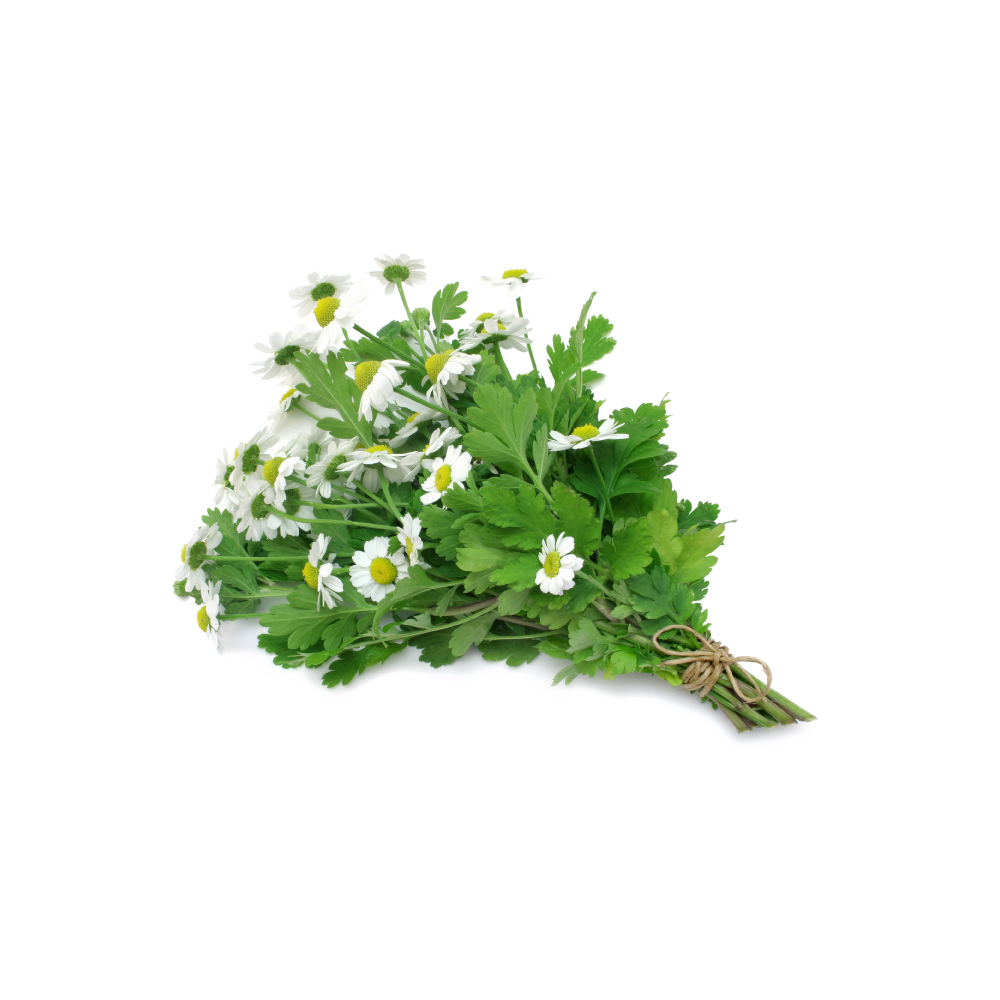
Canin is a naturally occurring sesquiterpene lactone (guaianolide; diepoxide bearing an α-methylene-γ-lactone), found in Feverfew, Silver sagebrush, Noble yarrow and 4 other sources. It is flagged as moderately toxic.
Concentration
Content by Source
Concentrations not reported. No percent-dry-weight or mg/g figures have been published for this compound in its source plants.
Canin at a Glance
Canin is a guaianolide sesquiterpene lactone — one of the bitter tricyclic terpenoids that define the daisy family (Asteraceae). It carries two epoxide rings, a tertiary hydroxyl, and the reactive α-methylene-γ-lactone group that characterises most of its chemical class 1Reference 1In vitroCompounds extracted from feverfew that have anti-secretory activity contain an alpha-methylene butyrolactone unit — [in vitro; plant extract fractions]View study →. Its proper chemical synonym is chrysartemin A 3Reference 3Canin from Artemisia cana Pursh ssp. canaView study →.
It is best known as a minor constituent of feverfew (Tanacetum parthenium), where it appears in constituent lists alongside two dozen other sesquiterpene lactones and is comprehensively overshadowed by parthenolide — the germacranolide that products are standardised to and that accounts for as much as 85% of the plant’s total lactone content 10,
Canin is a blank, and the blankness is the finding. It is chemically well defined — its structure was confirmed by X-ray crystallography in 1983, which is more than most minor plant lactones ever get 3Reference 3Canin from Artemisia cana Pursh ssp. canaView study →. Pharmacologically it is close to a blank: across the whole of PubMed, exactly two papers report canin in an experiment, and neither of them reports a result for canin tested on its own. Everything else attributed to this molecule is either a class property of sesquiterpene lactones in general, or belongs to feverfew the herb rather than to canin the molecule.
Canin, Chrysartemin A & Artecanin — One Skeleton, Four Names
The nomenclature around this molecule is genuinely tangled, and untangling it matters more than anything else written about it.
Canin is chrysartemin A. The two names came from two groups working in parallel. K. H. Lee, R. F. Simpson and T. A. Geissman isolated the compound from Artemisia cana ssp. cana and published its structure in 1969, naming it canin after the species 2Reference 2Sesquiterpenoid lactones of ArtemisiaView study →. A year later, J. Romo, A. Romo de Vivar and colleagues in Mexico described chrysartemins A and B from Artemisia and Chrysanthemum species 4Reference 4Constituents of Artemisia and Chrysanthemum species — the structures of chrysartemins A and B — [phytochemistry; structure elucidation]View study →. The duplication stood for over a decade until Kelsey, Shafizadeh and co-workers grew crystals of canin from A. cana and solved its structure by X-ray diffraction, publishing the result under the explicit title “Canin from Artemisia cana Pursh ssp. cana. Crystal structure and identification of chrysartemin A” 3Reference 3Canin from Artemisia cana Pursh ssp. canaView study →.
Artecanin is chrysartemin B, by the same pattern. Artecanin’s structure was published by Bhadane and Shafizadeh in 1975 5Reference 5Sesquiterpene lactones of sagebrush: the structure of artecanin — [phytochemistry; structure elucidation]View study →, and its identity with chrysartemin B was established by Ohno, Gershenzon, Roane and Mabry in 1980 6Reference 6Ohno, N., Gershenzon, J., Roane, C., & Mabry, T. J. (1980). 11,13-Dehydrodesacetylmatricarin and other sesquiterpene lactones from Artemisia ludoviciana var. ludoviciana and the identity of artecanin and chrysartemin B — [phytochemistry; structure correlation]. Phytochemistry, 19, 103–106. https://doi.org/10.1016/0031-9422(80)85022-9View study → — the same Missoula–Austin axis of sagebrush chemists resolving both dual names within three years of each other.
Canin and artecanin are stereoisomers of one another. They have the same molecular formula (C₁₅H₁₈O₅, MW 278.30) and, more tellingly, the same InChIKey skeleton block — KXLUWEYBZBGJRZ — which encodes constitution and connectivity. Only the stereochemical block differs 22Reference 22Canin (CID 442175) and Artecanin (CID 442147) — [chemical database]View study →:
| Name | Also known as | PubChem CID | CAS | InChIKey |
|---|---|---|---|---|
| Canin | Chrysartemin A | 442175 | 24959-84-0 | KXLUWEYBZBGJRZ-POEOZHCLSA-N |
| Artecanin | Chrysartemin B | 442147 | 29431-84-3 | KXLUWEYBZBGJRZ-SSISGLGMSA-N |
Comparing the two systematic stereodescriptors, they agree at four of the eight defined stereocentres and differ at the other four — and those four are precisely the carbons of the two epoxide rings. The lactone and carbinol centres are identical. Canin and artecanin are therefore diastereomers differing in the facial orientation of both epoxides on an otherwise identical guaianolide, which is why they co-occur, co-elute and are so persistently reported as a pair.
Two practical consequences follow. First, findings for artecanin are not findings for canin — artecanin has a little more literature than canin does (it has been isolated from Achillea falcata and screened against colorectal cancer cells as chrysartemin B 21Reference 21In vitroDifferential growth inhibitory effects of highly oxygenated guaianolides isolated from the Middle Eastern indigenous plant Achillea falcata in HCT-116 colorectal cancer cells — [in vitro]View study →, and it turns up in molecular-docking work), and none of that transfers. Second, a great deal of phytochemical writing still lists “chrysartemin A” and “canin” as two separate entries in the same compound table — the 2025 Achillea nobilis review does exactly this, listing “chrysartemin A”, “canin” and “chrysartemin” as three items 15Reference 15ReviewPhytochemistry, pharmacological potential, and ethnomedicinal relevance of Achillea nobilis and its subspecies: a comprehensive review — [review]View study →. Anyone counting occurrences from secondary sources will double-count.
For completeness, feverfew constituent lists also include 10-epicanin, a further stereoisomer at C-10, which is a distinct entry again 10Reference 10Systematic reviewFeverfew (Tanacetum parthenium L.): a systematic review — [review]View study →.
The Published Literature Is Two Papers
Canin has been the subject of two published studies, and nothing else. Groenewegen’s 1986 work
on feverfew lactones 1Reference 1In vitroCompounds extracted from feverfew that have anti-secretory activity contain an alpha-methylene butyrolactone unit — [in vitro; plant extract fractions]View study → and Kim’s 2015 paper on Artemisia 9Reference 9In vitroChemical constituents on the aerial parts of Artemisia selengensis and their IL-6 inhibitory activity — [in vitro]View study → are the whole of it. Everything
else that names the compound is an occurrence list — a line in a table of what was found in a
plant, with no experiment attached 15,
The name is part of the problem. Canin is a substring of canine, American and Duncan; it is a French spelling of canine; it is a common surname; it is the pet-food brand Royal Canin; and CaNiN is a perovskite-type nitride in the solid-state physics literature. A database search on the bare word returns several hundred records and almost none of them are about this molecule. Its synonym chrysartemin A is barely better, because chrysartemin B — a different compound, artecanin — dominates what little there is.
That ambiguity makes the literature look larger than it is. It is not: two papers is the real size of it, and the sections below rest on them.
Where The Anti-Migraine Claim Came From
Canin is sometimes credited with anti-migraine and anti-secretory activity, sourced to Pareek’s Pharmacognosy Reviews systematic review of feverfew 10Reference 10Systematic reviewFeverfew (Tanacetum parthenium L.): a systematic review — [review]View study →. That review does not make the claim. Canin appears in it exactly once, in a flat list of sesquiterpene lactones isolated from the herb, with no activity attached.
The review’s anti-secretory discussion is about extracts of feverfew and about a chemical class — “the sesquiterpenes in feverfew contain the alpha-methylenebutyrolactone unit capable of reacting with sulfhydryl groups” — rather than about this molecule 10Reference 10Systematic reviewFeverfew (Tanacetum parthenium L.): a systematic review — [review]View study →.
What does survive is weaker. The review’s own primary source, Groenewegen 1986 1Reference 1In vitroCompounds extracted from feverfew that have anti-secretory activity contain an alpha-methylene butyrolactone unit — [in vitro; plant extract fractions]View study →, named canin as one of five lactones present in anti-secretory fractions of a feverfew extract. That is co-identification, not isolate pharmacology.
Feverfew’s anti-migraine reputation belongs to the herb, and even there the Cochrane review rates the six placebo-controlled trials as low-quality evidence 20Reference 20Systematic reviewFeverfew for preventing migraine — systematic reviewView study →. A minor constituent does not inherit it.
What It's Used For
There are two papers. Neither reports what canin did.
Nothing here is scoreable, so there is no Evidence-by-Application table. The site’s support score weights study type and volume; both inputs are effectively zero here. A row reading “0%” would imply a negative result was found, and none was — canin has not been tested and failed, it has simply not been tested. The two studies below are given in full so the reader can see exactly how little there is.
1. Anti-Secretory Activity of Feverfew Fractions (Not of Canin)
The only paper that connects canin to a biological effect, and the primary source behind every downstream claim. Groenewegen, Knight and Heptinstall fractionated an extract of feverfew and recovered eleven fractions with anti-secretory activity against granule release from platelets and neutrophils. Examining the active fractions plus two inactive ones by ¹H-NMR and infrared spectroscopy, they found that all eleven active fractions, and neither inactive fraction, contained compounds bearing an α-methylene butyrolactone unit. Five such compounds were identified in the material: parthenolide, 3β-hydroxyparthenolide, secotanapartholide A, canin and artecanin. The authors’ conclusion is explicitly at class level — that “these and other sesquiterpene lactones that contain an alpha-methylene butyrolactone unit are responsible for the anti-secretory activity in extracts of feverfew” 1Reference 1In vitroCompounds extracted from feverfew that have anti-secretory activity contain an alpha-methylene butyrolactone unit — [in vitro; plant extract fractions]View study →.
This is plant-extract work, not isolate work.
Gap: canin was never separated and assayed. Its presence in an active fraction alongside parthenolide — the dominant lactone of feverfew, and the one with the characterised platelet and IKKβ pharmacology 19Reference 19In vitroThe anti-inflammatory natural product parthenolide from the medicinal herb feverfew directly binds to and inhibits IκB kinase — [in vitro]View study → — makes it impossible to assign any share of the effect to canin. The paper also predates the two structural revisions this same group later published on feverfew guaianolide α-methylenebutyrolactones 7,
2. IL-6 Inhibition Screen in Artemisia Selengensis (Result Not Reported)
The only paper in which purified canin entered an assay. Kim, Ko, Chowdhury, Chang and Woo isolated ten compounds from the aerial parts of Artemisia selengensis, structurally identified by 1D and 2D NMR; canin was compound 3. The isolates were then evaluated for inhibition of interleukin-6 production in TNF-α-stimulated MG-63 osteosarcoma cells. The published abstract states that the activity “was also examined” and stops there — no IC₅₀, no ranking, no indication of whether canin was active, weak or inert 9Reference 9In vitroChemical constituents on the aerial parts of Artemisia selengensis and their IL-6 inhibitory activity — [in vitro]View study →.
This is isolate work, which is a methodological strength; the problem is that the outcome is not in the accessible record.
Gap: the per-compound IL-6 data sits in that paper’s full text and has never been extracted. Until it is, canin has been put into one cellular assay and the answer is unknown.
Mechanisms
There is no mechanism table for canin, because no mechanism has been demonstrated for canin.
What can be said structurally is that canin carries the α-methylene-γ-lactone group 1Reference 1In vitroCompounds extracted from feverfew that have anti-secretory activity contain an alpha-methylene butyrolactone unit — [in vitro; plant extract fractions]View study → — the Michael acceptor that alkylates cysteine thiols and underlies most sesquiterpene-lactone pharmacology, including parthenolide’s covalent binding to cysteine-179 of IKKβ and consequent NF-κB inhibition 19Reference 19In vitroThe anti-inflammatory natural product parthenolide from the medicinal herb feverfew directly binds to and inhibits IκB kinase — [in vitro]View study →. Canin is chemically capable of the same reaction.
That statement is far less useful than it sounds, and it is the main trap here. Nearly every α-methylene sesquiterpene lactone alkylates thiols and thereby perturbs NF-κB and other thiol-dependent targets, so “it is a Michael acceptor” distinguishes canin from essentially nothing in its class. It predicts reactivity, not selectivity, not potency, and not therapeutic relevance. Parthenolide’s well-characterised IKKβ pharmacology belongs to parthenolide — see parthenolide — and must not be read onto this molecule.
Pharmacokinetics
Nothing exists. A PubMed search pairing canin with pharmacokinetics returns zero records. No absorption, oral bioavailability, distribution, metabolism, active metabolites, protein binding, half-life or plasma-concentration data have been published for canin in any species, including in vitro.
This matters even more than usual here, because the one biological observation on record 1Reference 1In vitroCompounds extracted from feverfew that have anti-secretory activity contain an alpha-methylene butyrolactone unit — [in vitro; plant extract fractions]View study → is an ex vivo effect of a plant fraction. Without any measure of whether canin is absorbed at all — and epoxide-bearing electrophiles are strong candidates for rapid conjugation and first-pass loss — there is no basis for supposing that oral feverfew delivers pharmacologically meaningful canin to anywhere.
Clinical Trials
There are none, in any indication, anywhere. No trial of isolated canin has been conducted, registered or proposed.
| Completed | Planned | Terminated | Preclinical |
|---|---|---|---|
| 0 | 0 | 0 | 2(one plant-fraction study, one isolate screen with no published result) |
Last checked: July 2026.
Isolate vs. Plant Studies
The split is unusually clean, and unusually unhelpful.
The one study with a biological result is plant work. Groenewegen 1986 tested fractions of a feverfew extract, identified canin as one of five lactones present in the active material, and drew a class-level conclusion 1Reference 1In vitroCompounds extracted from feverfew that have anti-secretory activity contain an alpha-methylene butyrolactone unit — [in vitro; plant extract fractions]View study →. Nothing in it isolates canin’s contribution.
The one study using purified canin published no outcome for it. Kim 2015 isolated canin from Artemisia selengensis and ran it through an IL-6 assay whose per-compound results are not in the abstract 9Reference 9In vitroChemical constituents on the aerial parts of Artemisia selengensis and their IL-6 inhibitory activity — [in vitro]View study →.
So the usual isolate-versus-plant caveat cannot even be applied: there is no isolate finding to caveat and no plant finding attributable to the molecule. The vehicles used across the whole literature are feverfew (extract) and A. selengensis (isolation source). No commercial preparation is standardised to canin, and no clinical material has ever been characterised for its canin content.
The wider risk is inheritance. Canin sits inside feverfew, a herb with six placebo-controlled migraine trials 20Reference 20Systematic reviewFeverfew for preventing migraine — systematic reviewView study →, and beside parthenolide, a molecule with a substantial mechanistic and oncology literature 19Reference 19In vitroThe anti-inflammatory natural product parthenolide from the medicinal herb feverfew directly binds to and inhibits IκB kinase — [in vitro]View study →. Both bodies of evidence are frequently written as though they extend to the herb’s other lactones. They do not.
Prevalence in Nature
Canin is a tribe-Anthemideae molecule, distributed across Artemisia, Achillea and Tanacetum. It has never been quantified in any of them — every record below is a qualitative isolation or an LC-MS identification.
Silver sagebrush (Artemisia cana ssp. cana) is the type source: canin was isolated from it and named after it in 1969 2Reference 2Sesquiterpenoid lactones of ArtemisiaView study →, and it was re-isolated from the same subspecies for the 1983 crystallographic work 3Reference 3Canin from Artemisia cana Pursh ssp. canaView study →.
Feverfew (Tanacetum parthenium) is the source that matters for herbal use. Canin is a recurring entry in feverfew constituent lists — in the Pareek systematic review, alongside artecanin, artemorin, balchanin, costunolide, 10-epicanin, reynosin, santamarine and secotanaparthenolide A 10Reference 10Systematic reviewFeverfew (Tanacetum parthenium L.): a systematic review — [review]View study →; in a 2024 comprehensive review of the plant’s phytochemistry and signalling 11Reference 11ReviewExploring the phytochemistry, signaling pathways, and mechanisms of action of Tanacetum parthenium (L.) Sch.Bip.: a comprehensive literature review — [review]View study →; and in a 2024 compositional study of extracts from different plant parts 12Reference 12In vitroChemical composition of extracts from various parts of feverfew (Tanacetum parthenium L.) and their antioxidant, protective, and antimicrobial activities — [in vitro]View study →. In every one of these it is a minor lactone in a list, with parthenolide named as the dominant member at up to ~85% of total sesquiterpene lactone content 10,
Across Artemisia, canin has been recovered from A. selengensis aerial parts 9Reference 9In vitroChemical constituents on the aerial parts of Artemisia selengensis and their IL-6 inhibitory activity — [in vitro]View study → and, together with artecanin, from A. princeps by repeated column chromatography of the dichloromethane fraction of a methanol extract 13Reference 13ReviewSesquiterpene lactones from Artemisia genus: biological activities and methods of analysis — [review]View study →. As chrysartemin A it has been reported from A. copa — a Chilean species where it was first described in 1986 and later confirmed by high-resolution LC-MS 17Reference 17In vitroChemical profiling, antioxidant, anticholinesterase, and antiprotozoal potentials of Artemisia copa Phil. (Asteraceae) — [in vitro]View study → — and from A. austriaca, where chrysartemins A and B were the only two sesquiterpenes detected and were the compounds most strongly correlated with that extract’s anti-mycobacterial activity in a five-species comparison 16Reference 16In vitroUnveiling the phytochemical profile and biological potential of five Artemisia species — [in vitro]View study →. It is also listed from A. mexicana and A. klotzschiana 16Reference 16In vitroUnveiling the phytochemical profile and biological potential of five Artemisia species — [in vitro]View study →.
In Achillea, canin and chrysartemin A were isolated from the aerial parts of noble yarrow (Achillea nobilis) in 1999 14Reference 14Chrysartemin A and canin from Achillea nobilis — [phytochemistry]View study → — a paper whose own title treats the two names as separate compounds, which the 2025 review of that species then propagates 15Reference 15ReviewPhytochemistry, pharmacological potential, and ethnomedicinal relevance of Achillea nobilis and its subspecies: a comprehensive review — [review]View study →.
Discovery & Synthesis
First isolation, 1969. K. H. Lee, R. F. Simpson and T. A. Geissman isolated the compound from Artemisia cana ssp. cana and established its structure by chemical transformation and spectroscopy, publishing it in Phytochemistry as “the structure of canin” 2Reference 2Sesquiterpenoid lactones of ArtemisiaView study →. The name follows the source species. In 1970 Romo, Romo de Vivar, Treviño, Joseph-Nathan and Díaz independently described chrysartemins A and B from Artemisia and Chrysanthemum material 4Reference 4Constituents of Artemisia and Chrysanthemum species — the structures of chrysartemins A and B — [phytochemistry; structure elucidation]View study →, creating the duplicate nomenclature that persists in the phytochemical literature to this day.
Identity settled by X-ray, 1983. Kelsey, Shafizadeh, Campbell, Craig, Campana and Craig obtained a single-crystal X-ray structure of canin from A. cana ssp. cana and identified it with chrysartemin A 3Reference 3Canin from Artemisia cana Pursh ssp. canaView study →. The parallel case had already been closed for the sibling molecule: Ohno, Gershenzon, Roane and Mabry established the identity of artecanin 5Reference 5Sesquiterpene lactones of sagebrush: the structure of artecanin — [phytochemistry; structure elucidation]View study → with chrysartemin B in 1980 6Reference 6Ohno, N., Gershenzon, J., Roane, C., & Mabry, T. J. (1980). 11,13-Dehydrodesacetylmatricarin and other sesquiterpene lactones from Artemisia ludoviciana var. ludoviciana and the identity of artecanin and chrysartemin B — [phytochemistry; structure correlation]. Phytochemistry, 19, 103–106. https://doi.org/10.1016/0031-9422(80)85022-9View study →.
Structural revisions in feverfew. Separately from the naming question, the assignments of feverfew’s guaianolide α-methylenebutyrolactones were revised twice by the Nottingham group — first by Begley, Hewlett and Knight in 1989 on the basis of X-ray analysis and chemical correlation 7Reference 7Revised structures for guaianolide α-methylenebutyro-lactones from feverfew — [phytochemistry; structure revision]View study →, then again in a 1996 paper that combined isolation, structural revision and platelet-function assays 8Reference 8In vitroSesquiterpene lactones from feverfew, Tanacetum parthenium: isolation, structural revision, activity against human blood platelet function and implications for migraine therapy — [in vitro]View study →. Anyone working from the 1986 identifications 1Reference 1In vitroCompounds extracted from feverfew that have anti-secretory activity contain an alpha-methylene butyrolactone unit — [in vitro; plant extract fractions]View study → should check them against these.
Total synthesis: none was found. No dedicated total synthesis of canin appears in PubMed or Crossref, and no semi-synthetic route to it has been described. All material used in research to date has been obtained by extraction and chromatographic isolation from Artemisia, Achillea or Tanacetum plant matter. There is no commercial production of any kind.
Toxicity & Safety
No toxicology exists for the isolate. There is no LD₅₀, no repeat-dose study, no genotoxicity assay, no reproductive or developmental study, no organ-toxicity work and no cytotoxicity screen for canin, in any species or system. The flag below is moderate on structural grounds — canin carries the reactive α-methylene-γ-lactone 1Reference 1In vitroCompounds extracted from feverfew that have anti-secretory activity contain an alpha-methylene butyrolactone unit — [in vitro; plant extract fractions]View study → that drives sesquiterpene-lactone cytotoxicity and sensitisation — not because a hazard has been measured. Absence of findings here is absence of study.
- No toxicology package whatsoever. No LD₅₀, no repeat-dose, genotoxicity, reproductive or cytotoxicity data for canin. Nothing has been measured.
- Carries the reactive α-methylene-γ-lactone. This Michael acceptor alkylates cysteine thiols and is the structural basis of sesquiterpene-lactone cytotoxicity and contact sensitisation 1,
19Reference 1In vitroCompounds extracted from feverfew that have anti-secretory activity contain an alpha-methylene butyrolactone unit — [in vitro; plant extract fractions]View study →Reference 19In vitroThe anti-inflammatory natural product parthenolide from the medicinal herb feverfew directly binds to and inhibits IκB kinase — [in vitro]View study → . Canin has it; it has simply never been tested for the consequences. - Asteraceae contact dermatitis. Feverfew is a recognised sensitiser and canin is listed among its guaianolides in the allergy literature 18Reference 18ReviewAsteraceae species as potential environmental factors of allergy — [review]View study →; Compositae sensitivity is detected by patch testing with a sesquiterpene-lactone mix. Canin itself has never been tested as a single allergen.
- Interactions are entirely unstudied. No CYP inhibition or induction screen, no P-glycoprotein work, no protein-binding measurement, no pharmacokinetic interaction data of any kind.
Full Safety & Interactions Detail
The class hazard, and why it is only a class hazard. Sesquiterpene-lactone toxicity and allergenicity are attributed principally to the α-methylene-γ-lactone Michael acceptor, which reacts with cysteine thiols on proteins — the same chemistry that makes parthenolide a covalent IKKβ inhibitor 19Reference 19In vitroThe anti-inflammatory natural product parthenolide from the medicinal herb feverfew directly binds to and inhibits IκB kinase — [in vitro]View study → and that makes the class a well-known cause of allergic contact dermatitis. Canin possesses this group 1Reference 1In vitroCompounds extracted from feverfew that have anti-secretory activity contain an alpha-methylene butyrolactone unit — [in vitro; plant extract fractions]View study →, so the class caution applies to it by structure. It has to be stated plainly that this is an inference from chemistry, not an observation: no reactivity assay, no sensitisation study and no cytotoxicity measurement has ever been run on canin. The two epoxide rings are a second class of electrophilic centre with the same status — chemically noteworthy, experimentally unexamined.
Asteraceae contact dermatitis. This is the one safety caution a canin page must carry, because it attaches to the plants that deliver it. Feverfew is an established sensitiser, and a review of Asteraceae species as environmental allergy factors lists canin explicitly among the guaianolides of Tanacetum parthenium in that context 18Reference 18ReviewAsteraceae species as potential environmental factors of allergy — [review]View study →. Compositae sensitivity is routinely detected with a sesquiterpene-lactone patch-test mix plus a Compositae mix containing feverfew, yarrow, chamomile, arnica and tansy extracts. Which individual lactones drive the feverfew response has not been resolved, and canin has never been evaluated as an individual patch-test allergen — so it cannot be exonerated or implicated.
Interactions. Nothing is known. No enzyme- or transporter-level data exist. The only interaction worth noting is indirect and belongs to the herb: feverfew inhibits platelet serotonin release and granule secretion, has a theoretical antiplatelet effect, and is cautioned alongside anticoagulant and antiplatelet drugs 10Reference 10Systematic reviewFeverfew (Tanacetum parthenium L.): a systematic review — [review]View study →. That is a feverfew caution; whether canin contributes anything to it is unknown, since the anti-secretory work was fraction-level 1Reference 1In vitroCompounds extracted from feverfew that have anti-secretory activity contain an alpha-methylene butyrolactone unit — [in vitro; plant extract fractions]View study →.
Reproductive note (prose only). No reproductive or developmental study of canin exists. Pregnancy and lactation decisions belong to the herb or product page where intake is decided, not to a molecule page.
Dosage
There is no dose. Canin has never been administered to a human or an animal, in any study, at any amount. No in-vitro concentration has been published for it either — the one cellular assay it entered did not report per-compound figures 9Reference 9In vitroChemical constituents on the aerial parts of Artemisia selengensis and their IL-6 inhibitory activity — [in vitro]View study →.
Human exposure is entirely indirect, through feverfew and other Anthemideae. Feverfew products are standardised to parthenolide (commonly a ≥0.2% target), never to canin, and no preparation on the market carries a canin content figure 10Reference 10Systematic reviewFeverfew (Tanacetum parthenium L.): a systematic review — [review]View study →. Because canin has never been quantified in any plant and has no pharmacokinetic data, there is no way to estimate exposure from a herbal dose even approximately.
Nothing here constitutes a dose recommendation, because there is nothing to recommend.
References
- Groenewegen, W. A., Knight, D. W., & Heptinstall, S. (1986). Compounds extracted from feverfew that have anti-secretory activity contain an alpha-methylene butyrolactone unit — [in vitro; plant extract fractions]. Journal of Pharmacy and Pharmacology. https://pubmed.ncbi.nlm.nih.gov/2877077/
- Lee, K. H., Simpson, R. F., & Geissman, T. A. (1969). Sesquiterpenoid lactones of Artemisia. Constituents of Artemisia cana ssp. cana. The structure of canin — [phytochemistry; first isolation]. Phytochemistry, 8, 1515–1521. https://doi.org/10.1016/S0031-9422(00)85924-5
- Kelsey, R. G., Shafizadeh, F., Campbell, J. A., Craig, A. C., Campana, C. F., & Craig, R. E. R. (1983). Canin from Artemisia cana Pursh ssp. cana. Crystal structure and identification of chrysartemin A — [X-ray crystallography]. The Journal of Organic Chemistry, 48, 125–127. https://doi.org/10.1021/jo00149a026
- Romo, J., Romo de Vivar, A., Treviño, R., Joseph-Nathan, P., & Díaz, E. (1970). Constituents of Artemisia and Chrysanthemum species — the structures of chrysartemins A and B — [phytochemistry; structure elucidation]. Phytochemistry, 9, 1615–1621. https://doi.org/10.1016/S0031-9422(00)85285-1
- Bhadane, N. R., & Shafizadeh, F. (1975). Sesquiterpene lactones of sagebrush: the structure of artecanin — [phytochemistry; structure elucidation]. Phytochemistry, 14, 2651–2653. https://doi.org/10.1016/0031-9422(75)85243-5
- Ohno, N., Gershenzon, J., Roane, C., & Mabry, T. J. (1980). 11,13-Dehydrodesacetylmatricarin and other sesquiterpene lactones from Artemisia ludoviciana var. ludoviciana and the identity of artecanin and chrysartemin B — [phytochemistry; structure correlation]. Phytochemistry, 19, 103–106. https://doi.org/10.1016/0031-9422(80)85022-9
- Begley, M. J., Hewlett, M. J., & Knight, D. W. (1989). Revised structures for guaianolide α-methylenebutyro-lactones from feverfew — [phytochemistry; structure revision]. Phytochemistry, 28, 940–943. https://doi.org/10.1016/0031-9422(89)80150-5
- Hewlett, M. J., Begley, M. J., Groenewegen, W. A., Heptinstall, S., Knight, D. W., May, J., Salan, U., & Toplis, D. (1996). Sesquiterpene lactones from feverfew, Tanacetum parthenium: isolation, structural revision, activity against human blood platelet function and implications for migraine therapy — [in vitro]. Journal of the Chemical Society, Perkin Transactions 1, 1979–1986. https://doi.org/10.1039/P19960001979
- Kim, A. R., Ko, H. J., Chowdhury, M. A., Chang, Y. S., & Woo, E. R. (2015). Chemical constituents on the aerial parts of Artemisia selengensis and their IL-6 inhibitory activity — [in vitro]. Archives of Pharmacal Research. https://pubmed.ncbi.nlm.nih.gov/25573777/
- Pareek, A., Suthar, M., Rathore, G. S., & Bansal, V. (2011). Feverfew (Tanacetum parthenium L.): a systematic review — [review]. Pharmacognosy Reviews. https://pubmed.ncbi.nlm.nih.gov/22096324/
- Kashkooe, A., et al. (2024). Exploring the phytochemistry, signaling pathways, and mechanisms of action of Tanacetum parthenium (L.) Sch.Bip.: a comprehensive literature review — [review]. Biomedicines. https://pubmed.ncbi.nlm.nih.gov/39457613/
- Michalak, M., et al. (2024). Chemical composition of extracts from various parts of feverfew (Tanacetum parthenium L.) and their antioxidant, protective, and antimicrobial activities — [in vitro]. International Journal of Molecular Sciences. https://pubmed.ncbi.nlm.nih.gov/39596244/
- Ivanescu, B., Miron, A., & Corciova, A. (2015). Sesquiterpene lactones from Artemisia genus: biological activities and methods of analysis — [review]. Journal of Analytical Methods in Chemistry. https://pubmed.ncbi.nlm.nih.gov/26495156/
- Turmukhambetov, A. Z., Buketova, G. K., Gafurov, N. M., & Adekenov, S. M. (1999). Chrysartemin A and canin from Achillea nobilis — [phytochemistry]. Chemistry of Natural Compounds, 35, 102. https://doi.org/10.1007/BF02238225
- Shevchenko, A., et al. (2025). Phytochemistry, pharmacological potential, and ethnomedicinal relevance of Achillea nobilis and its subspecies: a comprehensive review — [review]. Molecules. https://pubmed.ncbi.nlm.nih.gov/40509346/
- Trifan, A., et al. (2022). Unveiling the phytochemical profile and biological potential of five Artemisia species — [in vitro]. Antioxidants. https://pubmed.ncbi.nlm.nih.gov/35624882/
- Larrazábal-Fuentes, M. J., et al. (2020). Chemical profiling, antioxidant, anticholinesterase, and antiprotozoal potentials of Artemisia copa Phil. (Asteraceae) — [in vitro]. Frontiers in Pharmacology. https://pubmed.ncbi.nlm.nih.gov/33343365/
- Denisow-Pietrzyk, M., Pietrzyk, Ł., & Denisow, B. (2019). Asteraceae species as potential environmental factors of allergy — [review]. Environmental Science and Pollution Research International. https://pubmed.ncbi.nlm.nih.gov/30666578/
- Kwok, B. H., Koh, B., Ndubuisi, M. I., Elofsson, M., & Crews, C. M. (2001). The anti-inflammatory natural product parthenolide from the medicinal herb feverfew directly binds to and inhibits IκB kinase — [in vitro]. Chemistry & Biology. https://pubmed.ncbi.nlm.nih.gov/11514225/
- Wider, B., Pittler, M. H., & Ernst, E. (2015). Feverfew for preventing migraine — systematic review. Cochrane Database of Systematic Reviews. https://pubmed.ncbi.nlm.nih.gov/25892430/
- Tohme, R., Al Aaraj, L., Ghaddar, T., Gali-Muhtasib, H., Saliba, N. A., & Darwiche, N. (2013). Differential growth inhibitory effects of highly oxygenated guaianolides isolated from the Middle Eastern indigenous plant Achillea falcata in HCT-116 colorectal cancer cells — [in vitro]. Molecules. https://pubmed.ncbi.nlm.nih.gov/23860275/
- PubChem. Canin (CID 442175) and Artecanin (CID 442147) — [chemical database]. National Library of Medicine. https://pubchem.ncbi.nlm.nih.gov/compound/442175



