
Compound Monograph
Artemisinic Acid
Artemisinic acid is the amorphane sesquiterpene precursor of artemisinin in sweet wormwood, and the feedstock molecule for the semi-synthetic artemisinin route — but it carries no endoperoxide bridge and no antimalarial activity of its own.

Sources · 1
Where Does It Come From?
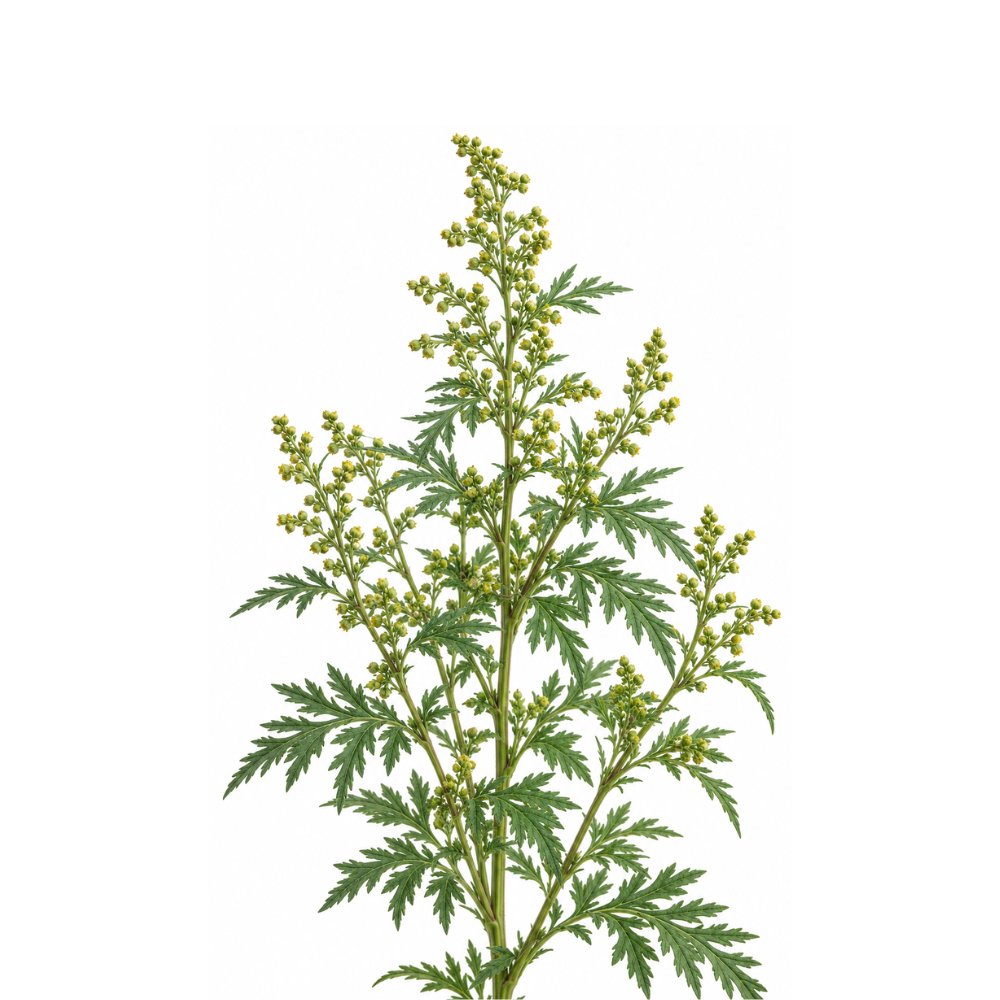
Artemisinic Acid is a naturally occurring sesquiterpene acid (amorphane), found in Sweet wormwood. Its toxicity is not yet characterized.
Concentration
Content by Source
Concentrations not reported. No percent-dry-weight or mg/g figures have been published for this compound in its source plants.
Research & Evidence
Artemisinic acid is a sesquiterpene acid of the amorphane skeleton, found in Artemisia annua alongside the molecule it gives rise to. Its significance is biosynthetic and industrial rather than pharmacological: it sits on the pathway to artemisinin, and it is the point at which the plant’s chemistry can be handed over to a factory.
The plant builds artemisinin from farnesyl diphosphate via amorpha-4,11-diene, which is oxidised to artemisinic acid and then reduced to dihydroartemisinic acid; that last intermediate is converted to artemisinin by a non-enzymatic photo-oxidation in the leaf’s glandular trichomes. Artemisinic acid is therefore one step off the productive branch — it must be reduced first, and material that stays oxidised drains towards arteannuin B instead.
That branch point is why the molecule matters commercially. Engineered yeast fermentation produces artemisinic acid in bulk, which is then converted chemically to artemisinin — the semi-synthetic artemisinin supply route developed to buffer the price volatility of a crop-dependent drug. It is worth being clear about what this does and does not mean for the herb: the fermentation route is an alternative way to make the drug, not a claim about the plant material.
Artemisinic acid is not an antimalarial. It has no endoperoxide bridge, and the endoperoxide is the entire basis of artemisinin’s iron-catalysed radical mechanism. It is best read here as a chemotaxonomic and yield marker for A. annua, not as an active constituent.
Toxicity & Safety
No isolated-compound toxicity data were located. It has never been given to humans as a therapeutic agent — its industrial use is as a chemical intermediate.



