
Materia Medica
Sweet Wormwood
Artemisia annua
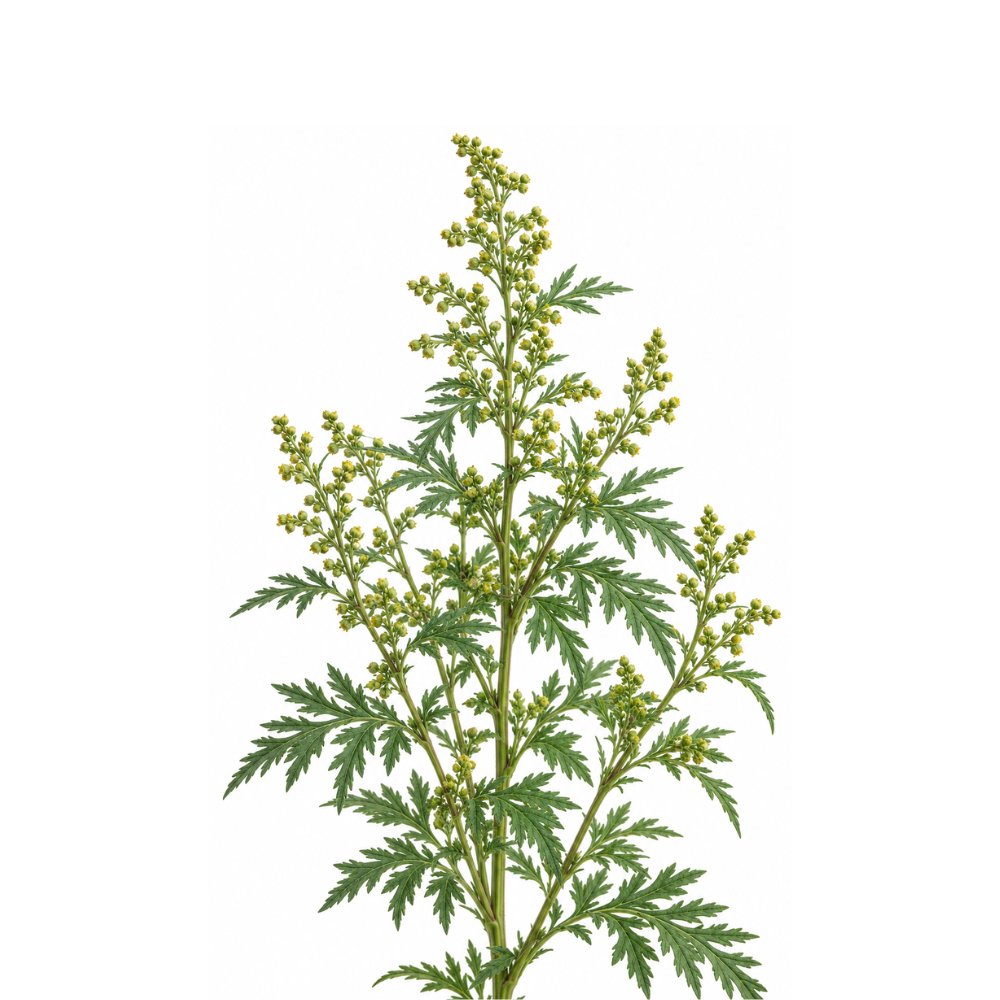
Sweet wormwood is a sweetly aromatic annual herb of the daisy family, known in Chinese medicine as qinghao and used there for fevers. It is the plant from which artemisinin, the basis of today's front-line malaria drugs, was first isolated.
What Is Sweet Wormwood?
Sweet wormwood is a sweetly aromatic annual herb of the daisy family, known in Chinese medicine as qinghao (青蒿). It has been used in China for fevers for many centuries, and it is the plant from which artemisinin was isolated 1,
The plant grows wild across much of China and temperate Asia and has spread to Europe, North Africa and North America as a weed of roadsides and waste ground 27,
In the early 1970s, Tu Youyou’s team found that a low-temperature extract of the herb strongly inhibited malaria in rodents. The discovery led to the artemisinin drugs used in today’s front-line malaria treatment, and it earned Tu a share of the 2015 Nobel Prize in Physiology or Medicine 25Reference 25ReviewInnovating Chinese herbal medicine: from traditional health practice to scientific drug discovery — reviewView study →. Research on the whole herb has been more limited: small tea trials for malaria, and laboratory work on inflammation, cancer and viruses 2,
Sweet wormwood is a different species from wormwood (Artemisia absinthium), with different chemistry and uses, although the two are often confused.
How Is Sweet Wormwood Used?
Sweet wormwood is used as the dried leaves and flowering tops.
- Tea or cold infusion — the traditional Chinese preparation for fevers. The herb is also included in the Chinese pharmacopoeia as a water preparation for fever and malaria 1Reference 1Clinical trialPharmacokinetic study of artemisinin after oral intake of a traditional preparation of Artemisia annua L. (annual wormwood) — clinical trialView study →.
- Pharmaceutical artemisinin — extracted from cultivated plants and converted into the artemisinin drugs used in combination malaria therapies 4,
29Reference 4AnimalDried whole plant Artemisia annua as an antimalarial therapy — mouse in vivo modelView study →Reference 29Seasonal and differential sesquiterpene accumulation in Artemisia annua suggest selection based on both artemisinin and dihydroartemisinic acid may increase artemisinin in planta — field studyView study → .
Traditional Uses
Traditional Chinese Medicine
In Chinese medicine the herb is qinghao. Shennong’s Herbal Classic (around 100 CE) describes it as bitter and cold, and lists it for scabies, itching, sores and lice, for heat retained in the bones, and for improving vision 26Reference 26ReviewArtemisiae Annuae Herba: from anti-malarial legacy to emerging anti-cancer potential — reviewView study →.
Its use against malaria was recorded by the physician Ge Hong (283–343 CE), who instructed that the herb be soaked in water and its juice wrung out 26Reference 26ReviewArtemisiae Annuae Herba: from anti-malarial legacy to emerging anti-cancer potential — reviewView study →. His Handbook of Prescriptions for Emergencies reads: “A handful of qinghao immersed in two litres of water, wring out the juice and drink it all” 25Reference 25ReviewInnovating Chinese herbal medicine: from traditional health practice to scientific drug discovery — reviewView study →. The Song dynasty scholar Zhou Qufei (1134–1189) also recorded it as a key treatment for malaria 26Reference 26ReviewArtemisiae Annuae Herba: from anti-malarial legacy to emerging anti-cancer potential — reviewView study →.
In 1971, Tu Youyou and her colleagues turned to qinghao in their search for an antimalarial. Ge Hong’s cold preparation suggested to her that heating might destroy the active molecule. Her team switched to a low-temperature ethyl ether extraction, and the new extract inhibited rodent malaria by 95–100% 25Reference 25ReviewInnovating Chinese herbal medicine: from traditional health practice to scientific drug discovery — reviewView study →.
Indications
- Malaria [leaf tea; TCM] Caution: In small trials, tea cleared parasites quickly, but many infections returned. The WHO does not support using Artemisia plant material in any form to prevent or treat malaria 2,
3, .24 - Fever [aerial parts; TCM]
- Scabies, itching and sores [aerial parts; TCM]
- Lice [aerial parts; TCM]
Botany
Sweet wormwood is a strongly aromatic annual in the daisy family (Asteraceae). It usually grows 0.3–2 m tall and occasionally reaches 3 m 27,
It usually has a single upright stem, which is green at first and turns reddish brown with age. The stem branches heavily 27,
The leaves are bright green, dotted with glands, and finely divided two or three times into narrow, toothed lobes 27,
The flower heads are tiny, globe-shaped and nodding, 1.5–2.5 mm across, with pale to dark yellow florets. They are carried in large, open, branching clusters and appear from late summer into autumn 27,
Artemisinin is made in glandular trichomes, the small secretory hairs on the plant’s surface 5Reference 5In vitroFlavonoid versus artemisinin anti-malarial activity in Artemisia annua whole-leaf extracts — in vitroView study →. Its content changes through the season: in field trials it peaked in plants that had not yet flowered, which points to day length rather than flowering as the trigger 29Reference 29Seasonal and differential sesquiterpene accumulation in Artemisia annua suggest selection based on both artemisinin and dihydroartemisinic acid may increase artemisinin in planta — field studyView study →.
Distribution
Sweet wormwood grows throughout most of China, on hillsides, roadsides, wasteland, forest margins, steppe, riverbanks and rocky slopes, and on saline soils. It is widely distributed across Asia, Europe, North Africa and North America 28Reference 28Artemisia annua LinnaeusView study →.
In North America it is an introduced plant. It is widely grown and often persists after cultivation, naturalising in moist, temperate areas, especially in the eastern United States, on sandy soils and moist waste ground 27Reference 27Artemisia annua LinnaeusView study →.
Cultivated crops are the only commercial source of plant-derived artemisinin, and growers have bred high-yielding strains in Brazil, China and Switzerland, among other places 29Reference 29Seasonal and differential sesquiterpene accumulation in Artemisia annua suggest selection based on both artemisinin and dihydroartemisinic acid may increase artemisinin in planta — field studyView study →.
Growing Conditions
Cultivation snapshot for Sweet Wormwood
Zonegrown as a summer annual in USDA 3–11; it completes its cycle in one season anywhere with a warm summer.
- Full sun and undemanding soil — it colonises roadsides and waste ground on its own, so a rich bed is not needed and produces leafier, less resinous growth.
- Artemisinin content changes through the season. In field trials it peaked in late August to early September, before flowering, so the harvest date matters 29Reference 29Seasonal and differential sesquiterpene accumulation in Artemisia annua suggest selection based on both artemisinin and dihydroartemisinic acid may increase artemisinin in planta — field studyView study →.
- It seeds prolifically and self-sows freely; it has naturalised across Europe and North America from exactly that habit.
Grow it yourself
Farm Wiki is our cultivation-focused sister site, also run by Justin Cooke.
Phytochemistry
Artemisinin is a sesquiterpene lactone with an endoperoxide bridge, a peroxide built into its ring system 26Reference 26ReviewArtemisiae Annuae Herba: from anti-malarial legacy to emerging anti-cancer potential — reviewView study →. In field-grown plants the leaves contained about 0.3–1.5% artemisinin, depending on the strain 29Reference 29Seasonal and differential sesquiterpene accumulation in Artemisia annua suggest selection based on both artemisinin and dihydroartemisinic acid may increase artemisinin in planta — field studyView study →.
The bridge is central to its antimalarial action. Inside the infected red blood cell, the parasite digests haemoglobin and releases haem and ferrous iron, which react with the endoperoxide 26Reference 26ReviewArtemisiae Annuae Herba: from anti-malarial legacy to emerging anti-cancer potential — reviewView study →.
The plant builds artemisinin from artemisinic acid through dihydroartemisinic acid. The last step, from dihydroartemisinic acid to artemisinin, happens by spontaneous oxidation rather than through an enzyme 30Reference 30In vitroDihydroartemisinic acid dehydrogenase-mediated alternative route for artemisinin biosynthesis — in vitro / biosynthesisView study →. Artemisinic acid can also be made by engineered yeast and converted to artemisinin chemically, which is the basis of semi-synthetic artemisinin 30Reference 30In vitroDihydroartemisinic acid dehydrogenase-mediated alternative route for artemisinin biosynthesis — in vitro / biosynthesisView study →. Arteannuin B is a related sesquiterpene lactone in the plant.
Dihydroartemisinic acid, the plant precursor, is a different molecule from dihydroartemisinin, the antimalarial drug.
The levels of these sesquiterpenes vary widely between strains. Some Chinese and Swiss plants held more dihydroartemisinic acid than artemisinin, up to 1.6%, while most Brazilian plants held more artemisinin 29Reference 29Seasonal and differential sesquiterpene accumulation in Artemisia annua suggest selection based on both artemisinin and dihydroartemisinic acid may increase artemisinin in planta — field studyView study →.
The plant also contains flavonoids, among them chrysosplenetin, casticin and quercetin, and the coumarin scopoletin. In mice, whole dried leaf reduced malaria parasites more effectively than a comparable dose of pure artemisinin 4Reference 4AnimalDried whole plant Artemisia annua as an antimalarial therapy — mouse in vivo modelView study →. But in lab tests against Plasmodium falciparum, extracts from mutant plants lacking flavonoids were as active as normal extracts, while extracts from plants unable to make artemisinin had little or no activity 5Reference 5In vitroFlavonoid versus artemisinin anti-malarial activity in Artemisia annua whole-leaf extracts — in vitroView study →.
The essential oil contains terpenes including artemisia ketone, camphor, 1,8-cineole, germacrene D, caryophyllene, caryophyllene oxide and β-selinene. The antibacterial results for the essential oil come from this fraction rather than from tea or capsules 23Reference 23In vitroAntibacterial potency of medicinal plants including Artemisia annua against multidrug-resistant E. coli — in vitroView study →.
Constituent Summary
Amounts are for the dried leaf of field-grown plants and vary widely with strain and harvest date.
Sesquiterpene Lactone2 compounds1 with data
Sesquiterpene6 compounds2 with data
Monoterpene3 compoundsno data
Flavonoid3 compoundsno data
Coumarin1 compoundno data
Pharmacology & Research
Most of the clinical research belongs to purified artemisinin and its semi-synthetic derivatives, artesunate, artemether and dihydroartemisinin. These are pharmaceutical drugs, used in artemisinin-combination therapies for malaria and tested in early cancer trials 8,
For the herb itself there are two small malaria trials of the tea, a pharmacokinetic study, and laboratory and animal work on inflammation, oxidation, immunity, viruses and bacteria 1,
-
Best-supported: the antimalarial activity of artemisinin. The tea delivers artemisinin to the blood, but in small trials many infections returned after treatment 1,
2, ; the derivative artesunate has shown anticancer signals in early human trials 8,3Reference 1Clinical trialPharmacokinetic study of artemisinin after oral intake of a traditional preparation of Artemisia annua L. (annual wormwood) — clinical trialView study →Reference 2RCTRandomised controlled trial of a traditional preparation of Artemisia annua L. in the treatment of malaria — randomised controlled trialView study →Reference 3RCTHerba Artemisiae annuae tea compared to sulfadoxine-pyrimethamine in uncomplicated falciparum malaria — randomised double-blind clinical trialView study → 9, .12Reference 8RCTA randomised, double-blind, placebo-controlled pilot study of oral artesunate therapy for colorectal cancer — randomised controlled trialView study →Reference 9Clinical trialA phase I study of intravenous artesunate in patients with advanced solid tumour malignancies — clinical trialView study →Reference 12Clinical trialFirst-in-human proof-of-concept trial of intravaginal artesunate to treat cervical intraepithelial neoplasia 2/3 — clinical trialView study → -
Emerging, worth watching: immunomodulation in lupus models by the synthetic artemisinin analogue SM934 14,
15Reference 14AnimalOral administration of artemisinin analogue SM934 ameliorates lupus syndromes in MRL/lpr mice by inhibiting Th1 and Th17 responses — mouse modelView study →Reference 15AnimalArtemisinin analogue SM934 protects against lupus-associated antiphospholipid syndrome via activation of Nrf2 — mouse modelView study → , and anti-inflammatory and antioxidant activity of the extracts 13,16Reference 13AnimalArtemisia annua L. aqueous extract promotes intestinal immunity and antioxidant function in broilers — animal modelView study →Reference 16In vitroAnti-inflammatory, antioxidant and antimicrobial effects of artemisinin extracts from Artemisia annua L. — in vitroView study → . -
Mechanistically thin: antiviral (including SARS-CoV-2) and antibacterial activity, which rests on in-vitro work 19,
20, .22, 23Reference 19ReviewThe antiviral activities of artemisinin and artesunate — reviewView study →Reference 20In vitroIn vitro efficacy of artemisinin-based treatments against SARS-CoV-2 — in vitroView study →Reference 22In vitroArtemisia annua L. extracts inhibit the in vitro replication of SARS-CoV-2 and two of its variants — in vitroView study →Reference 23In vitroAntibacterial potency of medicinal plants including Artemisia annua against multidrug-resistant E. coli — in vitroView study → - The caveat: nearly all clinical data belong to the isolated drugs, not the herb, and the herb delivers lower and more variable doses.
A cup of tea is not an artemisinin drug. One litre of tea made from 9 g of leaves contained about 94.5 mg of artemisinin, roughly 19% of the usual daily drug dose, and artemisinin drugs are prescribed only in combination with a second antimalarial to limit resistance 1,
1. Antimalarial
Artemisinin’s endoperoxide bridge reacts with the haem and ferrous iron released as the parasite digests haemoglobin inside the red blood cell 26Reference 26ReviewArtemisiae Annuae Herba: from anti-malarial legacy to emerging anti-cancer potential — reviewView study →.
In 14 healthy men, one litre of tea made from 9 g of leaves contained 94.5 mg of artemisinin, about 19% of the usual daily dose. Artemisinin was absorbed faster from the tea than from tablets, with similar bioavailability. The authors judged the blood levels enough for a clinical effect but not enough to substitute for artemisinin drugs 1Reference 1Clinical trialPharmacokinetic study of artemisinin after oral intake of a traditional preparation of Artemisia annua L. (annual wormwood) — clinical trialView study →.
In an open randomised trial in uncomplicated malaria, tea preparations cleared parasites and symptoms quickly. Seven-day cure rates averaged 74%, against 91% for quinine, but many infections returned 2Reference 2RCTRandomised controlled trial of a traditional preparation of Artemisia annua L. in the treatment of malaria — randomised controlled trialView study →.
In a double-blind trial in semi-immune adults, tea and sulfadoxine-pyrimethamine both cured 7 of 10 and 7 of 9 patients at day 7. By day 28, cure rates had fallen to 1 of 9 with the tea and 3 of 8 with sulfadoxine-pyrimethamine 3Reference 3RCTHerba Artemisiae annuae tea compared to sulfadoxine-pyrimethamine in uncomplicated falciparum malaria — randomised double-blind clinical trialView study →.
In mice with rodent malaria, a single dose of dried whole leaf reduced parasites more effectively than a comparable dose of pure artemisinin 4Reference 4AnimalDried whole plant Artemisia annua as an antimalarial therapy — mouse in vivo modelView study →. In lab tests against P. falciparum, extracts from flavonoid-free mutant plants were as active as normal extracts, while extracts from plants that could not make artemisinin had little or no activity 5Reference 5In vitroFlavonoid versus artemisinin anti-malarial activity in Artemisia annua whole-leaf extracts — in vitroView study →.
Artemisinin is prescribed only in combination therapies, to limit the spread of resistance 4Reference 4AnimalDried whole plant Artemisia annua as an antimalarial therapy — mouse in vivo modelView study →. Partial resistance, driven mainly by mutations in the parasite’s Kelch13 gene, has now emerged in Africa 6Reference 6ReviewPlasmodium falciparum resistance to artemisinin-based combination therapies — reviewView study →. The WHO does not support using Artemisia plant material in any form to prevent or treat malaria 24Reference 24The use of non-pharmaceutical forms of Artemisia — position statement and technical document (WHO/CDS/GMP/2019.14). https://www.who.int/publications/i/item/WHO-CDS-GMP-2019.14View study →.
Gap: a large double-blind trial reporting that Artemisia tea beat artesunate-amodiaquine was retracted 7Reference 7Retraction notice: Artemisia annua and Artemisia afra tea infusions vs. artesunate-amodiaquine in treating P. falciparum malariaView study →. No adequately powered, unretracted trial shows the herb cures malaria without the infection returning.
2. Anticancer
Artemisinin-type drugs have shown anticancer activity in preclinical models, through proposed mechanisms including DNA damage, blocking new blood-vessel growth, and triggering cell death 9Reference 9Clinical trialA phase I study of intravenous artesunate in patients with advanced solid tumour malignancies — clinical trialView study →.
The human data belong to the isolated derivative artesunate, not to A. annua. In a double-blind, placebo-controlled pilot trial, 23 people awaiting colorectal cancer surgery took 200 mg of oral artesunate or placebo daily for 14 days. The primary outcome, tumour-cell apoptosis, was similar in both groups (67% vs 55% of patients). A Bayesian analysis gave a 0.89 probability that artesunate reduced the proliferation marker Ki67. Over a median 42 months, cancer returned in 1 patient on artesunate and 6 on placebo 8Reference 8RCTA randomised, double-blind, placebo-controlled pilot study of oral artesunate therapy for colorectal cancer — randomised controlled trialView study →.
A phase I trial of intravenous artesunate in advanced solid tumours set a maximum tolerated dose of 18 mg/kg. There were no tumour responses, and 27% of patients had stable disease 9Reference 9Clinical trialA phase I study of intravenous artesunate in patients with advanced solid tumour malignancies — clinical trialView study →.
In metastatic breast cancer, oral artesunate added to standard treatment was well tolerated at up to 200 mg a day over four weeks 10Reference 10Clinical trialPhase I study to define a well-tolerated dose of oral artesunate as add-on therapy in metastatic breast cancer (ARTIC M33/2) — clinical trialView study →, and 13 patients continued for up to 37 months without major safety concerns 11Reference 11Clinical trialLong-term add-on therapy (compassionate use) with oral artesunate in metastatic breast cancer — clinical trialView study →.
Self-administered vaginal artesunate inserts led to regression of CIN2/3 cervical lesions in 19 of 28 women 12Reference 12Clinical trialFirst-in-human proof-of-concept trial of intravaginal artesunate to treat cervical intraepithelial neoplasia 2/3 — clinical trialView study →.
Gap: every human result is for the semi-synthetic drug, mostly in early-phase, uncontrolled trials. There is no controlled human trial of the whole herb for any cancer.
3. Anti-Inflammatory
Water, methanol, ethanol and acetone extracts of A. annua all reduced LPS-induced nitric oxide, prostaglandin E2 and inflammatory cytokines, with the acetone extract most active 16Reference 16In vitroAnti-inflammatory, antioxidant and antimicrobial effects of artemisinin extracts from Artemisia annua L. — in vitroView study →.
In broiler chickens, an aqueous extract added to feed lowered intestinal IL-1β and IL-6 through the NF-κB pathway 13Reference 13AnimalArtemisia annua L. aqueous extract promotes intestinal immunity and antioxidant function in broilers — animal modelView study →.
Gap: no human anti-inflammatory trial of the herb. Much of the animal data comes from production livestock rather than disease models.
4. Antioxidant
The ethanol extract of A. annua scavenged 91% of free radicals in vitro, close to α-tocopherol 16Reference 16In vitroAnti-inflammatory, antioxidant and antimicrobial effects of artemisinin extracts from Artemisia annua L. — in vitroView study →.
In broiler chickens, an aqueous extract in feed raised antioxidant enzyme activity in the small intestine through the Nrf2 pathway 13Reference 13AnimalArtemisia annua L. aqueous extract promotes intestinal immunity and antioxidant function in broilers — animal modelView study →.
Gap: no human antioxidant study of the herb.
5. Immunomodulatory
The clearest autoimmune signal comes from SM934, a water-soluble artemisinin analogue. In lupus-prone MRL/lpr mice, oral SM934 reduced proteinuria, kidney damage and anti-dsDNA antibodies and extended survival, by suppressing Th1 and Th17 responses and increasing regulatory T cells 14Reference 14AnimalOral administration of artemisinin analogue SM934 ameliorates lupus syndromes in MRL/lpr mice by inhibiting Th1 and Th17 responses — mouse modelView study →.
In a mouse model of lupus with antiphospholipid syndrome, it reduced autoantibodies, inflammation and oxidative stress in the kidney through Nrf2 signalling 15Reference 15AnimalArtemisinin analogue SM934 protects against lupus-associated antiphospholipid syndrome via activation of Nrf2 — mouse modelView study →.
A review collects the anti-inflammatory and immunoregulatory effects of artemisinin drugs across autoimmune and transplant models 17Reference 17ReviewImmunoregulation by artemisinin and its derivatives: a new role for old antimalarial drugs — reviewView study →.
Gap: the strongest data use a synthetic analogue (SM934) that the herb does not contain, in rodents. There is no controlled human trial of A. annua or artemisinin for any autoimmune disease.
6. Antiparasitic (Non-Malaria)
Artemisinin and its derivatives are active in vitro and in animals against several other protozoa, including Leishmania, trypanosomes, Toxoplasma and Giardia, and against schistosomes 18Reference 18ReviewArtemisinin and its derivatives in treating protozoan infections beyond malaria — reviewView study →.
A large clinical trial reporting that A. annua tea cleared Schistosoma mansoni eggs faster than praziquantel was retracted 21Reference 21Clinical trialRetraction notice: Effect of Artemisia annua and Artemisia afra tea infusions on schistosomiasis in a large clinical trialView study →.
Gap: the human evidence for the herb in schistosomiasis was withdrawn. The remaining data are from animals and cell cultures.
8. Antibacterial
Ethanolic and aqueous extracts and the essential oil of A. annua inhibited multidrug-resistant E. coli in vitro, with the essential oil most potent 23Reference 23In vitroAntibacterial potency of medicinal plants including Artemisia annua against multidrug-resistant E. coli — in vitroView study →. Extracts were also active against several bacteria that cause gum disease 16Reference 16In vitroAnti-inflammatory, antioxidant and antimicrobial effects of artemisinin extracts from Artemisia annua L. — in vitroView study →.
Gap: laboratory activity only, with no clinical data.
Mechanisms
Artemisinin and its drug derivatives carry an endoperoxide bridge. It reacts with the haem and ferrous iron that malaria parasites release when they digest haemoglobin, and the same chemistry has been studied for anticancer activity 9,
The extracts’ anti-inflammatory and antioxidant effects have been studied separately, through NF-κB and Nrf2 signalling 13,
| Mechanism | Drives | Key compounds |
|---|---|---|
| Endoperoxide activation by haem and ferrous iron | antimalarialantiparasitic | artemisinin, artesunate, dihydroartemisinin |
| DNA damage, anti-angiogenesis, apoptosis | anticancer | artesunate |
| NF-κB ↓, cytokine suppression | anti-inflammatory | A. annua extracts |
| Nrf2 activation, radical scavenging | antioxidant | A. annua extracts |
| Th1/Th17 ↓, Treg ↑, STAT signalling ↓ | immunomodulatory | artemisinin analogue SM934 |
Clinical Trials
Registered human trials are almost all of the isolated derivatives, such as artesunate for cancer and precancerous lesions and artemisinin-combination therapies for malaria. Trials of the herb itself are few, and a COVID-19 outpatient trial of camostat with A. annua was terminated.
| Completed | Planned | Terminated | Preclinical |
|---|---|---|---|
| ~15(mostly isolated derivatives) | 3-4 | 1(COVID-19) | ~hundreds |
Last checked: August 2026.
Dosage
The WHO does not support using Artemisia plant material in any form to prevent or treat malaria 24Reference 24The use of non-pharmaceutical forms of Artemisia — position statement and technical document (WHO/CDS/GMP/2019.14). https://www.who.int/publications/i/item/WHO-CDS-GMP-2019.14View study →. The doses below are those used in studies.
| Indication | Preparation | Dose | Est. dried-herb equivalent | Source |
|---|---|---|---|---|
| Antimalarial (pharmacokinetics) | Tea infusion | 9 g dried leaves in 1 L, giving ~94.5 mg artemisinin | 9 g dried leaf | 1Reference 1Clinical trialPharmacokinetic study of artemisinin after oral intake of a traditional preparation of Artemisia annua L. (annual wormwood) — clinical trialView study → |
| Antimalarial (trials) | Traditional tea preparation | 7-day course | — | 2, |
| Anticancer (colorectal) | Oral artesunate, the isolated drug | 200 mg a day for 14 days | — | 8Reference 8RCTA randomised, double-blind, placebo-controlled pilot study of oral artesunate therapy for colorectal cancer — randomised controlled trialView study → |
| Anticancer (breast, phase I) | Oral artesunate | Up to 200 mg a day (2.2–3.9 mg/kg a day) | — | 10, |
| Anticancer (solid tumours, phase I) | Intravenous artesunate | Maximum tolerated dose 18 mg/kg | — | 9Reference 9Clinical trialA phase I study of intravenous artesunate in patients with advanced solid tumour malignancies — clinical trialView study → |
Traditional Dosage
| System | Preparation | Dose |
|---|---|---|
| TCM (qinghao 青蒿) | Dried aerial parts as a water preparation, or the juice wrung out after cold soaking | ~4.5–9 g a day dried herb |
Safety & Pregnancy
Sweet wormwood’s main safety issue concerns malaria treatment rather than toxicity.
- Not a substitute for artemisinin-combination therapy. The WHO does not support using Artemisia plant material in any form to prevent or treat malaria 24Reference 24The use of non-pharmaceutical forms of Artemisia — position statement and technical document (WHO/CDS/GMP/2019.14). https://www.who.int/publications/i/item/WHO-CDS-GMP-2019.14View study →. In trials of the tea, many infections returned after treatment 2,
3Reference 2RCTRandomised controlled trial of a traditional preparation of Artemisia annua L. in the treatment of malaria — randomised controlled trialView study →Reference 3RCTHerba Artemisiae annuae tea compared to sulfadoxine-pyrimethamine in uncomplicated falciparum malaria — randomised double-blind clinical trialView study → . - Avoid in pregnancy. The herb has not been studied in pregnancy, and artemisinin drugs were long restricted in the first trimester over concerns about harm to the embryo 31Reference 31Meta-analysisPregnancy outcomes after first-trimester treatment with artemisinin derivatives versus non-artemisinin antimalarials — systematic review and individual patient data meta-analysisView study →.
- Daisy-family allergy. A. annua pollen is a major cause of allergic respiratory disease in northern China 32Reference 32In vitroImmunoproteomic analysis and identification of possible allergenic proteins in Artemisia annua pollen — in vitro / animalView study →, and people sensitive to other daisy-family plants may react to it.
- Two widely cited trials were retracted: the tea-versus-artesunate-amodiaquine malaria trial 7Reference 7Retraction notice: Artemisia annua and Artemisia afra tea infusions vs. artesunate-amodiaquine in treating P. falciparum malariaView study → and the tea-for-schistosomiasis trial 21Reference 21Clinical trialRetraction notice: Effect of Artemisia annua and Artemisia afra tea infusions on schistosomiasis in a large clinical trialView study →.
- Artesunate is generally well tolerated. In cancer trials, side effects such as low white-cell counts, liver-enzyme changes and nausea appeared mainly at high intravenous doses 8,
9, .10Reference 8RCTA randomised, double-blind, placebo-controlled pilot study of oral artesunate therapy for colorectal cancer — randomised controlled trialView study →Reference 9Clinical trialA phase I study of intravenous artesunate in patients with advanced solid tumour malignancies — clinical trialView study →Reference 10Clinical trialPhase I study to define a well-tolerated dose of oral artesunate as add-on therapy in metastatic breast cancer (ARTIC M33/2) — clinical trialView study →
Full Safety & Interactions Detail
Malaria treatment. Artemisinin is prescribed only in combination with a second antimalarial, to limit resistance 4Reference 4AnimalDried whole plant Artemisia annua as an antimalarial therapy — mouse in vivo modelView study →. Partial resistance, driven mainly by Kelch13 mutations, has emerged in Africa 6Reference 6ReviewPlasmodium falciparum resistance to artemisinin-based combination therapies — reviewView study →. A litre of tea delivers about 19% of a usual daily artemisinin dose 1Reference 1Clinical trialPharmacokinetic study of artemisinin after oral intake of a traditional preparation of Artemisia annua L. (annual wormwood) — clinical trialView study →, and in trials many tea-treated infections returned 2,
Retracted trials. A large trial claiming Artemisia tea outperformed artesunate-amodiaquine for malaria has been retracted 7Reference 7Retraction notice: Artemisia annua and Artemisia afra tea infusions vs. artesunate-amodiaquine in treating P. falciparum malariaView study →, as has a trial claiming the tea cleared Schistosoma mansoni eggs faster than praziquantel 21Reference 21Clinical trialRetraction notice: Effect of Artemisia annua and Artemisia afra tea infusions on schistosomiasis in a large clinical trialView study →.
Artesunate side effects. In the intravenous phase I trial, dose-limiting effects included neutropenic fever, a hypersensitivity reaction, liver-test abnormalities and nausea 9Reference 9Clinical trialA phase I study of intravenous artesunate in patients with advanced solid tumour malignancies — clinical trialView study →. Oral artesunate up to 200 mg a day caused occasional low blood counts and fatigue 10Reference 10Clinical trialPhase I study to define a well-tolerated dose of oral artesunate as add-on therapy in metastatic breast cancer (ARTIC M33/2) — clinical trialView study →.
Allergy. A. annua pollen is a major cause of hay fever and asthma in northern China 32Reference 32In vitroImmunoproteomic analysis and identification of possible allergenic proteins in Artemisia annua pollen — in vitro / animalView study →.
Interactions. No human drug-interaction study of the herb exists.
Avoid. The herb has not been studied in pregnancy or breastfeeding.
Artemisinin drugs were long restricted in the first trimester because of concerns about harm to the embryo. A 2023 analysis of 34,178 pregnancies found no increase in miscarriage, stillbirth or major birth defects after first-trimester artemisinin treatment, and it recommended artemether-lumefantrine as the preferred first-trimester treatment 31Reference 31Meta-analysisPregnancy outcomes after first-trimester treatment with artemisinin derivatives versus non-artemisinin antimalarials — systematic review and individual patient data meta-analysisView study →. That finding concerns the pharmaceutical drugs at controlled doses, not the herb.
References
- Räth, K., Taxis, K., Walz, G., et al. (2004). Pharmacokinetic study of artemisinin after oral intake of a traditional preparation of Artemisia annua L. (annual wormwood) — clinical trial. American Journal of Tropical Medicine and Hygiene. https://pubmed.ncbi.nlm.nih.gov/14993622/
- Mueller, M. S., Runyambo, N., Wagner, I., et al. (2004). Randomised controlled trial of a traditional preparation of Artemisia annua L. in the treatment of malaria — randomised controlled trial. Transactions of the Royal Society of Tropical Medicine and Hygiene. https://pubmed.ncbi.nlm.nih.gov/15109558/
- Blanke, C. H., Naisabha, G. B., Balema, M. B., et al. (2008). Herba Artemisiae annuae tea compared to sulfadoxine-pyrimethamine in uncomplicated falciparum malaria — randomised double-blind clinical trial. Tropical Doctor. https://pubmed.ncbi.nlm.nih.gov/18453510/
- Elfawal, M. A., Towler, M. J., Reich, N. G., et al. (2012). Dried whole plant Artemisia annua as an antimalarial therapy — mouse in vivo model. PLoS One. https://pubmed.ncbi.nlm.nih.gov/23289055/
- Czechowski, T., Rinaldi, M. A., Famodimu, M. T., et al. (2019). Flavonoid versus artemisinin anti-malarial activity in Artemisia annua whole-leaf extracts — in vitro. Frontiers in Plant Science. https://pubmed.ncbi.nlm.nih.gov/31417596/
- Ward, K. E., Fidock, D. A., & Bridgford, J. L. (2022). Plasmodium falciparum resistance to artemisinin-based combination therapies — review. Current Opinion in Microbiology. https://pubmed.ncbi.nlm.nih.gov/36007459/
- Munyangi, J., Cornet-Vernet, L., Idumbo, M., et al. (2020). Retraction notice: Artemisia annua and Artemisia afra tea infusions vs. artesunate-amodiaquine in treating P. falciparum malaria. Phytomedicine. https://pubmed.ncbi.nlm.nih.gov/32972797/
- Krishna, S., Ganapathi, S., Ster, I. C., et al. (2015). A randomised, double-blind, placebo-controlled pilot study of oral artesunate therapy for colorectal cancer — randomised controlled trial. EBioMedicine. https://pubmed.ncbi.nlm.nih.gov/26137537/
- Deeken, J. F., Wang, H., Hartley, M., et al. (2018). A phase I study of intravenous artesunate in patients with advanced solid tumour malignancies — clinical trial. Cancer Chemotherapy and Pharmacology. https://pubmed.ncbi.nlm.nih.gov/29392450/
- von Hagens, C., Walter-Sack, I., Goeckenjan, M., et al. (2017). Phase I study to define a well-tolerated dose of oral artesunate as add-on therapy in metastatic breast cancer (ARTIC M33/2) — clinical trial. Breast Cancer Research and Treatment. https://pubmed.ncbi.nlm.nih.gov/28439738/
- von Hagens, C., Walter-Sack, I., Goeckenjan, M., et al. (2019). Long-term add-on therapy (compassionate use) with oral artesunate in metastatic breast cancer — clinical trial. Phytomedicine. https://pubmed.ncbi.nlm.nih.gov/30668363/
- Trimble, C. L., Levinson, K., Maldonado, L., et al. (2020). First-in-human proof-of-concept trial of intravaginal artesunate to treat cervical intraepithelial neoplasia 2/3 — clinical trial. Gynecologic Oncology. https://pubmed.ncbi.nlm.nih.gov/32005582/
- Guo, S., Ma, J., Xing, Y., et al. (2022). Artemisia annua L. aqueous extract promotes intestinal immunity and antioxidant function in broilers — animal model. Frontiers in Veterinary Science. https://pubmed.ncbi.nlm.nih.gov/35873687/
- Hou, L. F., He, S. J., Li, X., et al. (2011). Oral administration of artemisinin analogue SM934 ameliorates lupus syndromes in MRL/lpr mice by inhibiting Th1 and Th17 responses — mouse model. Arthritis & Rheumatism. https://pubmed.ncbi.nlm.nih.gov/21484768/
- Lin, Z., Liu, Y., Chen, L., et al. (2021). Artemisinin analogue SM934 protects against lupus-associated antiphospholipid syndrome via activation of Nrf2 — mouse model. Science China Life Sciences. https://pubmed.ncbi.nlm.nih.gov/33481164/
- Kim, W. S., Choi, W. J., Lee, S., et al. (2015). Anti-inflammatory, antioxidant and antimicrobial effects of artemisinin extracts from Artemisia annua L. — in vitro. Korean Journal of Physiology & Pharmacology. https://pubmed.ncbi.nlm.nih.gov/25605993/
- Qiu, F., Liu, J., Mo, X., et al. (2021). Immunoregulation by artemisinin and its derivatives: a new role for old antimalarial drugs — review. Frontiers in Immunology. https://pubmed.ncbi.nlm.nih.gov/34567013/
- Loo, C. S., Lam, N. S., Yu, D., et al. (2017). Artemisinin and its derivatives in treating protozoan infections beyond malaria — review. Pharmacological Research. https://pubmed.ncbi.nlm.nih.gov/27867026/
- Efferth, T., Romero, M. R., Wolf, D. G., et al. (2008). The antiviral activities of artemisinin and artesunate — review. Clinical Infectious Diseases. https://pubmed.ncbi.nlm.nih.gov/18699744/
- Zhou, Y., Gilmore, K., Ramirez, S., et al. (2021). In vitro efficacy of artemisinin-based treatments against SARS-CoV-2 — in vitro. Scientific Reports. https://pubmed.ncbi.nlm.nih.gov/34272426/
- Munyangi, J., Cornet-Vernet, L., Idumbo, M., et al. (2020). Retraction notice: Effect of Artemisia annua and Artemisia afra tea infusions on schistosomiasis in a large clinical trial. Phytomedicine. https://pubmed.ncbi.nlm.nih.gov/32972796/
- Nair, M. S., Huang, Y., Fidock, D. A., et al. (2021). Artemisia annua L. extracts inhibit the in vitro replication of SARS-CoV-2 and two of its variants — in vitro. Journal of Ethnopharmacology. https://pubmed.ncbi.nlm.nih.gov/33716085/
- Golbarg, H., & Mehdipour Moghaddam, M. J. (2021). Antibacterial potency of medicinal plants including Artemisia annua against multidrug-resistant E. coli — in vitro. BioMed Research International. https://pubmed.ncbi.nlm.nih.gov/34124267/
- World Health Organization, Global Malaria Programme (2019). The use of non-pharmaceutical forms of Artemisia — position statement and technical document (WHO/CDS/GMP/2019.14). https://www.who.int/publications/i/item/WHO-CDS-GMP-2019.14
- Gu, S., & Pei, J. (2017). Innovating Chinese herbal medicine: from traditional health practice to scientific drug discovery — review. Frontiers in Pharmacology, 8, 381. https://pubmed.ncbi.nlm.nih.gov/28670279/
- Sun, J., Xufeng, J., Qiu, Z., et al. (2025). Artemisiae Annuae Herba: from anti-malarial legacy to emerging anti-cancer potential — review. Theranostics, 15, 7346–7377. https://pubmed.ncbi.nlm.nih.gov/40756346/
- Shultz, L. M. (2006). Artemisia annua Linnaeus. In Flora of North America Editorial Committee (eds.), Flora of North America North of Mexico, Vol. 19 — flora. http://www.efloras.org/florataxon.aspx?flora_id=1&taxon_id=200023164
- Lin, Y., Humphries, C. J., & Gilbert, M. G. (2011). Artemisia annua Linnaeus. In Wu, Z. Y., Raven, P. H., & Hong, D. Y. (eds.), Flora of China, Vol. 20–21 — flora. http://www.efloras.org/florataxon.aspx?flora_id=2&taxon_id=200023164
- Ferreira, J. F. S., Benedito, V. A., Sandhu, D., Marchese, J. A., & Liu, S. (2018). Seasonal and differential sesquiterpene accumulation in Artemisia annua suggest selection based on both artemisinin and dihydroartemisinic acid may increase artemisinin in planta — field study. Frontiers in Plant Science, 9, 1096. https://pubmed.ncbi.nlm.nih.gov/30154807/
- Guo, Z., Zhou, Y., Li, J., et al. (2025). Dihydroartemisinic acid dehydrogenase-mediated alternative route for artemisinin biosynthesis — in vitro / biosynthesis. Nature Communications, 16(1), 3888. https://pubmed.ncbi.nlm.nih.gov/40274872/
- Saito, M., McGready, R., Tinto, H., et al. (2023). Pregnancy outcomes after first-trimester treatment with artemisinin derivatives versus non-artemisinin antimalarials — systematic review and individual patient data meta-analysis. The Lancet, 401(10371), 118–130. https://pubmed.ncbi.nlm.nih.gov/36442488/
- Wang, M., Ma, J., Yang, Z., et al. (2025). Immunoproteomic analysis and identification of possible allergenic proteins in Artemisia annua pollen — in vitro / animal. International Immunopharmacology, 146, 113837. https://pubmed.ncbi.nlm.nih.gov/39689605/



