
Compound Monograph
Cascaroside A
Cascaroside A is the principal laxative glycoside of cascara sagrada bark — an O-glucoside of the barbaloin (aloin) anthrone system and the European Pharmacopoeia's marker for standardising the herb. It is a prodrug: colonic bacteria strip its sugars to release aloe-emodin anthrone, the actual purgative. It shares the hydroxyanthracene-derivative genotoxicity flag behind the FDA's 2002 removal of cascara OTC laxatives and the EU's food restriction.

Sources · 2
Where Does It Come From?
Cascaroside A is a naturally occurring anthrone o-glycoside (c-glucosyl-o-glucosyl aloe-emodin anthrone; hydroxyanthracene derivative), found in Cascara sagrada and 1 other source. It is flagged as moderately toxic.
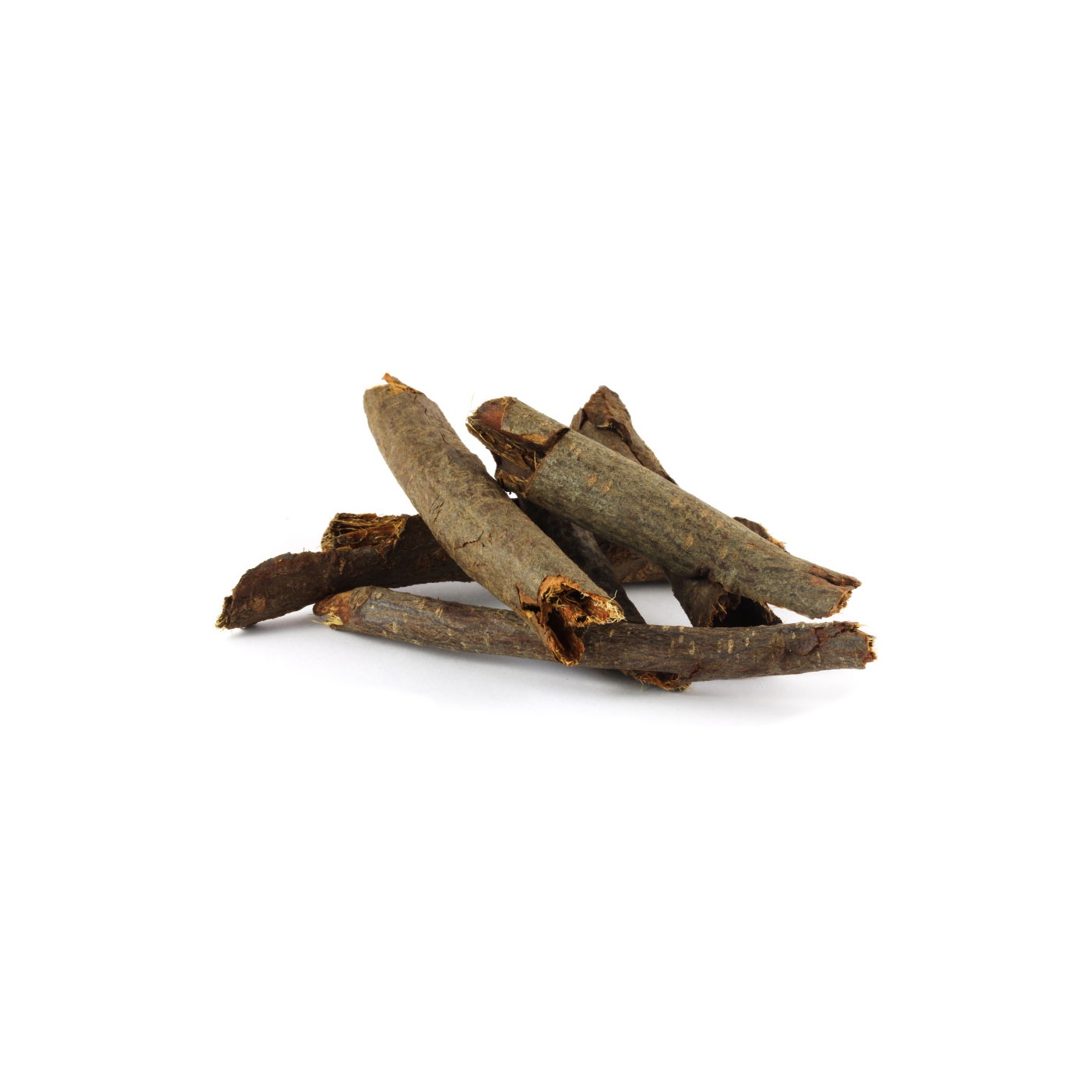
Concentration
Content by Source
Reported concentrations across the plants that contain cascaroside A — the bar marks the typical level, the line shows the reported range.
Literature figures for varying plant parts and preparations. Read them as a comparative guide, not exact assays.
Cascaroside A at a Glance
Cascaroside A is the principal laxative glycoside of cascara sagrada (Frangula purshiana, formerly Rhamnus purshianus) bark — the single compound the European Pharmacopoeia uses to standardise the herb. Chemically it is an O-glucoside of the barbaloin (aloin) anthrone system: a barbaloin-type 10-C-glucosyl anthrone carrying an additional sugar attached through an ordinary oxygen link. Cascaroside A is the 10-S diastereomer; its near-twin cascaroside B is the 10-R form, and together with the chrysophanol-derived cascarosides C and D they make up the bark’s characteristic actives 1,
Its one genuine human effect is as a stimulant laxative, and — like the rest of this family — it is indirect. Cascaroside A is a prodrug: it survives the stomach and upper gut largely intact and is only cleaved deep in the colon, where resident bacteria strip off both sugars to release aloe-emodin-9-anthrone, the compound that actually drives peristalsis and fluid secretion 3,
The headline that now frames the molecule is regulatory and toxicological. Cascaroside A sits inside the hydroxyanthracene derivative class flagged for genotoxicity: the anthrone it releases is a genotoxic metabolite, and on that class basis the FDA removed cascara OTC laxatives in 2002 and the EU restricted these substances in food 2,
Cascara’s Principal Glycoside Laxative
The most important thing to state plainly: cascaroside A is cascara’s defining active, the way barbaloin is aloe’s. Where crude aloe latex is largely aloin, aged cascara bark is characterised by its cascarosides — and cascaroside A is the one everything is measured against.
The cascarosides are a family, and A is the reference member. Cascara bark carries four principal cascarosides: A and B are the 10-S / 10-R diastereomers derived from the barbaloin (aloe-emodin anthrone) system, while C and D are the corresponding pair built on chrysophanol 1,
The structure is a doubly-glycosylated anthrone. Cascaroside A is best read as barbaloin with an extra sugar: the barbaloin core is aloe-emodin-9-anthrone carrying a glucose bolted on at C-10 through a carbon–carbon (C-glycosidic) bond, and the cascaroside adds a second glucose at the 8-position phenol through an ordinary oxygen (O-glycosidic) bond 2Reference 2Safety of hydroxyanthracene derivatives for use in foodView study →. That combination is what makes it a colon-targeted prodrug by accident of chemistry — the O-glucose is cleaved readily by gut bacteria, but the C-glucosyl bond of the underlying barbaloin resists upper-GI hydrolysis, so the molecule travels to the large bowel before its active anthrone is liberated 3,
Its reputation is “gentler than senna.” Cascara has a long folk and pharmacopoeial reputation as one of the milder stimulant (anthranoid) laxatives — traditionally preferred where senna’s cramping is unwanted, and requiring bark to be aged (or heat-treated) for at least a year so that harsher free anthrones oxidise to the gentler glycosides before use 2Reference 2Safety of hydroxyanthracene derivatives for use in foodView study →. That “gentleness” is a comparative, historical claim about the whole standardised bark, not a controlled head-to-head of the isolated molecule.
Cascaroside A vs. Cascaroside B
Cascaroside A and cascaroside B are diastereomers — the same connectivity, differing only in the spatial configuration at the C-10 anthrone carbon where the C-glucose is attached. Cascaroside A is the 10-S form and cascaroside B the 10-R form, mirroring the aloin A / aloin B (barbaloin / isobarbaloin) relationship in their shared anthrone core 1,
In practice they behave as a set. Both are isolated together from the bark, co-occur with the chrysophanol-derived cascarosides C and D, and are cleaved by colonic bacteria to the same active aglycone-anthrone — so their laxative pharmacology is not meaningfully distinguished in the literature; the pharmacopoeia deliberately sums the cascarosides and expresses the total as cascaroside A rather than treating the diastereomers separately 2Reference 2Safety of hydroxyanthracene derivatives for use in foodView study →. The distinction is therefore mostly analytical (they separate as distinct chromatographic peaks, useful for authentication and quality control) rather than clinical 1Reference 1Isolation of six anthraquinone diglucosides from cascara sagrada (Rhamnus purshiana) bark by high-performance countercurrent chromatographyView study →. Because a dedicated cascaroside-B monograph does not yet exist here, the diastereomer is referenced here in prose only.
What It's Used For
Cascaroside A’s evidence base is narrow and lopsided. There is one real, mechanistically well-understood human effect — stimulant laxation — and almost nothing else studied at the level of the isolated molecule. Even the laxative action is not cascaroside A’s own: it is the action of a bacterial metabolite, and the molecule-specific data are notably thin (a point recent toxicology explicitly flags) 12Reference 12Phytotoxicity and cytogenotoxic effects of extracts from the medicinal bark of Rhamnus purshiana DC. (Rhamnaceae)View study →.
Support is an experimental score — weighted by study type (human > animal > in vitro) and volume. A beta, not a validated metric. Only the laxative row has real human standing (and it is now a restricted use); it is largely whole-bark/class evidence rather than isolated cascaroside A.
The molecule’s only established human action — and a textbook prodrug story. Taken orally, cascaroside A is not itself a laxative: it reaches the colon largely intact, where anaerobic bacteria progressively remove its O-glucose and then C-glucose to give aloe-emodin-9-anthrone, the genuine purgative 3,
The anthrone stimulates propulsive motility and shifts the mucosa toward net water and electrolyte secretion with increased mucus — and in rat work the water-retention effect was judged the more important driver of the resulting diarrhoea than peristalsis alone 7Reference 7Studies of aloeView study →; combined anthrones (aloe-emodin plus rhein anthrone) act synergistically on transit and secretion 8Reference 8AnimalThe synergistic purgative action of aloe-emodin anthrone and rhein anthrone in mice: synergism in large intestinal propulsion and water secretionView study →.
This is a whole-bark / class-consistent result: the purgative activity of crude cascara and of its purified cascarosides trace to the same colonic anthrone chemistry.
Gap: the effect depends entirely on the individual’s colonic flora (no suitable anaerobes, no active anthrone, no laxation), and almost all human-grade evidence is for the standardised whole bark, not isolated cascaroside A. The very mechanism that makes it work — colonic delivery of a reactive anthrone — is also what drives the genotoxicity concern, and the use is regulatorily withdrawn/restricted (see Regulatory History), not a recommendable application 2,
Cascaroside A’s most concrete, non-clinical role. It is the European Pharmacopoeia’s standardisation analyte for cascara bark: the herb’s total anthracene-glycoside content is expressed as cascaroside A, and modern separation methods (e.g. high-performance countercurrent chromatography) are developed specifically to isolate cascarosides A–F as marker compounds for herbal authentication and quality control 1,
This is not a therapeutic “application,” but it is the setting in which the isolated molecule matters most today.
Gap: this is an analytical/regulatory role, not a demonstrated health effect; it says nothing about efficacy or safety of the molecule as a medicine 1Reference 1Isolation of six anthraquinone diglucosides from cascara sagrada (Rhamnus purshiana) bark by high-performance countercurrent chromatographyView study →.
Mechanisms
| Target / pathway | Effect | Relevant to |
|---|---|---|
| Colonic bacterial glycosidases (O- then C-glucose cleavage) | strips both sugars → aloe-emodin-9-anthrone (the active purgative) | laxative activation (prodrug step) |
| Colonic enterocytes & myenteric neurons (via the anthrone) | stimulates propulsive motility; net water/electrolyte secretion; ↑ mucus | stimulant-laxative effect |
| Intestinal water handling (via the anthrone) | intestinal water retention — the dominant driver of the diarrhoeal response over peristalsis alone | laxative mechanism |
| DNA (via the metabolite aloe-emodin/anthrone) | genotoxic signal — DNA fragmentation in vivo; the hydroxyanthracene-derivative concern | genotoxicity / carcinogenicity |
| Plant chromosomal / cell-division assays (whole-bark extract) | cytotoxic, mitodepressive and chromosome-damaging in a lettuce-seed cytogenotoxicity model | toxicity (whole extract) |
The load-bearing rows are the top two: cascaroside A does nothing until gut bacteria turn it into aloe-emodin anthrone. The same colon-targeted delivery of a reactive anthrone that produces the effect also underlies the harm.
Pharmacokinetics
Cascaroside A’s kinetics are the direct consequence of its doubly-glycosylated anthrone structure. It is poorly absorbed from the upper gastrointestinal tract and resistant to gastric/enzymatic hydrolysis, so most of an oral dose reaches the colon intact. There, bacterial glycosidases remove the O-glucose and the C-glucose in turn to give aloe-emodin-9-anthrone, which is then oxidised to aloe-emodin 3,
Clinical Trials
There are no modern controlled efficacy trials of isolated cascaroside A. Its human “evidence” is the long historical record of cascara-containing stimulant laxatives, standardised to cascaroside A, which the FDA judged to lack adequate safety substantiation rather than efficacy — moving cascara off the OTC market for want of the requested genotoxicity/carcinogenicity data 9Reference 9Status of certain additional over-the-counter drug category II and III active ingredients (aloe & cascara sagrada stimulant laxatives)View study →. The active contemporary literature on this molecule is analytical and toxicological, not therapeutic 1,
| Completed | Planned | Terminated | Preclinical |
|---|---|---|---|
| —(historical whole-bark laxative use only; no isolate efficacy RCTs) | — | — | Laxative mechanism; bacterial activation; whole-bark cytogenotoxicity |
Last checked: July 2026.
The Regulatory History (FDA & EMA)
Cascaroside A is unusual among plant molecules in that its defining modern story is regulatory. The efficacy and the hazard share the same chemistry — the hydroxyanthracene structure that makes it a laxative is the structure that carries the genotoxicity signal — so, as with barbaloin, regulators acted on the whole class rather than sorting it into “useful” and “unsafe.”
United States — FDA, 2002. After reopening the OTC laxative record and reclassifying aloe and cascara sagrada from Category I (monograph) to Category III (more data needed), the FDA requested mutagenicity, genotoxicity and carcinogenicity data on these stimulant-laxative ingredients. The data were not supplied. In a final rule effective November 5, 2002, the agency ruled that the stimulant-laxative ingredients cascara sagrada (including casanthranol and the cascara extracts) and aloe in OTC products are “not generally recognized as safe and effective” — removing them from the US OTC market 9Reference 9Status of certain additional over-the-counter drug category II and III active ingredients (aloe & cascara sagrada stimulant laxatives)View study →.
European Union — EFSA and Regulation (EU) 2021/468. In a 2018 scientific opinion, EFSA concluded that hydroxyanthracene derivatives should be regarded as genotoxic and carcinogenic unless specific data show otherwise, that aloe-emodin and emodin are genotoxic, that aloe whole-leaf extract is carcinogenic, and that no safe daily intake could be established 2Reference 2Safety of hydroxyanthracene derivatives for use in foodView study →. On that basis, Commission Regulation (EU) 2021/468 restricted aloin A/B (barbaloin), aloe-emodin, emodin and danthron — and preparations in which they occur — from food. Cascaroside A is not named individually in that list, but it is a barbaloin-derived hydroxyanthracene prodrug whose active metabolite is precisely the genotoxic anthrone the restriction targets, so it falls under the same class judgement 2Reference 2Safety of hydroxyanthracene derivatives for use in foodView study →.
The genotoxicity evidence behind the actions. The toxicology is colon-directed and, for cascaroside A specifically, largely inferred from the class. The metabolite pathway ends in aloe-emodin, which causes DNA fragmentation in the mouse in-vivo comet assay 11Reference 11AnimalAloe-emodin-induced DNA fragmentation in the mouse in vivo comet assayView study →; the US National Toxicology Program found clear evidence of carcinogenic activity for a whole-leaf Aloe extract (a related hydroxyanthracene source) in the rat large intestine 10Reference 10AnimalClear evidence of carcinogenic activity by a whole-leaf extract of Aloe barbadensis miller (aloe vera) in F344/N ratsView study →. Directly on cascara, a 2025 study reported that extracts of the medicinal bark of Rhamnus purshiana were cytotoxic, mitodepressive and chromosome-damaging in a plant (lettuce-seed) cytogenotoxicity model, while explicitly flagging the scarcity of studies on cascaroside A itself and the safety implications of its continued use in supplements 12Reference 12Phytotoxicity and cytogenotoxic effects of extracts from the medicinal bark of Rhamnus purshiana DC. (Rhamnaceae)View study →.
The honest caveat. The direct genotoxicity/carcinogenicity evidence is strongest for the released anthrone (aloe-emodin) and for whole Aloe/cascara material; pure cascaroside A has not itself been run through a definitive genotoxicity battery or a cancer bioassay. It is treated within the hydroxyanthracene class because it is a prodrug that delivers a genotoxic anthrone to the colon — not because the isolated glycoside has been separately shown to be carcinogenic 2,
Isolate vs. Plant Studies
For cascaroside A the isolate-vs-plant split is stark, and it does not rescue a safety story. Nearly all of the meaningful evidence is whole-bark or class-level, not isolated cascaroside A. The laxative mechanism is established through the shared colonic anthrone (aloe-emodin-9-anthrone) common to crude cascara, purified cascarosides and the related aloins 3,
Prevalence in Nature
Cascaroside A is, in effect, a cascara-specific molecule: it is the dominant anthracene glycoside of aged cascara sagrada bark (Frangula purshiana / Rhamnus purshianus, family Rhamnaceae), where the cascarosides as a group make up roughly 60–70% of the bark’s anthracene glycosides and cascaroside A is the reference member 2Reference 2Safety of hydroxyanthracene derivatives for use in foodView study →. Under the European Pharmacopoeia standard — bark ≥8% total hydroxyanthracenes, ≥60% cascarosides expressed as cascaroside A — the cascaroside fraction (as cascaroside A) works out to roughly 5–6% of the dried bark or more, making it a major, not trace, constituent of the drug 2Reference 2Safety of hydroxyanthracene derivatives for use in foodView study →.
Its concentration is strongly provenance-dependent: cascara bark is deliberately aged (or heat-treated) for at least a year before use, because fresh bark is richer in harsher free anthrones that oxidise on storage toward the gentler glycosides, shifting the profile toward the cascarosides 2Reference 2Safety of hydroxyanthracene derivatives for use in foodView study →. Outside cascara, cascaroside-type doubly-glycosylated anthrones are characteristic of the anthraquinone-laxative Rhamnaceae (e.g. alder buckthorn/frangula, Frangula alnus), but cascaroside A as such is a signature of R. purshiana; comparable dry-weight figures for the individual diastereomer across sources are not well tabulated (see the compound’s gaps tracker).
Discovery & Synthesis
Cascara bark has been used as a purgative since long before its chemistry was understood, entering nineteenth-century Western pharmacy from Pacific Northwest Indigenous use as “cascara sagrada” (sacred bark). Its characteristic actives were later resolved as the cascarosides — doubly-glycosylated anthrones distinct from the simple aloins — and the diastereomeric pair cascaroside A (10-S) and cascaroside B (10-R), along with the chrysophanol-derived C and D and the wider cascaroside A–F set, were separated and characterised by twentieth-century and modern chromatographic work 1,
Manufacture today is by extraction from cascara bark, not total synthesis: cascaroside A is isolated as a reference/marker standard (for pharmacopoeial assay and herbal authentication) from the abundant natural source, using preparative techniques such as high-performance countercurrent chromatography to obtain the individual cascarosides in quantity 1Reference 1Isolation of six anthraquinone diglucosides from cascara sagrada (Rhamnus purshiana) bark by high-performance countercurrent chromatographyView study →. There is no approved isolated-cascaroside-A drug product to drive a synthetic route — the C-glucosyl-O-glucosyl anthrone is far more practically obtained from the plant than built.
Patents: not yet researched.
Toxicity & Safety
Cascaroside A carries a moderate flag — heavier than an ordinary plant glycoside and on par with its relatives barbaloin, aloe-emodin and emodin — because it is a hydroxyanthracene-derivative prodrug that delivers a genotoxic anthrone to the colon. The flag stops short of a carcinogen badge only because the direct genotoxicity/cancer data are for the released anthrone and for whole cascara/Aloe material rather than for pure cascaroside A; its class membership, the metabolite’s genotoxicity, and the cytogenotoxicity of R. purshiana bark extracts are why it is treated as a genuine concern rather than a benign bitter 2,
Genotoxicity & carcinogenicity (the class hazard). EFSA classifies hydroxyanthracene derivatives — the cascaroside/aloin/anthraquinone family among them — as genotoxic and carcinogenic unless shown otherwise, with aloe-emodin genotoxic in vivo and no safe intake establishable 2Reference 2Safety of hydroxyanthracene derivatives for use in foodView study →. The metabolite aloe-emodin causes DNA fragmentation in the mouse in-vivo comet assay 11Reference 11AnimalAloe-emodin-induced DNA fragmentation in the mouse in vivo comet assayView study →; whole-leaf Aloe extract is a clear NTP rodent large-intestine carcinogen 10Reference 10AnimalClear evidence of carcinogenic activity by a whole-leaf extract of Aloe barbadensis miller (aloe vera) in F344/N ratsView study →; and cascara bark extracts themselves are cytotoxic and chromosome-damaging in a plant cytogenotoxicity model, with the authors flagging how little cascaroside-A-specific safety work exists 12Reference 12Phytotoxicity and cytogenotoxic effects of extracts from the medicinal bark of Rhamnus purshiana DC. (Rhamnaceae)View study →.
GI and functional harms. As a stimulant laxative it can cause cramping, fluid and electrolyte loss (notably potassium), and dependence/atony with chronic use, together with the class-typical melanosis (pseudomelanosis) coli — a benign but marker pigmentation of the colonic mucosa. Cascara’s traditional reputation is comparatively gentle among anthranoid laxatives, but the everyday “don’t use stimulant laxatives long-term” rule applies, layered on top of the genotoxic-class concern 2Reference 2Safety of hydroxyanthracene derivatives for use in foodView study →.
Pregnancy (prose only). Stimulant anthranoid laxatives are conventionally cautioned in pregnancy (theoretical uterine-stimulant and fluid/electrolyte concerns), and the class genotoxicity signal is an added reason for avoidance; a molecule that delivers a genotoxic anthrone to the gut is not one to take electively while pregnant, and anthraquinone metabolites can appear in breast milk. Pregnancy/lactation decisions belong to the herb or product page where intake is actually decided, not to this molecule page — no isolate-specific verdict is issued here.
- Its own systemic absorption is low. The doubly-glycosylated anthrone stays in the gut lumen; little intact parent circulates, and the laxative effect is local to the colon 3,
4Reference 3Isolation of a human intestinal bacterium capable of transforming barbaloin to aloe-emodin anthroneView study →Reference 4A purgative action of barbaloin is induced by Eubacterium sp. strain BAR, a human intestinal anaerobe, capable of transforming barbaloin to aloe-emodin anthroneView study → . - Hydroxyanthracene-derivative genotoxicity concern. The class is treated as genotoxic/carcinogenic-until-proven-otherwise; the released anthrone (aloe-emodin) is genotoxic in vivo, and cascara bark extracts are cytotoxic/chromosome-damaging in a cytogenotoxicity model 2,
11, .12Reference 2Safety of hydroxyanthracene derivatives for use in foodView study →Reference 11AnimalAloe-emodin-induced DNA fragmentation in the mouse in vivo comet assayView study →Reference 12Phytotoxicity and cytogenotoxic effects of extracts from the medicinal bark of Rhamnus purshiana DC. (Rhamnaceae)View study → - Removed / restricted by regulators. FDA took cascara (and aloe) stimulant laxatives off the US OTC market (2002); the EU restricts the hydroxyanthracene-derivative class in food to trace levels 2,
9Reference 2Safety of hydroxyanthracene derivatives for use in foodView study →Reference 9Status of certain additional over-the-counter drug category II and III active ingredients (aloe & cascara sagrada stimulant laxatives)View study → . - Stimulant-laxative harms. Cramping, electrolyte (potassium) loss, dependence/atony with chronic use, and melanosis coli — despite cascara’s comparatively gentle reputation 2Reference 2Safety of hydroxyanthracene derivatives for use in foodView study →.
- Flora-dependent and unpredictable. The active anthrone forms only if the right colonic anaerobes are present, so effect and exposure vary between people 3,
4Reference 3Isolation of a human intestinal bacterium capable of transforming barbaloin to aloe-emodin anthroneView study →Reference 4A purgative action of barbaloin is induced by Eubacterium sp. strain BAR, a human intestinal anaerobe, capable of transforming barbaloin to aloe-emodin anthroneView study → .
Dosage
There is no recommended dose for cascaroside A. Historically, cascara bark — standardised to its cascaroside A content — was dosed as a stimulant (purgative) laxative, but that use has been withdrawn or restricted: the FDA removed cascara stimulant-laxative ingredients from the US OTC market in 2002 9Reference 9Status of certain additional over-the-counter drug category II and III active ingredients (aloe & cascara sagrada stimulant laxatives)View study →, and the EU limits hydroxyanthracene derivatives of this class in food to trace amounts 2Reference 2Safety of hydroxyanthracene derivatives for use in foodView study →. Any historical purgative “doses” are for the whole standardised bark, not the isolated glycoside, and are context not a personal recommendation. Given the genotoxicity-class concern and the scarcity of molecule-specific safety data, self-dosing isolated cascaroside A is not advisable 12Reference 12Phytotoxicity and cytogenotoxic effects of extracts from the medicinal bark of Rhamnus purshiana DC. (Rhamnaceae)View study →.
References
- Rho T, Kil HW, Seo YJ, Shin KJ, Wang D, Yoon KD (2020). Isolation of six anthraquinone diglucosides from cascara sagrada (Rhamnus purshiana) bark by high-performance countercurrent chromatography. Journal of Separation Science. https://pubmed.ncbi.nlm.nih.gov/32876395/
- EFSA ANS Panel (Younes M, et al.) (2018). Safety of hydroxyanthracene derivatives for use in food. EFSA Journal. https://pubmed.ncbi.nlm.nih.gov/32625659/
- Che QM, Akao T, Hattori M, Kobashi K, Namba T (1991). Isolation of a human intestinal bacterium capable of transforming barbaloin to aloe-emodin anthrone. Planta Medica. https://pubmed.ncbi.nlm.nih.gov/2062951/
- Akao T, Che QM, Kobashi K, Hattori M, Namba T (1996). A purgative action of barbaloin is induced by Eubacterium sp. strain BAR, a human intestinal anaerobe, capable of transforming barbaloin to aloe-emodin anthrone. Biological & Pharmaceutical Bulletin. https://pubmed.ncbi.nlm.nih.gov/8820926/
- Hattori M, Kanda T, Shu YZ, Akao T, Kobashi K, Namba T (1988). Metabolism of barbaloin by intestinal bacteria. Chemical & Pharmaceutical Bulletin. https://pubmed.ncbi.nlm.nih.gov/3246014/
- Dreessen M, Lemli J (1988). Studies in the field of drugs containing anthraquinone derivatives. XXXVI. The metabolism of cascarosides by intestinal bacteria. Pharmaceutica Acta Helvetiae. https://pubmed.ncbi.nlm.nih.gov/3237734/
- Ishii Y, Tanizawa H, Takino Y (1994). Studies of aloe. V. Mechanism of cathartic effect. (4). Biological & Pharmaceutical Bulletin. https://pubmed.ncbi.nlm.nih.gov/7920425/
- Yagi T, Yamauchi K, Kuwano S (1997). The synergistic purgative action of aloe-emodin anthrone and rhein anthrone in mice: synergism in large intestinal propulsion and water secretion. Journal of Pharmacy and Pharmacology. https://pubmed.ncbi.nlm.nih.gov/9120764/
- Food and Drug Administration (2002). Status of certain additional over-the-counter drug category II and III active ingredients (aloe & cascara sagrada stimulant laxatives). Final rule. Federal Register 67(90):31125-7. https://pubmed.ncbi.nlm.nih.gov/12001972/
- Boudreau MD, Mellick PW, Olson GR, Felton RP, Thorn BT, Beland FA (2013). Clear evidence of carcinogenic activity by a whole-leaf extract of Aloe barbadensis miller (aloe vera) in F344/N rats. Toxicological Sciences. https://pubmed.ncbi.nlm.nih.gov/22968693/
- Nesslany F, Simar-Meintières S, Ficheux H, Marzin D (2009). Aloe-emodin-induced DNA fragmentation in the mouse in vivo comet assay. Mutation Research. https://pubmed.ncbi.nlm.nih.gov/19559101/
- Souza KS, da Cunha Neto AR, Chagas-Paula DA, Barbosa S, da Silva GA, Calvelli JVB (2025). Phytotoxicity and cytogenotoxic effects of extracts from the medicinal bark of Rhamnus purshiana DC. (Rhamnaceae). Journal of Toxicology and Environmental Health, Part A. https://pubmed.ncbi.nlm.nih.gov/39964315/



