
Compound Monograph
Crocetin
Crocetin is the small, lipophilic apocarotenoid at the core of saffron's crocin pigments — and the form the body actually absorbs. Because crocin is hydrolysed to crocetin in the gut, crocetin is the species that reaches the blood and crosses the blood–brain barrier, behind a small human sleep-quality RCT (7.5 mg/day raising EEG delta power), antioxidant and anti-inflammatory activity, and a distinctive oxygen-diffusion property developed into the drug trans-sodium crocetinate.

Sources · 3
Where Does It Come From?
Crocetin is a naturally occurring apocarotenoid (carotenoid-derived dicarboxylic acid; the aglycone of crocin), found in Saffron, Gardenia and 1 other source. It is well tolerated orally (low toxicity).
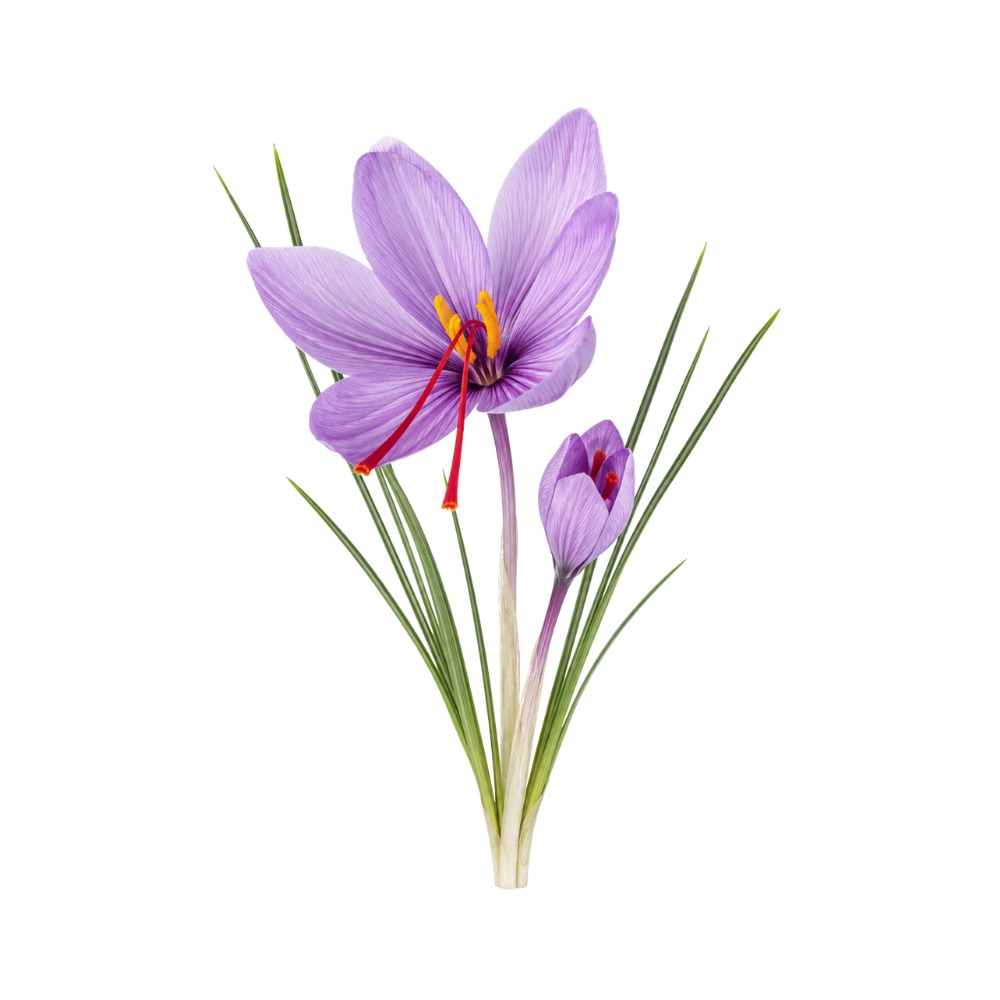
Concentration
Content by Source
Concentrations not reported. No percent-dry-weight or mg/g figures have been published for this compound in its source plants.
Crocetin at a Glance
Crocetin is a small apocarotenoid dicarboxylic acid — a carotenoid-derived pigment — and the chemical heart of saffron’s colour. In the plant it is stored not as the free acid but as a family of sugar esters called the crocins; crocetin is their aglycone, the coloured backbone left when the sugars are removed.
That relationship is the point. Crocins themselves are large and water-soluble and are poorly absorbed intact; in the gut they are hydrolysed back to crocetin, and it is crocetin — small, lipophilic and membrane-crossing — that actually reaches the bloodstream and the brain 1,
The isolated molecule has a genuine but still-thin human footprint: a small crossover sleep-quality RCT in which 7.5 mg/day raised EEG delta (slow-wave) power and improved morning refreshment 3Reference 3RCTEffect of crocetin on quality of sleep: a randomized, double-blind, placebo-controlled, crossover studyView study →, plus preclinical antioxidant, anti-inflammatory and neuroprotective activity 4,
Crocin, Crocetin & Bioavailability
The single most important fact about this molecule is that crocetin is the absorbed form of crocin, not a separate story from it.
The crocins are crocetin esterified with one or more sugar units (mono- and di-gentiobiose glycosides). Those glycosides make the pigment water-soluble and are what give saffron and gardenia their intense red-gold colour — but they also make the intact molecule too large and polar to be absorbed efficiently. In mice, orally administered crocins are hydrolysed to crocetin before or during intestinal absorption, and it is crocetin (plus its glucuronide conjugates) that appears in blood plasma — the parent crocins are essentially not detected in the circulation 1Reference 1AnimalOrally administered crocetin and crocins are absorbed into blood plasma as crocetin and its glucuronide conjugates in miceView study →. Human and review pharmacokinetic work reaches the same conclusion: crocetin is the bioavailable species, small and lipophilic enough to cross membranes and the blood–brain barrier by passive transcellular diffusion 2,
The practical consequence: crocetin is more directly bioavailable than crocin, and when a saffron or gardenia preparation produces a systemic effect, crocetin is the most likely circulating actor. This is also why crocetin is attractive to drug developers despite its awkward physical chemistry — its poor aqueous solubility and chemical instability are the main hurdles flagged in its druglike-property analysis, not membrane penetration 8Reference 8ADME/PK insights of crocetin: a molecule having an unusual chemical structure with druglike featuresView study →.
Sleep & the Central Nervous System
Crocetin’s most distinctive human signal is in sleep, and it is one of the rare compound pages where the human trial used the isolated molecule, not a whole-plant extract.
In a randomised, double-blind, placebo-controlled crossover study, oral crocetin at 7.5 mg/day significantly increased delta (slow-wave) power on EEG and improved subjective measures of morning alertness and refreshment versus placebo, consistent with improved sleep continuity/depth rather than sedation on the way to sleep 3Reference 3RCTEffect of crocetin on quality of sleep: a randomized, double-blind, placebo-controlled, crossover studyView study →. Because crocetin crosses the blood–brain barrier readily 2,
Beyond sleep, the isolated molecule shows a broader neuroprotective profile in preclinical work — reducing oxidative stress and neuroinflammation and supporting mitochondrial function in models of diet-induced and other cognitive dysfunction — but this remains animal/mechanistic, and the reviews are explicit that poor bioavailability and the absence of large human trials constrain translation 4Reference 4Crocetin as a Neuroprotective Agent: Targeting Western Diet-Induced Cognitive DysfunctionView study →. A crocetin salt has also been shown to cross into the CNS and dampen spinal glial pro-inflammatory cytokine signalling in an inflammatory-pain model 5Reference 5Transcrocetin meglumine salt inhibits spinal glial cell-mediated proinflammatory cytokinesView study →.
Oxygen Diffusion & Trans-Sodium Crocetinate
Crocetin has a physical property most bioactive molecules do not: its rigid, amphiphilic conjugated-polyene chain increases the rate at which oxygen diffuses through water and plasma, improving oxygen delivery into hypoxic tissue. This is a biophysical effect on diffusivity, not a receptor action.
That property has been engineered into a semisynthetic derivative, trans-sodium crocetinate (TSC) — a bipolar disodium salt of trans-crocetin — described as the “first-in-class” oxygen-diffusion-enhancing agent and taken into development for ischaemic and hypoxic conditions and as a radiosensitiser in oncology 6Reference 6ReviewCrocetin and related oxygen diffusion-enhancing compounds: a review of the recent patent literatureView study →. Reviews of TSC in hypoxia-related disease report upregulated oxygen availability in hypoxic tissue across models such as haemorrhagic shock and ischaemia 7Reference 7ReviewThe anti-hypoxia potentials of trans-sodium crocetinate in hypoxia-related diseases: a reviewView study →, and a clinically translatable transcrocetin liposomal platform produced a transient ~50% increase in tumour oxygenation and enhanced radiotherapy in preclinical work 10Reference 10Clinically translatable transcrocetin delivery platform for correction of tumor hypoxia and enhancement of radiation therapy effectsView study →.
The honest framing for a molecule page: the native free acid carries the underlying oxygen-diffusion physics, but the clinical development — and most of the efficacy/safety data — belongs to the engineered salt (TSC), not to crocetin as swallowed from saffron. Treat the oxygen-diffusion story as the derivative’s, seeded by the parent molecule’s chemistry.
What It's Used For
Crocetin’s evidence is unusually lopsided: one small human trial (on the isolate), a decent human pharmacokinetic base, a broad preclinical antioxidant/anti-inflammatory/neuroprotective literature, and a separate drug-development track for its salt. The load-bearing caveat is that the whole-body clinical footprint is small, and much of what is called “crocin” activity is crocetin after absorption 1,
Support is an experimental score — weighted by study type (human > animal > in vitro) and volume. A beta, not a validated metric. One application rests on a single human isolate trial; the others are preclinical or belong to the TSC derivative, so read the per-row basis.
Crocetin’s marquee human result — and, unusually, a trial of the pure isolated molecule. In a randomised, double-blind, placebo-controlled crossover study, 7.5 mg/day of oral crocetin significantly increased EEG delta (slow-wave) power and improved subjective morning alertness and refreshment relative to placebo 3Reference 3RCTEffect of crocetin on quality of sleep: a randomized, double-blind, placebo-controlled, crossover studyView study →.
The effect fits crocetin’s ready blood–brain-barrier penetration 2,
Gap: a single small crossover trial with largely subjective endpoints plus one EEG parameter; no dose-ranging, no replication of the isolate, and no long-term data 3Reference 3RCTEffect of crocetin on quality of sleep: a randomized, double-blind, placebo-controlled, crossover studyView study →.
A coherent preclinical story. In animal and mechanistic models — including Western/high-fat-diet-induced cognitive dysfunction — crocetin reduces oxidative stress and neuroinflammation, supports mitochondrial function, and modulates the gut–brain axis, and it reaches the CNS because it crosses the BBB by passive transcellular diffusion 4,
A crocetin salt likewise entered the CNS and suppressed spinal glial pro-inflammatory cytokines in an inflammatory-pain model 5Reference 5Transcrocetin meglumine salt inhibits spinal glial cell-mediated proinflammatory cytokinesView study →.
Gap: the neuroprotection review is explicit that poor bioavailability and the lack of large-scale human trials limit translation — this is animal/isolate mechanism, not clinical proof 4Reference 4Crocetin as a Neuroprotective Agent: Targeting Western Diet-Induced Cognitive DysfunctionView study →.
The mechanistic base under most of crocetin’s other claims. As an apocarotenoid it scavenges free radicals and upregulates endogenous (Nrf2-type) antioxidant defences, and it dampens NF-κB-driven pro-inflammatory cytokine signalling in cell and animal systems 4,
In saffron this activity is shared with crocin and safranal, but crocetin is the fraction most likely to be present systemically after absorption 1Reference 1AnimalOrally administered crocetin and crocins are absorbed into blood plasma as crocetin and its glucuronide conjugates in miceView study →.
Gap: in-vitro and animal work; no human antioxidant/anti-inflammatory outcome trial rests on isolated crocetin, and effective tissue concentrations must be reconciled with its modest bioavailability 4Reference 4Crocetin as a Neuroprotective Agent: Targeting Western Diet-Induced Cognitive DysfunctionView study →.
A genuinely distinctive, biophysical activity — and the one furthest along in drug development, but as a derivative. Crocetin’s amphiphilic conjugated chain raises the diffusivity of oxygen through plasma/water, improving delivery into hypoxic tissue; this was engineered into trans-sodium crocetinate (TSC), a “first-in-class” oxygen-diffusion enhancer explored for ischaemia, haemorrhagic shock and as a tumour radiosensitiser 6,
Gap: the efficacy and safety data belong to the TSC salt, not to crocetin as absorbed from food; the native acid’s own oxygen-therapeutic use is not established 6,
Mechanisms
| Target / pathway | Effect | Relevant to |
|---|---|---|
| Intestinal hydrolysis of crocins → crocetin | glycosides deglycosylated pre-/during absorption; crocetin (+ glucuronides) is the circulating species | bioavailability (the load-bearing point) |
| Membrane partition / lipophilicity | crosses cell membranes and the blood–brain barrier by passive transcellular diffusion | CNS deliverygeneral PK |
| EEG slow-wave (delta) activity | ↑ delta power; improved sleep continuity/refreshment | sleep |
| Nrf2-type antioxidant defences | ↑ endogenous antioxidant capacity; ↓ oxidative stress | antioxidantneuroprotection |
| NF-κB / pro-inflammatory cytokines (incl. spinal glia) | ↓ neuroinflammatory cytokine signalling | anti-inflammatoryneuroprotection |
| Mitochondrial function | supports bioenergetics in stressed neural tissue | neuroprotection |
| Plasma/tissue oxygen diffusivity (amphiphilic conjugated chain; as TSC) | ↑ rate of O₂ diffusion water → tissue → improved oxygenation of hypoxic tissue | oxygen diffusion / anti-hypoxia |
The first row is the one that reframes the page: crocetin’s mechanisms only matter because crocetin — not crocin — is what the body ends up with after an oral dose 1,
Pharmacokinetics
Crocetin is a small, lipophilic dicarboxylic acid, and this is the compound page’s core value-add over its glycosides. In humans, a single oral dose is rapidly absorbed (detectable within an hour), with Tmax ≈ 4.0–4.8 h, Cmax ≈ 101–280 ng/mL across doses, and an elimination half-life of ≈ 6.1–7.5 h — faster absorption than most dietary carotenoids 2Reference 2Clinical trialThe pharmacokinetic profile of crocetin in healthy adult human volunteers after a single oral administrationView study →. Upstream of this, orally dosed crocins are hydrolysed to crocetin before or during intestinal absorption, so plasma carries crocetin and its mono-/di-glucuronide conjugates, not the intact glycosides 1Reference 1AnimalOrally administered crocetin and crocins are absorbed into blood plasma as crocetin and its glucuronide conjugates in miceView study →; a commercial saffron extract likewise showed crocetin appearing with a Cmax around 60–90 min 11Reference 11Bioaccessibility and pharmacokinetics of a commercial saffron (Crocus sativus L.) extractView study →. Distribution is favourable — crocetin’s lipophilicity lets it cross tissues and the blood–brain barrier by passive transcellular diffusion 9Reference 9Pharmacokinetic properties of saffron and its active componentsView study → — while its poor aqueous solubility and chemical instability are the properties flagged as the main druggability limits 8Reference 8ADME/PK insights of crocetin: a molecule having an unusual chemical structure with druglike featuresView study →. The take-home: crocetin is the pharmacokinetically real species; crocin is a prodrug-like delivery form for it 1,
Clinical Trials
Human evidence on the isolated molecule is limited to one small efficacy trial plus pharmacokinetic work; the larger clinical program belongs to the TSC derivative, and most therapeutic mechanism work is preclinical.
| Completed | Planned | Terminated | Preclinical |
|---|---|---|---|
| Crocetin sleep-quality crossover RCT (7.5 mg/day) 3Reference 3RCTEffect of crocetin on quality of sleep: a randomized, double-blind, placebo-controlled, crossover studyView study →; human single-dose PK 2Reference 2Clinical trialThe pharmacokinetic profile of crocetin in healthy adult human volunteers after a single oral administrationView study → | — | — | Neuroprotection / antioxidant / anti-inflammatory (isolate) 4, |
Last checked: July 2026.
Isolate vs. Plant Studies
Crocetin partly inverts the usual isolate-vs-plant caveat. Its headline human result — the sleep RCT — used isolated crocetin, which is a genuine strength for a phytochemical 3Reference 3RCTEffect of crocetin on quality of sleep: a randomized, double-blind, placebo-controlled, crossover studyView study →, and its human pharmacokinetics were measured for the pure compound 2Reference 2Clinical trialThe pharmacokinetic profile of crocetin in healthy adult human volunteers after a single oral administrationView study →. Where the caveat bites is the reverse direction: most efficacy claims attached to saffron’s colour fraction were generated for crocin or whole saffron, yet crocin is hydrolysed to crocetin on absorption — so those results are arguably crocetin’s once you account for what actually enters the blood 1Reference 1AnimalOrally administered crocetin and crocins are absorbed into blood plasma as crocetin and its glucuronide conjugates in miceView study →. And the most developed therapeutic use, oxygen diffusion, is neither the plant nor the native isolate but a semisynthetic salt (TSC) 6Reference 6ReviewCrocetin and related oxygen diffusion-enhancing compounds: a review of the recent patent literatureView study →. The clean read: strong isolate PK + one isolate human trial + a large preclinical base that overlaps crocin’s, with the oxygen-therapeutic evidence sitting on the derivative.
Its Role in Plants
Crocetin is an apocarotenoid: it is made by oxidative cleavage of a C₄₀ carotenoid (zeaxanthin) by carotenoid cleavage dioxygenases, yielding the C₂₀ crocetin dialdehyde/diacid backbone, which is then glycosylated into the water-soluble crocins for storage in the vacuole [see saffron]. In saffron stigmas and gardenia fruit this apocarotenoid pathway is what produces the vivid red-gold pigment — a visual signal and, as a carotenoid derivative, part of the plant’s antioxidant/photoprotective chemistry. The free acid itself is largely a transient intermediate: plants keep the pigment as the glycosides and release crocetin on hydrolysis, which mirrors exactly what then happens in the gut.
Prevalence in Nature
Free crocetin is uncommon as a stored compound — in nature it occurs mainly bound as its crocin glycosides. The two significant botanical sources are the stigmas of saffron (Crocus sativus), where the crocins are the dominant colouring fraction, and the fruit of gardenia (Gardenia jasminoides), the basis of the “gardenia yellow” food colourant; in gardenia yellow, crocin is a major component (reported around ~45% of the extract) and is biotransformed to crocetin on gastrointestinal metabolism 12Reference 12Hepatic and renal toxicity of gardenia yellowView study →. Because the pigment content of saffron varies enormously with cultivar, provenance, harvest and storage, medicinal saffron is standardised to its apocarotenoids (crocin/safranal) rather than sold by weight, and quantified free-crocetin figures per plant part are not well characterised — the crocetin actually delivered depends on how much crocin is hydrolysed [see saffron].
Discovery & Synthesis
Crocetin’s history is inseparable from saffron’s pigment: it was characterised as the coloured aglycone of the crocins during the development of carotenoid chemistry, once the water-soluble saffron dye was resolved into a crocetin backbone plus sugars. A precise first-isolation date and total synthesis are not well documented here and are left for a later pass rather than asserted. What is well established is the modern derivative chemistry: the free acid is converted to trans-sodium crocetinate (TSC), a bipolar disodium salt, to overcome crocetin’s poor aqueous solubility and give a defined, injectable oxygen-diffusion drug 6,
Patents: not yet researched.
Toxicity & Safety
Crocetin carries a low flag. It is a food-derived apocarotenoid: the crocins that yield it are consumed in saffron and in gardenia-yellow colourant, and the human sleep and pharmacokinetic studies at milligram doses reported no notable toxicity 3,
- Food-derived, low acute toxicity. Delivered dietarily as the crocins in saffron and gardenia colourant; milligram-dose human sleep/PK studies reported no notable adverse effects 3,
2, .12Reference 3RCTEffect of crocetin on quality of sleep: a randomized, double-blind, placebo-controlled, crossover studyView study →Reference 2Clinical trialThe pharmacokinetic profile of crocetin in healthy adult human volunteers after a single oral administrationView study →Reference 12Hepatic and renal toxicity of gardenia yellowView study → - Favourable distribution. Small and lipophilic — crosses membranes and the blood–brain barrier by passive diffusion, unlike its bulky glycosides 9Reference 9Pharmacokinetic properties of saffron and its active componentsView study →.
- Sparse human data. One small isolate efficacy trial and limited PK; long-term safety, drug-interaction and high-dose data for pure crocetin are not established 3,
4Reference 3RCTEffect of crocetin on quality of sleep: a randomized, double-blind, placebo-controlled, crossover studyView study →Reference 4Crocetin as a Neuroprotective Agent: Targeting Western Diet-Induced Cognitive DysfunctionView study → . - Poor solubility / instability. The free acid’s aqueous solubility and chemical stability are its main formulation limits — the reason the drug program uses the TSC salt, not the parent 8Reference 8ADME/PK insights of crocetin: a molecule having an unusual chemical structure with druglike featuresView study →.
- Saffron-class caution carries to the herb, not decided here. Saffron itself is traditionally avoided at medicinal doses in pregnancy; pregnancy/lactation is adjudicated on the saffron page, where intake is decided, not on this molecule page.
Dosage
There is no established or recommended human dose for isolated crocetin. The figures that exist are research values:
| Context | Form | Amount |
|---|---|---|
| Sleep-quality crossover RCT | isolated crocetin, oral | 7.5 mg/day 3Reference 3RCTEffect of crocetin on quality of sleep: a randomized, double-blind, placebo-controlled, crossover studyView study → |
| Human pharmacokinetics | isolated crocetin, single oral dose | milligram-range single doses 2Reference 2Clinical trialThe pharmacokinetic profile of crocetin in healthy adult human volunteers after a single oral administrationView study → |
| Dietary (indirect) | as crocins in saffron / gardenia | delivered as crocetin after gut hydrolysis 1, |
Because crocetin is the absorbed form of crocin, a saffron or gardenia dose does not map cleanly to a crocetin dose — the amount delivered depends on how much crocin is hydrolysed and absorbed 1Reference 1AnimalOrally administered crocetin and crocins are absorbed into blood plasma as crocetin and its glucuronide conjugates in miceView study →. These are doses and exposures studied in research and are not a personal recommendation.
References
- Asai A, Nakano T, Takahashi M, Nagao A (2005). Orally administered crocetin and crocins are absorbed into blood plasma as crocetin and its glucuronide conjugates in mice. Journal of Agricultural and Food Chemistry. https://pubmed.ncbi.nlm.nih.gov/16131146/
- Umigai N, Murakami K, Ulit MV, et al. (2011). The pharmacokinetic profile of crocetin in healthy adult human volunteers after a single oral administration. Phytomedicine. https://pubmed.ncbi.nlm.nih.gov/21112749/
- Umigai N, Takeda R, Mori A (2018). Effect of crocetin on quality of sleep: a randomized, double-blind, placebo-controlled, crossover study. Complementary Therapies in Medicine. https://pubmed.ncbi.nlm.nih.gov/30477864/
- Kondaveeti S, Gupta V, Dar AA, et al. (2026). Crocetin as a Neuroprotective Agent: Targeting Western Diet-Induced Cognitive Dysfunction. ASN Neuro. https://pubmed.ncbi.nlm.nih.gov/41416475/
- Qiao Y, et al. (2023). Transcrocetin meglumine salt inhibits spinal glial cell-mediated proinflammatory cytokines. Neuroimmunomodulation. https://pubmed.ncbi.nlm.nih.gov/37899033/
- Shah HM, Jain AS, Joshi SV, Kharkar PS (2021). Crocetin and related oxygen diffusion-enhancing compounds: a review of the recent patent literature. Drug Development Research. https://pubmed.ncbi.nlm.nih.gov/33817811/
- Klunko NS, Achmad H, Abdullah TM, et al. (2024). The anti-hypoxia potentials of trans-sodium crocetinate in hypoxia-related diseases: a review. Current Radiopharmaceuticals. https://pubmed.ncbi.nlm.nih.gov/37877507/
- Manhas D, Dhiman S, Kour H, et al. (2024). ADME/PK insights of crocetin: a molecule having an unusual chemical structure with druglike features. ACS Omega. https://pubmed.ncbi.nlm.nih.gov/38764638/
- Hosseini A, Razavi BM, Hosseinzadeh H (2018). Pharmacokinetic properties of saffron and its active components. European Journal of Drug Metabolism and Pharmacokinetics. https://pubmed.ncbi.nlm.nih.gov/29134501/
- Diringer MC, Coliat P, Mathieu C, et al. (2023). Clinically translatable transcrocetin delivery platform for correction of tumor hypoxia and enhancement of radiation therapy effects. Small. https://pubmed.ncbi.nlm.nih.gov/36587987/
- Almodóvar P, Briskey D, Rao A, et al. (2020). Bioaccessibility and pharmacokinetics of a commercial saffron (Crocus sativus L.) extract. Evidence-Based Complementary and Alternative Medicine. https://pubmed.ncbi.nlm.nih.gov/32089715/
- Lai YF, Xu FF, Wu WL, et al. (2025). Hepatic and renal toxicity of gardenia yellow. Journal of Agricultural and Food Chemistry. https://pubmed.ncbi.nlm.nih.gov/41144239/
- Alavizadeh SH, Hosseinzadeh H (2014). Bioactivity assessment and toxicity of crocin: a comprehensive review. Food and Chemical Toxicology. https://pubmed.ncbi.nlm.nih.gov/24275090/



