
Compound Monograph
Crocin
Crocin is the red, water-soluble apocarotenoid pigment of saffron — a crocetin di-gentiobiose ester behind the spice's colour and much of its mood, antioxidant and anti-inflammatory reputation. Its signature quirk: an unusually water-soluble carotenoid that is poorly absorbed intact and acts largely through its gut-liberated aglycone, crocetin.

Sources · 3
Where Does It Come From?
Crocin is a naturally occurring apocarotenoid glycoside (crocetin di-(β-d-gentiobiosyl) ester), found in Saffron, Gardenia and 1 other source. It is well tolerated orally (low toxicity).
Concentration
Content by Source
Concentrations not reported. No percent-dry-weight or mg/g figures have been published for this compound in its source plants.
Crocin at a Glance
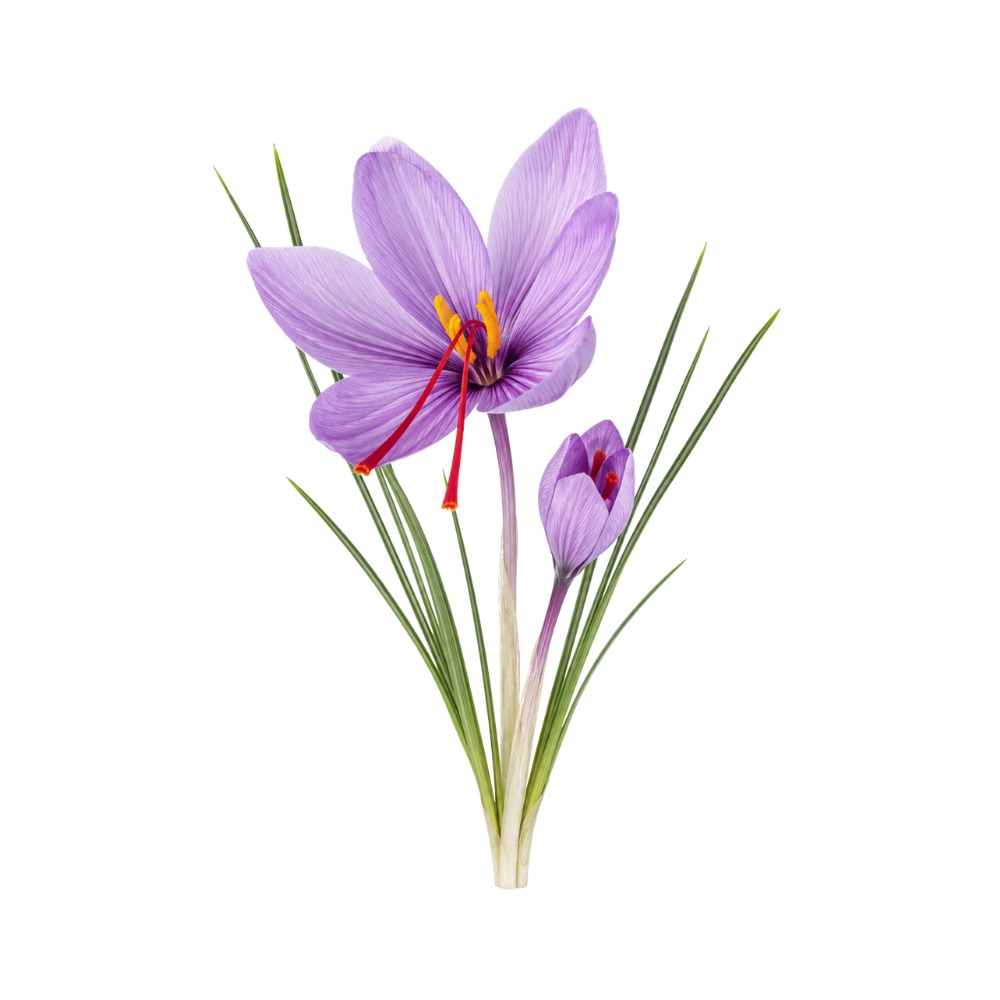
Crocin is the red apocarotenoid pigment of saffron — the dried stigma of Crocus sativus — and the main reason a few threads of the spice can stain a whole pot of water gold. Chemically it is a crocetin di-(β-D-gentiobiosyl) ester: a carotenoid backbone (crocetin) capped at both ends with sugar chains, which is what makes it unusually water-soluble for a carotenoid. Saffron is graded (ISO 3632) largely by how much crocin it carries 10Reference 10ReviewBioactivity assessment and toxicity of crocin: a comprehensive reviewView study →.
It is the constituent most often credited with saffron’s headline use — mood. Whole saffron is one of the most clinically studied botanicals for depression and anxiety, and isolated crocin has its own small but real human trial signal, alongside antioxidant (Nrf2), anti-inflammatory, neuroprotective and antiproliferative activity in preclinical models 1,
The load-bearing caveat is pharmacokinetic. Crocin is poorly absorbed as the intact molecule; in the gut it is hydrolysed to its aglycone crocetin, which is what actually reaches the circulation. So a good deal of what looks like “crocin activity” in the body is, mechanistically, crocetin activity 11Reference 11AnimalEffects of intestinal microbiota on pharmacokinetics of crocin and crocetin in male Sprague-Dawley ratsView study →. That single fact reframes how to read every oral crocin study here.
The Saffron Antidepressant Story
Saffron’s mood reputation is the point of this molecule, and crocin sits at the centre of it — though the evidence comes in two grades that are worth keeping apart.
The whole-spice evidence is strong and human. Saffron stigma is one of the most-trialled botanicals for depression: successive meta-analyses place standardised extracts on par with placebo-beating effect sizes and, in several head-to-head trials, comparable to SSRIs in mild-to-moderate depression 2,
The isolated-crocin evidence is thinner but exists. A randomised, double-blind, placebo-controlled pilot trial used crocin 30 mg/day as an adjunct to standard antidepressants (fluoxetine, sertraline or citalopram) in major depressive disorder and found significantly greater improvement on depression and anxiety scores than the antidepressant plus placebo 1Reference 1RCTCrocin, the main active saffron constituent, as an adjunctive treatment in major depressive disorder: a randomized, double-blind, placebo-controlled, pilot clinical trialView study →. This is the cleanest human read on the isolate itself — a genuine positive, but a single small pilot, and as an add-on rather than a stand-alone drug.
The honest framing: the robust clinical mood record is saffron’s; crocin has a supporting, isolate-level human signal that is consistent with it but far smaller. And because oral crocin is largely delivered to the body as crocetin (see below), even the isolate trial is partly a crocetin trial in disguise 11Reference 11AnimalEffects of intestinal microbiota on pharmacokinetics of crocin and crocetin in male Sprague-Dawley ratsView study →.
An Unusual Water-Soluble Carotenoid
Crocin is what makes this a phytochemistry story and not just a mood story. Almost every dietary carotenoid — β-carotene, lycopene, lutein — is a fat-soluble hydrocarbon that travels with lipids. Crocin is the exception: its two gentiobiose (disaccharide) caps make it freely water-soluble, which is why it colours aqueous foods and why saffron works as a water-based dye 10Reference 10ReviewBioactivity assessment and toxicity of crocin: a comprehensive reviewView study →.
That solubility comes at a pharmacokinetic cost. The same bulky sugar groups that dissolve crocin in water also block its intestinal absorption. In controlled animal PK work, intestinal absorption of intact crocin was marginal; the molecule is instead hydrolysed by gut microbiota to crocetin, the lipophilic aglycone, which is then absorbed and enters the circulation 11Reference 11AnimalEffects of intestinal microbiota on pharmacokinetics of crocin and crocetin in male Sprague-Dawley ratsView study →. Antibiotic depletion of the microbiota blunts this conversion, and the authors concluded plainly that crocin’s in vivo effects “might be considered as the effects by its aglycone, crocetin, mainly” 11Reference 11AnimalEffects of intestinal microbiota on pharmacokinetics of crocin and crocetin in male Sprague-Dawley ratsView study →. Once crocetin is absorbed it binds human serum albumin and distributes as the lipophilic species 12,
Two practical consequences follow. First, oral crocin has low and variable bioavailability, so high in-vitro potency does not translate into a matching plasma exposure. Second, crocin and crocetin are pharmacologically continuous — dosing crocin is, in part, a slow-release way of dosing crocetin. This is the molecule’s defining pharmacology, and the reason its sibling aglycone gets a separate page.
What It's Used For
Crocin’s evidence base is broad and mechanistically coherent, but it splits sharply by evidence tier — a handful of human crocin trials on biomarkers and mood, a much larger body of animal/in-vitro mechanism work, and the ever-present question of whether the isolate or whole saffron (or crocetin) was really the actor.
Support is an experimental score — weighted by study type (human > animal > in vitro) and volume. A beta, not a validated metric. Human mood data are mostly whole saffron; several rows rest on isolated-crocin biomarker trials; read the per-row basis.
Crocin’s flagship. In a randomised, double-blind, placebo-controlled pilot, crocin 30 mg/day added to a standard antidepressant produced significantly greater improvement in depression and anxiety scores than antidepressant-plus-placebo in major depressive disorder 1Reference 1RCTCrocin, the main active saffron constituent, as an adjunctive treatment in major depressive disorder: a randomized, double-blind, placebo-controlled, pilot clinical trialView study → — the strongest read on the isolated molecule. This sits inside a much larger whole-saffron human literature: meta-analyses find standardised stigma comparable to placebo-beating effect sizes and, in several trials, to SSRIs in mild-to-moderate depression 2,
Proposed mechanisms are serotonergic modulation, NMDA antagonism and anti-inflammatory/antioxidant action 7Reference 7Antiinflammatory, antioxidant, and immunomodulatory effects of Crocus sativus L. and its main constituentsView study →.
Gap: the robust, replicated efficacy is whole saffron; isolated crocin has a single small adjunct trial, and because oral crocin is largely delivered as crocetin 11Reference 11AnimalEffects of intestinal microbiota on pharmacokinetics of crocin and crocetin in male Sprague-Dawley ratsView study →, even that is not a clean isolate read.
The application where the isolated molecule carries the best human data. In a randomised, double-blind, placebo-controlled trial in COPD patients, crocin lowered serum IL-6 and TNF-α 5Reference 5RCTEffect of crocin of Crocus sativus L. on serum inflammatory markers (IL-6 and TNF-α) in chronic obstructive pulmonary disease patients: a randomized, double-blind, placebo-controlled trialView study →; in a separate randomised trial in multiple sclerosis, 8 weeks of crocin reduced hs-CRP (and lowered anxiety within-group), though it did not shift MDA or nitric oxide 6Reference 6RCTEffects of crocin on inflammatory biomarkers and mental health status in patients with multiple sclerosis: a randomized, double-blinded clinical trialView study →.
Preclinically, crocin, crocetin and safranal suppress NF-κB signalling and pro-inflammatory cytokines across cell and animal models 7Reference 7Antiinflammatory, antioxidant, and immunomodulatory effects of Crocus sativus L. and its main constituentsView study →.
Gap: human data are biomarker-level (IL-6, TNF-α, hs-CRP) in specific disease populations, not clinical-endpoint trials, and durations are short (~8 weeks) 5,
One of crocin’s most consistent mechanistic properties. It scavenges free radicals and activates the Nrf2 antioxidant pathway, upregulating downstream cytoprotective enzymes, a mechanism reviewed across saffron’s constituents 7,
Gap: mostly mechanistic/animal; the human antioxidant signal is indirect biomarker movement within saffron/crocin trials, not a standalone outcome 7,
A focused human signal for the isolate. In a placebo-controlled randomised trial, crocin 5–15 mg/day reduced inflammatory markers and improved outcomes in diabetic maculopathy 8Reference 8RCTEffects of crocin on diabetic maculopathy: a placebo-controlled randomized clinical trialView study →, consistent with saffron’s broader retinal literature in age-related macular degeneration and with an antioxidant/anti-inflammatory retinal-protection mechanism.
Gap: a single crocin RCT in one retinal condition; the wider eye evidence is whole saffron, and long-term visual-outcome data for isolated crocin are absent 8Reference 8RCTEffects of crocin on diabetic maculopathy: a placebo-controlled randomized clinical trialView study →.
A 2024 systematic review and meta-analysis of RCTs found saffron and crocin produced modest reductions in fasting blood glucose and other metabolic parameters in type-2 diabetes 9Reference 9Meta-analysisEffect of Crocus sativus L. (saffron) and crocin in the treatment of patients with type-2 diabetes mellitus: a systematic review and meta-analysisView study →, aligning with crocin’s antioxidant/anti-inflammatory actions. A trial of oral crocin in cigarette smokers, however, found no significant effect on fasting glucose, insulin or insulin resistance 17Reference 17Clinical trialOral supplementation with crocin (a constituent of saffron) in subjects with cigarette smoking: a clinical trialView study →, underscoring that the metabolic signal is modest and population-dependent.
Gap: the meta-analysis pools saffron and crocin arms, so a crocin-specific effect size is not cleanly isolated, and effects are small 9,
Preclinically coherent, humanly indirect. Crocin and crocetin inhibit amyloid-β aggregation and improve memory measures in animal models, and saffron cognition RCTs (whole stigma) show benefit in mild-to-moderate Alzheimer’s 7,
Gap: direct human evidence is whole saffron; the isolated-crocin cognition data are animal/in-vitro, and bioavailability limits translation 10,
Entirely preclinical for efficacy, with one adjunct human trial. Crocin (and crocetin) are antiproliferative and pro-apoptotic across numerous cancer cell lines and slow tumour growth in animal models 10Reference 10ReviewBioactivity assessment and toxicity of crocin: a comprehensive reviewView study →.
The carotenoids of gardenia show the same pattern in breast/colon cell lines 14Reference 14Gastrointestinal absorption, antiproliferative and anti-inflammatory effect of the major carotenoids of Gardenia jasminoides Ellis on cancer cellsView study →.
A randomised, double-blind, placebo-controlled trial tested crocin as a concurrent adjunct during chemoradiation for oesophageal squamous-cell carcinoma 18Reference 18RCTRandomized, double-blind, placebo-controlled clinical trial of concurrent use of crocin during chemoradiation for esophageal squamous cell carcinomaView study → — a tolerability/adjunct study, not evidence that crocin treats cancer.
Gap: no human efficacy data; the mechanism work is cell-line/animal, and the one human trial is an adjunct-tolerability design 10,
Mechanisms
| Target / pathway | Effect | Relevant to |
|---|---|---|
| Free-radical scavenging + Nrf2 activation | raises antioxidant-enzyme defences | antioxidantretinalmetabolicneuroprotective |
| NF-κB signalling / cytokines (IL-6, TNF-α, hs-CRP) | suppressed inflammatory transcription and cytokine output | anti-inflammatoryretinalmood |
| Serotonergic modulation; NMDA-glutamate antagonism | supports antidepressant / anxiolytic action | mood |
| Amyloid-β aggregation | inhibited in vitro/animal | cognition / neuroprotection |
| Pro-apoptotic / antiproliferative signalling | cytotoxic to cancer cell lines (preclinical) | anticancer |
| Gut-microbiota β-glycosidase hydrolysis → crocetin | converts poorly-absorbed crocin to the absorbed aglycone | pharmacokinetics (the master caveat) |
The load-bearing row is the last: most systemic “crocin” activity is delivered as crocetin, so crocin’s mechanisms are best read as crocin-plus-crocetin rather than the intact glycoside alone 11Reference 11AnimalEffects of intestinal microbiota on pharmacokinetics of crocin and crocetin in male Sprague-Dawley ratsView study →.
Pharmacokinetics
Crocin’s PK is its most distinctive feature and its biggest limitation. Despite being highly water-soluble, the intact glycoside is poorly absorbed from the gut: in controlled animal work its intestinal absorption was marginal, and it was instead hydrolysed by intestinal microbiota to crocetin, the lipophilic aglycone that actually enters the circulation 11Reference 11AnimalEffects of intestinal microbiota on pharmacokinetics of crocin and crocetin in male Sprague-Dawley ratsView study →. Antibiotic depletion of the microbiota reduced this conversion, confirming the microbiome as a gatekeeper 11Reference 11AnimalEffects of intestinal microbiota on pharmacokinetics of crocin and crocetin in male Sprague-Dawley ratsView study →. Absorbed crocetin binds human serum albumin and circulates as the lipophilic species 13Reference 13Saffron carotenoids (crocin and crocetin) binding to human serum albumin as investigated by different spectroscopic methods and molecular dockingView study →, with oral and intravenous crocetin PK characterised in animal models 12Reference 12AnimalPreparation, chemical characterization and determination of crocetin’s pharmacokinetics after oral and intravenous administration of saffron (Crocus sativus L.) aqueous extract to C57/BL6J miceView study →. The upshot: plasma exposure to intact crocin is low, half-life and bioavailability of the parent glycoside are poorly defined in humans, and in-vitro potencies that assume high crocin concentrations should be discounted accordingly. Functionally, oral crocin behaves as a pro-drug for crocetin 11Reference 11AnimalEffects of intestinal microbiota on pharmacokinetics of crocin and crocetin in male Sprague-Dawley ratsView study →.
Clinical Trials
Human evidence divides into a large whole-saffron body (mood, sleep, cognition, eye, metabolic) and a smaller set of isolated-crocin trials: the antidepressant-adjunct pilot 1Reference 1RCTCrocin, the main active saffron constituent, as an adjunctive treatment in major depressive disorder: a randomized, double-blind, placebo-controlled, pilot clinical trialView study →, the COPD IL-6/TNF-α trial 5Reference 5RCTEffect of crocin of Crocus sativus L. on serum inflammatory markers (IL-6 and TNF-α) in chronic obstructive pulmonary disease patients: a randomized, double-blind, placebo-controlled trialView study →, the MS hs-CRP trial 6Reference 6RCTEffects of crocin on inflammatory biomarkers and mental health status in patients with multiple sclerosis: a randomized, double-blinded clinical trialView study →, the diabetic-maculopathy trial 8Reference 8RCTEffects of crocin on diabetic maculopathy: a placebo-controlled randomized clinical trialView study →, a smoker metabolic trial 17Reference 17Clinical trialOral supplementation with crocin (a constituent of saffron) in subjects with cigarette smoking: a clinical trialView study →, and an oesophageal-cancer chemoradiation adjunct 18Reference 18RCTRandomized, double-blind, placebo-controlled clinical trial of concurrent use of crocin during chemoradiation for esophageal squamous cell carcinomaView study →. Most are small, short (≈8 weeks), and several come from a limited number of Iranian research groups.
| Completed | Planned | Terminated | Preclinical |
|---|---|---|---|
| Isolated crocin: MDD adjunct, COPD, MS, diabetic maculopathy, smokers, oesophageal-cancer adjunct; extensive whole-saffron RCTs | — | — | Antioxidant/Nrf2, NF-κB, amyloid, antiproliferative mechanism |
Last checked: July 2026.
Isolate vs. Plant Studies
Crocin sits in a useful middle. Unlike most saffron claims, several human trials tested the isolated molecule directly — the antidepressant-adjunct pilot 1Reference 1RCTCrocin, the main active saffron constituent, as an adjunctive treatment in major depressive disorder: a randomized, double-blind, placebo-controlled, pilot clinical trialView study →, and the biomarker RCTs in COPD, MS and diabetic maculopathy 5,
Its Role in Plants
Crocin is an apocarotenoid — a carotenoid-cleavage product. In Crocus sativus, carotenoid cleavage dioxygenases cut the C40 carotenoid zeaxanthin to yield crocetin dialdehyde, which is oxidised and then glycosylated with glucose/gentiobiose units to give the water-soluble crocins that accumulate in the stigma 10Reference 10ReviewBioactivity assessment and toxicity of crocin: a comprehensive reviewView study →. The same enzymatic logic, on the same or related substrates, produces the pigments of gardenia fruit.
Ecologically, crocin is a pigment: its intense red-orange colour in the stigma is a visual signal, and its accumulation (with picrocrocin and, on drying, safranal) defines the spice. Storing the carotenoid in a water-soluble, glycosylated form lets the plant bank large amounts in vacuoles — the same trait that later makes crocin a food dye and a poorly-absorbed oral compound.
Prevalence in Nature
Crocin is not a widespread plant volatile; it is concentrated in a small number of species that use it as a pigment. Its defining source is saffron — the dried stigma of Crocus sativus — where it is the dominant colouring principle and the basis of the spice’s ISO 3632 grading 10Reference 10ReviewBioactivity assessment and toxicity of crocin: a comprehensive reviewView study →. Content varies enormously with cultivar, provenance (Iran, Kashmir, Spain, Greece), harvest timing and storage, which is exactly why medicinal saffron is standardised to crocin/safranal percentages rather than sold by raw weight 10Reference 10ReviewBioactivity assessment and toxicity of crocin: a comprehensive reviewView study →.
The other major source is gardenia (Gardenia jasminoides) fruit, long used in East Asia as the “gardenia yellow” natural colourant; its carotenoids include crocin and crocetin and show measurable gastrointestinal absorption and bioactivity in cell studies 14Reference 14Gastrointestinal absorption, antiproliferative and anti-inflammatory effect of the major carotenoids of Gardenia jasminoides Ellis on cancer cellsView study →. Crocin also occurs in other Crocus and Gardenia species exploited for natural dyes.
Major Natural Sources
| Source | Plant part | Role of crocin |
|---|---|---|
| Saffron (Crocus sativus) | dried stigma | Dominant red pigment; the ISO 3632 grading constituent |
| Gardenia (Gardenia jasminoides) | fruit | Basis of “gardenia yellow” natural colourant |
Exact concentrations are strongly provenance- and storage-dependent and are not reported here as a single figure — saffron is graded by coloring strength (crocin absorbance) rather than a clean percentage of dry weight 10Reference 10ReviewBioactivity assessment and toxicity of crocin: a comprehensive reviewView study →.
Discovery & Synthesis
Crocin entered chemistry as saffron’s colouring principle: nineteenth-century pigment chemists isolated the red water-soluble dye and named it crocin, and the underlying crocetin/crocin apocarotenoid structure — a diester of the polyene diacid crocetin with the sugar gentiobiose — was resolved through the twentieth-century carotenoid work that also mapped β-carotene and the other carotenoids 10Reference 10ReviewBioactivity assessment and toxicity of crocin: a comprehensive reviewView study →. A precise first-isolation date and author are not well documented in the accessible literature.
Manufacture today is chiefly by extraction — from saffron stigma for high-value pharmaceutical/nutraceutical crocin, and, more cheaply and at larger scale, from gardenia fruit for the food-colourant market. Total chemical synthesis of the fully glycosylated crocins is difficult (the sugar caps make it laborious), so botanical extraction dominates; crocetin, the smaller aglycone, is the more common synthetic/semi-synthetic target.
Patents: not yet researched.
Toxicity & Safety
Crocin carries a low toxicity flag. Across the toxicological literature it has a wide margin of safety — a comprehensive review of crocin’s bioactivity and toxicity found it well tolerated at the doses used in animal and human studies, with low acute toxicity 10Reference 10ReviewBioactivity assessment and toxicity of crocin: a comprehensive reviewView study →. Its poor oral absorption further limits systemic exposure to the intact molecule 11Reference 11AnimalEffects of intestinal microbiota on pharmacokinetics of crocin and crocetin in male Sprague-Dawley ratsView study →. The important safety points are herb-level and reproductive, not molecule-level poisoning.
- Low oral toxicity, wide margin. Crocin is well tolerated in animal and human studies at researched doses, and poor absorption limits systemic exposure to the intact glycoside 10,
11Reference 10ReviewBioactivity assessment and toxicity of crocin: a comprehensive reviewView study →Reference 11AnimalEffects of intestinal microbiota on pharmacokinetics of crocin and crocetin in male Sprague-Dawley ratsView study → . - Human crocin trials were tolerable. The COPD, MS, maculopathy, depression-adjunct and cancer-adjunct trials reported acceptable tolerability at ~15–30 mg/day 1,
5, .6, 8, 18Reference 1RCTCrocin, the main active saffron constituent, as an adjunctive treatment in major depressive disorder: a randomized, double-blind, placebo-controlled, pilot clinical trialView study →Reference 5RCTEffect of crocin of Crocus sativus L. on serum inflammatory markers (IL-6 and TNF-α) in chronic obstructive pulmonary disease patients: a randomized, double-blind, placebo-controlled trialView study →Reference 6RCTEffects of crocin on inflammatory biomarkers and mental health status in patients with multiple sclerosis: a randomized, double-blinded clinical trialView study →Reference 8RCTEffects of crocin on diabetic maculopathy: a placebo-controlled randomized clinical trialView study →Reference 18RCTRandomized, double-blind, placebo-controlled clinical trial of concurrent use of crocin during chemoradiation for esophageal squamous cell carcinomaView study → - High-dose saffron is a traditional abortifacient / uterine stimulant. This is a herb-level caution — large medicinal doses of whole saffron have long been avoided in pregnancy for uterine-stimulant effects; decide pregnancy use at the herb/product level, not from this molecule page.
- Reproductive-toxicity signal at high isolate doses. Crocin (with safranal) showed teratogenic effects in a high-dose mouse study — relevant as a dose-dependent caution, not a claim about dietary amounts 15Reference 15AnimalEvaluation of teratogenic effects of crocin and safranal, active ingredients of saffron, in miceView study →.
- Interaction and long-term data are thin. Formal drug-interaction (CYP/transporter) characterisation and long-duration human safety data for isolated crocin are limited; do not read silence as safety.
Full Safety & Interactions Detail
Acute/general toxicity. Isolated crocin is a low-toxicity compound in the animal and human record, with a broad margin of safety and no signal of serious organ toxicity at researched doses 10Reference 10ReviewBioactivity assessment and toxicity of crocin: a comprehensive reviewView study →; its low oral bioavailability means systemic exposure to the intact molecule is modest 11Reference 11AnimalEffects of intestinal microbiota on pharmacokinetics of crocin and crocetin in male Sprague-Dawley ratsView study →. Human trials at ~15–30 mg/day for up to ~8–12 weeks reported acceptable tolerability 1,
Reproductive — the real caution, and it is largely herb-level. Whole saffron has a long traditional reputation as an emmenagogue and abortifacient, and high medicinal doses are cautioned against in pregnancy for uterine-stimulant activity — a herb-level fact that predates and sits above any single constituent. At the isolate level, a mouse study reported teratogenic effects of high-dose crocin and safranal 15Reference 15AnimalEvaluation of teratogenic effects of crocin and safranal, active ingredients of saffron, in miceView study →, making high-dose reproductive exposure a genuine dose-dependent concern even though dietary saffron amounts are far lower. Per house policy, the pregnancy/lactation decision belongs on the saffron herb and any product page, where intake is set — not on this molecule page. It is flagged here as a cited finding, not a verdict.
Interactions and scope. Isolated crocin does not have a well-characterised CYP-isoform / transporter interaction package, and because oral crocin is converted to crocetin by gut microbiota 11Reference 11AnimalEffects of intestinal microbiota on pharmacokinetics of crocin and crocetin in male Sprague-Dawley ratsView study →, antibiotics or major microbiome shifts could in principle alter its exposure — plausible but unquantified. Long-term (multi-month to year) human safety data for the isolate are not established. Treat these as open scope items rather than reassurance.
Dosage
There is no established consumer dose for isolated crocin. Human crocin trials have used low milligram amounts, and whole-saffron mood trials dose standardised stigma at ~28–30 mg/day:
| Application | Form | Dose (as studied) |
|---|---|---|
| Major depression (adjunct) | Isolated crocin | 30 mg/day added to a standard antidepressant 1Reference 1RCTCrocin, the main active saffron constituent, as an adjunctive treatment in major depressive disorder: a randomized, double-blind, placebo-controlled, pilot clinical trialView study → |
| Anti-inflammatory (COPD / MS) | Isolated crocin | ~15–30 mg/day, 8 weeks 5, |
| Diabetic maculopathy | Isolated crocin | 5–15 mg/day 8Reference 8RCTEffects of crocin on diabetic maculopathy: a placebo-controlled randomized clinical trialView study → |
| Mood (whole spice) | Standardised saffron stigma / affron® | ~28–30 mg/day 2, |
Because crocin is poorly absorbed intact and hydrolysed to crocetin in the gut 11Reference 11AnimalEffects of intestinal microbiota on pharmacokinetics of crocin and crocetin in male Sprague-Dawley ratsView study →, an oral crocin dose does not translate cleanly into a plasma exposure, and figures for whole saffron are not interchangeable with isolated crocin. These are doses studied in research and are not a personal recommendation.
References
- Talaei A, Hassanpour Moghadam M, Sajadi Tabassi SA, Mohajeri SA (2015). Crocin, the main active saffron constituent, as an adjunctive treatment in major depressive disorder: a randomized, double-blind, placebo-controlled, pilot clinical trial. Journal of Affective Disorders. https://pubmed.ncbi.nlm.nih.gov/25484177/
- Tóth B, et al. (2019). The efficacy of saffron in the treatment of mild to moderate depression: a meta-analysis. Planta Medica. https://pubmed.ncbi.nlm.nih.gov/30036891/
- Hausenblas HA, et al. (2013). Saffron (Crocus sativus L.) and major depressive disorder: a meta-analysis of randomized clinical trials. Journal of Integrative Medicine. https://pubmed.ncbi.nlm.nih.gov/24299602/
- Kell G, et al. (2017). affron® a novel saffron extract (Crocus sativus L.) improves mood in healthy adults over 4 weeks in a double-blind, parallel, randomized, placebo-controlled clinical trial. Complementary Therapies in Medicine. https://pubmed.ncbi.nlm.nih.gov/28735826/
- Aslani MR, Abdollahi N, Matin S, Zakeri A, Ghobadi H (2023). Effect of crocin of Crocus sativus L. on serum inflammatory markers (IL-6 and TNF-α) in chronic obstructive pulmonary disease patients: a randomized, double-blind, placebo-controlled trial. British Journal of Nutrition. https://pubmed.ncbi.nlm.nih.gov/36628554/
- Kouchaki E, et al. (2024). Effects of crocin on inflammatory biomarkers and mental health status in patients with multiple sclerosis: a randomized, double-blinded clinical trial. Multiple Sclerosis and Related Disorders. https://pubmed.ncbi.nlm.nih.gov/38306888/
- Boskabady MH, Farkhondeh T (2016). Antiinflammatory, antioxidant, and immunomodulatory effects of Crocus sativus L. and its main constituents. Phytotherapy Research. https://pubmed.ncbi.nlm.nih.gov/27098287/
- Sepahi S, Mohajeri SA, Hosseini SM, et al. (2018). Effects of crocin on diabetic maculopathy: a placebo-controlled randomized clinical trial. American Journal of Ophthalmology. https://pubmed.ncbi.nlm.nih.gov/29550187/
- Amatto PPG, et al. (2024). Effect of Crocus sativus L. (saffron) and crocin in the treatment of patients with type-2 diabetes mellitus: a systematic review and meta-analysis. Journal of Ethnopharmacology. https://pubmed.ncbi.nlm.nih.gov/37778521/
- Alavizadeh SH, Hosseinzadeh H (2014). Bioactivity assessment and toxicity of crocin: a comprehensive review. Food and Chemical Toxicology. https://pubmed.ncbi.nlm.nih.gov/24275090/
- Shakya R, Nepal MR, Kang MJ, Jeong TC (2020). Effects of intestinal microbiota on pharmacokinetics of crocin and crocetin in male Sprague-Dawley rats. Metabolites. https://pubmed.ncbi.nlm.nih.gov/33114484/
- Christodoulou E, et al. (2019). Preparation, chemical characterization and determination of crocetin’s pharmacokinetics after oral and intravenous administration of saffron (Crocus sativus L.) aqueous extract to C57/BL6J mice. Journal of Pharmacy and Pharmacology. https://pubmed.ncbi.nlm.nih.gov/30575029/
- Jafarisani M, Bathaie SZ, Mousavi MF (2018). Saffron carotenoids (crocin and crocetin) binding to human serum albumin as investigated by different spectroscopic methods and molecular docking. Journal of Biomolecular Structure and Dynamics. https://pubmed.ncbi.nlm.nih.gov/28537197/
- Oliveira H, et al. (2017). Gastrointestinal absorption, antiproliferative and anti-inflammatory effect of the major carotenoids of Gardenia jasminoides Ellis on cancer cells. Food & Function. https://pubmed.ncbi.nlm.nih.gov/28322405/
- Moallem SA, Afshar M, Etemad L, Razavi BM, Hosseinzadeh H (2016). Evaluation of teratogenic effects of crocin and safranal, active ingredients of saffron, in mice. Toxicology and Industrial Health. https://pubmed.ncbi.nlm.nih.gov/24097366/
- Umigai N, Takeda R, Mori A (2018). Effect of crocetin on quality of sleep: a randomized, double-blind, placebo-controlled, crossover study. Complementary Therapies in Medicine. https://pubmed.ncbi.nlm.nih.gov/30477864/
- Mahdavi M, et al. (2024). Oral supplementation with crocin (a constituent of saffron) in subjects with cigarette smoking: a clinical trial. Naunyn-Schmiedeberg’s Archives of Pharmacology. https://pubmed.ncbi.nlm.nih.gov/38294505/
- Ebrahimi N, et al. (2024). Randomized, double-blind, placebo-controlled clinical trial of concurrent use of crocin during chemoradiation for esophageal squamous cell carcinoma. Cancer Investigation. https://pubmed.ncbi.nlm.nih.gov/38385429/



