
Materia Medica
Saffron
Crocus sativus
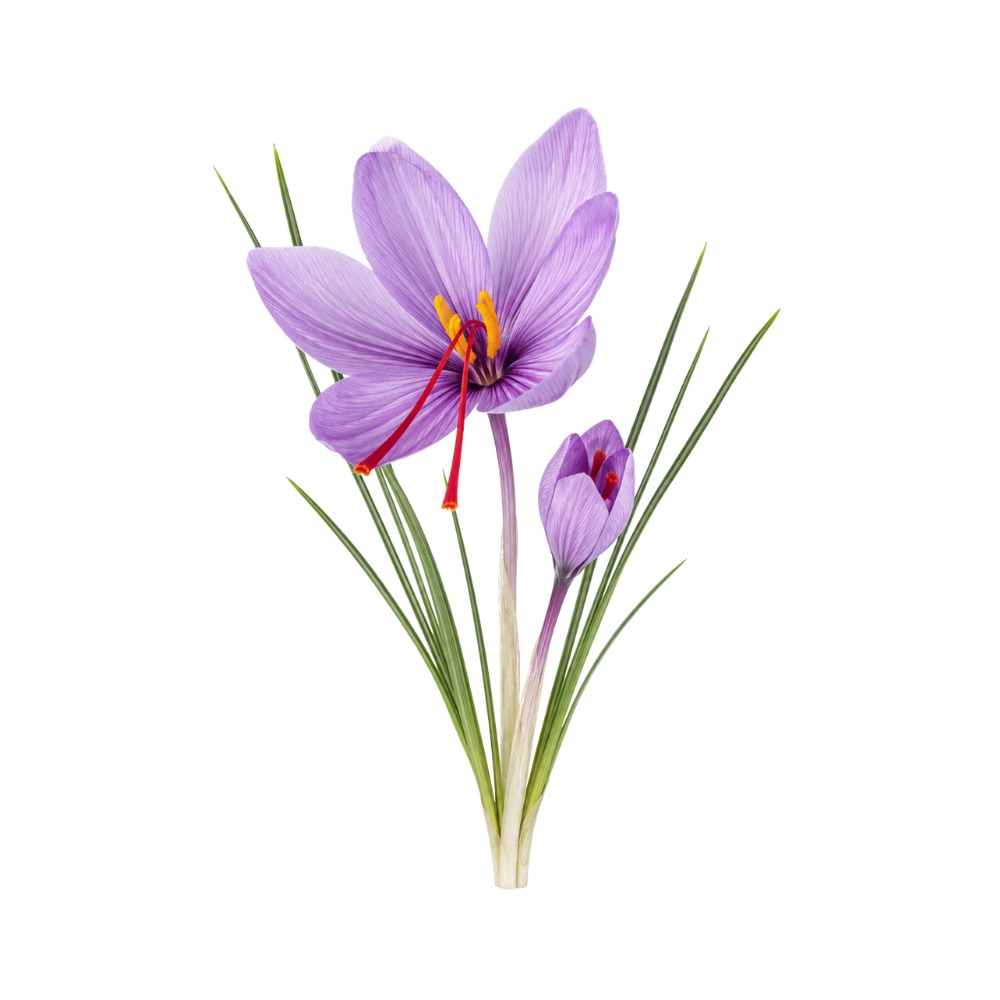
Saffron is the dried red stigma of the saffron crocus, a costly spice and dye. Its carotenoids crocin and crocetin and the aroma compound safranal are studied for low mood, anxiety, sleep and premenstrual symptoms.
What Is Saffron?
Saffron is the dried red stigma of the saffron crocus, used as a spice, a dye and a medicine. It is the world’s most expensive spice 42Reference 42RCTHydro-alcoholic extract of Crocus sativus L. versus fluoxetine in the treatment of mild to moderate depression: a double-blind, randomised pilot trialView study →.
Crocus sativus is an autumn-flowering corm in the iris family, known only in cultivation 44Reference 44I., & Mathew, BView study →. The style of each flower splits into three deep-red branches, and these are dried to make saffron 43Reference 43J., & Mathew, BView study →. In Persian medicine it was a mood-lifting, digestive and sedative herb 46Reference 46ReviewRazi’s Al-Hawi and saffron (Crocus sativus): a review — historical/traditional-use reviewView study →.
Saffron’s colour comes from crocin, its bitter taste from picrocrocin and its aroma from safranal 36,
Saffron is unrelated to meadow saffron (Colchicum autumnale), a poisonous plant from a different family.
How Is Saffron Used?
- Dried stigmas — whole or powdered; the form used in most trials, at 20–30 mg a day 7,
15, .27Reference 7RCTCrocus sativus L. in the treatment of mild to moderate depression: a double-blind, randomised and placebo-controlled trialView study →Reference 15RCTCrocus sativus L. (saffron) in the treatment of premenstrual syndrome: a double-blind, randomised and placebo-controlled trialView study →Reference 27RCTSaffron therapy for the treatment of mild/moderate age-related macular degeneration: a randomised clinical trialView study → - Standardised stigma extracts — such as affron®, at 14–28 mg a day 9,
11Reference 9RCTaffron® a novel saffron extract (Crocus sativus L.) improves mood in healthy adults over 4 weeks in a double-blind, parallel, randomised, placebo-controlled clinical trialView study →Reference 11RCTAn investigation into an evening intake of a saffron extract (affron®) on sleep quality, cortisol, and melatonin concentrations in adults with poor sleep: a randomised, double-blind, placebo-controlled, multi-dose studyView study → . - Petals — tested in one trial for depression 8Reference 8RCTCrocus sativus L. (petal) in the treatment of mild-to-moderate depression: a double-blind, randomised and placebo-controlled trialView study →.
- Food and dye — the stigmas are used in cooking and to make saffron dye 43Reference 43J., & Mathew, BView study →.
Traditional Uses
Saffron is one of the oldest medicines of the Persian and Arabic world, and the same dried stigma is an official drug in Chinese medicine 46,
Persian & Unani Medicine
Saffron was a mood-lifting herb. In his encyclopaedia Al-Hawi, Razi (Rhazes) wrote that it brings a strong feeling of pleasure, and he described it as a sedative and a heart-enlivening agent 46Reference 46ReviewRazi’s Al-Hawi and saffron (Crocus sativus): a review — historical/traditional-use reviewView study →. It is still used for depression in Persian traditional medicine 7,
It was also a digestive. Razi wrote that it cleanses the stomach, aids digestion and strengthens the liver and stomach, and Persian practice counts it good for stomach complaints and as an antispasmodic 7,
Razi called saffron a diuretic and a stimulant of sexual desire, and Iranian medicine used it as an aphrodisiac and an emmenagogue 46Reference 46ReviewRazi’s Al-Hawi and saffron (Crocus sativus): a review — historical/traditional-use reviewView study →.
It was given to ease difficult labour and uterine pain and to regulate the menstrual cycle. Razi wrote that 6–7 g of saffron brings on delivery, and he warned that about 13.5 g brings an excess of joy that may be fatal 46Reference 46ReviewRazi’s Al-Hawi and saffron (Crocus sativus): a review — historical/traditional-use reviewView study →.
Traditional Chinese Medicine
In Chinese medicine saffron is Zang Hong Hua (藏红花), and the drug is the dried stigma 39,
It is classed as a herb that promotes blood circulation and resolves blood stasis. It also cools the blood and relieves toxicity, and it relieves depression 49Reference 49ReviewPhytochemistry, pharmacology, and potential clinical applications of saffron: A review — reviewView study →.
Its indications follow from that classification: depression, irregular menstruation, postpartum blood stasis (described in modern reviews as postpartum thrombosis), and bruises 49Reference 49ReviewPhytochemistry, pharmacology, and potential clinical applications of saffron: A review — reviewView study →.
Its use for low mood agrees with Persian practice, and its blood-moving action matches the emmenagogue use recorded by Razi 46,
Western Herbal Medicine
Grieve’s early 20th-century herbal lists saffron as a carminative, diaphoretic and emmenagogue. It was given to children to bring on sweating, and to adults for chronic bleeding from the uterus 45Reference 45A Modern Herbal | Saffron. (n.d.). Grieve, M. Retrieved from https://www.botanical.com/botanical/mgmh/s/saffro03.htmlView study →.
In London, saffron “tea” flavoured with brandy was a household remedy for measles 45Reference 45A Modern Herbal | Saffron. (n.d.). Grieve, M. Retrieved from https://www.botanical.com/botanical/mgmh/s/saffro03.htmlView study →.
Indications
- Mild to moderate depression [stigma; standardised extract] Caution: A 2026 review of 34 trials found saffron lowered self-rated depression scores but not clinician-rated ones 6.
- Low mood and stress in healthy adults [stigma extract] Caution: A 2025 trial in 51 adults with low mood found no effect on its main outcome 10.
- Anxiety [stigma] Caution: In a network meta-analysis of herbs for anxiety, saffron did not significantly lower anxiety scores 4.
- Poor sleep [stigma extract]
- Premenstrual syndrome and period pain [stigma]
- Sexual dysfunction caused by antidepressants [stigma]
- Mild to moderate Alzheimer’s disease [stigma]
- ADHD in children [stigma]
- Early age-related macular degeneration [stigma] Caution: In a 12-month extension, retinal function stayed better but visual acuity was 1.6 letters worse, possibly from cataract progression 28.
- Type 2 diabetes and prediabetes [stigma; crocin]
- Low spirits [stigma; Persian medicine; TCM]
- Indigestion [stigma; Persian medicine]
- Menstrual complaints [stigma; Persian medicine]
- Irregular menstruation, postpartum blood stasis and bruising [stigma; TCM]
- Low libido [stigma; Persian medicine]
Botany
Saffron is a low perennial herb in the iris family, Iridaceae, that grows from a corm about 3 cm across 43Reference 43J., & Mathew, BView study →. The corm is wrapped in a light yellow-brown, netted, fibrous tunic 43Reference 43J., & Mathew, BView study →.
Each corm produces 9–15 narrow, grass-like leaves, 15–20 cm long and 2–3 mm wide 43Reference 43J., & Mathew, BView study →.
The fragrant purple flowers appear one or two at a time in autumn, from October to December in Kashmir 43,
Saffron is a triploid and is sterile. It sets no fertile seed and is propagated only from its corms 43,
Distribution
Saffron is known only in cultivation 44Reference 44I., & Mathew, BView study →. It is widely grown, including throughout China, and in Pakistan it is cultivated in the main Kashmir valley 43,
In the early 20th century, the best saffron in the English market came from Spain. Persian saffron has been cultivated since at least the tenth century 45Reference 45A Modern Herbal | Saffron. (n.d.). Grieve, M. Retrieved from https://www.botanical.com/botanical/mgmh/s/saffro03.htmlView study →.
Because it sets no seed, saffron grows only where people plant its corms.
Growing Conditions
Cultivation snapshot for Saffron
Grow it yourself
Farm Wiki is our cultivation-focused sister site, also run by Justin Cooke.
Pharmacology & Research
Saffron has been tested in dozens of randomised trials and several meta-analyses, most of them for depression 1,
Smaller trials have tested it for sleep, premenstrual symptoms, sexual function, dementia, ADHD and macular degeneration. The anticancer findings and most of the anti-inflammatory findings are preclinical 34,
Most trials used 15–30 mg a day of dried stigma or a standardised extract 7,
-
Best-supported: mild-to-moderate depression, where multiple RCTs and meta-analyses show benefit over placebo and no difference from SSRIs 1,
2, ; anxiety symptoms, usually measured alongside mood 9,3, 6, 40Reference 1Meta-analysisSaffron (Crocus sativus L.) and major depressive disorder: a meta-analysis of randomized clinical trialsView study →Reference 2Meta-analysisThe efficacy of saffron in the treatment of mild to moderate depression: a meta-analysisView study →Reference 3Meta-analysisSafety and efficacy of saffron (Crocus sativus L.) for treating mild to moderate depression: a systematic review and meta-analysisView study →Reference 6Meta-analysisEffect of saffron on depression, anxiety and mood disorder: a GRADE-assessed systematic review and meta-analysis of 34 randomised controlled trialsView study →Reference 40Meta-analysisEffect of saffron versus selective serotonin reuptake inhibitors (SSRIs) in treatment of depression and anxiety: a systematic review and meta-analysis. https://pubmed.ncbi.nlm.nih.gov/38913392/View study → 40Reference 9RCTaffron® a novel saffron extract (Crocus sativus L.) improves mood in healthy adults over 4 weeks in a double-blind, parallel, randomised, placebo-controlled clinical trialView study →Reference 40Meta-analysisEffect of saffron versus selective serotonin reuptake inhibitors (SSRIs) in treatment of depression and anxiety: a systematic review and meta-analysis. https://pubmed.ncbi.nlm.nih.gov/38913392/View study → ; and self-reported sleep quality 11,12Reference 11RCTAn investigation into an evening intake of a saffron extract (affron®) on sleep quality, cortisol, and melatonin concentrations in adults with poor sleep: a randomised, double-blind, placebo-controlled, multi-dose studyView study →Reference 12Meta-analysisEffects of saffron supplementation on improving sleep quality: a meta-analysis of randomised controlled trialsView study → . -
Emerging, worth watching: premenstrual syndrome 15,
16Reference 15RCTCrocus sativus L. (saffron) in the treatment of premenstrual syndrome: a double-blind, randomised and placebo-controlled trialView study →Reference 16Meta-analysisEffect of saffron on premenstrual syndrome and dysmenorrhea: a systematic review and meta-analysisView study → , antidepressant-induced sexual dysfunction 17,18Reference 17RCTSaffron for treatment of fluoxetine-induced sexual dysfunction in women: randomised double-blind placebo-controlled studyView study →Reference 18RCTEffect of saffron on fluoxetine-induced sexual impairment in men: randomised double-blind placebo-controlled trialView study → , mild Alzheimer’s 21,23Reference 21RCTSaffron in the treatment of patients with mild to moderate Alzheimer’s disease: a 16-week, randomised and placebo-controlled trialView study →Reference 23Meta-analysisSaffron for mild cognitive impairment and dementia: a systematic review and meta-analysis of randomised clinical trialsView study → , and retinal function in early macular degeneration 27,28, .29Reference 27RCTSaffron therapy for the treatment of mild/moderate age-related macular degeneration: a randomised clinical trialView study →Reference 28Saffron therapy for the ongoing treatment of age-related macular degenerationView study →Reference 29Influence of saffron supplementation on retinal flicker sensitivity in early age-related macular degenerationView study → -
Mechanistically thin: anticancer activity rests entirely on cell-line and animal work for crocin and crocetin, with no human efficacy data 35,
36Reference 35Systematic reviewEfficacy of saffron (Crocus sativus L.) and its constituents on breast cancer: a systematic review of preclinical studies. https://pubmed.ncbi.nlm.nih.gov/40819247/View study →Reference 36ReviewBioactivity assessment and toxicity of crocin: a comprehensive review. https://pubmed.ncbi.nlm.nih.gov/24275090/View study → . - The caveat: the trials are short and small, and the preparation matters; a kitchen pinch is not the trial dose.
Most trials were small and short, and many came from one research group. In the largest review, saffron lowered self-rated depression and anxiety scores but not clinician-rated ones 6Reference 6Meta-analysisEffect of saffron on depression, anxiety and mood disorder: a GRADE-assessed systematic review and meta-analysis of 34 randomised controlled trialsView study →.
1. Depression
In a double-blind trial in 40 outpatients with mild to moderate depression, dried stigma at 30 mg/day beat placebo on the Hamilton Depression Rating Scale over six weeks 7Reference 7RCTCrocus sativus L. in the treatment of mild to moderate depression: a double-blind, randomised and placebo-controlled trialView study →.
A companion trial reported the same for 30 mg/day of the petal 8Reference 8RCTCrocus sativus L. (petal) in the treatment of mild-to-moderate depression: a double-blind, randomised and placebo-controlled trialView study →, a different plant part from the stigma.
In active-comparator trials, saffron 30 mg/day performed like imipramine 100 mg/day in 30 patients 41Reference 41RCTComparison of Crocus sativus L. and imipramine in the treatment of mild to moderate depression: a pilot double-blind randomised trialView study →, and a hydroalcoholic stigma extract at 30 mg/day performed like fluoxetine 20 mg/day in 40 patients 42Reference 42RCTHydro-alcoholic extract of Crocus sativus L. versus fluoxetine in the treatment of mild to moderate depression: a double-blind, randomised pilot trialView study →.
A 2019 meta-analysis pooled nine trials and found saffron more effective than placebo (g = 0.89) and non-inferior to antidepressants 2Reference 2Meta-analysisThe efficacy of saffron in the treatment of mild to moderate depression: a meta-analysisView study →. A 2020 meta-analysis of 12 studies reached the same result, with no difference in adverse effects 3Reference 3Meta-analysisSafety and efficacy of saffron (Crocus sativus L.) for treating mild to moderate depression: a systematic review and meta-analysisView study →. A 2025 meta-analysis of eight head-to-head trials found no difference from SSRIs for depression, with fewer adverse events on saffron 40Reference 40Meta-analysisEffect of saffron versus selective serotonin reuptake inhibitors (SSRIs) in treatment of depression and anxiety: a systematic review and meta-analysis. https://pubmed.ncbi.nlm.nih.gov/38913392/View study →.
An umbrella analysis of seven meta-analyses found a fall in Beck Depression Inventory scores, but no significant change in Hamilton scores 5Reference 5Meta-analysisSaffron, as an adjunct therapy, contributes to relieve depression symptoms: an umbrella meta-analysisView study →. A 2026 GRADE-assessed review of 34 trials (1,769 participants) found the same pattern: self-rated depression scores fell, while the clinician-rated Hamilton scale did not change significantly. It rated the certainty of the evidence as moderate 6Reference 6Meta-analysisEffect of saffron on depression, anxiety and mood disorder: a GRADE-assessed systematic review and meta-analysis of 34 randomised controlled trialsView study →.
In 128 adults with self-reported low mood, a standardised extract (affron® 28 mg/day) improved mood over four weeks, while 22 mg/day did not 9Reference 9RCTaffron® a novel saffron extract (Crocus sativus L.) improves mood in healthy adults over 4 weeks in a double-blind, parallel, randomised, placebo-controlled clinical trialView study →. A 2025 trial in 51 adults with subclinical symptoms found no effect on its combined depression, anxiety and fatigue score 10Reference 10RCTEffect of saffron extract supplementation on mood in healthy adults with subclinical symptoms of depression: a randomised, double-blind placebo-controlled studyView study →.
Gap: the benefit is consistent on self-rated scales but not on clinician-rated ones, and the trials are short, mostly six to eight weeks, and modest in size. Long-term efficacy, relapse prevention and severe depression are untested.
2. Anxiety
Anxiety is usually measured as a secondary outcome in saffron’s mood trials.
In a network meta-analysis of herbs for anxiety, saffron did not significantly lower Hamilton anxiety scores in the main network (mean difference −2.71; 95% credible interval −6.06 to 0.57), although separate networks supported further study 4Reference 4Meta-analysisMedicinal herbs for the treatment of anxiety: a systematic review and network meta-analysisView study →. The 2026 review found a fall in self-rated anxiety (Beck Anxiety Inventory) but not in the clinician-rated Hamilton scale 6Reference 6Meta-analysisEffect of saffron on depression, anxiety and mood disorder: a GRADE-assessed systematic review and meta-analysis of 34 randomised controlled trialsView study →.
A 2025 meta-analysis of four trials found no difference between saffron and SSRIs for anxiety, with fewer adverse events on saffron 40Reference 40Meta-analysisEffect of saffron versus selective serotonin reuptake inhibitors (SSRIs) in treatment of depression and anxiety: a systematic review and meta-analysis. https://pubmed.ncbi.nlm.nih.gov/38913392/View study →. The affron® trial in healthy adults reported less stress and anxiety at 28 mg/day 9Reference 9RCTaffron® a novel saffron extract (Crocus sativus L.) improves mood in healthy adults over 4 weeks in a double-blind, parallel, randomised, placebo-controlled clinical trialView study →, and the 2025 trial in adults with subclinical symptoms found no change in anxiety 10Reference 10RCTEffect of saffron extract supplementation on mood in healthy adults with subclinical symptoms of depression: a randomised, double-blind placebo-controlled studyView study →.
Few trials use anxiety as the primary endpoint or enrol people with a diagnosed anxiety disorder.
3. Sleep Quality
A 2022 meta-analysis of randomised trials found saffron improved several validated sleep scores against placebo. In its subgroup analysis, 100 mg/day gave the most stable effect 12Reference 12Meta-analysisEffects of saffron supplementation on improving sleep quality: a meta-analysis of randomised controlled trialsView study →.
In 66 adults with mild to moderate sleep problems linked to anxiety, 15.5 mg/day of an extract for six weeks increased time in bed on actigraphy and improved questionnaire sleep scores 13Reference 13RCTEffects of saffron extract on sleep quality: a randomised double-blind controlled clinical trialView study →.
In 120 adults with poor sleep, 14 or 28 mg of affron® taken an hour before bed for 28 days improved sleep-quality ratings and raised evening melatonin, without changing cortisol 11Reference 11RCTAn investigation into an evening intake of a saffron extract (affron®) on sleep quality, cortisol, and melatonin concentrations in adults with poor sleep: a randomised, double-blind, placebo-controlled, multi-dose studyView study →.
In a crossover trial in 30 adults, the constituent crocetin at 7.5 mg/day increased EEG delta power during sleep and improved feeling refreshed on waking 14Reference 14RCTEffect of crocetin on quality of sleep: a randomised, double-blind, placebo-controlled, crossover studyView study →.
Most endpoints are questionnaires, and the objective measures come from small samples.
4. Premenstrual Syndrome
In a double-blind placebo-controlled trial, women aged 20–45 took saffron 30 mg/day (15 mg twice daily) for two menstrual cycles. Total premenstrual symptoms and Hamilton depression scores improved against placebo 15Reference 15RCTCrocus sativus L. (saffron) in the treatment of premenstrual syndrome: a double-blind, randomised and placebo-controlled trialView study →.
A 2026 meta-analysis of the randomised trials found a benefit for premenstrual symptoms (SMD −0.64; 95% CI −0.84 to −0.44) and a smaller effect on period pain (SMD −0.51; 95% CI −1.01 to −0.01) 16Reference 16Meta-analysisEffect of saffron on premenstrual syndrome and dysmenorrhea: a systematic review and meta-analysisView study →.
The trial base is small, and the confidence interval for period pain comes close to zero.
5. Antioxidant
Saffron and its constituents act as free-radical scavengers and raise antioxidant capacity in cell and animal studies 34Reference 34ReviewAnti-inflammatory, antioxidant, and immunomodulatory effects of Crocus sativus L. and its main constituents — reviewView study →.
In people, the evidence is a biomarker. In a trial in 75 overweight or obese adults with prediabetes, 15 mg/day for eight weeks raised DPPH radical-scavenging activity within the saffron group, but the difference from placebo was only a trend 32Reference 32RCTEffect of saffron (Crocus sativus L.) on lipid profile, glycemic indices and antioxidant status among overweight/obese prediabetic individuals: a double-blinded, randomised controlled trialView study →.
The antioxidant activity is a mechanism behind other findings rather than a clinical outcome in itself.
Gap: the one human measure is a within-group biomarker change that was only a trend against placebo.
6. Sexual Dysfunction
The strongest data concern sexual dysfunction caused by fluoxetine. In a placebo-controlled trial, 36 men on stable fluoxetine took saffron 15 mg twice daily for four weeks, and erectile function and intercourse satisfaction improved 18Reference 18RCTEffect of saffron on fluoxetine-induced sexual impairment in men: randomised double-blind placebo-controlled trialView study →.
In 38 women on fluoxetine, 30 mg/day for four weeks improved the Female Sexual Function Index total, arousal, lubrication and pain scores, though not desire, satisfaction or orgasm 17Reference 17RCTSaffron for treatment of fluoxetine-induced sexual dysfunction in women: randomised double-blind placebo-controlled studyView study →.
A three-centre trial in 74 women with sexual dysfunction found 15 mg twice daily for six weeks improved desire, lubrication and satisfaction 19Reference 19RCTCrocus sativus (saffron) in the treatment of female sexual dysfunction: a three-center, double-blind, randomised, and placebo-controlled clinical trialView study →. A topical saffron gel improved erectile function in 50 men with diabetes 20Reference 20RCTEffects of a topical saffron (Crocus sativus L.) gel on erectile dysfunction in diabetics: a randomised, parallel-group, double-blind, placebo-controlled trialView study →.
The trials are short and small, and most concern dysfunction caused by antidepressants.
7. Cognition & Dementia
In 46 patients with mild to moderate Alzheimer’s disease, saffron 30 mg/day for 16 weeks improved cognitive scores (ADAS-cog) against placebo 21Reference 21RCTSaffron in the treatment of patients with mild to moderate Alzheimer’s disease: a 16-week, randomised and placebo-controlled trialView study →.
In 68 patients with moderate to severe Alzheimer’s disease, saffron extract 30 mg/day for 12 months performed like memantine 20 mg/day on cognitive decline 22Reference 22RCTComparing the efficacy and safety of Crocus sativus L. with memantine in patients with moderate to severe Alzheimer’s disease: a double-blind randomised clinical trialView study →.
A 2020 meta-analysis of four randomised trials found saffron improved cognitive scores against placebo and did not differ from conventional drugs 23Reference 23Meta-analysisSaffron for mild cognitive impairment and dementia: a systematic review and meta-analysis of randomised clinical trialsView study →. A systematic review of five trials (325 people) found the same, with no difference from donepezil or memantine, and noted a potentially high risk of bias 24Reference 24Systematic reviewEffects of saffron (Crocus sativus L.) on cognitive function: a systematic review of RCTsView study →.
The trials are small and short relative to the course of dementia, and whether saffron slows the disease is unknown.
9. Anti-Inflammatory
Most of the anti-inflammatory evidence is preclinical: saffron and its constituents crocin, crocetin and safranal modulate inflammatory mediators in cell and animal models 34Reference 34ReviewAnti-inflammatory, antioxidant, and immunomodulatory effects of Crocus sativus L. and its main constituents — reviewView study →.
The clearest human signal is a placebo-controlled trial in 57 people with COPD. Crocin 15 mg twice daily for 12 weeks lowered serum TNF-α and improved lung function and six-minute walking distance 33Reference 33RCTEffect of crocin of Crocus sativus L. on serum inflammatory markers (IL-6 and TNF-α) in chronic obstructive pulmonary disease patients: a randomised, double-blind, placebo-controlled trialView study →.
Gap: the one controlled human trial used isolated crocin, not the whole stigma; the rest is cell and animal work.
10. ADHD
In a six-week pilot trial, 54 children aged 6–17 with ADHD took saffron or methylphenidate at 20–30 mg/day by body weight. Teacher and parent rating scores did not differ between the two groups 25Reference 25RCTCrocus sativus L. versus methylphenidate in treatment of children with attention-deficit/hyperactivity disorder: a randomised, double-blind pilot studyView study →.
A 2024 review of four studies (118 patients in total), including trials of saffron alongside methylphenidate, found saffron helped ADHD symptoms with an acceptable safety profile 26Reference 26Systematic reviewThe effects of Crocus sativus (saffron) on ADHD: a systematic reviewView study →.
Gap: the studies are small and short, and the head-to-head trial had no placebo arm.
11. Metabolic & Glycemic
A 2024 meta-analysis pooled 15 trials in type 2 diabetes. Saffron extract lowered HbA1c by 0.35% (95% CI −0.65 to −0.06) and fasting glucose, and crocin lowered HbA1c, fasting glucose and systolic blood pressure. Powdered saffron raised BMI slightly, and crocin raised serum creatinine by 0.24 mg/dL 31Reference 31Meta-analysisEffect of Crocus sativus L. (saffron) and crocin in the treatment of patients with type-2 diabetes mellitus: a systematic review and meta-analysisView study →.
In 75 overweight or obese adults with prediabetes, 15 mg/day for eight weeks lowered fasting glucose by 7.97 mg/dL and HbA1c by 0.15% against placebo, with no change in blood lipids 32Reference 32RCTEffect of saffron (Crocus sativus L.) on lipid profile, glycemic indices and antioxidant status among overweight/obese prediabetic individuals: a double-blinded, randomised controlled trialView study →.
The effects are small and vary between trials.
12. Anticancer
Anticancer activity is entirely preclinical. A 2025 systematic review of 44 preclinical breast-cancer studies found saffron’s constituents, especially crocin and crocetin, act through apoptosis and cell-cycle effects 35Reference 35Systematic reviewEfficacy of saffron (Crocus sativus L.) and its constituents on breast cancer: a systematic review of preclinical studies. https://pubmed.ncbi.nlm.nih.gov/40819247/View study →. A review of crocin describes antitumour activity in experimental models 36Reference 36ReviewBioactivity assessment and toxicity of crocin: a comprehensive review. https://pubmed.ncbi.nlm.nih.gov/24275090/View study →.
Gap: no human efficacy trials exist.
Mechanisms
Saffron’s main active compounds are the water-soluble carotenoid crocin, its aglycone crocetin, and safranal 36Reference 36ReviewBioactivity assessment and toxicity of crocin: a comprehensive review. https://pubmed.ncbi.nlm.nih.gov/24275090/View study →. Crocin and safranal have been proposed to inhibit the reuptake of serotonin, dopamine and noradrenaline, although the exact antidepressant mechanism is unknown 48Reference 48ReviewSaffron (Crocus sativus L.): as an antidepressant — reviewView study →.
Saffron and its constituents also have antioxidant, anti-inflammatory and immunomodulatory activity in cell and animal studies 34Reference 34ReviewAnti-inflammatory, antioxidant, and immunomodulatory effects of Crocus sativus L. and its main constituents — reviewView study →. In people, an evening dose of extract raised melatonin 11Reference 11RCTAn investigation into an evening intake of a saffron extract (affron®) on sleep quality, cortisol, and melatonin concentrations in adults with poor sleep: a randomised, double-blind, placebo-controlled, multi-dose studyView study →.
| Mechanism | Drives | Key compounds |
|---|---|---|
| Serotonin, dopamine and noradrenaline reuptake inhibition (proposed) | depressionanxiety | crocin, safranal |
| Free-radical scavenging | antioxidantretinalmetabolic | crocin, crocetin |
| Modulation of inflammatory mediators, ↓ TNF-α | anti-inflammatoryretinal | crocin, crocetin, safranal |
| ↑ Evening melatonin; ↑ EEG delta power | sleep | saffron extract, crocetin |
| Amyloid-β aggregation inhibition (proposed) | cognitiondementia | saffron |
| Pro-apoptotic, antiproliferative (preclinical) | anticancer | crocin, crocetin |
Pharmacokinetics
Crocin is not found in the bloodstream after it is taken by mouth. It is converted in the intestine to its aglycone crocetin, and most of the remaining crocin leaves in the faeces 50Reference 50ReviewPharmacokinetic Properties of Saffron and its Active Components — reviewView study →.
In 10 healthy volunteers, single oral doses of 7.5–22.5 mg of crocetin peaked in plasma after 4.0–4.8 hours, with blood levels rising in proportion to the dose and an elimination half-life of 6.1–7.5 hours 51Reference 51Clinical trialThe pharmacokinetic profile of crocetin in healthy adult human volunteers after a single oral administration — open-label human studyView study →.
Crocetin binds albumin only weakly, so it spreads into tissues, and it crosses the blood–brain barrier 50Reference 50ReviewPharmacokinetic Properties of Saffron and its Active Components — reviewView study →.
Clinical Trials
Saffron, crocin and crocetin have about 56 registered trials across mood, sleep, metabolic, eye and inflammatory conditions. About 31 are completed and 20 have an unknown status.
| Completed | Planned | Terminated | Preclinical |
|---|---|---|---|
| ~31 | 4(recruiting, active or not yet recruiting) | 1(withdrawn) | ~hundreds |
Last checked: October 2026.
Phytochemistry
Saffron’s three defining compounds are crocin, picrocrocin and safranal 36Reference 36ReviewBioactivity assessment and toxicity of crocin: a comprehensive review. https://pubmed.ncbi.nlm.nih.gov/24275090/View study →.
Crocin is a group of highly water-soluble glycosides of crocetin, and it gives saffron most of its colour 36Reference 36ReviewBioactivity assessment and toxicity of crocin: a comprehensive review. https://pubmed.ncbi.nlm.nih.gov/24275090/View study →. Picrocrocin is the bitter principle. Safranal, the main volatile, can be formed from picrocrocin by hydrolysis 47Reference 47ReviewSaffron (Crocus sativus L.) in ocular diseases: a narrative review of the existing evidence from clinical studies — reviewView study →.
The stigmas also contain other carotenoids, carbohydrates, proteins, anthocyanins, vitamins and minerals 36Reference 36ReviewBioactivity assessment and toxicity of crocin: a comprehensive review. https://pubmed.ncbi.nlm.nih.gov/24275090/View study →. The petal contains the flavonol kaempferol 46Reference 46ReviewRazi’s Al-Hawi and saffron (Crocus sativus): a review — historical/traditional-use reviewView study →.
Constituent Summary
The main constituents of the dried stigma, with kaempferol from the petal.
Flavonoid1 compound1 with data
Dosage
In trials, saffron is taken as dried stigma or a standardised extract at 15–30 mg a day 7,
| Indication | Preparation | Dose | Est. dried-herb equivalent | Source |
|---|---|---|---|---|
| Depression | Dried stigma capsule | 30 mg/day (15 mg ×2) | 30 mg (whole stigma) | 7Reference 7RCTCrocus sativus L. in the treatment of mild to moderate depression: a double-blind, randomised and placebo-controlled trialView study → |
| Mood (subclinical) | Standardised extract (affron®) | 28 mg/day | ~28 mg extract; not directly convertible | 9Reference 9RCTaffron® a novel saffron extract (Crocus sativus L.) improves mood in healthy adults over 4 weeks in a double-blind, parallel, randomised, placebo-controlled clinical trialView study → |
| Sleep | Standardised extract | 14–28 mg/day (evening); up to ~100 mg/day (pooled) | not directly convertible | 11, |
| Sleep (constituent) | Crocetin | 7.5 mg/day | not convertible (isolated constituent) | 14Reference 14RCTEffect of crocetin on quality of sleep: a randomised, double-blind, placebo-controlled, crossover studyView study → |
| Premenstrual syndrome | Dried stigma capsule | 30 mg/day | 30 mg (whole stigma) | 15Reference 15RCTCrocus sativus L. (saffron) in the treatment of premenstrual syndrome: a double-blind, randomised and placebo-controlled trialView study → |
| SSRI-induced sexual dysfunction | Dried stigma capsule | 30 mg/day | 30 mg (whole stigma) | 17, |
| Alzheimer’s / cognition | Dried stigma or extract | 30 mg/day | 30 mg (whole stigma) | 21, |
| Age-related macular degeneration | Dried stigma | 20 mg/day | 20 mg (whole stigma) | 27Reference 27RCTSaffron therapy for the treatment of mild/moderate age-related macular degeneration: a randomised clinical trialView study → |
| Prediabetes / glycemic | Dried stigma | 15 mg/day | 15 mg (whole stigma) | 32Reference 32RCTEffect of saffron (Crocus sativus L.) on lipid profile, glycemic indices and antioxidant status among overweight/obese prediabetic individuals: a double-blinded, randomised controlled trialView study → |
| ADHD (children) | Dried stigma capsule | 20–30 mg/day (weight-based) | 20–30 mg (whole stigma) | 25Reference 25RCTCrocus sativus L. versus methylphenidate in treatment of children with attention-deficit/hyperactivity disorder: a randomised, double-blind pilot studyView study → |
Most trials used whole dried stigma, so the dose is the herb weight. Standardised extracts have no fixed ratio back to raw stigma.
Traditional Dosage
| System | Preparation | Dose |
|---|---|---|
| Western herbal (Grieve) | Tincture | 5–15 drops 45Reference 45A Modern Herbal | Saffron. (n.d.). Grieve, M. Retrieved from https://www.botanical.com/botanical/mgmh/s/saffro03.htmlView study → |
| Persian / Unani | Stigma in water or milk | Not quantified |
Safety & Pregnancy
Saffron is well tolerated at the medicinal doses used in trials, around 30 mg a day, but it is toxic in gram amounts and stimulates the uterus, so medicinal doses are avoided in pregnancy.
- Well tolerated at trial doses. Adverse effects at about 30 mg/day were no more common than on placebo or antidepressants, and fewer than on SSRIs 3,
40Reference 3Meta-analysisSafety and efficacy of saffron (Crocus sativus L.) for treating mild to moderate depression: a systematic review and meta-analysisView study →Reference 40Meta-analysisEffect of saffron versus selective serotonin reuptake inhibitors (SSRIs) in treatment of depression and anxiety: a systematic review and meta-analysis. https://pubmed.ncbi.nlm.nih.gov/38913392/View study → . - Toxic in gram amounts. Toxic effects are reported from 5 g a day, and about 20 g can be lethal 23Reference 23Meta-analysisSaffron for mild cognitive impairment and dementia: a systematic review and meta-analysis of randomised clinical trialsView study →.
- Avoid medicinal doses in pregnancy. Saffron stimulates the uterus, and high doses and occupational exposure have been linked to miscarriage 38Reference 38ReviewSaffron and pregnancy: cultural practices, beliefs, and safety evidence — an integrative review. https://pubmed.ncbi.nlm.nih.gov/42186868/View study →.
- Diabetes medicines. Saffron and crocin lower fasting glucose and HbA1c, so they may add to glucose-lowering drugs 31Reference 31Meta-analysisEffect of Crocus sativus L. (saffron) and crocin in the treatment of patients with type-2 diabetes mellitus: a systematic review and meta-analysisView study →.
- Small effect on CYP1A2. A saffron infusion slightly lowered CYP1A2 activity in healthy men; laboratory studies also point to CYP3A4 52,
53Reference 52Clinical trialEffects of short-term saffron (Crocus sativus L.) intake on the in vivo activities of xenobiotic metabolizing enzymes in healthy volunteers — human studyView study →Reference 53ReviewEffects of Crocus sativus and its active constituents on cytochrome P450: a review — reviewView study → . - No effect on clotting in volunteers. 200–400 mg a day for a week did not change clotting tests 54Reference 54RCTEffect of Crocus sativus L. (saffron) on coagulation and anticoagulation systems in healthy volunteers — randomised controlled trialView study →.
Full Safety Detail
Trial doses. In the depression trials, saffron at about 30 mg/day caused adverse effects no more often than placebo or antidepressants 3Reference 3Meta-analysisSafety and efficacy of saffron (Crocus sativus L.) for treating mild to moderate depression: a systematic review and meta-analysisView study →. Compared with SSRIs, it caused fewer 40Reference 40Meta-analysisEffect of saffron versus selective serotonin reuptake inhibitors (SSRIs) in treatment of depression and anxiety: a systematic review and meta-analysis. https://pubmed.ncbi.nlm.nih.gov/38913392/View study →.
Toxic doses. Toxic effects are reported from 5 g a day, and about 20 g can be lethal 23Reference 23Meta-analysisSaffron for mild cognitive impairment and dementia: a systematic review and meta-analysis of randomised clinical trialsView study →. Razi warned that 13.5 g brings an excess of joy that may be fatal 46Reference 46ReviewRazi’s Al-Hawi and saffron (Crocus sativus): a review — historical/traditional-use reviewView study →.
Antidepressant and serotonergic drugs. Crocin and safranal have been proposed to inhibit serotonin reuptake 48Reference 48ReviewSaffron (Crocus sativus L.): as an antidepressant — reviewView study →, which suggests care alongside SSRIs and other serotonergic drugs. No interaction has been reported, and saffron has been trialled alongside fluoxetine to treat its sexual side effects 17,
Sedatives. Saffron extracts improved sleep in trials 11,
Diabetes medicines. In people with type 2 diabetes, saffron extract and crocin lowered HbA1c and fasting glucose 31Reference 31Meta-analysisEffect of Crocus sativus L. (saffron) and crocin in the treatment of patients with type-2 diabetes mellitus: a systematic review and meta-analysisView study →, so they may add to the effect of glucose-lowering drugs. Monitor blood sugar.
Anticoagulant and antiplatelet drugs. Saffron has affected platelet aggregation and coagulation in laboratory and animal studies 54Reference 54RCTEffect of Crocus sativus L. (saffron) on coagulation and anticoagulation systems in healthy volunteers — randomised controlled trialView study →. In a double-blind trial in 60 healthy volunteers, 200 or 400 mg a day for seven days did not change PT, PTT, fibrinogen, factor VII or proteins C and S 54Reference 54RCTEffect of Crocus sativus L. (saffron) on coagulation and anticoagulation systems in healthy volunteers — randomised controlled trialView study →. A bleeding interaction at normal doses is therefore theoretical, though care is reasonable with anticoagulants or a bleeding disorder.
Drug metabolism. In 34 healthy volunteers, a saffron stigma infusion for six days lowered CYP1A2 activity, measured by caffeine metabolism, by about 14% in saliva. The fall was significant in men but not in women, and CYP2A6, xanthine oxidase and NAT2 were unchanged 52Reference 52Clinical trialEffects of short-term saffron (Crocus sativus L.) intake on the in vivo activities of xenobiotic metabolizing enzymes in healthy volunteers — human studyView study →. The authors judged a CYP1A2 interaction possible in men and others unlikely 52Reference 52Clinical trialEffects of short-term saffron (Crocus sativus L.) intake on the in vivo activities of xenobiotic metabolizing enzymes in healthy volunteers — human studyView study →. A 2025 review of laboratory and animal work found that saffron, crocin and safranal affect CYP1A1/2, CYP2E1 and CYP3A4, with CYP3A4 inhibition the most important for drug interactions; none of this has been tested in people 53Reference 53ReviewEffects of Crocus sativus and its active constituents on cytochrome P450: a review — reviewView study →.
Kidney function. In the diabetes meta-analysis, crocin raised serum creatinine (by 0.24 mg/dL on average), so care is reasonable in people with kidney disease 31Reference 31Meta-analysisEffect of Crocus sativus L. (saffron) and crocin in the treatment of patients with type-2 diabetes mellitus: a systematic review and meta-analysisView study →.
Children. A six-week pilot trial gave children aged 6–17 20–30 mg a day by body weight 25Reference 25RCTCrocus sativus L. versus methylphenidate in treatment of children with attention-deficit/hyperactivity disorder: a randomised, double-blind pilot studyView study →, and a review of four ADHD studies found an acceptable safety profile 26Reference 26Systematic reviewThe effects of Crocus sativus (saffron) on ADHD: a systematic reviewView study →. Paediatric data come only from these small, short studies.
Avoid medicinal doses. Saffron is a traditional emmenagogue, and Razi wrote that 6–7 g brings on delivery 46Reference 46ReviewRazi’s Al-Hawi and saffron (Crocus sativus): a review — historical/traditional-use reviewView study →.
A 2026 review found that higher doses and occupational exposure are linked to uterine stimulation and miscarriage. At term, about 250 mg a day has been studied to help ripen the cervix and shorten labour 38Reference 38ReviewSaffron and pregnancy: cultural practices, beliefs, and safety evidence — an integrative review. https://pubmed.ncbi.nlm.nih.gov/42186868/View study →.
In pregnant mice, injected crocin and safranal, at every dose tested, caused smaller foetuses and minor skeletal malformations 37Reference 37AnimalEvaluation of teratogenic effects of crocin and safranal, active ingredients of saffron, in mice — animal model, intraperitonealView study →. Early pharmacological work documented direct effects on the uterus and the estrus cycle 39Reference 39Studies on the pharmacological action of Crocus sativus L.: effects on the uterus and estrus cycle — animal study. https://pubmed.ncbi.nlm.nih.gov/14141441/View study →.
Culinary amounts are far smaller than these doses. Saffron has not been studied during breastfeeding, so a medicinal dose cannot be assumed safe.
References
- Hausenblas, H. A., et al. (2013). Saffron (Crocus sativus L.) and major depressive disorder: a meta-analysis of randomized clinical trials. Journal of Integrative Medicine. https://pubmed.ncbi.nlm.nih.gov/24299602/
- Tóth, B., et al. (2019). The efficacy of saffron in the treatment of mild to moderate depression: a meta-analysis. Planta Medica. https://pubmed.ncbi.nlm.nih.gov/30036891/
- Dai, L., Chen, L., Wang, W., et al. (2020). Safety and efficacy of saffron (Crocus sativus L.) for treating mild to moderate depression: a systematic review and meta-analysis. Journal of Nervous and Mental Disease. https://pubmed.ncbi.nlm.nih.gov/32221179/
- Zhang, W., Yan, Y., Wu, Y., et al. (2022). Medicinal herbs for the treatment of anxiety: a systematic review and network meta-analysis. Pharmacological Research. https://pubmed.ncbi.nlm.nih.gov/35378276/
- Musazadeh, V., Zarezadeh, M., Faghfouri, A. H., et al. (2022). Saffron, as an adjunct therapy, contributes to relieve depression symptoms: an umbrella meta-analysis. Pharmacological Research. https://pubmed.ncbi.nlm.nih.gov/34757208/
- Mahmoudi R, Mohammadi-Sartang M, Servatyari K, et al. (2026). Effect of saffron on depression, anxiety and mood disorder: a GRADE-assessed systematic review and meta-analysis of 34 randomised controlled trials. Nutritional Neuroscience. https://pubmed.ncbi.nlm.nih.gov/41693488/
- Akhondzadeh, S., et al. (2005). Crocus sativus L. in the treatment of mild to moderate depression: a double-blind, randomised and placebo-controlled trial. Phytotherapy Research. https://pubmed.ncbi.nlm.nih.gov/15852492/
- Moshiri, E., Basti, A. A., Noorbala, A. A., et al. (2006). Crocus sativus L. (petal) in the treatment of mild-to-moderate depression: a double-blind, randomised and placebo-controlled trial. Phytomedicine. https://pubmed.ncbi.nlm.nih.gov/16979327/
- Kell, G., et al. (2017). affron® a novel saffron extract (Crocus sativus L.) improves mood in healthy adults over 4 weeks in a double-blind, parallel, randomised, placebo-controlled clinical trial. Complementary Therapies in Medicine. https://pubmed.ncbi.nlm.nih.gov/28735826/
- Amadieu C, Leyrolle Q, Farneti M, et al. (2025). Effect of saffron extract supplementation on mood in healthy adults with subclinical symptoms of depression: a randomised, double-blind placebo-controlled study. American Journal of Clinical Nutrition. https://pubmed.ncbi.nlm.nih.gov/41047129/
- Lopresti, A. L., et al. (2021). An investigation into an evening intake of a saffron extract (affron®) on sleep quality, cortisol, and melatonin concentrations in adults with poor sleep: a randomised, double-blind, placebo-controlled, multi-dose study. Sleep Medicine. https://pubmed.ncbi.nlm.nih.gov/34438361/
- Lian J, Zhong Y, Li H, et al. (2022). Effects of saffron supplementation on improving sleep quality: a meta-analysis of randomised controlled trials. Sleep Medicine. https://pubmed.ncbi.nlm.nih.gov/35325766/
- Pachikian BD, Copine S, Suchareau M, et al. (2021). Effects of saffron extract on sleep quality: a randomised double-blind controlled clinical trial. Nutrients. https://pubmed.ncbi.nlm.nih.gov/33925432/
- Umigai N, Takeda R, Mori A (2018). Effect of crocetin on quality of sleep: a randomised, double-blind, placebo-controlled, crossover study. Complementary Therapies in Medicine. https://pubmed.ncbi.nlm.nih.gov/30477864/
- Agha-Hosseini, M., et al. (2008). Crocus sativus L. (saffron) in the treatment of premenstrual syndrome: a double-blind, randomised and placebo-controlled trial. BJOG. https://pubmed.ncbi.nlm.nih.gov/18271889/
- Mohammadi MM, Karimi Z (2026). Effect of saffron on premenstrual syndrome and dysmenorrhea: a systematic review and meta-analysis. Korean Journal of Family Medicine. https://pubmed.ncbi.nlm.nih.gov/41151539/
- Kashani, L., et al. (2013). Saffron for treatment of fluoxetine-induced sexual dysfunction in women: randomised double-blind placebo-controlled study. Human Psychopharmacology. https://pubmed.ncbi.nlm.nih.gov/23280545/
- Modabbernia, A., et al. (2012). Effect of saffron on fluoxetine-induced sexual impairment in men: randomised double-blind placebo-controlled trial. Psychopharmacology. https://pubmed.ncbi.nlm.nih.gov/22552758/
- Kashani L, Aslzadeh S, Shokraee K, et al. (2022). Crocus sativus (saffron) in the treatment of female sexual dysfunction: a three-center, double-blind, randomised, and placebo-controlled clinical trial. Avicenna Journal of Phytomedicine. https://pubmed.ncbi.nlm.nih.gov/36186931/
- Mohammadzadeh-Moghadam, H., et al. (2015). Effects of a topical saffron (Crocus sativus L.) gel on erectile dysfunction in diabetics: a randomised, parallel-group, double-blind, placebo-controlled trial. Journal of Evidence-Based Complementary & Alternative Medicine. https://pubmed.ncbi.nlm.nih.gov/25948674/
- Akhondzadeh, S., et al. (2010). Saffron in the treatment of patients with mild to moderate Alzheimer’s disease: a 16-week, randomised and placebo-controlled trial. Journal of Clinical Pharmacy and Therapeutics. https://pubmed.ncbi.nlm.nih.gov/20831681/
- Farokhnia, M., et al. (2014). Comparing the efficacy and safety of Crocus sativus L. with memantine in patients with moderate to severe Alzheimer’s disease: a double-blind randomised clinical trial. Human Psychopharmacology. https://pubmed.ncbi.nlm.nih.gov/25163440/
- Ayati Z, Yang G, Ayati MH, et al. (2020). Saffron for mild cognitive impairment and dementia: a systematic review and meta-analysis of randomised clinical trials. BMC Complementary Medicine and Therapies. https://pubmed.ncbi.nlm.nih.gov/33167948/
- Avgerinos, K. I., et al. (2020). Effects of saffron (Crocus sativus L.) on cognitive function: a systematic review of RCTs. Neurological Sciences. https://pubmed.ncbi.nlm.nih.gov/32445136/
- Baziar, S., et al. (2019). Crocus sativus L. versus methylphenidate in treatment of children with attention-deficit/hyperactivity disorder: a randomised, double-blind pilot study. Journal of Child and Adolescent Psychopharmacology. https://pubmed.ncbi.nlm.nih.gov/30741567/
- Seyedi-Sahebari S, Farhang S, Araj-Khodaei M, et al. (2024). The effects of Crocus sativus (saffron) on ADHD: a systematic review. Journal of Attention Disorders. https://pubmed.ncbi.nlm.nih.gov/37864351/
- Broadhead, G. K., et al. (2019). Saffron therapy for the treatment of mild/moderate age-related macular degeneration: a randomised clinical trial. Graefe’s Archive for Clinical and Experimental Ophthalmology. https://pubmed.ncbi.nlm.nih.gov/30343354/
- Broadhead GK, Grigg J, McCluskey PJ, et al. (2024). Saffron therapy for the ongoing treatment of age-related macular degeneration. BMJ Open Ophthalmology. https://pubmed.ncbi.nlm.nih.gov/38485112/
- Falsini, B., et al. (2010). Influence of saffron supplementation on retinal flicker sensitivity in early age-related macular degeneration. Investigative Ophthalmology & Visual Science. https://pubmed.ncbi.nlm.nih.gov/20688744/
- Sepahi, S., et al. (2018). Effects of crocin on diabetic maculopathy: a placebo-controlled randomised clinical trial. American Journal of Ophthalmology. https://pubmed.ncbi.nlm.nih.gov/29550187/
- Amatto PPG, Chaves L, Braga GG, et al. (2024). Effect of Crocus sativus L. (saffron) and crocin in the treatment of patients with type-2 diabetes mellitus: a systematic review and meta-analysis. Journal of Ethnopharmacology. https://pubmed.ncbi.nlm.nih.gov/37778521/
- Karimi-Nazari E, Nadjarzadeh A, Masoumi R, et al. (2019). Effect of saffron (Crocus sativus L.) on lipid profile, glycemic indices and antioxidant status among overweight/obese prediabetic individuals: a double-blinded, randomised controlled trial. Clinical Nutrition ESPEN. https://pubmed.ncbi.nlm.nih.gov/31677703/
- Aslani MR, Abdollahi N, Matin S, et al. (2023). Effect of crocin of Crocus sativus L. on serum inflammatory markers (IL-6 and TNF-α) in chronic obstructive pulmonary disease patients: a randomised, double-blind, placebo-controlled trial. British Journal of Nutrition. https://pubmed.ncbi.nlm.nih.gov/36628554/
- Boskabady, M. H., Farkhondeh, T., et al. (2016). Anti-inflammatory, antioxidant, and immunomodulatory effects of Crocus sativus L. and its main constituents — review. Phytotherapy Research. https://pubmed.ncbi.nlm.nih.gov/27098287/
- Hasheminasab FS, Azimi M (2025). Efficacy of saffron (Crocus sativus L.) and its constituents on breast cancer: a systematic review of preclinical studies. https://pubmed.ncbi.nlm.nih.gov/40819247/
- Alavizadeh, S. H., Hosseinzadeh, H., et al. (2014). Bioactivity assessment and toxicity of crocin: a comprehensive review. https://pubmed.ncbi.nlm.nih.gov/24275090/
- Moallem SA, Afshar M, Etemad L, et al. (2016). Evaluation of teratogenic effects of crocin and safranal, active ingredients of saffron, in mice — animal model, intraperitoneal. Toxicology and Industrial Health. https://pubmed.ncbi.nlm.nih.gov/24097366/
- Alshdefat A, Ayed A, Aqtam I, et al. (2026). Saffron and pregnancy: cultural practices, beliefs, and safety evidence — an integrative review. https://pubmed.ncbi.nlm.nih.gov/42186868/
- CHANG PY, WANG CK, LIANG JD, et al. (1964). Studies on the pharmacological action of Crocus sativus L.: effects on the uterus and estrus cycle — animal study. https://pubmed.ncbi.nlm.nih.gov/14141441/
- Shafiee A, Jafarabady K, Seighali N, et al. (2025). Effect of saffron versus selective serotonin reuptake inhibitors (SSRIs) in treatment of depression and anxiety: a systematic review and meta-analysis. https://pubmed.ncbi.nlm.nih.gov/38913392/
- Akhondzadeh, S., et al. (2004). Comparison of Crocus sativus L. and imipramine in the treatment of mild to moderate depression: a pilot double-blind randomised trial. BMC Complementary and Alternative Medicine. https://pubmed.ncbi.nlm.nih.gov/15341662/
- Noorbala, A. A., et al. (2005). Hydro-alcoholic extract of Crocus sativus L. versus fluoxetine in the treatment of mild to moderate depression: a double-blind, randomised pilot trial. Journal of Ethnopharmacology. https://pubmed.ncbi.nlm.nih.gov/15707766/
- Zhao, Y.-T., Noltie, H. J., & Mathew, B. F. (n.d.). Crocus sativus Linnaeus — species description. In Flora of China, Vol. 24, Iridaceae. eFloras.org. http://www.efloras.org/florataxon.aspx?flora_id=2&taxon_id=200028148
- Ali, S. I., & Mathew, B. (n.d.). Crocus sativus Linnaeus — cultivation and propagation. In Flora of Pakistan, Vol. 202, Iridaceae. eFloras.org. http://www.efloras.org/florataxon.aspx?flora_id=5&taxon_id=200028148
- A Modern Herbal | Saffron. (n.d.). Grieve, M. Retrieved from https://www.botanical.com/botanical/mgmh/s/saffro03.html
- Mollazadeh, H., Emami, S. A., & Hosseinzadeh, H. (2015). Razi’s Al-Hawi and saffron (Crocus sativus): a review — historical/traditional-use review. Iranian Journal of Basic Medical Sciences, 18(12), 1153–1166. https://pubmed.ncbi.nlm.nih.gov/26877844/
- Heitmar, R., Brown, J., & Kyrou, I. (2019). Saffron (Crocus sativus L.) in ocular diseases: a narrative review of the existing evidence from clinical studies — review. Nutrients, 11(3). https://pubmed.ncbi.nlm.nih.gov/30889784/
- Siddiqui, M. J., Saleh, M. S. M., Basharuddin, S. N. B. B., et al. (2018). Saffron (Crocus sativus L.): as an antidepressant — review. Journal of Pharmacy & Bioallied Sciences, 10(4), 173–180. https://pubmed.ncbi.nlm.nih.gov/30568374/
- Xing B, Li S, Yang J, et al. (2021). Phytochemistry, pharmacology, and potential clinical applications of saffron: A review — review. J Ethnopharmacol. https://pubmed.ncbi.nlm.nih.gov/34438035/
- Hosseini A, Razavi BM, Hosseinzadeh H (2018). Pharmacokinetic Properties of Saffron and its Active Components — review. Eur J Drug Metab Pharmacokinet. https://pubmed.ncbi.nlm.nih.gov/29134501/
- Umigai N, Murakami K, Ulit MV, et al. (2011). The pharmacokinetic profile of crocetin in healthy adult human volunteers after a single oral administration — open-label human study. Phytomedicine. https://pubmed.ncbi.nlm.nih.gov/21112749/
- Begas E, Bounitsi M, Kilindris T, et al. (2019). Effects of short-term saffron (Crocus sativus L.) intake on the in vivo activities of xenobiotic metabolizing enzymes in healthy volunteers — human study. Food Chem Toxicol. https://pubmed.ncbi.nlm.nih.gov/31082462/
- Bathaei P, Imenshahidi M, Vahdati-Mashhadian N, et al. (2025). Effects of Crocus sativus and its active constituents on cytochrome P450: a review — review. Naunyn Schmiedebergs Arch Pharmacol. https://pubmed.ncbi.nlm.nih.gov/40167627/
- Ayatollahi H, Javan AO, Khajedaluee M, et al. (2014). Effect of Crocus sativus L. (saffron) on coagulation and anticoagulation systems in healthy volunteers — randomised controlled trial. Phytother Res. https://pubmed.ncbi.nlm.nih.gov/23733488/



