
Compound Monograph
Cryptolepinone
Cryptolepinone is a minor indoloquinolinone alkaloid of Cryptolepis sanguinolenta and Sida species — the 11-oxo (keto) relative of cryptolepine, largely an oxidation artifact of extraction, with only sparse preclinical pharmacology.

Sources · 3
Where Does It Come From?
Cryptolepinone is a naturally occurring indoloquinolinone alkaloid (indolo[3,2-b]quinolin-11-one; keto tautomer of hydroxycryptolepine), found in Cryptolepis, Wireweed and 1 other source. It is flagged as moderately toxic.
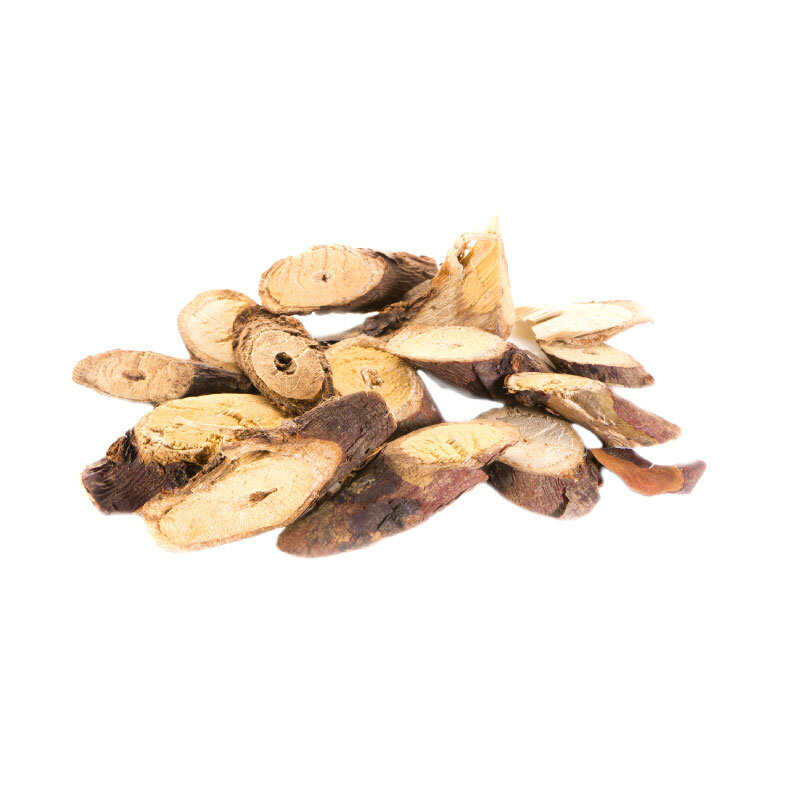 Principal source Cryptolepis Cryptolepis sanguinolenta Herb monograph →
 Source Wireweed Sida acuta Herb monograph →
Concentration
Content by Source
Concentrations not reported. No percent-dry-weight or mg/g figures have been published for this compound in its source plants.
Cryptolepinone at a Glance
Cryptolepinone is a minor indoloquinolinone alkaloid found in the West African antimalarial root Cryptolepis sanguinolenta and in the pantropical weeds Sida acuta (wireweed) and Sida rhombifolia. Structurally it is the 11-oxo (“keto”) relative of cryptolepine, the flagship indoloquinoline of these plants.
Its most important honest caveat comes from the chemistry itself: cryptolepinone was shown to be, at least in part, an oxidation artifact of cryptolepine formed during extraction rather than a major genuine constituent, and it exists in equilibrium with its enol tautomer, hydroxycryptolepine 1Reference 1Isolation and unambiguous synthesis of cryptolepinone: an oxidation artifact of cryptolepineView study →. The two names describe the same molecule in its keto and enol forms.
The pharmacology on record is sparse and entirely preclinical — a cancer-chemoprevention signal from a mouse mammary organ-culture screen 2Reference 2AnimalCompounds obtained from Sida acuta with the potential to induce quinone reductase and to inhibit 7,12-dimethylbenz[a]anthracene-induced preneoplastic lesions in a mouse mammary organ culture modelView study → and an ex-vivo vasorelaxant observation on isolated artery 3Reference 3Secondary metabolites from Sida rhombifolia L. (Malvaceae) and the vasorelaxant activity of cryptolepinoneView study →. There is no human data, no pharmacokinetics, and no dedicated safety dataset for the isolated molecule.
Cryptolepinone vs. Cryptolepine
The single most important point about this molecule is its relationship to its parent, and the care needed not to conflate the two.
Cryptolepine is 5-methyl-10H-indolo[3,2-b]quinoline — the abundant, deeply studied major alkaloid of Cryptolepis sanguinolenta and the antiplasmodial DNA-intercalator that gives the root its reputation. Cryptolepinone is its 11-oxo derivative: the same tetracyclic indoloquinoline skeleton carrying a carbonyl at the 11-position.
Fort and colleagues resolved a genuine confusion in the literature by isolating cryptolepinone and confirming its structure through an unambiguous total synthesis 1Reference 1Isolation and unambiguous synthesis of cryptolepinone: an oxidation artifact of cryptolepineView study →. Two findings from that work anchor everything else here:
- It is largely an extraction artifact. The compound was “isolated as an artifact of extraction” from C. sanguinolenta, i.e. it forms by oxidation of cryptolepine during work-up rather than necessarily accumulating in the living root. This means occurrence reports should be read as reported-on-isolation, not as a measured native abundance 1Reference 1Isolation and unambiguous synthesis of cryptolepinone: an oxidation artifact of cryptolepineView study →.
- Cryptolepinone and hydroxycryptolepine are tautomers. The molecule can sit in the keto form (cryptolepinone) or the enol form (hydroxycryptolepine) depending on solvent — so earlier “11-hydroxycryptolepine” and “cryptolepinone” reports describe one compound, and the structure had previously been mis-assigned before the synthesis settled it 1Reference 1Isolation and unambiguous synthesis of cryptolepinone: an oxidation artifact of cryptolepineView study →.
The practical upshot: cryptolepinone should not be assumed to carry cryptolepine’s antimalarial or cytotoxic profile. Adding the 11-oxo group changes the electronics and planarity of the ring system, and the two molecules have been tested for entirely different endpoints. Where cryptolepine has a large, DNA-intercalation-driven anticancer/antiparasitic literature, cryptolepinone has only the two small preclinical readouts below.
What It's Used For
Cryptolepinone’s evidence base is thin. It has never been the primary drug candidate of its plants — that role belongs to cryptolepine — so it appears mostly as a secondary isolate screened alongside more active compounds. Read every row below as isolated compound, preclinical.
Support is an experimental score — weighted by study type (human > animal > in vitro) and volume. A beta, not a validated metric. Both rows rest on single preclinical studies of the isolate, so the scores are low by design.
In a bioassay-guided study of Sida acuta aimed at cancer-chemopreventive compounds, cryptolepinone (the isolated alkaloid) was among the constituents that induced quinone reductase — a phase-II detoxifying enzyme used as a chemoprevention marker — with the most active compounds in the set active at concentration-to-double (CD) values of about 0.01–0.12 µg/mL. Cryptolepinone also inhibited 7,12-dimethylbenz[a]anthracene (DMBA)-induced preneoplastic lesions by ~83% at 10 µg/mL in a mouse mammary gland organ-culture model; a related synthetic analogue (5,10-dimethylquindolin-11-one, in the quindolinone family) gave ~67% 2Reference 2AnimalCompounds obtained from Sida acuta with the potential to induce quinone reductase and to inhibit 7,12-dimethylbenz[a]anthracene-induced preneoplastic lesions in a mouse mammary organ culture modelView study →.
Gap: this is a single ex-vivo organ-culture screen of the isolate — not a whole-animal tumour study, and certainly not human evidence. It establishes a mechanistic chemoprevention signal only 2Reference 2AnimalCompounds obtained from Sida acuta with the potential to induce quinone reductase and to inhibit 7,12-dimethylbenz[a]anthracene-induced preneoplastic lesions in a mouse mammary organ culture modelView study →.
Cryptolepinone isolated from Sida rhombifolia was tested on pre-contracted rat mesenteric artery rings. It produced near-complete relaxation with the endothelium intact (Emax ≈ 92%) but a much weaker effect once the endothelium was removed (Emax ≈ 61%), identifying the response as largely endothelium-dependent — consistent with an endothelium-mediated (e.g. nitric-oxide-type) relaxing pathway, though the study characterised the effect rather than pinning down the mechanism 3Reference 3Secondary metabolites from Sida rhombifolia L. (Malvaceae) and the vasorelaxant activity of cryptolepinoneView study →.
Gap: an isolated-tissue (ex-vivo) observation with no dose translation, no in-vivo blood-pressure data and no mechanistic confirmation; the vascular relevance in a living animal or human is untested 3Reference 3Secondary metabolites from Sida rhombifolia L. (Malvaceae) and the vasorelaxant activity of cryptolepinoneView study →.
Mechanisms
| Target / pathway | Effect | Relevant to |
|---|---|---|
| Quinone reductase (NQO1, phase-II detox) | induction | cancer chemoprevention |
| DMBA-induced mammary preneoplasia (organ culture) | ~83% inhibition of lesion formation at 10 µg/mL | cancer chemoprevention |
| Vascular endothelium (mesenteric artery) | endothelium-dependent relaxation of pre-contracted vessel | vasorelaxation |
| Keto ⇌ enol tautomerism with hydroxycryptolepine | solvent-dependent equilibrium (structure, not a drug target) | chemistry / identity |
The two pharmacology rows come from different plants and different assay types; neither has been reproduced. The tautomerism row is chemistry, not pharmacology, and is included because it is the defining structural fact about the molecule 1Reference 1Isolation and unambiguous synthesis of cryptolepinone: an oxidation artifact of cryptolepineView study →.
Pharmacokinetics
No pharmacokinetic data exist for cryptolepinone. There are no absorption, oral-bioavailability, distribution, metabolism or half-life figures for the isolated molecule in any species. The published concentrations (CD ≈ 0.01–0.12 µg/mL for the active QR-inducing set; µM-range artery work) are in-vitro/ex-vivo assay concentrations, not systemic exposures, so it is unknown whether any of these effects are reachable in a living organism 2,
Clinical Trials
There are no clinical trials of cryptolepinone. All evidence is preclinical isolate work.
| Completed | Planned | Terminated | Preclinical |
|---|---|---|---|
| — | — | — | Quinone-reductase / mammary chemoprevention screen 2Reference 2AnimalCompounds obtained from Sida acuta with the potential to induce quinone reductase and to inhibit 7,12-dimethylbenz[a]anthracene-induced preneoplastic lesions in a mouse mammary organ culture modelView study →; ex-vivo vasorelaxation 3Reference 3Secondary metabolites from Sida rhombifolia L. (Malvaceae) and the vasorelaxant activity of cryptolepinoneView study → |
Last checked: July 2026.
Isolate vs. Plant Studies
Every cryptolepinone result on record used the isolated compound, not a whole extract — but each isolate came out of a different plant. The chemoprevention data are from Sida acuta 2Reference 2AnimalCompounds obtained from Sida acuta with the potential to induce quinone reductase and to inhibit 7,12-dimethylbenz[a]anthracene-induced preneoplastic lesions in a mouse mammary organ culture modelView study →; the vasorelaxant data are from Sida rhombifolia 3Reference 3Secondary metabolites from Sida rhombifolia L. (Malvaceae) and the vasorelaxant activity of cryptolepinoneView study →; the structural work is from Cryptolepis sanguinolenta 1Reference 1Isolation and unambiguous synthesis of cryptolepinone: an oxidation artifact of cryptolepineView study →. None of these plants is used traditionally for cryptolepinone — it is a minor alkaloid that rides along with the far more abundant cryptolepine and the Sida phenolics/ecdysteroids. Because cryptolepinone is partly an extraction artifact of cryptolepine 1Reference 1Isolation and unambiguous synthesis of cryptolepinone: an oxidation artifact of cryptolepineView study →, attributing any traditional use of these herbs to it would be unsupported. There is no human study of the isolate or of a cryptolepinone-standardised extract.
Prevalence in Nature
Cryptolepinone is a minor, un-quantified alkaloid of the indoloquinoline-bearing plants. It has been reported from:
- Cryptolepis sanguinolenta (Apocynaceae) — the West African antimalarial root, where it appears alongside cryptolepine, quindoline, hydroxycryptolepine and the dimeric cryptolepine alkaloids. Here it is explicitly flagged as arising, at least in part, by oxidation of cryptolepine during extraction rather than as a large native pool 1Reference 1Isolation and unambiguous synthesis of cryptolepinone: an oxidation artifact of cryptolepineView study →.
- Wireweed / Sida acuta (Malvaceae) — one of the indoloquinolinones isolated in the cancer-chemoprevention study of the aerial/whole plant 2Reference 2AnimalCompounds obtained from Sida acuta with the potential to induce quinone reductase and to inhibit 7,12-dimethylbenz[a]anthracene-induced preneoplastic lesions in a mouse mammary organ culture modelView study →.
- Arrowleaf sida (Sida rhombifolia) (Malvaceae) — isolated with sterols, chlorophyll-derived porphyrins and the flavone acacetin in the vasorelaxant study 3Reference 3Secondary metabolites from Sida rhombifolia L. (Malvaceae) and the vasorelaxant activity of cryptolepinoneView study →.
No reliable concentration figures (% dry weight or mg/g) have been published for cryptolepinone in any source. Its occurrence is best summarised as a trace/minor congener of cryptolepine wherever the indoloquinoline alkaloids are found.
Discovery & Synthesis
Cryptolepinone emerged from the intense 1990s phytochemical study of Cryptolepis sanguinolenta that also characterised cryptolepine’s many congeners. Its structure was initially entangled with that of hydroxycryptolepine. The matter was settled by Fort, Litvak and co-workers (Shaman Pharmaceuticals) in 1998, who isolated the compound and carried out an unambiguous total synthesis, demonstrating that it is an oxidation artifact of cryptolepine and that “cryptolepinone” (keto) and “hydroxycryptolepine” (enol) are solvent-dependent tautomers of one structure 1Reference 1Isolation and unambiguous synthesis of cryptolepinone: an oxidation artifact of cryptolepineView study →. Later syntheses of the indoloquinolin-11-one system (and of the related quindolinone) have used it as a target, and Sida studies re-isolated it from Malvaceae plants 2,
Patents: not yet researched.
Toxicity & Safety
Cryptolepinone carries a moderate flag on a conservative, precautionary basis — not because of a documented poisoning, but because no dedicated toxicity dataset exists for the isolated molecule and it is a close structural relative of cryptolepine, which is a cytotoxic, genotoxic (micronucleus-inducing) DNA-intercalator and embryotoxic in zebrafish. Adding the 11-oxo group may well change that behaviour, but with no direct data on cryptolepinone the honest posture is caution by structural analogy rather than a clean bill of health.
- No isolate safety data. No genotoxicity, repeat-dose, reproductive or organ-toxicity study has been published for cryptolepinone itself — safety is unproven, not established.
- Genotoxic parent alkaloid. Its parent cryptolepine is a cytotoxic, DNA-intercalating, micronucleus-inducing alkaloid; kinship warrants caution until cryptolepinone is tested directly.
- No human exposure history. There is no traditional or clinical use of purified cryptolepinone and no drug-interaction data (no CYP/transporter work), so interactions are simply unassessed.
Any reproductive- or developmental-toxicity question is unaddressed for this isolate; the zebrafish embryotoxicity finding belongs to cryptolepine, not to cryptolepinone. Pregnancy and lactation decisions belong to the herb pages where intake is actually decided, not to this molecule-level page.
Dosage
There is no established or recommended dose for cryptolepinone. It is a minor plant alkaloid with no human use and no supplement form. The only figures in the literature are preclinical assay concentrations — the ~0.01–0.12 µg/mL concentration-to-double range for quinone-reductase induction in the active Sida acuta set (~10 µg/mL for the 83% mammary-lesion inhibition) 2Reference 2AnimalCompounds obtained from Sida acuta with the potential to induce quinone reductase and to inhibit 7,12-dimethylbenz[a]anthracene-induced preneoplastic lesions in a mouse mammary organ culture modelView study →, and µM-range concentrations on isolated artery 3Reference 3Secondary metabolites from Sida rhombifolia L. (Malvaceae) and the vasorelaxant activity of cryptolepinoneView study →. These are experimental exposures in cells and tissue, not intake doses, and are not a personal recommendation.
References
- Fort DM, Litvak J, Chen JL, Lu Q, Phuan PW, Cooper R, Bierer DE (1998). Isolation and unambiguous synthesis of cryptolepinone: an oxidation artifact of cryptolepine. Journal of Natural Products. https://pubmed.ncbi.nlm.nih.gov/9868157/
- Jang DS, Park EJ, Kang YH, Su BN, Hawthorne ME, Vigo JS, Graham JG, Cabieses F, Fong HHS, Mehta RG, Pezzuto JM, Kinghorn AD (2003). Compounds obtained from Sida acuta with the potential to induce quinone reductase and to inhibit 7,12-dimethylbenz[a]anthracene-induced preneoplastic lesions in a mouse mammary organ culture model. Archives of Pharmacal Research. https://pubmed.ncbi.nlm.nih.gov/12967190/
- Chaves OS, Gomes RA, Tomaz AC, Fernandes MG, das Graças Mendes L Jr, de Fátima Agra M, Braga VA, de Fátima Vanderlei de Souza M (2013). Secondary metabolites from Sida rhombifolia L. (Malvaceae) and the vasorelaxant activity of cryptolepinone. Molecules. https://pubmed.ncbi.nlm.nih.gov/23455668/



