
Compound Monograph
Hydroxycryptolepine
Hydroxycryptolepine (11-hydroxycryptolepine) is a minor indoloquinoline alkaloid of the West African antimalarial root Cryptolepis sanguinolenta — a C-11 hydroxylated congener of cryptolepine that is a strong antiplasmodial in the test tube but was inactive in infected mice.

Sources · 1
Where Does It Come From?
Hydroxycryptolepine is a naturally occurring indoloquinoline alkaloid (cryptolepine group; c-11 hydroxylated congener), found in Cryptolepis. It is flagged as moderately toxic.
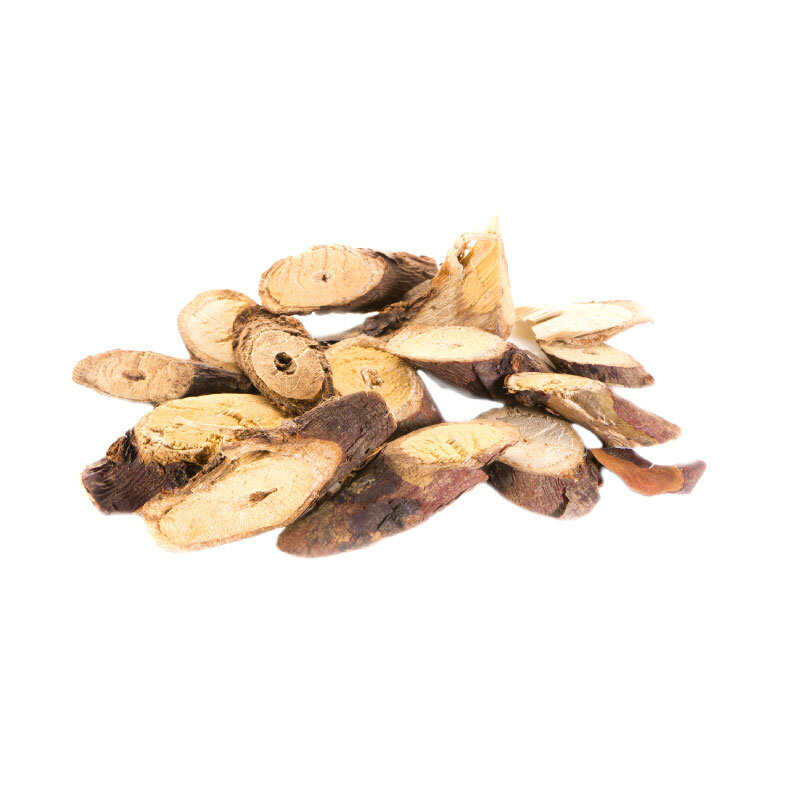
Concentration
Content by Source
Concentrations not reported. No percent-dry-weight or mg/g figures have been published for this compound in its source plants.
Hydroxycryptolepine at a Glance
Hydroxycryptolepine — properly 11-hydroxycryptolepine — is a minor alkaloid of Cryptolepis sanguinolenta, the yellow-rooted West African climber whose water decoction is a traditional treatment for malaria and fever. Chemically it is a C-11 hydroxylated version of cryptolepine, the plant’s flagship indoloquinoline alkaloid, and it travels alongside cryptolepine and quindoline in the root bark and leaves 1,
Its research footprint is thin and honest. The one substantive finding is antimalarial: in the test tube it is a strong antiplasmodial, active even against chloroquine-resistant Plasmodium falciparum — but in infected mice it did nothing 1Reference 1In vitroIn vitro and in vivo antiplasmodial activity of cryptolepine and related alkaloids from Cryptolepis sanguinolentaView study →. A separate assay found it inhibits the enzyme xanthine oxidase and scavenges superoxide radicals, an activity its non-hydroxylated cousins lack 3Reference 3ReviewPhytochemical and pharmacological review of Cryptolepis sanguinolenta (Lindl.) SchlechterView study →. Beyond isolation, those two datapoints are essentially the whole story; there is no dedicated safety, pharmacokinetic or clinical work on the isolated molecule.
The Cryptolepine Relationship
The point is a single structural fact: hydroxycryptolepine is cryptolepine carrying a hydroxyl group at position 11 of the indoloquinoline core. That one change is worth understanding, because C-11 is exactly the position where cryptolepine is chemically vulnerable.
When cryptolepine is fed to liver enzymes, the flavoprotein aldehyde oxidase oxidises it at C-11 to cryptolepine-11-one (the 11-oxo form, related to cryptolepinone) — and that oxidised product was inactive against P. falciparum 4Reference 4Metabolism of cryptolepine and 2-fluorocryptolepine by aldehyde oxidaseView study →. Because aldehyde oxidase can act quickly in humans, this C-11 oxidation is viewed as a metabolic liability that may blunt cryptolepine’s usefulness as an oral antimalarial 5Reference 5AnimalIdentification of cryptolepine metabolites in rat and human hepatocytes and metabolism and pharmacokinetics of cryptolepine in Sprague Dawley ratsView study →. Hydroxycryptolepine sits on the same C-11 oxygenated axis (the hydroxyl is the reduced, enol-side relative of that 11-oxo group), which frames it as much a marker of cryptolepine’s oxidative fate as an independent drug lead.
This is chemistry and metabolism, not a demonstrated human effect — but it explains why a molecule that looks like “cryptolepine plus one oxygen” behaves so differently in a living animal than in a dish.
What It's Used For
The evidence base is two isolated in-vitro signals from Cryptolepis phytochemistry, both on the pure alkaloid. Neither has any human data behind it.
Support is an experimental score — weighted by study type (human > animal > in vitro) and volume. A beta, not a validated metric. Both scores rest on single in-vitro reports of the isolated alkaloid, with no human data; read the per-row basis.
The one substantive finding, and it comes with its own refutation. As an isolated alkaloid, hydroxycryptolepine showed strong antiplasmodial activity against chloroquine-resistant P. falciparum (the K-1 and W-2 strains) as well as the chloroquine-sensitive D-6 strain 1Reference 1In vitroIn vitro and in vivo antiplasmodial activity of cryptolepine and related alkaloids from Cryptolepis sanguinolentaView study →.
That is the promising half. The other half: in the same study, hydroxycryptolepine (compound 3) was inactive in P. berghei-infected mice — the whole-animal test where a drug lead has to prove itself 1Reference 1In vitroIn vitro and in vivo antiplasmodial activity of cryptolepine and related alkaloids from Cryptolepis sanguinolentaView study →.
It was co-isolated from the leaves in a later screen, but that work reported no separate potency figure for it, quoting cryptolepine and cryptoheptine as the most active alkaloids 2Reference 2Antiplasmodial activity of Cryptolepis sanguinolenta alkaloids from leaves and rootsView study →.
Gap: the activity is in-vitro isolate only; the in-vivo failure in mice, and the fact that it does not outperform the parent cryptolepine, keep this well short of a drug lead. The traditional remedy is a water decoction of the whole root, in which this minor alkaloid is a bit player, not the active agent 1,
The distinctively “hydroxy” activity. In an assay of Cryptolepis alkaloids, hydroxycryptolepine inhibited xanthine oxidase (IC50 ≈ 32.3 µM) and scavenged superoxide anions (IC50 ≈ 28 µM) — modest potencies, but notable because the closely related cryptolepine, quindoline, neocryptolepine and biscryptolepine were devoid of both activities, implicating the C-11 hydroxyl group as the pharmacophore 3Reference 3ReviewPhytochemical and pharmacological review of Cryptolepis sanguinolenta (Lindl.) SchlechterView study →.
Gap: this rests on a single in-vitro report (relayed through a peer-reviewed review, as the primary appeared in a journal not indexed on PubMed), at micromolar concentrations, with no cellular or animal follow-up and no link to any therapeutic outcome 3Reference 3ReviewPhytochemical and pharmacological review of Cryptolepis sanguinolenta (Lindl.) SchlechterView study →.
Mechanisms
| Target / pathway | Effect | Relevant to |
|---|---|---|
| P. falciparum (blood-stage parasite) | strong growth inhibition in vitro, including chloroquine-resistant strains; not reproduced in infected mice | antiplasmodial |
| Xanthine oxidase | enzyme inhibition (IC50 ≈ 32 µM); activity absent in the non-hydroxylated congeners | antioxidant / uric-acid pathway |
| Superoxide anion | radical scavenging (IC50 ≈ 28 µM), attributed to the C-11 hydroxyl | antioxidant |
| Indoloquinoline (cryptolepine) scaffold | shares the DNA-intercalating aromatic core of its parent, though intercalation/topoisomerase activity has not been measured for this specific congener | mechanistic context / safety |
The load-bearing point is the contrast in the antioxidant row: adding a hydroxyl at C-11 switches on xanthine-oxidase and superoxide activity that the parent alkaloids lack 3Reference 3ReviewPhytochemical and pharmacological review of Cryptolepis sanguinolenta (Lindl.) SchlechterView study →, while the antiplasmodial punch of the scaffold survives in the dish but not in the animal 1Reference 1In vitroIn vitro and in vivo antiplasmodial activity of cryptolepine and related alkaloids from Cryptolepis sanguinolentaView study →.
Pharmacokinetics
No pharmacokinetic study of isolated hydroxycryptolepine exists — absorption, distribution, oral bioavailability and half-life are all uncharacterised. The only relevant context is indirect and belongs to the parent: cryptolepine is oxidised at C-11 by aldehyde oxidase to cryptolepine-11-one 4Reference 4Metabolism of cryptolepine and 2-fluorocryptolepine by aldehyde oxidaseView study →, and human hepatocyte work identified oxidative-hydroxylation metabolites of cryptolepine, with aldehyde-oxidase involvement flagged as a potential limit on its systemic usefulness 5Reference 5AnimalIdentification of cryptolepine metabolites in rat and human hepatocytes and metabolism and pharmacokinetics of cryptolepine in Sprague Dawley ratsView study →. In other words, the C-11 oxygenation that defines hydroxycryptolepine is a metabolic hotspot for the whole cryptolepine series — but no one has measured what the pre-formed hydroxy alkaloid does in a body. This is a genuine hole, not silence to read as reassurance.
Clinical Trials
There are no clinical trials of hydroxycryptolepine, and none are registered. Human evidence for the plant belongs to whole Cryptolepis sanguinolenta preparations and to research on the major alkaloid cryptolepine, not to this minor congener.
| Completed | Planned | Terminated | Preclinical |
|---|---|---|---|
| — | — | — | In-vitro antiplasmodial + xanthine-oxidase/antioxidant only 1, |
Last checked: July 2026.
Isolate vs. Plant Studies
Every reported result for hydroxycryptolepine is on the isolated alkaloid — it has never been the thing a person or animal actually took. The antiplasmodial and xanthine-oxidase data are pure-compound in-vitro assays 1,
Prevalence in Nature
Hydroxycryptolepine occurs in Cryptolepis sanguinolenta, a West African Apocynaceae liana (the roots give the traditional antimalarial “Ghana quinine”). It has been isolated from both the root bark and the leaves, always as one of a set of indoloquinoline alkaloids led by cryptolepine and accompanied by quindoline and neocryptolepine 1,
Discovery & Synthesis
Hydroxycryptolepine was described as one of the known minor alkaloids of Cryptolepis sanguinolenta during the 1990s wave of phytochemistry that grew out of the plant’s antimalarial reputation; its antiplasmodial and toxicity profile relative to cryptolepine was set out by Cimanga and colleagues in 1997 1Reference 1In vitroIn vitro and in vivo antiplasmodial activity of cryptolepine and related alkaloids from Cryptolepis sanguinolentaView study →, and it was again isolated from leaf extracts by Paulo and colleagues in 2000 2Reference 2Antiplasmodial activity of Cryptolepis sanguinolenta alkaloids from leaves and rootsView study →. Its name is purely descriptive — cryptolepine bearing a hydroxyl group at ring position 11. No dedicated total synthesis of hydroxycryptolepine is documented in the sources reviewed; related C-11 oxygenated cryptolepines have instead been reached through the metabolic oxidation of cryptolepine (e.g. the aldehyde-oxidase route to cryptolepine-11-one) rather than by a standalone synthetic campaign 4Reference 4Metabolism of cryptolepine and 2-fluorocryptolepine by aldehyde oxidaseView study →. Any material used in research has been obtained by isolation from the plant.
Patents: not yet researched.
Toxicity & Safety
Hydroxycryptolepine carries a moderate flag, assigned conservatively rather than from measured harm. There is no isolate-specific toxicology — no genotoxicity, cytotoxicity, repeat-dose or reproductive dataset for the pure compound. The flag reflects two things: it is a close congener of cryptolepine, whose isolated alkaloid is potently cytotoxic and genotoxic (DNA intercalation, micronucleus induction) in vitro, and it shares that alkaloid’s flat, DNA-intercalating indoloquinoline scaffold. Absence of data here is a reason for caution, not comfort.
- A minor plant alkaloid, not a marketed product. Human exposure, if any, is as a trace constituent of whole Cryptolepis root preparations, where cryptolepine dominates.
- Cryptolepine-family scaffold. The parent alkaloid is cytotoxic and genotoxic in vitro; a shared DNA-intercalating core means the same class-level concern should be assumed for this congener until tested.
- No isolate safety data. No genotoxicity, cytotoxicity, pharmacokinetic or reproductive study exists for hydroxycryptolepine itself — safety cannot be inferred from silence.
- Not established for any human use. The antiplasmodial signal is in-vitro only and failed in mice; there is no dose or indication with human support.
Reproductive and developmental toxicity have not been assessed for this molecule. Pregnancy- and lactation-safety decisions belong to the Cryptolepis sanguinolenta herb page, where whole-plant intake is decided, not to this molecule-level phytochemistry page.
Dosage
There is no established or studied human dose for hydroxycryptolepine. It is a minor research-stage alkaloid, and every figure attached to it is a laboratory concentration, not a dose: strong in-vitro antiplasmodial activity against P. falciparum 1Reference 1In vitroIn vitro and in vivo antiplasmodial activity of cryptolepine and related alkaloids from Cryptolepis sanguinolentaView study →, and micromolar in-vitro xanthine-oxidase (IC50 ≈ 32 µM) and superoxide (IC50 ≈ 28 µM) activity 3Reference 3ReviewPhytochemical and pharmacological review of Cryptolepis sanguinolenta (Lindl.) SchlechterView study →. Traditional use of the source plant is a whole-root water decoction standardised, if at all, to cryptolepine — not to this constituent. These are research figures and not a personal recommendation.
References
- Cimanga K, De Bruyne T, Pieters L, Vlietinck AJ, Turger CA (1997). In vitro and in vivo antiplasmodial activity of cryptolepine and related alkaloids from Cryptolepis sanguinolenta. Journal of Natural Products. https://pubmed.ncbi.nlm.nih.gov/9249972/
- Paulo A, Gomes ET, Steele J, Warhurst DC, Houghton PJ (2000). Antiplasmodial activity of Cryptolepis sanguinolenta alkaloids from leaves and roots. Planta Medica. https://pubmed.ncbi.nlm.nih.gov/10705730/
- Osafo N, Mensah KB, Yeboah OK (2017). Phytochemical and pharmacological review of Cryptolepis sanguinolenta (Lindl.) Schlechter. Advances in Pharmacological Sciences. https://pubmed.ncbi.nlm.nih.gov/29750083/
- Stell JGP, Wheelhouse RT, Wright CW (2012). Metabolism of cryptolepine and 2-fluorocryptolepine by aldehyde oxidase. Journal of Pharmacy and Pharmacology. https://pubmed.ncbi.nlm.nih.gov/22221099/
- Forkuo AD, Ansah C, Pearson D, et al. (2017). Identification of cryptolepine metabolites in rat and human hepatocytes and metabolism and pharmacokinetics of cryptolepine in Sprague Dawley rats. BMC Pharmacology & Toxicology. https://pubmed.ncbi.nlm.nih.gov/29273084/



