
Compound Monograph
Quindolinone
Quindolinone is a minor indoloquinoline alkaloid of Cryptolepis sanguinolenta and Sida acuta — an 11-oxo derivative of quindoline. Its only reported biology is potent quinone-reductase induction in a cell screen; it is otherwise a structural and analytical-marker compound with no pharmacology in animals or people.

Sources · 3
Where Does It Come From?
Quindolinone is a naturally occurring indoloquinoline alkaloid (quindoline / indolo[3,2-b]quinolinone group), found in Yellow-dye root, Wireweed and 1 other source. It is flagged as moderately toxic.
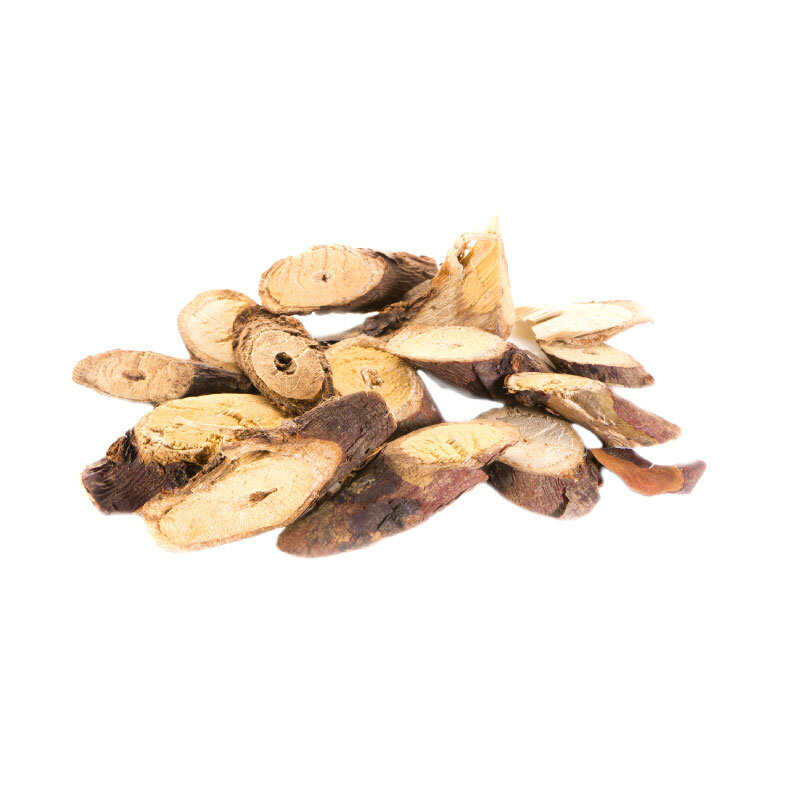 Principal source Cryptolepis Cryptolepis sanguinolenta Herb monograph →
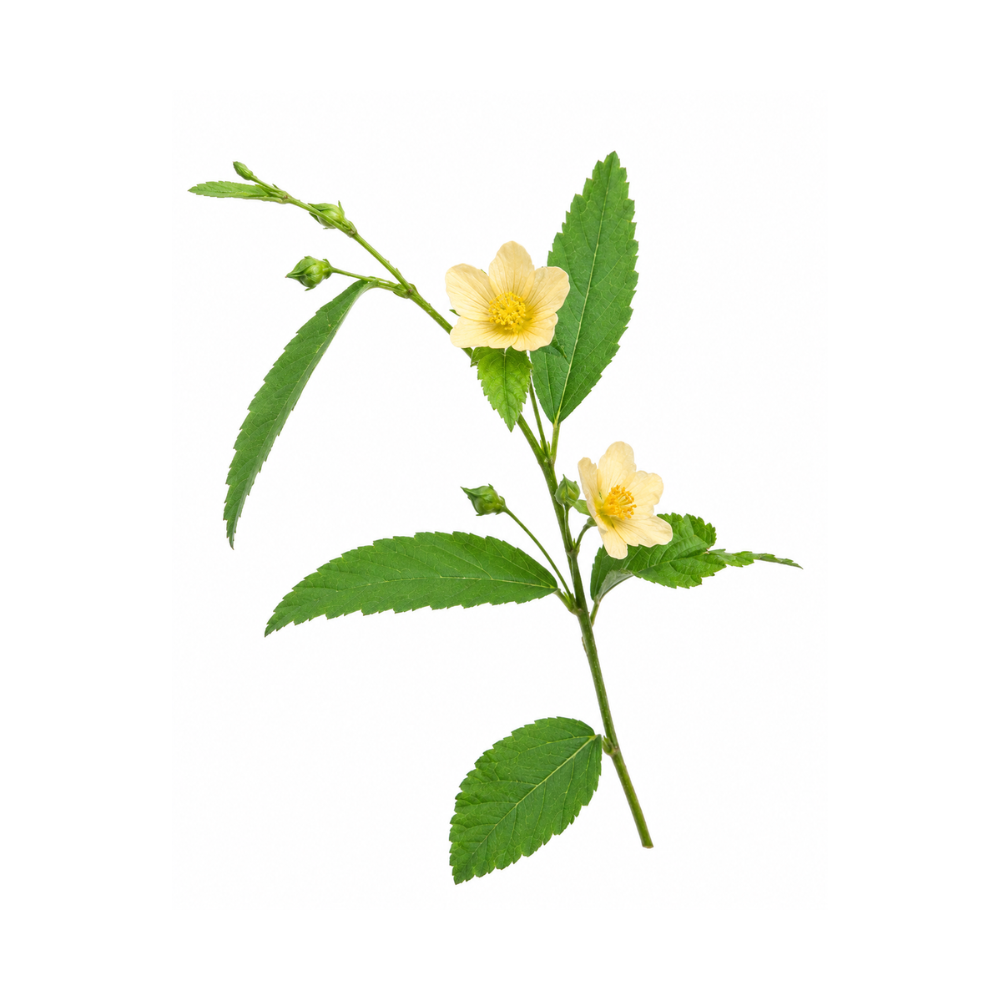 Source Wireweed Sida acuta Herb monograph →
Concentration
Content by Source
Concentrations not reported. No percent-dry-weight or mg/g figures have been published for this compound in its source plants.
Quindolinone at a Glance
Quindolinone is a minor indoloquinoline alkaloid found in the roots of Cryptolepis sanguinolenta and in Sida acuta (wireweed). Structurally it is an oxidised (11-oxo) form of quindoline — the des-N-methyl parent of the flagship alkaloid cryptolepine — and the des-N-methyl counterpart of cryptolepinone.
Unlike its heavily-studied relatives, quindolinone has almost no pharmacology of its own. It surfaces in the literature in two narrow contexts: as one of several alkaloids that induced quinone reductase in a single cell-based chemoprevention screen 1Reference 1AnimalCompounds obtained from Sida acuta with the potential to induce quinone reductase and to inhibit 7,12-dimethylbenz[a]anthracene-induced preneoplastic lesions in a mouse mammary organ culture modelView study →, and as a marker compound used to fingerprint and authenticate Sida herbal material 2Reference 2Densitometric method for assessment of six specialized metabolites in four Sida sp. and its congener Abutilon indicum: targeted metabolomics, greenness assessment, and chemometrics analysisView study →. There are no animal studies, no clinical data, and no toxicity dataset for the isolated molecule.
This is a structure-and-occurrence page, not an efficacy page. What is honest to say about quindolinone is where it comes from, what it is related to, and that its biology is essentially uncharacterised beyond one in-vitro signal.
Relationship to Quindoline & Cryptolepine
The Cryptolepis/Sida indoloquinolines are a tight structural family built on the indolo[3,2-b]quinoline scaffold, and quindolinone’s identity is easiest to read off that family tree:
- Cryptolepine — 5-methyl-indolo[3,2-b]quinoline; the major, bioactive alkaloid (DNA-intercalating, antiplasmodial, cytotoxic).
- Quindoline — the des-N-methyl parent of cryptolepine and its biosynthetic precursor.
- Quindolinone — the 11-oxo (11-one) derivative of quindoline, i.e. a carbonyl at the 11-position of that same scaffold.
- Cryptolepinone — the N-methyl (5-methyl) analogue of quindolinone; quindolinone is simply cryptolepinone without the N-methyl group.
The distinction matters because the added 11-oxo group removes the flat, cationic, DNA-intercalating character that drives cryptolepine’s activity. Quindolinone is a neutral carbonyl compound rather than a planar aromatic cation, which is consistent with its lack of the antiplasmodial/cytotoxic profile seen in cryptolepine and quindoline.
What It's Used For
The entire reported pharmacology of quindolinone rests on one paper: a Sida acuta bioassay-guided isolation that screened its alkaloids for quinone-reductase (QR) induction, an in-vitro marker of cancer-chemopreventive (phase-II detoxification enzyme) activity 1Reference 1AnimalCompounds obtained from Sida acuta with the potential to induce quinone reductase and to inhibit 7,12-dimethylbenz[a]anthracene-induced preneoplastic lesions in a mouse mammary organ culture modelView study →.
Support is an experimental score — weighted by study type (human > animal > in vitro) and volume. A beta, not a validated metric. The single row below reflects one in-vitro mechanistic screen; there is no application-level (disease-outcome) evidence for this molecule.
In a bioassay-guided study of Sida acuta, quindolinone was one of three indoloquinoline alkaloids (with 11-methoxyquindoline and cryptolepinone) that acted as potent inducers of quinone reductase in cultured Hepa 1c1c7 mouse hepatoma cells, with CD values of 0.01–0.12 µg/mL 1Reference 1AnimalCompounds obtained from Sida acuta with the potential to induce quinone reductase and to inhibit 7,12-dimethylbenz[a]anthracene-induced preneoplastic lesions in a mouse mammary organ culture modelView study →.
QR induction is used as an early in-vitro proxy for phase-II detoxification and cancer chemoprevention. This is an isolated-compound result on a cellular enzyme readout, not a disease model.
Gap: the follow-on functional endpoint in that paper — 83% inhibition of DMBA-induced preneoplastic mammary lesions in mouse organ culture at 10 µg/mL — was shown for the N-methyl analogue cryptolepinone, not for quindolinone; whether quindolinone itself carries any protective effect beyond the enzyme-induction number was never tested 1Reference 1AnimalCompounds obtained from Sida acuta with the potential to induce quinone reductase and to inhibit 7,12-dimethylbenz[a]anthracene-induced preneoplastic lesions in a mouse mammary organ culture modelView study →.
Mechanisms
| Target / pathway | Effect | Relevant to |
|---|---|---|
| Quinone reductase (NQO1) in Hepa 1c1c7 cells | potent induction (CD 0.01–0.12 µg/mL) — a phase-II detoxification / chemoprevention marker | the sole reported in-vitro signal |
| DNA intercalation (cf. cryptolepine) | not applicable — the 11-oxo group removes the flat cationic character; no intercalation/topoisomerase data reported for quindolinone | contrast with cryptolepine |
The only measured mechanism is enzyme induction in one cell line. Nothing links quindolinone to a receptor, pathway, or in-vivo endpoint of its own.
Pharmacokinetics
No pharmacokinetic data exist for quindolinone. Absorption, oral bioavailability, distribution, metabolism, and half-life have not been studied in any species. As a minor alkaloid present only in trace amounts, meaningful systemic exposure from ingesting the source plants is unlikely, but this has not been measured.
Clinical Trials
None. Quindolinone has never been evaluated in humans, and no trials are registered or planned.
| Completed | Planned | Terminated | Preclinical |
|---|---|---|---|
| — | — | — | One in-vitro QR-induction screen (isolate) 1Reference 1AnimalCompounds obtained from Sida acuta with the potential to induce quinone reductase and to inhibit 7,12-dimethylbenz[a]anthracene-induced preneoplastic lesions in a mouse mammary organ culture modelView study → |
Last checked: July 2026.
Analytical Marker in Sida
Quindolinone’s most practically useful role is analytical, not pharmacological. A validated HPTLC-UV densitometric method for authenticating and quantifying Sida herbal material uses quindolinone (alongside cryptolepine and other specialised metabolites) as one of six marker compounds to fingerprint Sida acuta, S. cordifolia, S. rhombifolia and S. cordata and to detect adulteration 2Reference 2Densitometric method for assessment of six specialized metabolites in four Sida sp. and its congener Abutilon indicum: targeted metabolomics, greenness assessment, and chemometrics analysisView study →. In this context the molecule is valued as a chemotaxonomic signature of the genus rather than for any biological effect.
Prevalence in Nature
Quindolinone occurs as a trace indoloquinoline alkaloid in two botanical contexts:
- Yellow-dye root (Cryptolepis sanguinolenta) — a West African root that is the classic source of the indoloquinoline alkaloids, dominated by cryptolepine; quindolinone is one of the minor congeners of the alkaloid fraction.
- Wireweed (Sida acuta) and related Sida species — where it is one of the aerial-part/whole-plant alkaloids and serves as a marker metabolite 1,
2Reference 1AnimalCompounds obtained from Sida acuta with the potential to induce quinone reductase and to inhibit 7,12-dimethylbenz[a]anthracene-induced preneoplastic lesions in a mouse mammary organ culture modelView study →Reference 2Densitometric method for assessment of six specialized metabolites in four Sida sp. and its congener Abutilon indicum: targeted metabolomics, greenness assessment, and chemometrics analysisView study → .
No quantified concentration for quindolinone has been published in either plant; it is reported qualitatively, and its abundance relative to the major alkaloid cryptolepine is not documented. This makes it a trace constituent by every available description, but the actual figure is a genuine gap.
Discovery & Synthesis
Quindolinone was isolated and characterised from Sida acuta in the 2003 bioassay-guided chemoprevention study by Jang and co-workers, who also prepared the synthetic derivative 5,10-dimethylquindolin-11-one to probe the QR-induction structure–activity relationship 1Reference 1AnimalCompounds obtained from Sida acuta with the potential to induce quinone reductase and to inhibit 7,12-dimethylbenz[a]anthracene-induced preneoplastic lesions in a mouse mammary organ culture modelView study →. As a member of the long-studied Cryptolepis alkaloid series, the quindolin-11-one scaffold is also known from that plant’s phytochemistry. No dedicated total-synthesis campaign or commercial production route is specific to quindolinone — it is a research-scale natural product accessed by isolation or by oxidation/derivatisation of the quindoline scaffold.
Patents: not yet researched.
Toxicity & Safety
Quindolinone has no dedicated toxicity dataset — no genotoxicity, repeat-dose, reproductive, or acute-toxicity studies of the isolated molecule exist. Its safety is therefore not established.
The moderate flag here is a conservative placeholder, not a measured finding: quindolinone is a minor member of an alkaloid class whose flagship, cryptolepine, is potently cytotoxic and genotoxic in vitro. The 11-oxo modification is expected to remove the DNA-intercalating character responsible for cryptolepine’s genotoxicity, so quindolinone may well be far less hazardous — but because that has not been tested, the page does not claim safety from silence.
- Safety not established. No toxicity, genotoxicity, or reproductive data exist for isolated quindolinone.
- Class context. It belongs to the indoloquinoline family of the genotoxic alkaloid cryptolepine; the 11-oxo form likely lacks that DNA-intercalating character, but this is inference, not data.
- Exposure is trace. It occurs only in minor amounts in its source plants, so real-world dietary/herbal exposure to the isolated molecule is very low.
Dosage
Not applicable. There is no established use, no human dose, and no isolated-compound dose studied in animals. The only quantities ever used are in-vitro assay concentrations (QR-induction CD of 0.01–0.12 µg/mL in cell culture) 1Reference 1AnimalCompounds obtained from Sida acuta with the potential to induce quinone reductase and to inhibit 7,12-dimethylbenz[a]anthracene-induced preneoplastic lesions in a mouse mammary organ culture modelView study →, which are laboratory figures, not doses and not a recommendation.
References
- Jang DS, Park EJ, Kang YH, et al. (2003). Compounds obtained from Sida acuta with the potential to induce quinone reductase and to inhibit 7,12-dimethylbenz[a]anthracene-induced preneoplastic lesions in a mouse mammary organ culture model. Archives of Pharmacal Research. https://pubmed.ncbi.nlm.nih.gov/12967190/
- Rahate SP, Singh M, Verma AK, et al. (2024). Densitometric method for assessment of six specialized metabolites in four Sida sp. and its congener Abutilon indicum: targeted metabolomics, greenness assessment, and chemometrics analysis. Journal of Pharmaceutical and Biomedical Analysis. https://pubmed.ncbi.nlm.nih.gov/38181556/



