
Compound Monograph
Cyanidin-3-Sambubioside
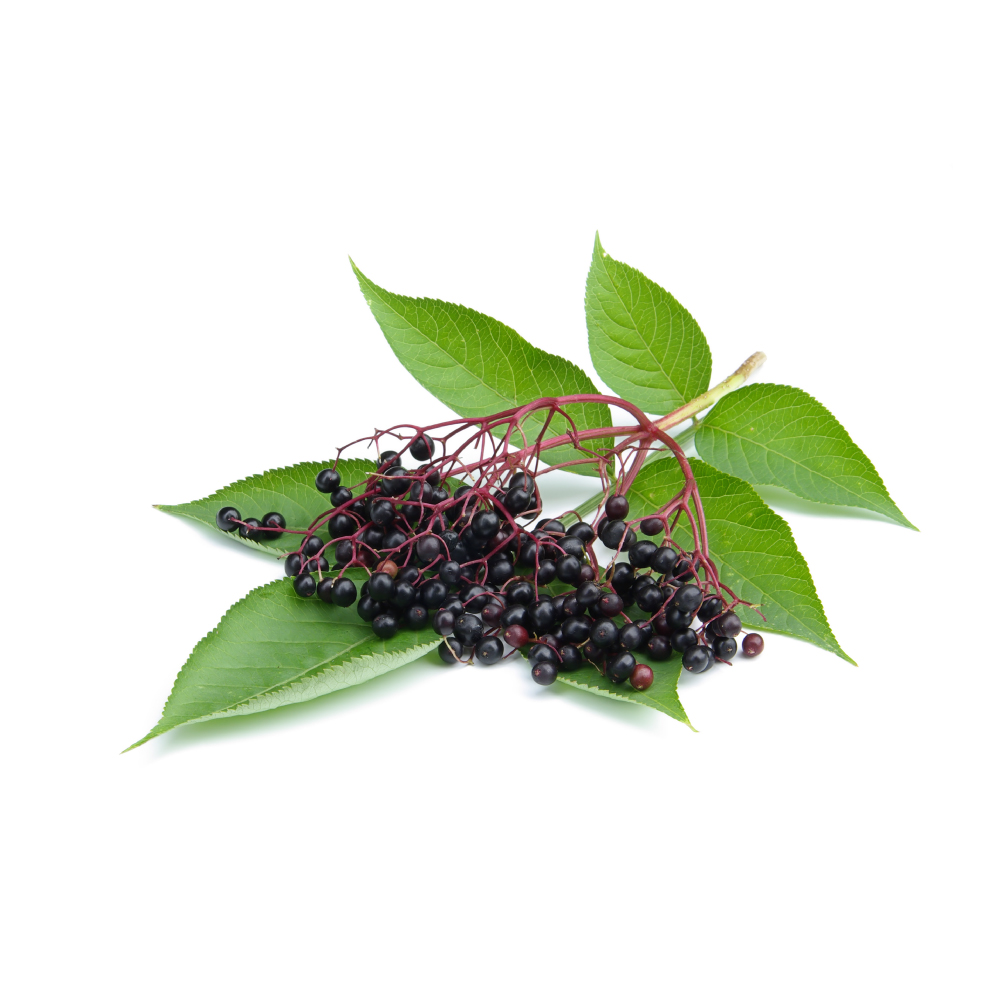
Cyanidin-3-sambubioside is the signature anthocyanin pigment of black elderberry (Sambucus nigra) — a cyanidin diglycoside that, with cyanidin-3-glucoside, colours the ripe berry and serves as its chemical marker. A strong antioxidant in the test tube, but like all anthocyanins it is poorly absorbed, and the human elderberry evidence is for whole extracts, not this isolated pigment.

Sources · 5
Where Does It Come From?
Cyanidin-3-Sambubioside is a naturally occurring anthocyanin (cyanidin 3-o-diglycoside / sambubioside), found in Black elderberry, American elderberry and 3 other sources. It is well tolerated orally (low toxicity).
Concentration
Content by Source
Reported concentrations across the plants that contain cyanidin-3-sambubioside — the bar marks the typical level, the line shows the reported range.
Literature figures for varying plant parts and preparations. Read them as a comparative guide, not exact assays.
Cyanidin-3-Sambubioside at a Glance
Cyanidin-3-sambubioside is one of the two anthocyanin pigments that give black elderberry (Sambucus nigra) its deep purple-black colour. It is a glycoside of cyanidin — the sugar-free anthocyanidin core carried on a sambubiose disaccharide — and alongside cyanidin-3-glucoside it is the berry’s dominant and most characteristic pigment 1Reference 1Investigation of anthocyanin profile of four elderberry species and interspecific hybridsView study →.
As chemistry, it is a capable antioxidant: its catechol B-ring scavenges radicals, and in cell studies it is among the most protective elderberry anthocyanins against oxidative stress 8Reference 8Antioxidant effects of elderberry anthocyanins in human colon carcinoma cells: a study on structure-activity relationshipsView study →. But two honest caveats govern everything below. First, like all anthocyanins it is poorly bioavailable — only a fraction of a percent is recovered intact, and much of its in-vivo activity likely belongs to downstream metabolites such as protocatechuic acid 2,
The Elderberry Anthocyanin
Cyanidin-3-sambubioside is best understood as elderberry’s signature molecule. Across surveys of Sambucus fruit it is one of the two most abundant anthocyanins — with cyanidin-3-glucoside and their 5-glucoside counterparts, the four together account for more than 98% of the berry’s total anthocyanin 1Reference 1Investigation of anthocyanin profile of four elderberry species and interspecific hybridsView study →. Because that profile is distinctive, the pigment functions as a chemical marker for authentic black elderberry, and in one anthocyanin-enriched elderberry extract it was the single largest component at about 51% 9Reference 9Antiproliferative and apoptotic potential of cyanidin-based anthocyanins on melanoma cellsView study →.
This is also the molecule most people mean, without knowing it, when they reach for elderberry against colds and flu. The popular antiviral story rests on whole elderberry preparations: an in-vitro study found elderberry flavonoids bind H1N1 virions and block host-cell entry 10Reference 10In vitroElderberry flavonoids bind to and prevent H1N1 infection in vitroView study →; a randomised trial of an elderberry syrup (Sambucol) reported influenza symptoms resolving roughly four days sooner than placebo 11Reference 11RCTRandomized study of the efficacy and safety of oral elderberry extract in the treatment of influenza A and B virus infectionsView study →; a placebo-controlled trial in air travellers found elderberry shortened cold duration and reduced symptom severity 12Reference 12RCTElderberry supplementation reduces cold duration and symptoms in air-travellers: a randomized, double-blind placebo-controlled clinical trialView study →; and a meta-analysis of controlled trials concluded elderberry supplementation reduced upper-respiratory symptoms 13Reference 13Meta-analysisBlack elderberry (Sambucus nigra) supplementation effectively treats upper respiratory symptoms: a meta-analysis of randomized, controlled clinical trialsView study →.
The load-bearing honesty is that none of these tested isolated cyanidin-3-sambubioside. They tested elderberry extracts — complex mixtures of anthocyanins, flavonols, phenolic acids and other constituents. The pigment is a major, defining part of that mixture and a plausible contributor, but the clinical signal cannot be attributed to it alone, and the trials themselves are small and call for confirmation 11,
Sambubioside vs. Glucoside
The two dominant elderberry pigments share the same coloured core — cyanidin — and differ only in the sugar hung at the 3-position. That difference is the whole point of this molecule.
- Cyanidin-3-glucoside carries a single glucose (a monoglycoside; also called chrysanthemin).
- Cyanidin-3-sambubioside carries sambubiose, a disaccharide — glucose with a β-D-xylose attached at its 2-position (2-O-β-D-xylosyl-glucose). It is therefore a diglycoside.
The extra xylose does not change the pigment’s colour chemistry much, but it does change its size, polarity and how enzymes handle it. In a structure–activity study in human colon-carcinoma cells, both cyanidin-3-sambubioside and cyanidin-3-glucoside were the most potent elderberry anthocyanins at protecting cells from hydrogen-peroxide-induced reactive oxygen species — the simpler mono- and di-glycosides of cyanidin outperformed the more heavily glycosylated 5-glucoside forms 8Reference 8Antioxidant effects of elderberry anthocyanins in human colon carcinoma cells: a study on structure-activity relationshipsView study →. In elderberry the two co-occur in comparable amounts and are usually reported together; cyanidin-3-glucoside is covered on its own page when built, and until then the shared caveats — poor absorption, metabolite-dominated exposure — apply equally to both.
What It's Used For
The evidence base is overwhelmingly preclinical, and splits into what has been shown for the isolated pigment (mostly cell-based antioxidant work) versus what belongs to the whole elderberry extract (the antiviral/immune data).
Support is an experimental score — weighted by study type (human > animal > in vitro) and volume. A beta, not a validated metric. The isolated pigment has essentially no human efficacy data of its own, so scores stay low by design; the elderberry human trials are scored under the extract, not the isolate.
The application where the isolated molecule is itself the thing tested. Cyanidin’s catechol (ortho-dihydroxy) B-ring makes its glycosides strong hydrogen-atom and electron donors 7Reference 7Antioxidant activity of anthocyanins and their aglyconsView study →.
In a structure–activity study in human colon-carcinoma (HT-29 / Caco-2) cells, cyanidin-3-sambubioside and cyanidin-3-glucoside were the most potent elderberry anthocyanins at protecting cells against hydrogen-peroxide-induced reactive oxygen species — with the protection appearing to work largely independently of the Nrf2 antioxidant pathway, so other mechanisms are implicated 8Reference 8Antioxidant effects of elderberry anthocyanins in human colon carcinoma cells: a study on structure-activity relationshipsView study →.
Gap: these are cell-based assays at applied concentrations; no human antioxidant outcome rests on the isolated pigment, and its poor absorption means intact-pigment exposure in tissue is very low (see Pharmacokinetics) 2,
The reputation elderberry is famous for — but the evidence is for the whole extract. Elderberry flavonoids bind H1N1 influenza virions in vitro and block host-cell entry (the potent species there were flavonols/flavanonols, not this anthocyanin) 10Reference 10In vitroElderberry flavonoids bind to and prevent H1N1 infection in vitroView study →.
A randomised trial of elderberry syrup reported influenza symptoms easing ~4 days sooner than placebo 11Reference 11RCTRandomized study of the efficacy and safety of oral elderberry extract in the treatment of influenza A and B virus infectionsView study →.
An air-traveller trial found elderberry shortened cold duration and severity 12Reference 12RCTElderberry supplementation reduces cold duration and symptoms in air-travellers: a randomized, double-blind placebo-controlled clinical trialView study →.
A meta-analysis concluded elderberry reduced upper-respiratory symptoms 13Reference 13Meta-analysisBlack elderberry (Sambucus nigra) supplementation effectively treats upper respiratory symptoms: a meta-analysis of randomized, controlled clinical trialsView study →.
Cyanidin-3-sambubioside is a defining constituent of these preparations and a plausible contributor.
Gap: no trial tested isolated cyanidin-3-sambubioside — all used elderberry extracts, so the clinical signal cannot be assigned to this pigment; the trials are also small and their authors call for larger confirmatory studies 11,
An anthocyanin-enriched elderberry extract — in which cyanidin-3-sambubioside was the major anthocyanin (~51%) — inhibited proliferation of metastatic B16-F10 murine melanoma cells in a concentration-dependent manner (IC₅₀ ≈ 264 µg/mL), with membrane-damage and DNA-fragmentation markers confirming apoptosis as the mechanism of cell death 9Reference 9Antiproliferative and apoptotic potential of cyanidin-based anthocyanins on melanoma cellsView study →.
Gap: this is an extract, not the isolate, tested on a cell line; cyanidin-3-sambubioside is the largest fraction but not the only active, and there is no animal or human antiproliferative evidence for the pure compound 9Reference 9Antiproliferative and apoptotic potential of cyanidin-based anthocyanins on melanoma cellsView study →.
Mechanisms
| Target / pathway | Effect | Relevant to |
|---|---|---|
| Catechol B-ring H-atom / electron donation | direct radical scavenging; protection against H₂O₂-induced ROS (among most potent elderberry anthocyanins) | antioxidant / cytoprotective |
| Nrf2 antioxidant pathway | cytoprotection appears largely Nrf2-independent in colon cells — other routes implicated | antioxidant (mechanism caveat) |
| Apoptosis (LDH release, DNA fragmentation) | anthocyanin-enriched extract triggers programmed melanoma-cell death | antiproliferative (extract) |
| H1N1 virion binding | elderberry flavonoids bind virions and block host-cell entry (extract, not this pigment) | antiviral (extract) |
| Gut-microbial deglycosylation → phenolic acids | cleaved to protocatechuic acid and other metabolites that dominate systemic exposure | pharmacokinetics / all applications |
The load-bearing point: the antioxidant chemistry is genuinely the pigment’s, but the systemic and clinical story is carried by the whole extract and by metabolites — not by intact cyanidin-3-sambubioside circulating in the blood.
Pharmacokinetics
This is the central caveat, and elderberry supplies unusually direct human data for it. Anthocyanins are poorly bioavailable, and cyanidin-3-sambubioside is no exception. In a study of elderly women given ~720 mg elderberry anthocyanins, both cyanidin-3-sambubioside and cyanidin-3-glucoside appeared in urine within 4 hours, but total recovery was only ~0.077% of intake — and the study showed, for the first time, in-vivo methylation of cyanidin to peonidin and glucuronide-conjugate formation (peonidin-3-sambubioside was among the urinary metabolites) 2Reference 2Absorption and metabolism of anthocyanins in elderly women after consumption of elderberry or blueberryView study →. In healthy young men given concentrated elderberry juice, the fraction of cyanidin-3-sambubioside excreted unchanged was ~0.05%, with a short urinary half-life of roughly 1.3–1.5 hours 3Reference 3Urinary pharmacokinetics of cyanidin glycosides in healthy young men following consumption of elderberry juiceView study →.
The broader anthocyanin literature agrees: the definitive ¹³C-tracer study of cyanidin-3-glucoside found only trace intact parent in serum with most label appearing as downstream metabolites 4Reference 4Human metabolism and elimination of the anthocyanin cyanidin-3-glucoside: a ¹³C-tracer studyView study →; intact anthocyanins circulate at nanomolar levels while phenolic-acid metabolites dominate exposure 5Reference 5The pharmacokinetics of anthocyanins and their metabolites in humansView study →; and protocatechuic acid is the major human metabolite of cyanidin glycosides 6Reference 6Protocatechuic acid is the major human metabolite of cyanidin-glucosidesView study →. Practically, much of any biological effect attributed to cyanidin-3-sambubioside is likely mediated by its metabolites — protocatechuic acid, methylated (peonidin) and conjugated forms — rather than the intact pigment.
Clinical Trials
There are no clinical trials of isolated cyanidin-3-sambubioside. The human data labelled “elderberry” are trials of whole standardised extracts — the Sambucol influenza study 11Reference 11RCTRandomized study of the efficacy and safety of oral elderberry extract in the treatment of influenza A and B virus infectionsView study →, the air-traveller cold trial 12Reference 12RCTElderberry supplementation reduces cold duration and symptoms in air-travellers: a randomized, double-blind placebo-controlled clinical trialView study →, and the pooled meta-analysis 13Reference 13Meta-analysisBlack elderberry (Sambucus nigra) supplementation effectively treats upper respiratory symptoms: a meta-analysis of randomized, controlled clinical trialsView study → — plus the elderberry PK studies above 2,
| Completed | Planned | Terminated | Preclinical |
|---|---|---|---|
| —(isolate); elderberry-extract trials only 11, | — | — | Antioxidant / antiproliferative (cell); PK (human) |
Last checked: July 2026.
Isolate vs. Plant Studies
The two evidence bases point in different directions, and the split is the crux of this file. The antioxidant/cytoprotective work is genuinely the isolate — cyanidin-3-sambubioside was tested directly and ranked among the most potent elderberry anthocyanins against oxidative stress 8Reference 8Antioxidant effects of elderberry anthocyanins in human colon carcinoma cells: a study on structure-activity relationshipsView study →, a real strength. The clinically meaningful evidence, by contrast, is the whole plant — every cold/flu trial used an elderberry extract 11,
Prevalence in Nature
Cyanidin-3-sambubioside is, in practice, an elderberry pigment. It is a co-dominant anthocyanin of black elderberry (Sambucus nigra) fruit, reported at roughly 122–269 mg/100 g fresh berries, and together with cyanidin-3-glucoside and the two corresponding 5-glucosides it accounts for more than 98% of the berry’s total anthocyanin 1Reference 1Investigation of anthocyanin profile of four elderberry species and interspecific hybridsView study →. A survey of four elderberry species and interspecific hybrids confirmed cyanidin-3-sambubioside and cyanidin-3-glucoside as the most abundant anthocyanins in S. nigra, with content varying widely by species, cultivar and ripeness 1Reference 1Investigation of anthocyanin profile of four elderberry species and interspecific hybridsView study →. It also occurs in American elderberry and in related plants that make cyanidin sambubiosides, notably hibiscus/roselle, but elderberry is the source it is most identified with and the reason it functions as a species marker.
Discovery & Synthesis
Cyanidin-3-sambubioside was characterised as one of the principal pigments of black elderberry fruit in twentieth-century anthocyanin surveys; its defining feature is the sambubiose sugar — a disaccharide of glucose bearing a β-D-xylose at the 2-position (2-O-β-D-xylosyl-D-glucose) — first described in elder and hibiscus pigment chemistry. An exact first-isolation date and namer are not well documented in the accessible literature. There is likewise no notable total-synthesis route: the compound is obtained by extraction from elderberry (and related anthocyanin-rich material), typically as part of an anthocyanin-enriched extract rather than as a bulk single molecule, and its instability at neutral pH makes isolation and handling of the pure pigment demanding. It is not manufactured synthetically at scale.
Patents: not yet researched.
Toxicity & Safety
Cyanidin-3-sambubioside carries a low flag. It is a dietary pigment eaten whenever people consume ripe elderberries, elderberry juice or elderberry supplements, with no significant toxicity reported at ordinary dietary levels, and its poor bioavailability further limits any systemic concern. There are no established drug interactions for the isolated pigment; theoretical additive antioxidant effects from anthocyanin-rich intake are unconfirmed.
The important safety point is a boundary, not a hazard of this molecule: raw or unripe elderberries — and the plant’s leaves, bark, stems and seeds — contain cyanogenic glycosides (e.g. sambunigrin) that can cause nausea, vomiting and diarrhoea if the berries are eaten raw or under-cooked. That risk belongs to the berry and green plant parts, is neutralised by proper cooking, and is chemically unrelated to cyanidin-3-sambubioside, which is the harmless pigment. Do not read the cyanogenic-glycoside caution as a property of the anthocyanin.
Any reproductive or developmental-toxicity question for elderberry intake belongs to the elder herb page and to the specific product, where the dose and preparation are decided — not to this molecule-level page. No isolate-specific reproductive dataset exists for the pure pigment.
- A well-tolerated dietary pigment. Eaten in ripe elderberries, juice and supplements with no significant toxicity at normal intake, and poorly absorbed.
- The famous elderberry benefits are the extract’s. Cold/flu evidence is for whole standardised preparations, not isolated cyanidin-3-sambubioside — and those trials are small.
- Raw/unripe elderberry is a berry hazard, not a pigment one. Cyanogenic glycosides in raw or unripe fruit and green parts require proper cooking; this is unrelated to the anthocyanin.
- Pregnancy/lactation and product-level safety are decided on the herb and product pages, not here; no isolate-specific human data.
Dosage
There is no established or recommended dose for isolated cyanidin-3-sambubioside — it is not sold or studied as a standalone compound, and it is unstable and poorly absorbed. For research context only (whole-berry and extract figures, not a recommendation): ripe elderberries carry roughly 122–269 mg of cyanidin-3-sambubioside per 100 g fresh fruit 1Reference 1Investigation of anthocyanin profile of four elderberry species and interspecific hybridsView study →, and elderberry pharmacokinetic studies dosed ~720 mg total elderberry anthocyanins (elderly women) 2Reference 2Absorption and metabolism of anthocyanins in elderly women after consumption of elderberry or blueberryView study → or concentrated elderberry juice (young men) 3Reference 3Urinary pharmacokinetics of cyanidin glycosides in healthy young men following consumption of elderberry juiceView study →, recovering well under 1% intact. The clinical cold/flu trials used standardised elderberry syrups/extracts, dosed by product rather than by pigment content 11,
References
- Mikulic-Petkovsek M, et al. (2014). Investigation of anthocyanin profile of four elderberry species and interspecific hybrids. Journal of Agricultural and Food Chemistry. https://pubmed.ncbi.nlm.nih.gov/24830391/
- Wu X, Cao G, Prior RL (2002). Absorption and metabolism of anthocyanins in elderly women after consumption of elderberry or blueberry. The Journal of Nutrition. https://pubmed.ncbi.nlm.nih.gov/12097661/
- Frank T, et al. (2005). Urinary pharmacokinetics of cyanidin glycosides in healthy young men following consumption of elderberry juice. Int J Clin Pharmacol Res. https://pubmed.ncbi.nlm.nih.gov/16060394/
- Czank C, et al. (2013). Human metabolism and elimination of the anthocyanin cyanidin-3-glucoside: a ¹³C-tracer study. The American Journal of Clinical Nutrition. https://pubmed.ncbi.nlm.nih.gov/23604435/
- de Ferrars RM, et al. (2014). The pharmacokinetics of anthocyanins and their metabolites in humans. British Journal of Pharmacology. https://pubmed.ncbi.nlm.nih.gov/24602005/
- Vitaglione P, et al. (2007). Protocatechuic acid is the major human metabolite of cyanidin-glucosides. The Journal of Nutrition. https://pubmed.ncbi.nlm.nih.gov/17709440/
- Kähkönen MP, Heinonen M (2003). Antioxidant activity of anthocyanins and their aglycons. Journal of Agricultural and Food Chemistry. https://pubmed.ncbi.nlm.nih.gov/12537433/
- Pahlke G, et al. (2021). Antioxidant effects of elderberry anthocyanins in human colon carcinoma cells: a study on structure-activity relationships. Molecular Nutrition & Food Research. https://pubmed.ncbi.nlm.nih.gov/34212508/
- Rugină D, et al. (2017). Antiproliferative and apoptotic potential of cyanidin-based anthocyanins on melanoma cells. International Journal of Molecular Sciences. https://pubmed.ncbi.nlm.nih.gov/28468289/
- Roschek B Jr, et al. (2009). Elderberry flavonoids bind to and prevent H1N1 infection in vitro. Phytochemistry. https://pubmed.ncbi.nlm.nih.gov/19682714/
- Zakay-Rones Z, et al. (2004). Randomized study of the efficacy and safety of oral elderberry extract in the treatment of influenza A and B virus infections. Journal of International Medical Research. https://pubmed.ncbi.nlm.nih.gov/15080016/
- Tiralongo E, Wee SS, Lea RA (2016). Elderberry supplementation reduces cold duration and symptoms in air-travellers: a randomized, double-blind placebo-controlled clinical trial. Nutrients. https://pubmed.ncbi.nlm.nih.gov/27023596/
- Hawkins J, et al. (2019). Black elderberry (Sambucus nigra) supplementation effectively treats upper respiratory symptoms: a meta-analysis of randomized, controlled clinical trials. Complementary Therapies in Medicine. https://pubmed.ncbi.nlm.nih.gov/30670267/



