
Compound Monograph
Cycloastragenol
Cycloastragenol (CAG, TAT2) is the cycloartane-triterpene aglycone of astragaloside IV — the small molecule behind the commercial telomerase-activator supplement TA-65. It is the rare herbal isolate with actual human trials, but those trials are small, industry-linked and built on contested telomere-length endpoints, and its marketing history includes an FTC deceptive-advertising settlement.

Sources · 2
Where Does It Come From?
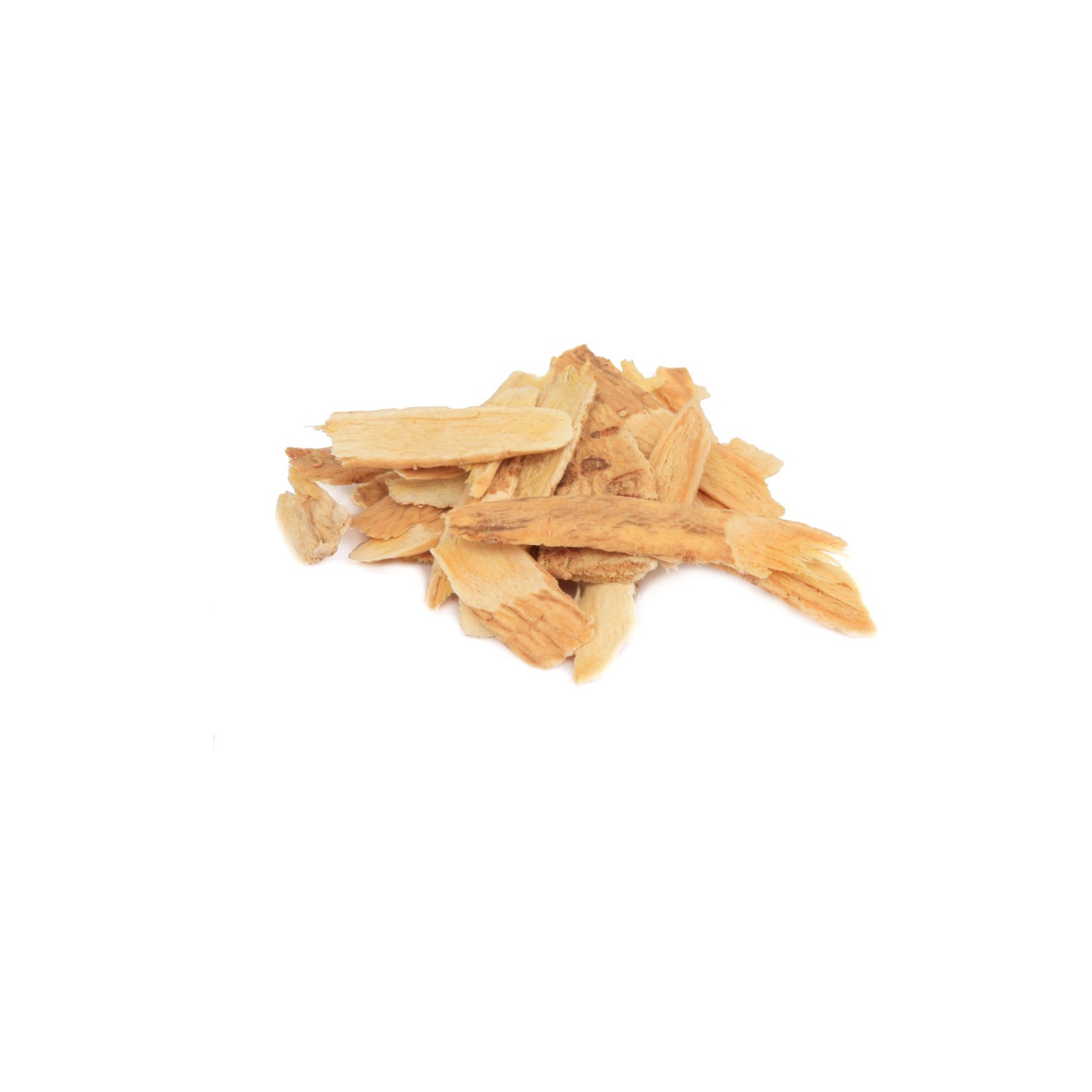
Cycloastragenol is a naturally occurring cycloartane triterpenoid (aglycone / sapogenin), found in Astragalus and 1 other source. It is well tolerated orally (low toxicity).
Concentration
Content by Source
Concentrations not reported. No percent-dry-weight or mg/g figures have been published for this compound in its source plants.
Cycloastragenol at a Glance
Cycloastragenol — usually abbreviated CAG, and known in its original research incarnation as TAT2 — is a cycloartane triterpenoid from astragalus (Astragalus membranaceus, huang qi). Chemically it is the aglycone of astragaloside IV: the same molecule with its two sugar groups removed. That single structural difference is the reason it matters, because it makes CAG far more absorbable than its parent saponin.
CAG is famous for one reason: it is the putative active ingredient of TA-65, a commercial supplement marketed as a telomerase activator — a compound claimed to switch on the enzyme that maintains the telomere “caps” on chromosomes, and by doing so to slow or reverse cellular ageing. This makes CAG unusual among herbal isolates: unlike almost every other astragalus compound, it has actually been through human trials.
The honest posture here is that those trials are small, mostly open-label or industry-linked, and rest on telomere-length endpoints that are hard to measure and easy to dispute — and that the marketing wrapped around the compound went far enough to draw a U.S. Federal Trade Commission deceptive-advertising settlement. There is real, reproducible cell and mouse biology showing CAG activates telomerase; there is much weaker evidence that this translates into the anti-ageing benefits sold to consumers. Both things are true at once, and the gap between them is the story.
Cycloastragenol as Astragaloside IV’s Aglycone
To understand CAG you have to start with its parent. Astragaloside IV (AS-IV) is a cycloartane saponin — a triterpene core carrying two sugar chains. Those sugars make the molecule large and polar, and that is exactly why AS-IV is barely absorbed by mouth: its oral bioavailability in rats is only about 2–3%, and its permeability across intestinal (Caco-2) monolayers is very poor 11Reference 11AnimalPharmacokinetics, metabolism, and excretion of cycloastragenol, a potent telomerase activator in rats — rat pharmacokineticsView study →.
Cycloastragenol is what is left when those sugars are removed. Strip the glycosides off AS-IV and you get the free aglycone (sapogenin), CAG — a smaller, less polar, more membrane-permeable molecule. The pharmacokinetic difference is dramatic:
- Across a Caco-2 monolayer, CAG crosses by passive diffusion roughly a thousandfold more readily than the intact glycoside 10Reference 10In vitroIn vitro intestinal absorption and first-pass intestinal and hepatic metabolism of cycloastragenol, a potent small molecule telomerase activator — in vitro ADMEView study →.
- Oral bioavailability in rats is about 25.7% for CAG at 10 mg/kg 11Reference 11AnimalPharmacokinetics, metabolism, and excretion of cycloastragenol, a potent telomerase activator in rats — rat pharmacokineticsView study → — an order of magnitude better than AS-IV’s ~2–3%.
This deglycosylation also happens in the body: human and rodent gut bacteria progressively strip the sugars off astragaloside IV, and CAG is the main aglycone that results — meaning some circulating CAG is generated from dietary/supplemental AS-IV rather than absorbed as such 11Reference 11AnimalPharmacokinetics, metabolism, and excretion of cycloastragenol, a potent telomerase activator in rats — rat pharmacokineticsView study →. It is a neat illustration of a general saponin principle: the glycoside is the storage/transport form the plant makes, but the aglycone is often the more bioavailable species, and sometimes the more active one.
The practical upshot: where AS-IV’s huge preclinical literature is chronically undercut by “the molecule can’t get in,” CAG gets in — which is one reason it, not AS-IV, became the lead for an oral supplement.
Cycloastragenol & Telomerase (the TA-65 Story)
This is the section CAG exists for, and the one that most needs discipline.
The Mechanism (Cell-Level, Real)
Telomeres are repetitive DNA caps that shorten each time a cell divides; when they get critically short the cell stops dividing (senescence). Telomerase (whose catalytic subunit is hTERT) rebuilds them, but most adult somatic cells keep telomerase switched off. The claim for CAG is that it partially re-activates telomerase in cells that would otherwise have it silenced.
The cell-level evidence for this is genuine and reproducible. In the founding study, exposing CD8⁺ T lymphocytes from HIV-positive donors to the CAG-derived activator TAT2 modestly slowed telomere shortening, increased the cells’ proliferative capacity, and boosted their antiviral cytokine output — and, critically, those effects were abolished by a specific telomerase inhibitor, showing they ran through telomerase rather than some off-target route 1Reference 1In vitroTelomerase-based pharmacologic enhancement of antiviral function of human CD8+ T lymphocytes — in vitro (TAT2/cycloastragenol)View study →. Later work showed CAG stimulates telomerase in human keratinocytes and rat neurons by activating the CREB → hTERT transcriptional axis, and that oral CAG reduced depression-like behaviour in mice 3Reference 3In vitroCycloastragenol is a potent telomerase activator in neuronal cells: implications for depression management — in vitro / mouseView study →. So: telomerase activation by CAG in cells is not marketing — it is a documented pharmacology 1,
The Mouse Healthspan Data
The most-cited animal result is a mouse study in which TA-65 dietary supplementation improved several health-span indicators in adult/old mice — glucose tolerance, bone (osteoporosis) and skin measures — and, importantly, did so without significantly increasing overall cancer incidence 4Reference 4AnimalThe telomerase activator TA-65 elongates short telomeres and increases health span of adult/old mice without increasing cancer incidence — mouse in vivoView study →. This is the single result most often invoked both for efficacy (“it improves healthspan”) and for safety (“it didn’t cause cancer in mice”). It is a real, peer-reviewed finding — but it is a mouse finding, and mouse cancer biology (telomerase is constitutively more active in mice) does not map cleanly onto humans.
The TA-65 Human Trials — and Their Caveats
CAG’s rare selling point is human data. The honest reading of that data is mixed:
- PattonProtocol-1 (open-label). The first human reports followed people on a commercial regimen combining TA-65 with a supplement pack and physician counselling. They described immune “rejuvenation” (a decline in senescent CD8⁺CD28⁻ T cells) and later metabolic/cardiovascular changes 5,
6Reference 5A natural product telomerase activator as part of a health maintenance program — open-label human (immune)View study →Reference 6A natural product telomerase activator as part of a health maintenance program: metabolic and cardiovascular response — open-label humanView study → . Caveat: open-label, uncontrolled, bundled with other supplements and lifestyle counselling, and authored by parties tied to the product — hypothesis-generating at best. - The randomised telomere-length trial. The one double-blind, placebo-controlled RCT (117 subjects, 12 months) reported that the low dose (250 units) significantly lengthened telomeres (by ~530 bp) while placebo shortened them 7Reference 7RCTA natural product telomerase activator lengthens telomeres in humans: a randomized, double blind, and placebo controlled study — RCTView study →. Caveats: the effect was seen at the low dose but not clearly dose-dependent; telomere-length measurement is notoriously noisy; and the trial was industry-connected. Telomere lengthening is a surrogate, not a health outcome.
- The cardiac RCT (TACTIC). The most rigorous test is an independent, investigator-led, double-blind RCT of TA-65 (16 mg/day for 12 months) in 90 older post-myocardial-infarction patients 8Reference 8RCTTelomerase activation to reverse immunosenescence in elderly patients with acute coronary syndrome: protocol for a randomized pilot trial (TACTIC) — trial protocolView study →. Its pre-specified primary endpoint — reducing the proportion of senescent CD8⁺ TEMRA T-cells — was not met 9Reference 9RCTActivation of telomerase by TA-65 enhances immunity and reduces inflammation post myocardial infarction — randomized controlled trial (TACTIC results)View study →. Secondary findings were more encouraging: higher total lymphocyte counts, lower hs-CRP (an inflammation marker), and fewer adverse events than placebo 9Reference 9RCTActivation of telomerase by TA-65 enhances immunity and reduces inflammation post myocardial infarction — randomized controlled trial (TACTIC results)View study →. A negative primary endpoint with positive secondaries is exactly the pattern that warrants caution, not a headline.
The Marketing & Litigation History
CAG’s evidence base cannot be read without its commercial context. In 2018 the U.S. Federal Trade Commission finalised a consent order against Telomerase Activation Sciences, Inc. and its principal Noel Patton, settling charges that they had marketed TA-65 with anti-ageing and health claims the science did not support; the order barred such unsupported claims going forward 14Reference 14FTC approves final consent order in Telomerase Activation Sciences deceptive-advertising case (against Telomerase Activation Sciences, Inc. and Noel Patton; TA-65) — regulatory action. https://www.ftc.gov/news-events/news/press-releases/2018/04/ftc-approves-final-consent-order-telomerase-activation-sciences-deceptive-advertising-caseView study →. Separately, a class-action lawsuit alleged deceptive marketing (and raised a theoretical cancer concern); a jury found for the company in 2014 15Reference 15Beauty from within claims for telomerase put to the test by lawsuit — news (TA-65 class action; company later prevailed at trial, 2014)View study →. None of this makes CAG’s cell biology wrong — but it means the consumer-facing claims outran the evidence far enough for a federal regulator to act.
The Double-Edged Sword
Finally, the mechanism carries an inherent theoretical tension. Telomerase reactivation is one of the hallmarks cancer cells use to become immortal — up-regulating hTERT is something most tumours do. A drug that switches telomerase back on is therefore, in principle, a double-edged sword: the same action that might rejuvenate a healthy senescing cell could, in theory, remove a brake on a pre-malignant one 2Reference 2ReviewTargeting Telomere Shortening in Vascular Aging and Atherosclerosis: Therapeutic Promise of Astragalus membranaceus — reviewView study →. The reassurance to date is empirical and limited — no increased cancer in the mouse healthspan study 4Reference 4AnimalThe telomerase activator TA-65 elongates short telomeres and increases health span of adult/old mice without increasing cancer incidence — mouse in vivoView study →, and no cancer signal in the small human trials — but the concern is theoretical rather than disproven, and it is the reason CAG’s safety flag is best read as “benign in the data we have, with a mechanism that warrants humility,” not “proven harmless.”
What It's Used For
Beyond telomerase, CAG has a scattered preclinical literature — anti-fibrotic, skin-protective, neuro-protective — that mostly rides on the same anti-inflammatory / anti-oxidant / senescence-modulating machinery. Almost all of it is cell or rodent work; the only human data are the TA-65 telomerase/immune trials above.
Support is an experimental score — weighted by study type (human > animal > in vitro) and volume, then tempered for isolate-vs-plant match, endpoint quality and commercial-bias risk. A beta, not a validated metric. The telomerase/immune rows score higher than most herbal isolates because human trials exist — but are capped hard by contested surrogate endpoints and industry linkage. Each application links to its write-up.
The best-supported use, and the one with human data. In the founding study the isolated activator (TAT2/CAG) slowed telomere loss and enhanced antiviral function in CD8⁺ T cells from HIV donors, telomerase-dependently 1Reference 1In vitroTelomerase-based pharmacologic enhancement of antiviral function of human CD8+ T lymphocytes — in vitro (TAT2/cycloastragenol)View study →.
Open-label TA-65 programs reported declines in senescent CD8⁺CD28⁻ T cells 5Reference 5A natural product telomerase activator as part of a health maintenance program — open-label human (immune)View study →, and the independent post-MI RCT found higher total lymphocyte counts and lower hs-CRP on TA-65 9Reference 9RCTActivation of telomerase by TA-65 enhances immunity and reduces inflammation post myocardial infarction — randomized controlled trial (TACTIC results)View study →.
This is the strand where “reversing immunosenescence” has the most behind it.
Gap: the strongest human test (TACTIC) missed its primary senescent-T-cell endpoint 9Reference 9RCTActivation of telomerase by TA-65 enhances immunity and reduces inflammation post myocardial infarction — randomized controlled trial (TACTIC results)View study →; the supportive human data are open-label/industry-linked 5,
The marquee marketing claim. In mice, TA-65 improved glucose tolerance, bone and skin measures without raising overall cancer incidence 4Reference 4AnimalThe telomerase activator TA-65 elongates short telomeres and increases health span of adult/old mice without increasing cancer incidence — mouse in vivoView study →; in humans, a double-blind RCT reported net telomere lengthening at the low dose versus shortening on placebo 7Reference 7RCTA natural product telomerase activator lengthens telomeres in humans: a randomized, double blind, and placebo controlled study — RCTView study →. Mechanistically this rests on CREB→hTERT telomerase activation 1,
Gap: telomere length is a noisy surrogate, not a clinical outcome; the human RCT was industry-linked and the effect was not cleanly dose-dependent 7Reference 7RCTA natural product telomerase activator lengthens telomeres in humans: a randomized, double blind, and placebo controlled study — RCTView study →; and the mouse cancer reassurance does not transfer directly to human telomerase biology 4Reference 4AnimalThe telomerase activator TA-65 elongates short telomeres and increases health span of adult/old mice without increasing cancer incidence — mouse in vivoView study →.
The most rigorous human trial sits here. TACTIC randomised 90 older post-MI patients to TA-65 (16 mg/day) or placebo for 12 months 8Reference 8RCTTelomerase activation to reverse immunosenescence in elderly patients with acute coronary syndrome: protocol for a randomized pilot trial (TACTIC) — trial protocolView study →.
The primary immunosenescence endpoint (CD8⁺ TEMRA proportion) was not met, but TA-65 significantly lowered hs-CRP (~1.1 vs 2.9 mg/L), raised lymphocyte counts, and produced fewer adverse events than placebo 9Reference 9RCTActivation of telomerase by TA-65 enhances immunity and reduces inflammation post myocardial infarction — randomized controlled trial (TACTIC results)View study →.
Earlier open-label work also reported metabolic/cardiovascular shifts within a bundled program 6Reference 6A natural product telomerase activator as part of a health maintenance program: metabolic and cardiovascular response — open-label humanView study →.
Gap: a single RCT with a negative primary endpoint; the positive results are secondary and hypothesis-generating, and the bundled open-label data cannot isolate CAG’s contribution 9,
A clean single-molecule rodent result. In carbon-tetrachloride-induced liver fibrosis in mice, isolated CAG at 200 mg/kg reduced collagen deposition, raised matrix-degrading enzymes and protected hepatocytes 12Reference 12AnimalHepatoprotective efficacy of cycloastragenol alleviated the progression of liver fibrosis in carbon-tetrachloride-treated mice — mouse in vivoView study →, echoing the broader anti-fibrotic reputation of its parent AS-IV.
Gap: one mouse model at a high dose; no human anti-fibrosis data for CAG, and the effective 200 mg/kg is far above the mg-level doses used in the human telomerase trials 12Reference 12AnimalHepatoprotective efficacy of cycloastragenol alleviated the progression of liver fibrosis in carbon-tetrachloride-treated mice — mouse in vivoView study →.
An in-vitro dermatology signal consistent with the mouse “skin fitness” finding. In cultured human dermal fibroblasts and HaCaT keratinocytes, isolated CAG cut UVB-induced MMP-1/-9/-13 and reactive-oxygen-species generation while preserving collagen and hydration factors 13Reference 13In vitroCycloastragenol exerts protective effects against UVB irradiation in human dermal fibroblasts and HaCaT keratinocytes — in vitroView study →.
Gap: cell-culture only — no human or even whole-animal skin outcome for CAG, and no link to a topical or oral dose people could use 13Reference 13In vitroCycloastragenol exerts protective effects against UVB irradiation in human dermal fibroblasts and HaCaT keratinocytes — in vitroView study →.
Mechanisms
| Target / pathway | Effect | Relevant to |
|---|---|---|
| Telomerase / hTERT (via CREB) | partial re-activation of telomerase; slowed telomere attrition (cells) | immunosenescencehealthspan — the core mechanism |
| Senescent T-cell compartment | ↑ proliferative capacity & antiviral function of CD8⁺ T cells; ↓ some senescence markers | immune support |
| hs-CRP / inflammatory tone | lowered systemic inflammation marker (human RCT, secondary) | cardiovascular / inflammation |
| TGF-β / collagen turnover (liver) | ↓ collagen deposition, ↑ matrix metalloproteinases | hepatoprotection / anti-fibrosis |
| MMP-1/-9/-13 & ROS (skin) | suppressed UVB-induced matrix breakdown and oxidative stress | skin photoprotection |
| Telomerase (theoretical downside) | the same re-activation is a hallmark of cancer immortalisation | safety — the double-edged-sword caveat |
Pharmacokinetics
CAG’s pharmacokinetics are the reason it, not astragaloside IV, became a supplement. As the deglycosylated aglycone, it is markedly more permeable than its parent — passing Caco-2 monolayers by passive diffusion roughly a thousandfold more readily 10Reference 10In vitroIn vitro intestinal absorption and first-pass intestinal and hepatic metabolism of cycloastragenol, a potent small molecule telomerase activator — in vitro ADMEView study → — and its oral bioavailability in rats is ~25.7% at 10 mg/kg, versus ~2–3% for AS-IV 11Reference 11AnimalPharmacokinetics, metabolism, and excretion of cycloastragenol, a potent telomerase activator in rats — rat pharmacokineticsView study →. That said, absorption is not the whole story: CAG undergoes extensive first-pass metabolism, with heavy glucuronidation in the intestine and oxidation in the liver (only ~8–17% of CAG survived 30 minutes in human/rat liver microsomes) 10Reference 10In vitroIn vitro intestinal absorption and first-pass intestinal and hepatic metabolism of cycloastragenol, a potent small molecule telomerase activator — in vitro ADMEView study →, and it is cleared via bile/faeces and the kidney 11Reference 11AnimalPharmacokinetics, metabolism, and excretion of cycloastragenol, a potent telomerase activator in rats — rat pharmacokineticsView study →. So CAG is “well-absorbed but rapidly metabolised” — better than AS-IV, but still not a molecule that reaches high sustained plasma levels by mouth. Some systemic CAG is also generated in situ from ingested AS-IV by gut-bacterial deglycosylation 11Reference 11AnimalPharmacokinetics, metabolism, and excretion of cycloastragenol, a potent telomerase activator in rats — rat pharmacokineticsView study →.
Clinical Trials
Unusually for an astragalus isolate, human trials of the CAG product (TA-65) exist — but they are few, small, and mostly industry-linked, and the one independent RCT missed its primary endpoint. All non-immune applications are preclinical.
| Completed | Planned | Terminated | Preclinical |
|---|---|---|---|
| TA-65: open-label programs 5, | — | — | Hepatoprotection, skin, neuro (cell/rodent) 12, |
Last checked: July 2026.
Isolate vs. Plant Studies
CAG inverts the usual astragalus caveat in one respect and keeps it in another. The telomerase and immune evidence is genuinely isolate-level — the human trials dosed a purified/standardised CAG product (TA-65), and the founding cell work used the isolated activator 1,
But two honesty caveats remain. First, CAG is essentially never consumed by eating astragalus — the root contains astragaloside IV, not free CAG, so drinking astragalus tea does not deliver a CAG dose; the aglycone is a processed/derived ingredient (or a gut-bacterial metabolite of AS-IV) 11Reference 11AnimalPharmacokinetics, metabolism, and excretion of cycloastragenol, a potent telomerase activator in rats — rat pharmacokineticsView study →. Second, TA-65 is a formulated commercial product, not pure CAG in a beaker — so even the “isolate” trials carry a product, and a commercial interest, rather than a clean pharmacological reagent 5,
Prevalence in Nature
Cycloastragenol is a cycloartane sapogenin of Astragalus membranaceus (huang qi) — but the crucial point is that it occurs in the plant mostly in glycosylated (bound) form, as the aglycone core of the astragalosides, chiefly astragaloside IV. Free CAG is present at only trace levels; the total astragaloside content of dry root itself is low (well under ~0.1%) 11Reference 11AnimalPharmacokinetics, metabolism, and excretion of cycloastragenol, a potent telomerase activator in rats — rat pharmacokineticsView study →. The molecule shares the plant with astragaloside IV and the isoflavones formononetin and calycosin, but it is the least abundant as a free compound of that group.
Because of this, commercial CAG is not simply extracted like a bulk phytochemical — it is generated by hydrolysing (deglycosylating) astragalus saponins to release the aglycone, then purifying it. In effect the useful CAG supply is made from the plant’s astragalosides rather than harvested pre-formed.
Discovery & Synthesis
Cycloastragenol was known to chemists for decades as the sapogenin obtained on hydrolysing the astragalus saponins — the aglycone you get when the sugars come off astragaloside IV. Its modern prominence, however, dates to the early 2000s, when a program screening Astragalus membranaceus extracts for telomerase-activating anti-ageing molecules (the effort behind Geron/TA Sciences and the “TAT2”/TA-65 story) identified this cycloartane aglycone as the active small molecule 1,
Manufacture today is best described as semi-synthetic / processing-based rather than total synthesis: the practical route is to take astragalus saponins (astragaloside IV and relatives) and hydrolyse/deglycosylate them to liberate CAG, then purify — the aglycone is derived from the abundant glycoside rather than built from scratch or harvested free. This is consistent with CAG being scarce in the intact plant but readily obtainable from its saponins.
Patents: not yet researched.
Toxicity & Safety
CAG carries a low flag, and the reasoning matters. The empirical safety record is reassuring for the doses in question: the mouse healthspan study reported benefits without a significant increase in overall cancer incidence 4Reference 4AnimalThe telomerase activator TA-65 elongates short telomeres and increases health span of adult/old mice without increasing cancer incidence — mouse in vivoView study →; the small human TA-65 trials found no safety signal, and the independent post-MI RCT actually recorded fewer adverse events on TA-65 than placebo 9Reference 9RCTActivation of telomerase by TA-65 enhances immunity and reduces inflammation post myocardial infarction — randomized controlled trial (TACTIC results)View study →. Systemic exposure by mouth is also intrinsically limited by heavy first-pass metabolism 10Reference 10In vitroIn vitro intestinal absorption and first-pass intestinal and hepatic metabolism of cycloastragenol, a potent small molecule telomerase activator — in vitro ADMEView study →.
The reason the flag isn’t simply “benign, no caveats” is the mechanism. Re-activating telomerase is, in principle, a double-edged sword: hTERT up-regulation is one of the routes cancer cells use to become immortal, so a telomerase activator carries a theoretical concern about promoting the growth of already-abnormal cells 2Reference 2ReviewTargeting Telomere Shortening in Vascular Aging and Atherosclerosis: Therapeutic Promise of Astragalus membranaceus — reviewView study →. To be clear, this is a theoretical, mechanism-based caution, not a demonstrated harm — the available animal and human data have not shown increased cancer 4,
- No cancer or safety signal in the data so far. Mouse healthspan dosing did not raise overall cancer incidence 4Reference 4AnimalThe telomerase activator TA-65 elongates short telomeres and increases health span of adult/old mice without increasing cancer incidence — mouse in vivoView study →; the independent human RCT logged fewer adverse events on TA-65 than placebo 9Reference 9RCTActivation of telomerase by TA-65 enhances immunity and reduces inflammation post myocardial infarction — randomized controlled trial (TACTIC results)View study →.
- Systemic exposure is self-limiting. Heavy intestinal/hepatic first-pass metabolism keeps oral CAG from reaching high sustained levels 10Reference 10In vitroIn vitro intestinal absorption and first-pass intestinal and hepatic metabolism of cycloastragenol, a potent small molecule telomerase activator — in vitro ADMEView study →.
- The efficacy claims outran the evidence. TA-65’s marketing drew a 2018 FTC deceptive-advertising settlement; telomere-length benefits rest on a contested surrogate endpoint 14,
7Reference 14FTC approves final consent order in Telomerase Activation Sciences deceptive-advertising case (against Telomerase Activation Sciences, Inc. and Noel Patton; TA-65) — regulatory action. https://www.ftc.gov/news-events/news/press-releases/2018/04/ftc-approves-final-consent-order-telomerase-activation-sciences-deceptive-advertising-caseView study →Reference 7RCTA natural product telomerase activator lengthens telomeres in humans: a randomized, double blind, and placebo controlled study — RCTView study → . - Telomerase activation is theoretically double-edged. The same hTERT re-activation is a hallmark of cancer; treat the anti-ageing rationale with caution, particularly with a personal/family cancer history 2Reference 2ReviewTargeting Telomere Shortening in Vascular Aging and Atherosclerosis: Therapeutic Promise of Astragalus membranaceus — reviewView study →.
Dosage
Nothing here is a recommendation. There is no established therapeutic dose for isolated CAG; the figures below are simply what was marketed or studied.
| Context | Form | Amount |
|---|---|---|
| Commercial supplement (TA-65) | Capsule (activity units) | ~5–8 mg/day (≈250–1,000 “units”) |
| Telomere-length RCT 7Reference 7RCTA natural product telomerase activator lengthens telomeres in humans: a randomized, double blind, and placebo controlled study — RCTView study → | TA-65 capsule | Low dose 250 units (the dose that lengthened telomeres) |
| Cardiac RCT (TACTIC) 8, | TA-65 | 16 mg/day (8 mg twice daily), 12 months |
| Mouse healthspan 4Reference 4AnimalThe telomerase activator TA-65 elongates short telomeres and increases health span of adult/old mice without increasing cancer incidence — mouse in vivoView study → | Dietary TA-65 | Rodent dietary dose (not human-equivalent) |
| Rodent hepatoprotection 12Reference 12AnimalHepatoprotective efficacy of cycloastragenol alleviated the progression of liver fibrosis in carbon-tetrachloride-treated mice — mouse in vivoView study → | Isolated CAG | 200 mg/kg (far above human supplement doses) |
Two honest framings sit on top of this table. First, the doses were chosen against a contested endpoint (telomere length) 7Reference 7RCTA natural product telomerase activator lengthens telomeres in humans: a randomized, double blind, and placebo controlled study — RCTView study →. Second, the preclinical “extra” effects (liver, skin) used doses orders of magnitude higher than the mg-level human supplement 12Reference 12AnimalHepatoprotective efficacy of cycloastragenol alleviated the progression of liver fibrosis in carbon-tetrachloride-treated mice — mouse in vivoView study →. These are amounts studied and sold in research and commerce — not a personal recommendation.
References
- Fauce SR, Jamieson BD, Chin AC, Mitsuyasu RT, Parish ST, Ng HL, Kitchen CMR, Yang OO, Harley CB, Effros RB (2008). Telomerase-based pharmacologic enhancement of antiviral function of human CD8+ T lymphocytes — in vitro (TAT2/cycloastragenol). The Journal of Immunology. https://pubmed.ncbi.nlm.nih.gov/18981163/
- Canale P, Andreassi MG (2025). Targeting Telomere Shortening in Vascular Aging and Atherosclerosis: Therapeutic Promise of Astragalus membranaceus — review. Journal of Cardiovascular Development and Disease. https://pubmed.ncbi.nlm.nih.gov/41002620/
- Ip FCF, Ng YP, An HJ, Dai Y, Pang HH, Hu YQ, Chin AC, Harley CB, Wong YH, Ip NY (2014). Cycloastragenol is a potent telomerase activator in neuronal cells: implications for depression management — in vitro / mouse. Neurosignals. https://pubmed.ncbi.nlm.nih.gov/25095809/
- Bernardes de Jesus B, Schneeberger K, Vera E, Tejera A, Harley CB, Blasco MA (2011). The telomerase activator TA-65 elongates short telomeres and increases health span of adult/old mice without increasing cancer incidence — mouse in vivo. Aging Cell. https://pubmed.ncbi.nlm.nih.gov/21426483/
- Harley CB, Liu W, Blasco M, Vera E, Andrews WH, Briggs LA, Raffaele JM (2011). A natural product telomerase activator as part of a health maintenance program — open-label human (immune). Rejuvenation Research. https://pubmed.ncbi.nlm.nih.gov/20822369/
- Harley CB, Liu W, Flom PL, Raffaele JM (2013). A natural product telomerase activator as part of a health maintenance program: metabolic and cardiovascular response — open-label human. Rejuvenation Research. https://pubmed.ncbi.nlm.nih.gov/23808324/
- Salvador L, Singaravelu G, Harley CB, Flom P, Suram A, Raffaele JM (2016). A natural product telomerase activator lengthens telomeres in humans: a randomized, double blind, and placebo controlled study — RCT. Rejuvenation Research. https://pubmed.ncbi.nlm.nih.gov/26950204/
- Maier R, Bawamia B, Bennaceur K, Dunn S, Marsay L, Amoah R, Kasim A, Filby A, Austin D, Hancock H, Spyridopoulos I (2020). Telomerase activation to reverse immunosenescence in elderly patients with acute coronary syndrome: protocol for a randomized pilot trial (TACTIC) — trial protocol. JMIR Research Protocols. https://pubmed.ncbi.nlm.nih.gov/32965237/
- Bawamia B, Spray L, Wangsaputra VK, Bennaceur K, Vahabi S, Stellos K, et al. (2023). Activation of telomerase by TA-65 enhances immunity and reduces inflammation post myocardial infarction — randomized controlled trial (TACTIC results). GeroScience. https://pubmed.ncbi.nlm.nih.gov/37086366/
- Zhu J, Lee S, Ho MKC, Hu Y, Pang H, Ip FCF, Chin AC, Harley CB, Ip NY, Wong YH (2010). In vitro intestinal absorption and first-pass intestinal and hepatic metabolism of cycloastragenol, a potent small molecule telomerase activator — in vitro ADME. Drug Metabolism and Pharmacokinetics. https://pubmed.ncbi.nlm.nih.gov/20877137/
- Ma PK, Wei BH, Cao YL, Miao Q, Chen N, Guo CE, Chen HY, Zhang YJ (2017). Pharmacokinetics, metabolism, and excretion of cycloastragenol, a potent telomerase activator in rats — rat pharmacokinetics. Xenobiotica. https://pubmed.ncbi.nlm.nih.gov/27412909/
- Luangmonkong T, Puphancharoensuk P, Tongsongsang V, Olinga P, Parichatikanond W (2023). Hepatoprotective efficacy of cycloastragenol alleviated the progression of liver fibrosis in carbon-tetrachloride-treated mice — mouse in vivo. Biomedicines. https://pubmed.ncbi.nlm.nih.gov/36672739/
- Yang MH, Hwang ST, Um JY, Ahn KS (2023). Cycloastragenol exerts protective effects against UVB irradiation in human dermal fibroblasts and HaCaT keratinocytes — in vitro. Journal of Dermatological Science. https://pubmed.ncbi.nlm.nih.gov/37474410/
- U.S. Federal Trade Commission (2018). FTC approves final consent order in Telomerase Activation Sciences deceptive-advertising case (against Telomerase Activation Sciences, Inc. and Noel Patton; TA-65) — regulatory action. https://www.ftc.gov/news-events/news/press-releases/2018/04/ftc-approves-final-consent-order-telomerase-activation-sciences-deceptive-advertising-case
- Pitman S (2012). Beauty from within claims for telomerase put to the test by lawsuit — news (TA-65 class action; company later prevailed at trial, 2014). CosmeticsDesign. https://www.cosmeticsdesign.com/Article/2012/08/23/Beauty-from-within-claims-for-telomerase-put-to-the-test-by-lawsuit/



