
Compound Monograph
Ginkgolide J
Ginkgolide J is a minor diterpene trilactone of Ginkgo biloba and the weakest platelet-activating-factor (PAF) receptor antagonist of the ginkgolide series — yet the one ginkgolide whose isolated molecule reproduced a terpene-trilactone extract's protection of hippocampal neurons against amyloid-beta. Its human evidence is nil; the signal is preclinical.

Sources · 1
Where Does It Come From?
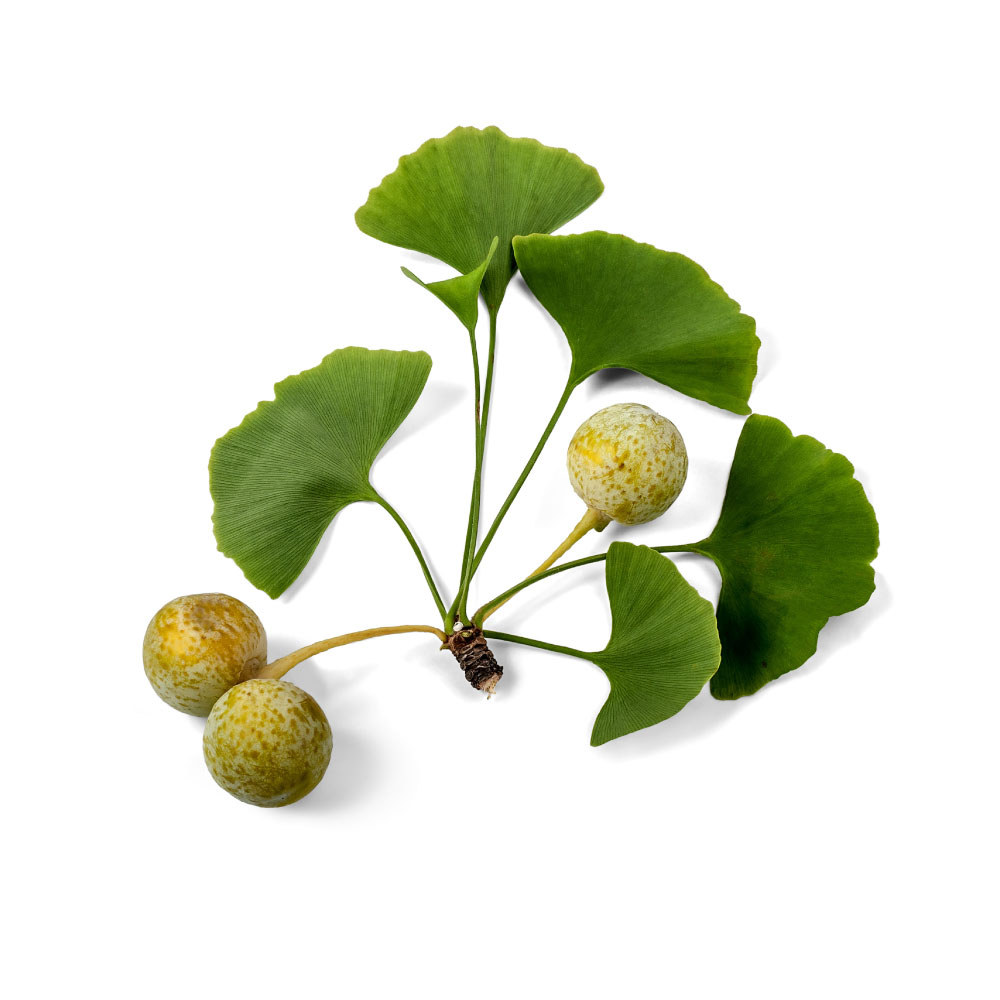
Ginkgolide J is a naturally occurring diterpene lactone (ginkgolide), found in Ginkgo. It is well tolerated orally (low toxicity).
Concentration
Content by Source
Concentrations not reported. No percent-dry-weight or mg/g figures have been published for this compound in its source plants.
Ginkgolide J at a Glance
Ginkgolide J is one of the diterpene trilactones of Ginkgo biloba — the ginkgo-unique cage molecules that, together with the sesquiterpene bilobalide, make up the terpene-lactone fraction of standardised leaf extracts. It sits alongside ginkgolide A, ginkgolide B and ginkgolide C, differing only in the number and position of its hydroxyl groups.
Two things distinguish it from its better-studied siblings. As a platelet-activating-factor (PAF) receptor antagonist — the defining ginkgolide mechanism — ginkgolide J is the weakest of the series 4Reference 4Preparation of 7-substituted ginkgolide derivatives: potent platelet activating factor (PAF) receptor antagonistsView study →. But it carries a notable, specific signal the others do not: in one influential study the isolated molecule reproduced the ability of a terpene-trilactone-enriched extract to protect hippocampal neurons and synaptic plasticity against amyloid-beta (Aβ) 1Reference 1Protection against beta-amyloid induced abnormal synaptic function and cell death by Ginkgolide JView study →.
The honest framing throughout: ginkgolide J has no human data of its own. The neuroprotective finding is ex-vivo/rodent, the isolate literature is thin, and much of what is called “ginkgolide” pharmacology belongs to ginkgolide B or to the whole-extract mixture rather than to J specifically.
What It's Used For
Ginkgolide J’s research profile is narrow and entirely preclinical. It splits into the shared ginkgolide mechanism (PAF antagonism, where J is a bit-part player) and one stand-out isolate finding in Alzheimer-relevant neuroprotection.
Support is an experimental score — weighted by study type (human > animal > in vitro) and volume. A beta, not a validated metric. Every score here is preclinical by design; there is no human ginkgolide-J data, so read each row’s basis.
The reason it matters. Screening a Ginkgo terpene-trilactone-enriched extract (P8A/TTL) for anti-Alzheimer activity, Vitolo and colleagues identified isolated ginkgolide J as the active molecule that prevented Aβ(1-42)-induced inhibition of long-term potentiation in mouse hippocampal slices and inhibited Aβ(1-42)-induced death of rodent hippocampal neurons 1Reference 1Protection against beta-amyloid induced abnormal synaptic function and cell death by Ginkgolide JView study → — a rare case where a single ginkgolide, not the mixture, carried the extract’s effect. A later homologue screen found ginkgolides reduced glutamate-induced neuronal damage by lowering intracellular calcium and blocking apoptosis, with J among the tested members (though K and B scored highest) 2Reference 2Xu J, Wang KL, Cao ZY, Cao L, Wang ZZ, Xiao W (2017). [Antagonistic effect of ginkgolide homologues on PAF-induced platelet aggregation and neuroprotective effect]. Zhongguo Zhong Yao Za Zhi. https://pubmed.ncbi.nlm.nih.gov/29493136/View study →.
Gap: this is ex-vivo slice and cultured-neuron work, never tested in humans; ginkgolide J also permeates the blood-brain barrier poorly 5Reference 5Transport of ginkgolides with different lipophilicities based on an hCMEC/D3 cell monolayer as a blood-brain barrier cell modelView study →, so whether an oral dose could reach a neuroprotective brain concentration is unknown.
All four leaf ginkgolides (A/B/C/J) antagonise the platelet-activating-factor receptor, the mechanism behind ginkgo’s circulatory and antiplatelet effects 3Reference 3Ginkgo biloba extract (EGb 761) and CNS functions: basic studies and clinical applicationsView study →.
Ginkgolide J is the weakest of them — the extra 7-position hydroxyl that also weakens ginkgolide C (roughly 25-fold below ginkgolide B) drops J’s PAF-receptor affinity further still, so B remains the prototypical, drug-coded antagonist while J is a minor contributor 4Reference 4Preparation of 7-substituted ginkgolide derivatives: potent platelet activating factor (PAF) receptor antagonistsView study →.
In the homologue screen, J’s antiplatelet activity trailed that of ginkgolides K and B 2Reference 2Xu J, Wang KL, Cao ZY, Cao L, Wang ZZ, Xiao W (2017). [Antagonistic effect of ginkgolide homologues on PAF-induced platelet aggregation and neuroprotective effect]. Zhongguo Zhong Yao Za Zhi. https://pubmed.ncbi.nlm.nih.gov/29493136/View study →.
Gap: J’s PAF antagonism is a receptor/platelet-assay property with no isolated human antiplatelet study; because it is the least potent member at low natural abundance, its real-world contribution to ginkgo’s antiplatelet effect is minor relative to ginkgolide B 4Reference 4Preparation of 7-substituted ginkgolide derivatives: potent platelet activating factor (PAF) receptor antagonistsView study →.
Mechanisms
| Target / pathway | Effect | Relevant to |
|---|---|---|
| PAF receptor — competitive antagonist (weakest ginkgolide) | ↓ PAF-driven platelet aggregation and vascular permeability | antiplatelet; circulatory effects of the extract |
| Amyloid-beta synaptotoxicity | preserves hippocampal long-term potentiation and neuronal survival against Aβ(1-42) | neuroprotection (the isolate signal) |
| Glutamate excitotoxicity / apoptosis | ↓ intracellular Ca²⁺, ↓ apoptotic neuronal death (homologue screen) | neuroprotection |
| Glycine-gated chloride channel | blocker (ginkgolide J IC₅₀ ≈ 2 µM in the SAR study) | CNS excitability; theoretical convulsant ceiling at high exposure |
The load-bearing point: J is a poor PAF antagonist but carried a real anti-Aβ signal as an isolate — the two do not track together, so its interest is neuroprotective, not circulatory.
Pharmacokinetics
No dedicated human pharmacokinetic study of isolated ginkgolide J exists. As a group, the ginkgolides are small, relatively polar trilactones that are absorbed orally but reach only low plasma levels and are cleared largely unchanged by the kidney. The one PK detail specific to J is unfavourable for its headline use: in a human blood-brain-barrier cell model (hCMEC/D3 monolayer), ginkgolides crossed by transport mechanisms that varied with lipophilicity, and the more polar members — ginkgolide J among them — showed limited brain penetration 5Reference 5Transport of ginkgolides with different lipophilicities based on an hCMEC/D3 cell monolayer as a blood-brain barrier cell modelView study →. That poor central bioavailability is the main caveat undercutting the in-vitro neuroprotection: the concentrations that protect neurons in a dish may not be reachable in brain tissue after oral dosing.
Clinical Trials
There are no clinical trials of ginkgolide J — as an isolate or otherwise. Human ginkgo trials use the whole leaf extract (EGb 761) or, for the ginkgolides specifically, an injectable ginkgolide mixture (ginkgo diterpene lactone meglumine) in which J is a minor component; none isolates ginkgolide J.
| Completed | Planned | Terminated | Preclinical |
|---|---|---|---|
| — | — | — | Neuroprotection (ex-vivo/cell) + PAF/receptor assays |
Last checked: July 2026.
Ginkgolide J vs. Its Siblings
The four leaf ginkgolides are near-identical cages that differ only in hydroxylation at positions 1, 3 and 7 — and those small differences reorder them completely depending on the assay. On PAF-receptor antagonism, potency runs roughly ginkgolide B > ginkgolide C > ginkgolide A ≈ ginkgolide J, with J the weakest — the 7-hydroxyl that defines C and J is the affinity-losing feature 4Reference 4Preparation of 7-substituted ginkgolide derivatives: potent platelet activating factor (PAF) receptor antagonistsView study →. On glycine-gated chloride-channel block, by contrast, J is comparably active to B and C (all low-micromolar) 6Reference 6Structure-activity studies with Ginkgo biloba extract constituents as receptor-gated chloride channel blockers and modulatorsView study →. And on the anti-amyloid neuroprotection axis it is ginkgolide J, not B, that emerged as the active isolate 1Reference 1Protection against beta-amyloid induced abnormal synaptic function and cell death by Ginkgolide JView study →. So the “best” ginkgolide depends entirely on which effect you are asking about — a good reminder that these molecules are not interchangeable despite their structural similarity. The fifth ginkgo trilactone, bilobalide, is a sesquiterpene and generally the most potent neuronal protectant of the fraction 7Reference 7Pharmacological studies supporting the therapeutic use of Ginkgo biloba extract for Alzheimer’s diseaseView study →.
Prevalence in Nature
Ginkgolide J is essentially unique to Ginkgo biloba — the ginkgolides have not been found in any other living plant, and the tree is a “living fossil” with no close relatives. Within ginkgo it occurs in both the leaves (the source of standardised extracts) and the root bark, as part of the terpene-trilactone fraction that makes up roughly 5–7% of a standardised extract such as EGb 761. Among that fraction, ginkgolide J is a minor, sub-percent member, present at lower levels than ginkgolides A and B.
Precise concentration figures for ginkgolide J specifically — by plant part, cultivar and season — are not well quantified in the accessible literature; the reported terpene-trilactone percentages describe the fraction as a whole rather than J in isolation.
Discovery & Synthesis
The ginkgolides were among the most structurally daunting natural products of their era: their highly oxidised, cagelike tert-butyl-bearing trilactone skeletons were elucidated in the 1960s through the independent work of Koji Nakanishi’s group and Sakabe’s group, building on the isolation of the parent ginkgolides from Ginkgo leaves and root bark. Ginkgolide J is one of the later-characterised minor members of the A/B/C/J/K/L/M series, distinguished by its particular hydroxylation pattern.
Manufacture today is by extraction and chromatographic separation from Ginkgo biloba leaf material — the same feedstock used for standardised extracts — rather than total synthesis; the ginkgolide cage has been synthesised as a landmark laboratory feat but total synthesis is not an economical production route. Semi-synthetic chemistry on the ginkgolide scaffold has instead been used to make more potent PAF-antagonist derivatives (e.g. 7-substituted ginkgolides) for research 4Reference 4Preparation of 7-substituted ginkgolide derivatives: potent platelet activating factor (PAF) receptor antagonistsView study →.
Patents: not yet researched.
Toxicity & Safety
Ginkgolide J carries a low toxicity flag. It is one of the ginkgo terpene lactones — not the allergenic ginkgolic acids or the seed neurotoxin ginkgotoxin (separate compounds) — and no isolate-specific toxicity signal is documented. The relevant cautions are the general ginkgolide/PAF ones, applied conservatively and at very low individual exposure; the ginkgolides’ bleeding concern is a whole-extract, PAF-antagonist consideration to which J — the weakest antagonist — contributes little 8Reference 8Inhibition of PAF-induced aggregation of human thrombocytes by ginkgolides: considerations on possible bleeding complications after oral Ginkgo biloba extractsView study →.
- A terpene lactone, not the problematic ginkgo compounds. Distinct from the allergenic ginkgolic acids and the seizure-inducing seed toxin ginkgotoxin.
- No isolate-specific toxicity reported. Ginkgolide J is a minor, low-abundance constituent with no documented direct toxicity.
- Class bleeding caution. As a (weak) PAF antagonist it shares the ginkgolides’ theoretical additive bleeding risk with anticoagulants, antiplatelets and NSAIDs — the concern is chiefly whole-extract, and J’s contribution is minor.
- Theoretical convulsant ceiling. Like other ginkgolides it blocks inhibitory glycine-gated chloride channels in vitro, a high-exposure concern not seen at normal intake.
Reproductive and developmental safety of isolated ginkgolide J has not been characterised. Pregnancy and lactation decisions belong to the ginkgo herb or product page, where intake is decided, not to this molecule page. Because there is no human exposure to ginkgolide J as an isolate, its safety profile is inferred from the ginkgolide class rather than measured directly — absence of reported harm is not evidence of safety.
Dosage
There is no established human dose for ginkgolide J, and nothing here is a recommendation. It is never taken as an isolate; human exposure is only as a minor fraction of whole Ginkgo biloba leaf extract (e.g. EGb 761 at 120–240 mg/day in research), within which ginkgolide J is a sub-percent component — delivering only a small fraction of a milligram. The research figures cited here are receptor-assay and ex-vivo concentrations, not oral doses.
References
- Vitolo O, Gong B, Cao Z, Ishii H, Jaracz S, Nakanishi K, Arancio O, Dzyuba SV, Lefort R, Shelanski M (2009). Protection against beta-amyloid induced abnormal synaptic function and cell death by Ginkgolide J. Neurobiology of Aging. https://pubmed.ncbi.nlm.nih.gov/17640772/
- Xu J, Wang KL, Cao ZY, Cao L, Wang ZZ, Xiao W (2017). [Antagonistic effect of ginkgolide homologues on PAF-induced platelet aggregation and neuroprotective effect]. Zhongguo Zhong Yao Za Zhi. https://pubmed.ncbi.nlm.nih.gov/29493136/
- DeFeudis FV, Drieu K (2000). Ginkgo biloba extract (EGb 761) and CNS functions: basic studies and clinical applications. Current Drug Targets. https://pubmed.ncbi.nlm.nih.gov/11475535/
- Vogensen SB, Strømgaard K, Shindou H, Jaracz S, Suehiro M, Ishii S, Shimizu T, Nakanishi K (2003). Preparation of 7-substituted ginkgolide derivatives: potent platelet activating factor (PAF) receptor antagonists. Journal of Medicinal Chemistry. https://pubmed.ncbi.nlm.nih.gov/12570381/
- Ma S, Liu X, Xu Q, Zhang X (2014). Transport of ginkgolides with different lipophilicities based on an hCMEC/D3 cell monolayer as a blood-brain barrier cell model. Life Sciences. https://pubmed.ncbi.nlm.nih.gov/25139831/
- Chatterjee SS, Kondratskaya EL, Krishtal OA (2003). Structure-activity studies with Ginkgo biloba extract constituents as receptor-gated chloride channel blockers and modulators. Pharmacopsychiatry. https://pubmed.ncbi.nlm.nih.gov/13130392/
- Ahlemeyer B, Krieglstein J (2003). Pharmacological studies supporting the therapeutic use of Ginkgo biloba extract for Alzheimer’s disease. Pharmacopsychiatry. https://pubmed.ncbi.nlm.nih.gov/13130383/
- Koch E (2005). Inhibition of PAF-induced aggregation of human thrombocytes by ginkgolides: considerations on possible bleeding complications after oral Ginkgo biloba extracts. Phytomedicine. https://pubmed.ncbi.nlm.nih.gov/15693702/



