
Compound Monograph
Glycyrrhisoflavone
Glycyrrhisoflavone is a minor prenylated isoflavone of licorice root (Glycyrrhiza), studied only in the test tube — as a tyrosinase inhibitor and skin-whitening candidate, an alpha-glucosidase inhibitor, a contributor to licorice's monoamine-oxidase (MAO-B) activity, and a NorA efflux-pump inhibitor that re-sensitises resistant Staphylococcus aureus to ciprofloxacin. There is no human data.

Sources · 3
Where Does It Come From?
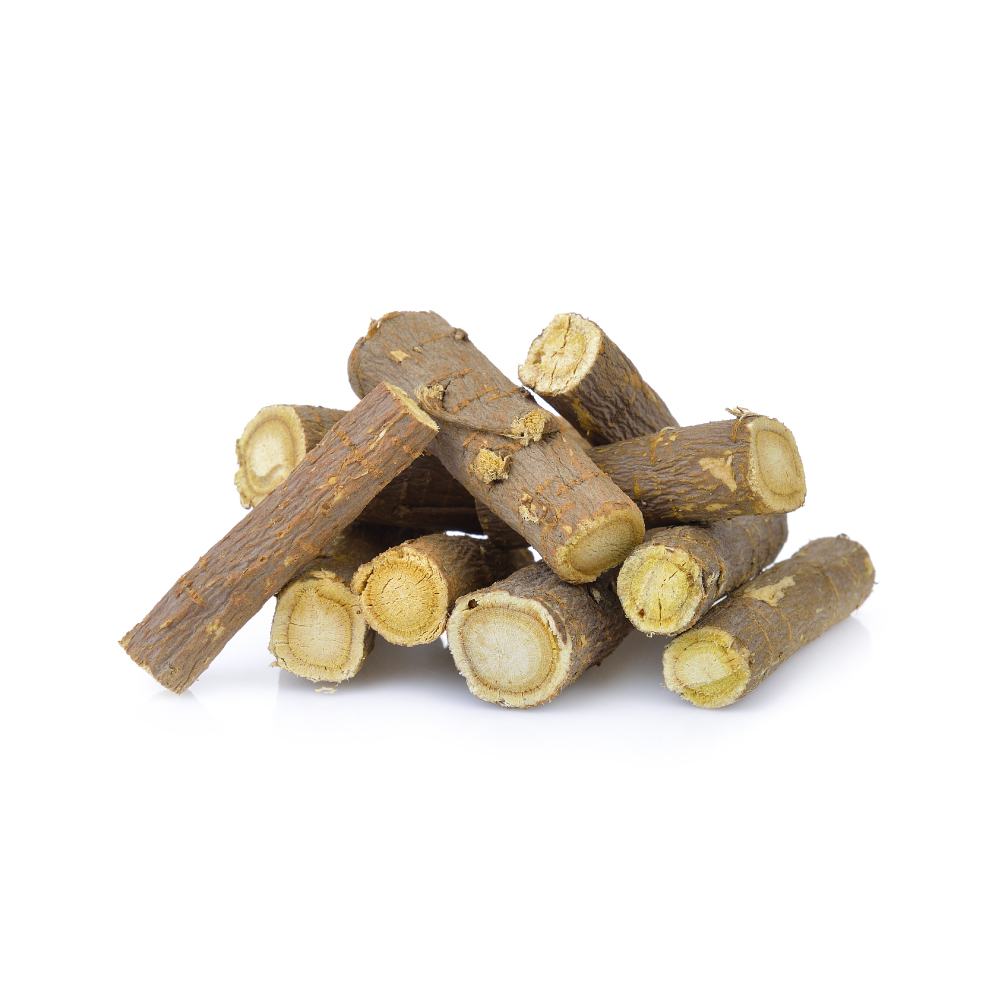
Glycyrrhisoflavone is a naturally occurring prenylated isoflavone (isoflavonoid), found in Chinese licorice and 2 other sources. It is well tolerated orally (low toxicity).
Concentration
Content by Source
Reported concentrations across the plants that contain glycyrrhisoflavone — the bar marks the typical level, the line shows the reported range.
Literature figures for varying plant parts and preparations. Read them as a comparative guide, not exact assays.
Glycyrrhisoflavone at a Glance
Glycyrrhisoflavone is a prenylated isoflavone — an isoflavonoid carrying a lipophilic prenyl (isoprene) side chain — found as a minor constituent of licorice root, chiefly Chinese licorice (Glycyrrhiza uralensis). It is one of dozens of phenolic compounds that give the licorice flavonoid fraction its colour and much of its non-sweet pharmacology, and it should not be confused with glycyrrhizin, the sweet saponin that carries licorice’s well-known blood-pressure caution — that is a different molecule entirely.
Its research record is thin and entirely preclinical. The isolated compound has been shown in vitro to inhibit tyrosinase (the melanin-making enzyme, making it a skin-whitening candidate) 2Reference 2Identification of tyrosinase inhibitors from Glycyrrhiza uralensisView study →, to inhibit alpha-glucosidase (a carbohydrate-digesting enzyme of interest in blood-sugar control) 1Reference 1Bioassay-guided isolation and quantification of the alpha-glucosidase inhibitory compound, glycyrrhisoflavone, from Glycyrrhiza uralensisView study →, and to help re-sensitise a drug-resistant strain of Staphylococcus aureus to an antibiotic by blocking a bacterial efflux pump 5Reference 5Molecular features of prenylated (iso)flavonoids from Fabaceae in relation to their potential NorA inhibition in Staphylococcus aureusView study →. It is also part of the story behind licorice’s monoamine-oxidase-inhibiting activity, though — as the sections below make clear — that headline rests more on whole-root extract than on the pure molecule 4,
There are no clinical trials, no pharmacokinetic data, and no dosing information for glycyrrhisoflavone. Everything here describes what the isolated compound does in a dish, not what it does in a person.
A Prenylated Licorice Isoflavone With MAO-B Interest
The reason this otherwise-obscure molecule gets attention is the monoamine-oxidase (MAO) thread — the enzyme family whose inhibitors are studied for mood and neuroprotection. Two separate strands feed it, and it is worth being precise about how strong each one is.
The older, isolate-level strand comes from the foundational Japanese phytochemistry on licorice: Hatano and colleagues characterised a series of licorice phenolics and tested them for MAO inhibition, with glycyrrhisoflavone among the constituents examined 3Reference 3Phenolic constituents of licoriceView study →. The newer, whole-extract strand comes from a high-throughput screen of 905 natural-product extracts against human MAO-B, in which licorice root ranked among the four most potent extracts tested 4Reference 4High throughput screening to identify natural human monoamine oxidase B inhibitorsView study → — but that screen worked at the extract level and did not name glycyrrhisoflavone as the responsible molecule.
So the honest reading is: glycyrrhisoflavone is a plausible contributor to licorice’s MAO/MAO-B activity — it is the component most often named, alongside the licorice coumarin licocoumarone, as a candidate MAO-B constituent — but not a demonstrated MAO-B drug. Licorice contains several phenolics with overlapping activity, and no study has pinned the extract’s MAO-B potency on this compound as the isolate. The “neuro interest” is real as a research hook; the evidence that this molecule drives it is not yet there.
What It's Used For
The evidence is a small set of in-vitro assays on the isolated molecule, plus one whole-extract MAO-B screen. No result has been reproduced in an animal, let alone a human.
Support is an experimental score — weighted by study type (human > animal > in vitro) and volume. A beta, not a validated metric. Every row here is in-vitro isolate (or, for MAO-B, whole-extract) with zero human data, so the whole set sits low; read the per-row basis.
The best-evidenced isolate application, and the only one where the compound was singled out as noteworthy. In a study of tyrosinase inhibitors from G. uralensis, glycyrrhisoflavone was identified as a tyrosinase inhibitor for the first time and showed strong melanin-synthesis inhibition — 63.73 ± 6.8% at 5 µg/mL in cell culture; the authors concluded it “could be a promising candidate in the design of skin-whitening agents” 2Reference 2Identification of tyrosinase inhibitors from Glycyrrhiza uralensisView study →.
Tyrosinase is the rate-limiting enzyme of melanogenesis, so this is the same mechanistic target as licorice’s better-known depigmenting molecule, glabridin.
Gap: this is an isolated-enzyme / cell assay only — no reconstructed-skin, animal, or human depigmentation data for glycyrrhisoflavone specifically, and no comparison of its potency against established whitening agents at equal, physiologically-plausible concentrations.
When the ethyl-acetate fraction of G. uralensis root was found to inhibit alpha-glucosidase (a gut carbohydrate-digesting enzyme whose inhibition blunts post-meal glucose spikes, the mechanism of drugs like acarbose), bioassay-guided fractionation isolated glycyrrhisoflavone as the active compound, and an HPLC method was validated to quantify it in nine root samples (15–93 mg/100 g) 1Reference 1Bioassay-guided isolation and quantification of the alpha-glucosidase inhibitory compound, glycyrrhisoflavone, from Glycyrrhiza uralensisView study →. Being pulled out because it was the active molecule is a stronger provenance than merely co-occurring in an active extract.
Gap: the result is enzyme-inhibition in vitro only, with no cellular, animal, or glycaemic-outcome follow-up, and no oral bioavailability data to suggest the gut-lumen concentrations needed are achievable from licorice intake.
The compound’s “neuro interest” hook (see the dedicated section above). Glycyrrhisoflavone was among the licorice phenolic constituents examined for MAO inhibition in the foundational Hatano work 3Reference 3Phenolic constituents of licoriceView study →, and separately, whole licorice root ranked among the four most potent MAO-B inhibitors out of 905 natural-product extracts in a high-throughput screen 4Reference 4High throughput screening to identify natural human monoamine oxidase B inhibitorsView study →. MAO-B inhibition is of interest for mood and neuroprotection.
Gap: the strong MAO-B number belongs to the whole extract, not the isolated molecule 4Reference 4High throughput screening to identify natural human monoamine oxidase B inhibitorsView study → — licorice carries several phenolics with overlapping activity, and no study demonstrates that glycyrrhisoflavone is the driver. The isolate-level MAO data 3Reference 3Phenolic constituents of licoriceView study → are decades old and not MAO-B-specific.
Not a direct antibiotic effect, but an antibiotic-resistance-reversal one. Screening 37 prenylated (iso)flavonoids against NorA-overexpressing Staphylococcus aureus, researchers found glycyrrhisoflavone was one of seven that potentiated ciprofloxacin up to 8-fold at 10 µM — i.e. it blocks the NorA efflux pump the bacterium uses to spit the antibiotic back out, restoring the drug’s potency; the work combined checkerboard and ethidium-accumulation assays with QSAR modelling 5Reference 5Molecular features of prenylated (iso)flavonoids from Fabaceae in relation to their potential NorA inhibition in Staphylococcus aureusView study →.
Gap: an in-vitro adjuvant finding in engineered efflux-overexpressing strains — it did not kill bacteria on its own, and there is no animal or clinical evidence that the effect translates. It sits alongside the broader antioxidant/antimicrobial reputation of the prenylated-licorice-flavonoid class rather than establishing a use for this molecule.
Mechanisms
| Target / pathway | Effect | Relevant to |
|---|---|---|
| Tyrosinase (monophenol monooxygenase) | inhibits the rate-limiting melanogenic enzyme → ~64% melanin-synthesis inhibition at 5 µg/mL (isolate) | tyrosinase / anti-melanogenic |
| Alpha-glucosidase | inhibits the carbohydrate-digesting enzyme in vitro; isolated as the active licorice compound by bioassay-guided fractionation | metabolic / post-prandial glucose |
| Monoamine oxidase (esp. MAO-B) | contributes to the MAO-inhibitory activity of licorice phenolics; whole licorice root is a potent MAO-B extract (isolate role unconfirmed) | neuro interest |
| NorA efflux pump (S. aureus) | blocks efflux → potentiates ciprofloxacin up to 8-fold at 10 µM | antibiotic-resistance reversal |
| Prenylated-isoflavone radical scavenging | class-level antioxidant contribution to the licorice flavonoid fraction | antioxidant (class context) |
The prenyl side chain is the through-line: it raises lipophilicity and membrane affinity, which is thought to favour the enzyme- and membrane-level interactions (tyrosinase, alpha-glucosidase, efflux-pump binding) seen across prenylated licorice isoflavonoids.
Pharmacokinetics
There is no pharmacokinetic data for glycyrrhisoflavone — no measured absorption, oral bioavailability, distribution, metabolism, or half-life in any species. As a lipophilic prenylated isoflavone, prenylation would be expected to increase membrane affinity while lowering aqueous solubility, a profile that often means poor and variable oral absorption for this compound class — but that is an inference from the chemistry, not a measurement. This matters directly: every activity above is an in-vitro concentration effect, and without any bioavailability figure it is unknown whether the effective test-tube concentrations are reachable in living tissue from licorice intake. This gap is the single biggest caveat on the whole record.
Clinical Trials
There are no clinical trials of glycyrrhisoflavone — not for skin whitening, glucose control, mood/MAO, or antimicrobial use. The entire evidence base is preclinical enzyme, cell, and extract work.
| Completed | Planned | Terminated | Preclinical |
|---|---|---|---|
| — | — | — | Tyrosinase, alpha-glucosidase, MAO/MAO-B, NorA efflux (all in-vitro isolate/extract) |
Last checked: July 2026.
Isolate vs. Plant Studies
The evidence splits in an unusually clean — and telling — way. The tyrosinase 2Reference 2Identification of tyrosinase inhibitors from Glycyrrhiza uralensisView study →, alpha-glucosidase 1Reference 1Bioassay-guided isolation and quantification of the alpha-glucosidase inhibitory compound, glycyrrhisoflavone, from Glycyrrhiza uralensisView study →, and NorA-efflux 5Reference 5Molecular features of prenylated (iso)flavonoids from Fabaceae in relation to their potential NorA inhibition in Staphylococcus aureusView study → findings are all on the isolated molecule, which is a real strength: two of them (alpha-glucosidase, tyrosinase) pulled glycyrrhisoflavone out because it was the active compound in a licorice fraction. The MAO-B headline, by contrast, is the weak link — it is a whole-licorice-root result 4Reference 4High throughput screening to identify natural human monoamine oxidase B inhibitorsView study → that has never been traced to this molecule as the isolate, and the isolate-level MAO data are older and non-specific 3Reference 3Phenolic constituents of licoriceView study →. In every case the “plant” is licorice (Glycyrrhiza, chiefly G. uralensis), and no study of any kind has moved beyond the dish to an animal or human, so the isolate-vs-plant question is downstream of a larger one: none of it is yet shown to matter in a body.
Prevalence in Nature
Glycyrrhisoflavone is a minor phenolic constituent of licorice root, reported chiefly in Chinese licorice (Glycyrrhiza uralensis), where a validated HPLC assay measured 15–93 mg per 100 g of dried root (~0.015–0.093% dry weight) across nine samples 1Reference 1Bioassay-guided isolation and quantification of the alpha-glucosidase inhibitory compound, glycyrrhisoflavone, from Glycyrrhiza uralensisView study →. That places it far below licorice’s bulk constituents — glycyrrhizin runs at several percent of the root, and even characteristic flavonoids like glabridin sit an order of magnitude higher — so glycyrrhisoflavone is genuinely a trace member of the prenylated-isoflavonoid fraction, alongside better-known licorice siblings such as glabridin and the antibacterial glycyrrhizol A. It has been re-isolated from G. uralensis root in later phytochemical surveys of the genus’s prenylflavonoids 6Reference 6Prenylflavonoids from Glycyrrhiza uralensis and their protein tyrosine phosphatase-1B inhibitory activitiesView study →, consistent with it being a recurring but low-abundance marker of the licorice phenolic pool rather than a compound concentrated in any one source. No non-plant occurrence is documented.
Discovery & Synthesis
Glycyrrhisoflavone belongs to the wave of licorice phenolics characterised by Japanese natural-product chemists in the late 1980s and early 1990s — the same Chem. Pharm. Bull. “Phenolic constituents of licorice” series (Hatano and colleagues) that described neighbouring compounds such as glicoricone and licofuranone and tested the licorice phenolic set for monoamine-oxidase inhibition 3Reference 3Phenolic constituents of licoriceView study →. It is obtained by extraction and bioassay-guided fractionation of G. uralensis root — a documented preparation runs a 95% ethanol root extract through Diaion HP-20 and silica-gel column chromatography followed by preparative HPLC 1Reference 1Bioassay-guided isolation and quantification of the alpha-glucosidase inhibitory compound, glycyrrhisoflavone, from Glycyrrhiza uralensisView study →. No total synthesis of glycyrrhisoflavone is on record, and there is no commercial production: it exists only as a research isolate and analytical reference, not as a manufactured ingredient.
Patents: not yet researched.
Toxicity & Safety
Glycyrrhisoflavone carries a low flag. It is a trace flavonoid of an edible plant, ingested in only tiny amounts as part of ordinary licorice, and there is no reported toxicity signal for the isolated molecule in the in-vitro literature. Critically, the serious licorice safety concern — pseudoaldosteronism / raised blood pressure — belongs to glycyrrhizin, a different (saponin) molecule, and does not apply to this minor isoflavone. The “low” badge reflects that benign starting point and the near-total absence of dedicated safety study — low presumed hazard, not a clean bill of health.
- Trace dietary flavonoid. A minor constituent of an edible, long-used plant, consumed in tiny amounts; no isolate toxicity signal reported.
- Not the licorice blood-pressure molecule. Pseudoaldosteronism is caused by glycyrrhizin, a separate saponin — it does not apply to glycyrrhisoflavone.
- No safety dataset. No genotoxicity, repeat-dose, reproductive, or interaction studies exist for the isolated compound; “low” is a presumption, not a tested clearance.
- No pharmacokinetics. With no absorption or metabolism data, exposure from any deliberate use is uncharacterised — another reason not to treat it as a supplement.
Dosage
There is no dose for glycyrrhisoflavone. It is not sold or studied as a stand-alone supplement, no human or animal dosing has been established, and its effects are known only as in-vitro concentrations (e.g. ~5 µg/mL for tyrosinase inhibition 2Reference 2Identification of tyrosinase inhibitors from Glycyrrhiza uralensisView study →; 10 µM for efflux potentiation 5Reference 5Molecular features of prenylated (iso)flavonoids from Fabaceae in relation to their potential NorA inhibition in Staphylococcus aureusView study →) that cannot be translated into an intake without pharmacokinetic data. Ordinary licorice provides it only in trace amounts, and licorice products are standardised to glycyrrhizin or bulk flavonoids, not to this compound. These are experimental assay concentrations, not a personal recommendation.
References
- Li W, Li S, Lin L, Bai H, Wang Y, Kato H, et al. (2010). Bioassay-guided isolation and quantification of the alpha-glucosidase inhibitory compound, glycyrrhisoflavone, from Glycyrrhiza uralensis. Natural Product Communications. https://pubmed.ncbi.nlm.nih.gov/20734938/
- Kim HJ, Seo SH, Lee BG, Lee YS (2005). Identification of tyrosinase inhibitors from Glycyrrhiza uralensis. Planta Medica. https://pubmed.ncbi.nlm.nih.gov/16142649/
- Hatano T, Fukuda T, Miyase T, Noro T, Okuda T (1991). Phenolic constituents of licorice. III. Structures of glicoricone and licofuranone, and inhibitory effects of licorice constituents on monoamine oxidase. Chemical & Pharmaceutical Bulletin (Tokyo). https://pubmed.ncbi.nlm.nih.gov/1913999/
- Mazzio E, Deiab S, Park K, Soliman KFA (2013). High throughput screening to identify natural human monoamine oxidase B inhibitors. Phytotherapy Research. https://pubmed.ncbi.nlm.nih.gov/22887993/
- Irianti MI, et al. (2025). Molecular features of prenylated (iso)flavonoids from Fabaceae in relation to their potential NorA inhibition in Staphylococcus aureus. Frontiers in Pharmacology. https://pubmed.ncbi.nlm.nih.gov/41695994/
- Li S, Li W, Wang Y, Asada Y, Koike K (2010). Prenylflavonoids from Glycyrrhiza uralensis and their protein tyrosine phosphatase-1B inhibitory activities. Bioorganic & Medicinal Chemistry Letters. https://pubmed.ncbi.nlm.nih.gov/20724155/



