
Compound Monograph
Isocryptolepine
Isocryptolepine (cryptosanguinolentine) is a minor indoloquinoline alkaloid of the West African antimalarial root Cryptolepis sanguinolenta — an angular isomer of the flagship alkaloid cryptolepine, with genuine in-vitro antiplasmodial and DNA-intercalating cytotoxic activity but essentially no in-vivo or human data for the natural molecule; most of its record is synthetic-analogue chemistry.

Sources · 1
Where Does It Come From?
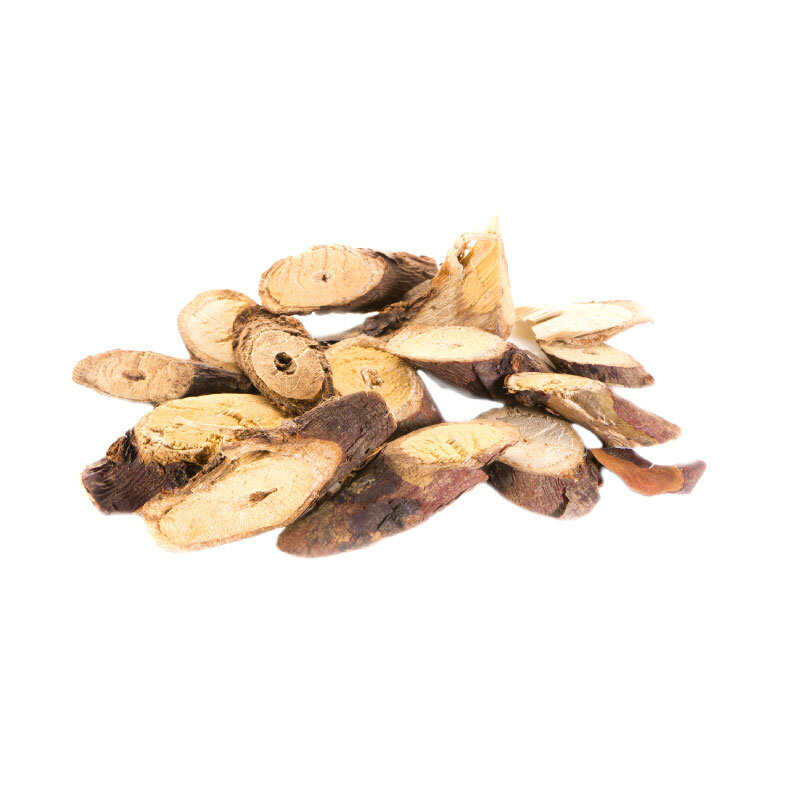
Isocryptolepine is a naturally occurring indoloquinoline alkaloid (indolo[3,2-c]quinoline), found in Cryptolepis. It is flagged as moderately toxic.
Concentration
Content by Source
Concentrations not reported. No percent-dry-weight or mg/g figures have been published for this compound in its source plants.
Isocryptolepine at a Glance
Isocryptolepine, also called cryptosanguinolentine, is a minor indoloquinoline alkaloid from the roots of Cryptolepis sanguinolenta, the West African climbing shrub whose decoction is a traditional antimalarial. Structurally it is 5-methyl-5H-indolo[3,2-c]quinoline — an angular isomer of the plant’s flagship alkaloid cryptolepine, differing only in how the indole and quinoline rings are fused 4Reference 4Isolation and synthesis of cryptosanguinolentine (isocryptolepine), a naturally-occurring bioactive indoloquinoline alkaloidView study →.
Its best-documented activity is antiplasmodial: the isolated molecule inhibits Plasmodium falciparum in vitro, including chloroquine-resistant strains, with a potency close to (though slightly below) cryptolepine 1Reference 1Antimalarial activity of cryptolepine and isocryptolepine, alkaloids isolated from Cryptolepis sanguinolentaView study →. Like other indoloquinolines it is a DNA intercalator, which underlies both its antiparasitic action and a general cytotoxicity toward mammalian cells 2Reference 2Indoloquinoline alkaloids as antimalarials: advances, challenges, and opportunitiesView study →.
Two honesty caveats frame this whole page. First, the natural molecule’s evidence is entirely in-vitro — there is no in-vivo or human data for isocryptolepine itself, unlike cryptolepine. Second, isocryptolepine has become a heavily synthesised scaffold: much of the literature that carries its name tests synthetic analogues (halogenated, side-chain-modified, or triazole-conjugated derivatives), not the plant compound. Those two things are kept separate throughout below.
Isocryptolepine vs. Cryptolepine
The single most useful fact about this molecule is its relationship to the alkaloid it shadows. Cryptolepine is a linear indolo[3,2-b]quinoline and the dominant, most-studied alkaloid of Cryptolepis sanguinolenta; isocryptolepine is an angular indolo[3,2-c]quinoline — the same atoms, a different ring fusion 4Reference 4Isolation and synthesis of cryptosanguinolentine (isocryptolepine), a naturally-occurring bioactive indoloquinoline alkaloidView study →.
That subtle change matters:
- Abundance. Cryptolepine is the major root alkaloid (percent-level); isocryptolepine is a minor/trace constituent, isolated in milligram amounts from kilograms of root 4Reference 4Isolation and synthesis of cryptosanguinolentine (isocryptolepine), a naturally-occurring bioactive indoloquinoline alkaloidView study →.
- Antiplasmodial potency. Both inhibit P. falciparum regardless of chloroquine resistance, but cryptolepine is somewhat more potent (IC50 ≈ 0.2–0.6 µM) than isocryptolepine (IC50 ≈ 0.8 µM) 1Reference 1Antimalarial activity of cryptolepine and isocryptolepine, alkaloids isolated from Cryptolepis sanguinolentaView study →.
- DNA/topoisomerase engagement. All three C. sanguinolenta isomers (cryptolepine, neocryptolepine, isocryptolepine) intercalate DNA and interfere with human topoisomerase II, but the effect is most pronounced for cryptolepine 2Reference 2Indoloquinoline alkaloids as antimalarials: advances, challenges, and opportunitiesView study →.
- Evidence depth. Cryptolepine has in-vivo rodent malaria data and a broad pharmacology; isocryptolepine’s natural-molecule record stops at in-vitro assays 1,
2Reference 1Antimalarial activity of cryptolepine and isocryptolepine, alkaloids isolated from Cryptolepis sanguinolentaView study →Reference 2Indoloquinoline alkaloids as antimalarials: advances, challenges, and opportunitiesView study → .
In short: isocryptolepine is a genuine but junior sibling of cryptolepine — real activity, far less of it, and far less studied.
What It's Used For
The evidence divides cleanly into two piles that must not be blended: a thin but real body of work on the natural isolate (antiplasmodial, DNA-intercalating cytotoxic) and a much larger body of work on synthetic analogues built on the isocryptolepine scaffold. The scores below stay modest by design — the natural molecule has no in-vivo or human data.
Support is an experimental score — weighted by study type (human > animal > in vitro) and volume. A beta, not a validated metric. Every score here is capped low: the natural molecule has only in-vitro data, and much of the field tests synthetic analogues rather than the plant compound. Read the per-row basis.
The flagship — and the only application resting mainly on the natural isolate. Isocryptolepine isolated from C. sanguinolenta roots inhibits Plasmodium falciparum in vitro with an IC50 of about 0.8 µM, and — importantly for a malaria lead — retains activity against chloroquine-resistant strains, so it is not cross-resistant with chloroquine 1Reference 1Antimalarial activity of cryptolepine and isocryptolepine, alkaloids isolated from Cryptolepis sanguinolentaView study →.
It sits just behind cryptolepine (IC50 ≈ 0.2–0.6 µM) in the same assay 1Reference 1Antimalarial activity of cryptolepine and isocryptolepine, alkaloids isolated from Cryptolepis sanguinolentaView study →, and modern reviews list it among the three “well-studied” antimalarial indoloquinoline alkaloids of the plant 2Reference 2Indoloquinoline alkaloids as antimalarials: advances, challenges, and opportunitiesView study →.
The three naturally occurring isomers have also been benchmarked side by side as the springboard for more potent synthetic leads — for example isoneocryptolepine and an N-methyl quaternary derivative, both markedly more active than the parent isomers in the same antiplasmodial assay 3Reference 3Isoneocryptolepine, a synthetic indoloquinoline alkaloid, as an antiplasmodial lead compoundView study →.
Mechanistically the antiplasmodial action is attributed to the class’s DNA intercalation, with a β-haematin (heme-detoxification) inhibition component demonstrated for the scaffold in analogue work 5Reference 5In vitroSynthesis, β-haematin inhibition, and in vitro antimalarial testing of isocryptolepine analoguesView study →.
Gap: all of this is in-vitro on the isolate — there is no in-vivo rodent-malaria or human data for isocryptolepine itself (a contrast with cryptolepine, which has both), and the plant’s clinical antimalarial reputation is carried by cryptolepine and the whole decoction, not this minor alkaloid 1,
The double-edge of a DNA-binder. As an indolo[3,2-c]quinoline, isocryptolepine intercalates into the DNA double helix and interferes with human topoisomerase II, the shared mechanism of the C. sanguinolenta alkaloids 2Reference 2Indoloquinoline alkaloids as antimalarials: advances, challenges, and opportunitiesView study → — which makes it cytotoxic to mammalian cells as well as to parasites, and is the reason the class is explored as an anticancer scaffold. The first dedicated anticancer evaluation of isocryptolepine chemistry tested synthetic analogues (against HepG2, HuCCA-1, MOLT-3 and A549 cell lines), not the natural molecule 6Reference 6Synthesis of isocryptolepine analogues and their structure-activity relationship studies as antiplasmodial and antiproliferative agentsView study →, and later tetracyclic ring-system variants reached nanomolar antiproliferative potency (one derivative IC50 ≈ 24 nM against a prostate-cancer line) 7Reference 7Synthesis and evaluation of the tetracyclic ring-system of isocryptolepine and regioisomers for antimalarial, antiproliferative and antimicrobial activitiesView study →.
Gap: the cytotoxicity is non-selective DNA-intercalation — a liability as much as an asset — and the anticancer potency figures belong to engineered analogues, not to isocryptolepine as it occurs in the plant; no isolate anticancer efficacy has been shown beyond in-vitro cell kill 6,
Reported for the scaffold, thin for the natural molecule. Synthetic tetracyclic ring-systems built on the isocryptolepine core show antimicrobial and biofilm-inhibitory activity in vitro (e.g. a pyridocarbazole variant with measurable biofilm inhibition) 7Reference 7Synthesis and evaluation of the tetracyclic ring-system of isocryptolepine and regioisomers for antimalarial, antiproliferative and antimicrobial activitiesView study →.
Within C. sanguinolenta itself, the documented antibacterial/antifungal alkaloids are the siblings — neocryptolepine, biscryptolepine and cryptoquindoline, with neocryptolepine active against Gram-positive bacteria and Candida albicans — a study in which isocryptolepine was not among the compounds tested 9Reference 9Antibacterial and antifungal activities of neocryptolepine, biscryptolepine and cryptoquindoline, alkaloids isolated from Cryptolepis sanguinolentaView study →.
Gap: there is no direct antifungal/antibacterial dataset for the natural isocryptolepine molecule; the antimicrobial claims attach either to synthetic ring-system analogues or to its indoloquinoline cousins, and should not be transferred to the plant compound 7,
A newer, purely synthetic thread. Isocryptolepine-triazole adducts — click-chemistry conjugates of the scaffold — inhibit the intestinal parasite Giardia duodenalis in vitro, with the lead adduct showing potent antigiardial activity and low toxicity to human intestinal cells, apparently by disrupting parasite phospholipid metabolism and membrane integrity 8Reference 8Inhibition of Giardia duodenalis by isocryptolepine-triazole adducts and derivativesView study →.
The parent alkaloid is also grouped with the class’s reported antitrypanosomal/antileishmanial cytotoxic activities in review coverage 2Reference 2Indoloquinoline alkaloids as antimalarials: advances, challenges, and opportunitiesView study →.
Gap: the antigiardial data are for synthetic derivatives, not natural isocryptolepine, and the broader antiprotozoal mentions for the isolate are qualitative — no isolate potency or in-vivo protozoal data are established 2,
Mechanisms
| Target / pathway | Effect | Relevant to |
|---|---|---|
| DNA (double-helix intercalation) | inserts between base pairs, distorting DNA and blocking replication/transcription | antiplasmodial + cytotoxic (the class throughline) |
| Human topoisomerase II | interferes with catalytic activity (less pronounced than cryptolepine) | cytotoxic / antiproliferative |
| β-haematin / heme detoxification | inhibition of heme crystallisation shown for scaffold analogues | antiplasmodial (heme-poisoning component) |
| Parasite membrane / phospholipid metabolism | disruption reported for synthetic triazole adducts | antigiardial (analogues) |
The load-bearing point is that isocryptolepine is fundamentally a DNA-intercalating alkaloid: the same property that stops parasite (and tumour-cell) DNA synthesis also makes it non-selectively cytotoxic, which is why the natural molecule is a lead scaffold rather than a drug 2Reference 2Indoloquinoline alkaloids as antimalarials: advances, challenges, and opportunitiesView study →.
Pharmacokinetics
No meaningful pharmacokinetic profile exists for natural isocryptolepine. There are no absorption, bioavailability, metabolism, half-life or distribution studies of the isolated plant molecule in animals or humans — its record is confined to in-vitro potency. As a flat, lipophilic, planar polycyclic DNA-intercalator it would be expected to bind nucleic acids avidly and distribute broadly, but this is inference from the compound class, not measured data. The absence of PK is itself a reason the field has moved to synthetic analogues, several designed explicitly to improve drug-like properties over the parent scaffold 5,
Clinical Trials
There are no clinical trials of isocryptolepine — as an isolate or a derivative. Human antimalarial evidence in this plant belongs to whole Cryptolepis sanguinolenta preparations and to cryptolepine, not to this minor alkaloid.
| Completed | Planned | Terminated | Preclinical |
|---|---|---|---|
| — | — | — | In-vitro antiplasmodial/cytotoxic (isolate) + extensive synthetic-analogue SAR |
Last checked: July 2026.
Isolate vs. Plant Studies
For this molecule the isolate-vs-plant distinction runs a specific way. The antiplasmodial and DNA-intercalation findings are for the purified isolate in cell-free/parasite-culture assays — a methodological strength for attribution, but every one of them stops at in-vitro 1,
Prevalence in Nature
Isocryptolepine is, so far, essentially confined to Cryptolepis sanguinolenta among natural sources — a West African climbing shrub (Apocynaceae) whose crimson-sapped roots are the traditional source of the yellow indoloquinoline alkaloids. It is a minor/trace root alkaloid: the first natural isolations recovered only milligram quantities from kilograms of dried root (roughly 10⁻³–10⁻⁴ % dry weight, depending on the study), placing it far below cryptolepine, which dominates the root alkaloid fraction 4Reference 4Isolation and synthesis of cryptosanguinolentine (isocryptolepine), a naturally-occurring bioactive indoloquinoline alkaloidView study →. It co-occurs there with the sibling indoloquinolines — cryptolepine, neocryptolepine, quindoline, 11-hydroxycryptolepine, cryptoheptine and the dimeric alkaloids — all variations on the same fused indole–quinoline theme 2,
Discovery & Synthesis
The story is unusual: the molecule was made in the laboratory before it was found in nature. The indolo[3,2-c]quinoline ring system now called isocryptolepine was first synthesised by Kermack and Storey in 1950 (via a modification of the Graebe–Ullmann carbazole synthesis), decades before anyone knew it occurred in a plant 4Reference 4Isolation and synthesis of cryptosanguinolentine (isocryptolepine), a naturally-occurring bioactive indoloquinoline alkaloidView study →. It was first isolated from a natural source — Cryptolepis sanguinolenta — in 1995 by the Bodo group, and independently obtained shortly after by the Tackie group in 1996, who named it cryptosanguinolentine after the plant; both recovered it only in trace amounts 4Reference 4Isolation and synthesis of cryptosanguinolentine (isocryptolepine), a naturally-occurring bioactive indoloquinoline alkaloidView study →. The name isocryptolepine reflects its status as an angular isomer of cryptolepine 4Reference 4Isolation and synthesis of cryptosanguinolentine (isocryptolepine), a naturally-occurring bioactive indoloquinoline alkaloidView study →.
Because it is a minor natural product, isocryptolepine is now sourced for research almost entirely by total synthesis rather than plant extraction, and its compact tetracyclic framework has made it a popular target for synthetic methodology — Fischer indolisations, palladium-catalysed cross-couplings and direct arylations, photochemical and visible-light-mediated cyclisations, nitrene/azide routes and electrosynthesis, with dozens of published total syntheses 4Reference 4Isolation and synthesis of cryptosanguinolentine (isocryptolepine), a naturally-occurring bioactive indoloquinoline alkaloidView study →. This synthetic accessibility is exactly what enabled the large analogue libraries (halogenated, C2/C6/N11-substituted, triazole-conjugated) that carry most of the compound’s biological record 5,
Patents: not yet researched.
Toxicity & Safety
Isocryptolepine carries a moderate flag. It is not acutely poisonous in any documented human sense — there is simply no human exposure to isolated isocryptolepine — but it is a DNA-intercalating, topoisomerase-interfering alkaloid, and that mechanism makes it non-selectively cytotoxic to mammalian cells, not just to parasites 2Reference 2Indoloquinoline alkaloids as antimalarials: advances, challenges, and opportunitiesView study →. Its close relative cryptolepine, which shares the DNA-intercalation mechanism, is documented as genotoxic and embryotoxic; isocryptolepine has not been characterised to that depth, so the caution here is a mechanism-based, not a measured, one.
- No documented human toxicity — because there is no human use. Exposure to the isolate is confined to the laboratory; dietary/traditional exposure is trace, as one minor alkaloid in a Cryptolepis decoction dominated by cryptolepine.
- DNA-intercalating cytotoxin. The same DNA-binding/topoisomerase-II mechanism behind its antiparasitic action makes it non-selectively cytotoxic to mammalian cells 2Reference 2Indoloquinoline alkaloids as antimalarials: advances, challenges, and opportunitiesView study →.
- Genotoxicity is plausible but uncharacterised. Its isomer cryptolepine is genotoxic/embryotoxic; no dedicated genotoxicity, reproductive or repeat-dose dataset exists for isocryptolepine itself.
- Do not read safety from the analogue data. The nanomolar, low-cytotoxicity figures in the literature belong to engineered derivatives, not the natural molecule.
Pregnancy and lactation are decided at the level of the herb or a finished product, not on this molecule page; no isolate-specific reproductive verdict is issued here, though the cryptolepine-class embryotoxicity signal is noted above as a mechanistic caution.
Dosage
There is no established or recommended dose for isocryptolepine — it is a research-stage minor alkaloid with no clinical use. Every figure in its literature is an in-vitro potency, not a dose: an antiplasmodial IC50 of about 0.8 µM for the natural isolate against P. falciparum 1Reference 1Antimalarial activity of cryptolepine and isocryptolepine, alkaloids isolated from Cryptolepis sanguinolentaView study →, and sub-micromolar-to-nanomolar IC50 values for various synthetic analogues 5,
References
- Grellier P, Ramiaramanana L, Millerioux V, Deharo E, Schrével J, Frappier F, Trigalo F, Bodo B, Pousset JL (1996). Antimalarial activity of cryptolepine and isocryptolepine, alkaloids isolated from Cryptolepis sanguinolenta. Phytotherapy Research. https://doi.org/10.1002/(SICI)1099-1573(199606)10:4%3C317::AID-PTR858%3E3.0.CO;2-0
- Parvatkar PT, Diagne K, Zhao Y, Manetsch R (2024). Indoloquinoline alkaloids as antimalarials: advances, challenges, and opportunities. ChemMedChem. https://pubmed.ncbi.nlm.nih.gov/38840271/
- Van Miert S, Hostyn S, Maes BU, Cimanga K, Brun R, Kaiser M, Mátyus P, Dommisse R, Lemière G, Vlietinck A, Pieters L (2005). Isoneocryptolepine, a synthetic indoloquinoline alkaloid, as an antiplasmodial lead compound. Journal of Natural Products. https://pubmed.ncbi.nlm.nih.gov/15921407/
- Thobokholt EN, Larghi EL, Bracca ABJ, Kaufman TS (2020). Isolation and synthesis of cryptosanguinolentine (isocryptolepine), a naturally-occurring bioactive indoloquinoline alkaloid. RSC Advances. https://pubmed.ncbi.nlm.nih.gov/35518305/
- Wang N, Wicht KJ, Imai K, Wang MQ, Anh Ngoc TA, Kiguchi R, Kaiser M, Egan TJ, Inokuchi T (2014). Synthesis, β-haematin inhibition, and in vitro antimalarial testing of isocryptolepine analogues. Bioorganic & Medicinal Chemistry. https://pubmed.ncbi.nlm.nih.gov/24721829/
- Aroonkit P, Thongsornkleeb C, Tummatorn J, Krajangsri S, Mungthin M, Ruchirawat S (2015). Synthesis of isocryptolepine analogues and their structure-activity relationship studies as antiplasmodial and antiproliferative agents. European Journal of Medicinal Chemistry. https://pubmed.ncbi.nlm.nih.gov/25747499/
- Håheim KS, Lindbäck E, Tan KN, Albrigtsen M, Urdal Helgeland IT, Lauga C, Matringe T, Kennedy EK, Andersen JH, Avery VM, Sydnes MO (2021). Synthesis and evaluation of the tetracyclic ring-system of isocryptolepine and regioisomers for antimalarial, antiproliferative and antimicrobial activities. Molecules. https://pubmed.ncbi.nlm.nih.gov/34070798/
- Popruk S, et al. (2024). Inhibition of Giardia duodenalis by isocryptolepine-triazole adducts and derivatives. International Journal for Parasitology: Drugs and Drug Resistance. https://pubmed.ncbi.nlm.nih.gov/39151240/
- Cimanga K, De Bruyne T, Pieters L, Totté J, Tona L, Kambu K, Vanden Berghe D, Vlietinck AJ (1998). Antibacterial and antifungal activities of neocryptolepine, biscryptolepine and cryptoquindoline, alkaloids isolated from Cryptolepis sanguinolenta. Phytomedicine. https://pubmed.ncbi.nlm.nih.gov/23195843/



