
Compound Monograph
Neocryptolepine
Neocryptolepine (cryptotackieine) is a minor indoloquinoline alkaloid of the West African root Cryptolepis sanguinolenta — the linear isomer of cryptolepine. It intercalates DNA and inhibits topoisomerase II, giving in-vitro antimalarial, anticancer and antibacterial activity, but it remains a research molecule with no clinical use.

Sources · 2
Where Does It Come From?
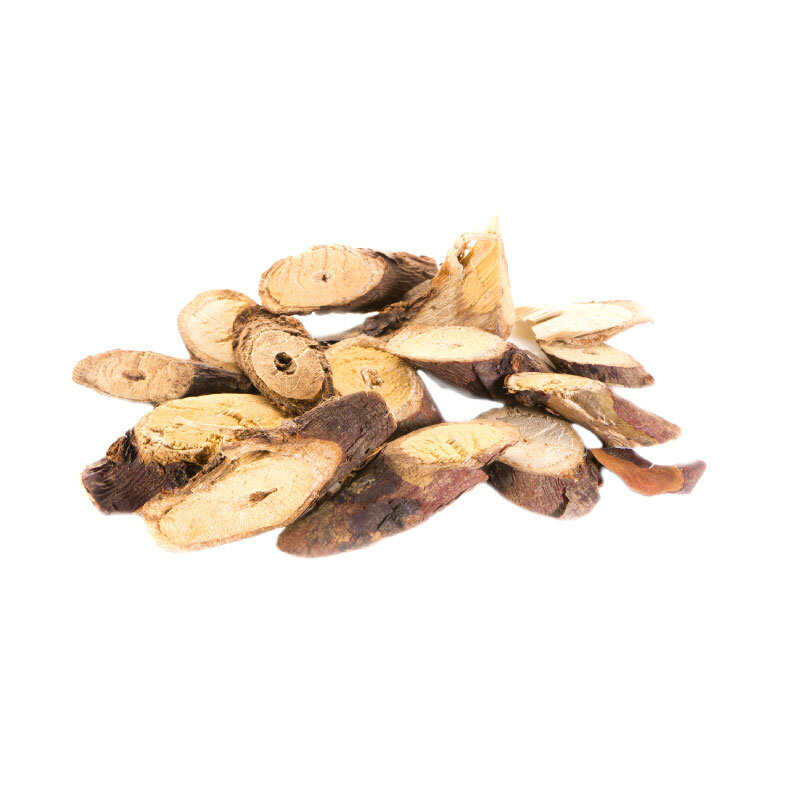
Neocryptolepine is a naturally occurring indoloquinoline alkaloid (linear 5h-indolo[2,3-b]quinoline), found in Ghana quinine and 1 other source. It is flagged as moderately toxic.
Concentration
Content by Source
Concentrations not reported. No percent-dry-weight or mg/g figures have been published for this compound in its source plants.
Neocryptolepine at a Glance
Neocryptolepine — also called cryptotackieine — is one of the indoloquinoline alkaloids of Cryptolepis sanguinolenta, the scrambling West African shrub (“Ghana quinine”) whose root decoction is a traditional antimalarial. It is a minor constituent of that root; the closely related cryptolepine is the dominant, most-studied alkaloid.
Structurally, neocryptolepine is the linear isomer of cryptolepine: both are methylated tetracyclic indoloquinolines, but the ring nitrogens sit in different positions, and that single change lowers neocryptolepine’s affinity for DNA and softens most of its activities relative to its more potent sibling 2Reference 2DNA intercalation, topoisomerase II inhibition and cytotoxic activity of the plant alkaloid neocryptolepineView study →.
Its interest is almost entirely preclinical and chemical. As an isolated molecule it intercalates DNA, interferes with topoisomerase II, and shows in-vitro antimalarial, anticancer and antibacterial activity 1,
Neocryptolepine vs. Cryptolepine
The single most important fact about this molecule is that it is an isomer of the flagship alkaloid, and the two are routinely confused.
- Cryptolepine is 5-methyl-10H-indolo[3,2-b]quinoline — the angular, dominant, more potent alkaloid.
- Neocryptolepine is 5-methyl-5H-indolo[2,3-b]quinoline — the linear isomer, in which the indole unit is rotated relative to the quinoline so the two nitrogens lie on the same side of the chromophore 2,
6Reference 2DNA intercalation, topoisomerase II inhibition and cytotoxic activity of the plant alkaloid neocryptolepineView study →Reference 6Indoloquinolines as scaffolds for drug discoveryView study → .
That geometric difference has real pharmacological consequences. Neocryptolepine still intercalates DNA (preferentially at GC-rich sequences) and still interferes with topoisomerase II, but with reduced DNA affinity and correspondingly weaker effects — in matched leukaemia assays cryptolepine was about four times more cytotoxic than neocryptolepine 2,
For drug discovery this “weaker” profile is not purely a downside: neocryptolepine’s lower baseline cytotoxicity has made it an attractive scaffold to derivatise, aiming for compounds that keep the antimalarial or antitumour activity while widening the gap from host-cell toxicity 5Reference 5In vitroIn vitro inhibition of beta-haematin formation, DNA interactions, antiplasmodial activity, and cytotoxicity of synthetic neocryptolepine derivativesView study →.
What It's Used For
Neocryptolepine’s evidence is narrow and preclinical: a handful of in-vitro studies on the isolated alkaloid across three activities, plus a large synthetic-analogue literature that must be kept separate from the natural molecule.
Support is an experimental score — weighted by study type (human > animal > in vitro) and volume. A beta, not a validated metric. Every row here is in-vitro isolate data, so the ceiling is low; read the per-row basis.
The best-characterised activity, and entirely in vitro on the isolated alkaloid. Neocryptolepine intercalates into DNA preferentially at GC-rich sequences but with lower affinity than cryptolepine, and it interferes with human topoisomerase II — though its topoisomerase-poisoning is milder than cryptolepine’s 2Reference 2DNA intercalation, topoisomerase II inhibition and cytotoxic activity of the plant alkaloid neocryptolepineView study →.
In murine P388 and human HL-60 leukaemia cells it drives accumulation of cells in the G2/M phase, promotes cytochrome-c release and caspase-mediated apoptosis, and is cytotoxic — but cryptolepine was about four times more toxic in the same systems 3Reference 3Cytotoxicity and cell cycle effects of the plant alkaloids cryptolepine and neocryptolepine: relation to drug-induced apoptosisView study →.
Gap: these are cell-line assays of the isolate with no animal antitumour or human data; the reported in-vivo antitumour results in this chemotype come from synthetic indolo[2,3-b]quinoline analogues, not from natural neocryptolepine 5,
The activity that first drew attention, because the parent plant is a traditional malaria remedy. The isolated alkaloid showed strong in-vitro antiplasmodial activity against chloroquine-resistant Plasmodium falciparum in the foundational survey of Cryptolepis alkaloids 1Reference 1In vitroIn vitro and in vivo antiplasmodial activity of cryptolepine and related alkaloids from Cryptolepis sanguinolentaView study →, consistent with the DNA-intercalation mechanism shared across the family 6Reference 6Indoloquinolines as scaffolds for drug discoveryView study →.
Antimalarial action in the scaffold has also been linked to inhibition of β-haematin (haemozoin) formation 5Reference 5In vitroIn vitro inhibition of beta-haematin formation, DNA interactions, antiplasmodial activity, and cytotoxicity of synthetic neocryptolepine derivativesView study →.
Gap: in the same study the natural molecule was not among the alkaloids that produced in-vivo efficacy in the rodent test system 1Reference 1In vitroIn vitro and in vivo antiplasmodial activity of cryptolepine and related alkaloids from Cryptolepis sanguinolentaView study →; the compounds with improved in-vivo activity and selectivity — for example 2-bromoneocryptolepine — are synthetic derivatives, not the natural alkaloid 5Reference 5In vitroIn vitro inhibition of beta-haematin formation, DNA interactions, antiplasmodial activity, and cytotoxicity of synthetic neocryptolepine derivativesView study →. Read the antimalarial promise as belonging to the chemotype, not to neocryptolepine itself.
The weakest of the three. Isolated from the root bark alongside the dimeric alkaloids biscryptolepine and cryptoquindoline, neocryptolepine showed antibacterial activity against gram-positive bacteria (MIC < 100 µg/mL), was less active against gram-negative organisms, and modestly inhibited Candida albicans — with the action described as bacteriostatic rather than bactericidal 4Reference 4Antibacterial and antifungal activities of neocryptolepine, biscryptolepine and cryptoquindoline, alkaloids isolated from Cryptolepis sanguinolentaView study →.
Gap: the MICs are high (weak by drug standards), the work is in-vitro only, and no whole-plant or in-vivo confirmation attributes Cryptolepis’s antimicrobial reputation specifically to this minor alkaloid 4Reference 4Antibacterial and antifungal activities of neocryptolepine, biscryptolepine and cryptoquindoline, alkaloids isolated from Cryptolepis sanguinolentaView study →.
Mechanisms
| Target / pathway | Effect | Relevant to |
|---|---|---|
| DNA (GC-rich sequences) | reversible base-pair intercalation, lower affinity than cryptolepine | anticancerantiplasmodial |
| Topoisomerase II | interference with catalytic activity; weak poisoning | anticancer |
| Cell cycle (G2/M) | arrest → cytochrome-c release → caspase-mediated apoptosis | anticancer |
| β-haematin / haemozoin formation | inhibition (shown chiefly for the scaffold and its derivatives) | antiplasmodial |
| Gram-positive bacterial growth | bacteriostatic, gram-positive-selective | antibacterial |
The load-bearing point is the isomerism: neocryptolepine’s rotated indole lowers its DNA affinity, which is why the same mechanisms operate at roughly a quarter of cryptolepine’s cytotoxic potency 2,
Pharmacokinetics
There is no dedicated human or animal pharmacokinetic dataset for neocryptolepine. The governing liability for the whole indoloquinoline class is poor aqueous solubility, which hampers bioavailability and is repeatedly named as the reason these alkaloids have not advanced to clinical development 6Reference 6Indoloquinolines as scaffolds for drug discoveryView study → — much of the medicinal-chemistry effort on the scaffold is aimed at fixing exactly this. Absorption, distribution, metabolism (CYP involvement), active metabolites and half-life for the natural molecule are all uncharacterised. Any potency read off an in-vitro assay should be discounted accordingly.
Clinical Trials
There are no clinical trials of neocryptolepine. All human-relevant interest is preclinical and, for in-vivo work, largely centred on synthetic derivatives rather than the natural alkaloid.
| Completed | Planned | Terminated | Preclinical |
|---|---|---|---|
| — | — | — | Antiplasmodial, anticancer (DNA/topo II) and antibacterial — in-vitro isolate; in-vivo work on synthetic analogues |
Last checked: July 2026.
Isolate vs. Plant Studies
This molecule sits firmly on the isolate side. Every neocryptolepine finding above comes from the purified alkaloid tested in vitro — DNA-binding and topoisomerase assays 2Reference 2DNA intercalation, topoisomerase II inhibition and cytotoxic activity of the plant alkaloid neocryptolepineView study →, leukaemia-cell cytotoxicity 3Reference 3Cytotoxicity and cell cycle effects of the plant alkaloids cryptolepine and neocryptolepine: relation to drug-induced apoptosisView study →, antiplasmodial screens 1Reference 1In vitroIn vitro and in vivo antiplasmodial activity of cryptolepine and related alkaloids from Cryptolepis sanguinolentaView study →, and antimicrobial MICs 4Reference 4Antibacterial and antifungal activities of neocryptolepine, biscryptolepine and cryptoquindoline, alkaloids isolated from Cryptolepis sanguinolentaView study →. None of it is whole-plant work. The traditional preparation is a water decoction of the whole Cryptolepis sanguinolenta root, whose activity is dominated by the far more abundant cryptolepine 1,
Prevalence in Nature
Neocryptolepine is a minor alkaloid of the root and root bark of Cryptolepis sanguinolenta (Apocynaceae/Periplocaceae), a thin-stemmed climbing shrub of West and Central Africa used traditionally for malaria, diarrhoea and respiratory complaints 7Reference 7ReviewPhytochemical and pharmacological review of Cryptolepis sanguinolenta (Lindl.) SchlechterView study →. Within the root’s indoloquinoline fraction it is a trace constituent, greatly outweighed by cryptolepine, which is the alkaloid that has been quantified and agronomically optimised; neocryptolepine’s own concentration has not been separately quantified in the literature 4,
Discovery & Synthesis
Neocryptolepine was first isolated in 1996 from the root bark of Cryptolepis sanguinolenta — and, in a coincidence typical of natural-product chemistry, by two groups at once. Cimanga and co-workers isolated the cryptolepine isomer in which both nitrogens sit on the same side of the ring system and named it neocryptolepine; simultaneously Sharaf and colleagues characterised the same 5-methyl-5H-indolo[2,3-b]quinoline and christened it cryptotackieine 6,
Because it is a compact, planar heterocycle, neocryptolepine quickly became a popular synthetic target, and several total and formal syntheses of the indolo[2,3-b]quinoline core have been published — the same routes medicinal chemists use to make the substituted analogues that carry most of the family’s in-vivo promise 5,
Patents: not yet researched.
Toxicity & Safety
Neocryptolepine carries a moderate flag. It is a DNA-intercalating, topoisomerase-II-interfering cytotoxin — genotoxic-type mechanisms — and is directly cytotoxic to mammalian cell lines in vitro 2,
- DNA-directed cytotoxin. Intercalates DNA and interferes with topoisomerase II; cytotoxic to mammalian cells in vitro — treat as a genotoxic-class research chemical, not a supplement.
- No safety data. No genotoxicity, reproductive or repeat-dose toxicology and no human exposure data exist for the isolated alkaloid.
- Lower potency than cryptolepine. Its reduced DNA affinity makes it roughly four-fold less cytotoxic than its sibling isomer in matched assays — part of why it is studied as a scaffold.
- Not the plant’s active. Do not read Cryptolepis traditional-use safety onto this trace isolate; the herb’s dominant alkaloid is cryptolepine.
Dosage
There is no dose. Neocryptolepine is a research molecule with no approved or traditional use as an isolated compound; it has never been dosed in humans, and its poor aqueous solubility has kept it out of clinical development 6Reference 6Indoloquinolines as scaffolds for drug discoveryView study →. The concentrations in the literature are in-vitro assay concentrations (typically low micromolar) used to characterise DNA binding, cytotoxicity and antiplasmodial activity of the purified alkaloid 1,
References
- Cimanga K, De Bruyne T, Pieters L, Vlietinck AJ, Turger CA (1997). In vitro and in vivo antiplasmodial activity of cryptolepine and related alkaloids from Cryptolepis sanguinolenta. Journal of Natural Products. https://pubmed.ncbi.nlm.nih.gov/9249972/
- Bailly C, Laine W, Baldeyrou B, De Pauw-Gillet MC, Colson P, Houssier C, Cimanga K, Van Miert S, Vlietinck AJ, Pieters L (2000). DNA intercalation, topoisomerase II inhibition and cytotoxic activity of the plant alkaloid neocryptolepine. Anti-Cancer Drug Design. https://pubmed.ncbi.nlm.nih.gov/11049087/
- Dassonneville L, Lansiaux A, Wattelet A, Wattez N, Mahieu C, Van Miert S, Pieters L, Bailly C (2000). Cytotoxicity and cell cycle effects of the plant alkaloids cryptolepine and neocryptolepine: relation to drug-induced apoptosis. European Journal of Pharmacology. https://pubmed.ncbi.nlm.nih.gov/11099695/
- Cimanga K, De Bruyne T, Pieters L, Totté J, Tona L, Kambu K, Vanden Berghe D, Vlietinck AJ (1998). Antibacterial and antifungal activities of neocryptolepine, biscryptolepine and cryptoquindoline, alkaloids isolated from Cryptolepis sanguinolenta. Phytomedicine. https://pubmed.ncbi.nlm.nih.gov/23195843/
- Van Miert S, Jonckers T, Cimanga K, Maes L, Maes B, Lemière G, Dommisse R, Vlietinck A, Pieters L (2004). In vitro inhibition of beta-haematin formation, DNA interactions, antiplasmodial activity, and cytotoxicity of synthetic neocryptolepine derivatives. Experimental Parasitology. https://pubmed.ncbi.nlm.nih.gov/15582513/
- Lavrado J, Moreira R, Paulo A (2010). Indoloquinolines as scaffolds for drug discovery. Current Medicinal Chemistry. https://pubmed.ncbi.nlm.nih.gov/20491639/
- Osafo N, Mensah KB, Yeboah OK (2017). Phytochemical and pharmacological review of Cryptolepis sanguinolenta (Lindl.) Schlechter. Advances in Pharmacological Sciences. https://pubmed.ncbi.nlm.nih.gov/29750083/



