
Compound Monograph
Isomenthone
Isomenthone is menthone's stereoisomer — the same monoterpene ketone with one carbon flipped. It is a minor component of peppermint oil, a major one of buchu and rose-geranium oils, and its most established use is forensic: it is one of the serum markers used to check whether a driver really did drink peppermint liqueur.

Sources · 6
Where Does It Come From?
Isomenthone is a naturally occurring monoterpene ketone (p-menthan-3-one; menthone stereoisomer), found in Peppermint, Buchu, Field mint / cornmint and 3 other sources. It is well tolerated orally (low toxicity).
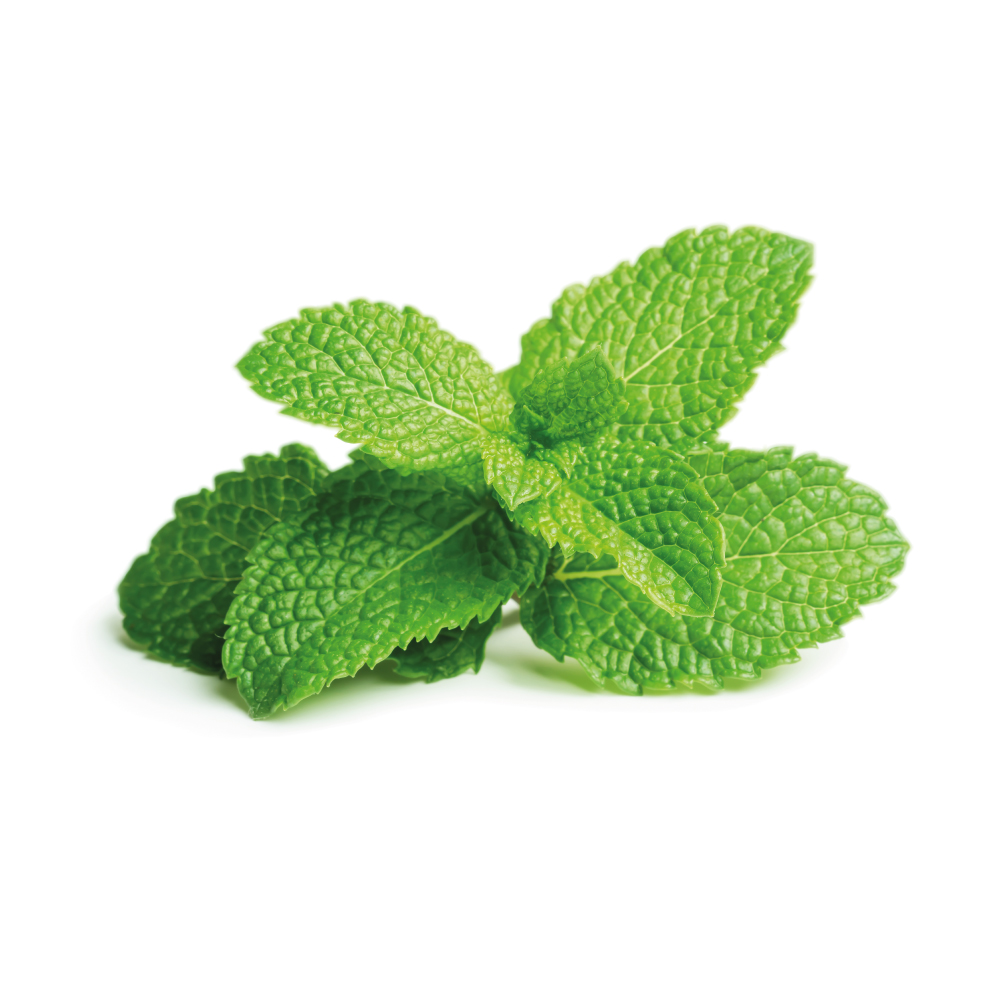 Principal source Peppermint Mentha × piperita Herb monograph →
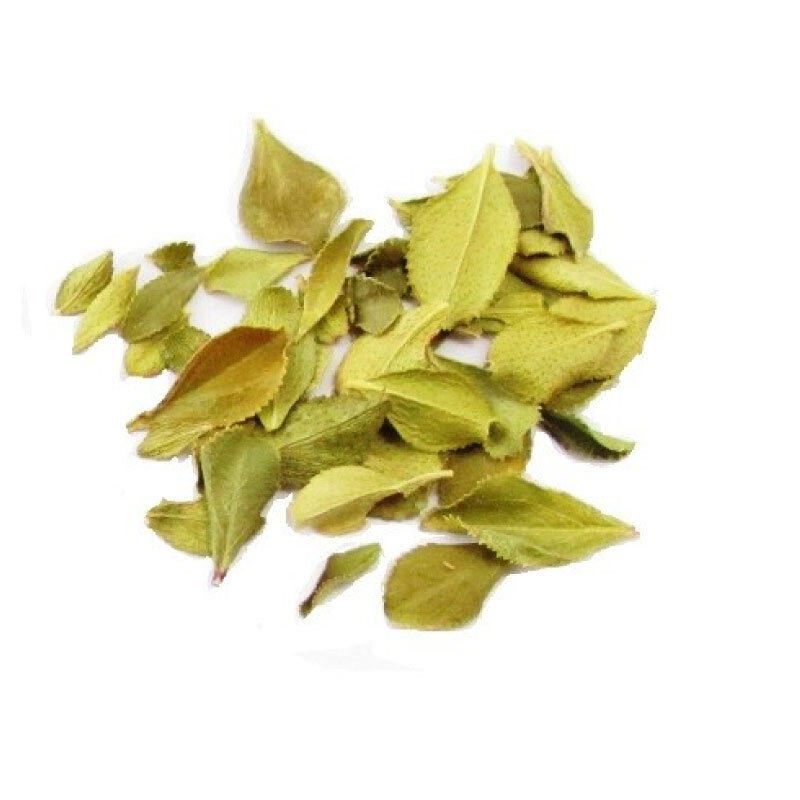 Source Buchu Agathosma betulina Herb monograph →
Concentration
Content by Source
Concentrations not reported. No percent-dry-weight or mg/g figures have been published for this compound in its source plants.
Isomenthone at a Glance
Isomenthone is a monoterpene ketone and menthone’s stereoisomer: the same p-menthan-3-one skeleton with the isopropyl group on the other face of the ring. Plants make both from the same precursor, pulegone, and the two travel together in essentially every oil that carries either.
It is a minor constituent of peppermint oil — pharmacopoeial composition limits put it at 1.5–10% — a few per cent of cornmint oil, and a major component of two unrelated oils: buchu, where it pairs with menthone as the dominant ketone fraction, and some chemotypes of rose geranium 7,
Its pharmacology is sparse and, where it has been tested against its own relatives, unimpressive: in a rat comparison of five mint constituents, menthol and limonene drove the bile-secretion effect and isomenthone produced only a slight one 5Reference 5Research on choleretic effect of menthol, menthone, pluegone, isomenthone, and limonene in DanShu capsule — animalView study →. The one thing isomenthone is genuinely used for is forensic: it is a serum marker of peppermint-liqueur consumption, used to check drink-driving defences 6Reference 6Clinical trialHeadspace solid-phase microextraction-gas chromatography-mass spectrometry determination of the characteristic flavourings menthone, isomenthone, neomenthol and menthol in serum samples with and without enzymatic cleavage to validate post-offence alcohol drinking claims — human volunteersView study →.
The Stereochemical Pair
Menthone and isomenthone differ at a single carbon, and the difference is set in the plant by how pulegone is reduced.
Feeding deuterium-labelled pulegone to peppermint shoot tips and analysing the oil by enantioselective multidimensional GC-MS showed that both enantiomers of pulegone are reduced to the corresponding p-menthan-3-ones — an unspecific reduction — but with different stereoselectivities, favouring the 4S-configured diastereomers, and with (S)-pulegone reduced faster than (R)-pulegone 2Reference 2Biogenetic studies in Mentha x piperitaView study →. Pulegone reductase is the enzyme that performs this step and it is what fixes the stereochemistry of everything downstream 3Reference 3Functional characterization and structural insights into stereoselectivity of pulegone reductase in menthol biosynthesisView study →.
Downstream, both ketones are substrates for the same two peppermint reductases that make the menthol isomers — but at very different affinities. Menthone:(−)-(3R)-menthol reductase has a Km of 3.0 µM for menthone and 41 µM for isomenthone; the neomenthol-forming enzyme has 674 µM and greater than 1 mM respectively 1Reference 1Monoterpene metabolismView study →. Isomenthone is the poorer substrate, which is part of why it lingers in the oil while menthone is drawn off toward menthol.
The same pair is made outside the mints. Pelargonium tomentosum — a Geraniaceae shrub, not a mint — builds menthone and isomenthone by its own route, and a somaclonal variant of rose-scented geranium selected for high isomenthone shows how far the ratio can be pushed 11Reference 11Menthone and isomenthone biosynthesis in Pelargonium tomentosum JacqView study →.
Isomenthone as a Forensic Marker
The most established human use of this molecule has nothing to do with medicine.
Peppermint liqueurs and certain herbal and bitter digestifs carry a characteristic set of mint volatiles, and their appearance in serum is evidence that someone drank one. A validated headspace SPME-GC-MS method measures menthone, isomenthone, neomenthol and menthol in serum, with and without enzymatic cleavage of conjugates, at limits of detection around 2–5 ng/mL 6Reference 6Clinical trialHeadspace solid-phase microextraction-gas chromatography-mass spectrometry determination of the characteristic flavourings menthone, isomenthone, neomenthol and menthol in serum samples with and without enzymatic cleavage to validate post-offence alcohol drinking claims — human volunteersView study →.
The method exists because of a specific legal problem: a driver who claims to have drunk alcohol after an offence rather than before it. In a controlled study, a volunteer drinking peppermint liqueur produced measurable concentration–time profiles for all four markers. In blood from 100 drivers who claimed post-offence peppermint-liqueur consumption, free isomenthone was found in eight cases at 3.1–11.3 ng/mL 6Reference 6Clinical trialHeadspace solid-phase microextraction-gas chromatography-mass spectrometry determination of the characteristic flavourings menthone, isomenthone, neomenthol and menthol in serum samples with and without enzymatic cleavage to validate post-offence alcohol drinking claims — human volunteersView study →.
The pharmacokinetic detail buried in that study is the useful part for a compound page. Menthol and neomenthol undergo rapid phase-II conjugation and were found largely as glucuronides — menthol reached 11.0–638.2 ng/mL as free plus conjugated in 59 of the 100 cases. Menthone and isomenthone were not conjugated at all, and appeared at lower concentrations over a shorter time span than the alcohols 6Reference 6Clinical trialHeadspace solid-phase microextraction-gas chromatography-mass spectrometry determination of the characteristic flavourings menthone, isomenthone, neomenthol and menthol in serum samples with and without enzymatic cleavage to validate post-offence alcohol drinking claims — human volunteersView study →. The two ketones are cleared by a different route from the alcohols they turn into, and they clear faster.
What It's Used For
Very little. Two isolate-level studies exist, and one of them is a negative result.
Isomenthone inhibited the TNF-α-mediated fall in viability of human dermal fibroblasts and reduced apoptosis under serum-free conditions, assessed by MTT and TUNEL. Mechanistically it blocked activation of the JNK and p38 MAPK pathways and the downstream apoptotic events they control 4Reference 4In vitroIsomenthone protects human dermal fibroblasts from TNF-α-induced death possibly by preventing activation of JNK and p38 MAPK — in vitroView study →. The authors framed the work in cosmetic terms — isomenthone is already used as a fragrance and flavour ingredient — rather than as a drug lead.
Gap: a single in-vitro study in one cell type under an artificial stress (serum deprivation plus TNF-α), with no dose-response in a living animal and no skin-level follow-up.
A Chinese herbal capsule containing mint constituents stimulated bile secretion in rats, and its five major constituents were then dosed separately at the amounts each contributed. Menthol and limonene promoted bile secretion, significantly lowered total cholesterol and raised total bile acid; isomenthone at 8.18 mg/kg produced only a slight choleretic effect, and pulegone had no obvious role. The authors attributed the formulation’s activity to menthol, menthone and limonene 5Reference 5Research on choleretic effect of menthol, menthone, pluegone, isomenthone, and limonene in DanShu capsule — animalView study →.
Gap: this is the informative kind of negative result — isomenthone was tested as an isolate, at its real contribution level, alongside molecules that did work, and it largely did not. Choleretic claims for mint should not be routed through it.
Mechanisms
| Target / pathway | Effect | Relevant to |
|---|---|---|
| JNK and p38 MAPK | blocked activation, preventing downstream apoptosis in TNF-α-stressed fibroblasts | cytoprotection (in vitro) |
| Bile secretion | only slight stimulation in rats at a realistic contribution dose | choleretic (largely negative) |
| Pulegone reductase (in planta) | isomenthone is a product — the stereochemical alternative to menthone | plant biochemistry |
| Menthone reductases (in planta) | isomenthone is a low-affinity substrate (Km 41 µM and > 1 mM) → the minor menthol isomers | plant biochemistry |
| Phase-II conjugation | not conjugated in humans, unlike menthol and neomenthol | pharmacokinetics |
Pharmacokinetics
Human data exist, unusually for a molecule this obscure, because forensic toxicologists needed them. After drinking peppermint liqueur, isomenthone appears in serum at single-digit to low double-digit ng/mL, entirely as the free compound — no conjugates were detected — and it clears faster and reaches lower concentrations than menthol or neomenthol from the same drink 6Reference 6Clinical trialHeadspace solid-phase microextraction-gas chromatography-mass spectrometry determination of the characteristic flavourings menthone, isomenthone, neomenthol and menthol in serum samples with and without enzymatic cleavage to validate post-offence alcohol drinking claims — human volunteersView study →. That is a meaningful contrast with menthol, which is essentially undetectable as the free molecule and circulates as its glucuronide. No absolute bioavailability, volume of distribution or half-life has been published.
Clinical Trials
| Completed | Planned | Terminated | Preclinical |
|---|---|---|---|
| None therapeutic; human serum data come from forensic toxicology | — | — | Fibroblast cytoprotection in vitro; rat choleretic comparison |
Last checked: September 2026.
Isolate vs. Plant Studies
Isomenthone has been studied as the isolate more often than as part of an oil, which is unusual — but the isolate studies are small and two of the three most useful are not pharmacology at all. The plant-biochemistry work traces it as a labelled product 2,
Where isomenthone appears inside oil-level findings, nothing is attributed to it. Buchu oil’s spasmolytic action on guinea-pig ileum was ascribed to the whole oil, with no constituent isolated 8Reference 8Buchu (Agathosma betulina and A. crenulata, Rutaceae) essential oils: their pharmacological action on guinea-pig ileum and antimicrobial activity on microorganismsView study →; the antifungal comparison in cornmint oil tested menthol and menthone, not isomenthone, and found menthol strongest 7Reference 7In vitroEvaluation of Mentha arvensis essential oil and its major constituents for fungitoxicity — in vitroView study →.
Prevalence in Nature
- Peppermint (Mentha × piperita) — 1.5–10% of the leaf oil under pharmacopoeial composition limits 9Reference 9ReviewReview article: the physiological effects and safety of peppermint oil and its efficacy in irritable bowel syndrome and other functional disorders — reviewView study →.
- Cornmint / field mint (Mentha canadensis) — around 5%; a GC-MS analysis of the cultivar CIM-Saryu found isomenthone at 5.24%, the second-largest component after menthol at 77.94% 7Reference 7In vitroEvaluation of Mentha arvensis essential oil and its major constituents for fungitoxicity — in vitroView study →.
- Buchu (Agathosma betulina, Rutaceae) — a major component, named as part of the dominant menthone-plus-isomenthone ketone fraction; buchu oil is one of the natural flavour complexes whose profile is defined by these alicyclic ketones 8,
10Reference 8Buchu (Agathosma betulina and A. crenulata, Rutaceae) essential oils: their pharmacological action on guinea-pig ileum and antimicrobial activity on microorganismsView study →Reference 10ReviewFEMA GRAS assessment of natural flavor complexes: mint, buchu, dill and caraway derived flavoring ingredients — reviewView study → . - Rose geranium (Pelargonium spp., Geraniaceae) — present in several chemotypes, and a somaclonal variant selected for moderately high isomenthone shows the trait is breedable 11Reference 11Menthone and isomenthone biosynthesis in Pelargonium tomentosum JacqView study →.
- Smaller amounts occur across the mint family, including in Clinopodium douglasii, where it is one of the chemotype-defining ketones.
The pattern is worth noting: isomenthone is minor wherever the plant is making menthol and major wherever it is not. In mints bred for menthol, the pathway pulls the ketones onward; in buchu and geranium, which have no menthol endpoint, they accumulate.
Discovery & Synthesis
Isomenthone was characterised alongside menthone in the nineteenth- and early twentieth-century work on the p-menthan-3-ones, and no single discovery event is attached to it. What was genuinely settled later is its stereochemical origin: deuterium-labelling experiments in Mentha × piperita in 1999 showed how pulegone is reduced to menthone and isomenthone with differing stereoselectivity 2Reference 2Biogenetic studies in Mentha x piperitaView study →, and the structural basis of that step was worked out for pulegone reductase in 2021 3Reference 3Functional characterization and structural insights into stereoselectivity of pulegone reductase in menthol biosynthesisView study →.
Commercially it is a flavour and fragrance material, obtained from mint and geranium oils or by isomerisation of menthone rather than by dedicated total synthesis. It is covered, with menthone and carvone, by the FEMA expert panel’s re-evaluation of the mint, buchu, dill and caraway flavour complexes 10Reference 10ReviewFEMA GRAS assessment of natural flavor complexes: mint, buchu, dill and caraway derived flavoring ingredients — reviewView study →.
Patents: not yet researched.
Toxicity & Safety
Isomenthone carries a low flag. It is a long-established flavour and fragrance constituent, encountered in mint-flavoured food, liqueurs and cosmetics, and is one of the alicyclic ketones on which the FEMA GRAS re-evaluation of mint and buchu flavour complexes rests 10Reference 10ReviewFEMA GRAS assessment of natural flavor complexes: mint, buchu, dill and caraway derived flavoring ingredients — reviewView study →.
- A long-standing food and fragrance constituent at the levels people actually encounter, assessed under the FEMA GRAS programme.
- Concentrated oils are irritant. Buchu and geranium oils, in which isomenthone is a major component, should be diluted for topical use.
- Isomenthone is not the safety problem in a mint oil. The hepatic caution and the regulatory intake limits belong to pulegone and its metabolite menthofuran.
Full Safety & Interactions Detail
What is established. As with menthone, isomenthone’s safety record is an exposure record rather than a toxicology package 10Reference 10ReviewFEMA GRAS assessment of natural flavor complexes: mint, buchu, dill and caraway derived flavoring ingredients — reviewView study →. No isolated-molecule clinical toxicity data exist, and no repeat-dose or genotoxicity package is characterised here.
What belongs to a different molecule. Isomenthone shares the p-menthan-3-one skeleton with menthone and is one reduction step from pulegone, but it lacks pulegone’s α,β-unsaturated ketone — the structural feature that makes pulegone susceptible to the P450 bioactivation behind pennyroyal’s hepatotoxicity. Reading that risk onto isomenthone overstates it. The relevant page is menthofuran.
Reproductive note. No reproductive-toxicity dataset for isolated isomenthone is characterised here. Pregnancy and lactation decisions belong to the herb or product page.
Interactions. None documented. The one relevant metabolic observation is that isomenthone is not glucuronidated in humans 6Reference 6Clinical trialHeadspace solid-phase microextraction-gas chromatography-mass spectrometry determination of the characteristic flavourings menthone, isomenthone, neomenthol and menthol in serum samples with and without enzymatic cleavage to validate post-offence alcohol drinking claims — human volunteersView study →, so the conjugation-based interactions that could in principle apply to menthol do not apply here.
Dosage
No therapeutic dose has been established for isolated isomenthone. The figures below are composition and exposure reference points, not doses.
| Context | Figure |
|---|---|
| Peppermint oil, pharmacopoeial composition limit | 1.5–10% of the oil 9Reference 9ReviewReview article: the physiological effects and safety of peppermint oil and its efficacy in irritable bowel syndrome and other functional disorders — reviewView study → |
| Cornmint oil, measured GC-MS sample | 5.24% of the oil 7Reference 7In vitroEvaluation of Mentha arvensis essential oil and its major constituents for fungitoxicity — in vitroView study → |
| Buchu oil | major, paired with menthone as the dominant ketone fraction 8, |
| Rat choleretic comparison | 8.18 mg/kg — the amount contributed by the formulation studied 5Reference 5Research on choleretic effect of menthol, menthone, pluegone, isomenthone, and limonene in DanShu capsule — animalView study → |
| Human serum after peppermint liqueur | 3.1–11.3 ng/mL, free and unconjugated 6Reference 6Clinical trialHeadspace solid-phase microextraction-gas chromatography-mass spectrometry determination of the characteristic flavourings menthone, isomenthone, neomenthol and menthol in serum samples with and without enzymatic cleavage to validate post-offence alcohol drinking claims — human volunteersView study → |
These are research and composition figures and are not a personal recommendation.
References
- Davis EM, Ringer KL, McConkey ME, et al. (2005). Monoterpene metabolism. Cloning, expression, and characterization of menthone reductases from peppermint. Plant Physiol. https://pubmed.ncbi.nlm.nih.gov/15728344/
- Fuchs S, Beck T, Sandvoss M, et al. (1999). Biogenetic studies in Mentha x piperita. 2. Stereoselectivity in the bioconversion of pulegone into menthone and isomenthone. J Agric Food Chem. https://pubmed.ncbi.nlm.nih.gov/10552608/
- Liu C, Gao Q, Shang Z, et al. (2021). Functional characterization and structural insights into stereoselectivity of pulegone reductase in menthol biosynthesis. Front Plant Sci. https://pubmed.ncbi.nlm.nih.gov/34917113/
- Jung E, Byun S, Kim S, et al. (2012). Isomenthone protects human dermal fibroblasts from TNF-α-induced death possibly by preventing activation of JNK and p38 MAPK — in vitro. Food Chem Toxicol. https://pubmed.ncbi.nlm.nih.gov/22796318/
- Hu G, Yuan X, Zhang S, et al. (2015). Research on choleretic effect of menthol, menthone, pluegone, isomenthone, and limonene in DanShu capsule — animal. Int Immunopharmacol. https://pubmed.ncbi.nlm.nih.gov/25499726/
- Schulz K, Bertau M, Schlenz K, et al. (2009). Headspace solid-phase microextraction-gas chromatography-mass spectrometry determination of the characteristic flavourings menthone, isomenthone, neomenthol and menthol in serum samples with and without enzymatic cleavage to validate post-offence alcohol drinking claims — human volunteers. Anal Chim Acta. https://pubmed.ncbi.nlm.nih.gov/19523566/
- Makkar MK, Sharma S, Kaur H (2018). Evaluation of Mentha arvensis essential oil and its major constituents for fungitoxicity — in vitro. J Food Sci Technol. https://pubmed.ncbi.nlm.nih.gov/30150845/
- Lis-Balchin M, Hart S, Simpson E (2001). Buchu (Agathosma betulina and A. crenulata, Rutaceae) essential oils: their pharmacological action on guinea-pig ileum and antimicrobial activity on microorganisms. J Pharm Pharmacol. https://pubmed.ncbi.nlm.nih.gov/11341377/
- Chumpitazi BP, Kearns GL, Shulman RJ (2018). Review article: the physiological effects and safety of peppermint oil and its efficacy in irritable bowel syndrome and other functional disorders — review. Aliment Pharmacol Ther. https://pubmed.ncbi.nlm.nih.gov/29372567/
- Cohen SM, Eisenbrand G, Fukushima S, et al. (2020). FEMA GRAS assessment of natural flavor complexes: mint, buchu, dill and caraway derived flavoring ingredients — review. Food Chem Toxicol. https://pubmed.ncbi.nlm.nih.gov/31604112/
- Fuchs S, Montag V, Mosandl A (2001). Menthone and isomenthone biosynthesis in Pelargonium tomentosum Jacq. Enantiomer. https://pubmed.ncbi.nlm.nih.gov/11958337/



