
Compound Monograph
Licochalcone B
Licochalcone B is a prenylated retrochalcone from licorice (Glycyrrhiza) and a sibling of licochalcone A, distinguished by one striking, well-defined mechanism: it is a selective NLRP3-inflammasome inhibitor that works by disrupting the NEK7–NLRP3 interaction. Its wider antioxidant, antitumour, hepatoprotective and anti-fibrotic profile is real but almost entirely preclinical.

Sources · 3
Where Does It Come From?
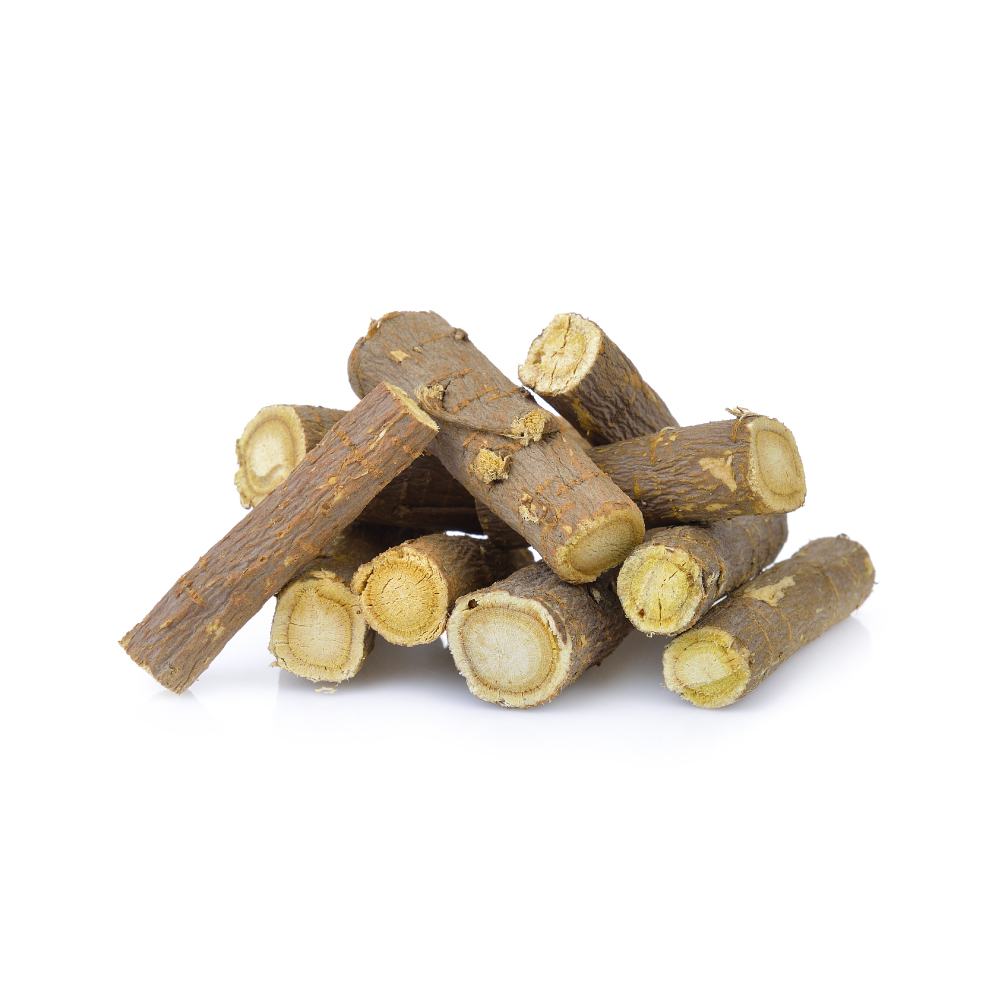
Licochalcone B is a naturally occurring retrochalcone (prenylated chalcone), found in Xinjiang licorice, Chinese licorice and Licorice. It is well tolerated orally (low toxicity).
Concentration
Content by Source
Concentrations not reported. No percent-dry-weight or mg/g figures have been published for this compound in its source plants.
Licochalcone B at a Glance
Licochalcone B is a prenylated retrochalcone from licorice root — one of the family of “licochalcones” (A, B, C, D and relatives) that are characteristic of Glycyrrhiza and, in particular, of Xinjiang licorice (Glycyrrhiza inflata). Like all the licochalcones it is a retrochalcone, lacking the usual oxygen function at the 2′-position that ordinary chalcones carry 2,
It is a close sibling of licochalcone A, and much of its broad preclinical activity — anti-inflammatory, antioxidant, antitumour, hepatoprotective — overlaps the wider chalcone story. What sets licochalcone B apart is one unusually clean, well-defined mechanism: it is a selective inhibitor of the NLRP3 inflammasome that acts by disrupting the NEK7–NLRP3 interaction 1Reference 1Licochalcone B specifically inhibits the NLRP3 inflammasome by disrupting NEK7–NLRP3 interactionView study →. That is its signature, and it is the reason the molecule has its own page rather than sitting inside the licorice monograph.
The honest headline is that essentially all of this is preclinical — cell-culture and rodent work on the isolated molecule. There are no human trials of licochalcone B, and its own toxicology is only lightly characterised, though as an isolated chalcone it carries a low toxicity flag 18Reference 18ReviewTherapeutic potential and action mechanisms of licochalcone B: a mini reviewView study →.
Selective NLRP3-Inflammasome Inhibition (NEK7 Disruption)
This is licochalcone B’s most distinctive finding and the mechanism that separates it from its siblings. In macrophages, licochalcone B specifically inhibits activation of the NLRP3 inflammasome — the sensor complex whose assembly drives caspase-1 activation and the release of interleukin-1β — while leaving the related AIM2 and NLRC4 inflammasomes untouched 1Reference 1Licochalcone B specifically inhibits the NLRP3 inflammasome by disrupting NEK7–NLRP3 interactionView study →. That selectivity is unusual for a natural product.
The mechanism is molecularly resolved: licochalcone B binds directly to NEK7 (NIMA-related kinase 7) and blocks the NEK7–NLRP3 interaction that is required for the inflammasome to oligomerise and fire 1Reference 1Licochalcone B specifically inhibits the NLRP3 inflammasome by disrupting NEK7–NLRP3 interactionView study →. Because NEK7 is the licensing partner that NLRP3 specifically depends on, disrupting that single contact switches off NLRP3 without hitting the other inflammasome sensors.
Downstream, this translated into protection in mouse models of NLRP3-driven disease — lipopolysaccharide-induced septic shock, monosodium-urate-induced peritonitis (a gout-flare model), and non-alcoholic steatohepatitis (NASH) 1Reference 1Licochalcone B specifically inhibits the NLRP3 inflammasome by disrupting NEK7–NLRP3 interactionView study →. It is the cleanest link in the whole file between a defined molecular target and an in-vivo outcome.
Gap: the evidence is the isolated molecule in cells and mice 1Reference 1Licochalcone B specifically inhibits the NLRP3 inflammasome by disrupting NEK7–NLRP3 interactionView study →; there is no human data, and this NEK7-binding selectivity has not been reproduced against the whole-plant extract, where licochalcone B is only a minor constituent.
What It's Used For
Beyond the NLRP3 signature, licochalcone B has been tested across inflammation, cancer, liver injury, oxidative stress and the nervous system. The pattern is consistent: a genuine, mechanistically-detailed preclinical signal, almost always on the isolated molecule in vitro or in rodents, with no human confirmation.
Support is an experimental score — weighted by study type (human > animal > in vitro) and volume. A beta, not a validated metric. Every row here is preclinical (no human data), so scores stay modest by design and reward the applications with an in-vivo mechanism.
The strongest application, carrying the compound’s signature (see above). Beyond the NEK7–NLRP3 disruption that selectively shuts down the NLRP3 inflammasome in macrophages and protects mice from septic shock, MSU peritonitis and NASH 1Reference 1Licochalcone B specifically inhibits the NLRP3 inflammasome by disrupting NEK7–NLRP3 interactionView study →, licochalcone B suppresses the phosphorylation of NF-κB p65 in the LPS signalling pathway of RAW264.7 macrophages — an effect shared with licochalcone A and D but characterised for each 2Reference 2Glycyrrhiza inflata-derived chalcones, licochalcone A, licochalcone B and licochalcone D, inhibit phosphorylation of NF-κB p65 in LPS signaling pathwayView study →.
It is also a 15-lipoxygenase inhibitor (IC50 ≈ 9.67 µM), reducing TNF-α release from LPS-stimulated macrophages 3Reference 3Discovery of natural 15-LOX small-molecule inhibitors from Chinese herbal medicine using virtual screening, biological evaluation and molecular dynamics studiesView study →.
Together these give it inflammasome, transcription-factor and eicosanoid-level anti-inflammatory actions.
Gap: all isolate work in macrophages and mice 1,
A wide but uniformly in-vitro picture: licochalcone B triggers apoptosis and cell-cycle arrest across several cancer cell types, each through a somewhat different route. In hepatoma (HepG2) cells it caused G2/M arrest, ROS generation and caspase-dependent apoptosis (IC50 ≈ 110 µM) 5Reference 5Licochalcone B extracted from Glycyrrhiza uralensis Fisch induces apoptotic effects in human hepatoma cell HepG2View study →, and in a separate study induced DNA damage and sensitised cells to TRAIL via AKT/mTOR inhibition and ER stress 6Reference 6Licochalcone B induces DNA damage, cell-cycle arrest, apoptosis, and enhances TRAIL sensitivity in hepatocellular carcinoma cellsView study →.
It inhibited JAK2 directly to suppress STAT3 signalling and esophageal squamous-cell-carcinoma growth 8Reference 8Janus kinase 2 inhibition by licochalcone B suppresses esophageal squamous-cell-carcinoma growthView study →, drove PI3K/AKT/mTOR-dependent apoptosis and autophagy in osteosarcoma cells 7Reference 7Licochalcone B induced apoptosis and autophagy in osteosarcoma tumor cells via the inactivation of the PI3K/AKT/mTOR pathwayView study →, and arrested bladder cancer cells with apoptosis in vitro and in an animal model 9Reference 9Licochalcone B inhibits growth of bladder cancer cells by arresting cell-cycle progression and inducing apoptosisView study →.
Gap: overwhelmingly cell-line data on the isolate; the effective concentrations (tens to >100 µM) are high, in-vivo confirmation is limited, and there is no clinical work 5,
A coherent rodent liver-protection signal. Pre-treatment with licochalcone B blunted carbon-tetrachloride (CCl₄) liver injury in mice — lowering ALT/AST and lipid peroxidation while raising SOD and glutathione, and suppressing p38 and NF-κB 10Reference 10AnimalHepatoprotective effects of licochalcone B on carbon-tetrachloride-induced liver toxicity in miceView study → — and a parallel study identified licochalcone B among Nrf2 activators from Glycyrrhiza inflata with hepatoprotection against CCl₄ 11Reference 11AnimalNrf2 activators from Glycyrrhiza inflata and their hepatoprotective activities against CCl₄-induced liver injury in miceView study →. Against ethanol-induced hepatocyte injury it reduced ROS and apoptosis by activating the ERK–Nrf2 axis 12Reference 12Protective role of licochalcone B against ethanol-induced hepatotoxicity through regulation of ERK signalingView study →.
Gap: rodent and hepatocyte-culture models of chemically-induced injury, all with the isolate 10,
An enabling mechanism that recurs beneath the other applications. As a licorice flavonoid, licochalcone B scavenges radicals and inhibits lipid peroxidation, suppressing ROS in macrophages 4Reference 4Antioxidant and anti-inflammatory activities of six flavonoids separated from licoriceView study →, and it repeatedly acts by inducing the Nrf2/HO-1 antioxidant programme — in the liver 12Reference 12Protective role of licochalcone B against ethanol-induced hepatotoxicity through regulation of ERK signalingView study →, in LPS-challenged lung endothelium via the Keap1/Nrf2 pathway 15Reference 15AnimalLicochalcone B confers protective effects against LPS-induced acute lung injury in cells and mice through the Keap1/Nrf2 pathwayView study →, and in the brain 13Reference 13AnimalLicochalcone B attenuates neuronal injury through anti-oxidant effect and enhancement of Nrf2 pathway in an MCAO rat model of strokeView study →.
Gap: in-vitro antioxidant chemistry plus Nrf2-pathway induction in rodent tissues; this is a supporting mechanism rather than a standalone human antioxidant claim 4,
A smaller, preclinical CNS signal built on the same antioxidant machinery. In a middle-cerebral-artery-occlusion (MCAO) rat stroke model licochalcone B attenuated neuronal injury, reduced oxidative stress and enhanced the Nrf2 pathway 13Reference 13AnimalLicochalcone B attenuates neuronal injury through anti-oxidant effect and enhancement of Nrf2 pathway in an MCAO rat model of strokeView study →. Separately, an in-vitro/in-silico study framed it as a multifunctional anti-Alzheimer’s agent, inhibiting amyloid-β self-aggregation and protecting neuronal cells from oxidative death 14Reference 14Licochalcone B, a chalcone derivative from Glycyrrhiza inflata, as a multifunctional agent for the treatment of Alzheimer’s diseaseView study →.
Gap: a single rodent stroke study plus in-vitro anti-amyloid work on the isolate 13,
The thinnest row, and notable because it is not the isolate alone. In a COPD model, licochalcone B combined with liquiritin (1:1) synergistically inhibited hemopoietic cell kinase (HCK), producing antioxidative, anti-inflammatory and anti-fibrotic effects 16Reference 16A synergistic mechanism of liquiritin and licochalcone B from Glycyrrhiza uralensis against COPDView study →. Licochalcone B also protected against LPS-induced acute lung injury through Keap1/Nrf2 in cells and mice 15Reference 15AnimalLicochalcone B confers protective effects against LPS-induced acute lung injury in cells and mice through the Keap1/Nrf2 pathwayView study →.
Gap: the anti-fibrotic result is a two-compound combination, so it cannot be attributed to licochalcone B alone, and both studies are preclinical 15,
Mechanisms
| Target / pathway | Effect | Relevant to |
|---|---|---|
| NEK7 → NEK7–NLRP3 interaction | direct NEK7 binding, disrupting the NEK7–NLRP3 contact → selective NLRP3-inflammasome inhibition (AIM2/NLRC4 spared) | anti-inflammatory (the signature) |
| NF-κB p65 | reduced phosphorylation in LPS-stimulated macrophages | anti-inflammatory |
| 15-lipoxygenase | enzyme inhibition (IC50 ≈ 9.67 µM), ↓ TNF-α | anti-inflammatory |
| Nrf2 / HO-1 (Keap1/Nrf2) | antioxidant-response activation across liver, lung, neuronal tissue | antioxidant / hepatoprotective / neuroprotective |
| ERK signalling | ERK–Nrf2 activation protecting hepatocytes | hepatoprotective |
| PI3K / AKT / mTOR | inhibition → apoptosis + autophagy | antitumour (osteosarcomahepatoma) |
| JAK2 / STAT3 | direct JAK2 inhibition → ↓ STAT3 phosphorylation | antitumour (esophageal SCC) |
| p53 / Bax / Bcl-2 / caspases | pro-apoptotic shift, cell-cycle arrest, ROS | antitumour (multiple lines) |
| 11β-hydroxysteroid dehydrogenase 2 (11β-HSD2) | enzyme inhibition (IC50 ≈ 31.85 µM, human) | toxicity (chalcone-class off-target) |
The load-bearing row is NEK7: a defined, selective molecular target with a matching in-vivo phenotype is what makes this molecule more than “another anti-inflammatory chalcone” 1Reference 1Licochalcone B specifically inhibits the NLRP3 inflammasome by disrupting NEK7–NLRP3 interactionView study →. The remaining pathways are the familiar chalcone repertoire — Nrf2 upregulation and pro-apoptotic MAPK/PI3K signalling — shared with licochalcone A and other licorice flavonoids.
Pharmacokinetics
Human pharmacokinetics for licochalcone B are essentially uncharacterised — no reliable absorption, oral-bioavailability, half-life or metabolite data are established, which is a real limitation given that most of the efficacy work is in-vitro at low-to-mid-micromolar (and, for hepatoma cytotoxicity, ~110 µM) concentrations 5Reference 5Licochalcone B extracted from Glycyrrhiza uralensis Fisch induces apoptotic effects in human hepatoma cell HepG2View study →. As a lipophilic prenylated chalcone it would be expected to be poorly water-soluble, and the in-vivo studies dose it directly in rodents rather than model realistic human exposure. Until proper ADME work exists, the gap between the concentrations that act in a dish and anything achievable from eating licorice or taking an extract should be read conservatively.
Clinical Trials
There are no clinical trials of isolated licochalcone B. The entire evidence base is preclinical — cell culture and rodent disease models.
| Completed | Planned | Terminated | Preclinical |
|---|---|---|---|
| — | — | — | NLRP3/NEK7(mouse); antitumour (multiple cell lines); hepatoprotective, neuroprotective, anti-lung-injury (rodent) 1, |
Last checked: July 2026.
Isolate vs. Plant Studies
Licochalcone B sits firmly on the isolate side of the ledger, and unusually so — nearly every result cited here used the purified molecule, not a licorice extract. The NEK7–NLRP3 work 1Reference 1Licochalcone B specifically inhibits the NLRP3 inflammasome by disrupting NEK7–NLRP3 interactionView study →, the antitumour cell-line studies 5,
The weakness is the mirror image. Because licochalcone B is only a minor retrochalcone in the root — and because whole-licorice pharmacology is dominated by glycyrrhizin, glabridin and the far more abundant flavonoids — none of these isolate findings can be assumed to occur when someone consumes licorice or a standardised extract. The one whole-plant-adjacent result is the COPD study, and even that is a two-compound combination (licochalcone B + liquiritin), not the extract 16Reference 16A synergistic mechanism of liquiritin and licochalcone B from Glycyrrhiza uralensis against COPDView study →. The correct reading: strong isolate mechanism, no human data, and no demonstrated bridge from the molecule back to the herb.
Prevalence in Nature
Licochalcone B is a retrochalcone of Glycyrrhiza (licorice) and is most closely associated with Xinjiang licorice, Glycyrrhiza inflata — the species from which the licochalcones were first isolated and whose chalcones are, distinctively, all retrochalcones 2,
Within the root it is a minor constituent: the licochalcones as a group sit inside the prenylated-flavonoid fraction, well below the dominant saponin (glycyrrhizin) and the bulk flavonoids such as the chalcone glycoside isoliquiritin. Its quantitative abundance is not well documented in the literature, and it varies with species and chemotype — the same species discipline that governs all of licorice phytochemistry, where G. inflata, G. uralensis and G. glabra differ chemically and cannot be treated as interchangeable. Licochalcone B typically co-occurs with its sibling licochalcone A and with the other retrochalcones (C, D) of G. inflata 18Reference 18ReviewTherapeutic potential and action mechanisms of licochalcone B: a mini reviewView study →.
Discovery & Synthesis
The licochalcones entered the literature in the mid-1970s: licochalcones A and B were among the first “new-type” chalcones isolated from licorice root by Saitoh and Shibata (1975), who recognised the family’s unusual retrochalcone skeleton — a chalcone lacking the 2′-oxygen function of ordinary chalcones 2,
Isolation from licorice root remains the usual laboratory route to the compound; no dominant commercial total synthesis is documented here, and the molecule is handled as a research-grade natural-product isolate rather than a manufactured ingredient.
Patents: not yet researched.
Toxicity & Safety
Licochalcone B carries a low toxicity flag: it is an isolated plant chalcone with no reported acute-toxicity signal at the doses used in its rodent studies, and the mini-review that collates its pharmacology notes that its toxicology is, frankly, poorly characterised 18Reference 18ReviewTherapeutic potential and action mechanisms of licochalcone B: a mini reviewView study →. The flag reflects the absence of alarming findings rather than a thorough safety dossier — “not much studied” is not the same as “shown to be safe.”
The one concrete safety-relevant off-target is a chalcone-class effect: licochalcone B inhibits 11β-hydroxysteroid dehydrogenase type 2 (11β-HSD2) in vitro (human enzyme IC50 ≈ 31.85 µM) 17Reference 17AnimalChalcones from plants cause toxicity by inhibiting human and rat 11β-hydroxysteroid dehydrogenase 2View study →. 11β-HSD2 protects the mineralocorticoid receptor from cortisol, so its inhibition is the same category of mechanism (though a different enzyme step) that underlies licorice’s well-known tendency to raise blood pressure and cause potassium loss via glycyrrhetinic acid. This is a plausible mechanistic caution for concentrated chalcone exposure, characterised only in enzyme assays 17Reference 17AnimalChalcones from plants cause toxicity by inhibiting human and rat 11β-hydroxysteroid dehydrogenase 2View study →.
- An isolated plant chalcone with no acute-toxicity signal in the rodent studies conducted to date 18Reference 18ReviewTherapeutic potential and action mechanisms of licochalcone B: a mini reviewView study →.
- Toxicology is barely characterised. There are no human safety data and no repeat-dose or reproductive dataset for the isolate — absence of findings is not evidence of safety 18Reference 18ReviewTherapeutic potential and action mechanisms of licochalcone B: a mini reviewView study →.
- Chalcone-class 11β-HSD2 inhibition in vitro (IC50 ≈ 32 µM, human enzyme) — the enzyme family behind licorice’s blood-pressure/potassium effects; a mechanistic caution for concentrated exposure, not a demonstrated clinical harm 17Reference 17AnimalChalcones from plants cause toxicity by inhibiting human and rat 11β-hydroxysteroid dehydrogenase 2View study →.
- Everything is preclinical. Effects are shown for the isolated molecule in cells and animals, often at concentrations far above anything achievable from licorice in the diet.
Dosage
There is no established or recommended human dose for licochalcone B — it has never been given to people as an isolated compound. The figures in the literature are entirely preclinical:
| Setting | Model | Reported figure |
|---|---|---|
| 15-Lipoxygenase inhibition | Enzyme / macrophage assay | IC50 ≈ 9.67 µM 3Reference 3Discovery of natural 15-LOX small-molecule inhibitors from Chinese herbal medicine using virtual screening, biological evaluation and molecular dynamics studiesView study → |
| Nitric-oxide inhibition | LPS-stimulated RAW264.7 | IC50 ≈ 8.78 µM |
| Hepatoma cytotoxicity | HepG2 cells | IC50 ≈ 110 µM 5Reference 5Licochalcone B extracted from Glycyrrhiza uralensis Fisch induces apoptotic effects in human hepatoma cell HepG2View study → |
| 11β-HSD2 inhibition | Human enzyme assay | IC50 ≈ 31.85 µM 17Reference 17AnimalChalcones from plants cause toxicity by inhibiting human and rat 11β-hydroxysteroid dehydrogenase 2View study → |
| Anti-inflammatory / hepatoprotective / stroke | Mouse & rat disease models | Dosed directly in animals 1, |
The spread — from single-digit-micromolar enzyme inhibition to ~110 µM for cancer-cell cytotoxicity — is itself worth noting: the concentrations that act in a dish vary widely by target, and none has been shown to be reachable in humans. These are research figures and are not a personal recommendation.
References
- Li Q, et al. (2022). Licochalcone B specifically inhibits the NLRP3 inflammasome by disrupting NEK7–NLRP3 interaction. EMBO Reports. https://pubmed.ncbi.nlm.nih.gov/34882936/
- Furusawa J, et al. (2009). Glycyrrhiza inflata-derived chalcones, licochalcone A, licochalcone B and licochalcone D, inhibit phosphorylation of NF-κB p65 in LPS signaling pathway. International Immunopharmacology. https://pubmed.ncbi.nlm.nih.gov/19291859/
- Li H, et al. (2021). Discovery of natural 15-LOX small-molecule inhibitors from Chinese herbal medicine using virtual screening, biological evaluation and molecular dynamics studies. Bioorganic Chemistry. https://pubmed.ncbi.nlm.nih.gov/34426159/
- Fu Y, et al. (2013). Antioxidant and anti-inflammatory activities of six flavonoids separated from licorice. Food Chemistry. https://pubmed.ncbi.nlm.nih.gov/23790887/
- Wang J, et al. (2019). Licochalcone B extracted from Glycyrrhiza uralensis Fisch induces apoptotic effects in human hepatoma cell HepG2. Journal of Agricultural and Food Chemistry. https://pubmed.ncbi.nlm.nih.gov/30835110/
- Zhang X, et al. (2022). Licochalcone B induces DNA damage, cell-cycle arrest, apoptosis, and enhances TRAIL sensitivity in hepatocellular carcinoma cells. Chemico-Biological Interactions. https://pubmed.ncbi.nlm.nih.gov/35948134/
- Huang WC, Jin H (2022). Licochalcone B induced apoptosis and autophagy in osteosarcoma tumor cells via the inactivation of the PI3K/AKT/mTOR pathway. Biological & Pharmaceutical Bulletin. https://pubmed.ncbi.nlm.nih.gov/35431285/
- Song Y, et al. (2020). Janus kinase 2 inhibition by licochalcone B suppresses esophageal squamous-cell-carcinoma growth. Phytotherapy Research. https://pubmed.ncbi.nlm.nih.gov/32144852/
- Yuan X, et al. (2014). Licochalcone B inhibits growth of bladder cancer cells by arresting cell-cycle progression and inducing apoptosis. Food and Chemical Toxicology. https://pubmed.ncbi.nlm.nih.gov/24384411/
- Teng H, et al. (2016). Hepatoprotective effects of licochalcone B on carbon-tetrachloride-induced liver toxicity in mice. Iranian Journal of Basic Medical Sciences. https://pubmed.ncbi.nlm.nih.gov/27746874/
- Lin Y, et al. (2017). Nrf2 activators from Glycyrrhiza inflata and their hepatoprotective activities against CCl₄-induced liver injury in mice. Bioorganic & Medicinal Chemistry. https://pubmed.ncbi.nlm.nih.gov/28835349/
- Gao XP, et al. (2017). Protective role of licochalcone B against ethanol-induced hepatotoxicity through regulation of ERK signaling. Iranian Journal of Basic Medical Sciences. https://pubmed.ncbi.nlm.nih.gov/28293388/
- Zhou Y, et al. (2021). Licochalcone B attenuates neuronal injury through anti-oxidant effect and enhancement of Nrf2 pathway in an MCAO rat model of stroke. International Immunopharmacology. https://pubmed.ncbi.nlm.nih.gov/34454290/
- Cao G, et al. (2020). Licochalcone B, a chalcone derivative from Glycyrrhiza inflata, as a multifunctional agent for the treatment of Alzheimer’s disease. Natural Product Research. https://pubmed.ncbi.nlm.nih.gov/30345819/
- Huang X, et al. (2023). Licochalcone B confers protective effects against LPS-induced acute lung injury in cells and mice through the Keap1/Nrf2 pathway. Redox Report. https://pubmed.ncbi.nlm.nih.gov/37565601/
- Dong Y, et al. (2024). A synergistic mechanism of liquiritin and licochalcone B from Glycyrrhiza uralensis against COPD. Phytomedicine. https://pubmed.ncbi.nlm.nih.gov/38870751/
- Lin S, et al. (2024). Chalcones from plants cause toxicity by inhibiting human and rat 11β-hydroxysteroid dehydrogenase 2. Food and Chemical Toxicology. https://pubmed.ncbi.nlm.nih.gov/38141941/
- Shaikh S, Lee EJ, Ahmad K, et al. (2024). Therapeutic potential and action mechanisms of licochalcone B: a mini review. Frontiers in Molecular Biosciences. https://pubmed.ncbi.nlm.nih.gov/39021879/



