
Compound Monograph
Menthol
Menthol is the cooling monoterpene alcohol of peppermint and cornmint oil — the molecule that opens the TRPM8 cold receptor, so that skin, nose and gut register cold that is not there. It is a genuine isolated drug in two narrow places: a topical counterirritant, and a sprayed antiperistaltic used during upper GI endoscopy.

Sources · 8
Where Does It Come From?
Menthol is a naturally occurring monoterpene alcohol (p-menthane type), found in Peppermint, Field mint / cornmint, Spearmint — minor and 5 other sources. It is well tolerated orally (low toxicity).
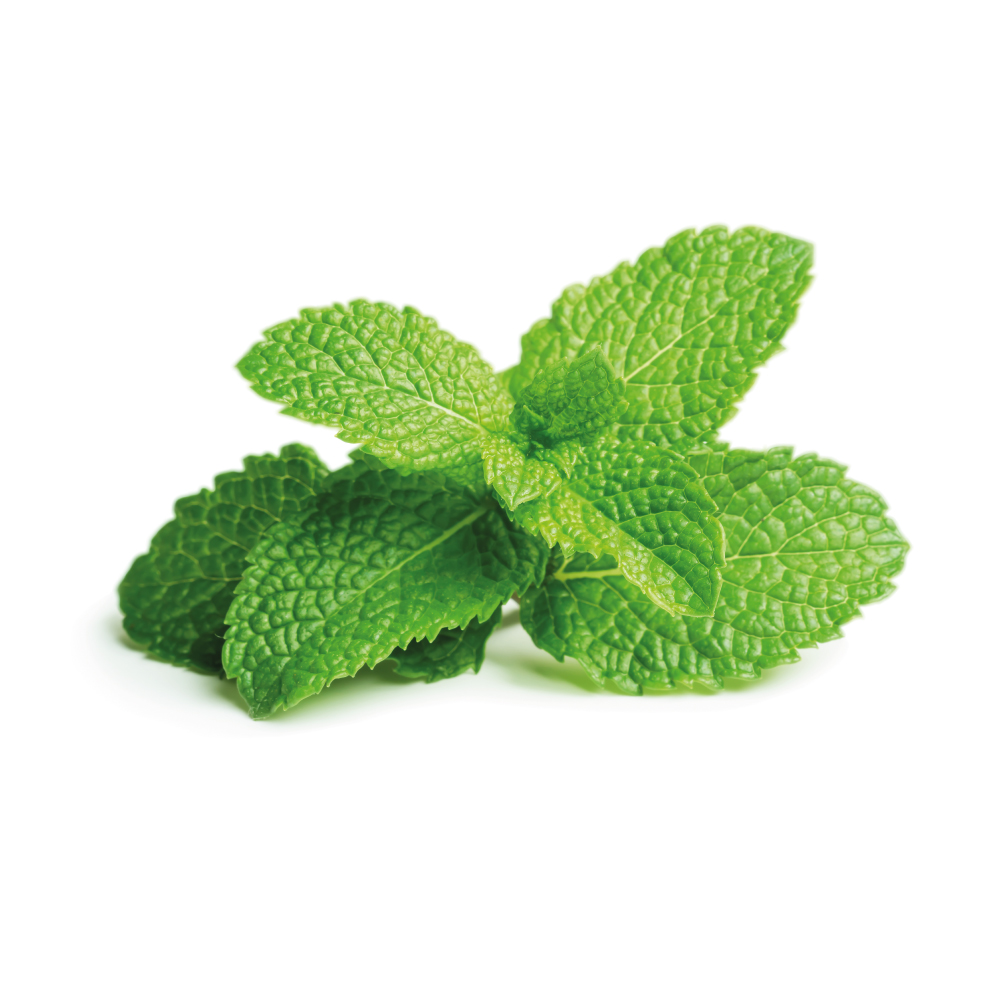 Principal source Peppermint Mentha × piperita Herb monograph →
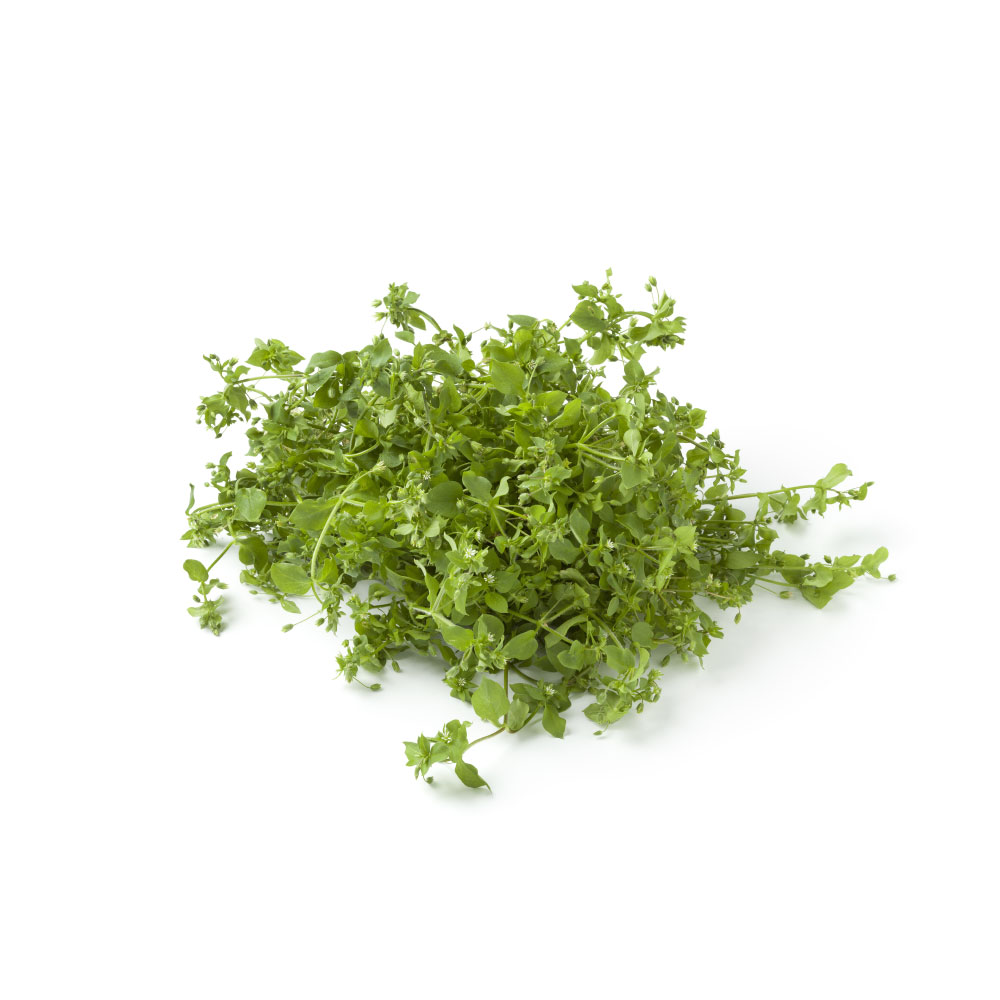 Source Chickweed Stellaria media Herb monograph →
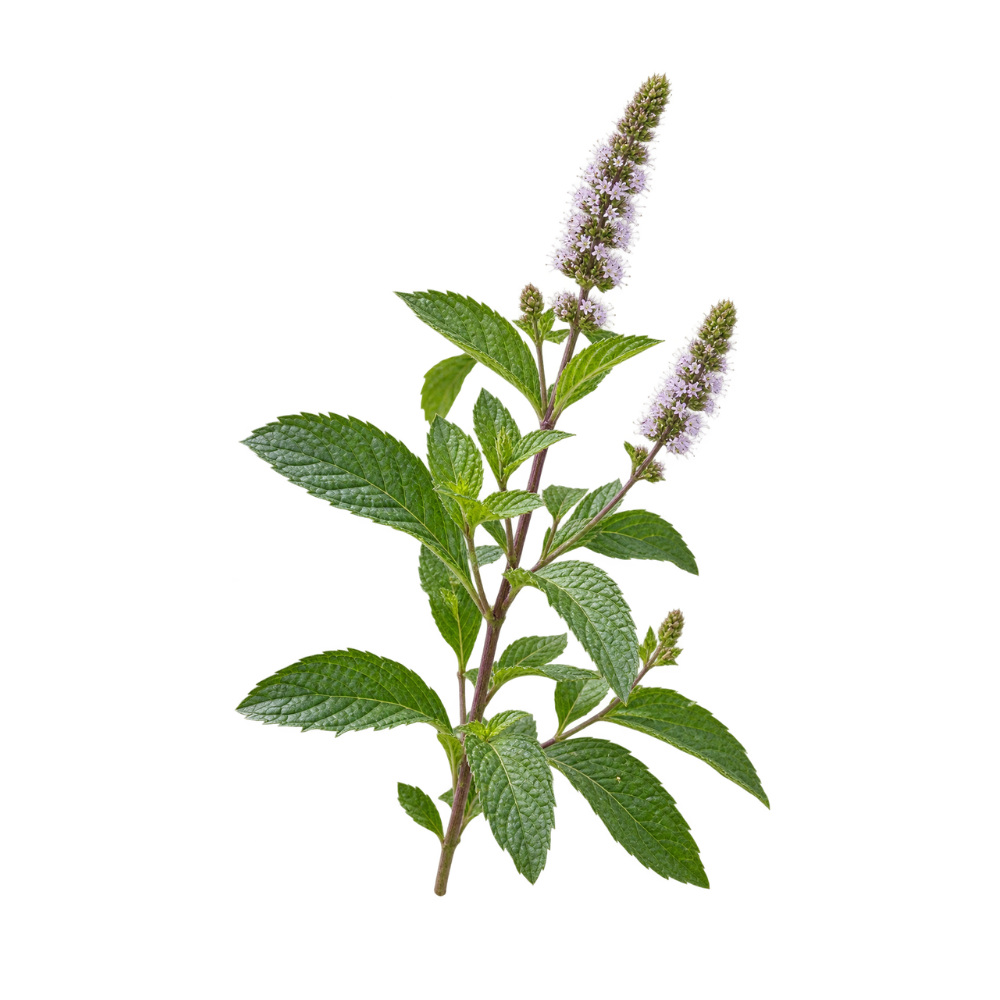 Source Spearmint Mentha spicata Herb monograph →
Concentration
Content by Source
Reported concentrations across the plants that contain menthol — the bar marks the typical level, the line shows the reported range.
Literature figures for varying plant parts and preparations. Read them as a comparative guide, not exact assays.
Menthol at a Glance
Menthol is the cooling monoterpene alcohol that defines peppermint. Chemically it is a cyclohexanol carrying a methyl and an isopropyl group — the p-menthane skeleton — and of its eight possible stereoisomers only one, (−)-menthol, produces the full cold sensation. That single molecule accounts for roughly a third to a half of peppermint leaf oil and, in the cornmint crop bred to supply it, close to four-fifths 7,
Its cooling is not a temperature effect. Menthol opens TRPM8, the ion channel that sensory neurons use to detect cold, so nerve endings report cold that is not there 1,
As an isolated drug it has a narrower record than its ubiquity suggests. There are two places where the pure molecule, rather than peppermint oil, carries the evidence: topical counterirritation, and a sprayed antiperistaltic used during upper gastrointestinal endoscopy in Japan, where 160 mg on the gastric mucosa suppressed peristalsis in a placebo-controlled phase III trial 8Reference 8RCTAntiperistaltic effect and safety of L-menthol sprayed on the gastric mucosa for upper GI endoscopy: a phase III, multicenter, randomized, double-blind, placebo-controlled study — randomised controlled trialView study →.
Established Uses
Topical counterirritant and analgesic. Menthol at roughly 1–16% is the active ingredient in a long-established class of over-the-counter rubs, gels and patches for muscular and joint pain. The mechanism is defined — TRPM8 activation produces a cooling sensation that competes with pain signalling — and the products are long-used, but the controlled human evidence for the isolated molecule is thinner than the shelf space implies.
Endoscopic antiperistalsis. L-menthol sprayed directly onto the gastric mucosa relaxes gastric smooth muscle and is licensed in Japan as an alternative to injected antispasmodics. In a six-centre randomised, double-blind trial of 87 patients, 160 mg completely suppressed gastric peristalsis in 35.6% of the menthol group versus 7.1% on placebo (P < 0.001), with 77.8% showing no or only mild peristalsis by the end of the procedure and no excess of adverse events 8Reference 8RCTAntiperistaltic effect and safety of L-menthol sprayed on the gastric mucosa for upper GI endoscopy: a phase III, multicenter, randomized, double-blind, placebo-controlled study — randomised controlled trialView study →. A phase II dose-ranging study established the response across sprayed doses 9Reference 9RCTMulticenter phase II randomized study evaluating dose-response of antiperistaltic effect of L-menthol sprayed onto the gastric mucosa for upper gastrointestinal endoscopy — randomised controlled trialView study →.
Flavour, cooling and oral care. Menthol is one of the most heavily used flavour compounds in commerce — confectionery, toothpaste, mouthwash, lozenges, tobacco. This is a sensory use rather than a therapeutic one, but it is where nearly all human exposure occurs.
How Menthol Makes Things Feel Cold
The cold receptor was identified twice in 2002, by two groups working independently, and menthol was the tool that found it. Both used menthol sensitivity to clone a cold- and menthol-gated ion channel from sensory neurons — TRPM8, a member of the transient receptor potential family 1,
The picture is not purely cooling. Menthol also acts on TRPA1, the irritant-sensing channel, and it does so bimodally — activating it at low concentrations and blocking it at high ones 3Reference 3Bimodal action of menthol on the transient receptor potential channel TRPA1View study →. That biphasic behaviour is a good explanation for a familiar experience: a little menthol is pleasantly cool, a lot stings and then numbs.
Menthol has a second, unrelated action on smooth muscle. In intestinal, neuronal and cardiac preparations it behaves as a calcium-channel blocker 4Reference 4The actions of peppermint oil and menthol on calcium channel dependent processes in intestinal, neuronal and cardiac preparationsView study →, and on isolated human colonic circular muscle it relaxes tissue through a mechanism that does not depend on nerves — a direct effect on the muscle itself 5Reference 5Effects of menthol on circular smooth muscle of human colon: analysis of the mechanism of actionView study →. This, not TRPM8, is the antispasmodic half of the molecule.
The Decongestant That Isn’t
Menthol’s reputation as a decongestant is one of the clearest cases in pharmacology of a sensation being mistaken for an effect. In a double-blind randomised trial, 62 people with naturally acquired colds took an 11 mg (−)-menthol lozenge or a candy placebo. Nasal airway resistance was measured by posterior rhinomanometry, and it rose over the two hours in both groups, with no difference between them at any point. Subjective nasal airflow, meanwhile, improved markedly in the menthol group within 10 minutes and not at all on placebo 10Reference 10RCTThe effects of oral administration of (-)-menthol on nasal resistance to airflow and nasal sensation of airflow in subjects suffering from nasal congestion associated with the common cold — randomised controlled trialView study →.
Menthol does not open the nose. It stimulates cold receptors in the nasal mucosa, and the brain reads strong cold-receptor traffic as strong airflow. The relief is real as an experience and absent as a measurement — a distinction worth keeping, because it also explains why menthol products are pleasant during a cold without changing its course.
What It's Used For
The evidence splits by what was actually tested: the isolated molecule (the endoscopy trials, the nasal-airflow trial, the in-vitro pharmacology) or peppermint oil (the irritable-bowel literature, the headache work), which is a mixture in which menthol is the largest but not the only active component.
The strongest evidence for menthol as an isolated drug, and it is deliberately local. Sprayed directly onto the gastric mucosa during upper GI endoscopy, 160 mg of L-menthol completely suppressed gastric peristalsis in 35.6% of patients against 7.1% on placebo (P < 0.001) in a multicentre, randomised, double-blind phase III study; 77.8% had no or mild peristalsis at the end of the examination, and adverse events did not differ from placebo 8Reference 8RCTAntiperistaltic effect and safety of L-menthol sprayed on the gastric mucosa for upper GI endoscopy: a phase III, multicenter, randomized, double-blind, placebo-controlled study — randomised controlled trialView study →.
A preceding phase II study mapped the dose-response for the sprayed route 9Reference 9RCTMulticenter phase II randomized study evaluating dose-response of antiperistaltic effect of L-menthol sprayed onto the gastric mucosa for upper gastrointestinal endoscopy — randomised controlled trialView study →.
This is the isolate, at a known dose, with a placebo arm.
Gap: the effect is topical to the stomach wall — it says nothing about swallowed or systemic menthol, and the trials measured peristalsis and procedural convenience rather than any symptom a person would report.
Menthol relaxes gut smooth muscle directly. In intestinal, neuronal and cardiac preparations it acts as a calcium-channel blocker 4Reference 4The actions of peppermint oil and menthol on calcium channel dependent processes in intestinal, neuronal and cardiac preparationsView study →, and on isolated human colonic circular muscle it produces relaxation by a nerve-independent action on the muscle 5Reference 5Effects of menthol on circular smooth muscle of human colon: analysis of the mechanism of actionView study → — a plausible basis for the carminative and antispasmodic reputation of mint. The human outcome data, however, belong to enteric-coated peppermint oil: a meta-analysis of 10 randomised trials in 1,030 patients found it better than placebo for global irritable-bowel symptoms (relative risk of not improving 0.65, NNT 4) and for abdominal pain (RR 0.76, NNT 7), while adverse events were significantly more common than placebo (RR 1.57) and the authors graded the evidence very low quality 6,
Gap: the trials tested an oil containing menthol alongside menthone, cineole, limonene and menthofuran — the effect cannot be assigned to menthol alone, and the same meta-analysis that found benefit called the evidence base too weak to settle the question.
An 11 mg (−)-menthol lozenge in 62 people with common colds produced a marked, statistically strong improvement in the sensation of nasal airflow within 10 minutes, while posterior rhinomanometry showed no difference in nasal airway resistance against a candy placebo at any timepoint 10Reference 10RCTThe effects of oral administration of (-)-menthol on nasal resistance to airflow and nasal sensation of airflow in subjects suffering from nasal congestion associated with the common cold — randomised controlled trialView study →. The finding is consistent and reproducible, and it is the reason menthol is best described as a cooling agent rather than a decongestant.
Gap: this is a positive result for a subjective endpoint and a null result for the physiological one. Products marketed for congestion on the strength of menthol are selling the sensation.
The mechanism is well characterised: TRPM8 activation generates cooling that competes with nociceptive signalling, and the bimodal TRPA1 action — activation then block — accounts for the sting-then-numbness of stronger preparations 3Reference 3Bimodal action of menthol on the transient receptor potential channel TRPA1View study →.
Menthol also increases the skin permeation of co-applied drugs, which is why it appears in transdermal formulations. Human trial evidence for the isolated molecule is comparatively thin; the best-known headache data are for 10% peppermint oil applied to the forehead in tension-type headache, where the preparation performed comparably to simple analgesics in controlled work 12Reference 12ReviewGöbel H, Heinze A, Heinze-Kuhn K, et al. (2016). [Peppermint oil in the acute treatment of tension-type headache] — review. Schmerz. https://pubmed.ncbi.nlm.nih.gov/27106030/View study →.
Gap: most of the clinical record is for oil preparations, multi-ingredient rubs, or menthol as a penetration enhancer for another active — not for menthol as the sole analgesic at a stated concentration.
A systematic review of essential oils and their isolated constituents against cariogenic bacteria singled out menthol and eugenol as the two constituents with the most consistent antibacterial signal, though the body of work is overwhelmingly in vitro against Streptococcus mutans and lactobacilli, with only one oil reaching a clinical mouthwash trial 13Reference 13Systematic reviewAntibacterial activity of essential oils and their isolated constituents against cariogenic bacteria: a systematic reviewView study →. Against plant-pathogenic fungi, isolated menthol was more active than the whole cornmint oil it came from, and more active than menthone — but weaker than the synthetic fungicide standard at every concentration tested 14Reference 14Evaluation of Mentha arvensis essential oil and its major constituents for fungitoxicityView study →.
Gap: in vitro throughout, and the one honest comparator that was included — a standard antifungal — outperformed it. No human anti-infective outcome rests on menthol.
Mechanisms
| Target / pathway | Effect | Relevant to |
|---|---|---|
| TRPM8 (cold/menthol receptor) | agonist — depolarises cold-sensing neurons, producing cold sensation without a temperature change | coolingtopical analgesianasal airflow sensation |
| TRPA1 (irritant receptor) | bimodal — activation at low concentrations, block at high ones | the sting-then-numbness of strong preparations |
| Voltage-gated calcium channels | blockade in intestinal, neuronal and cardiac preparations | antispasmodiccarminative |
| Colonic circular smooth muscle | direct, nerve-independent relaxation | gastrointestinal antispasmodicendoscopic antiperistalsis |
| Stratum corneum lipids | penetration enhancement for co-applied drugs | topical formulation |
| Microbial membranes | disruption of membrane integrity (in vitro) | antibacterialantifungal |
The two halves of menthol do not share a mechanism. The cooling is receptor-mediated and needs almost no menthol; the muscle relaxation is a calcium-channel effect and needs a great deal more. Confusing them is how “menthol relaxes you” becomes a claim.
Pharmacokinetics
Menthol’s systemic pharmacokinetics are the constraint on every systemic claim made for it. In a crossover study of 12 subjects given 100 mg l-menthol in a capsule, or 10 mg in mint candy or tea, free menthol could not be measured in plasma or urine at all — only menthol glucuronide, formed by rapid first-pass conjugation. The glucuronide’s plasma half-life averaged 56.2 minutes after the capsule and 42.6 minutes after candy or tea, and 45.6–56.6% of the dose was recovered in urine as the glucuronide 11Reference 11RCTDisposition kinetics and effects of menthol — randomised controlled trialView study →. Systemic bioavailability was comparable whether menthol arrived as a pure capsule or in food.
Two consequences follow. First, oral menthol reaches tissues almost entirely as an inactive conjugate, so an in-vitro concentration that works in a dish is not a concentration the body sustains. Second, formulation decides the effect: enteric coating exists precisely to deliver peppermint oil past the stomach to the colon, and the endoscopy use works by spraying menthol onto the target tissue rather than swallowing it 7,
Clinical Trials
| Completed | Planned | Terminated | Preclinical |
|---|---|---|---|
| Endoscopic antiperistalsis (phase II + III, isolate); nasal airflow sensation; peppermint-oil IBS RCTs (10 trials, 1,030 patients) | — | — | TRPM8/TRPA1 electrophysiology; colonic smooth muscle; antimicrobial and antifungal in vitro |
Last checked: September 2026.
Isolate vs. Plant Studies
This molecule sits unusually cleanly on both sides of the divide, and the split runs by route.
Where menthol is applied to a surface — gastric mucosa, nasal mucosa, skin — the isolate is the evidence. The endoscopy trials used pure L-menthol at a stated milligram dose against placebo 8,
Where menthol is swallowed for a systemic or luminal effect, the evidence is peppermint oil’s. Every trial in the irritable-bowel meta-analysis tested an oil preparation, in which menthol is the largest component but shares the vehicle with menthone, isomenthone, 1,8-cineole, limonene and the two hepatotoxic minor terpenes, pulegone and menthofuran 6,
The honest reading is that menthol is a well-characterised local agent with a strong mechanistic case and two narrow clinical footholds, and that the popular systemic story — mint for digestion — belongs to the oil, at low quality of evidence.
Prevalence in Nature
Menthol is a mint-family molecule and, within Mentha, a chemotype marker rather than a genus constant.
Peppermint (Mentha × piperita) is the plant menthol is named for. Its steam-distilled leaf oil runs roughly 30–55% menthol, with menthone at 14–32%, menthyl acetate, 1,8-cineole, isomenthone and small percentages of the toxicologically significant minor terpenes; the dried leaf yields about 1–3% volatile oil in total 7,
Cornmint or field mint (Mentha canadensis, published also as M. arvensis and M. haplocalyx) is the commercial source. It is farmed for menthol yield, and a GC-MS analysis of the cultivar CIM-Saryu found 77.9% menthol, followed by isomenthone at 5.2% 14,
Spearmint (Mentha spicata) is the counter-example. Spearmint is a carvone-type mint with a sweet, low-cooling profile; menthol is present but minor, and it is not what defines the species or its oil. Treating menthol as the mint molecule across the genus gets spearmint exactly wrong.
Outside the mints it turns up in small amounts in unrelated aromatic plants — chickweed is one of the entries here that lists it — and it is manufactured on a scale that dwarfs all plant sources combined.
Discovery & Synthesis
Crystalline menthol was in use in Japan, separated from hakka mint oil by cooling, long before it had a Western name. In European chemistry the compound was isolated by Hieronymus David Gaubius in 1771 and named “menthol” by Oppenheim in 1861, after which it entered the pharmacopoeias as a cooling agent and mild local anaesthetic.
Manufacture today is dominated by synthesis, not distillation. The landmark route is the Takasago process, an industrial application of asymmetric catalysis: a Rh–BINAP catalyst performs the enantioselective isomerisation of an allylamine to a chiral enamine, which is carried on to (−)-menthol 17Reference 17Enantioselective isomerization of allylamine to enamine: practical asymmetric synthesis of (–)-menthol by Rh–BINAP catalystsView study →. It was one of the first large-scale demonstrations that a homogeneous chiral catalyst could compete commercially with extraction, and it supplies a substantial share of world menthol; a separate route from m-cresol supplies more. Natural cornmint oil remains a major source, but “menthol” on an ingredient list is as likely to be a made molecule as a distilled one.
Patents: not yet researched.
Toxicity & Safety
Menthol is a low-toxicity, heavily consumed flavour compound at the concentrations found in food, oral care and topical products. Its genuine cautions are specific and mostly concern infants, concentrated preparations and one inherited enzyme deficiency.
- Long-established at food and topical concentrations. Decades of use in confectionery, oral care, lozenges and analgesic rubs; rapid conjugation and urinary clearance.
- Do not apply to the face or chest of infants and small children. Menthol and camphor preparations near the nose can provoke reflex apnoea and laryngospasm in the very young.
- G6PD deficiency in neonates. In a controlled study of 60 G6PD-deficient newborns, daily mentholated umbilical powder produced significantly more jaundice than no treatment.
- Concentrated menthol is a mucosal irritant. Undiluted crystals or high-strength oils irritate skin, eyes and airways; heavy topical use over broken skin is not a low-dose exposure.
- Mint oil is not menthol. Peppermint and cornmint oils also carry pulegone and menthofuran, and those, not menthol, drive the hepatic cautions and the regulatory limits on mint oils.
Full Safety & Interactions Detail
Infants and small children. The oldest and most consistent caution is against applying menthol- or camphor-containing preparations to the face, nostrils or chest of infants and young children, where the cold-receptor stimulus around the nose can trigger reflex breathing changes. This is a route- and age-specific caution, not a statement about menthol’s toxicity generally.
G6PD deficiency. In Lagos, a controlled study of 60 consecutive glucose-6-phosphate-dehydrogenase-deficient newborns dressed the umbilical cords of 30 with a mentholated powder and left 30 untreated; the treated infants developed significantly more jaundice, attributed to the neonate’s limited capacity to conjugate menthol 16Reference 16The risk of jaundice in glucose-6-phosphate dehydrogenase deficient babies exposed to mentholView study →. The authors concluded that menthol- and camphor-containing products should not be used on neonates where G6PD deficiency is common. Given that conjugation is the entire clearance route in adults 11Reference 11RCTDisposition kinetics and effects of menthol — randomised controlled trialView study →, the mechanism is coherent.
Irritation and high concentrations. Menthol’s TRPA1 activity at higher concentrations is irritant rather than cooling 3Reference 3Bimodal action of menthol on the transient receptor potential channel TRPA1View study →, and concentrated oils or crystals can burn skin and mucous membranes. Gastro-oesophageal reflux is the characteristic adverse event of swallowed peppermint oil — the same smooth-muscle relaxation that helps the colon also relaxes the lower oesophageal sphincter — and adverse events were significantly more frequent than placebo across the IBS trials 6Reference 6Meta-analysisSystematic review and meta-analysis: efficacy of peppermint oil in irritable bowel syndrome — meta-analysisView study →.
What belongs to the oil, not the molecule. The hepatotoxicity and regulatory limits attached to mint oils belong to pulegone and its metabolite menthofuran, not to menthol. Menthol carries no comparable hepatic signal, and conflating the two overstates its risk as badly as ignoring theirs understates the oil’s.
Reproductive note. No dedicated reproductive-toxicity dataset for isolated menthol is characterised here. Pregnancy and lactation decisions belong to the herb or product page, where intake is actually decided.
Interactions. Menthol is cleared by glucuronidation rather than by the cytochrome P450 system, so classical CYP interaction is not the expected liability; the practical interaction is pharmaceutical rather than metabolic — menthol enhances the skin permeation of co-applied drugs, which changes the delivered dose of whatever it is formulated with.
Menthol in Tobacco
Menthol’s largest single use is not medical. Added to cigarettes it cools and anaesthetises the airway, blunting the harshness of smoke, and the sensory effect is inseparable from the pharmacology described above. A review of its biological impact on tobacco dependence sets out the case that menthol is not a neutral flavouring: by reducing the aversive sensory feedback of inhalation and interacting with nicotine’s own pharmacology, it plausibly eases initiation and sustains dependence 15Reference 15ReviewThe biological impact of menthol on tobacco dependence — reviewView study →. That reasoning is the basis of the menthol-cigarette restrictions adopted in the European Union and elsewhere.
The relevance to a phytochemistry page is narrow but real: the great majority of human menthol exposure is inhaled or oral-sensory, at doses and by routes that none of the therapeutic literature studied.
Dosage
| Application | Form | Dose or concentration |
|---|---|---|
| Endoscopic antiperistalsis | L-menthol solution sprayed on gastric mucosa | 160 mg 8Reference 8RCTAntiperistaltic effect and safety of L-menthol sprayed on the gastric mucosa for upper GI endoscopy: a phase III, multicenter, randomized, double-blind, placebo-controlled study — randomised controlled trialView study → |
| Nasal airflow sensation (colds) | Lozenge | 11 mg (−)-menthol 10Reference 10RCTThe effects of oral administration of (-)-menthol on nasal resistance to airflow and nasal sensation of airflow in subjects suffering from nasal congestion associated with the common cold — randomised controlled trialView study → |
| Topical analgesic products | Cream, gel, patch | ~1–16% |
| Tension-type headache | 10% peppermint oil in ethanol, applied to forehead | topical, as studied 12Reference 12ReviewGöbel H, Heinze A, Heinze-Kuhn K, et al. (2016). [Peppermint oil in the acute treatment of tension-type headache] — review. Schmerz. https://pubmed.ncbi.nlm.nih.gov/27106030/View study → |
| Irritable bowel syndrome | Enteric-coated peppermint oil, not isolated menthol | per trial protocol 6, |
| Pharmacokinetic reference | Oral capsule | 100 mg l-menthol 11Reference 11RCTDisposition kinetics and effects of menthol — randomised controlled trialView study → |
Two of these rows are not menthol doses at all — the headache and IBS entries are for peppermint oil preparations, and they are listed here only because they are routinely quoted as menthol evidence. These are doses studied in research and used in licensed products, and are not a personal recommendation.
References
- Peier AM, Moqrich A, Hergarden AC, et al. (2002). A TRP channel that senses cold stimuli and menthol. Cell. https://pubmed.ncbi.nlm.nih.gov/11893340/
- McKemy DD, Neuhausser WM, Julius D (2002). Identification of a cold receptor reveals a general role for TRP channels in thermosensation. Nature. https://pubmed.ncbi.nlm.nih.gov/11882888/
- Karashima Y, Damann N, Prenen J, et al. (2007). Bimodal action of menthol on the transient receptor potential channel TRPA1. J Neurosci. https://pubmed.ncbi.nlm.nih.gov/17855602/
- Hawthorn M, Ferrante J, Luchowski E, et al. (1988). The actions of peppermint oil and menthol on calcium channel dependent processes in intestinal, neuronal and cardiac preparations. Aliment Pharmacol Ther. https://pubmed.ncbi.nlm.nih.gov/2856502/
- Amato A, Liotta R, Mulè F (2014). Effects of menthol on circular smooth muscle of human colon: analysis of the mechanism of action. Eur J Pharmacol. https://pubmed.ncbi.nlm.nih.gov/25046841/
- Ingrosso MR, Ianiro G, Nee J, et al. (2022). Systematic review and meta-analysis: efficacy of peppermint oil in irritable bowel syndrome — meta-analysis. Aliment Pharmacol Ther. https://pubmed.ncbi.nlm.nih.gov/35942669/
- Chumpitazi BP, Kearns GL, Shulman RJ (2018). Review article: the physiological effects and safety of peppermint oil and its efficacy in irritable bowel syndrome and other functional disorders — review. Aliment Pharmacol Ther. https://pubmed.ncbi.nlm.nih.gov/29372567/
- Hiki N, Kaminishi M, Yasuda K, et al. (2011). Antiperistaltic effect and safety of L-menthol sprayed on the gastric mucosa for upper GI endoscopy: a phase III, multicenter, randomized, double-blind, placebo-controlled study — randomised controlled trial. Gastrointest Endosc. https://pubmed.ncbi.nlm.nih.gov/21353674/
- Hiki N, Kaminishi M, Yasuda K, et al. (2012). Multicenter phase II randomized study evaluating dose-response of antiperistaltic effect of L-menthol sprayed onto the gastric mucosa for upper gastrointestinal endoscopy — randomised controlled trial. Dig Endosc. https://pubmed.ncbi.nlm.nih.gov/22348831/
- Eccles R, Jawad MS, Morris S (1990). The effects of oral administration of (-)-menthol on nasal resistance to airflow and nasal sensation of airflow in subjects suffering from nasal congestion associated with the common cold — randomised controlled trial. J Pharm Pharmacol. https://pubmed.ncbi.nlm.nih.gov/1981905/
- Gelal A, Jacob P 3rd, Yu L, et al. (1999). Disposition kinetics and effects of menthol — randomised controlled trial. Clin Pharmacol Ther. https://pubmed.ncbi.nlm.nih.gov/10460066/
- Göbel H, Heinze A, Heinze-Kuhn K, et al. (2016). [Peppermint oil in the acute treatment of tension-type headache] — review. Schmerz. https://pubmed.ncbi.nlm.nih.gov/27106030/
- Freires IA, Denny C, Benso B, et al. (2015). Antibacterial activity of essential oils and their isolated constituents against cariogenic bacteria: a systematic review. Molecules. https://pubmed.ncbi.nlm.nih.gov/25911964/
- Makkar MK, Sharma S, Kaur H (2018). Evaluation of Mentha arvensis essential oil and its major constituents for fungitoxicity. J Food Sci Technol. https://pubmed.ncbi.nlm.nih.gov/30150845/
- Wickham RJ (2020). The biological impact of menthol on tobacco dependence — review. Nicotine Tob Res. https://pubmed.ncbi.nlm.nih.gov/31867627/
- Olowe SA, Ransome-Kuti O (1980). The risk of jaundice in glucose-6-phosphate dehydrogenase deficient babies exposed to menthol. Acta Paediatr Scand. https://pubmed.ncbi.nlm.nih.gov/7376859/
- Akutagawa S (1997). Enantioselective isomerization of allylamine to enamine: practical asymmetric synthesis of (–)-menthol by Rh–BINAP catalysts. Topics in Catalysis. https://doi.org/10.1023/a:1019112911246
- Tang C, Zhu J, Bai Y, et al. (2024). Mentha haplocalyx Briq. (mint): a comprehensive review on the botany, traditional uses, nutritional value, phytochemistry, health benefits, and applications — review. Chinese Medicine. https://doi.org/10.1186/s13020-024-01037-2
- Grigoleit HG, Grigoleit P (2005). Pharmacology and preclinical pharmacokinetics of peppermint oil — review. Phytomedicine. https://pubmed.ncbi.nlm.nih.gov/16121523/



