
Materia Medica
Spearmint
Mentha spicata
Spearmint is the common garden mint, a sweet, aromatic culinary herb used for digestive upsets. Its oil is rich in carvone rather than menthol, and its tea has been studied for lowering testosterone in women with hirsutism and PCOS.
What Is Spearmint?
Spearmint is the common garden mint, grown for its sweet, aromatic leaves. It flavours mint sauce, teas, chewing gum and toothpaste, and it has long been used as a gentle remedy for wind, colic and nausea 26,
Mentha spicata grows wild in Europe, south-west Asia and parts of Africa, and in gardens almost everywhere 26,
Spearmint’s essential oil is led by carvone rather than the menthol that dominates peppermint oil 19Reference 19ReviewThe traditional uses, phytochemistry and pharmacology of spearmint (Mentha spicata L.): A review — [review]View study →. Small trials have tested spearmint tea for lowering testosterone in women with hirsutism and polycystic ovary syndrome, and a standardised leaf extract for memory and attention 1,
Spearmint and peppermint are often confused, though their oils differ in chemistry.
How Is Spearmint Used?
- Leaf tea — fresh or dried leaf infused in hot water, for wind, colic and nausea. Twice-daily tea was the preparation tested for hirsutism and knee pain 1,
2, .6Reference 1RCTSpearmint herbal tea has significant anti-androgen effects in polycystic ovarian syndromeView study →Reference 2Clinical trialEffect of spearmint (Mentha spicata Labiatae) teas on androgen levels in women with hirsutism — [clinical trial]View study →Reference 6RCTHigh-rosmarinic acid spearmint tea in the management of knee osteoarthritis symptoms — [randomised controlled trial]View study → - Standardised dry extract — a leaf extract concentrated to about 15% rosmarinic acid, taken as capsules for memory and attention 4,
5, .24Reference 4RCTSpearmint Extract Improves Working Memory in Men and Women with Age-Associated Memory Impairment — [randomised controlled trial]View study →Reference 5RCTThe attention-enhancing effects of spearmint extract supplementation in healthy men and women: a randomized, double-blind, placebo-controlled, parallel trial — [randomised controlled trial]View study →Reference 24In vitroThe safety of a dry spearmint extract in vitro and in vivo — [animal model (rat)]View study → - Essential oil — steam-distilled from the leaf and tops, used for flavouring and tested for chemotherapy nausea 17,
26Reference 17RCTAntiemetic activity of volatile oil from Mentha spicata and Mentha × piperita in chemotherapy-induced nausea and vomiting — [randomised controlled trial]View study →Reference 26Mentha spicata Linnaeus — species description, uses and distribution — floraView study → . - In the kitchen — the mint of mint sauce, lamb dishes, peas and teas 27,
29Reference 27Mentha spicata — description, origin, dimensions, leaves, flowers and cultivation — reference databaseView study →Reference 29A Modern Herbal — “Mints: Spearmint.” (historical/traditional reference). https://www.botanical.com/botanical/mgmh/m/mints-39.htmlView study → .
Traditional Uses
Western Herbal Medicine
Spearmint was used mainly as a food. Its oil was considered stimulant, carminative and antispasmodic, like peppermint’s but weaker, and it was thought better suited to children’s complaints 29Reference 29A Modern Herbal — “Mints: Spearmint.” (historical/traditional reference). https://www.botanical.com/botanical/mgmh/m/mints-39.htmlView study →.
A distilled spearmint water was given for hiccough, flatulence and the giddiness of indigestion. A sweetened infusion was a remedy for infants’ ailments and a drink in fevers, and spearmint was held to be a specific for nausea and vomiting and to relieve colic 29Reference 29A Modern Herbal — “Mints: Spearmint.” (historical/traditional reference). https://www.botanical.com/botanical/mgmh/m/mints-39.htmlView study →.
The infusion was made from an ounce of dried herb to a pint of boiling water 29Reference 29A Modern Herbal — “Mints: Spearmint.” (historical/traditional reference). https://www.botanical.com/botanical/mgmh/m/mints-39.htmlView study →.
Mediterranean & Middle Eastern Traditions
Spearmint is a Mediterranean plant that the Romans cultivated and brought to Britain. Pliny wrote that its smell stirred the appetite, and it was eaten with food to aid digestion 29Reference 29A Modern Herbal — “Mints: Spearmint.” (historical/traditional reference). https://www.botanical.com/botanical/mgmh/m/mints-39.htmlView study →.
In the town of Isparta in south-west Turkey, local belief held that tea made from spearmint or peppermint lowered libido. That belief prompted the first clinical study of spearmint tea in women with hirsutism 2Reference 2Clinical trialEffect of spearmint (Mentha spicata Labiatae) teas on androgen levels in women with hirsutism — [clinical trial]View study →.
Ayurvedic Medicine
Known as pudina, spearmint is used as a cooling, aromatic digestive for nausea, poor appetite and stomach discomfort. It is taken as fresh leaf, chewed, or as a light infusion after food.
Indications
- Hirsutism and raised androgens in polycystic ovary syndrome [leaf tea] Caution: Tea lowered free testosterone in two small trials, but the one trial that measured visible hair growth on an objective scale found no significant change over 30 days 1,
2 . - Wind, colic and digestive cramping [leaf tea, oil; Western herbal medicine]
- Nausea and vomiting [leaf infusion, oil; Western herbal medicine]
- Hiccough [distilled water; Western herbal medicine]
- Working memory and attention [standardised extract]
- Knee osteoarthritis pain [high-rosmarinic-acid leaf tea] Caution: One trial found less pain only with tea from a specially bred high-rosmarinic-acid variety. Ordinary commercial spearmint tea did not reduce pain 6.
- Chemotherapy nausea [essential oil]
- Fevers [sweetened infusion; Western herbal medicine]
Botany
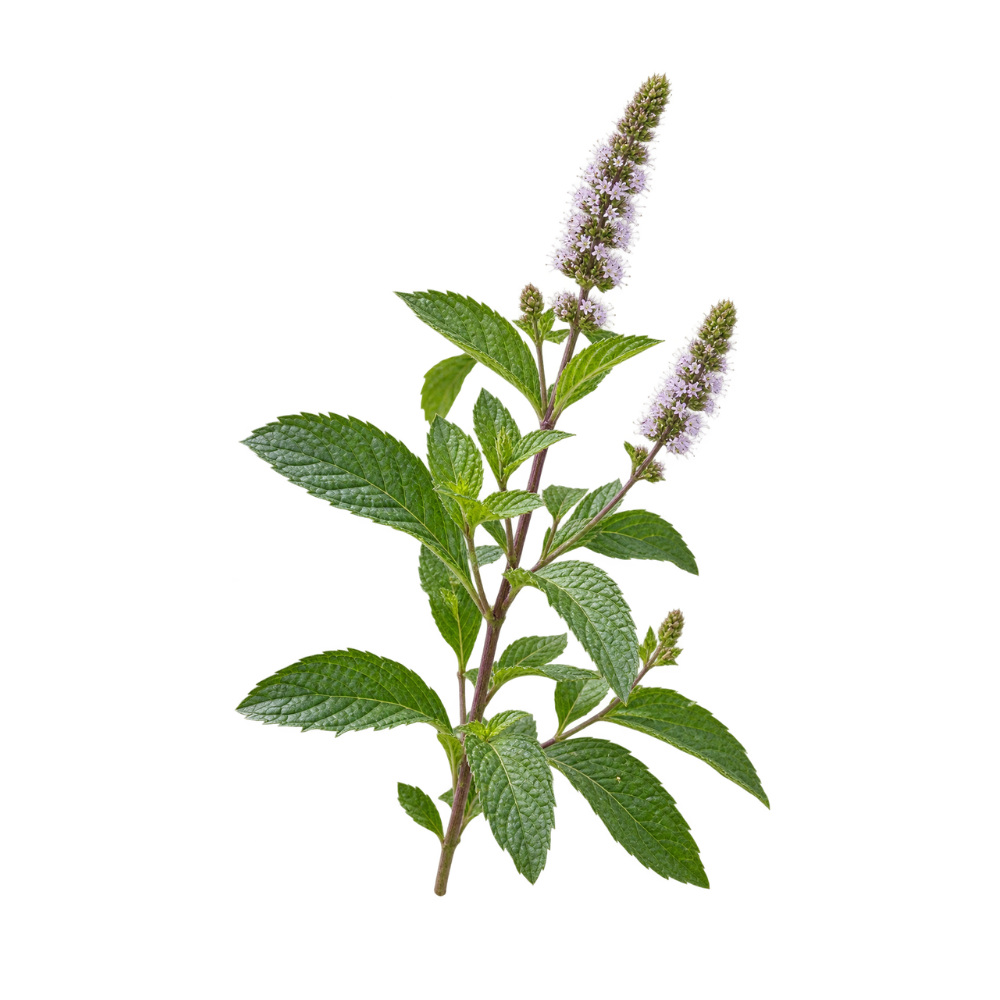
Spearmint is an upright, aromatic perennial herb in the mint family (Lamiaceae) 26,
The leaves grow in opposite pairs and have almost no stalk. They are oval-oblong to lance-shaped, 3–7 cm long, with irregularly toothed edges 26Reference 26Mentha spicata Linnaeus — species description, uses and distribution — floraView study →. They are mostly hairless, and the upper surface looks wrinkled along the veins 27Reference 27Mentha spicata — description, origin, dimensions, leaves, flowers and cultivation — reference databaseView study →. Spearmint’s almost hairless, stalkless leaves distinguish it from other mints 27Reference 27Mentha spicata — description, origin, dimensions, leaves, flowers and cultivation — reference databaseView study →.
The small flowers are pale purple, pink or white. They grow in whorls gathered into slender spikes 4–10 cm long at the stem tips, with the lowest whorls spaced apart 26,
Distribution
Spearmint grows wild in Europe, south-west Asia, Russia, Turkmenistan and parts of Africa 26Reference 26Mentha spicata Linnaeus — species description, uses and distribution — floraView study →. It has been introduced by cultivation to Canada, the United States and south-eastern South America, and it is grown in China as a source of spearmint oil 26,
In the wild it grows in moist fields and at the edges of ponds and lakes 27Reference 27Mentha spicata — description, origin, dimensions, leaves, flowers and cultivation — reference databaseView study →. In America it has long been known as a garden escape on moist soils 29Reference 29A Modern Herbal — “Mints: Spearmint.” (historical/traditional reference). https://www.botanical.com/botanical/mgmh/m/mints-39.htmlView study →.
Growing Conditions
Cultivation snapshot for Spearmint
- Full sun to part shade, in rich, moist, well-drained soil. It tolerates most soils but does poorly where they dry out.
- Grow it in confinement. It spreads rapidly by rhizomes and by stems that root where they touch the ground, so a container, a raised bed or a soil barrier keeps it in bounds.
- Propagate by division, stem cuttings or seed. Shearing off the flower spikes after bloom encourages fresh leafy growth.
Grow it yourself
Farm Wiki is our cultivation-focused sister site, also run by Justin Cooke.
Pharmacology & Research
Spearmint has a small clinical literature. Two small trials found that twice-daily spearmint tea lowered free testosterone in women with hirsutism, most of them with polycystic ovary syndrome 1,
A separate line of trials uses a proprietary extract standardised to rosmarinic acid, not tea, and reports gains in working memory and attention 4,
The antioxidant, anti-inflammatory, liver-protective, antimicrobial and blood-sugar findings come from animal and laboratory studies.
-
Best-supported: lowering free testosterone in hirsutism/PCOS via twice-daily tea 1,
2Reference 1RCTSpearmint herbal tea has significant anti-androgen effects in polycystic ovarian syndromeView study →Reference 2Clinical trialEffect of spearmint (Mentha spicata Labiatae) teas on androgen levels in women with hirsutism — [clinical trial]View study → ; working-memory and sustained-attention gains from a standardised rosmarinic-acid extract 4,5Reference 4RCTSpearmint Extract Improves Working Memory in Men and Women with Age-Associated Memory Impairment — [randomised controlled trial]View study →Reference 5RCTThe attention-enhancing effects of spearmint extract supplementation in healthy men and women: a randomized, double-blind, placebo-controlled, parallel trial — [randomised controlled trial]View study → . - Emerging, worth watching: reduced knee-osteoarthritis pain from a high-rosmarinic-acid tea 6Reference 6RCTHigh-rosmarinic acid spearmint tea in the management of knee osteoarthritis symptoms — [randomised controlled trial]View study →; anti-amyloid activity of rosmarinic acid relevant to dementia 10Reference 10In vitroSpearmint Extract Containing Rosmarinic Acid Suppresses Amyloid Fibril Formation of Proteins Associated with Dementia — [in vitro]View study →.
- Mechanistically thin: antidiabetic, hepatoprotective, antimicrobial and antispasmodic claims rest on animal, ex-vivo or in-vitro work with no human data.
- The caveat: tea, standardised extract and essential oil are studied as different products — a result in one does not transfer to the others, and the objective (visible) hirsutism endpoint was null in the one RCT that measured it 1Reference 1RCTSpearmint herbal tea has significant anti-androgen effects in polycystic ovarian syndromeView study →.
Tea, standardised extract and essential oil are studied as different products. The hormone and knee-pain results come from tea, the cognition results from one proprietary extract, and most of the antimicrobial and nausea work from the essential oil.
1. Antiandrogenic
This is spearmint’s best-studied effect in people. In a 30-day, two-centre randomised trial in 42 women with PCOS, free and total testosterone fell significantly in the group drinking spearmint tea twice daily, and LH and FSH rose. The comparison was a placebo herbal tea, and 41 of the 42 women completed the study 1Reference 1RCTSpearmint herbal tea has significant anti-androgen effects in polycystic ovarian syndromeView study →.
An earlier open trial in 21 hirsute women (12 with PCOS, 9 with idiopathic hirsutism) gave a cup of spearmint tea twice daily for five days. Free testosterone fell and LH, FSH and estradiol rose, while total testosterone and DHEA sulphate did not change significantly 2Reference 2Clinical trialEffect of spearmint (Mentha spicata Labiatae) teas on androgen levels in women with hirsutism — [clinical trial]View study →.
In male rats, an aqueous spearmint extract lowered the expression of steroid-making enzymes (cytochrome P450scc, P450c17, 3β- and 17β-hydroxysteroid dehydrogenase) and reduced testicular testosterone. The authors proposed that oxidative stress in the hypothalamus lowers LH and FSH, which in turn reduces testosterone production 3Reference 3AnimalSpearmint induced hypothalamic oxidative stress and testicular anti-androgenicity in male rats - altered levels of gene expression, enzymes and hormones — [animal model (rat)]View study →.
In a letrozole-induced PCOS rat model, both a spearmint extract and carvone alone reversed the raised testosterone, insulin resistance and ovarian inflammation 7Reference 7AnimalMentha spicata and Its Bioactive Compound Carvone Ameliorate Metabolic Disturbance and Ovarian Dysfunction in Experimental Rat Model of PCOS by Suppression of SREBP1/TLR4-Dependent Pathway — [animal model (rat)]View study →. A combination of spearmint and flaxseed extracts lowered testosterone in a second rat model of PCOS 8Reference 8AnimalA combination of spearmint and flaxseed extract improved endocrine and histomorphology of ovary in experimental PCOS — [animal model (rat); combination formulation]View study →.
⚠ In the 30-day trial, the objective Ferriman–Gallwey hirsutism score did not improve significantly (p = 0.12), although hormone levels and the women’s own ratings of their hair growth did 1Reference 1RCTSpearmint herbal tea has significant anti-androgen effects in polycystic ovarian syndromeView study →.
Gap: Both human trials are small (n=42, n=21) and short (5–30 days); no trial has yet shown a significant reduction in visible hirsutism on an objective scale.
2. Cognitive Function
This research uses a proprietary spearmint extract standardised to rosmarinic acid, not tea. In a 90-day double-blind trial in 90 adults with age-associated memory impairment, 900 mg a day improved quality of working memory by 15% and spatial working-memory accuracy by 9% compared with placebo. The same group reported falling asleep more easily. A 600 mg dose was also tested 4Reference 4RCTSpearmint Extract Improves Working Memory in Men and Women with Age-Associated Memory Impairment — [randomised controlled trial]View study →.
A larger 90-day trial in 142 healthy, recreationally active adults found that 900 mg a day improved sustained attention at days 30 and 90, and complex attention at day 7. Mood, sleep and quality of life did not change 5Reference 5RCTThe attention-enhancing effects of spearmint extract supplementation in healthy men and women: a randomized, double-blind, placebo-controlled, parallel trial — [randomised controlled trial]View study →.
A 17-day pilot in ten counter-terrorism operators, tested after a 24-hour sleepless operation, was inconclusive for physical and cognitive performance. Subjective energy, alertness and focus were rated better on the extract 9Reference 9RCTEffect of Spearmint Extract Containing Rosmarinic Acid on Physical and Executive Functioning After a Tactical Operation — [randomised controlled trial]View study →.
In the laboratory, spearmint extract and rosmarinic acid suppressed the formation of amyloid-β, tau and α-synuclein fibrils, and rosmarinic acid broke down fibrils that had already formed 10Reference 10In vitroSpearmint Extract Containing Rosmarinic Acid Suppresses Amyloid Fibril Formation of Proteins Associated with Dementia — [in vitro]View study →.
Both main trials were run by the extract’s manufacturer 4,
Gap: Every positive cognition trial used one proprietary standardised extract at 900 mg/day; there is no evidence that drinking spearmint tea delivers a comparable rosmarinic-acid dose or cognitive effect.
3. Antioxidant
Antioxidant activity has been shown repeatedly in the laboratory and in animals, and is attributed to phenolic acids, chiefly rosmarinic acid, and flavonoids 19Reference 19ReviewThe traditional uses, phytochemistry and pharmacology of spearmint (Mentha spicata L.): A review — [review]View study →. In rats given nicotine, a spearmint aqueous extract (100 mg/kg for two months) restored antioxidant-enzyme activity and lowered lipid peroxidation in the liver and red blood cells 11Reference 11AnimalProtective effects of Mentha spicata against nicotine-induced toxicity in liver and erythrocytes of Wistar rats — [animal model (rat)]View study →.
A spearmint variety has been bred that makes about 20 times more rosmarinic acid than ordinary plants 13Reference 13In vitroProtection against LPS-induced cartilage inflammation and degradation provided by a biological extract of Mentha spicata — [in vitro]View study →.
No human trial has measured an oxidative-stress endpoint after spearmint intake.
4. Anti-Inflammatory
In pig cartilage kept in culture, a simulated digest of the high-rosmarinic-acid spearmint variety reduced inflammatory signals (prostaglandin E2 and nitric oxide) and cartilage breakdown caused by bacterial endotoxin. The authors found the effect was mostly independent of rosmarinic acid, and its breakdown products had no effect 13Reference 13In vitroProtection against LPS-induced cartilage inflammation and degradation provided by a biological extract of Mentha spicata — [in vitro]View study →.
In rats, the ethyl acetate and water fractions of an ethanol extract reduced both acute paw swelling and chronic inflammation, and the ethyl acetate fraction was comparable to standard anti-inflammatory drugs in the chronic model 12Reference 12AnimalAnti-inflammatory activity of four solvent fractions of ethanol extract of Mentha spicata L. investigated on acute and chronic inflammation induced rats — [animal model (rat)]View study →.
No trial has measured inflammatory markers in people.
5. Analgesic / Osteoarthritis
In a 16-week double-blind trial in knee osteoarthritis (62 randomised, 46 analysed), participants drank tea twice daily from either a high-rosmarinic-acid spearmint variety or a commercial spearmint. Pain scores fell significantly over the 16 weeks only in the high-rosmarinic-acid group, which also improved on the SF-36 bodily-pain score. Stiffness and physical disability improved in both groups 6Reference 6RCTHigh-rosmarinic acid spearmint tea in the management of knee osteoarthritis symptoms — [randomised controlled trial]View study →.
The differences between the two groups were not statistically significant 6Reference 6RCTHigh-rosmarinic acid spearmint tea in the management of knee osteoarthritis symptoms — [randomised controlled trial]View study →.
A review of spearmint essential oil reports analgesic effects in animal studies for the oil and its main compounds, carvone, limonene and menthol 14Reference 14ReviewMentha spicata as natural analgesia for treatment of pain in osteoarthritis patients — [review]View study →.
Gap: A single, modest-sized trial of a non-commercial high-rosmarinic-acid cultivar; the effect has not been replicated and does not clearly extend to ordinary spearmint tea.
6. Hepatoprotective
In rats given nicotine for two months, spearmint aqueous extract (100 mg/kg) reduced the rise in the liver enzymes AST, ALT, ALP and LDH, restored antioxidant-enzyme activity, and reduced lipid peroxidation in the liver and red blood cells 11Reference 11AnimalProtective effects of Mentha spicata against nicotine-induced toxicity in liver and erythrocytes of Wistar rats — [animal model (rat)]View study →.
A review of spearmint pharmacology lists liver protection among the activities reported for its extracts 19Reference 19ReviewThe traditional uses, phytochemistry and pharmacology of spearmint (Mentha spicata L.): A review — [review]View study →.
This is a single chemical-injury model in animals. There are no human liver-function data.
7. Antimicrobial
A review of spearmint pharmacology reports antibacterial and antifungal activity for the essential oil and extracts in laboratory studies 19Reference 19ReviewThe traditional uses, phytochemistry and pharmacology of spearmint (Mentha spicata L.): A review — [review]View study →.
In a comparison of nine commercial essential oils against the tooth-decay bacterium Streptococcus mutans, spearmint oil showed no antibacterial activity, and neither did peppermint oil 25Reference 25In vitroAntimicrobial activity of commercially available essential oils against Streptococcus mutans — [in vitro]View study →.
In the Salmonella test, a spearmint leaf tea extract reduced the mutagenic effect of a cooked-meat carcinogen in a dose-dependent way. Rats drinking spearmint tea during and after exposure to the same carcinogen developed fewer precancerous lesions in the colon 21Reference 21In vitroAntimutagenic activity of spearmint — [in vitro]View study →.
Gap: Nearly all antimicrobial data use the concentrated essential oil at levels far above what tea delivers; there is no clinical infection endpoint.
8. Antispasmodic
In isolated guinea-pig ileum, (−)-carvone, the form found in spearmint oil, reduced contractions triggered by histamine, barium chloride and carbachol. It acted like a calcium-channel blocker and was almost 100 times more potent than verapamil against high-potassium contractions 15Reference 15AnimalSouza FV, et al. (2013). (-)-Carvone: antispasmodic effect and mode of action — [animal model (ex vivo, guinea pig ileum)]. Fitoterapia. https://pubmed.ncbi.nlm.nih.gov/23103297/View study →. An earlier report found it more potent than its (+) form 15Reference 15AnimalSouza FV, et al. (2013). (-)-Carvone: antispasmodic effect and mode of action — [animal model (ex vivo, guinea pig ileum)]. Fitoterapia. https://pubmed.ncbi.nlm.nih.gov/23103297/View study →.
The evidence is from isolated tissue and a single compound. No human trial has tested spearmint tea or extract for irritable bowel syndrome, indigestion or cramping.
9. Antidiabetic
In streptozotocin-diabetic rats, repeated oral doses of spearmint aqueous extract (20 mg/kg) significantly lowered blood glucose, comparably to glibenclamide. In normal rats, neither a single dose nor repeated doses lowered blood glucose, though the extract improved glucose tolerance 16Reference 16AnimalAntidiabetic Effect of Spearmint in Streptozotocin-Induced Diabetic Rats — [animal model (rat)]View study →.
In the PCOS rat model, spearmint extract and carvone also improved insulin resistance and blood lipids 7Reference 7AnimalMentha spicata and Its Bioactive Compound Carvone Ameliorate Metabolic Disturbance and Ovarian Dysfunction in Experimental Rat Model of PCOS by Suppression of SREBP1/TLR4-Dependent Pathway — [animal model (rat)]View study →.
There are no human blood-sugar data.
10. Antiemetic
In a randomised, double-blind trial in chemotherapy patients, spearmint or peppermint essential oil reduced the intensity of nausea and the number of vomiting episodes in the first 24 hours, compared with patients who continued their usual anti-sickness treatment. No adverse effects were reported 17Reference 17RCTAntiemetic activity of volatile oil from Mentha spicata and Mentha × piperita in chemotherapy-induced nausea and vomiting — [randomised controlled trial]View study →.
A systematic review of alternative remedies for nausea and vomiting in pregnancy gave mixed findings: it listed spearmint syrup among the remedies found safe and effective, but reported that Mentha had no benefit on nausea and vomiting 18Reference 18Systematic reviewA systematic review of the efficacy of alternative medicine in the treatment of nausea and vomiting of pregnancy — [systematic review]View study →.
Gap: One small positive essential-oil trial in chemotherapy nausea versus a null signal in pregnancy nausea — too little, and too preparation-specific, to generalise.
Mechanisms
In rats, spearmint extract lowered testosterone by reducing the enzymes that make steroid hormones, a change the authors linked to oxidative stress in the hypothalamus 3Reference 3AnimalSpearmint induced hypothalamic oxidative stress and testicular anti-androgenicity in male rats - altered levels of gene expression, enzymes and hormones — [animal model (rat)]View study →. Rosmarinic acid has been studied for its effects on the protein fibrils involved in dementia 10Reference 10In vitroSpearmint Extract Containing Rosmarinic Acid Suppresses Amyloid Fibril Formation of Proteins Associated with Dementia — [in vitro]View study →.
Carvone, the main compound in the oil, relaxes gut smooth muscle in a way that resembles calcium-channel blockers 15Reference 15AnimalSouza FV, et al. (2013). (-)-Carvone: antispasmodic effect and mode of action — [animal model (ex vivo, guinea pig ileum)]. Fitoterapia. https://pubmed.ncbi.nlm.nih.gov/23103297/View study →.
| Mechanism | Drives | Key compounds |
|---|---|---|
| Steroidogenic enzymes ↓ (P450scc, P450c17, 3β-/17β-HSD), LH/FSH ↓ via hypothalamic oxidative stress | antiandrogenic | aqueous leaf extract (compound not identified); carvone in a PCOS rat model |
| Restoration of SOD/catalase/glutathione; lipid peroxidation ↓ | antioxidanthepatoprotective | rosmarinic acid and other phenolics |
| Prostaglandin E2 and nitric oxide ↓ in cartilage | anti-inflammatoryanalgesic | high-rosmarinic-acid leaf extract (mostly independent of rosmarinic acid) |
| Inhibition/disassembly of amyloid-β, tau and α-synuclein fibrils | cognitive / neuroprotective | rosmarinic acid |
| Calcium-channel-blocker-like smooth-muscle relaxation | antispasmodiccarminative | carvone |
Clinical Trials
Registered human trials include a completed spearmint-tea trial for knee osteoarthritis (NCT01380015) and completed trials of the proprietary extract for cognition (for example NCT02518165).
| Completed | Planned | Terminated | Preclinical |
|---|---|---|---|
| 5 | 1 | 0 | ~50+ |
Last checked: August 2026.
Phytochemistry
The essential oil of spearmint is led by carvone, which gives the herb its sweet, less cooling flavour 19,
The leaf’s water-soluble fraction is led by rosmarinic acid, the main phenolic acid, alongside the flavonoids luteolin and apigenin 19Reference 19ReviewThe traditional uses, phytochemistry and pharmacology of spearmint (Mentha spicata L.): A review — [review]View study →. A proprietary dry extract used in the cognition trials contained 15.4% rosmarinic acid 24Reference 24In vitroThe safety of a dry spearmint extract in vitro and in vivo — [animal model (rat)]View study →. A bred variety makes about 20 times more rosmarinic acid than ordinary spearmint 13Reference 13In vitroProtection against LPS-induced cartilage inflammation and degradation provided by a biological extract of Mentha spicata — [in vitro]View study →.
A review found 35 constituents reported across the plant, mainly phenolic acids, flavonoids and lignans 19Reference 19ReviewThe traditional uses, phytochemistry and pharmacology of spearmint (Mentha spicata L.): A review — [review]View study →.
Tea delivers mainly the phenolic fraction, while the oil carries the volatile compounds.
Constituent Summary
Content varies with chemotype, variety, growing site and season 19Reference 19ReviewThe traditional uses, phytochemistry and pharmacology of spearmint (Mentha spicata L.): A review — [review]View study →.
Monoterpene4 compounds4 with data
Phenolic Acid1 compound1 with data
Dosage
Tea, the standardised extract and the essential oil were each tested at their own doses.
| Indication | Preparation | Dose | Est. dried-herb equivalent | Source |
|---|---|---|---|---|
| Hirsutism / PCOS (lowering free testosterone) | Leaf tea | One cup twice daily, 5–30 days | Not quantified | 1, |
| Knee osteoarthritis (pain) | High-rosmarinic-acid spearmint tea | Twice daily, 16 weeks | Not quantified | 6Reference 6RCTHigh-rosmarinic acid spearmint tea in the management of knee osteoarthritis symptoms — [randomised controlled trial]View study → |
| Working memory / attention | Proprietary dry extract, ~15% rosmarinic acid | 900 mg/day, 90 days | — | 4, |
| Chemotherapy-induced nausea | Essential oil | Per-protocol dosing | — | 17Reference 17RCTAntiemetic activity of volatile oil from Mentha spicata and Mentha × piperita in chemotherapy-induced nausea and vomiting — [randomised controlled trial]View study → |
Traditional Dosage
| System | Preparation | Dose |
|---|---|---|
| Western herbal | Infusion of dried herb | 1 oz (about 28 g) to 1 pint (about 570 mL) of boiling water, a wineglassful or less per dose 29Reference 29A Modern Herbal — “Mints: Spearmint.” (historical/traditional reference). https://www.botanical.com/botanical/mgmh/m/mints-39.htmlView study → |
| Western herbal | Oil | 2–5 drops on sugar 29Reference 29A Modern Herbal — “Mints: Spearmint.” (historical/traditional reference). https://www.botanical.com/botanical/mgmh/m/mints-39.htmlView study → |
| Western herbal | Dried leaf infusion | 1.5–3 g as an infusion, up to 3× daily |
| Western herbal | Tincture 1:5 (45%) | 2–4 mL up to 3× daily |
Safety & Pregnancy
Spearmint is a food with a long safety record. At the doses used in trials, the tea lowers free testosterone, which matters to anyone managing hormone levels.
- Safe as a food and flavouring. Spearmint and its extracts are Generally Recognized as Safe (GRAS) as flavourings 20Reference 20RCTSafety and tolerability of a dried aqueous spearmint extract — [randomised controlled trial]View study →.
- Standardised extract well tolerated. 600–900 mg a day for 90 days did not change FSH, LH or TSH, vital signs, blood chemistry or blood counts in a randomised trial 20Reference 20RCTSafety and tolerability of a dried aqueous spearmint extract — [randomised controlled trial]View study →.
- Twice-daily tea lowers free testosterone. Shown in two small trials in women 1,
2Reference 1RCTSpearmint herbal tea has significant anti-androgen effects in polycystic ovarian syndromeView study →Reference 2Clinical trialEffect of spearmint (Mentha spicata Labiatae) teas on androgen levels in women with hirsutism — [clinical trial]View study → . - Hormone-sensitive conditions. Take care alongside hormonal medicines or antiandrogens, and in men trying to conceive, given the testosterone findings in male rats 3Reference 3AnimalSpearmint induced hypothalamic oxidative stress and testicular anti-androgenicity in male rats - altered levels of gene expression, enzymes and hormones — [animal model (rat)]View study →.
- No known drug interactions. None have been formally studied.
Full Safety & Interactions Detail
Food and extract safety. Spearmint and its extracts are Generally Recognized as Safe (GRAS) as flavourings. In a 90-day trial, 600 or 900 mg a day of a dried aqueous spearmint extract did not change FSH, LH or TSH, vital signs, blood chemistry or blood counts, and adverse events were no more common than on placebo 20Reference 20RCTSafety and tolerability of a dried aqueous spearmint extract — [randomised controlled trial]View study →. In a 90-day rat study, the no-observed-adverse-effect level of the extract was 1,948 mg/kg a day, the highest dose tested, and it was not mutagenic in laboratory tests 24Reference 24In vitroThe safety of a dry spearmint extract in vitro and in vivo — [animal model (rat)]View study →.
Hormones. Twice-daily tea lowered free testosterone in women in two clinical trials 1,
Interactions. No human drug-interaction study exists. The testosterone-lowering effect could add to antiandrogen or hormonal therapy.
Culinary amounts are a normal food. Therapeutic amounts of the tea lower free testosterone and have not been studied in human pregnancy, so they are best avoided 1,
The one prenatal study tested a combination tea of Moringa stenopetala and spearmint leaves in rats, and found no harm to mothers or fetuses at the doses tested. The result cannot be attributed to spearmint alone 23Reference 23AnimalPrenatal developmental toxicity study of herbal tea of Moringa stenopetala and Mentha spicata leaves formulation in Wistar rats — [animal model (rat); combination formulation]View study →.
Therapeutic amounts have not been studied while breastfeeding.
References
- Grant P, et al. (2010). Spearmint herbal tea has significant anti-androgen effects in polycystic ovarian syndrome. A randomized controlled trial — [randomised controlled trial]. Phytotherapy research. https://pubmed.ncbi.nlm.nih.gov/19585478/
- Akdoğan M, et al. (2007). Effect of spearmint (Mentha spicata Labiatae) teas on androgen levels in women with hirsutism — [clinical trial]. Phytotherapy research. https://pubmed.ncbi.nlm.nih.gov/17310494/
- Kumar V, et al. (2008). Spearmint induced hypothalamic oxidative stress and testicular anti-androgenicity in male rats - altered levels of gene expression, enzymes and hormones — [animal model (rat)]. Food and chemical toxicology. https://pubmed.ncbi.nlm.nih.gov/18804513/
- Herrlinger KA, et al. (2018). Spearmint Extract Improves Working Memory in Men and Women with Age-Associated Memory Impairment — [randomised controlled trial]. Journal of alternative and complementary medicine (New York, N.Y.). https://pubmed.ncbi.nlm.nih.gov/29314866/
- Falcone PH, et al. (2019). The attention-enhancing effects of spearmint extract supplementation in healthy men and women: a randomized, double-blind, placebo-controlled, parallel trial — [randomised controlled trial]. Nutrition research (New York, N.Y.). https://pubmed.ncbi.nlm.nih.gov/30802720/
- Connelly AE, et al. (2014). High-rosmarinic acid spearmint tea in the management of knee osteoarthritis symptoms — [randomised controlled trial]. Journal of medicinal food. https://pubmed.ncbi.nlm.nih.gov/25058311/
- Oladele CA, et al. (2025). Mentha spicata and Its Bioactive Compound Carvone Ameliorate Metabolic Disturbance and Ovarian Dysfunction in Experimental Rat Model of PCOS by Suppression of SREBP1/TLR4-Dependent Pathway — [animal model (rat)]. American journal of reproductive immunology. https://pubmed.ncbi.nlm.nih.gov/41201918/
- Mehraban M, et al. (2020). A combination of spearmint and flaxseed extract improved endocrine and histomorphology of ovary in experimental PCOS — [animal model (rat); combination formulation]. Journal of ovarian research. https://pubmed.ncbi.nlm.nih.gov/32197626/
- Ostfeld I, et al. (2018). Effect of Spearmint Extract Containing Rosmarinic Acid on Physical and Executive Functioning After a Tactical Operation — [randomised controlled trial]. Journal of special operations medicine. https://pubmed.ncbi.nlm.nih.gov/30566730/
- Ogawa K, et al. (2020). Spearmint Extract Containing Rosmarinic Acid Suppresses Amyloid Fibril Formation of Proteins Associated with Dementia — [in vitro]. Nutrients. https://pubmed.ncbi.nlm.nih.gov/33202830/
- Ben Saad A, et al. (2018). Protective effects of Mentha spicata against nicotine-induced toxicity in liver and erythrocytes of Wistar rats — [animal model (rat)]. Applied physiology, nutrition, and metabolism. https://pubmed.ncbi.nlm.nih.gov/28892646/
- Arumugam P, et al. (2008). Anti-inflammatory activity of four solvent fractions of ethanol extract of Mentha spicata L. investigated on acute and chronic inflammation induced rats — [animal model (rat)]. Environmental toxicology and pharmacology. https://pubmed.ncbi.nlm.nih.gov/21783894/
- Pearson W, et al. (2010). Protection against LPS-induced cartilage inflammation and degradation provided by a biological extract of Mentha spicata — [in vitro]. BMC complementary and alternative medicine. https://pubmed.ncbi.nlm.nih.gov/20459798/
- Mahboubi M, et al. (2017). Mentha spicata as natural analgesia for treatment of pain in osteoarthritis patients — [review]. Complementary therapies in clinical practice. https://pubmed.ncbi.nlm.nih.gov/28107842/
- Souza FV, et al. (2013). (-)-Carvone: antispasmodic effect and mode of action — [animal model (ex vivo, guinea pig ileum)]. Fitoterapia. https://pubmed.ncbi.nlm.nih.gov/23103297/
- Farid O, et al. (2018). Antidiabetic Effect of Spearmint in Streptozotocin-Induced Diabetic Rats — [animal model (rat)]. Endocrine, metabolic & immune disorders drug targets. https://pubmed.ncbi.nlm.nih.gov/29769013/
- Tayarani-Najaran Z, et al. (2013). Antiemetic activity of volatile oil from Mentha spicata and Mentha × piperita in chemotherapy-induced nausea and vomiting — [randomised controlled trial]. Ecancermedicalscience. https://pubmed.ncbi.nlm.nih.gov/23390455/
- Khorasani F, et al. (2020). A systematic review of the efficacy of alternative medicine in the treatment of nausea and vomiting of pregnancy — [systematic review]. Journal of obstetrics and gynaecology. https://pubmed.ncbi.nlm.nih.gov/31215276/
- Mahendran G, et al. (2021). The traditional uses, phytochemistry and pharmacology of spearmint (Mentha spicata L.): A review — [review]. Journal of ethnopharmacology. https://pubmed.ncbi.nlm.nih.gov/34087400/
- Lasrado JA, et al. (2017). Safety and tolerability of a dried aqueous spearmint extract — [randomised controlled trial]. Regulatory toxicology and pharmacology. https://pubmed.ncbi.nlm.nih.gov/28286189/
- Yu TW, et al. (2004). Antimutagenic activity of spearmint — [in vitro]. Environmental and molecular mutagenesis. https://pubmed.ncbi.nlm.nih.gov/15529323/
- Nozhat F, et al. (2014). Evaluation of possible toxic effects of spearmint (Mentha spicata) on the reproductive system, fertility and number of offspring in adult male rats — [animal model (rat)]. Avicenna journal of phytomedicine. https://pubmed.ncbi.nlm.nih.gov/25386406/
- Musa AH, et al. (2022). Prenatal developmental toxicity study of herbal tea of Moringa stenopetala and Mentha spicata leaves formulation in Wistar rats — [animal model (rat); combination formulation]. Toxicology reports. https://pubmed.ncbi.nlm.nih.gov/36518396/
- Lasrado JA, et al. (2015). The safety of a dry spearmint extract in vitro and in vivo — [animal model (rat)]. Regulatory toxicology and pharmacology. https://pubmed.ncbi.nlm.nih.gov/25527048/
- Chaudhari LK, et al. (2012). Antimicrobial activity of commercially available essential oils against Streptococcus mutans — [in vitro]. The journal of contemporary dental practice. https://pubmed.ncbi.nlm.nih.gov/22430697/
- Li, X. W., & Hedge, I. C. (1994). Mentha spicata Linnaeus — species description, uses and distribution — flora. In Wu, Z. Y., & Raven, P. H. (eds.), Flora of China, Vol. 17. http://www.efloras.org/florataxon.aspx?flora_id=2&taxon_id=200019821
- NC State Extension (n.d.). Mentha spicata — description, origin, dimensions, leaves, flowers and cultivation — reference database. North Carolina Extension Gardener Plant Toolbox. https://plants.ces.ncsu.edu/plants/mentha-spicata/
- Li, X. W., & Hedge, I. C. (1994). Mentha × piperita Linnaeus — species description and parentage — flora. In Wu, Z. Y., & Raven, P. H. (eds.), Flora of China, Vol. 17. http://www.efloras.org/florataxon.aspx?flora_id=2&taxon_id=210001264
- Grieve, M. (1931). A Modern Herbal — “Mints: Spearmint.” (historical/traditional reference). https://www.botanical.com/botanical/mgmh/m/mints-39.html



