
Compound Monograph
Mesembryanthemoidigenic Acid
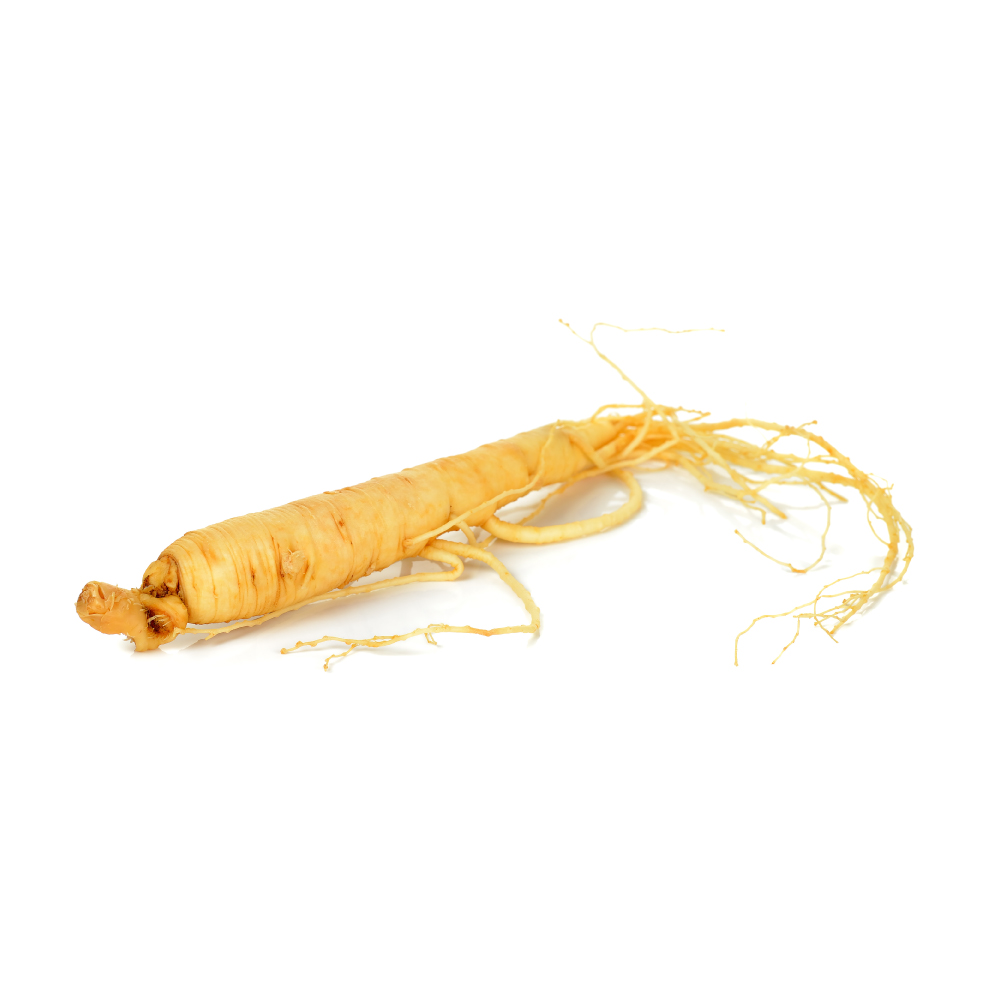
Mesembryanthemoidigenic acid is an oleanane-type triterpenoid acid (3-beta,29-dihydroxyolean-12-en-28-oic acid) reported from the root of suma (Pfaffia paniculata) and from Akebia, Calendula stellata and eleuthero, where it mostly occurs as the aglycone of saponins. Despite the name it has nothing to do with kanna or the mesembrine alkaloids. Its own pharmacology amounts to a single in-vitro enzyme assay — none of suma's adaptogen reputation rests on this molecule.

Sources · 6
Where Does It Come From?
Mesembryanthemoidigenic Acid is a naturally occurring oleanane-type triterpenoid acid (saponin aglycone) — 3-beta,29-dihydroxyolean-12-en-28-oic acid, found in Suma, Eleuthero — as the aglycone of its ciwujianoside saponins and 4 other sources. Its toxicity is not yet characterized.
Concentration
Content by Source
Concentrations not reported. No percent-dry-weight or mg/g figures have been published for this compound in its source plants.
Mesembryanthemoidigenic Acid at a Glance
Mesembryanthemoidigenic acid is an oleanane-type triterpenoid acid — a pentacyclic C30 triterpene carrying a carboxylic acid at C-28 and hydroxyls at C-3 and C-29 (3β,29-dihydroxyolean-12-en-28-oic acid, C30H48O4, CAS 4871-87-8) 8Reference 8Marigold metabolites: diversity and separation methods of Calendula genus phytochemicals from 1891 to 2022View study →. In this database it arrives as one of the twelve compounds a 2010 University of Mississippi study pulled out of the root of suma (Pfaffia paniculata, “Brazilian ginseng”), where it was reported from the plant for the first time 1Reference 1Triterpenoids from Brazilian ginseng, Pfaffia paniculataView study →.
It is best understood not as a drug candidate but as a saponin aglycone — the triterpene core that plants decorate with sugars. Free mesembryanthemoidigenic acid is a minor find; its glycosides are the abundant, named, studied compounds, and they show up across an oddly scattered set of families: Amaranthaceae (Pfaffia), Araliaceae (eleuthero), Asteraceae (Calendula stellata), Lardizabalaceae (Akebia) and Fabaceae (Millettia) 5,
Its own research record is close to empty. A PubMed search for “mesembryanthemoidigenic” returns five papers (checked July 2026), and a PubMed Central full-text search ten — every one of them a phytochemistry or isolation report. Exactly one of them tested the free acid in a bioassay 3Reference 3Triterpenoids with α-glucosidase inhibitory activity and cytotoxic activity from the leaves of Akebia trifoliataView study →. Nothing about suma’s adaptogen, anticancer or “Brazilian ginseng” reputation rests on this molecule; that literature belongs to the whole root, to the saponin fraction, and to pfaffic acid and the ecdysteroids 10,
The Name Points at the Wrong Plant
This compound’s name is a trap, and it is worth defusing before anything else.
It is not a kanna alkaloid. The prefix invites confusion with mesembrine, mesembrenone and the other alkaloids of Sceletium tortuosum (kanna) — plants of the Aizoaceae, historically classed under Mesembryanthemum. Mesembryanthemoidigenic acid shares nothing with them but a few syllables. Those are nitrogen-containing alkaloids with serotonin-transporter and PDE4 activity; this is a nitrogen-free pentacyclic triterpene acid with no reported CNS activity of any kind. None of kanna’s pharmacology, and none of its cautions, transfer here.
The Mesembryanthemum reference could not be verified. The -igenic suffix follows the standard convention for a saponin aglycone (compare hederagenin, from Hedera), so the name implies a first isolation from a Mesembryanthemum-type plant. No primary report establishing that could be located — the compound simply appears in the 1980s literature as an already-named known compound 2Reference 2Triterpenoids of Akebia quinata callus tissueView study →. This page therefore treats the etymology as unverified, and it is worth noting that no confirmed report of the molecule from an Aizoaceae plant appears in the modern indexed literature either. The plants it is actually documented from are listed below.
The structural class is settled, however. Independent sources agree on the skeleton: PubChem (CID 21594136) and ChEBI (CHEBI:132373) both record C30H48O4 at 472.7 g/mol, and Olennikov and Kashchenko’s Calendula metabolite review names it explicitly as 3β,29-dihydroxyolean-12-en-28-oic acid 8Reference 8Marigold metabolites: diversity and separation methods of Calendula genus phytochemicals from 1891 to 2022View study →. The bioassay paper that tested it classes it among “oleanane type triterpenes” and reads its structure–activity behaviour on exactly that basis 3Reference 3Triterpenoids with α-glucosidase inhibitory activity and cytotoxic activity from the leaves of Akebia trifoliataView study →. There is no genuine ambiguity about what kind of molecule this is.
Where It Sits Among Suma’s Triterpenoids
Suma’s root is unusual for carrying nor-triterpenoids — triterpenes that have lost a carbon — alongside conventional ones. Mesembryanthemoidigenic acid belongs to the conventional group, which is the useful thing to know about it in this plant.
| Molecule | Skeleton | What it is in suma root |
|---|---|---|
| Pfaffic acid | Nor-triterpene (C29) | The genus marker and the pfaffoside aglycone; ~1–4% of dried root 11Reference 11Development of an analytical method for the quantification of pfaffic acid in Brazilian ginseng (Hebanthe eriantha)View study → |
| Pfaffine A / pfaffine B | 30-Nor-oleanane | Two new nortriterpenoids named in the 2010 study 1Reference 1Triterpenoids from Brazilian ginseng, Pfaffia paniculataView study → |
| Pfameric acid | Nor-triterpene | Known nortriterpenoid, previously from P. glomerata 1Reference 1Triterpenoids from Brazilian ginseng, Pfaffia paniculataView study → |
| Mesembryanthemoidigenic acid | Oleanane (full C30) | A known triterpenoid acid, first reported from this plant in 2010 1Reference 1Triterpenoids from Brazilian ginseng, Pfaffia paniculataView study → |
| Calenduloside E 6′-methyl ester | Oleanane saponin | Co-isolated glycoside 1Reference 1Triterpenoids from Brazilian ginseng, Pfaffia paniculataView study → |
| Oleanolic acid 28-O-β-D-glucopyranoside | Oleanane saponin | Co-isolated glycoside 1Reference 1Triterpenoids from Brazilian ginseng, Pfaffia paniculataView study → |
The distinction matters for attribution. The nor-oleananes are the Pfaffia-specific chemistry — pfaffic acid is used precisely because it distinguishes Hebanthe eriantha from the other plants sold as Brazilian ginseng 11Reference 11Development of an analytical method for the quantification of pfaffic acid in Brazilian ginseng (Hebanthe eriantha)View study →. Mesembryanthemoidigenic acid is the opposite: a widely distributed oleanane found in unrelated families, so it carries no chemotaxonomic weight for suma and cannot be used as a marker of it. It was one of ten known compounds identified by spectroscopic comparison in that study; the two genuinely new molecules were the pfaffines 1Reference 1Triterpenoids from Brazilian ginseng, Pfaffia paniculataView study →.
What It's Used For
There is very little to report, and the little there is comes from Akebia, not from suma. No study has ever dosed this compound in an animal or a person.
Support is an experimental score — weighted by study type (human > animal > in vitro) and volume. A beta, not a validated metric. Both rows below are single in-vitro findings, and the second is not even about this molecule but about a glycoside of it, so the scores stay very low by design. Read the per-row basis rather than the number.
The only bioassay ever performed on the isolated molecule. Ouyang and colleagues isolated ten pentacyclic triterpenoids from the leaves of Akebia trifoliata and screened them against α-glucosidase, the intestinal enzyme that releases glucose from dietary carbohydrate. Mesembryanthemoidigenic acid (their compound 6) returned an IC50 of 0.042 ± 0.002 mM — well below acarbose (0.409 mM) and in the same range as corosolic acid (0.060 mM) 3Reference 3Triterpenoids with α-glucosidase inhibitory activity and cytotoxic activity from the leaves of Akebia trifoliataView study →.
The authors also drew a structure–activity point directly from it: adding a hydroxyl at C-2 (giving 2α,3β,29-trihydroxyolean-12-en-28-oic acid) worsened the inhibition markedly, so the C-2 position is doing real work in this series 3Reference 3Triterpenoids with α-glucosidase inhibitory activity and cytotoxic activity from the leaves of Akebia trifoliataView study →.
This is an isolate result, obtained from Akebia leaf, not from suma.
Gap: it is one assay, in a cuvette, with no cell model, no animal, no oral-absorption data and no replication. Triterpene acids are poorly absorbed as a class, and an intestinal-lumen enzyme target at least sidesteps that problem in principle — but nobody has tested whether the compound reaches or inhibits the enzyme in a living gut. Nothing here supports a blood-sugar claim for suma, Akebia or any product.
Jiang and colleagues isolated fifteen triterpenoid saponins from the leaves of Acanthopanax senticosus — the plant this database lists as eleuthero (Eleutherococcus senticosus) — and screened them against pancreatic lipase. Among the inhibitors was 3-O-α-L-rhamnopyranosyl-(1→2)-α-L-arabinopyranosyl mesembryanthemoidigenic acid, one of several saponins in that set to reduce the enzyme’s activity in vitro; others in the same experiment enhanced it, so the effect is structure-specific rather than a general saponin property 5Reference 5Biologically active triterpenoid saponins from Acanthopanax senticosusView study →.
A later review of digestive-enzyme inhibitors places the active A. senticosus saponins in the IC50 range of roughly 0.22–0.29 mM 13Reference 13ReviewThe role of lipid and carbohydrate digestive enzyme inhibitors in the management of obesity: a review of current and emerging therapeutic agentsView study →.
Gap: the tested substance was the glycoside, not mesembryanthemoidigenic acid. Sugars change a saponin’s solubility, membrane behaviour and target engagement completely, so this result is evidence about a ciwujianoside-type saponin and cannot be read back onto the aglycone. There is no animal or human anti-obesity outcome attached to it either.
Mechanisms
| Target / pathway | Effect | Relevant to |
|---|---|---|
| α-Glucosidase | competitive-range inhibition in vitro, IC50 0.042 mM — the only target reported for the free acid 3Reference 3Triterpenoids with α-glucosidase inhibitory activity and cytotoxic activity from the leaves of Akebia trifoliataView study → | carbohydrate digestion (in vitro) |
| Pancreatic lipase | inhibition in vitro by the 3-O-rhamnosyl-arabinosyl glycoside, not the aglycone 5, | fat digestion (glycoside-level) |
| TAS1R2 / TAS1R3 sweet-taste receptor | Millettia dubia oleanane glycosides built partly on this aglycone were screened as agonists; two of ten were active 9Reference 9Millettia dubia De Wild. (Fabaceae): structural analysis of the oleanane-type glycosides and stimulation of the sweet taste receptors TAS1R2/TAS1R3View study → | sweet-taste chemistry (glycoside-level) |
| Cancer-cell viability (A549, HeLa, HepG2) | no activity — IC50 > 100 µM for the isolate 3Reference 3Triterpenoids with α-glucosidase inhibitory activity and cytotoxic activity from the leaves of Akebia trifoliataView study → | a reported negativenot a gap |
| Bacterial growth (five strains) | not among the active compounds in an A. trifoliata pericarp screen 4Reference 4Antibacterial oleanane-type triterpenoids from pericarps of Akebia trifoliataView study → | a reported negativenot a gap |
The two negatives are as informative as the positive here. A molecule co-isolated from a plant with a large anticancer literature was put into cancer-cell assays and did nothing.
Pharmacokinetics
No data whatsoever. Absorption, oral bioavailability, distribution, metabolism, half-life and metabolites are all unstudied. Pentacyclic triterpene acids as a class tend to be poorly absorbed orally, but no measurement exists for this compound and no analogy is asserted here as fact.
Clinical Trials
None, at any stage, and no animal work either. Every study here is in vitro or purely analytical.
| Completed | Planned | Terminated | Preclinical |
|---|---|---|---|
| — | — | — | In-vitro enzyme + cytotoxicity screens only 3, |
Last checked: July 2026.
Isolate vs. Plant Studies
The split here is unusually clean, and it runs against the compound rather than for it.
The isolate has been studied — and mostly came back negative. Unlike many trace phytochemicals, this one has actually been put into assays as a pure compound. It inhibited α-glucosidase 3Reference 3Triterpenoids with α-glucosidase inhibitory activity and cytotoxic activity from the leaves of Akebia trifoliataView study →; it did not kill cancer cells 3Reference 3Triterpenoids with α-glucosidase inhibitory activity and cytotoxic activity from the leaves of Akebia trifoliataView study →; it was not among the antibacterial actives 4Reference 4Antibacterial oleanane-type triterpenoids from pericarps of Akebia trifoliataView study →. That is a small but genuine isolate record, and it is honest to report the nulls alongside the hit.
The plant-level evidence belongs to other molecules. Suma’s preclinical anticancer, anti-inflammatory and adaptogen literature is built on whole root, butanolic extracts and the pfaffosidic saponin fraction — pfaffic-acid glycosides — with the ecdysteroid 20-hydroxyecdysone carrying the hormone-modulating thread 10,
The transfer problem is compounded by glycosylation. In most plants where this molecule occurs, it occurs bound — as ciwujianosides in eleuthero, as calendustellatoside E in Calendula stellata, as new oleanane glycosides in Millettia dubia 5,
Prevalence in Nature
The occurrence record is qualitative everywhere, and taxonomically scattered.
In suma. Li, Jadhav and Khan extracted 2.4 kg of dried Pfaffia paniculata root, partitioned the methanol extract and identified mesembryanthemoidigenic acid as compound 9 among twelve, by spectroscopic comparison with the Akebia quinata dataset 1,
In Akebia. The best-documented genus for this compound. It was characterised in A. quinata callus tissue in 1986 2Reference 2Triterpenoids of Akebia quinata callus tissueView study →, and later isolated from A. trifoliata pericarps 4Reference 4Antibacterial oleanane-type triterpenoids from pericarps of Akebia trifoliataView study → and leaves 3Reference 3Triterpenoids with α-glucosidase inhibitory activity and cytotoxic activity from the leaves of Akebia trifoliataView study →; a review of the genus lists it among some 32 triterpenoids reported from A. trifoliata 12Reference 12ReviewThe Akebia genus as a novel forest crop: a review of its genetic resources, nutritional components, biosynthesis, and biological studiesView study →.
In eleuthero (Eleutherococcus senticosus). Here it is a major structural theme rather than a free compound. A 2024 UPLC-QTOF/QTRAP profiling study of A. senticosus shoots, leaves, fruits and stems mapped 82 triterpenoid saponins, of which a large block are mesembryanthemoidigenic-acid derivatives — including the named ciwujianosides A₃, A₄ and D₃, ezoukoginoside C and acasentrioide A — most abundant in the shoots 6Reference 6Comprehensive profiling of phenolic compounds and triterpenoid saponins from Acanthopanax senticosus and their antioxidant, α-glucosidase inhibitory activitiesView study →. The free aglycone itself was not reported as a detected compound.
In Calendula. Lehbili and colleagues found it as one of four aglycones (with oleanolic, echinocystic and morolic acids) underlying the calendustellatoside saponins of Calendula stellata 7Reference 7Oleanane-type triterpene saponins from Calendula stellataView study →; the Calendula metabolite review lists both the free acid and its glycoside calendustellatoside E from that species 8Reference 8Marigold metabolites: diversity and separation methods of Calendula genus phytochemicals from 1891 to 2022View study →, and an untargeted analysis of C. arvensis annotated a mesembryanthemoidigenic hexosyl ester 14Reference 14Calendula arvensis (Vaill.) L.: a systematic plant analysis of the polar extracts from its organs by UHPLC-HRMSView study →. Note the species carefully — neither is Calendula officinalis, the calendula of herbal medicine, and no report places this compound in it.
In Millettia. Ten previously undescribed oleanane glycosides from Millettia dubia root bark were built on mesembryanthemoidigenic acid, hederagenin and oleanolic acid 9Reference 9Millettia dubia De Wild. (Fabaceae): structural analysis of the oleanane-type glycosides and stimulation of the sweet taste receptors TAS1R2/TAS1R3View study →.
No concentration figure exists for the free acid in any plant. Chasing measured levels is logged in the compound’s gaps tracker.
Discovery & Synthesis
First isolation and naming — not established. The compound enters the accessible literature already named. The earliest primary report traced is Ikuta and Itokawa (1986), Phytochemistry 25:1625–1628, “Triterpenoids of Akebia quinata callus tissue” — the dataset that later isolations, including the suma one, compare their spectra against 1,
Structure elucidation. Settled and consistent across sources: 3β,29-dihydroxyolean-12-en-28-oic acid, C30H48O4, MW 472.7 — an olean-12-ene with the C-28 carboxylic acid, a 3β-hydroxyl on ring A and a hydroxymethyl in place of one of the C-20 methyls 3,
Total synthesis. None reported. Like most oxygenated pentacyclic triterpenes it would be a semi-synthetic target at best — a plausible route would be C-29 functionalisation of oleanolic acid — but no published synthesis or semi-synthesis of this specific compound could be found.
Manufacture today. None. It is not produced commercially, not sold as a supplement, and is not routinely available as an analytical reference standard, which is one practical reason it never appears in a quantitative method for suma or eleuthero.
Patents: not yet researched.
Toxicity & Safety
The unknown grading is literal: no toxicology of any kind has been performed on this compound. There is no acute or repeat-dose study, no genotoxicity assay, no reproductive or developmental data, no interaction work and no human exposure record. Absence of reported harm here reflects absence of testing, not a finding of safety.
Two things can be said honestly, and neither is a safety clearance.
It was non-cytotoxic in the one screen that looked. Against A549, HeLa and HepG2 cells the isolate gave IC50 values above 100 µM — no activity at the concentrations tested 3Reference 3Triterpenoids with α-glucosidase inhibitory activity and cytotoxic activity from the leaves of Akebia trifoliataView study →. That is a cancer-cell viability assay run to find anticancer hits, not a toxicology study, and it says nothing about a whole organism.
Class context, not a verdict. Triterpenoid saponins as a class are locally irritant and haemolytic in vitro at high concentrations, and that caveat applies to the glycosides this aglycone underpins rather than to the free acid. Human exposure to mesembryanthemoidigenic acid is dietary and indirect — via suma root preparations, Akebia fruit, or eleuthero — at unmeasured trace levels. Safety decisions about those materials belong on the suma and eleuthero pages, where intake is actually decided, not here.
- Toxicity genuinely unknown. No acute, repeat-dose, genotoxicity, reproductive or interaction data exist for the isolated compound. Untested is not the same as safe.
- No characterised human exposure. The compound is not sold, not dosed and not quantified in any plant, so no exposure estimate can be made even for people taking the herbs that contain it.
- No cytotoxicity in the one assay run. IC50 > 100 µM against three human cancer cell lines — a null result in a screen designed to find hits, not a safety assessment.
- Do not read the parent herbs’ safety profiles onto it, or off it. Suma’s and eleuthero’s own cautions belong to those preparations and their major constituents; this molecule neither carries them nor excuses them.
Dosage
There is no dose, and no basis for setting one. Mesembryanthemoidigenic acid has never been administered to a person or an animal, has no pharmacokinetic data, and is not available as a product. The only figures attached to it anywhere are in-vitro enzyme concentrations — an α-glucosidase IC50 of 0.042 mM for the free acid 3Reference 3Triterpenoids with α-glucosidase inhibitory activity and cytotoxic activity from the leaves of Akebia trifoliataView study → and a lipase IC50 in the 0.22–0.29 mM range for related A. senticosus saponins 13Reference 13ReviewThe role of lipid and carbohydrate digestive enzyme inhibitors in the management of obesity: a review of current and emerging therapeutic agentsView study → — and plate concentrations are not doses.
Suma is taken as whole root or as a saponin-standardised extract, dosed against the pfaffic acid / pfaffoside content rather than this molecule 11Reference 11Development of an analytical method for the quantification of pfaffic acid in Brazilian ginseng (Hebanthe eriantha)View study →; those figures live on the suma page. Nothing here is dosing guidance.
References
- Li J, Jadhav AN, Khan IA (2010). Triterpenoids from Brazilian ginseng, Pfaffia paniculata. Planta Medica 76(6):635–639. https://pubmed.ncbi.nlm.nih.gov/19941264/
- Ikuta A, Itokawa H (1986). Triterpenoids of Akebia quinata callus tissue. Phytochemistry 25(7):1625–1628. https://doi.org/10.1016/S0031-9422(00)81222-4
- Ouyang JK, Dong LM, Xu QL, Wang J, Liu SB, Qian T, Yuan YF, Tan JW (2018). Triterpenoids with α-glucosidase inhibitory activity and cytotoxic activity from the leaves of Akebia trifoliata. RSC Advances 8(70):40483–40489. https://pubmed.ncbi.nlm.nih.gov/35558232/
- Wang J, Ren H, Xu QL, Zhou ZY, Wu P, Wei XY, Cao Y, Chen XX, Tan JW (2015). Antibacterial oleanane-type triterpenoids from pericarps of Akebia trifoliata. Food Chemistry 168:623–629. https://pubmed.ncbi.nlm.nih.gov/25172756/
- Jiang W, Li W, Han L, Liu L, Zhang Q, Zhang S, Nikaido T, Koike K (2006). Biologically active triterpenoid saponins from Acanthopanax senticosus. Journal of Natural Products 69(11):1577–1581. https://pubmed.ncbi.nlm.nih.gov/17125224/
- Kwon RH, Na H, Kim JH, Kim SA, Kim SY, Jung HA, Lee SH, Wee CD, Lee KS, Kim HW (2024). Comprehensive profiling of phenolic compounds and triterpenoid saponins from Acanthopanax senticosus and their antioxidant, α-glucosidase inhibitory activities. Scientific Reports 14:26330. https://pubmed.ncbi.nlm.nih.gov/39487169/
- Lehbili M, Alabdul Magid A, Kabouche A, Voutquenne-Nazabadioko L, Abedini A, Morjani H, Sarazin T, Gangloff SC, Kabouche Z (2017). Oleanane-type triterpene saponins from Calendula stellata. Phytochemistry 144:33–42. https://pubmed.ncbi.nlm.nih.gov/28881197/
- Olennikov DN, Kashchenko NI (2022). Marigold metabolites: diversity and separation methods of Calendula genus phytochemicals from 1891 to 2022. Molecules 27(23):8626. https://pubmed.ncbi.nlm.nih.gov/36500716/
- Pertuit D, Belloir C, Bouizi Y, Delaude C, Kapundu M, Lacaille-Dubois MA, Briand L, Mitaine-Offer AC (2024). Millettia dubia De Wild. (Fabaceae): structural analysis of the oleanane-type glycosides and stimulation of the sweet taste receptors TAS1R2/TAS1R3. Phytochemistry 226:114204. https://pubmed.ncbi.nlm.nih.gov/38971498/
- Araque Gelves DI, de Andreoli Souza GC, Hernandez Tasco AJ, Salvador MJ (2025). Ethnomedicinal uses, phytochemistry, pharmacological activities, and toxicology of the subfamily Gomphrenoideae (Amaranthaceae): a comprehensive review. Chemistry & Biodiversity 22(9):e202500530. https://pubmed.ncbi.nlm.nih.gov/40273036/
- Rodrigues MV, Souza KP, Rehder VL, Vilela GF, Montanari Junior I, Figueira GM, Rath S (2013). Development of an analytical method for the quantification of pfaffic acid in Brazilian ginseng (Hebanthe eriantha). Journal of Pharmaceutical and Biomedical Analysis 77:76–82. https://pubmed.ncbi.nlm.nih.gov/23384553/
- Huang P, Zang F, Li C, Lin F, Zang D, Li B, Zheng Y (2022). The Akebia genus as a novel forest crop: a review of its genetic resources, nutritional components, biosynthesis, and biological studies. Frontiers in Plant Science 13:936571. https://pubmed.ncbi.nlm.nih.gov/35958221/
- Tucci SA, Boyland EJ, Halford JC (2010). The role of lipid and carbohydrate digestive enzyme inhibitors in the management of obesity: a review of current and emerging therapeutic agents. Diabetes, Metabolic Syndrome and Obesity: Targets and Therapy 3:125–143. https://pubmed.ncbi.nlm.nih.gov/21437083/
- Fiorentino M, Gravina C, Piccolella S, Pecoraro MT, Formato M, Stinca A, Pacifico S, Esposito A (2022). Calendula arvensis (Vaill.) L.: a systematic plant analysis of the polar extracts from its organs by UHPLC-HRMS. Foods 11(3):247. https://pubmed.ncbi.nlm.nih.gov/35159399/



