
Compound Monograph
Pimaric Acid
Pimaric acid is a minor diterpene resin acid of pine and fir oleoresin and the parent of the pimarane class. Its pharmacological interest is narrow but real: it opens BK potassium channels, an activity its close relative abietic acid does not share at all.

Sources · 6
Where Does It Come From?
Pimaric Acid is a naturally occurring pimarane diterpene resin acid, found in Subalpine fir, Pine and 4 other sources. It is well tolerated orally (low toxicity).
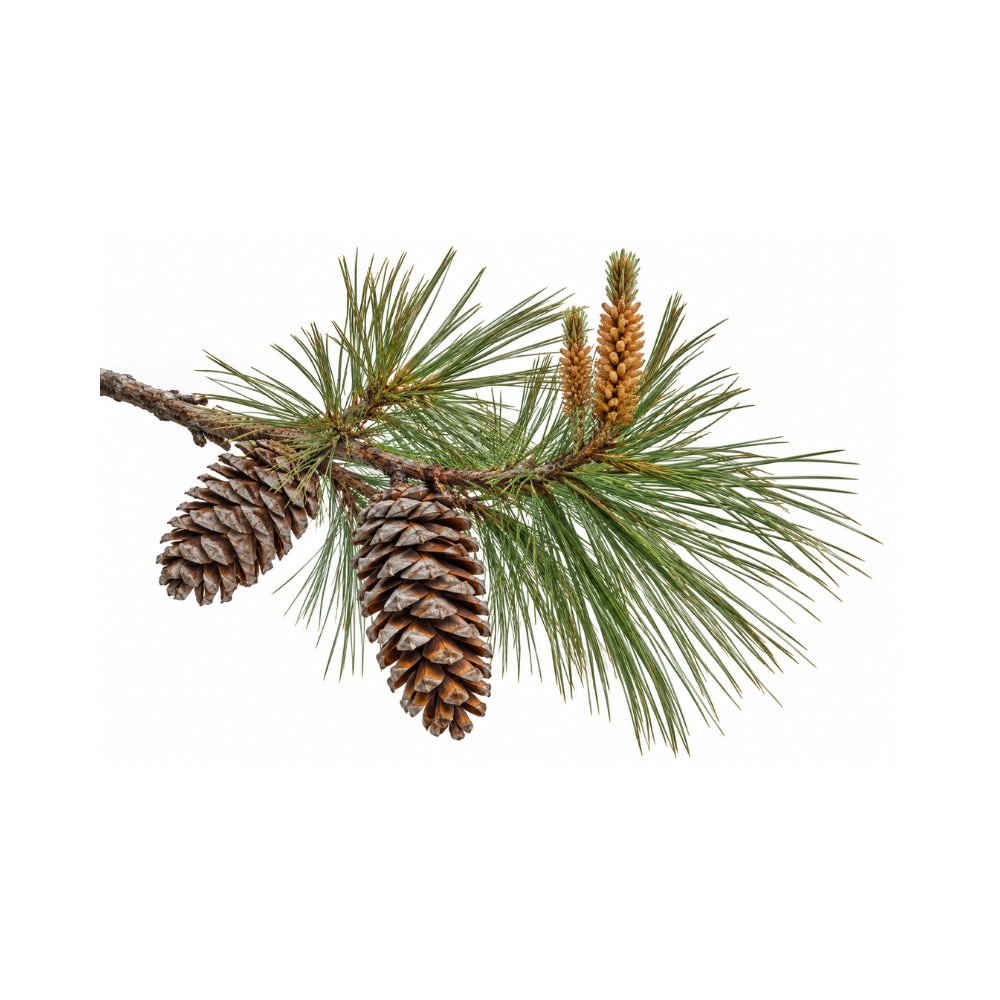 Source Chir Pine Pinus roxburghii Herb monograph →
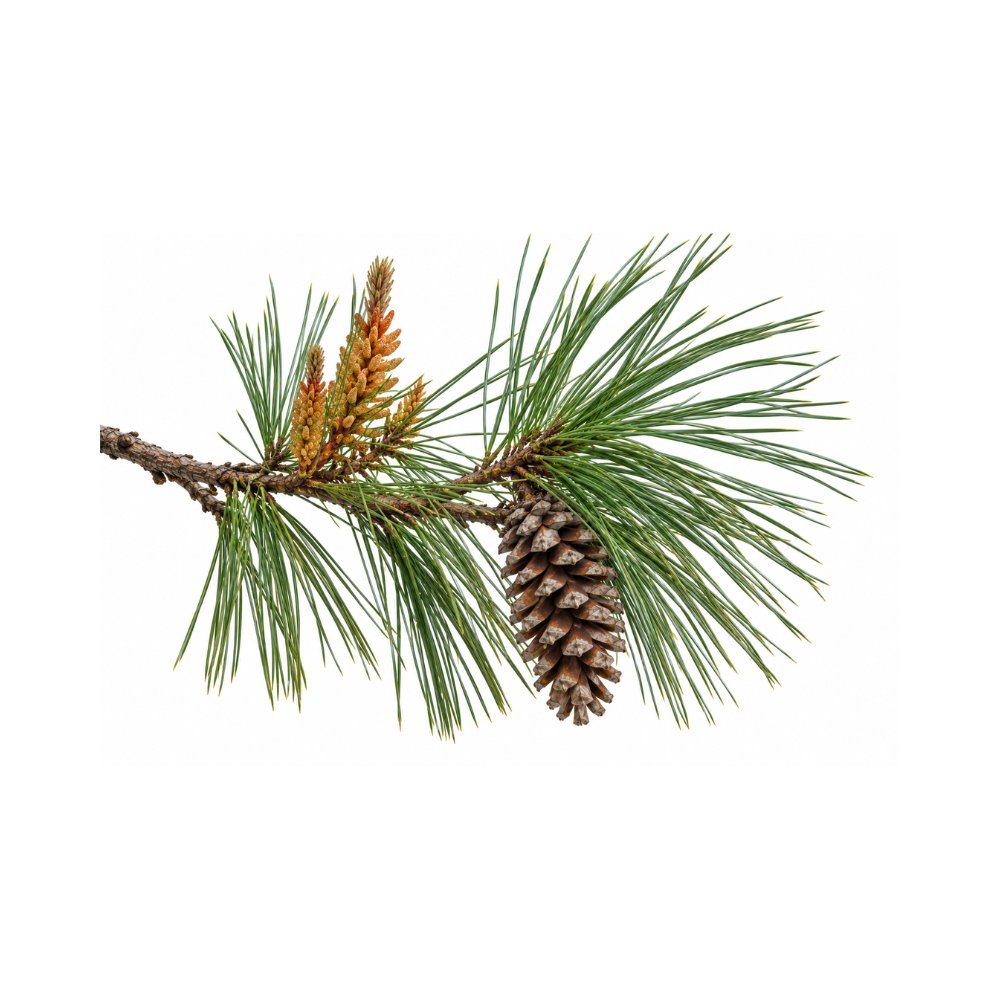 Source Masson Pine Pinus massoniana Herb monograph →
 Source Pine Pinus sylvestris Herb monograph →
Concentration
Content by Source
Concentrations not reported. No percent-dry-weight or mg/g figures have been published for this compound in its source plants.
Pimaric Acid at a Glance
Pimaric acid is one of the minor diterpene resin acids of pine and fir oleoresin, and the compound the whole pimarane class is named after. In rosin it sits well behind abietic acid: in softwood sawmill air the two were measured together at 0.6 and 7.2 µg/m³ respectively 5Reference 5ObservationalExposure to dust, resin acids, and monoterpenes in softwood lumber mills — cross-sectional exposure surveyView study →.
It has one distinct pharmacological identity, and it is a laboratory one. Pimaric acid opens large-conductance calcium-activated potassium (BK) channels, and it does so cleanly enough to be used as a research tool for the channel 1Reference 1In vitroMolecular basis of pimarane compounds as novel activators of large-conductance Ca(2+)-activated K(+) channel alpha-subunit — in vitro electrophysiologyView study →. That single activity is what separates it from its far more abundant relative — because abietic acid, structurally almost identical, does nothing to BK channels at all 1Reference 1In vitroMolecular basis of pimarane compounds as novel activators of large-conductance Ca(2+)-activated K(+) channel alpha-subunit — in vitro electrophysiologyView study →.
Why It Opens BK Channels and Abietic Acid Does Not
This is the interesting thing about the molecule. Nine closely related diterpenes were screened against BK channels expressed in HEK293 cells. Pimaric acid, isopimaric acid, sandaracoisopimaric acid and three dihydro derivatives all produced substantial membrane hyperpolarisation and opened the channel in the same 1–10 µM range. Abietic acid, sclareol and methyl pimarate had no effect at all 1Reference 1In vitroMolecular basis of pimarane compounds as novel activators of large-conductance Ca(2+)-activated K(+) channel alpha-subunit — in vitro electrophysiologyView study →.
Pimaric acid does not change the channel’s unit conductance. It raises open probability by increasing sensitivity to both calcium and voltage, works from either side of the membrane, and acts on the BKα subunit — coexpressing β1 did not change the response. It is selective for BK over the small- and intermediate-conductance calcium-activated potassium channels 1Reference 1In vitroMolecular basis of pimarane compounds as novel activators of large-conductance Ca(2+)-activated K(+) channel alpha-subunit — in vitro electrophysiologyView study →.
The authors made the point that carries: pimaric and abietic acid differ only very slightly in structure, yet one is a BK opener and the other is inert. The pimarane skeleton carries a vinyl group and a quaternary methyl at C-13 where the abietane carries an isopropyl group on an aromatic-adjacent ring — and that small difference is the whole activity. Anyone reasoning about “conifer resin acids” as a single pharmacological block is reasoning about the wrong unit.
Later work extended the profile beyond BK. Pimaric acid also shifts the voltage-activation of several voltage-gated KV1 and KV2.1 channels to lower potentials and slows their deactivation, with a phenylalanine in the S5 segment identified by mutagenesis as critical to the effect; KV4.3 was not affected 2Reference 2In vitroMolecular mechanisms underlying pimaric acid-induced modulation of voltage-gated K(+) channels — in vitro electrophysiologyView study →.
What It's Used For
Everything below is in vitro or in isolated animal tissue. Pimaric acid has no clinical literature.
The defining activity. In HEK293 cells expressing BKα or BKαβ1, pimaric acid at 1–10 µM caused membrane hyperpolarisation and opened the channel, increasing open probability through raised calcium and voltage sensitivity without altering unit conductance. The site of action is the α subunit, it works from either membrane face, and it is selective over SK and IK channels 1Reference 1In vitroMolecular basis of pimarane compounds as novel activators of large-conductance Ca(2+)-activated K(+) channel alpha-subunit — in vitro electrophysiologyView study →.
Related work mapped a parallel, weaker action on KV1.1–KV2.1 channels to a lipophilic S5 residue 2Reference 2In vitroMolecular mechanisms underlying pimaric acid-induced modulation of voltage-gated K(+) channels — in vitro electrophysiologyView study →.
Gap: this is characterised pharmacology in a heterologous expression system. Pimaric acid is used as a research tool for studying BK channels; no therapeutic programme has been built on it, and it has never been dosed in an animal systemically or in a person.
The functional consequence of the channel work, in tissue. In rat pulmonary arterial smooth muscle, pimaric acid attenuated the vasoconstriction produced by high extracellular potassium or endothelin-1 and reduced the high-K⁺-induced rise in cytosolic calcium. Two mechanisms contribute: BK channel activation and inhibition of voltage-dependent calcium channels 3Reference 3AnimalPimaric acid reduces vasoconstriction via BK(Ca) channel activation and VDCC inhibition in rat pulmonary arterial smooth muscles — animal model (isolated tissue)View study →.
Gap: isolated tissue from one species, from the group that originally characterised the channel effect. No whole-animal haemodynamic study, and nothing in pulmonary hypertension beyond the mechanistic rationale.
A separate line, from a separate plant. Pimaric acid purified from Aralia cordata inhibited TNF-α-induced MMP-9 transcription in human aortic smooth-muscle cells, reduced nuclear NF-κB p65, c-Fos, phospho-c-Jun, Jun-D and phospho-ATF2, blocked ERK, p38 and JNK activation, and dose-dependently suppressed cell migration and invasion 4Reference 4In vitroPimaric acid from Aralia cordata has an inhibitory effect on TNF-α-induced MMP-9 production and HASMC migration via down-regulated NF-κB and AP-1 — in vitroView study →.
Gap: one in-vitro study, framed as anti-atherosclerotic on mechanistic grounds only. No animal or human follow-up, and the source plant is not a conifer.
Mechanisms
| Target / pathway | Effect | Relevant to |
|---|---|---|
| BK (KCa1.1) α subunit | opener — raises open probability via increased Ca²⁺ and voltage sensitivity; no change in conductance | BK channel openingvasorelaxation |
| KV1.1–KV1.6, KV2.1 | leftward shift in voltage activation, slowed deactivation; KV4.3 unaffected | channel pharmacology |
| Voltage-dependent Ca²⁺ channels | inhibited, lowering cytosolic Ca²⁺ in smooth muscle | vasorelaxation |
| NF-κB / AP-1 → MMP-9 | transcription suppressed; ERK, p38 and JNK activation blocked | smooth-muscle migration |
Pharmacokinetics
None characterised. Pimaric acid has not been administered to a person or, so far as the indexed literature records, dosed systemically in an animal — the entire pharmacology is cell and isolated-tissue work at defined bath concentrations. No absorption, metabolism or half-life data exist.
Clinical Trials
No clinical trials. There is no development programme for pimaric acid; it functions as a pharmacological tool compound for BK channel research.
| Completed | Planned | Terminated | Preclinical |
|---|---|---|---|
| None | — | — | BK/KV electrophysiology, isolated-vessel vasorelaxation, smooth-muscle migration |
Last checked: September 2026.
Isolate vs. Plant Studies
Entirely isolate. Every result here used purified pimaric acid at a known bath concentration, and one of them used material purified from a plant — Aralia cordata — that is not a conifer at all 4Reference 4In vitroPimaric acid from Aralia cordata has an inhibitory effect on TNF-α-induced MMP-9 production and HASMC migration via down-regulated NF-κB and AP-1 — in vitroView study →. Nothing has been shown for pine or fir resin, needle oil, or any preparation a person would encounter, and the concentrations that open BK channels are not concentrations a resin salve or a needle tea delivers.
The honest reading is that pimaric acid is a useful molecule that happens to occur in conifer resin, not an explanation for anything conifer resin does.
Its Role in Plants
Pimaric acid is part of the conifer oleoresin defence fraction — the sticky, non-volatile residue that seals wounds and deters bark beetles once the monoterpenes have evaporated. It shares its origin with abietic acid: both descend from geranylgeranyl diphosphate through the bifunctional diterpene cyclase abietadiene synthase 6Reference 6In vitroDiterpenoid resin acid biosynthesis in conifers: enzymatic cyclization of geranylgeranyl pyrophosphate to abietadiene, the precursor of abietic acid — in vitro enzymologyView study →.
The relationship is closer than a shared enzyme. Mechanistic work on abietadiene synthase showed that the reaction proceeds through cryptic pimarenyl carbocation intermediates — the pimarane skeleton is a way-station on the route to the abietane one 7Reference 7In vitroMechanism of abietadiene synthase catalysis: stereochemistry and stabilization of the cryptic pimarenyl carbocation intermediates — in vitro enzymologyView study →. Pimaric acid is, in that sense, what happens when the enzyme’s intermediate is captured rather than rearranged, which is a large part of why conifers make a family of resin acids instead of a single compound.
Prevalence in Nature
A Pinaceae resin acid, consistently present and consistently minor. The one quantified figure is airborne rather than in-tissue: in a British Columbia lumber mill processing spruce, lodgepole pine and subalpine fir, personal sampling gave a mean airborne pimaric acid of 0.6 µg/m³ against 7.2 µg/m³ for abietic acid — roughly a twelvefold difference in the same dust 5Reference 5ObservationalExposure to dust, resin acids, and monoterpenes in softwood lumber mills — cross-sectional exposure surveyView study →.
It also occurs outside the conifers. Japanese spikenard (Aralia cordata), an Araliaceae root used in East Asian herbal medicine, was the source used for the vascular smooth-muscle work 4Reference 4In vitroPimaric acid from Aralia cordata has an inhibitory effect on TNF-α-induced MMP-9 production and HASMC migration via down-regulated NF-κB and AP-1 — in vitroView study →. The closely related 4-epi-pimaric acid is a separate molecule with its own antibacterial and anti-biofilm literature against oral pathogens — related, but not this compound 8Reference 8In vitroAli F, Sangwan PL, Koul S, et al. (2012). 4-epi-Pimaric acid: a phytomolecule as a potent antibacterial and anti-biofilm agent for oral cavity pathogens — in vitro. Eur J Clin Microbiol Infect Dis. https://pubmed.ncbi.nlm.nih.gov/21594714/View study →.
Discovery & Synthesis
Pimaric acid belongs to the mid-twentieth-century era of rosin chemistry, when the individual resin acids were separated from one another for the first time. Dextropimaric acid was isolated in 1948, in the same work that described the new pimaric-type acid isodextropimaric acid 9Reference 9Resin acids; the isolation of dextropimaric acid and a new pimaric-type acid, isodextropimaric acidView study → — the paper that gave the class its members. The name derives from the pimaric acids’ original identification in pine resin, and dextro- distinguishes the naturally occurring rotation.
There is no manufacturing route to speak of, because there is no demand for pure pimaric acid outside the laboratory. It is obtained by fractionating rosin. What industry does with rosin acids as a class — hydrogenation, disproportionation, esterification — is aimed at the abietic-type acids rather than this one.
Patents: not yet researched.
Toxicity & Safety
There is no toxicology package for pimaric acid. It has not been given to animals systemically, so acute, repeat-dose, genotoxicity and reproductive data simply do not exist — an absence, not a clearance.
- No documented toxicity of its own, and it is a minor component of a material people have handled for centuries.
- Colophony cross-reactivity applies to the material, not this molecule. Someone patch-test positive to rosin should treat pine and fir resin products with the same caution regardless of which resin acid is named; the sensitisers are oxidation products of the abietic-type acids 1Reference 1In vitroMolecular basis of pimarane compounds as novel activators of large-conductance Ca(2+)-activated K(+) channel alpha-subunit — in vitro electrophysiologyView study →.
- No safety data exist for an oral or systemic dose. Nothing here supports taking it.
Full Safety & Interactions Detail
What is not known. No acute or repeat-dose toxicity study, no genotoxicity assay, no reproductive-toxicity data and no drug-interaction work has been published for pimaric acid. The silence reflects the fact that nobody has developed it, not evidence of safety.
Contact allergy. Rosin allergy is real and common, but the allergens were traced to the oxidation products of abietic and dehydroabietic acid — 15-hydroperoxyabietic acid and the 13,14-epoxides — not to the pimarane acids 1Reference 1In vitroMolecular basis of pimarane compounds as novel activators of large-conductance Ca(2+)-activated K(+) channel alpha-subunit — in vitro electrophysiologyView study →. Pimaric acid is nonetheless present in the same material, so a person allergic to colophony has no practical way to separate the two, and the sensible handling advice is about the resin, not the molecule. See abietic acid for that story in full.
Mechanistic caution. BK channel opening at micromolar concentrations is a genuine cardiovascular action in isolated tissue 1,
Dosage
There is no dose. Pimaric acid is not taken, and the only figures in the literature are bath concentrations in cell and tissue experiments, plus one airborne exposure measurement.
| Context | Form | Figure reported |
|---|---|---|
| BK channel activation | bath concentration, HEK293 cells | 1–10 µM 1Reference 1In vitroMolecular basis of pimarane compounds as novel activators of large-conductance Ca(2+)-activated K(+) channel alpha-subunit — in vitro electrophysiologyView study → |
| Isolated pulmonary artery | bath concentration, rat tissue | Micromolar, BK activation plus VDCC inhibition 3Reference 3AnimalPimaric acid reduces vasoconstriction via BK(Ca) channel activation and VDCC inhibition in rat pulmonary arterial smooth muscles — animal model (isolated tissue)View study → |
| Softwood lumber mill air | inhalable particulate | 0.6 µg/m³ mean airborne pimaric acid 5Reference 5ObservationalExposure to dust, resin acids, and monoterpenes in softwood lumber mills — cross-sectional exposure surveyView study → |
These are experimental concentrations and an exposure measurement, not a personal recommendation.
References
- Imaizumi Y, Sakamoto K, Yamada A, et al. (2002). Molecular basis of pimarane compounds as novel activators of large-conductance Ca(2+)-activated K(+) channel alpha-subunit — in vitro electrophysiology. Mol Pharmacol. https://pubmed.ncbi.nlm.nih.gov/12237330/
- Sakamoto K, Suzuki Y, Yamamura H, et al. (2017). Molecular mechanisms underlying pimaric acid-induced modulation of voltage-gated K(+) channels — in vitro electrophysiology. J Pharmacol Sci. https://pubmed.ncbi.nlm.nih.gov/28391996/
- Ishida M, Yamamura A, Fujiwara M, et al. (2023). Pimaric acid reduces vasoconstriction via BK(Ca) channel activation and VDCC inhibition in rat pulmonary arterial smooth muscles — animal model (isolated tissue). J Pharmacol Sci. https://pubmed.ncbi.nlm.nih.gov/37640473/
- Suh SJ, Kwak CH, Chung TW, et al. (2012). Pimaric acid from Aralia cordata has an inhibitory effect on TNF-α-induced MMP-9 production and HASMC migration via down-regulated NF-κB and AP-1 — in vitro. Chem Biol Interact. https://pubmed.ncbi.nlm.nih.gov/22705379/
- Demers PA, Teschke K, Davies HW, et al. (2000). Exposure to dust, resin acids, and monoterpenes in softwood lumber mills — cross-sectional exposure survey. AIHAJ. https://pubmed.ncbi.nlm.nih.gov/10976682/
- LaFever RE, Vogel BS, Croteau R (1994). Diterpenoid resin acid biosynthesis in conifers: enzymatic cyclization of geranylgeranyl pyrophosphate to abietadiene, the precursor of abietic acid — in vitro enzymology. Arch Biochem Biophys. https://pubmed.ncbi.nlm.nih.gov/8053674/
- Ravn MM, Peters RJ, Coates RM, et al. (2002). Mechanism of abietadiene synthase catalysis: stereochemistry and stabilization of the cryptic pimarenyl carbocation intermediates — in vitro enzymology. J Am Chem Soc. https://pubmed.ncbi.nlm.nih.gov/12059223/
- Ali F, Sangwan PL, Koul S, et al. (2012). 4-epi-Pimaric acid: a phytomolecule as a potent antibacterial and anti-biofilm agent for oral cavity pathogens — in vitro. Eur J Clin Microbiol Infect Dis. https://pubmed.ncbi.nlm.nih.gov/21594714/
- Harris GC, Sanderson TF (1948). Resin acids; the isolation of dextropimaric acid and a new pimaric-type acid, isodextropimaric acid. J Am Chem Soc. https://pubmed.ncbi.nlm.nih.gov/18863801/



