
Materia Medica
Chir Pine
Pinus roxburghii
Chir pine is a large three-needled pine of the Himalaya whose resin, bark and wood are used in Ayurvedic and Unani medicine, where it is called sarala. Its tapped oleoresin yields Indian turpentine, rich in Δ-3-carene and longifolene.
What Is Chir Pine?
Chir pine is a large Himalayan pine whose resin, bark, wood and needles are used in Ayurvedic and Unani medicine, where it is called sarala. Its tapped oleoresin is the source of Indian turpentine and rosin 1,
Pinus roxburghii grows along the Himalayan monsoon belt from Afghanistan and Pakistan through northern India and Nepal to Bhutan and southern Tibet, at 450–2,300 m 1Reference 1Pinus roxburghii — species description, distribution, elevation, needle retention, conservation status and economic uses — reference databaseView study →. It can reach 55 m, and it makes up about 17% of Nepal’s forest area 1Reference 1Pinus roxburghii — species description, distribution, elevation, needle retention, conservation status and economic uses — reference databaseView study →. It was formerly named Pinus longifolia 1Reference 1Pinus roxburghii — species description, distribution, elevation, needle retention, conservation status and economic uses — reference databaseView study →.
Its turpentine is led by Δ-3-carene, longifolene and α-pinene 10Reference 10In vitroShort path molecular distillation of the essential oil from Pinus roxburghii oleoresin affords volatile fractions with powerful antioxidant and antimicrobial activities — in vitroView study →. Around thirty laboratory and animal studies have explored the bark and resin for antioxidant, antimicrobial, anti-inflammatory and pain-relieving activity, and no human study has been published 3,
How Is Chir Pine Used?
- Oleoresin — gandhabiroja, the resin tapped from living trunks. The main medicinal material: applied to painful joints and muscles and to wounds, and distilled into turpentine and rosin 1,
10Reference 1Pinus roxburghii — species description, distribution, elevation, needle retention, conservation status and economic uses — reference databaseView study →Reference 10In vitroShort path molecular distillation of the essential oil from Pinus roxburghii oleoresin affords volatile fractions with powerful antioxidant and antimicrobial activities — in vitroView study → . - Bark — decocted, and the material behind most of the modern anti-inflammatory and analgesic research 3,
4Reference 3Analgesic and anti-inflammatory activity of Pinus roxburghii Sarg. — animalView study →Reference 4AnimalChemical composition of Pinus roxburghii bark volatile oil and validation of its anti-inflammatory activity using molecular modelling and bleomycin-induced inflammation in albino mice — animal / in silicoView study → . - Wood — used in classical preparations; the Ayurvedic texts describe it as aromatic, deodorant and stimulant 2Reference 2ReviewEthnobotany and phytopharmacology of Pinus roxburghii Sargent: a plant review — reviewView study →.
- Needles — little used medicinally. The fallen needles have been studied in Uttarakhand as a fuel for generating electricity 26Reference 26Pine needle gasification-based electricity production: understanding the effect of supply chain — modelling / analysisView study →.
Traditional Uses
Ayurveda and Unani — Sarala
In Ayurveda and Unani the wood is described as aromatic, deodorant, haemostatic, stimulant, anthelmintic, digestive, diaphoretic and diuretic, and as a liver tonic 2Reference 2ReviewEthnobotany and phytopharmacology of Pinus roxburghii Sargent: a plant review — reviewView study →. Its indications span diseases of the eye, ear and throat, foul ulcers, haemorrhage and haemoptysis, worm infestation, flatulence, liver complaints, bronchitis, inflammation, skin disease and itching 2Reference 2ReviewEthnobotany and phytopharmacology of Pinus roxburghii Sargent: a plant review — reviewView study →.
The resin is applied to painful joints and muscles and to wounds.
Himalayan Folk and Ethnoveterinary Use
A survey of Azad Jammu and Kashmir listed P. roxburghii among the medicinally important trees of the region, with bark and resin the parts collected 24Reference 24ObservationalEthnobotanical survey of medicinally important shrubs and trees of Himalayan region of Azad Jammu and Kashmir, Pakistan — ethnobotanical survey (observational)View study →. In Nepal the oil is applied to cuts, wounds, boils and blisters 14Reference 14In vitroVolatile constituents of Pinus roxburghii from Nepal — analytical / in vitroView study →.
Herders in the Cholistan desert of Pakistan apply the resin to livestock against ticks, lice, mange and myiasis 25Reference 25ObservationalEthnoveterinary practices for the treatment of parasitic diseases in livestock in Cholistan desert, Pakistan — ethnobotanical survey (observational)View study →.
Botany
Chir pine is a large evergreen tree that grows to 55 m tall and over 100 cm in trunk diameter 1Reference 1Pinus roxburghii — species description, distribution, elevation, needle retention, conservation status and economic uses — reference databaseView study →. Its bark is dark red-brown, thick and scaly, and deeply fissured along the trunk 1Reference 1Pinus roxburghii — species description, distribution, elevation, needle retention, conservation status and economic uses — reference databaseView study →.
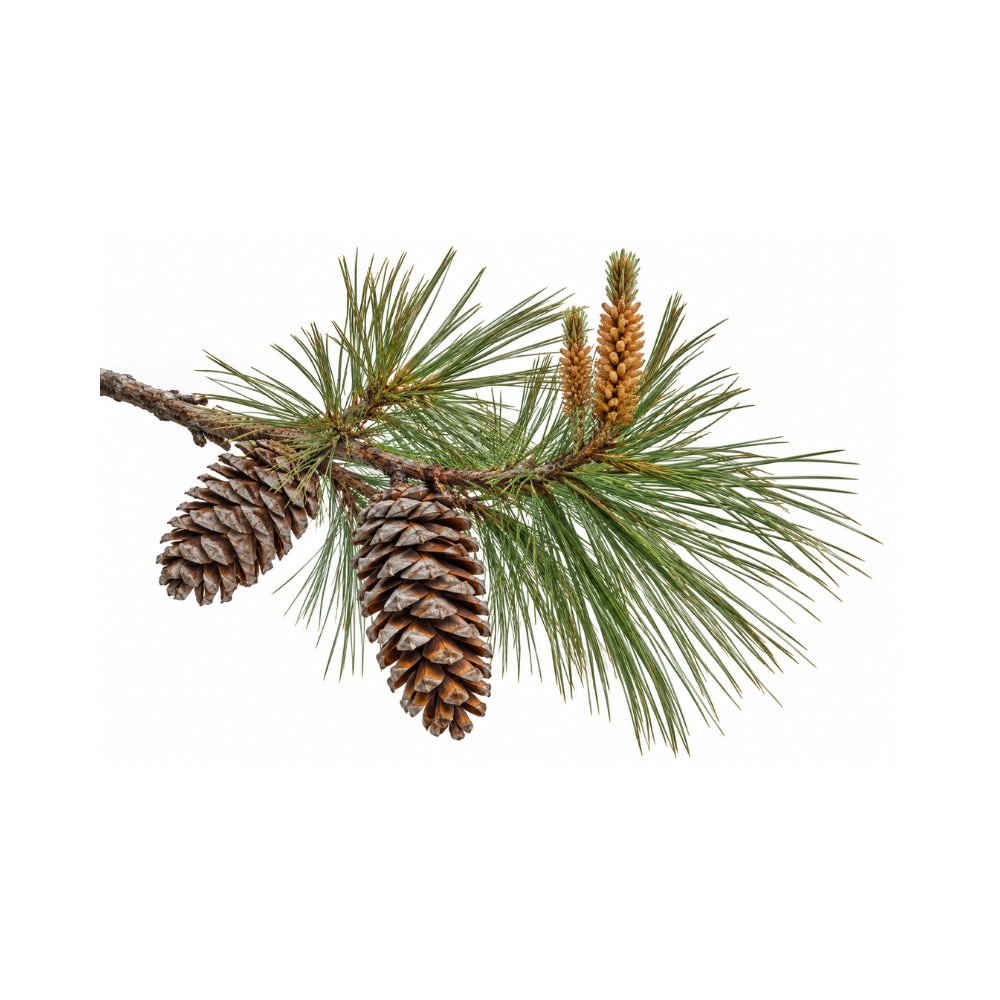
Its needles grow in bundles of three. They are slender and 20–30 cm long 1Reference 1Pinus roxburghii — species description, distribution, elevation, needle retention, conservation status and economic uses — reference databaseView study →. The seed cones are ovoid and 10–20 cm long, with thick, stiff scales whose exposed tips are strongly swollen and ridged. Each seed is 8–12 mm long with a wing about 2.5 cm long 1Reference 1Pinus roxburghii — species description, distribution, elevation, needle retention, conservation status and economic uses — reference databaseView study →.
Chir pine keeps its needles for only about one year, the shortest time of any pine, so it comes closer than any other pine to being deciduous 1Reference 1Pinus roxburghii — species description, distribution, elevation, needle retention, conservation status and economic uses — reference databaseView study →.
Distribution
Chir pine grows in the Himalaya of Afghanistan, Pakistan, India (Jammu and Kashmir, Punjab, Himachal Pradesh, Uttarakhand and Sikkim), Nepal, Bhutan and southern Tibet, at 450–2,300 m 1Reference 1Pinus roxburghii — species description, distribution, elevation, needle retention, conservation status and economic uses — reference databaseView study →. It is limited to the monsoon belt between roughly 72°–95°E and 27°–35°N. Within that range it is common, and it is the most widely planted conifer 1Reference 1Pinus roxburghii — species description, distribution, elevation, needle retention, conservation status and economic uses — reference databaseView study →.
The species is classed as Least Concern on the IUCN Red List 1Reference 1Pinus roxburghii — species description, distribution, elevation, needle retention, conservation status and economic uses — reference databaseView study →. It is widely cultivated, and its resin comes from tapped trees in managed and planted forest.
Chir pine has been expanding its range across the Himalaya, and modelling projects the expansion to continue under climate change 5Reference 5Spatio-temporal mapping and climate change impact on current and future expansion of P. roxburghii in the Himalayan biodiversity hotspot — modellingView study →. Fire has favoured it over banj oak, whose branches are lopped for fodder and firewood; chir pine then colonises the degraded oak forest 6Reference 6Chir pine forest and pre-monsoon drought determine spatial and temporal patterns of forest fires in Uttarakhand Himalaya — field / analysisView study →.
Chir pine forest is a main factor in the pattern of forest fires in Uttarakhand, together with pre-monsoon drought 6Reference 6Chir pine forest and pre-monsoon drought determine spatial and temporal patterns of forest fires in Uttarakhand Himalaya — field / analysisView study →. Its annual needle fall builds up as litter on the forest floor, and collecting that litter reduces the fuel for fire 6Reference 6Chir pine forest and pre-monsoon drought determine spatial and temporal patterns of forest fires in Uttarakhand Himalaya — field / analysisView study →. Uttarakhand’s pine forests shed an estimated 1.67 billion kg of needles a year, and the needles have been studied as a fuel for electricity generation, partly as a way to reduce forest fires 26Reference 26Pine needle gasification-based electricity production: understanding the effect of supply chain — modelling / analysisView study →. Needle-derived products from the Indian Himalaya put this litter to use.
Growing Conditions
Cultivation snapshot for Chir Pine
Zonehardy to about USDA zone 9 1Reference 1Pinus roxburghii — species description, distribution, elevation, needle retention, conservation status and economic uses — reference databaseView study →.
Soilshallow, stony, acidic hillside ground, including landslip scars and abandoned terraces.
Chir pine is a subtropical to warm-temperate, monsoon-dependent pine. It tolerates poor, dry, eroded hillside ground and is the most fire-tolerant tree species in Uttarakhand 6Reference 6Chir pine forest and pre-monsoon drought determine spatial and temporal patterns of forest fires in Uttarakhand Himalaya — field / analysisView study →.
Grow it yourself
Farm Wiki is our cultivation-focused sister site, also run by Justin Cooke.
Indications
- Joint, muscle and rheumatic pain [resin, turpentine; topical] Caution: The traditional topical resin has not been tested. The animal studies used an alcoholic bark extract and the bark volatile oil 3,
4, .15 - Wounds, boils, ulcers and skin eruptions [resin; topical]
- Eczema and itching [resin; topical]
- Bronchitis and chest complaints [bark, resin; Ayurveda and Unani]
- Intestinal worms [bark, wood; Ayurveda and Unani]
- Flatulence and liver complaints [wood; Ayurveda and Unani]
- Urinary complaints [wood, bark; Ayurveda and Unani]
Pharmacology & Research
Research on chir pine is preclinical and centres on the bark and the oleoresin. It comes mainly from India, Pakistan and Egypt: around thirty in-vitro and animal studies, a handful of docking screens, and two narrative reviews 2,
Antioxidant and antimicrobial activity has been reported by independent groups in every tissue tested: bark, needle, seed and oleoresin 9,
No human trial of chir pine has been published.
-
Best-supported: antioxidant capacity, reproduced in bark, needle, seed and oleoresin preparations by separate groups 9,
10, , and broad antibacterial and antifungal activity of the oleoresin oils 10,11, 12, 13Reference 9In vitroPotential biological efficacy of Pinus plant species against oxidative, inflammatory and microbial disorders — in vitroView study →Reference 10In vitroShort path molecular distillation of the essential oil from Pinus roxburghii oleoresin affords volatile fractions with powerful antioxidant and antimicrobial activities — in vitroView study →Reference 11In vitroChemical composition, antioxidant, and antimicrobial activities of P. roxburghii oleoresin essential oils extracted by steam distillation, superheated steam, and supercritical fluid CO2 extraction — in vitroView study →Reference 12In vitroStudies of phytochemicals, antioxidant, and antibacterial activities of Pinus gerardiana and Pinus roxburghii seed extracts — in vitroView study →Reference 13In vitroIntegrative in silico and in vitro analysis of Pinus roxburghii essential oil: unveiling its antioxidant, antidiabetic, and antiglycation potential — in vitro / in silicoView study → 11, .14Reference 10In vitroShort path molecular distillation of the essential oil from Pinus roxburghii oleoresin affords volatile fractions with powerful antioxidant and antimicrobial activities — in vitroView study →Reference 11In vitroChemical composition, antioxidant, and antimicrobial activities of P. roxburghii oleoresin essential oils extracted by steam distillation, superheated steam, and supercritical fluid CO2 extraction — in vitroView study →Reference 14In vitroVolatile constituents of Pinus roxburghii from Nepal — analytical / in vitroView study → -
Emerging, worth watching: analgesia and anti-inflammatory activity measured in rodents, with cannabinoid-CB1 and opioid receptor binding offering a mechanism 3,
4, .15Reference 3Analgesic and anti-inflammatory activity of Pinus roxburghii Sarg. — animalView study →Reference 4AnimalChemical composition of Pinus roxburghii bark volatile oil and validation of its anti-inflammatory activity using molecular modelling and bleomycin-induced inflammation in albino mice — animal / in silicoView study →Reference 15In vitroSecondary metabolites isolated from Pinus roxburghii and interpretation of their cannabinoid and opioid binding properties by virtual screening and in vitro studies — in vitro / in silicoView study → -
Mechanistically thin: the antidiabetic, anti-osteoporotic, anticonvulsant and nephroprotective claims each rest on a single experiment, often on the volatile oil or a docking model 13,
17, .18, 19, 20, 21Reference 13In vitroIntegrative in silico and in vitro analysis of Pinus roxburghii essential oil: unveiling its antioxidant, antidiabetic, and antiglycation potential — in vitro / in silicoView study →Reference 17In vitroChemical diversity and α-glucosidase inhibitory activity in needle essential oils of four Pinus species from northwestern Himalaya, India — in vitroView study →Reference 18Pharmacophore modeling and molecular docking studies on Pinus roxburghii as a target for diabetes mellitus — in silicoView study →Reference 19Anticonvulsant activity of alcoholic extract of bark of Pinus roxburghii Sarg. — animalView study →Reference 20Pinus roxburghii alleviates bone porosity and loss in postmenopausal osteoporosis by regulating estrogen, calcium homeostasis and RANK/OPG/cathepsin bone markers — animalView study →Reference 21In vitroUnveiling nephroprotective, diuretic and toxicity response of Pinus roxburghii Sarg. extract by in-vitro, in-vivo and docking techniques — animal / in vitroView study → - The caveat: no dose is standardised, and much of the measured activity tracks terpenes and phenolics common to the whole genus rather than anything specific to P. roxburghii.
No human study of chir pine has been published. Every finding comes from cell, animal or docking work, and most used a bark extract or the volatile oil rather than the resin preparations of tradition.
1. Antioxidant
Antioxidant activity has been reported in every tissue tested.
Hydro-alcoholic stem-bark extracts scavenge DPPH, nitric oxide and hydrogen peroxide radicals and show measurable reducing power 9Reference 9In vitroPotential biological efficacy of Pinus plant species against oxidative, inflammatory and microbial disorders — in vitroView study →.
Seed extract carries a total phenolic content of roughly 1,536 mg gallic-acid equivalents per 100 g — more than twice that of the chilgoza pine nut — with catechin the dominant peak on HPLC at about 15.8 µg/mg 12Reference 12In vitroStudies of phytochemicals, antioxidant, and antibacterial activities of Pinus gerardiana and Pinus roxburghii seed extracts — in vitroView study →.
Oleoresin-derived essential oils reproduce the pattern across DPPH, FRAP, peroxide and linoleic-acid peroxidation assays, with potency varying by extraction temperature and method 10,
The activity is attributed to quercetin, gallic acid and related phenolics rather than to the terpene fraction 9,
Gap: all of it is chemical-assay or cell-free work. No antioxidant endpoint has been measured in an animal.
2. Antimicrobial
The oleoresin and bark oils inhibit a consistent panel of organisms across independent laboratories.
Molecular-distillation fractions of the turpentine oil were active against Staphylococcus aureus, Escherichia coli, Bacillus subtilis and Pasteurella multocida, and against the fungi Fusarium solani, Alternaria alternata and Aspergillus species, at potencies the authors described as comparable to common synthetic agents 10Reference 10In vitroShort path molecular distillation of the essential oil from Pinus roxburghii oleoresin affords volatile fractions with powerful antioxidant and antimicrobial activities — in vitroView study →.
Oleoresin oils prepared by steam, superheated steam and supercritical CO₂ reproduced the antibacterial and antifungal activity by disc diffusion, microdilution and resazurin assay 11Reference 11In vitroChemical composition, antioxidant, and antimicrobial activities of P. roxburghii oleoresin essential oils extracted by steam distillation, superheated steam, and supercritical fluid CO2 extraction — in vitroView study →.
Needle, cone and bark oils from Nepalese material — dominated by caryophyllene, humulene and terpinen-4-ol — showed broad activity alongside brine-shrimp cytotoxicity, without the active constituent being isolated from the mixture 14Reference 14In vitroVolatile constituents of Pinus roxburghii from Nepal — analytical / in vitroView study →.
Gap: nothing has been tested in an animal or human infection model.
3. Anti-Inflammatory
Bark volatile oil, in which longifolene makes up about 33% and palmitic acid about 9%, reduced bleomycin-induced pulmonary inflammation in mice at 100 mg/kg. It lowered malondialdehyde, nitric oxide, myeloperoxidase, IL-6 and TNF-α by roughly 55–78% while restoring superoxide dismutase and catalase 4Reference 4AnimalChemical composition of Pinus roxburghii bark volatile oil and validation of its anti-inflammatory activity using molecular modelling and bleomycin-induced inflammation in albino mice — animal / in silicoView study →.
An alcoholic bark extract reduced carrageenan-induced paw oedema and cotton-pellet granuloma in rats 3Reference 3Analgesic and anti-inflammatory activity of Pinus roxburghii Sarg. — animalView study →.
In-vitro albumin-denaturation and membrane-stabilisation assays place P. roxburghii among the more active of the pine species tested side by side 9Reference 9In vitroPotential biological efficacy of Pinus plant species against oxidative, inflammatory and microbial disorders — in vitroView study →. The proposed mechanism is suppression of NF-κB signalling, with docking nominating palmitic acid as the best-fitting glucocorticoid-receptor ligand in the bark oil 4Reference 4AnimalChemical composition of Pinus roxburghii bark volatile oil and validation of its anti-inflammatory activity using molecular modelling and bleomycin-induced inflammation in albino mice — animal / in silicoView study →.
Gap: the in-vivo work used the bark oil and an alcoholic bark extract. The resin preparations of tradition have never been through an animal model.
4. Analgesic
The alcoholic bark extract produced dose-dependent analgesia in mice in both the acetic-acid writhing test, which reads peripheral pain, and the tail-immersion test, which reads central pain, benchmarked against diclofenac and indomethacin 3Reference 3Analgesic and anti-inflammatory activity of Pinus roxburghii Sarg. — animalView study →.
A phytochemical follow-up isolated sixteen constituents from the bark and tested them against cannabinoid and opioid receptors. The total bark extract bound CB1 at 66.8% and ursolic acid at 48.1%, while isopimaric acid and related diterpene resin acids engaged opioid receptors 15Reference 15In vitroSecondary metabolites isolated from Pinus roxburghii and interpretation of their cannabinoid and opioid binding properties by virtual screening and in vitro studies — in vitro / in silicoView study →.
Gap: one efficacy study plus binding data. No one has tested whether a topical resin delivers any of these compounds through the skin, which is how the plant is used for pain.
5. Single-Study Findings
Five further activities have each been reported in a single study.
Antidiabetic, in vitro only. Needle essential oils from four Himalayan Pinus species inhibited α-glucosidase at potencies approaching acarbose, chir pine among them 17Reference 17In vitroChemical diversity and α-glucosidase inhibitory activity in needle essential oils of four Pinus species from northwestern Himalaya, India — in vitroView study →; a GC-MS-profiled oleoresin oil did the same at an IC₅₀ of 0.12 mg/mL while suppressing glycation end-products 13Reference 13In vitroIntegrative in silico and in vitro analysis of Pinus roxburghii essential oil: unveiling its antioxidant, antidiabetic, and antiglycation potential — in vitro / in silicoView study →. Docking nominated the lignans secoisolariciresinol and pinoresinol as aldose-reductase inhibitors 18Reference 18Pharmacophore modeling and molecular docking studies on Pinus roxburghii as a target for diabetes mellitus — in silicoView study →.
Cytotoxicity, in cell lines. The essential oil induced apoptosis in colon, leukaemia, myeloma, pancreatic, head-and-neck and lung cancer cells at roughly 50% inhibition at 25 µg/mL, with caspase-3 cleavage and suppression of NF-κB-regulated survival genes 8Reference 8In vitroPinus roxburghii essential oil anticancer activity and chemical composition evaluation — in vitroView study →. Silver nanoparticles made from the needle butanol fraction were cytotoxic to lung and prostate lines while sparing normal lymphocytes 16Reference 16In vitroApoptosis induction in lung and prostate cancer cells through silver nanoparticles synthesized from Pinus roxburghii bioactive fraction — in vitroView study →.
Bone loss, one rat study. Hydroalcoholic stem-bark extract at 100–200 mg/kg for eight weeks restored bone mineral density, breaking strength and calcium–phosphorus balance in ovariectomised rats, with modulation of the RANK, osteoprotegerin and cathepsin axis 20Reference 20Pinus roxburghii alleviates bone porosity and loss in postmenopausal osteoporosis by regulating estrogen, calcium homeostasis and RANK/OPG/cathepsin bone markers — animalView study →.
Seizure threshold, one rat study. An alcoholic bark extract at 300 and 500 mg/kg reduced every phase of maximal-electroshock seizure and delayed pentylenetetrazole-induced seizure, with 100 mg/kg ineffective and no mechanism established 19Reference 19Anticonvulsant activity of alcoholic extract of bark of Pinus roxburghii Sarg. — animalView study →.
Diuretic and nephroprotective, one rat study. Aqueous-ethanolic extract relaxed high-potassium and carbachol-induced contractions in isolated rat bladder strips and showed diuretic activity in vivo, with HPLC identifying chlorogenic acid, gallic acid, kaempferol and p-coumaric acid 21Reference 21In vitroUnveiling nephroprotective, diuretic and toxicity response of Pinus roxburghii Sarg. extract by in-vitro, in-vivo and docking techniques — animal / in vitroView study →. The wood has a diuretic reputation in Ayurveda and Unani 2Reference 2ReviewEthnobotany and phytopharmacology of Pinus roxburghii Sargent: a plant review — reviewView study →. The same paper included an acute toxicity test 21Reference 21In vitroUnveiling nephroprotective, diuretic and toxicity response of Pinus roxburghii Sarg. extract by in-vitro, in-vivo and docking techniques — animal / in vitroView study →.
Gap: every one of these rests on a single experiment, and the preparations tested are the volatile oil, a solvent extract or an engineered nanoparticle rather than the resin and bark of traditional use.
6. Cognition
⚠ The one test of chir pine’s effect on memory was null.
Chir pine and deodar cedar were tested together in aged mice on the Morris water maze, because both appear in Indian texts for disorders of the mind 22Reference 22AnimalCognitive enhancement in aged mice after chronic administration of Cedrus deodara Loud. and Pinus roxburghii Sarg. with demonstrated antioxidant properties — animalView study →.
The memory improvement and the fall in brain malondialdehyde belonged almost entirely to the Cedrus deodara chloroform extract. The P. roxburghii oils and extracts did not produce a significant reduction in escape latency.
Gap: the positive finding belongs to a different tree.
Mechanisms
Most of the measured activity traces to two groups of compounds found throughout the genus: the terpenes of the resin and essential oils, and the phenolics of the bark. The bark’s triterpene and diterpene acids have been studied for binding at cannabinoid and opioid receptors.
Several rows come from work on the isolated essential oil or a fractionated extract rather than the resin or bark as traditionally used.
| Mechanism | Drives | Key compounds |
|---|---|---|
| Free-radical scavenging; ↑ superoxide dismutase, catalase, glutathione | antioxidantanti-inflammatory | quercetin, gallic acid, catechin |
| NF-κB suppression; ↓ TNF-α, IL-6, myeloperoxidase, malondialdehyde | anti-inflammatory | longifolene, palmitic acid, caryophyllene |
| Cannabinoid CB1 and opioid receptor binding | analgesic | ursolic acid, isopimaric acid |
| Membrane-disruptive lipophilic action of the resin oils | antimicrobial | caryophyllene, terpinen-4-ol, delta-3-carene |
| α-Glucosidase inhibition; suppression of glycation end-products | antidiabetic (in vitro only) | caryophyllene, secoisolariciresinol, pinoresinol |
| RANK / osteoprotegerin / cathepsin modulation | bone loss (one animal study) | quercetin, caffeic acid |
Clinical trials
No registered trial of Pinus roxburghii was identified on ClinicalTrials.gov, and no human study appears in the indexed literature.
| Completed | Planned | Terminated | Preclinical |
|---|---|---|---|
| 0 | 0 | 0 | ~30 |
Last checked: September 2026.
Phytochemistry
Chir pine oleoresin separates into two fractions: the volatile turpentine and the solid rosin 10Reference 10In vitroShort path molecular distillation of the essential oil from Pinus roxburghii oleoresin affords volatile fractions with powerful antioxidant and antimicrobial activities — in vitroView study →. The turpentine is led by Δ-3-carene, longifolene and α-pinene, with β-pinene, limonene and camphene 10Reference 10In vitroShort path molecular distillation of the essential oil from Pinus roxburghii oleoresin affords volatile fractions with powerful antioxidant and antimicrobial activities — in vitroView study →. One oleoresin oil contained about 44% Δ-3-carene, 27% α-pinene, 13% β-pinene and 9% longifolene 10Reference 10In vitroShort path molecular distillation of the essential oil from Pinus roxburghii oleoresin affords volatile fractions with powerful antioxidant and antimicrobial activities — in vitroView study →. Longifolene, a sesquiterpene, takes its name from the tree’s old binomial, Pinus longifolia.
The rosin holds the diterpene resin acids; abietic and isopimaric acid are among those reported from chir pine oleoresin 10Reference 10In vitroShort path molecular distillation of the essential oil from Pinus roxburghii oleoresin affords volatile fractions with powerful antioxidant and antimicrobial activities — in vitroView study →. Isopimaric acid from the bark has been studied for opioid-receptor binding 15Reference 15In vitroSecondary metabolites isolated from Pinus roxburghii and interpretation of their cannabinoid and opioid binding properties by virtual screening and in vitro studies — in vitro / in silicoView study →.
The oils vary with the part and the source. An analysis of Nepalese needle, cone and bark oils found them dominated by caryophyllene at 27–35%, with terpinen-4-ol at 4–30%; Δ-3-carene was present only in the needle and cone oils 14Reference 14In vitroVolatile constituents of Pinus roxburghii from Nepal — analytical / in vitroView study →. In a separate analysis, the bark volatile oil was about 33% longifolene 4Reference 4AnimalChemical composition of Pinus roxburghii bark volatile oil and validation of its anti-inflammatory activity using molecular modelling and bleomycin-induced inflammation in albino mice — animal / in silicoView study →, and a Pakistani oleoresin oil was about 30% β-pinene 13Reference 13In vitroIntegrative in silico and in vitro analysis of Pinus roxburghii essential oil: unveiling its antioxidant, antidiabetic, and antiglycation potential — in vitro / in silicoView study →. A comparison of needle oils from four north-western Himalayan pines, chir pine among them, found α-pinene at 20–34% and Δ-3-carene at up to 47% 17Reference 17In vitroChemical diversity and α-glucosidase inhibitory activity in needle essential oils of four Pinus species from northwestern Himalaya, India — in vitroView study →.
The bark carries polyphenols: proanthocyanidins, catechin, taxifolin, the flavonols quercetin and kaempferol, and the phenolic acids gallic, caffeic, chlorogenic and p-coumaric acid 20,
The seed carries about 1,536 mg gallic-acid equivalents of phenolics per 100 g 12Reference 12In vitroStudies of phytochemicals, antioxidant, and antibacterial activities of Pinus gerardiana and Pinus roxburghii seed extracts — in vitroView study →. A genus-wide fatty-acid survey places P. roxburghii seed oil within the usual pine pattern of linoleic and pinolenic acids 7Reference 7Fatty acid profiling in the genus Pinus in relation to its chemotaxonomy and nutritional or pharmaceutical properties — analyticalView study →.
Several studies analyse chir pine alongside other Himalayan pines in one experiment, and their pooled figures should be read separately from those for chir pine alone 9,
Constituent Summary
Δ-3-carene and longifolene characterise the turpentine; the bark carries the phenolics.
Monoterpene4 compounds4 with data
Sesquiterpene2 compounds2 with data
Diterpene2 compounds2 with data
Triterpene1 compound1 with data
Flavanol1 compound1 with data
Fatty Acid1 compound1 with data
Resin acids, proanthocyanidins, the xanthones and the phenolic-acid fraction as a whole are compound classes and are described above.
Dosage
No standardised dose has been established. The doses in the modern literature are animal doses.
- Resin, topical — the traditional application, in an ointment or plaster base. Not quantified.
- Bark decoction, wood preparations — used in classical Ayurvedic and Unani practice. Not quantified.
- Turpentine — for external use and inhalation only.
| Indication | Preparation | Dose | Est. dried-herb equivalent | Source |
|---|---|---|---|---|
| Anti-inflammatory (lung) | Bark volatile oil, mouse | 100 mg/kg | — concentrated oil, not back-convertible | 4Reference 4AnimalChemical composition of Pinus roxburghii bark volatile oil and validation of its anti-inflammatory activity using molecular modelling and bleomycin-induced inflammation in albino mice — animal / in silicoView study → |
| Analgesic / anti-inflammatory | Alcoholic bark extract, rat and mouse | 100–500 mg/kg | ~1–5 g/kg dried bark at a 10% extract yield | 3Reference 3Analgesic and anti-inflammatory activity of Pinus roxburghii Sarg. — animalView study → |
| Anticonvulsant | Alcoholic bark extract, rat | 300–500 mg/kg; 100 mg/kg ineffective | ~3–5 g/kg dried bark at a 10% extract yield | 19Reference 19Anticonvulsant activity of alcoholic extract of bark of Pinus roxburghii Sarg. — animalView study → |
| Bone loss | Hydroalcoholic stem-bark extract, rat | 100–200 mg/kg for 8 weeks | ~1–2 g/kg dried bark at a 10% extract yield | 20Reference 20Pinus roxburghii alleviates bone porosity and loss in postmenopausal osteoporosis by regulating estrogen, calcium homeostasis and RANK/OPG/cathepsin bone markers — animalView study → |
⚠ The dried-herb equivalents assume a 10% extract yield and are a rough guide only. They are not human doses.
Traditional Dosage
| System | Preparation | Dose |
|---|---|---|
| Ayurveda and Unani | Oleoresin (gandhabiroja) applied topically to wounds, boils and painful joints | Not quantified |
| Ayurveda and Unani | Bark decoction, internally, for respiratory and blood complaints | Not quantified |
| Himalayan folk practice | Turpentine oil as an external rubefacient for rheumatic pain | Not quantified; external use only |
| Ethnoveterinary (Cholistan, Pakistan) | Resin applied to livestock for ticks, lice, mange and myiasis | Not quantified 25Reference 25ObservationalEthnoveterinary practices for the treatment of parasitic diseases in livestock in Cholistan desert, Pakistan — ethnobotanical survey (observational)View study → |
Safety & Pregnancy
The resin, bark and wood are low-risk as traditionally used. The cautions belong to distilled turpentine and to aged, oxidised oil.
- Long traditional use of resin, bark and wood across the Himalayan systems of medicine, with no toxicity literature accumulating around them 2Reference 2ReviewEthnobotany and phytopharmacology of Pinus roxburghii Sargent: a plant review — reviewView study →.
- The seeds are eaten in culinary amounts with no reported problem 12Reference 12In vitroStudies of phytochemicals, antioxidant, and antibacterial activities of Pinus gerardiana and Pinus roxburghii seed extracts — in vitroView study →.
- Oxidised oil can cause skin allergy. The sensitiser is Δ-3-carene hydroperoxide, which forms as turpentine ages. Store the oil cool, dark and fresh.
- Rosin (colophony) is a well-known contact allergen through the oxidation products of abietic acid.
- Sawdust can cause airborne contact dermatitis. A case has been reported in a carpenter working chir pine 23Reference 23Case reportOccupational airborne contact dermatitis caused by Pinus roxburghii sawdust — case reportView study →.
- Distilled turpentine is for external use. It irritates the gut and is toxic if swallowed in quantity.
- Interactions have not been studied. The bark extract binds cannabinoid and opioid receptors in vitro 15Reference 15In vitroSecondary metabolites isolated from Pinus roxburghii and interpretation of their cannabinoid and opioid binding properties by virtual screening and in vitro studies — in vitro / in silicoView study →, so care alongside sedatives and CNS-active drugs is reasonable.
- Pregnancy and lactation have not been studied.
Full Safety Detail
Traditional use. Chir pine resin, bark and wood have long been used in Ayurveda and Unani, with a broad indication list and no accumulated toxicity reporting 2Reference 2ReviewEthnobotany and phytopharmacology of Pinus roxburghii Sargent: a plant review — reviewView study →. The seeds are eaten 12Reference 12In vitroStudies of phytochemicals, antioxidant, and antibacterial activities of Pinus gerardiana and Pinus roxburghii seed extracts — in vitroView study →.
Contact allergy. The sensitisers in turpentine are not the terpenes themselves but their air-oxidation products, chiefly Δ-3-carene hydroperoxide. Chir pine turpentine is rich in Δ-3-carene, so old oil is more likely to sensitise than fresh. The same applies to rosin, whose sensitisers are the oxidation products of abietic acid. The same risk runs through Scots pine and mugo pine.
Occupational exposure. Airborne contact dermatitis has been reported in a carpenter working P. roxburghii sawdust 23Reference 23Case reportOccupational airborne contact dermatitis caused by Pinus roxburghii sawdust — case reportView study →. Woodworkers and resin tappers are the exposed group, not people using a resin salve.
Turpentine by mouth. Distilled turpentine is toxic if swallowed. Traditional internal use is of the prepared resin and bark, not the distilled oil.
Interactions. No interaction study exists, in people or in animals. In vitro, an alcoholic bark extract binds the cannabinoid CB1 receptor at 66.8%, and diterpene resin acids from the bark engage opioid receptors 15Reference 15In vitroSecondary metabolites isolated from Pinus roxburghii and interpretation of their cannabinoid and opioid binding properties by virtual screening and in vitro studies — in vitro / in silicoView study →. Whether this survives oral dosing is unknown, so care alongside sedatives and opioid analgesics is reasonable.
Research materials. Bark extracts and essential oils tested in animals have no established human tolerance. The only formal toxicology is the acute arm of a single 2025 rat study 21Reference 21In vitroUnveiling nephroprotective, diuretic and toxicity response of Pinus roxburghii Sarg. extract by in-vitro, in-vivo and docking techniques — animal / in vitroView study →.
Not assessed. No pregnancy or lactation data exist for chir pine resin, bark, wood or extracts.
Turpentine and concentrated resin preparations are conventionally avoided in pregnancy. The seeds, eaten as food, raise no specific concern.
References
- Earle, C. J. (ed.) (2023). Pinus roxburghii — species description, distribution, elevation, needle retention, conservation status and economic uses — reference database. The Gymnosperm Database. https://www.conifers.org/pi/Pinus_roxburghii.php
- Kaushik, P., Kaushik, D., & Khokra, S. L. (2013). Ethnobotany and phytopharmacology of Pinus roxburghii Sargent: a plant review — review. Journal of Integrative Medicine, 11(6), 371–376. https://pubmed.ncbi.nlm.nih.gov/24299601/
- Kaushik, D., Kumar, A., Kaushik, P., & Rana, A. C. (2012). Analgesic and anti-inflammatory activity of Pinus roxburghii Sarg. — animal. Advances in Pharmacological Sciences, 2012, 245431. https://pubmed.ncbi.nlm.nih.gov/22761611/
- Labib, R. M., Youssef, F. S., Ashour, M. L., Abdel-Daim, M. M., & Ross, S. A. (2017). Chemical composition of Pinus roxburghii bark volatile oil and validation of its anti-inflammatory activity using molecular modelling and bleomycin-induced inflammation in albino mice — animal / in silico. Molecules, 22(9), 1384. https://pubmed.ncbi.nlm.nih.gov/28850077/
- Chowdhary, M. A., Sharma, V., Gadri, H. S., Roy, S., & Bhardwaj, P. (2025). Spatio-temporal mapping and climate change impact on current and future expansion of P. roxburghii in the Himalayan biodiversity hotspot — modelling. Environmental Monitoring and Assessment, 197(3), 316. https://pubmed.ncbi.nlm.nih.gov/39976755/
- Singh, R. D., Gumber, S., Sundriyal, R. C., Ram, J., & Singh, S. P. (2023). Chir pine forest and pre-monsoon drought determine spatial and temporal patterns of forest fires in Uttarakhand Himalaya — field / analysis. Tropical Ecology, 1–11. https://pubmed.ncbi.nlm.nih.gov/37362779/
- Lahlou, A., Lyashenko, S., Chileh-Chelh, T., Belarbi, E. H., & Torres-García, I. (2023). Fatty acid profiling in the genus Pinus in relation to its chemotaxonomy and nutritional or pharmaceutical properties — analytical. Phytochemistry, 206, 113517. https://pubmed.ncbi.nlm.nih.gov/36442579/
- Sajid, A., Manzoor, Q., Iqbal, M., Tyagi, A. K., & Sarfraz, R. A. (2018). Pinus roxburghii essential oil anticancer activity and chemical composition evaluation — in vitro. EXCLI Journal, 17, 233–245. https://pubmed.ncbi.nlm.nih.gov/29743861/
- Sharma, A., Goyal, R., & Sharma, L. (2016). Potential biological efficacy of Pinus plant species against oxidative, inflammatory and microbial disorders — in vitro. BMC Complementary and Alternative Medicine, 16, 35. https://pubmed.ncbi.nlm.nih.gov/26822870/
- Ayub, M. A., Amin, H. I. M., Waseem, R., et al. (2025). Short path molecular distillation of the essential oil from Pinus roxburghii oleoresin affords volatile fractions with powerful antioxidant and antimicrobial activities — in vitro. Heliyon, 11(3), e42153. https://pubmed.ncbi.nlm.nih.gov/39991225/
- Ayub, M. A., Choobkar, N., Hanif, M. A., et al. (2023). Chemical composition, antioxidant, and antimicrobial activities of P. roxburghii oleoresin essential oils extracted by steam distillation, superheated steam, and supercritical fluid CO2 extraction — in vitro. Journal of Food Science, 88(6), 2569–2583. https://pubmed.ncbi.nlm.nih.gov/37199441/
- Bhardwaj, K., Sharma, R., Cruz-Martins, N., et al. (2022). Studies of phytochemicals, antioxidant, and antibacterial activities of Pinus gerardiana and Pinus roxburghii seed extracts — in vitro. BioMed Research International, 2022, 3954079. https://pubmed.ncbi.nlm.nih.gov/35686234/
- Naz Qaisrani, R., Iram Niaz, S., Bano, R., et al. (2025). Integrative in silico and in vitro analysis of Pinus roxburghii essential oil: unveiling its antioxidant, antidiabetic, and antiglycation potential — in vitro / in silico. Frontiers in Pharmacology, 16, 1554562. https://pubmed.ncbi.nlm.nih.gov/40365316/
- Satyal, P., Paudel, P., Raut, J., et al. (2013). Volatile constituents of Pinus roxburghii from Nepal — analytical / in vitro. Pharmacognosy Research, 5(1), 43–48. https://pubmed.ncbi.nlm.nih.gov/23598924/
- Labib, R. M., Srivedavyasasri, R., Youssef, F. S., et al. (2018). Secondary metabolites isolated from Pinus roxburghii and interpretation of their cannabinoid and opioid binding properties by virtual screening and in vitro studies — in vitro / in silico. Saudi Pharmaceutical Journal, 26(3), 437–444. https://pubmed.ncbi.nlm.nih.gov/29556136/
- Kumari, R., Saini, A. K., Kumar, A., et al. (2020). Apoptosis induction in lung and prostate cancer cells through silver nanoparticles synthesized from Pinus roxburghii bioactive fraction — in vitro. Journal of Biological Inorganic Chemistry, 25(1), 23–37. https://pubmed.ncbi.nlm.nih.gov/31641851/
- Maurya, A. K., Vashisath, S., Aggarwal, G., et al. (2022). Chemical diversity and α-glucosidase inhibitory activity in needle essential oils of four Pinus species from northwestern Himalaya, India — in vitro. Chemistry & Biodiversity, 19(12), e202200428. https://pubmed.ncbi.nlm.nih.gov/36395372/
- Kaushik, P., Lal Khokra, S., Rana, A. C., et al. (2014). Pharmacophore modeling and molecular docking studies on Pinus roxburghii as a target for diabetes mellitus — in silico. Advances in Bioinformatics, 2014, 903246. https://pubmed.ncbi.nlm.nih.gov/25114678/
- Kaushik, D., Kumar, A., Kaushik, P., et al. (2012). Anticonvulsant activity of alcoholic extract of bark of Pinus roxburghii Sarg. — animal. Journal of Chinese Integrative Medicine, 10(9), 1056–1060. https://pubmed.ncbi.nlm.nih.gov/22979938/
- Sharma, A., Sharma, L., Saini, R. V., et al. (2021). Pinus roxburghii alleviates bone porosity and loss in postmenopausal osteoporosis by regulating estrogen, calcium homeostasis and RANK/OPG/cathepsin bone markers — animal. Journal of Pharmacy and Pharmacology, 73(4), 474–484. https://pubmed.ncbi.nlm.nih.gov/33769535/
- Nasir, M., Saqib, F., Latif, M. F., et al. (2025). Unveiling nephroprotective, diuretic and toxicity response of Pinus roxburghii Sarg. extract by in-vitro, in-vivo and docking techniques — animal / in vitro. Dose-Response, 23(3). https://pubmed.ncbi.nlm.nih.gov/40936512/
- Chaudhary, A. K., Ahmad, S., & Mazumder, A. (2014). Cognitive enhancement in aged mice after chronic administration of Cedrus deodara Loud. and Pinus roxburghii Sarg. with demonstrated antioxidant properties — animal. Journal of Natural Medicines, 68(2), 274–283. https://pubmed.ncbi.nlm.nih.gov/23645071/
- Mahajan, V. K., & Sharma, N. L. (2011). Occupational airborne contact dermatitis caused by Pinus roxburghii sawdust — case report. Contact Dermatitis, 64(2), 115–116. https://pubmed.ncbi.nlm.nih.gov/21210825/
- Rashid, S., Ahmad, M., Zafar, M., et al. (2015). Ethnobotanical survey of medicinally important shrubs and trees of Himalayan region of Azad Jammu and Kashmir, Pakistan — ethnobotanical survey (observational). Journal of Ethnopharmacology, 166, 340–351. https://pubmed.ncbi.nlm.nih.gov/25814319/
- Farooq, Z., Iqbal, Z., Mushtaq, S., et al. (2008). Ethnoveterinary practices for the treatment of parasitic diseases in livestock in Cholistan desert, Pakistan — ethnobotanical survey (observational). Journal of Ethnopharmacology, 118(2), 213–219. https://pubmed.ncbi.nlm.nih.gov/18524514/
- Halba, A., & Arora, P. (2025). Pine needle gasification-based electricity production: understanding the effect of supply chain — modelling / analysis. Environmental Science and Pollution Research, 32(48), 27786–27804. https://pubmed.ncbi.nlm.nih.gov/38743326/



