
Compound Monograph
Abietic Acid
Abietic acid is the principal diterpene resin acid of pine and fir oleoresin and the main constituent of rosin (colophony). It is usually named as the classic rosin contact allergen — but the pure molecule is not the sensitiser; its air-oxidation products are, which is why fresh resin and aged rosin behave differently on skin.

Sources · 15
Where Does It Come From?
Abietic Acid is a naturally occurring abietane diterpene resin acid, found in Lodgepole pine, Subalpine fir, Grand fir and 12 other sources. It is flagged as moderately toxic.
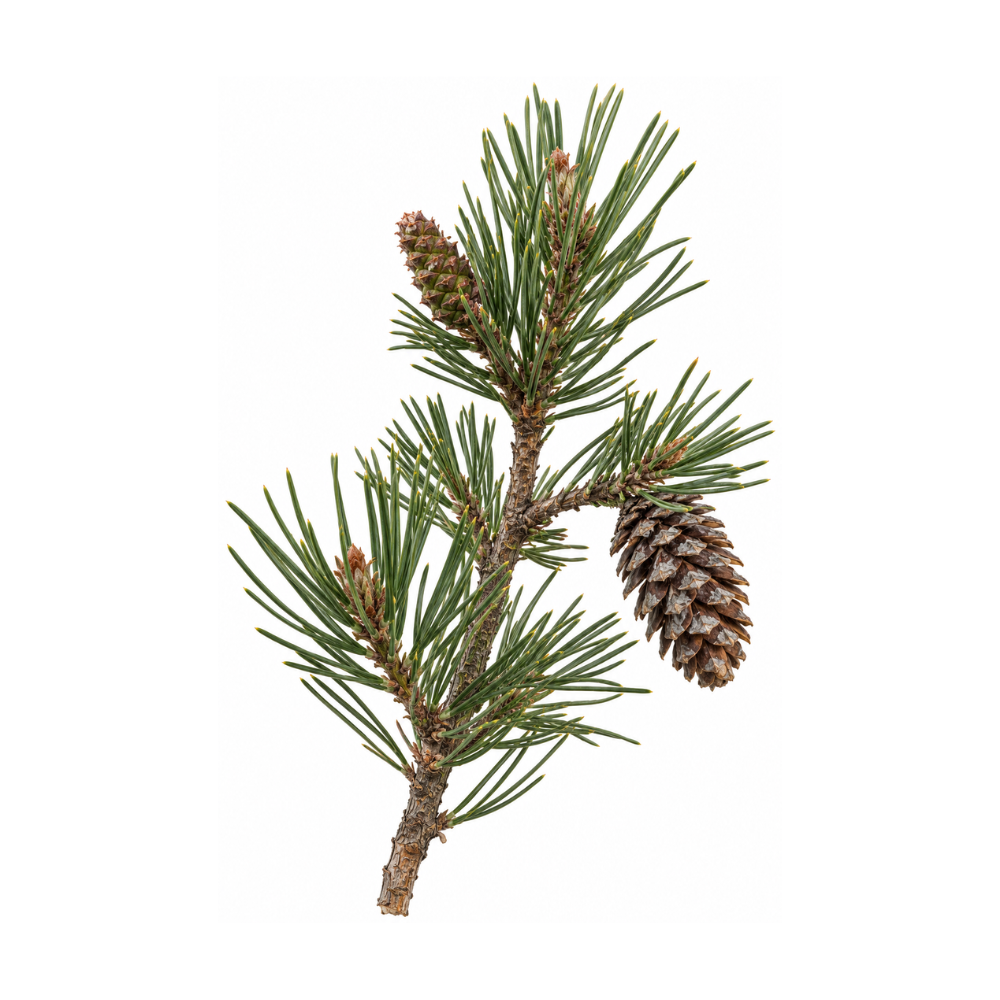 Principal source Lodgepole Pine Pinus contorta Herb monograph →
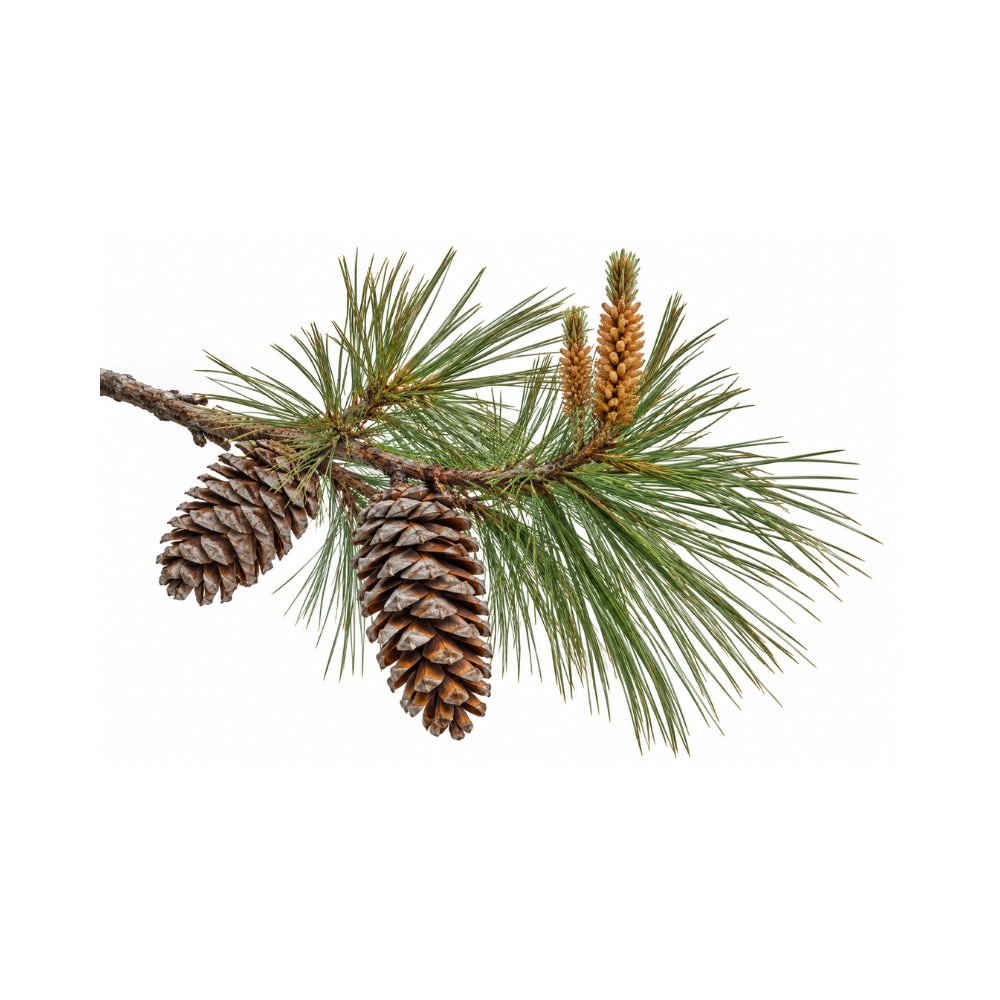 Source Chir Pine Pinus roxburghii Herb monograph →
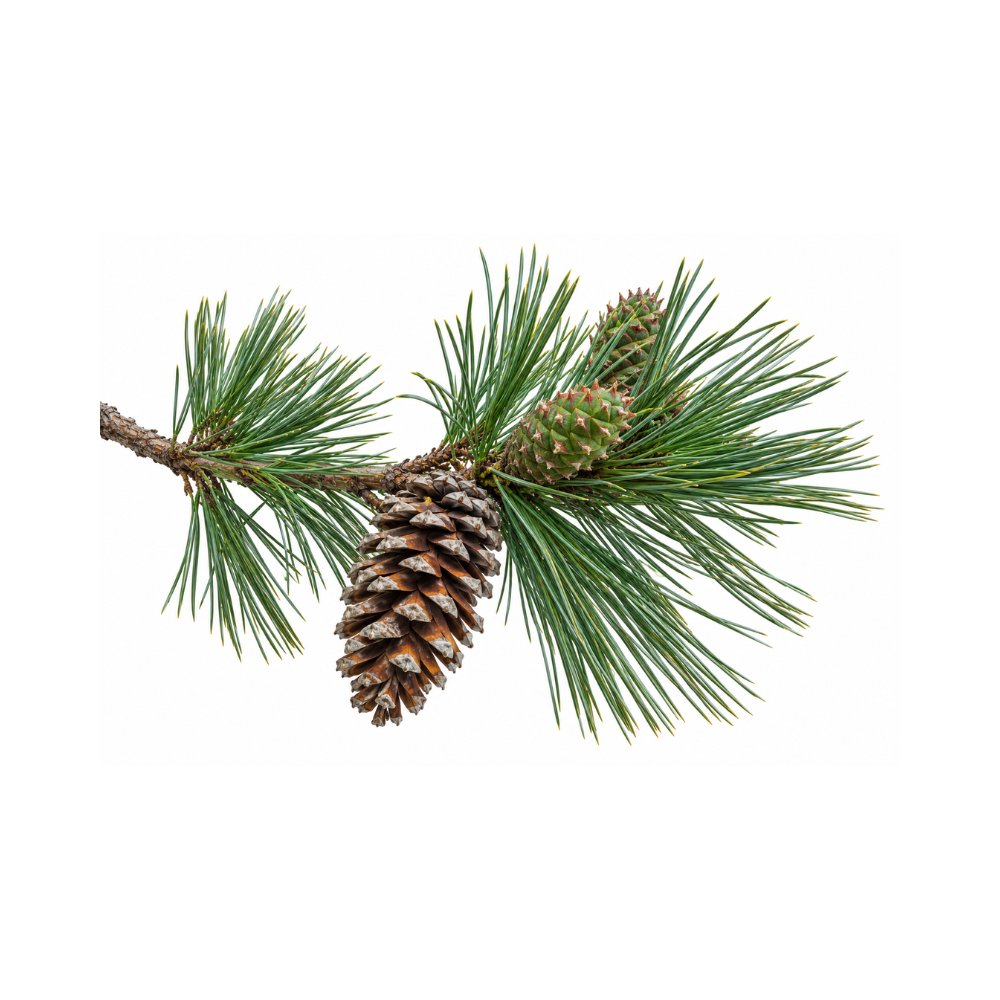 Source Korean Pine Pinus koraiensis Herb monograph →
Photo coming soon
Source Korean Red Pine Pinus densiflora Herb monograph →
Photo coming soon
Source Maritime Pine Pinus pinaster Herb monograph →
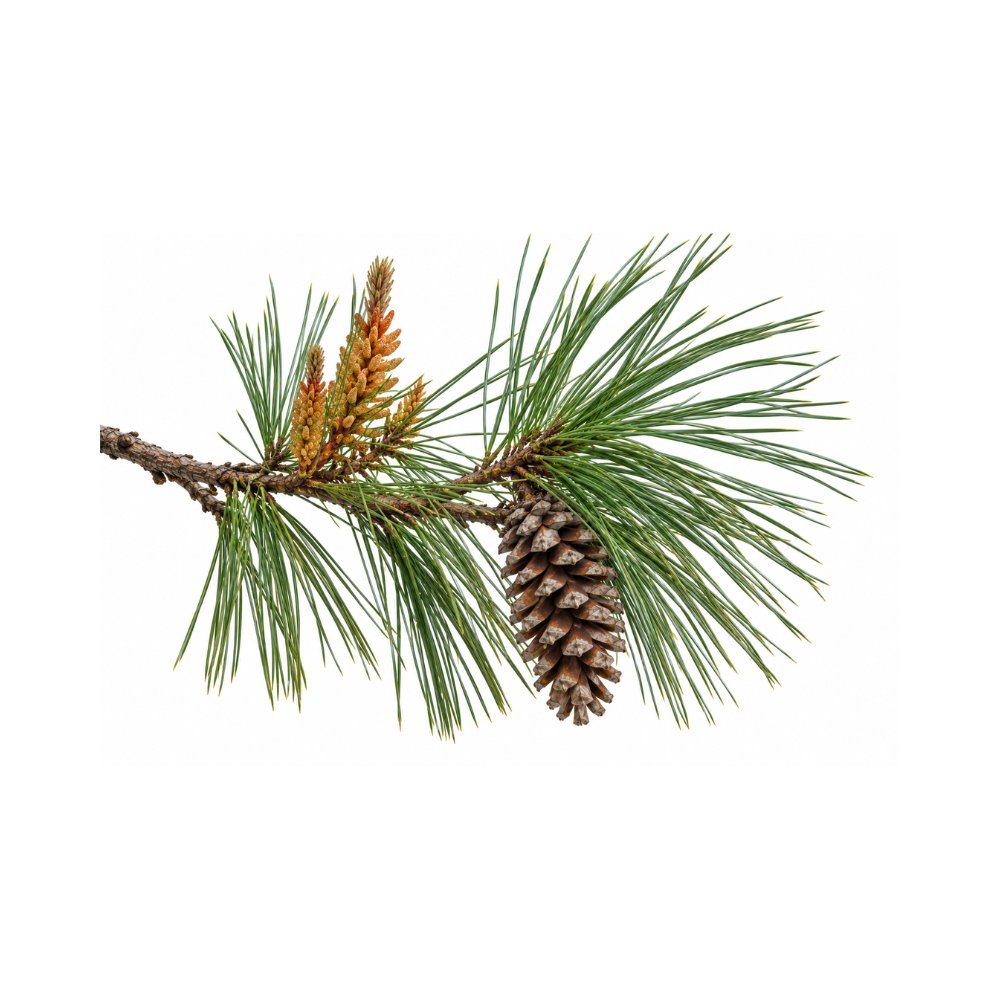 Source Masson Pine Pinus massoniana Herb monograph →
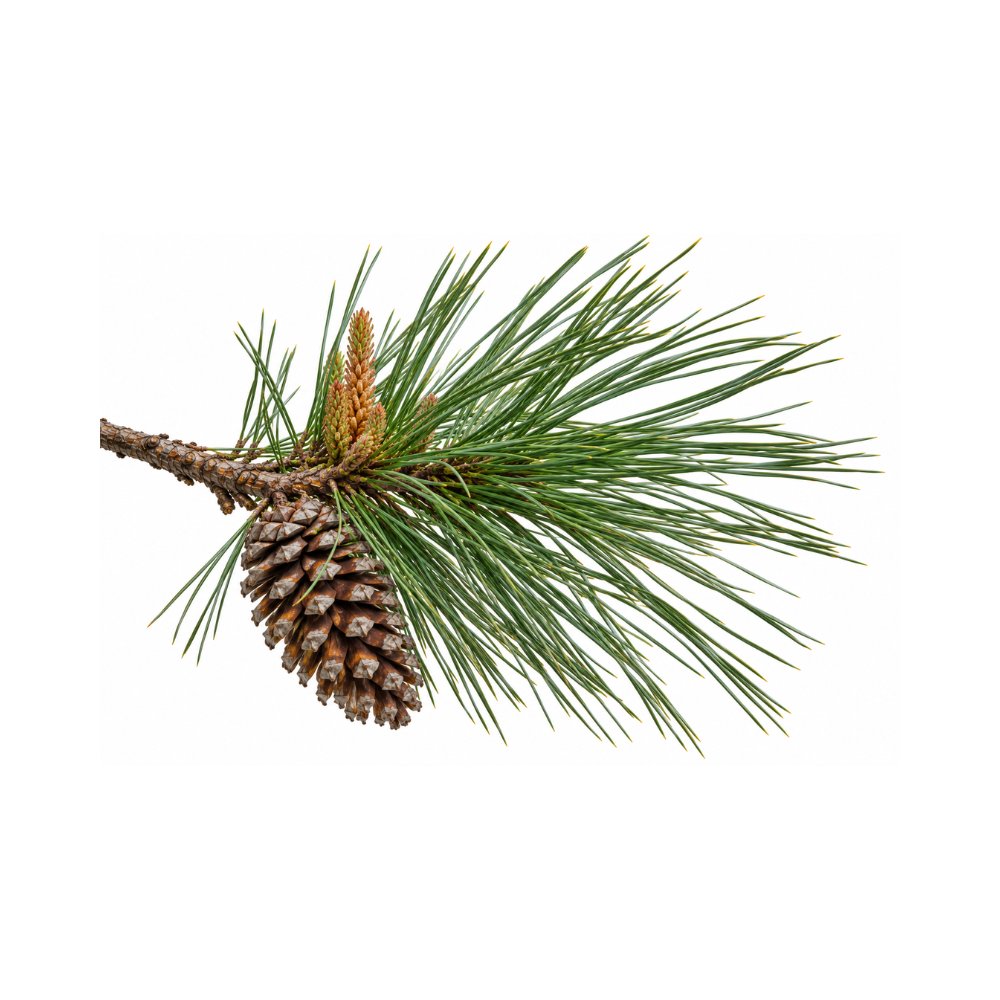 Source Monterey Pine Pinus radiata Herb monograph →
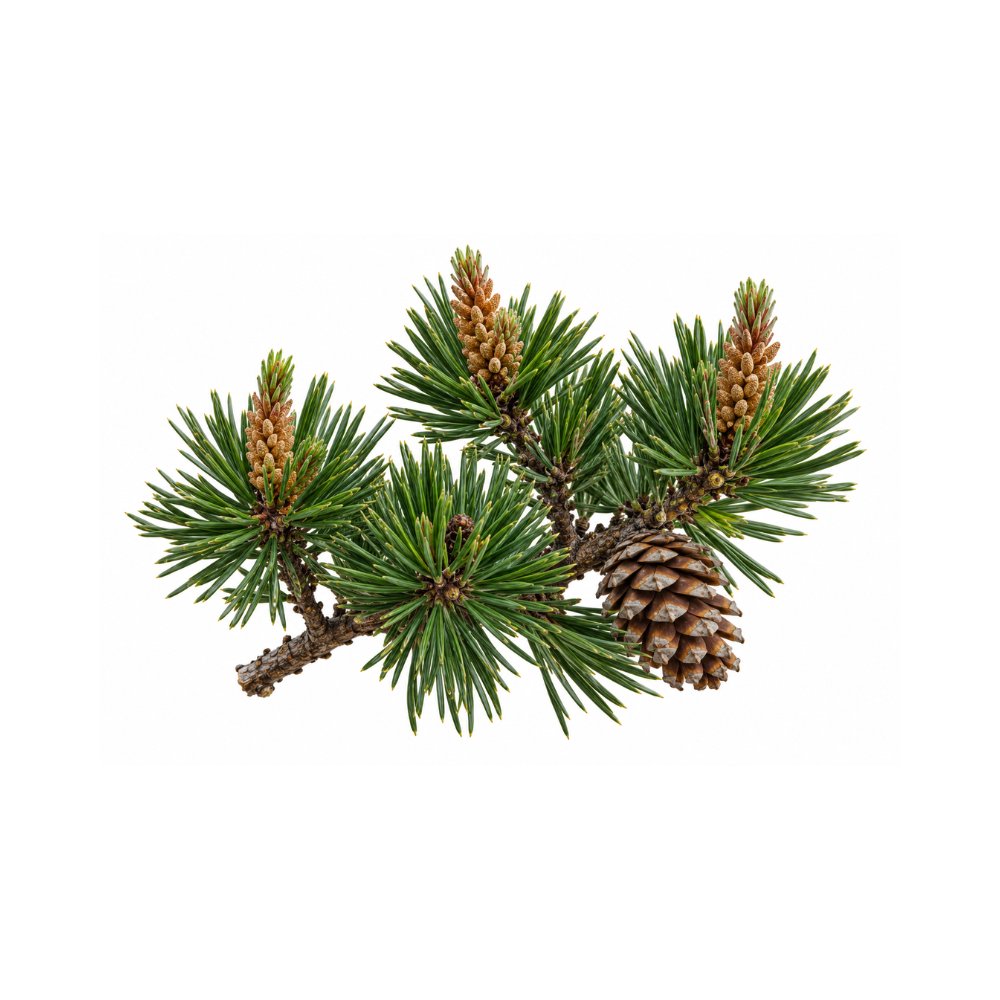 Source Mugo Pine Pinus mugo Herb monograph →
 Source Pine Pinus sylvestris Herb monograph →
Concentration
Content by Source
Concentrations not reported. No percent-dry-weight or mg/g figures have been published for this compound in its source plants.
Abietic Acid at a Glance
Abietic acid is the main diterpene resin acid of pine and fir oleoresin, and the single largest component of rosin — the solid residue left when turpentine is distilled off, also called colophony. It is what makes pitch sticky, what a violinist puts on a bow, and what the traditional conifer resin salve is mostly made of.
Its reputation is as an allergen. That reputation is half right, and the half that is wrong is the useful part: when the rosin allergens were actually isolated and tested, abietic acid itself turned out not to be allergenic. The sensitisers are the compounds it turns into on contact with air — chiefly 15-hydroperoxyabietic acid and the epoxides of abietic acid 1,
Everything else about it is preclinical. Abietic acid has repeatable anti-inflammatory activity in rodents and cell models, and it was one of three compounds isolated from balsam fir in a bioassay-guided search for the plant’s antidiabetic actives 9,
The Colophony Story
Colophony is one of the more common causes of allergic contact dermatitis, and it is on every standard patch-test series. In a meta-analysis of fifteen years of published T.R.U.E. Test data it ranked fourth among the tested allergens by clinical importance, behind only nickel, cobalt and fragrance mix 4Reference 4Meta-analysisPrevalence and relevance of contact dermatitis allergens: a meta-analysis of 15 years of published T.R.U.E. test data — meta-analysisView study →.
Abietic acid was the assumed culprit for decades — “the classical colophony allergen,” as the paper that dismantled the idea puts it. Anne-Therese Karlberg’s group fractionated unmodified Portuguese gum rosin, tested each isolated component in sensitised guinea pigs and then in rosin-allergic patients, and found that pure abietic acid produced no reaction. What did react were its oxidation products, with 15-hydroperoxyabietic acid identified as one of the principal allergens — formed by ordinary air oxidation of abietic acid 1Reference 1AnimalContact allergy to colophonyView study →.
Later work filled in the chemistry. The 13,14-α- and 13,14-β-epoxides of abietic acid are contact allergens in their own right, the β-epoxide was detected in gum rosin itself, and it elicits reactions in rosin-allergic people. The hydroperoxide and the epoxides cross-react, which is best explained by 15-hydroperoxyabietic acid forming an epoxide, or an alkoxy radical, that then binds skin protein to complete the antigen 2Reference 2AnimalContact allergy to resin acid hydroperoxidesView study →.
Two practical consequences follow, and both are about the state of the material rather than the species it came from:
- Age and air matter more than source. The allergenic fraction accumulates through oxidation, so weathered rosin, an old resin salve, or a long-opened container of pitch carries more of it than fresh oleoresin.
- Hydrogenated rosin is a different proposition. Hydrogenating gum rosin removes the easily-oxidised abietic-type double bonds, and hydrogenated rosin showed measurably reduced allergenic activity in both animal experiments and human patch testing 3Reference 3AnimalHydrogenation reduces the allergenicity of colophony (rosin) — animal modelView study →. This is the basis of the “hydrogenated” and “modified” rosin grades used where skin contact is expected.
None of this makes conifer resin an unusual hazard. It makes it a material whose skin behaviour depends on how oxidised it is — the same relationship linalool has with its own oxidation products.
What It's Used For
Abietic acid has a consistent anti-inflammatory signal across independent rodent and cell models, and one well-characterised metabolic finding. All of it is preclinical, and none of it involves a human dose.
The best-supported activity, and the one different groups keep reproducing. Abietic acid isolated from Pimenta racemosa inhibited carrageenan-induced rat paw oedema dose- and time-dependently and TPA-induced mouse ear oedema after either oral or topical administration; myeloperoxidase inhibition in the topical model points to reduced neutrophil infiltration as the route 9Reference 9AnimalAnti-inflammatory activity of abietic acid, a diterpene isolated from Pimenta racemosa var. grissea — animal modelView study →.
Independent work found antioedematogenic and analgesic effects in mice 11Reference 11AnimalAntiedematogenic and analgesic activities of abietic acid in mice — animal modelView study → and attenuation of IL-1β-driven inflammatory signalling in human osteoarthritis chondrocytes in vitro 10Reference 10In vitroAbietic acid attenuates IL-1β-induced inflammation in human osteoarthritis chondrocytes — in vitroView study →.
A 2024 study reproduced the paw-oedema and membrane-stabilising effects but added a caution that nothing else in this literature had reported: combining abietic acid with celecoxib or ketoprofen reduced the anti-inflammatory activity of both drugs rather than adding to it 12Reference 12AnimalAbietic acid antagonizes the anti-inflammatory effects of celecoxib and ketoprofen: preclinical assessment and molecular dynamic simulations — animal modelView study →.
Gap: every result is isolate-in-animal or isolate-in-cell. No conifer preparation has been tested for anti-inflammatory activity in a person, and the drug-antagonism finding is a single preclinical study that has not been followed up.
This is the one finding that starts from a plant people actually use. Balsam fir was the standout species in a Canadian screen of Eastern James Bay Cree antidiabetic plants, and bioassay-guided fractionation of its active hexane fraction isolated three compounds — abietic acid, dehydroabietic acid and squalene. In cultured liver cells all three decreased glucose-6-phosphatase activity (the rate-limiting gluconeogenic enzyme) and stimulated glycogen synthase, with the G6Pase effect correlating with both Akt (insulin-dependent) and AMPK (insulin-independent) phosphorylation, and the glycogen-synthase effect with GSK-3 phosphorylation 13Reference 13In vitroRegulation of liver cell glucose homeostasis by dehydroabietic acid, abietic acid and squalene isolated from balsam fir (Abies balsamea (L.) Mill.) a plant of the Eastern James Bay Cree traditional pharmacopeia — in vitro, bioassay-guided fractionationView study →.
Gap: cultured hepatocytes only, and abietic acid was the weakest of the three — dehydroabietic acid came closest to reproducing the crude extract. Nothing here has been given to an animal, let alone a person, and a needle tea or resin salve is not a hexane fraction.
The counterpoint to the contact-allergy story. Abietic acid isolated from rosin, applied in a DNCB-induced atopic-dermatitis model in BALB/c mice, reduced the iNOS/COX-2 inflammatory pathway and the associated skin changes 14Reference 14AnimalAnti-atopic dermatitis effects of abietic acid isolated from rosin under condition optimized by response surface methodology in DNCB-spread BALB/c mice — animal modelView study →. A molecule whose oxidation products sensitise skin also, unoxidised, suppresses an inflammatory skin model — the two findings are not in conflict, but they sit either side of the same molecule’s oxidation state.
Gap: one animal model, no human topical data, and the material tested was freshly isolated rather than aged — the very variable the allergy literature says matters most 1Reference 1AnimalContact allergy to colophonyView study →.
Abietic acid appears in the natural-product cytotoxicity literature, and a 2024 review collects the scattered in-vitro results across cell lines together with the semisynthetic derivatives built on the abietane scaffold 15Reference 15ReviewAnticancer activities of natural abietic acid — reviewView study →. It is screening-stage material.
Gap: no in-vivo efficacy programme and no clinical work. The abietane skeleton is a medicinal-chemistry starting point here, not a candidate.
Mechanisms
| Target / pathway | Effect | Relevant to |
|---|---|---|
| Myeloperoxidase / neutrophil infiltration | inhibited in TPA-induced ear oedema — the route for the topical anti-inflammatory effect | anti-inflammatory |
| IL-1β signalling in chondrocytes | attenuated inflammatory response in vitro | anti-inflammatory |
| iNOS / COX-2 axis in skin | suppressed in a DNCB atopic-dermatitis model | topical skin inflammation |
| COX-2 (docking + combination assay) | binds COX-2 in simulation, but reduces celecoxib and ketoprofen activity in combination | drug interaction |
| Glucose-6-phosphatase ↓, glycogen synthase ↑ via Akt / AMPK / GSK-3 | lowers hepatic glucose output and raises glucose storage in cultured liver cells | hepatic glucose handling |
| Air oxidation → 15-hydroperoxyabietic acid and 13,14-epoxides | generates the hapten that binds skin protein — the actual contact allergens | contact sensitisation |
The last row is the one that changes behaviour. Abietic acid is not itself the antigen; it is the substrate air turns into one.
Pharmacokinetics
Human pharmacokinetic data for abietic acid do not exist — it has never been given to people as a dose, so there is nothing to measure. What is characterised is exposure, not disposition. Rosin exposure in industry is monitored through its sibling resin acid: dehydroabietic acid in urine has been evaluated as a biomarker of colophony exposure in soldering work 7Reference 7ObservationalDehydroabietic acid as a biomarker for exposure to colophony — observationalView study →, and airborne resin acids are quantified directly on personal samplers in sawmills 8Reference 8ObservationalExposure to dust, resin acids, and monoterpenes in softwood lumber mills — cross-sectional exposure surveyView study →. Absorption through skin is the route that matters for the allergy story, and there it is the oxidised derivatives — not the parent acid — that form the protein adducts 2Reference 2AnimalContact allergy to resin acid hydroperoxidesView study →.
Clinical Trials
There is no clinical trial programme for abietic acid. The human literature is entirely diagnostic and occupational: patch testing with rosin and its isolated components 1,
| Completed | Planned | Terminated | Preclinical |
|---|---|---|---|
| None(human data are patch-test and occupational-health only) | — | — | Anti-inflammatory, hepatic glucose handling, topical, cytotoxicity screening |
Last checked: September 2026.
Isolate vs. Plant Studies
The split here is unusually clean, and it runs the opposite way to most plant molecules.
On the safety side, the isolate is the evidence. The rosin-allergy literature was built by isolating single compounds from gum rosin and testing them individually, which is precisely how it was established that abietic acid is not the allergen and its oxidation products are 1,
On the pharmacology side, the isolate is all there is — and it is not the plant. The anti-inflammatory work used abietic acid isolated from Pimenta racemosa, a myrtle, not a conifer 9Reference 9AnimalAnti-inflammatory activity of abietic acid, a diterpene isolated from Pimenta racemosa var. grissea — animal modelView study →. The metabolic work used a hexane fraction of balsam fir, a solvent extract no herbal preparation resembles, and found the compound less active than its sibling 13Reference 13In vitroRegulation of liver cell glucose homeostasis by dehydroabietic acid, abietic acid and squalene isolated from balsam fir (Abies balsamea (L.) Mill.) a plant of the Eastern James Bay Cree traditional pharmacopeia — in vitro, bioassay-guided fractionationView study →. No conifer tea, tincture, pitch salve or needle oil has been tested for either effect.
The one place plant and molecule meet is the traditional resin dressing. Lodgepole pine pitch has documented antibacterial activity, and the tested material was the used material — but the assay was run on whole pitch, and abietic acid’s contribution to it is inferred from the resin’s composition, not measured 20Reference 20In vitroCarrier herbal medicine: an evaluation of the antimicrobial and anticancer activity in some frequently used remedies — in vitroView study →.
Its Role in Plants
Diterpene resin acids are conifer defence chemistry. Oleoresin floods a wound, the volatile monoterpenes evaporate, and the resin acids left behind seal the injury and present a physical and chemical barrier to bark beetles and their fungal associates. Abietic acid is the dominant member of that residue.
Its biosynthesis is among the best-characterised in any conifer, largely because grand fir became the model organism for the work. Geranylgeranyl diphosphate is cyclised to abietadiene by a bifunctional diterpene cyclase — abietadiene synthase, first isolated as an enzyme activity 17Reference 17In vitroDiterpenoid resin acid biosynthesis in conifers: enzymatic cyclization of geranylgeranyl pyrophosphate to abietadiene, the precursor of abietic acid — in vitro enzymologyView study → and then cloned from Abies grandis 18Reference 18In vitroAbietadiene synthase from grand fir (Abies grandis). cDNA isolation, characterization, and bacterial expression of a bifunctional diterpene cyclase involved in resin acid biosynthesis — in vitro enzymologyView study → — after which a cytochrome P450 of the CYP720B family carries out the three-step oxidation of abietadienol and abietadienal through to the acid, as characterised in loblolly pine 19Reference 19In vitroDiterpene resin acid biosynthesis in loblolly pine (Pinus taeda): functional characterization of abietadiene/levopimaradiene synthase (PtTPS-LAS) cDNA and subcellular targeting of PtTPS-LAS and abietadienol/abietadienal oxidase (PtAO, CYP720B1) — in vitro enzymologyView study →. The enzyme is bifunctional and somewhat promiscuous, which is why a conifer makes a family of related resin acids rather than one: abietic, dehydroabietic, pimaric, isopimaric, levopimaric, palustric and neoabietic acids all arise from the same machinery.
Prevalence in Nature
Abietic acid is a Pinaceae signature. It occurs across the pines, firs, spruces and Douglas fir, concentrated in the oleoresin of wood, bark and pitch rather than in the needle essential oil, which is monoterpene-dominated. It is the principal acid of gum rosin and tall-oil rosin, the two commercial colophony grades, and rosin is produced at industrial scale — historically around a million tonnes a year, most of it going into paper sizing, adhesives and fluxes 1Reference 1AnimalContact allergy to colophonyView study →.
Outside the conifers it is scattered and much rarer. The best-documented non-Pinaceae source is the bay rum tree, Pimenta racemosa var. grissea (Myrtaceae), from which the anti-inflammatory work isolated it 9Reference 9AnimalAnti-inflammatory activity of abietic acid, a diterpene isolated from Pimenta racemosa var. grissea — animal modelView study →.
The one place it has been quantified in air rather than in tissue is a British Columbia lumber mill processing Engelmann and white spruce, lodgepole pine and subalpine fir together. Across 220 personal inhalable-particulate samples the mean airborne abietic acid was 7.2 µg/m³ and pimaric acid 0.6 µg/m³, against a geometric mean inhalable particulate of 1.0 mg/m³ 8Reference 8ObservationalExposure to dust, resin acids, and monoterpenes in softwood lumber mills — cross-sectional exposure surveyView study →. The two acids were used as tracers to separate wood dust from total dust — the figures describe the mill, not any one of the three species.
| Source | Part | What is reported |
|---|---|---|
| Gum rosin / tall-oil rosin (colophony) | distillation residue of pine oleoresin | The principal resin acid; the commercial material |
| Lodgepole pine (Pinus contorta) | oleoresin, pitch | Major resin acid of the rosin fraction, made via abietadiene 17Reference 17In vitroDiterpenoid resin acid biosynthesis in conifers: enzymatic cyclization of geranylgeranyl pyrophosphate to abietadiene, the precursor of abietic acid — in vitro enzymologyView study → |
| Subalpine fir (Abies lasiocarpa) | wood resin, pitch | Present in wood; measured in mill air alongside pimaric acid 8Reference 8ObservationalExposure to dust, resin acids, and monoterpenes in softwood lumber mills — cross-sectional exposure surveyView study → |
| Balsam fir (Abies balsamea) | bark and branch resin | Isolated from the active hexane fraction 13Reference 13In vitroRegulation of liver cell glucose homeostasis by dehydroabietic acid, abietic acid and squalene isolated from balsam fir (Abies balsamea (L.) Mill.) a plant of the Eastern James Bay Cree traditional pharmacopeia — in vitro, bioassay-guided fractionationView study → |
| Grand fir (Abies grandis) | oleoresin | Bark-beetle defence chemistry; the model species for its biosynthesis 18Reference 18In vitroAbietadiene synthase from grand fir (Abies grandis). cDNA isolation, characterization, and bacterial expression of a bifunctional diterpene cyclase involved in resin acid biosynthesis — in vitro enzymologyView study → |
| Bay rum tree (Pimenta racemosa var. grissea) | — | The source used for the anti-inflammatory studies 9Reference 9AnimalAnti-inflammatory activity of abietic acid, a diterpene isolated from Pimenta racemosa var. grissea — animal modelView study → |
Discovery & Synthesis
The name is older than the modern literature: abietic comes from Abies, the fir genus, and the compound was characterised through nineteenth-century resin chemistry, with the older names abietinic acid and sylvic acid still occasionally appearing. The indexed record does not resolve a single first-isolation paper, and the tricyclic abietane skeleton was settled later, by the terpene chemistry of the early twentieth century — so no isolation date is asserted here.
Manufacture is not a synthesis problem. Abietic acid has never needed to be made: it is obtained by distilling turpentine from pine oleoresin and keeping the residue. Gum rosin is tapped from living trees, tall-oil rosin is recovered from kraft pulping, and both are refined by the same physical routes. What the industry does chemically is the reverse of synthesis — hydrogenation, disproportionation and esterification are applied to remove the reactive abietic-type double bonds, which both stabilises the material against oxidation and, as a side effect, lowers its allergenic potential 3Reference 3AnimalHydrogenation reduces the allergenicity of colophony (rosin) — animal modelView study →.
Patents: not yet researched.
Toxicity & Safety
Abietic acid is not an ingested substance and has no oral safety dataset in humans. Its documented harms are contact and inhalation, both occupational, and both better understood as properties of rosin than of the pure molecule.
- Fresh, unoxidised resin is the low-risk end. The pure molecule was not allergenic on testing; the allergens form as it oxidises in air 1Reference 1AnimalContact allergy to colophonyView study →.
- Hydrogenated and modified rosin grades exist for exactly this reason and test as less allergenic 3Reference 3AnimalHydrogenation reduces the allergenicity of colophony (rosin) — animal modelView study →.
- Rosin is a top-ranked contact allergen. Colophony sits fourth by clinical importance among standard patch-test allergens, and anyone patch-test positive to it should treat pine and fir resin products the same way 4Reference 4Meta-analysisPrevalence and relevance of contact dermatitis allergens: a meta-analysis of 15 years of published T.R.U.E. test data — meta-analysisView study →.
- Inhaled rosin fume is a respiratory sensitiser. Soldering-flux fume causes occupational asthma; this is a fume-and-dust exposure, not a herbal one 5,
6Reference 5ObservationalOccupational asthma in electronics workers caused by colophony fumes: follow-up of affected workers — occupational cohortView study →Reference 6Meta-analysisWork-related respiratory symptoms and lung function among solderers in the electronics industry: a meta-analysisView study → . - Age and storage change the material. Weathered pitch and long-open resin salves carry more of the oxidised allergens than fresh oleoresin.
Full Safety & Interactions Detail
Contact sensitisation. The mechanism is settled and specific. Abietic acid air-oxidises to 15-hydroperoxyabietic acid and to the 13,14-α and 13,14-β epoxides; these bind skin protein — via alkoxy radicals or via epoxide opening — to form the complete antigen, and they cross-react with each other 1,
Respiratory. Colophony fume from soldering flux is a well-documented cause of occupational asthma, established through follow-up of affected electronics workers 5Reference 5ObservationalOccupational asthma in electronics workers caused by colophony fumes: follow-up of affected workers — occupational cohortView study →. A meta-analysis of seven studies of solderers found soldering associated with wheeze (meta-OR 2.60, 95% CI 1.46–4.63) and small statistically significant reductions in FEV₁, FVC and FEV₁/FVC — though the pooled lung-function values remained within normal ranges, so the signal is symptomatic rather than a demonstrated functional impairment 6Reference 6Meta-analysisWork-related respiratory symptoms and lung function among solderers in the electronics industry: a meta-analysisView study →. Airborne resin acids are also measurable in softwood sawmills, at microgram-per-cubic-metre levels well below the total dust burden 8Reference 8ObservationalExposure to dust, resin acids, and monoterpenes in softwood lumber mills — cross-sectional exposure surveyView study →.
What the cattle data actually show. Rosin gum and dehydroabietic acid, fed to pregnant cattle, produced a genuine systemic toxicosis — anorexia, rumen acidosis, dyspnoea, progressive paresis, nephrosis, skeletal myonecrosis and death — but did not cause abortion 16Reference 16AnimalThe toxic and abortifacient effects of ponderosa pine — animal modelView study →. The abortifacient in pine needles is a different molecule, the labdane isocupressic acid, which at abortifacient doses caused no other toxicosis 16Reference 16AnimalThe toxic and abortifacient effects of ponderosa pine — animal modelView study →. Two distinct hazards live in the same tree and should not be conflated. The cattle doses were bulk feeding of needles and rosin over days; they say nothing about incidental human exposure.
Interactions. One preclinical study found abietic acid reduced the anti-inflammatory activity of celecoxib and ketoprofen when co-administered, rather than adding to it 12Reference 12AnimalAbietic acid antagonizes the anti-inflammatory effects of celecoxib and ketoprofen: preclinical assessment and molecular dynamic simulations — animal modelView study →. No enzyme or transporter mechanism has been proposed, and this has not been examined in humans; no CYP or P-gp interaction profile has been characterised for this molecule.
Reproductive. No reproductive-toxicity dataset exists for isolated abietic acid. The reproductive finding associated with conifers belongs to isocupressic acid, not to the resin acids 16Reference 16AnimalThe toxic and abortifacient effects of ponderosa pine — animal modelView study →.
Dosage
There is no dose. Abietic acid is not taken; it is contacted, inhaled or, in a resin salve, applied. The figures below are the ones the literature actually reports, and they are exposure measurements and research doses.
| Context | Form | Figure reported |
|---|---|---|
| Softwood lumber mill air | inhalable particulate | 7.2 µg/m³ mean airborne abietic acid (mill-wide, 220 samples) 8Reference 8ObservationalExposure to dust, resin acids, and monoterpenes in softwood lumber mills — cross-sectional exposure surveyView study → |
| Patch testing | gum rosin in petrolatum | 10% considered worth adopting for routine testing on dose-response grounds 1Reference 1AnimalContact allergy to colophonyView study → |
| Rodent anti-inflammatory models | isolated compound, oral and topical | Dose- and time-dependent oedema inhibition 9Reference 9AnimalAnti-inflammatory activity of abietic acid, a diterpene isolated from Pimenta racemosa var. grissea — animal modelView study →; 20 and 40 mg/kg p.o. in a later model 12Reference 12AnimalAbietic acid antagonizes the anti-inflammatory effects of celecoxib and ketoprofen: preclinical assessment and molecular dynamic simulations — animal modelView study → |
| Liver-cell metabolic work | isolated compound in culture | Concentrations in a bioassay-guided fractionation series 13Reference 13In vitroRegulation of liver cell glucose homeostasis by dehydroabietic acid, abietic acid and squalene isolated from balsam fir (Abies balsamea (L.) Mill.) a plant of the Eastern James Bay Cree traditional pharmacopeia — in vitro, bioassay-guided fractionationView study → |
These are exposure measurements and research doses studied in animals and cells. They are not a personal recommendation, and no human intake of abietic acid has been established.
References
- Karlberg AT (1988). Contact allergy to colophony. Chemical identifications of allergens, sensitization experiments and clinical experiences — animal model. Acta Derm Venereol Suppl (Stockh). https://pubmed.ncbi.nlm.nih.gov/3188806/
- Gäfvert E, Shao LP, Karlberg AT, et al. (1994). Contact allergy to resin acid hydroperoxides. Hapten binding via free radicals and epoxides — animal model. Chem Res Toxicol. https://pubmed.ncbi.nlm.nih.gov/8199316/
- Karlberg AT, Boman A, Nilsson JL (1988). Hydrogenation reduces the allergenicity of colophony (rosin) — animal model. Contact Dermatitis. https://pubmed.ncbi.nlm.nih.gov/3180766/
- Krob HA, Fleischer AB Jr, D’Agostino R Jr, et al. (2004). Prevalence and relevance of contact dermatitis allergens: a meta-analysis of 15 years of published T.R.U.E. test data — meta-analysis. J Am Acad Dermatol. https://pubmed.ncbi.nlm.nih.gov/15337975/
- Burge PS (1982). Occupational asthma in electronics workers caused by colophony fumes: follow-up of affected workers — occupational cohort. Thorax. https://pubmed.ncbi.nlm.nih.gov/7112471/
- Mendy A, Gasana J, Forno E, et al. (2012). Work-related respiratory symptoms and lung function among solderers in the electronics industry: a meta-analysis. Environ Health Prev Med. https://pubmed.ncbi.nlm.nih.gov/21879344/
- Baldwin PE, Cain JR, Fletcher R, et al. (2007). Dehydroabietic acid as a biomarker for exposure to colophony — observational. Occup Med (Lond). https://pubmed.ncbi.nlm.nih.gov/17548866/
- Demers PA, Teschke K, Davies HW, et al. (2000). Exposure to dust, resin acids, and monoterpenes in softwood lumber mills — cross-sectional exposure survey. AIHAJ. https://pubmed.ncbi.nlm.nih.gov/10976682/
- Fernández MA, Tornos MP, García MD, et al. (2001). Anti-inflammatory activity of abietic acid, a diterpene isolated from Pimenta racemosa var. grissea — animal model. J Pharm Pharmacol. https://pubmed.ncbi.nlm.nih.gov/11428663/
- Kang S, Zhang J, Yuan Y (2018). Abietic acid attenuates IL-1β-induced inflammation in human osteoarthritis chondrocytes — in vitro. Int Immunopharmacol. https://pubmed.ncbi.nlm.nih.gov/30172103/
- de Lima Silva MG, Santos da Silva LY, Torres Pessoa R, et al. (2023). Antiedematogenic and analgesic activities of abietic acid in mice — animal model. Chem Biodivers. https://pubmed.ncbi.nlm.nih.gov/37795905/
- Hasan R, Bhuia MS, Chowdhury R, et al. (2024). Abietic acid antagonizes the anti-inflammatory effects of celecoxib and ketoprofen: preclinical assessment and molecular dynamic simulations — animal model. Comput Biol Med. https://pubmed.ncbi.nlm.nih.gov/39454522/
- Nachar A, Saleem A, Arnason JT, et al. (2015). Regulation of liver cell glucose homeostasis by dehydroabietic acid, abietic acid and squalene isolated from balsam fir (Abies balsamea (L.) Mill.) a plant of the Eastern James Bay Cree traditional pharmacopeia — in vitro, bioassay-guided fractionation. Phytochemistry. https://pubmed.ncbi.nlm.nih.gov/26164238/
- Park J, Kim JE, Jin YJ, et al. (2023). Anti-atopic dermatitis effects of abietic acid isolated from rosin under condition optimized by response surface methodology in DNCB-spread BALB/c mice — animal model. Pharmaceuticals (Basel). https://pubmed.ncbi.nlm.nih.gov/36986507/
- Ahmad B, Tian C, Tang JX, et al. (2024). Anticancer activities of natural abietic acid — review. Front Pharmacol. https://pubmed.ncbi.nlm.nih.gov/38633616/
- Stegelmeier BL, Gardner DR, James LF, et al. (1996). The toxic and abortifacient effects of ponderosa pine — animal model. Vet Pathol. https://pubmed.ncbi.nlm.nih.gov/8826003/
- LaFever RE, Vogel BS, Croteau R (1994). Diterpenoid resin acid biosynthesis in conifers: enzymatic cyclization of geranylgeranyl pyrophosphate to abietadiene, the precursor of abietic acid — in vitro enzymology. Arch Biochem Biophys. https://pubmed.ncbi.nlm.nih.gov/8053674/
- Vogel BS, Wildung MR, Vogel G, et al. (1996). Abietadiene synthase from grand fir (Abies grandis). cDNA isolation, characterization, and bacterial expression of a bifunctional diterpene cyclase involved in resin acid biosynthesis — in vitro enzymology. J Biol Chem. https://pubmed.ncbi.nlm.nih.gov/8798524/
- Ro DK, Bohlmann J (2006). Diterpene resin acid biosynthesis in loblolly pine (Pinus taeda): functional characterization of abietadiene/levopimaradiene synthase (PtTPS-LAS) cDNA and subcellular targeting of PtTPS-LAS and abietadienol/abietadienal oxidase (PtAO, CYP720B1) — in vitro enzymology. Phytochemistry. https://pubmed.ncbi.nlm.nih.gov/16497345/
- Ritch-Krc EM, Turner NJ, Towers GH (1996). Carrier herbal medicine: an evaluation of the antimicrobial and anticancer activity in some frequently used remedies — in vitro. J Ethnopharmacol. https://pubmed.ncbi.nlm.nih.gov/8771456/



