
Materia Medica
Masson Pine
Pinus massoniana
Masson pine is a two-needled pine of southern China and one of the official sources of pine pollen, a Chinese medicine dusted onto weeping, eroded skin and bleeding wounds. Its bark yields a proanthocyanidin-rich extract studied for antioxidant activity.
What Is Masson Pine?
Masson pine is a two-needled pine of southern China and one of the official sources of pine pollen. The pollen, song hua fen (松花粉), is a Chinese medicine dusted onto weeping, eroded skin and bleeding wounds 28Reference 28ReviewChinese Pharmacopoeia Commission (2015). 松花粉 Songhuafen (Pini Pollen) — monograph: source species (Pinus massoniana, P. tabuliformis or several other pines), taste, channels, actions, indications and external use. Pharmacopoeia of the People’s Republic of China, 2015 ed., Vol. I, p. 205. https://www.drugfuture.com/Pharmacopoeia/CP2015-1/205-206.pdfView study →.
Pinus massoniana grows across central and southern China and Taiwan, from near sea level to 2,000 m, and reaches 45 m in height 1Reference 1Pinus massoniana — species description, distribution, varieties, conservation status and economic uses — reference databaseView study →. It is an important afforestation tree in southern China, grown for timber, resin and tannin 1Reference 1Pinus massoniana — species description, distribution, varieties, conservation status and economic uses — reference databaseView study →. Pine pollen was first recorded in the Tang-dynasty Xin Xiu Ben Cao and has been used as both a medicine and a food ever since 2Reference 2Clinical trialThe potential effects and use of Chinese herbal medicine pine pollen (Pinus pollen): a bibliometric analysis of pharmacological and clinical studies — bibliometric review of 239 publications, inclView study →.
The pollen’s studied fraction is a polysaccharide, and the bark carries proanthocyanidins, concentrated into an extract known as PMBE. A review of Chinese pine pollen research found 37 clinical studies, most of them on skin conditions such as bedsores, diaper dermatitis and eczema 2Reference 2Clinical trialThe potential effects and use of Chinese herbal medicine pine pollen (Pinus pollen): a bibliometric analysis of pharmacological and clinical studies — bibliometric review of 239 publications, inclView study →. One Australian trial has tested the bark extract as part of a polyphenol supplement 8Reference 8RCTAntioxidant effects of a polyphenol-rich dietary supplement incorporating Pinus massoniana bark extract in healthy older adults — randomised placebo-controlled trialView study →.
The Chinese Pharmacopoeia also accepts pollen from Chinese pine (P. tabuliformis) and other pines as song hua fen, so pine pollen products are not always from this species 2,
How Is Masson Pine Used?
- Pollen — the main medicine. It is dusted onto weeping or eroded skin and bleeding wounds 28Reference 28ReviewChinese Pharmacopoeia Commission (2015). 松花粉 Songhuafen (Pini Pollen) — monograph: source species (Pinus massoniana, P. tabuliformis or several other pines), taste, channels, actions, indications and external use. Pharmacopoeia of the People’s Republic of China, 2015 ed., Vol. I, p. 205. https://www.drugfuture.com/Pharmacopoeia/CP2015-1/205-206.pdfView study →, and is also eaten as a health food 2Reference 2Clinical trialThe potential effects and use of Chinese herbal medicine pine pollen (Pinus pollen): a bibliometric analysis of pharmacological and clinical studies — bibliometric review of 239 publications, inclView study →.
- Bark extract (PMBE) — a proanthocyanidin-rich extract of the bark 21Reference 21ReviewPinus massoniana bark extract: structure–activity relationship and biomedical potentials — reviewView study →. Its one human trial tested it inside a multi-ingredient polyphenol supplement 8,
9Reference 8RCTAntioxidant effects of a polyphenol-rich dietary supplement incorporating Pinus massoniana bark extract in healthy older adults — randomised placebo-controlled trialView study →Reference 9RCTEffect of a polyphenol-rich dietary supplement containing Pinus massoniana bark extract on blood pressure in healthy adults — randomised placebo-controlled trial, secondary analysisView study → . - Needles — the source of a needle polysaccharide studied for blood lipids 4Reference 4AnimalChemical composition and antioxidant activities of polysaccharide from pine needle (Pinus massoniana) and its hypolipidemic effect in high-fat-diet mice — animalView study →, and of a volatile oil 27Reference 27Comparison of chemical components of essential oils in needles of Pinus massoniana Lamb and Pinus elliottii Engelm from Guangxi — analyticalView study →.
- Branch nodes — the Chinese medicine Pini Lignum Nodi, the dried knotted or branched nodes of the tree 13Reference 13In vitroHepatoprotective diterpenes from the nodes of Pinus massoniana — in vitroView study →.
- Resin — tapped from the trunk as an industrial and medicinal raw material 1Reference 1Pinus massoniana — species description, distribution, varieties, conservation status and economic uses — reference databaseView study →.
- Root bark — a minor material, studied for its diterpenoids 7Reference 7In vitroDiterpenoids from the root bark of Pinus massoniana and evaluation of their phosphodiesterase type 4D inhibitory activity — phytochemistry / in vitroView study →.
Traditional Uses
Traditional Chinese Medicine
Pine pollen, song hua fen, is a fine, bright or pale yellow powder 2Reference 2Clinical trialThe potential effects and use of Chinese herbal medicine pine pollen (Pinus pollen): a bibliometric analysis of pharmacological and clinical studies — bibliometric review of 239 publications, inclView study →. It is sweet and warm, and enters the Liver and Spleen channels 28Reference 28ReviewChinese Pharmacopoeia Commission (2015). 松花粉 Songhuafen (Pini Pollen) — monograph: source species (Pinus massoniana, P. tabuliformis or several other pines), taste, channels, actions, indications and external use. Pharmacopoeia of the People’s Republic of China, 2015 ed., Vol. I, p. 205. https://www.drugfuture.com/Pharmacopoeia/CP2015-1/205-206.pdfView study →.
Its actions are to astringe and stop bleeding, and to dry dampness and close sores. It is used for bleeding from wounds, eczema, impetigo and eroded skin that weeps pus or fluid 28Reference 28ReviewChinese Pharmacopoeia Commission (2015). 松花粉 Songhuafen (Pini Pollen) — monograph: source species (Pinus massoniana, P. tabuliformis or several other pines), taste, channels, actions, indications and external use. Pharmacopoeia of the People’s Republic of China, 2015 ed., Vol. I, p. 205. https://www.drugfuture.com/Pharmacopoeia/CP2015-1/205-206.pdfView study →. It is applied externally, dusted onto the affected area 28Reference 28ReviewChinese Pharmacopoeia Commission (2015). 松花粉 Songhuafen (Pini Pollen) — monograph: source species (Pinus massoniana, P. tabuliformis or several other pines), taste, channels, actions, indications and external use. Pharmacopoeia of the People’s Republic of China, 2015 ed., Vol. I, p. 205. https://www.drugfuture.com/Pharmacopoeia/CP2015-1/205-206.pdfView study →.
Li Shizhen’s Compendium of Materia Medica (Ming dynasty) described it as sweet, warm and non-toxic, and said it nourishes the heart and lungs, replenishes qi, disperses wind and stops bleeding 2Reference 2Clinical trialThe potential effects and use of Chinese herbal medicine pine pollen (Pinus pollen): a bibliometric analysis of pharmacological and clinical studies — bibliometric review of 239 publications, inclView study →.
The pollen is also eaten as a health food 2Reference 2Clinical trialThe potential effects and use of Chinese herbal medicine pine pollen (Pinus pollen): a bibliometric analysis of pharmacological and clinical studies — bibliometric review of 239 publications, inclView study →. In modern Chinese practice it has been used, alone or as an adjuvant, for high blood lipids, high blood pressure, type 2 diabetes, enlarged prostate and prostatitis 2Reference 2Clinical trialThe potential effects and use of Chinese herbal medicine pine pollen (Pinus pollen): a bibliometric analysis of pharmacological and clinical studies — bibliometric review of 239 publications, inclView study →.
Botany
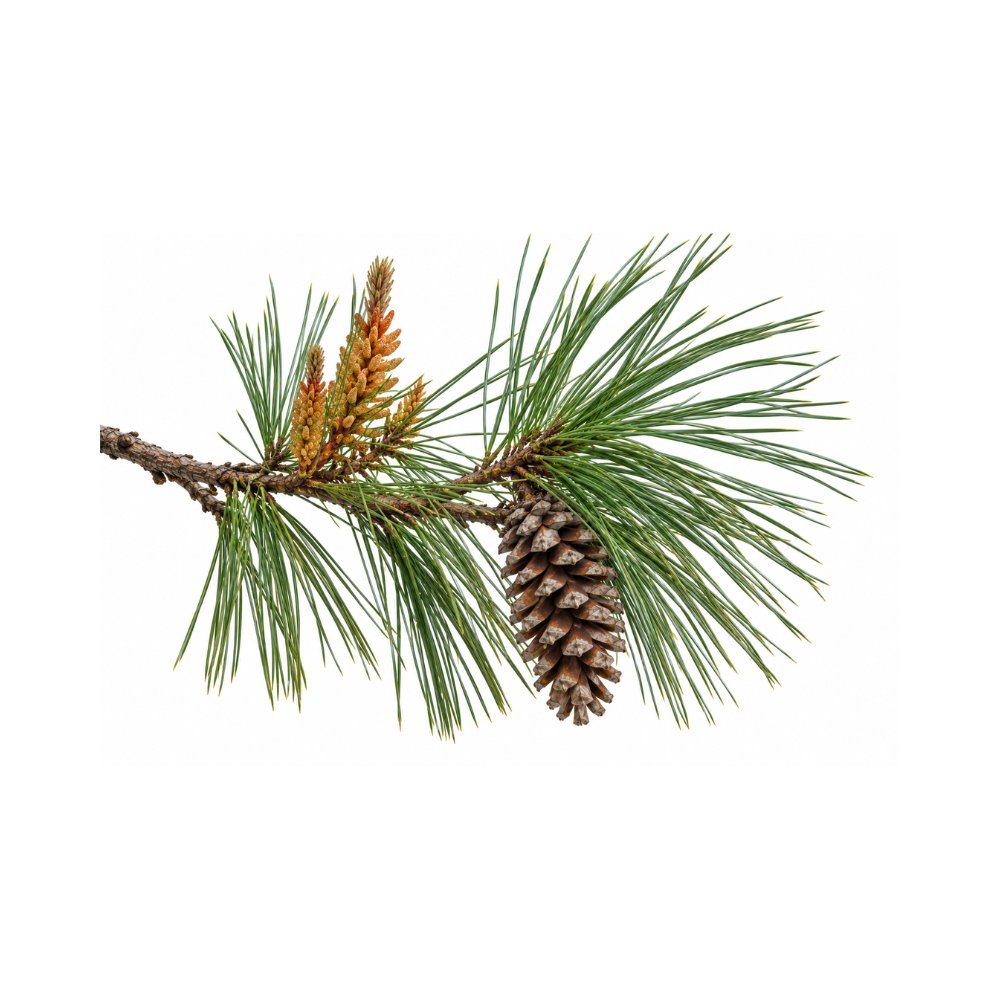
Masson pine is an evergreen tree that grows 18–45 m tall, with a trunk up to 150 cm across. The trunk is usually crooked, and the crown is broad and irregular 1Reference 1Pinus massoniana — species description, distribution, varieties, conservation status and economic uses — reference databaseView study →.
The bark is red-brown towards the top of the trunk and grey- or red-brown towards the base. It flakes in irregular scales or cracks into deep furrows 1Reference 1Pinus massoniana — species description, distribution, varieties, conservation status and economic uses — reference databaseView study →.
Its needles grow in pairs, occasionally in threes. They are slender, slightly twisted, pale green and 12–20 cm long 1Reference 1Pinus massoniana — species description, distribution, varieties, conservation status and economic uses — reference databaseView study →.
The seed cones take two years to ripen. They are ovoid to conical, usually 4–7 cm long, and turn chestnut brown when mature. The seeds are winged 1Reference 1Pinus massoniana — species description, distribution, varieties, conservation status and economic uses — reference databaseView study →.
Two varieties are recognised. Var. massoniana is the widespread form, and var. hainanensis grows only in the hills of Hainan 1Reference 1Pinus massoniana — species description, distribution, varieties, conservation status and economic uses — reference databaseView study →.
Distribution
Masson pine grows in Taiwan and across central and southern China, in Anhui, Fujian, Guangdong, Guangxi, Guizhou, Hainan, Henan, Hubei, Hunan, Jiangsu, Jiangxi, Shaanxi, Sichuan, Yunnan and Zhejiang. It occurs from the plains to the mountains, from near sea level to 2,000 m. It has also been planted in several provinces of Vietnam 1Reference 1Pinus massoniana — species description, distribution, varieties, conservation status and economic uses — reference databaseView study →.
It usually forms pure stands, or grows alongside other light-demanding trees. It is an important afforestation tree in southern China 1Reference 1Pinus massoniana — species description, distribution, varieties, conservation status and economic uses — reference databaseView study →.
The species as a whole is listed as Least Concern, and the pollen, bark and needles are by-products of a very common, widely planted tree 1Reference 1Pinus massoniana — species description, distribution, varieties, conservation status and economic uses — reference databaseView study →. The exception is var. hainanensis, which is rare and listed as Critically Endangered 1Reference 1Pinus massoniana — species description, distribution, varieties, conservation status and economic uses — reference databaseView study →. It is confined to Hainan and is not the material in trade.
Growing Conditions
Cultivation snapshot for Masson Pine
Masson pine needs full light and humidity, and it cannot tolerate shade. It roots deeply 1Reference 1Pinus massoniana — species description, distribution, varieties, conservation status and economic uses — reference databaseView study →.
It does best on deep, well-drained soil, but it also grows on poor soils and scrubby hillsides. It grows fast when young and slows with age, and it is hardy to about USDA zone 7 1Reference 1Pinus massoniana — species description, distribution, varieties, conservation status and economic uses — reference databaseView study →.
Grow it yourself
Farm Wiki is our cultivation-focused sister site, also run by Justin Cooke.
Indications
- Bedsores [pollen, topical]
- Diaper dermatitis [pollen, topical]
- Eczema and weeping, eroded skin [pollen, topical; TCM]
- Impetigo [pollen, topical; TCM]
- Bleeding from wounds [pollen, topical; TCM]
- Oral mucositis and radiation dermatitis [pollen, topical]
- High blood lipids [pollen; needle polysaccharide]
- High blood pressure [pollen; bark extract] Caution: In the one bark-extract trial, systolic pressure fell against baseline, but the difference from placebo was not statistically significant 9.
- Type 2 diabetes [pollen]
- Enlarged prostate and prostatitis [pollen, as an adjunct]
- Oxidative stress [bark extract]
Pharmacology & Research
Research on Masson pine falls into three groups.
The first is the Chinese clinical literature on pine pollen. A 2020 bibliometric review found 37 clinical studies, mostly of topical use on the skin 2Reference 2Clinical trialThe potential effects and use of Chinese herbal medicine pine pollen (Pinus pollen): a bibliometric analysis of pharmacological and clinical studies — bibliometric review of 239 publications, inclView study →. The review covers pine pollen in general, which in China comes mainly from Masson pine and Chinese pine 2Reference 2Clinical trialThe potential effects and use of Chinese herbal medicine pine pollen (Pinus pollen): a bibliometric analysis of pharmacological and clinical studies — bibliometric review of 239 publications, inclView study →.
The second is the bark extract, PMBE. Most of this work is in cell lines and animals 3,
The third is the pollen polysaccharide, studied mostly in poultry as a vaccine adjuvant, an intestinal immune enhancer and an antiviral 5,
Pine pollen is sold in Western markets as a male hormone tonic. None of the 37 clinical studies in the review used hormone levels as an outcome 2Reference 2Clinical trialThe potential effects and use of Chinese herbal medicine pine pollen (Pinus pollen): a bibliometric analysis of pharmacological and clinical studies — bibliometric review of 239 publications, inclView study →.
- Best-supported: topical pollen for bedsores, diaper dermatitis, eczema and oral mucositis in Chinese clinical studies 2Reference 2Clinical trialThe potential effects and use of Chinese herbal medicine pine pollen (Pinus pollen): a bibliometric analysis of pharmacological and clinical studies — bibliometric review of 239 publications, inclView study →; antioxidant activity, with one human randomised trial of a supplement containing the bark extract 8Reference 8RCTAntioxidant effects of a polyphenol-rich dietary supplement incorporating Pinus massoniana bark extract in healthy older adults — randomised placebo-controlled trialView study →.
-
Emerging, worth watching: anti-inflammatory signalling through ICAM-1, NF-κB and PI3K/AKT 14,
15Reference 14In vitroEffect of Pinus massoniana bark extract on IFN-γ-induced ICAM-1 expression in HaCaT human keratinocytes — in vitroView study →Reference 15Pinus massoniana pollen polysaccharides alleviate LPS-induced myocardial injury through p110β-mediated inhibition of the PI3K/AKT/NF-κB pathway — animalView study → ; liver protection across three different preparations 11,12, ; anticancer activity of bark and pollen fractions in cells and mice 3,13Reference 11Preliminary characterisation, antioxidant and hepatoprotective activities of polysaccharides from Taishan Pinus massoniana pollen — animalView study →Reference 12In vitroPinus massoniana bark extract protects against oxidative damage in L-02 hepatic cells and mice — in vitro / animalView study →Reference 13In vitroHepatoprotective diterpenes from the nodes of Pinus massoniana — in vitroView study → 18, .19Reference 3In vitroAnti-tumor effect of Pinus massoniana bark proanthocyanidins on ovarian cancer through induction of cell apoptosis and inhibition of cell migration — in vitro / animalView study →Reference 18In vitroPinus massoniana bark extract selectively induces apoptosis in human hepatoma cells, possibly through caspase-dependent pathways — in vitro / animalView study →Reference 19In vitroAnti-tumor activity of polysaccharides extracted from Pinus massoniana pollen in colorectal cancer — in vitro / animalView study → - Mechanistically thin: a hormonal effect. No study has measured one.
- The caveat: most of the efficacy data comes from cells, rodents or poultry, the one human trial tested a blend, and no preparation has a standardised dose.
Most of the research uses isolated fractions rather than the materials as they are used. A pollen polysaccharide result is not a result for the pollen powder, and a proanthocyanidin result is not a result for the bark.
1. Antioxidant
In a double-blind placebo-controlled trial in healthy older adults, 50 mL a day of a polyphenol-rich supplement containing 1,322 mg of PMBE lowered fasting plasma malondialdehyde. The fall was significant against placebo at six and twelve weeks 8Reference 8RCTAntioxidant effects of a polyphenol-rich dietary supplement incorporating Pinus massoniana bark extract in healthy older adults — randomised placebo-controlled trialView study →.
Preclinically, PMBE scavenges free radicals and inhibits lipid peroxidation in a dose-dependent way 10Reference 10In vitroPotential biomedical properties of Pinus massoniana bark extract — in vitroView study →. Both the pollen polysaccharide and the needle polysaccharide raise superoxide dismutase and glutathione peroxidase and lower malondialdehyde in animal models 4,
Gap: ⚠ the human result comes from a supplement containing several polyphenol sources alongside PMBE, so the effect cannot be attributed to Masson pine alone. It says nothing about pine pollen eaten as a food 8Reference 8RCTAntioxidant effects of a polyphenol-rich dietary supplement incorporating Pinus massoniana bark extract in healthy older adults — randomised placebo-controlled trialView study →.
2. Skin Repair
The bibliometric review identified 37 clinical studies of pine pollen. The conditions treated most often were bedsores, diaper dermatitis, eczema, oral mucositis and radiation dermatitis, and the pollen was usually applied to the skin 2Reference 2Clinical trialThe potential effects and use of Chinese herbal medicine pine pollen (Pinus pollen): a bibliometric analysis of pharmacological and clinical studies — bibliometric review of 239 publications, inclView study →.
In the individual trials, topical pine pollen was compared with iodophor, talcum powder, erythromycin ointment or zinc oxide ointment 2Reference 2Clinical trialThe potential effects and use of Chinese herbal medicine pine pollen (Pinus pollen): a bibliometric analysis of pharmacological and clinical studies — bibliometric review of 239 publications, inclView study →.
The bark extract adds laboratory work. A PMBE containing 1.27% taxifolin suppressed interferon-γ-induced ICAM-1 in human keratinocytes 14Reference 14In vitroEffect of Pinus massoniana bark extract on IFN-γ-induced ICAM-1 expression in HaCaT human keratinocytes — in vitroView study →. A pine pollen extract rich in the same molecule, given orally, improved an imiquimod-induced psoriasis model in mice 17Reference 17In vitroBiological activity study of a pine pollen extract rich in dihydroquercetin for the treatment of psoriasis — in vitro / animalView study →.
Gap: the 37 studies comprise 15 randomised trials, 6 controlled trials, 14 case series and 2 case reports, all published in Chinese. The review did not appraise their quality 2Reference 2Clinical trialThe potential effects and use of Chinese herbal medicine pine pollen (Pinus pollen): a bibliometric analysis of pharmacological and clinical studies — bibliometric review of 239 publications, inclView study →.
3. Anti-Inflammatory
PMBE inhibited interferon-γ-induced ICAM-1 expression in keratinocytes more strongly than an equal concentration of taxifolin alone 14Reference 14In vitroEffect of Pinus massoniana bark extract on IFN-γ-induced ICAM-1 expression in HaCaT human keratinocytes — in vitroView study →.
The pollen polysaccharide reduced inflammatory injury in an LPS-induced heart model in animals by suppressing PI3K/AKT/NF-κB signalling 15Reference 15Pinus massoniana pollen polysaccharides alleviate LPS-induced myocardial injury through p110β-mediated inhibition of the PI3K/AKT/NF-κB pathway — animalView study →. It also relieved colitis in mice while shifting the gut microbiota 16Reference 16AnimalEffects of Pinus massoniana pollen polysaccharides on intestinal microenvironment and colitis in mice — animalView study →.
A Masson pine extract, alone and combined with saw palmetto and saffron, reduced inflammatory and oxidative markers in rat prostate tissue challenged with LPS outside the body 23Reference 23In vitroCrocus sativus, Serenoa repens and Pinus massoniana extracts modulate inflammatory response in isolated rat prostate challenged with LPS — ex vivo / in vitroView study →.
⚠ The human inflammatory data cuts both ways. In the older-adult trial, PMBE lowered fibrinogen but raised interleukin-6 against placebo 8Reference 8RCTAntioxidant effects of a polyphenol-rich dietary supplement incorporating Pinus massoniana bark extract in healthy older adults — randomised placebo-controlled trialView study →.
4. Liver Protection
PMBE protected human L-02 liver cells against peroxide, and protected mice against carbon-tetrachloride injury. It lowered ALT, AST and malondialdehyde and raised catalase and glutathione peroxidase 12Reference 12In vitroPinus massoniana bark extract protects against oxidative damage in L-02 hepatic cells and mice — in vitro / animalView study →.
The pollen polysaccharide reproduced this against carbon tetrachloride in rats at 100–400 mg/kg 11Reference 11Preliminary characterisation, antioxidant and hepatoprotective activities of polysaccharides from Taishan Pinus massoniana pollen — animalView study →.
Diterpenes isolated from the branch nodes protected HepG2 cells against oxidative damage, and several were more active than the reference drug bicyclol 13Reference 13In vitroHepatoprotective diterpenes from the nodes of Pinus massoniana — in vitroView study →.
Gap: all of this is in cells and animals. There is no human liver data.
5. Anticancer
Bark proanthocyanidins induce apoptosis and suppress migration in ovarian 3Reference 3In vitroAnti-tumor effect of Pinus massoniana bark proanthocyanidins on ovarian cancer through induction of cell apoptosis and inhibition of cell migration — in vitro / animalView study →, cervical 24Reference 24In vitroEffects of Pinus massoniana bark extract on the adhesion and migration capabilities of HeLa cells — in vitroView study → and lung cancer cell lines 20Reference 20In vitroPinus massoniana bark extract inhibits migration of the lung cancer A549 cell line — in vitroView study →. PMBE selectively killed hepatoma cells while sparing normal L-02 liver cells, and reduced tumour weight by 43–70% in mice implanted with H22 tumours 18Reference 18In vitroPinus massoniana bark extract selectively induces apoptosis in human hepatoma cells, possibly through caspase-dependent pathways — in vitro / animalView study →.
Pollen polysaccharides inhibited proliferation, triggered apoptosis and suppressed MMP-9 in HCT-116 colorectal cells and in nude-mouse xenografts 19Reference 19In vitroAnti-tumor activity of polysaccharides extracted from Pinus massoniana pollen in colorectal cancer — in vitro / animalView study →. A sulfated pollen polysaccharide arrested HepG2 cells at the G2/M phase 25Reference 25In vitroEffects of sulfated polysaccharide from Masson pine (Pinus massoniana) pollen on the proliferation and cell cycle of HepG2 cells — in vitroView study →.
A review of the bark extract names the B-series proanthocyanidins as its main active compounds 21Reference 21ReviewPinus massoniana bark extract: structure–activity relationship and biomedical potentials — reviewView study →.
Gap: ⚠⚠ every result uses an isolated fraction at cell-culture or injected doses that neither the dusting powder nor pollen eaten as food can deliver, and there is no human oncology data of any kind.
6. Immune Modulation
Pollen polysaccharide improves intestinal mucosal immunity in chickens 5Reference 5Polysaccharides from Pinus massoniana pollen improve intestinal mucosal immunity in chickens — veterinaryView study →. It also inhibits the replication of avian leukosis virus, and the tumour growth linked to it, in poultry 6Reference 6Taishan Pinus massoniana pollen polysaccharide inhibits the replication of acute tumorigenic ALV-J and its associated tumour growth — veterinaryView study →.
In mice, the polysaccharide changed the gut microbiota and lymphocyte responses 16Reference 16AnimalEffects of Pinus massoniana pollen polysaccharides on intestinal microenvironment and colitis in mice — animalView study →.
Gap: ⚠⚠ this is chicken and mouse work, at doses and routes that say nothing about human tolerance or benefit.
7. Blood Pressure
A secondary analysis of the Australian trial, in 62 adults aged 55–75, found that 1,322 mg of PMBE a day, inside the polyphenol supplement, lowered systolic blood pressure against baseline. The fall was 3.29 mmHg overall and 6.46 mmHg in those starting above 120 mmHg 9Reference 9RCTEffect of a polyphenol-rich dietary supplement containing Pinus massoniana bark extract on blood pressure in healthy adults — randomised placebo-controlled trial, secondary analysisView study →.
Diastolic pressure did not change in the group as a whole. In people with high-normal pressure who were not on medication, systolic pressure fell by 7.49 mmHg and diastolic by 3.06 mmHg 9Reference 9RCTEffect of a polyphenol-rich dietary supplement containing Pinus massoniana bark extract on blood pressure in healthy adults — randomised placebo-controlled trial, secondary analysisView study →.
Gap: ⚠⚠ the comparison against placebo was not statistically significant. These are within-group changes in a secondary analysis of a multi-ingredient supplement 9Reference 9RCTEffect of a polyphenol-rich dietary supplement containing Pinus massoniana bark extract on blood pressure in healthy adults — randomised placebo-controlled trial, secondary analysisView study →.
8. Blood Lipids
A pine-needle polysaccharide lowered total cholesterol, triglycerides and LDL cholesterol in mice on a high-fat diet, and raised their antioxidant enzymes 4Reference 4AnimalChemical composition and antioxidant activities of polysaccharide from pine needle (Pinus massoniana) and its hypolipidemic effect in high-fat-diet mice — animalView study →.
High blood lipids were among the conditions most often treated with pine pollen in the Chinese clinical studies 2Reference 2Clinical trialThe potential effects and use of Chinese herbal medicine pine pollen (Pinus pollen): a bibliometric analysis of pharmacological and clinical studies — bibliometric review of 239 publications, inclView study →.
Gap: the controlled evidence is one mouse study.
Mechanisms
Most of the mechanistic work uses two isolated fractions: proanthocyanidins from the bark, and polysaccharides from the pollen. The bark proanthocyanidins have been studied for radical scavenging, apoptosis signalling and adhesion molecules such as ICAM-1. The pollen polysaccharides have been studied for their effects on PI3K/AKT/NF-κB signalling and gut immunity.
The topical use of the pollen powder has not been studied at the level of a molecular target.
| Mechanism | Drives | Key compounds |
|---|---|---|
| Free-radical scavenging; ↓ malondialdehyde; ↑ SOD and glutathione peroxidase | antioxidantliver protection | proanthocyanidins, polysaccharides |
| NF-κB ↓, caspase activation, Bcl-2 ↓ | anticancer | proanthocyanidins |
| ICAM-1 ↓ | anti-inflammatory (skin) | PMBE, taxifolin |
| PI3K / AKT / NF-κB ↓ | anti-inflammatory | pollen polysaccharides |
| MMP-9 ↓; cell migration inhibited | anticancer | proanthocyanidins, pollen polysaccharides |
| Mucosal immune stimulation | immune modulation — veterinary models | pollen polysaccharides |
Clinical Trials
No trial of Masson pine as a sole intervention is registered on ClinicalTrials.gov. The human evidence is one Australian randomised trial of a multi-ingredient supplement containing PMBE, reported in two papers 8,
| Completed | Planned | Terminated | Preclinical |
|---|---|---|---|
| ~38 | 0 | 0 | ~40+ |
Last checked: September 2026.
Phytochemistry
The bark’s main active compounds are proanthocyanidins, especially the B-series. These are oligomers and polymers built from flavan-3-ol units 21Reference 21ReviewPinus massoniana bark extract: structure–activity relationship and biomedical potentials — reviewView study →. One bark extract contained 1.27% taxifolin 14Reference 14In vitroEffect of Pinus massoniana bark extract on IFN-γ-induced ICAM-1 expression in HaCaT human keratinocytes — in vitroView study →.
Pine pollen contains amino acids, minerals, vitamins, enzymes and flavonoids 2Reference 2Clinical trialThe potential effects and use of Chinese herbal medicine pine pollen (Pinus pollen): a bibliometric analysis of pharmacological and clinical studies — bibliometric review of 239 publications, inclView study →. Its most studied fraction is a polysaccharide 5,
The needles yield a polysaccharide made up mainly of fucose, arabinose, galactose, glucose and galacturonic acid 4Reference 4AnimalChemical composition and antioxidant activities of polysaccharide from pine needle (Pinus massoniana) and its hypolipidemic effect in high-fat-diet mice — animalView study →. They also yield about 0.45% volatile oil, made up mainly of monoterpenes and sesquiterpenes. Masson pine needle oil contained 2.6 times as much α-pinene as slash pine needle oil, and less β-pinene 27Reference 27Comparison of chemical components of essential oils in needles of Pinus massoniana Lamb and Pinus elliottii Engelm from Guangxi — analyticalView study →.
The root bark has yielded 32 diterpenoids, five of them new compounds named pinmassins 7Reference 7In vitroDiterpenoids from the root bark of Pinus massoniana and evaluation of their phosphodiesterase type 4D inhibitory activity — phytochemistry / in vitroView study →. The branch nodes have yielded further diterpenes, including three new pinusins 13Reference 13In vitroHepatoprotective diterpenes from the nodes of Pinus massoniana — in vitroView study →.
Results for isolated fractions such as the pollen polysaccharides and bark proanthocyanidins should be read separately from the whole pollen and bark 5,
Constituent Summary
The main constituents of each part used.
Flavanol2 compounds2 with data
Polysaccharide1 compound1 with data
Monoterpene2 compounds2 with data
The pollen polysaccharides (including the sulfated fraction), the needle polysaccharide, the B-series proanthocyanidins and the root-bark and node diterpenoids are compound classes and fractions, and are described above.
Dosage
- Pollen, topical — dusted onto the affected skin, in whatever amount covers it 28Reference 28ReviewChinese Pharmacopoeia Commission (2015). 松花粉 Songhuafen (Pini Pollen) — monograph: source species (Pinus massoniana, P. tabuliformis or several other pines), taste, channels, actions, indications and external use. Pharmacopoeia of the People’s Republic of China, 2015 ed., Vol. I, p. 205. https://www.drugfuture.com/Pharmacopoeia/CP2015-1/205-206.pdfView study →.
- Pollen, internal — eaten as a health food. No medicinal dose is established.
- Bark extract — the one human dose is 1,322 mg a day, given inside a multi-ingredient supplement 8Reference 8RCTAntioxidant effects of a polyphenol-rich dietary supplement incorporating Pinus massoniana bark extract in healthy older adults — randomised placebo-controlled trialView study →.
| Indication | Preparation | Dose | Est. dried-herb equivalent | Source |
|---|---|---|---|---|
| Oxidative stress | Polyphenol supplement containing PMBE | 1,322 mg PMBE/day for 12 weeks | — multi-ingredient; not a whole-herb dose | 8Reference 8RCTAntioxidant effects of a polyphenol-rich dietary supplement incorporating Pinus massoniana bark extract in healthy older adults — randomised placebo-controlled trialView study → |
| Blood pressure (secondary analysis) | Polyphenol supplement containing PMBE | 1,322 mg PMBE/day for 12 weeks | — as above | 9Reference 9RCTEffect of a polyphenol-rich dietary supplement containing Pinus massoniana bark extract on blood pressure in healthy adults — randomised placebo-controlled trial, secondary analysisView study → |
| Liver protection (rat) | Pollen polysaccharide, oral | 100–400 mg/kg | — isolated fraction | 11Reference 11Preliminary characterisation, antioxidant and hepatoprotective activities of polysaccharides from Taishan Pinus massoniana pollen — animalView study → |
Traditional Dosage
| System | Preparation | Dose |
|---|---|---|
| Chinese medicine, external | Dried pollen (song hua fen) dusted onto the affected skin | Enough to cover the area 28Reference 28ReviewChinese Pharmacopoeia Commission (2015). 松花粉 Songhuafen (Pini Pollen) — monograph: source species (Pinus massoniana, P. tabuliformis or several other pines), taste, channels, actions, indications and external use. Pharmacopoeia of the People’s Republic of China, 2015 ed., Vol. I, p. 205. https://www.drugfuture.com/Pharmacopoeia/CP2015-1/205-206.pdfView study → |
| Chinese medicine, internal | Dried pollen, eaten as a health food | Not quantified |
Safety & Pregnancy
Pine pollen has a long record of use on the skin and as a food, and the Chinese trials that reported adverse events found few.
- Well tolerated in the reported trials. Eight of the trials reviewed reported no adverse events, and one reported mild gastrointestinal symptoms that resolved without treatment 2Reference 2Clinical trialThe potential effects and use of Chinese herbal medicine pine pollen (Pinus pollen): a bibliometric analysis of pharmacological and clinical studies — bibliometric review of 239 publications, inclView study →.
- Long food and topical history in China 2Reference 2Clinical trialThe potential effects and use of Chinese herbal medicine pine pollen (Pinus pollen): a bibliometric analysis of pharmacological and clinical studies — bibliometric review of 239 publications, inclView study →.
- It is a pollen. People with a pine or pollen allergy may react to pine pollen products, whether eaten or applied.
- No hormonal effect has been shown. No study has measured one 2Reference 2Clinical trialThe potential effects and use of Chinese herbal medicine pine pollen (Pinus pollen): a bibliometric analysis of pharmacological and clinical studies — bibliometric review of 239 publications, inclView study →.
- Interactions have not been studied for any preparation.
- Pregnancy and lactation have not been assessed for any preparation.
- The bark extract’s human record is one 12-week trial, of a multi-ingredient supplement 8,
9Reference 8RCTAntioxidant effects of a polyphenol-rich dietary supplement incorporating Pinus massoniana bark extract in healthy older adults — randomised placebo-controlled trialView study →Reference 9RCTEffect of a polyphenol-rich dietary supplement containing Pinus massoniana bark extract on blood pressure in healthy adults — randomised placebo-controlled trial, secondary analysisView study → . Maritime pine bark extract is a different species and a different extract.
Full Safety Detail
Clinical record. In the trials collected by the bibliometric review, eight reported no adverse events and one reported mild gastrointestinal effects that resolved on their own. Most of the trials did not report on adverse events at all 2Reference 2Clinical trialThe potential effects and use of Chinese herbal medicine pine pollen (Pinus pollen): a bibliometric analysis of pharmacological and clinical studies — bibliometric review of 239 publications, inclView study →.
Allergy. Pine pollen is a pollen, and people with a pollen allergy may react to it when it is eaten or applied to the skin.
Hormonal claims. Enlarged prostate and prostatitis appear in the Chinese clinical studies as conditions pine pollen was used to treat, often alongside other medicines 2Reference 2Clinical trialThe potential effects and use of Chinese herbal medicine pine pollen (Pinus pollen): a bibliometric analysis of pharmacological and clinical studies — bibliometric review of 239 publications, inclView study →. Hormone levels were not measured in those studies 2Reference 2Clinical trialThe potential effects and use of Chinese herbal medicine pine pollen (Pinus pollen): a bibliometric analysis of pharmacological and clinical studies — bibliometric review of 239 publications, inclView study →. Anyone with prostate symptoms should be assessed rather than relying on pine pollen alone.
Bark extract. PMBE was tolerated for twelve weeks at 1,322 mg a day in healthy older adults, with no safety signal reported. It was one component of a polyphenol supplement, so the tolerability belongs to the blend 8,
Interactions. Drug interactions have not been studied in people or in animals.
Veterinary data. The pollen-polysaccharide immunology was done in chickens, at doses and routes that say nothing about human tolerance 5,
Not assessed for any preparation. There are no pregnancy or lactation data for pine pollen, Masson pine bark extract or any other material from this species.
The pollen’s use as a food in China has not been studied in pregnancy.
References
- Earle, C. J. (ed.) (2023). Pinus massoniana — species description, distribution, varieties, conservation status and economic uses — reference database. The Gymnosperm Database. https://www.conifers.org/pi/Pinus_massoniana.php
- Liang, S. B., Liang, N., Bu, F. L., Lai, B. Y., & Zhang, Y. P. (2020). The potential effects and use of Chinese herbal medicine pine pollen (Pinus pollen): a bibliometric analysis of pharmacological and clinical studies — bibliometric review of 239 publications, incl. 37 clinical trials. World Journal of Traditional Chinese Medicine, 6(2), 163–170. https://pubmed.ncbi.nlm.nih.gov/34327226/
- Liu, J., Bai, J., Jiang, G., Li, X., & Wang, J. (2015). Anti-tumor effect of Pinus massoniana bark proanthocyanidins on ovarian cancer through induction of cell apoptosis and inhibition of cell migration — in vitro / animal. PLOS ONE, 10(11), e0142157. https://pubmed.ncbi.nlm.nih.gov/26539720/
- Chu, L., Yang, L., Lin, L., Wei, J., & Wang, N. (2019). Chemical composition and antioxidant activities of polysaccharide from pine needle (Pinus massoniana) and its hypolipidemic effect in high-fat-diet mice — animal. International Journal of Biological Macromolecules, 125, 445–452. https://pubmed.ncbi.nlm.nih.gov/30537499/
- Sha, Z., Shang, H., Miao, Y., Huang, J., & Niu, X. (2021). Polysaccharides from Pinus massoniana pollen improve intestinal mucosal immunity in chickens — veterinary. Poultry Science, 100(2), 507–516. https://pubmed.ncbi.nlm.nih.gov/33518103/
- Wang, Q., Miao, Y., Xu, Y., Meng, X., & Cui, W. (2019). Taishan Pinus massoniana pollen polysaccharide inhibits the replication of acute tumorigenic ALV-J and its associated tumour growth — veterinary. Veterinary Microbiology, 236, 108376. https://pubmed.ncbi.nlm.nih.gov/31500736/
- Fu, Y., Ding, X., Zhang, X., Shao, X., & Zhao, J. (2020). Diterpenoids from the root bark of Pinus massoniana and evaluation of their phosphodiesterase type 4D inhibitory activity — phytochemistry / in vitro. Journal of Natural Products, 83(4), 1229–1237. https://pubmed.ncbi.nlm.nih.gov/32100544/
- Ferguson, J. J. A., Oldmeadow, C., Bentley, D., & Garg, M. L. (2022). Antioxidant effects of a polyphenol-rich dietary supplement incorporating Pinus massoniana bark extract in healthy older adults — randomised placebo-controlled trial. Antioxidants, 11(8), 1560. https://pubmed.ncbi.nlm.nih.gov/36009279/
- Ferguson, J. J. A., Oldmeadow, C., Bentley, D., Eslick, S., & Garg, M. L. (2022). Effect of a polyphenol-rich dietary supplement containing Pinus massoniana bark extract on blood pressure in healthy adults — randomised placebo-controlled trial, secondary analysis. Complementary Therapies in Medicine, 71, 102896. https://pubmed.ncbi.nlm.nih.gov/36280012/
- Cui, Y., Xie, H., & Wang, J. (2005). Potential biomedical properties of Pinus massoniana bark extract — in vitro. Phytotherapy Research, 19(1), 34–38. https://pubmed.ncbi.nlm.nih.gov/15798999/
- Zhou, C., Yin, S., Yu, Z., et al. (2018). Preliminary characterisation, antioxidant and hepatoprotective activities of polysaccharides from Taishan Pinus massoniana pollen — animal. Molecules, 23(2), 281. https://pubmed.ncbi.nlm.nih.gov/29385683/
- Wang, M., Ma, H. L., Liu, B., et al. (2010). Pinus massoniana bark extract protects against oxidative damage in L-02 hepatic cells and mice — in vitro / animal. American Journal of Chinese Medicine, 38(5), 909–919. https://pubmed.ncbi.nlm.nih.gov/20821822/
- Chen, J. Q., Zhang, L. Z., Ma, J., et al. (2025). Hepatoprotective diterpenes from the nodes of Pinus massoniana — in vitro. Journal of Asian Natural Products Research, 27(7), 995–1004. https://pubmed.ncbi.nlm.nih.gov/40396928/
- Wu, C., Feng, D., Ma, H., et al. (2009). Effect of Pinus massoniana bark extract on IFN-γ-induced ICAM-1 expression in HaCaT human keratinocytes — in vitro. Journal of Ethnopharmacology, 122(1), 48–53. https://pubmed.ncbi.nlm.nih.gov/19103272/
- Wang, C., Wang, P., Fu, J., et al. (2024). Pinus massoniana pollen polysaccharides alleviate LPS-induced myocardial injury through p110β-mediated inhibition of the PI3K/AKT/NF-κB pathway — animal. International Journal of Biological Macromolecules, 283, 137713. https://pubmed.ncbi.nlm.nih.gov/39551317/
- Niu, X., Shang, H., Chen, S., et al. (2021). Effects of Pinus massoniana pollen polysaccharides on intestinal microenvironment and colitis in mice — animal. Food & Function, 12(1), 252–266. https://pubmed.ncbi.nlm.nih.gov/33295902/
- Xu, Q., Chen, Y., Dong, Y., Li, G., & Yan, M. (2026). Biological activity study of a pine pollen extract rich in dihydroquercetin for the treatment of psoriasis — in vitro / animal. Phytomedicine, 150, 157597. https://pubmed.ncbi.nlm.nih.gov/41447846/
- Ma, H., Liu, B., Feng, D., et al. (2010). Pinus massoniana bark extract selectively induces apoptosis in human hepatoma cells, possibly through caspase-dependent pathways — in vitro / animal. International Journal of Molecular Medicine, 25(5), 751–759. https://pubmed.ncbi.nlm.nih.gov/20372819/
- Shang, H., Niu, X., Cui, W., et al. (2022). Anti-tumor activity of polysaccharides extracted from Pinus massoniana pollen in colorectal cancer — in vitro / animal. Food & Function, 13(11), 6350–6361. https://pubmed.ncbi.nlm.nih.gov/35612410/
- Mao, P., Zhang, E., Chen, Y., et al. (2017). Pinus massoniana bark extract inhibits migration of the lung cancer A549 cell line — in vitro. Oncology Letters, 13(2), 1019–1023. https://pubmed.ncbi.nlm.nih.gov/28356994/
- Feng, J., Zhang, X. L., Li, Y. Y., Cui, Y. Y., & Chen, Y. H. (2016). Pinus massoniana bark extract: structure–activity relationship and biomedical potentials — review. American Journal of Chinese Medicine, 44(8), 1559–1577. https://pubmed.ncbi.nlm.nih.gov/27852122/
- Wang, C., Zhang, L., Cheng, P., & Zhang, Q. (2015). Inhibitory effects of Pinus massoniana bark extract on hepatitis C virus in vitro — in vitro. Pharmaceutical Biology, 53(3), 451–456. https://pubmed.ncbi.nlm.nih.gov/25471218/
- Chiavaroli, A., Recinella, L., Ferrante, C., et al. (2017). Crocus sativus, Serenoa repens and Pinus massoniana extracts modulate inflammatory response in isolated rat prostate challenged with LPS — ex vivo / in vitro. Journal of Biological Regulators and Homeostatic Agents, 31(3), 531–541. https://pubmed.ncbi.nlm.nih.gov/28889734/
- Wu, D. C., Li, S., Yang, D. Q., & Cui, Y. Y. (2011). Effects of Pinus massoniana bark extract on the adhesion and migration capabilities of HeLa cells — in vitro. Fitoterapia, 82(8), 1202–1205. https://pubmed.ncbi.nlm.nih.gov/21888955/
- Chu, H. L., Mao, H., Feng, W., Liu, J. W., & Geng, Y. (2013). Effects of sulfated polysaccharide from Masson pine (Pinus massoniana) pollen on the proliferation and cell cycle of HepG2 cells — in vitro. International Journal of Biological Macromolecules, 55, 104–108. https://pubmed.ncbi.nlm.nih.gov/23270833/
- Wang, L. (2026). 松花粉的功效与作用 [Pine pollen: actions and uses] — Chinese materia medica entry drawing on the Chinese Pharmacopoeia Commission’s Clinical Guide to the Pharmacopoeia of the People’s Republic of China: Decoction Pieces (2020 edition) — reference entry. China Medical Information Platform (dayi.org.cn). https://m.dayi.org.cn/qa/139525.html
- Shen, C., Duan, W., Cen, B., & Tan, J. (2006). Comparison of chemical components of essential oils in needles of Pinus massoniana Lamb and Pinus elliottii Engelm from Guangxi — analytical. Se Pu (Chinese Journal of Chromatography), 24(6), 619–624. https://pubmed.ncbi.nlm.nih.gov/17288147/
- Chinese Pharmacopoeia Commission (2015). 松花粉 Songhuafen (Pini Pollen) — monograph: source species (Pinus massoniana, P. tabuliformis or several other pines), taste, channels, actions, indications and external use. Pharmacopoeia of the People’s Republic of China, 2015 ed., Vol. I, p. 205. https://www.drugfuture.com/Pharmacopoeia/CP2015-1/205-206.pdf



