
Compound Monograph
Psilostachyin C
Psilostachyin C is a sesquiterpene dilactone of the ragweed genus Ambrosia — the most frequently reported sesquiterpene of that genus. Its strongest data are antiparasitic (Trypanosoma cruzi, Leishmania), with a measured selectivity index; its widely-repeated anticancer claim rests on in-vitro cytotoxicity and a computationally predicted target.

Sources · 6
Where Does It Come From?
Psilostachyin C is a naturally occurring sesquiterpene dilactone (seco-pseudoguaianolide, psilostachyin series), found in Western ragweed, Common ragweed, Ambrosia scabra and 3 other sources. It is flagged as moderately toxic.
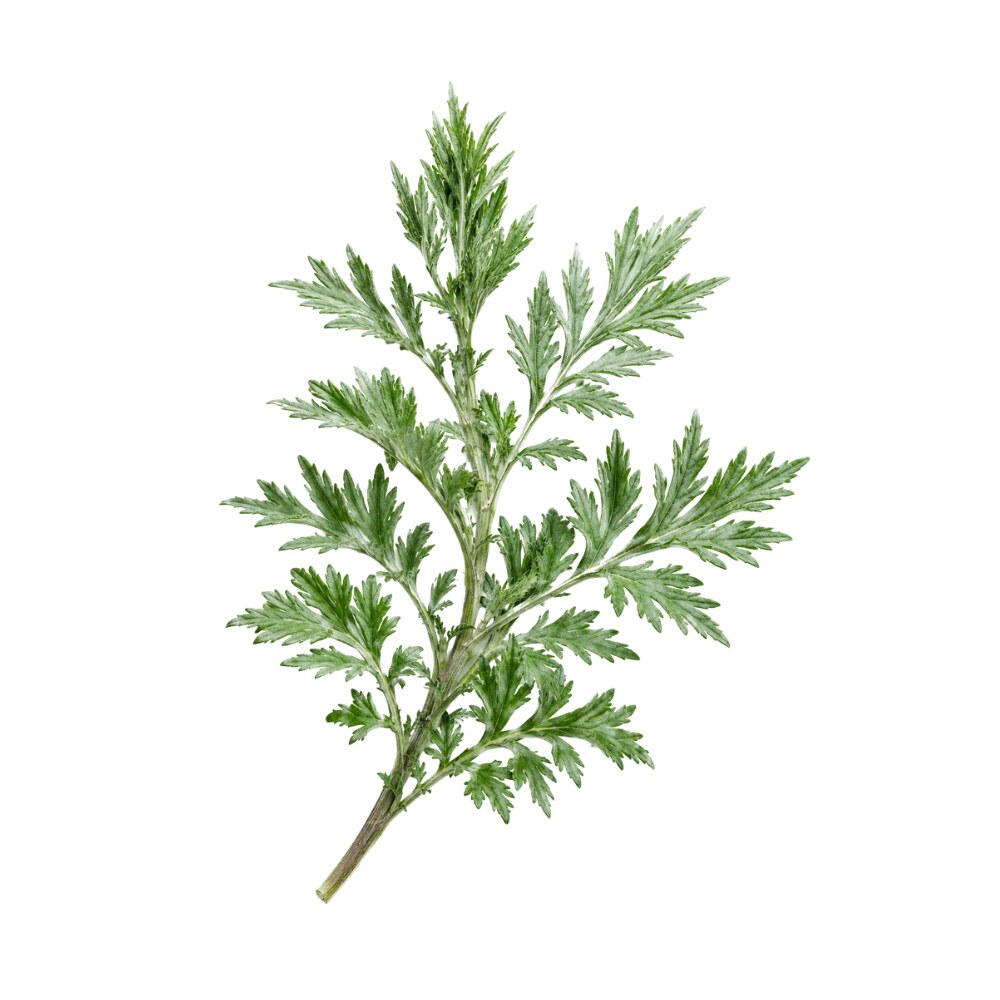 Source Mugwort Artemisia vulgaris Herb monograph →
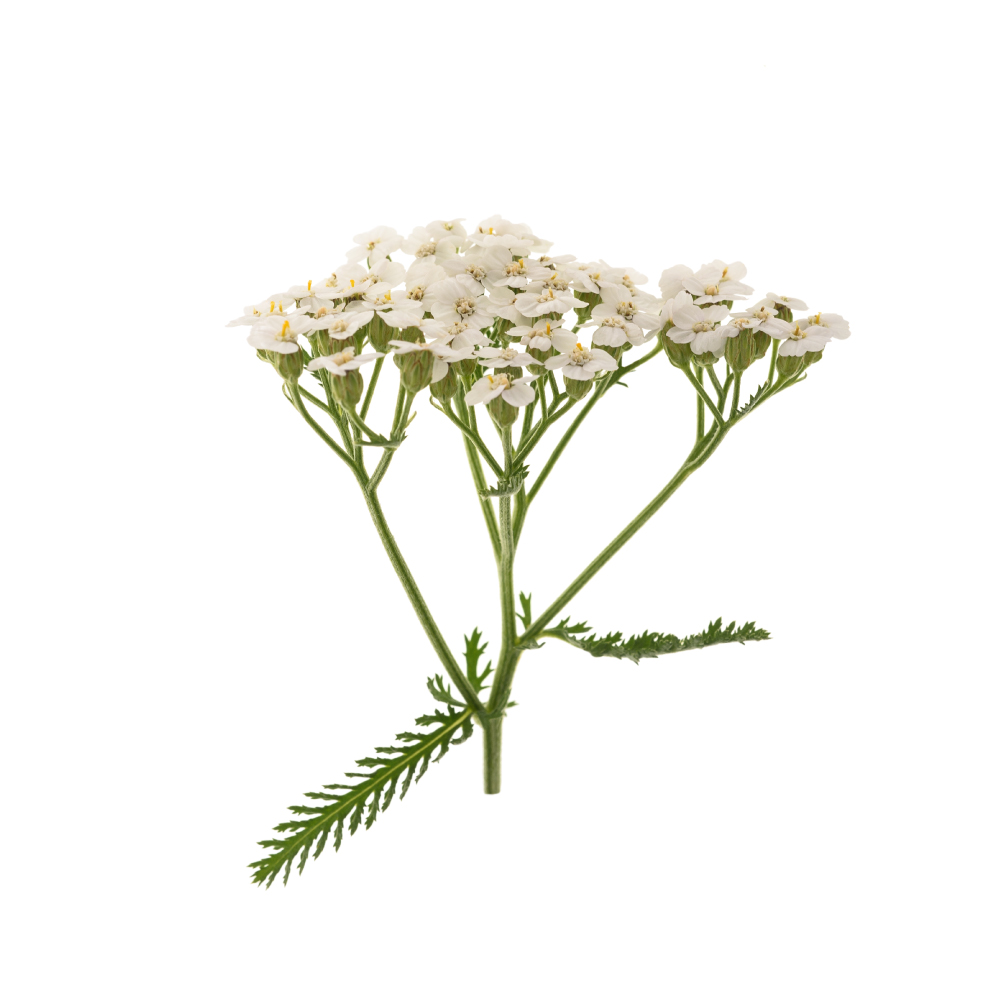 Source Yarrow Achillea millefolium Herb monograph →
Concentration
Content by Source
Concentrations not reported. No percent-dry-weight or mg/g figures have been published for this compound in its source plants.
Psilostachyin C at a Glance
Psilostachyin C is a sesquiterpene dilactone — a molecule carrying two lactone rings, one of them the reactive α-methylene-γ-lactone that defines much of Asteraceae chemistry. It was first characterised in 1966 from western ragweed, Ambrosia psilostachya, the plant that gave the psilostachyin series its name 1Reference 1The structure of psilostachyin C, a new sesquiterpene dilactone from Ambrosia psilostachya DCView study →.
Its centre of gravity is antiparasitic, not anticancer. The isolated molecule kills Trypanosoma cruzi — the agent of Chagas disease — at low-micromolar concentrations, reduced circulating parasites in infected mice, and is one of the few sesquiterpene lactones for which a selectivity index against mammalian cells was actually measured and reported 3Reference 3In vitroPsilostachyin C: a natural compound with trypanocidal activity — in vitro, with a mouse infection modelView study →. Its mechanism in the parasite is unusual for its class: it blocks ergosterol biosynthesis, where its close relative psilostachyin instead binds hemin 4Reference 4In vitroMode of action of the sesquiterpene lactones psilostachyin and psilostachyin C on Trypanosoma cruzi — in vitroView study →.
The claim most often attached to this molecule in recent secondary sources — that it is an anti-hepatocellular-carcinoma agent acting through CREBBP and GATAD2B — comes from a single 2024 cell-line paper in which the target was a bioinformatics prediction, not a measurement, and in which no non-tumour cell was tested 8Reference 8In vitroPsilostachyin C reduces malignant properties of hepatocellular carcinoma cells by blocking CREBBP-mediated transcription of GATAD2B — in vitroView study →. That claim gets its own section below, because the gap between what the paper shows and what it is cited for is the most important thing here.
Psilostachyin C vs. Psilostachyin
These are two different molecules and their numbers are routinely mixed up. Keeping them apart matters because almost every psilostachyin-series claim in circulation belongs to one or the other, not both.
| Psilostachyin C | Psilostachyin | |
|---|---|---|
| Formula / MW | C₁₅H₂₀O₄, 264.3 | C₁₅H₂₀O₅, 280.3 |
| CAS | 6466-67-7 | — |
| Structure | fused tricyclic dilactone, no free hydroxyl | spiro dilactone with a tertiary hydroxyl |
| α-methylene-γ-lactone | yes | yes |
| T. cruzi mechanism | inhibits ergosterol biosynthesis (squalene accumulates) 4Reference 4In vitroMode of action of the sesquiterpene lactones psilostachyin and psilostachyin C on Trypanosoma cruzi — in vitroView study → | binds hemin; drives a ~5-fold ROS rise 4Reference 4In vitroMode of action of the sesquiterpene lactones psilostachyin and psilostachyin C on Trypanosoma cruzi — in vitroView study → |
| Glutathione reversal | only partial; does not deplete parasite glutathione 5Reference 5In vitroNatural sesquiterpene lactones induce oxidative stress in Leishmania mexicana — in vitroView study → | strongly reversed by glutathione; depletes it 5Reference 5In vitroNatural sesquiterpene lactones induce oxidative stress in Leishmania mexicana — in vitroView study → |
| Antiplasmodial data | none | tested (with peruvin) against P. falciparum 14Reference 14In vitroIn vitro antiplasmodial activity of sesquiterpene lactones from Ambrosia tenuifolia — in vitroView study → |
The practical consequence: the antiplasmodial figures belong to psilostachyin and peruvin, not to psilostachyin C 14Reference 14In vitroIn vitro antiplasmodial activity of sesquiterpene lactones from Ambrosia tenuifolia — in vitroView study →, and the thiol-depletion mechanism that fits most sesquiterpene lactones fits psilostachyin better than it fits psilostachyin C 5Reference 5In vitroNatural sesquiterpene lactones induce oxidative stress in Leishmania mexicana — in vitroView study →.
The CREBBP/GATAD2B Claim — A Predicted Target, Not a Measured One
This is the finding that put psilostachyin C on lists of anticancer natural products, so it is worth stating precisely what the paper did.
Jiang and colleagues (2024) treated two hepatocellular-carcinoma cell lines, Hep 3B and Huh7, with 25 µM psilostachyin C and reported reduced proliferation, cell-cycle progression, migration and invasion, and increased apoptosis. They then wrote: “Bioinformatics prediction suggests CREB binding protein (CREBBP) as a promising target of PSC.” CREBBP was shown to drive transcription of GATAD2B by binding its promoter; both were elevated in HCC tissue and reduced by psilostachyin C treatment; and over-expressing either one restored the malignant phenotype 8Reference 8In vitroPsilostachyin C reduces malignant properties of hepatocellular carcinoma cells by blocking CREBBP-mediated transcription of GATAD2B — in vitroView study →.
What was measured, and what was not:
- Predicted, not measured: that psilostachyin C binds CREBBP. There is no pulldown, no CETSA or thermal-shift, no photoaffinity labelling, no binding-site mutagenesis, no enzymatic assay of CREBBP acetyltransferase activity. The target assignment is computational.
- Measured: that CREBBP and GATAD2B protein levels fall after treatment, and that restoring either one rescues the phenotype. This is genuine functional epistasis — it shows the CREBBP→GATAD2B axis is required for the effect. It does not show the molecule acts on CREBBP; a compound that kills the cell by any route can lower the levels of a growth-associated coactivator, and rescuing that coactivator can restore growth.
- Absent: any selectivity. No normal hepatocyte, no immortalised non-tumour liver line, no fibroblast control, no selectivity index. A cytotoxic effect on cancer cells without a non-cancer comparator is a cytotoxicity result, not a cancer-selectivity result.
25 µM is not a distinguishing concentration for this molecule. An independent group measured psilostachyin C’s cytotoxicity at IC₅₀ 26.6 µM on Colo205 colon adenocarcinoma cells — essentially the same concentration, in an unrelated lineage, with no CREBBP involved 7Reference 7In vitroAntiproliferative and cytotoxic effects of sesquiterpene lactones isolated from Ambrosia artemisiifolia on human adenocarcinoma and normal cell lines — in vitroView study →. In that study psilostachyin C was explicitly not among the compounds singled out for potency or selectivity toward the MRC-5 normal fibroblast line; acetoxydihydrodamsin, 1’-noraltamisin and psilostachyin were 7Reference 7In vitroAntiproliferative and cytotoxic effects of sesquiterpene lactones isolated from Ambrosia artemisiifolia on human adenocarcinoma and normal cell lines — in vitroView study →. And in yarrow-derived material, psilostachyin C showed no antiproliferative effect at all against HeLa, MCF-7 or A431 cells 11Reference 11In vitroAntiproliferative effect of flavonoids and sesquiterpenoids from Achillea millefolium s.l. on cultured human tumour cell lines — in vitroView study →.
The simpler explanation. Psilostachyin C carries an intact α-methylene-γ-lactone — the class Michael acceptor that alkylates cysteine thiols. That is not speculation for this molecule: removing the α,β-unsaturated carbonyl abolished its cell-cycle-checkpoint activity in the study that first found it, and the authors concluded the compounds “bind covalently to target proteins through Michael addition” 2Reference 2In vitroModulation of the G2 cell cycle checkpoint by sesquiterpene lactones psilostachyins A and C isolated from the common ragweed Ambrosia artemisiifolia — in vitroView study →. A promiscuous covalent electrophile hitting many thiol-dependent proteins at 25 µM is the most economical account of a broad in-vitro antitumour profile, and it predicts exactly what is observed — activity at similar concentrations across unrelated lineages, and no selectivity data.
Context worth knowing: the adjacent liver-cancer paper in this same compound series — Anticancer action of psilostachyin-A in 5-fluorouracil-resistant human liver carcinoma — was retracted in 2021 for non-original and manipulated figures 13Reference 13Retracted: Anticancer action of psilostachyin-A in 5-fluorouracil-resistant human liver carcinomaView study →. That retraction concerns psilostachyin A, a different molecule, and says nothing about the validity of the 2024 psilostachyin C work. It is noted here only because the two are commonly cited side by side.
What It's Used For
The literature on this isolate is small and lopsided: the antiparasitic strand has in-vivo confirmation and a measured selectivity index; the oncology strand is entirely cell-line work.
Support is an experimental score — weighted by study type (human > animal > in vitro) and volume. A beta, not a validated metric. Every row here is preclinical; the scores rank within a small preclinical literature and no row approaches clinical evidence.
The best-evidenced application, and the only one with an in-vivo component. Isolate study. Psilostachyin C, isolated from Ambrosia scabra by bioassay-guided fractionation, inhibited Trypanosoma cruzi epimastigotes, trypomastigotes and amastigotes with IC₅₀ values of 0.6, 3.5 and 0.9 µg/mL (≈2.3, 13.2 and 3.4 µM) against a mammalian-cell CC₅₀ of 87.5 µg/mL (≈331 µM) — a selectivity index of about 146, 25 and 97 respectively. It produced vacuolisation and multivesicular-body-like structures on transmission electron microscopy at concentrations as low as 0.2 µg/mL, and in T. cruzi-infected mice treated for five days it significantly reduced circulating parasites at the peak of parasitaemia (7.4 ± 1.2 × 10⁵ vs. 12.8 ± 2.0 × 10⁵ parasites/mL). It also inhibited Leishmania mexicana and L. amazonensis promastigotes (IC₅₀ 1.2 and 1.5 µg/mL, ≈4.5 and 5.7 µM) 3Reference 3In vitroPsilostachyin C: a natural compound with trypanocidal activity — in vitro, with a mouse infection modelView study →.
Mechanistically it is the odd one out of its own series: of psilostachyin and psilostachyin C, only psilostachyin C inhibited ergosterol biosynthesis, causing squalene to accumulate, while psilostachyin acted by interacting with hemin; both killed the parasite by apoptosis 4Reference 4In vitroMode of action of the sesquiterpene lactones psilostachyin and psilostachyin C on Trypanosoma cruzi — in vitroView study →.
Gap: one research group produced essentially all of this work, the in-vivo result is a parasitaemia reduction rather than a cure or survival endpoint, and no comparison against benznidazole or amphotericin B under matched conditions is reported. Nothing has progressed beyond rodents.
Isolate study, in vitro only. Psilostachyin C was discovered as a G2 DNA-damage-checkpoint inhibitor in a phenotypic screen of the US National Cancer Institute Natural Products Repository, in a methanol extract of common ragweed (Ambrosia artemisiifolia); assay-guided fractionation identified psilostachyins A and C as the active pair. The compounds also blocked cells in mitosis and produced aberrant microtubule spindles, but did not interfere with microtubule polymerisation in vitro — so the spindle effect is downstream of something else. Critically, eliminating the α,β-unsaturated carbonyl caused loss of activity, which the authors read as covalent binding to target proteins by Michael addition. Related sesquiterpene lactones from the same extract — psilostachyin B, paulitin and isopaulitin — showed no checkpoint inhibition 2Reference 2In vitroModulation of the G2 cell cycle checkpoint by sesquiterpene lactones psilostachyins A and C isolated from the common ragweed Ambrosia artemisiifolia — in vitroView study →. Follow-up work alongside the total synthesis found that psilostachyin C sensitised HeLa cells to camptothecin via caspase-3-mediated apoptosis 9Reference 9Total synthesis of the G2/M DNA damage checkpoint inhibitor psilostachyin CView study →.
Gap: the protein target of the checkpoint effect was never identified — the 2005 authors explicitly set that as future work, and twenty years on it remains unresolved. A covalent electrophile with an unidentified target is a chemical-biology lead, not a mechanism.
Isolate studies, in vitro only, and mutually inconsistent. Against a murine BW5147 lymphoma line, psilostachyin C was reported as “the most active and the less toxic” of four Ambrosia lactones tested, inducing apoptosis with loss of mitochondrial membrane potential, ROS generation and S-phase arrest 6Reference 6In vitroSesquiterpene lactones from Ambrosia spp. are active against a murine lymphoma cell line by inducing apoptosis and cell cycle arrest — in vitroView study →. Against human colon adenocarcinoma it was middling — IC₅₀ 26.6 µM on Colo205, and it was not among the compounds the authors highlighted for potency or for selectivity against the MRC-5 normal fibroblast line 7Reference 7In vitroAntiproliferative and cytotoxic effects of sesquiterpene lactones isolated from Ambrosia artemisiifolia on human adenocarcinoma and normal cell lines — in vitroView study →. In hepatocellular-carcinoma lines Hep 3B and Huh7, 25 µM suppressed proliferation, migration and invasion and induced apoptosis, attributed to a computationally predicted CREBBP target 8Reference 8In vitroPsilostachyin C reduces malignant properties of hepatocellular carcinoma cells by blocking CREBBP-mediated transcription of GATAD2B — in vitroView study →. And in Achillea millefolium-derived material, psilostachyin C “did not display antiproliferative effects” against HeLa, MCF-7 or A431 11Reference 11In vitroAntiproliferative effect of flavonoids and sesquiterpenoids from Achillea millefolium s.l. on cultured human tumour cell lines — in vitroView study →.
Gap: the active concentration barely moves across unrelated lineages (25–27 µM), one dataset finds no effect at all, the HCC study reports no non-tumour control and no selectivity index, and no in-vivo tumour model has ever been run with this molecule. This is a cytotoxicity profile consistent with non-selective thiol alkylation, not a demonstrated anticancer pharmacology.
Mechanisms
| Target / pathway | Effect | Relevant to |
|---|---|---|
| Protein cysteine thiols (α-methylene-γ-lactone Michael acceptor) | covalent alkylation; removing the α,β-unsaturated carbonyl abolishes checkpoint activity 2Reference 2In vitroModulation of the G2 cell cycle checkpoint by sesquiterpene lactones psilostachyins A and C isolated from the common ragweed Ambrosia artemisiifolia — in vitroView study → | the class-level explanation for most reported activities |
| Ergosterol biosynthesis (parasite sterol pathway) | inhibited — squalene accumulates; distinguishes it from psilostachyin, which binds hemin 4Reference 4In vitroMode of action of the sesquiterpene lactones psilostachyin and psilostachyin C on Trypanosoma cruzi — in vitroView study → | antiparasitic |
| Parasite apoptosis machinery | apoptosis-like death in T. cruzi; ultrastructural vacuolisation / multivesicular bodies 3, | antiparasitic |
| Parasite glutathione / redox balance | only partially reversed by glutathione and does not deplete parasite glutathione — unlike psilostachyin 5Reference 5In vitroNatural sesquiterpene lactones induce oxidative stress in Leishmania mexicana — in vitroView study → | antiparasitic (a genuine divergence from the class pattern) |
| G2 DNA-damage checkpoint; mitotic progression | checkpoint override, mitotic block, aberrant spindles — without direct effect on microtubule polymerisation; protein target never identified 2Reference 2In vitroModulation of the G2 cell cycle checkpoint by sesquiterpene lactones psilostachyins A and C isolated from the common ragweed Ambrosia artemisiifolia — in vitroView study → | cell-cycle / cytotoxicity |
| Mitochondrial membrane potential, ROS, S-phase arrest | apoptosis in a murine lymphoma line 6Reference 6In vitroSesquiterpene lactones from Ambrosia spp. are active against a murine lymphoma cell line by inducing apoptosis and cell cycle arrest — in vitroView study → | cytotoxicity |
| CREBBP → GATAD2B transcription | levels reduced by treatment; axis required for the effect — but the binding target is a bioinformatics prediction, unverified by any binding assay 8Reference 8In vitroPsilostachyin C reduces malignant properties of hepatocellular carcinoma cells by blocking CREBBP-mediated transcription of GATAD2B — in vitroView study → | the HCC claim (see the dedicated section above) |
Read down this table and one pattern dominates: a reactive electrophile with one specific, replicated pathway effect (parasite ergosterol synthesis) and a set of downstream cellular phenotypes whose direct molecular target has never been isolated.
Pharmacokinetics
Nothing is published. There is no absorption study, no oral bioavailability figure, no plasma concentration, no metabolism or metabolite identification, no half-life, no protein-binding and no tissue-distribution data for psilostachyin C in any species. The only in-vivo exposure on record is the five-day mouse dosing in the T. cruzi study, which reported a parasitaemia outcome without any pharmacokinetic measurement 3Reference 3In vitroPsilostachyin C: a natural compound with trypanocidal activity — in vitro, with a mouse infection modelView study →.
This is the single largest hole in the evidence. Every activity above is a concentration applied to cells in a dish; without a plasma figure there is no way to know whether 25 µM — or 2 µM — is reachable in a living animal, let alone from eating a plant.
Clinical Trials
There are none. Psilostachyin C has never been administered to a human being in a reported study, and no trial registration for it exists.
| Completed | Planned | Terminated | Preclinical |
|---|---|---|---|
| 0 | 0 | 0 | ~8primary reports (antiparasitic, cell-cycle, cytotoxicity, synthesis) |
Last checked: July 2026.
The Literature Is Nine Papers
Nine published records name psilostachyin C. One is a total synthesis 9Reference 9Total synthesis of the G2/M DNA damage checkpoint inhibitor psilostachyin CView study →, one a review 10Reference 10ReviewA comprehensive phytochemical and pharmacological review on sesquiterpenes from the genus Ambrosia — reviewView study →, one an incidental non-result in yarrow 11Reference 11In vitroAntiproliferative effect of flavonoids and sesquiterpenoids from Achillea millefolium s.l. on cultured human tumour cell lines — in vitroView study →, one a 1993 Chinese-language ragweed constituents paper, and five are the primary bioactivity reports cited here.
There is no pharmacokinetics paper, no toxicology paper, no in-vivo tumour study and no human study. The emptiness is real rather than a retrieval artefact — the wider search on the parent name returns only twenty-four records for the whole compound family.
The Artemisia vulgaris Attribution
Mugwort (Artemisia vulgaris) lists psilostachyin C among its sesquiterpene lactones. That attribution is weaker than it looks, and the honest framing is that this is an Ambrosia molecule reported in Artemisia.
- Every primary isolation of psilostachyin C on record is from a different genus. The 1966 structure paper worked on Ambrosia psilostachya 1Reference 1The structure of psilostachyin C, a new sesquiterpene dilactone from Ambrosia psilostachya DCView study →; the trypanocidal isolate came from A. scabra 3Reference 3In vitroPsilostachyin C: a natural compound with trypanocidal activity — in vitro, with a mouse infection modelView study →; the checkpoint and cytotoxicity isolates from common ragweed, A. artemisiifolia 2,
7Reference 2In vitroModulation of the G2 cell cycle checkpoint by sesquiterpene lactones psilostachyins A and C isolated from the common ragweed Ambrosia artemisiifolia — in vitroView study →Reference 7In vitroAntiproliferative and cytotoxic effects of sesquiterpene lactones isolated from Ambrosia artemisiifolia on human adenocarcinoma and normal cell lines — in vitroView study → ; the one non-Ambrosia isolation is from yarrow, Achillea millefolium 11Reference 11In vitroAntiproliferative effect of flavonoids and sesquiterpenoids from Achillea millefolium s.l. on cultured human tumour cell lines — in vitroView study →. A genus-wide review calls psilostachyin C the most common compound in Ambrosia, detected in 11 taxa 10Reference 10ReviewA comprehensive phytochemical and pharmacological review on sesquiterpenes from the genus Ambrosia — reviewView study →. - The mugwort claim traces to two non-phytochemical sources. The Ekiert 2020 review states that “a characteristic feature of this species is the presence of sesquiterpenoid lactones, including psilostachyin, psilostachyin C, and vulgarin,” listing it in a table without a stated content figure 12Reference 12ReviewSignificance of Artemisia vulgaris L. (common mugwort) in the history of medicine and its possible contemporary applications substantiated by phytochemical and pharmacological studies — reviewView study →; and the 2024 HCC paper describes its test compound as “a sesquiterpenoid lactone isolated from Artemisia vulgaris L.” in its opening sentence 8Reference 8In vitroPsilostachyin C reduces malignant properties of hepatocellular carcinoma cells by blocking CREBBP-mediated transcription of GATAD2B — in vitroView study →. Neither is a phytochemical isolation report for this species.
- Exactly one published record pairs Artemisia vulgaris with psilostachyin — the 2024 cancer paper itself. No independent isolation, quantification or chromatographic confirmation of psilostachyin C in A. vulgaris surfaces.
- Modern A. vulgaris lactone isolations do not recover it. Two recent guaianolide-focused isolations from A. vulgaris aerial parts, yielding 22 sesquiterpene lactones between them, report none of the psilostachyin series. This mirrors what was found for vulgarin, whose modern isolations also came from a different Artemisia species.
Verdict. Treat psilostachyin C as a ragweed-genus molecule whose presence in mugwort is reported but unconfirmed. Nothing here should be read as telling you what is in a cup of mugwort tea. Note also that ragweed’s notoriety as an allergen concerns its pollen proteins, which are a completely separate issue from sesquiterpene-lactone chemistry — see Toxicity below.
Isolate vs. Plant Studies
Unusually for a plant constituent, every study here used the purified isolate — there is no whole-extract literature attributed to psilostachyin C. It was isolated and structurally characterised before being tested in each case: from A. psilostachya for the 1966 structure work 1Reference 1The structure of psilostachyin C, a new sesquiterpene dilactone from Ambrosia psilostachya DCView study →, from A. artemisiifolia by assay-guided fractionation for the checkpoint screen 2Reference 2In vitroModulation of the G2 cell cycle checkpoint by sesquiterpene lactones psilostachyins A and C isolated from the common ragweed Ambrosia artemisiifolia — in vitroView study → and for the colon-cancer panel 7Reference 7In vitroAntiproliferative and cytotoxic effects of sesquiterpene lactones isolated from Ambrosia artemisiifolia on human adenocarcinoma and normal cell lines — in vitroView study →, from A. scabra for the antiparasitic work 3,
That is a genuine strength of the dataset — the findings belong to the molecule, not to a mixture. It is also the limit of what can be inferred: none of it transfers to any plant. No study has measured how much psilostachyin C a person consuming ragweed, yarrow or mugwort would actually be exposed to, and without a single published concentration figure for any source (see below), the step from “this molecule does X in a dish” to “this plant does X in a person” cannot be taken at all.
Prevalence in Nature
Psilostachyin C is a genus Ambrosia molecule (Asteraceae, tribe Heliantheae) — the ragweeds. A comprehensive review of Ambrosia sesquiterpenes identifies it as the most common compound in the genus, detected in 11 taxa, ahead of the pseudoguaianolide damsin at nine 10Reference 10ReviewA comprehensive phytochemical and pharmacological review on sesquiterpenes from the genus Ambrosia — reviewView study →. Documented species include western ragweed (A. psilostachya), the source of the original structure determination and of the compound’s name 1Reference 1The structure of psilostachyin C, a new sesquiterpene dilactone from Ambrosia psilostachya DCView study →; common ragweed (A. artemisiifolia) 2,
Outside Ambrosia, the one well-documented occurrence is in yarrow (Achillea millefolium), where it was isolated alongside paulitin and isopaulitin in a study that reported the first occurrence of seco-pseudoguaianolides in the genus Achillea 11Reference 11In vitroAntiproliferative effect of flavonoids and sesquiterpenoids from Achillea millefolium s.l. on cultured human tumour cell lines — in vitroView study →. Its reported presence in mugwort (Artemisia vulgaris) is discussed above and should be treated as unconfirmed 8,
No concentration figure has ever been published — not a percentage of dry weight, not a mg/kg, not for any species, plant part, season or chemotype. The genus review tabulates presence and absence, not content 10Reference 10ReviewA comprehensive phytochemical and pharmacological review on sesquiterpenes from the genus Ambrosia — reviewView study →.
Discovery & Synthesis
First reported (1966). The structure of psilostachyin C was established by Kagan, Miller, Renold, Lakshmikantham, Tether, Herz and Mabry, published in the Journal of Organic Chemistry as “The structure of psilostachyin C, a new sesquiterpene dilactone from Ambrosia psilostachya DC.” 1Reference 1The structure of psilostachyin C, a new sesquiterpene dilactone from Ambrosia psilostachya DCView study →. The name is toponymic to the plant, not to any property — Ambrosia psilostachya is western or Cuman ragweed, and “psilostachya” is Greek for “smooth-spiked,” describing the inflorescence. Psilostachyin C is therefore the third-lettered member of a series named for a ragweed, which is the clearest single reason its pharmacology should not be read as Artemisia pharmacology.
First total synthesis (2011). Li, Tu, Wen, Li, Chang, Shao and Lei reported a concise total synthesis in the Journal of Organic Chemistry, built on a 1,4-addition / aldol-condensation / ring-closing-metathesis strategy, and used the synthetic material to show that psilostachyin C sensitises HeLa cells to camptothecin through caspase-3-mediated apoptosis 9Reference 9Total synthesis of the G2/M DNA damage checkpoint inhibitor psilostachyin CView study →. The paper’s title — “Total synthesis of the G2/M DNA damage checkpoint inhibitor psilostachyin C” — reflects that the molecule was, at that point, of interest as a chemical-biology probe rather than a drug candidate.
Manufacture today. There is none at scale. Psilostachyin C is not a commercial product; it is prepared either by extraction and chromatographic isolation from Ambrosia material for individual studies, or by total synthesis. It is available only as a research-grade reference standard.
Toxicity & Safety
The moderate flag reflects what this molecule is rather than what has been observed, because almost nothing has been observed. Psilostachyin C is a cysteine-reactive α-methylene-γ-lactone Michael acceptor — the same electrophilic warhead that makes sesquiterpene lactones as a class both bioactive and problematic — and its own SAR data confirm that this reactivity drives its cellular activity 2Reference 2In vitroModulation of the G2 cell cycle checkpoint by sesquiterpene lactones psilostachyins A and C isolated from the common ragweed Ambrosia artemisiifolia — in vitroView study →. It is cytotoxic to human cells in the tens-of-micromolar range 7Reference 7In vitroAntiproliferative and cytotoxic effects of sesquiterpene lactones isolated from Ambrosia artemisiifolia on human adenocarcinoma and normal cell lines — in vitroView study → and to mammalian cells at a CC₅₀ of 87.5 µg/mL (≈331 µM) in the antiparasitic study 3Reference 3In vitroPsilostachyin C: a natural compound with trypanocidal activity — in vitro, with a mouse infection modelView study →. Against that, no oral, dermal, repeat-dose, genotoxicity or reproductive-toxicity study of psilostachyin C has ever been published, in any species.
- Reactive electrophile. An intact α-methylene-γ-lactone that alkylates protein cysteine thiols; its own SAR shows removing that group abolishes activity — so this is confirmed reactivity, not a class assumption.
- No toxicology whatsoever. No acute, repeat-dose, oral, dermal, genotoxicity or reproductive study exists for this isolate. Silence here is absence of data, not evidence of safety.
- Sesquiterpene-lactone contact dermatitis. As a Michael-acceptor lactone from Asteraceae plants, it belongs to the chemical class responsible for allergic contact dermatitis in ragweed, yarrow and chrysanthemum handlers — a hapten reaction from skin contact with plant material.
- Cytotoxic to normal mammalian cells at concentrations only ~10–100× above those used in the cell-culture “anticancer” experiments, and with no selectivity index reported in the headline HCC study.
- No human exposure incident has ever been attributed to this molecule — which is unsurprising, since it has never been given to a person and its content in any plant is unmeasured.
Full Safety & Interactions Detail
Reactivity and its consequences. The α-methylene-γ-lactone confers Michael-acceptor chemistry: conjugate addition of protein cysteine thiols, and of free glutathione. For psilostachyin C this is demonstrated rather than assumed — eliminating the α,β-unsaturated carbonyl abolished checkpoint activity, and the original authors attributed the effect to covalent binding 2Reference 2In vitroModulation of the G2 cell cycle checkpoint by sesquiterpene lactones psilostachyins A and C isolated from the common ragweed Ambrosia artemisiifolia — in vitroView study →. One nuance is worth keeping: unlike its congener, psilostachyin C’s antiparasitic effect was only partially reversed by glutathione and it did not deplete parasite glutathione, which led those authors to conclude it “would act by another mechanism” 5Reference 5In vitroNatural sesquiterpene lactones induce oxidative stress in Leishmania mexicana — in vitroView study →. So the warhead is real, but thiol depletion is not the whole story.
Two different ragweed problems, often conflated. Ragweed’s public reputation rests on pollen allergy — an IgE-mediated response to pollen proteins (Amb a allergens). That is a protein-antigen phenomenon and has nothing to do with psilostachyin C. The sesquiterpene-lactone issue is entirely separate: allergic contact dermatitis, a delayed type-IV hapten reaction in which the lactone’s Michael acceptor binds skin proteins. A person may have either, both or neither. The same distinction applies to mugwort, whose documented allergy literature is about pollen allergens, not lactones.
Interactions. No drug-interaction study of any kind exists. No CYP450 isoform, no transporter (P-gp/BCRP), no protein-binding and no enzyme-induction or -inhibition data have been generated for psilostachyin C. It was, however, tested for and did not inhibit the ABCB1 (P-glycoprotein) efflux pump in the colon-cancer panel 7Reference 7In vitroAntiproliferative and cytotoxic effects of sesquiterpene lactones isolated from Ambrosia artemisiifolia on human adenocarcinoma and normal cell lines — in vitroView study → — a single negative datapoint, not an interaction profile.
Reproductive and developmental note (prose only). No reproductive or developmental toxicity study exists for psilostachyin C. Pregnancy and lactation decisions belong on the herb or product page where intake is actually decided, not on a molecule page — and in this case the molecule’s presence in any commonly consumed herb is itself unconfirmed.
Dosage
There is no dose. Psilostachyin C has never been administered to a human, is not sold as a supplement, and has no established or studied human dose in any form or by any route. The figures below are the concentrations and doses used in laboratory research, recorded for reference only.
| Setting | Model | Concentration / dose |
|---|---|---|
| T. cruzi epimastigotes / trypomastigotes / amastigotes | in vitro | IC₅₀ 0.6 / 3.5 / 0.9 µg/mL (≈2.3 / 13.2 / 3.4 µM) 3Reference 3In vitroPsilostachyin C: a natural compound with trypanocidal activity — in vitro, with a mouse infection modelView study → |
| Leishmania mexicana / L. amazonensis promastigotes | in vitro | IC₅₀ 1.2 / 1.5 µg/mL (≈4.5 / 5.7 µM) 3Reference 3In vitroPsilostachyin C: a natural compound with trypanocidal activity — in vitro, with a mouse infection modelView study → |
| Mammalian-cell cytotoxicity (antiparasitic study) | in vitro | CC₅₀ 87.5 µg/mL (≈331 µM) 3Reference 3In vitroPsilostachyin C: a natural compound with trypanocidal activity — in vitro, with a mouse infection modelView study → |
| Colo205 colon adenocarcinoma | in vitro | IC₅₀ 26.6 µM 7Reference 7In vitroAntiproliferative and cytotoxic effects of sesquiterpene lactones isolated from Ambrosia artemisiifolia on human adenocarcinoma and normal cell lines — in vitroView study → |
| Hep 3B / Huh7 hepatocellular carcinoma | in vitro | 25 µM (single tested concentration) 8Reference 8In vitroPsilostachyin C reduces malignant properties of hepatocellular carcinoma cells by blocking CREBBP-mediated transcription of GATAD2B — in vitroView study → |
| HeLa / MCF-7 / A431 | in vitro | no antiproliferative effect reported 11Reference 11In vitroAntiproliferative effect of flavonoids and sesquiterpenoids from Achillea millefolium s.l. on cultured human tumour cell lines — in vitroView study → |
| T. cruzi-infected mice | mouse, in vivo | 5 consecutive days; parasitaemia reduced at peak (dose reported in source) 3Reference 3In vitroPsilostachyin C: a natural compound with trypanocidal activity — in vitro, with a mouse infection modelView study → |
These are research concentrations and a rodent dosing schedule, not a personal recommendation — and with no pharmacokinetic data at all, none of them can be translated into an intake.
References
- Kagan HB, Miller HE, Renold W, Lakshmikantham MV, Tether LR, Herz W, Mabry TJ (1966). The structure of psilostachyin C, a new sesquiterpene dilactone from Ambrosia psilostachya DC. The Journal of Organic Chemistry, 31, 1629–1632. https://doi.org/10.1021/jo01343a072
- Sturgeon CM, Craig K, Brown C, Rundle NT, Andersen RJ, Roberge M (2005). Modulation of the G2 cell cycle checkpoint by sesquiterpene lactones psilostachyins A and C isolated from the common ragweed Ambrosia artemisiifolia — in vitro. Planta Medica. https://pubmed.ncbi.nlm.nih.gov/16254826/
- Sülsen VP, Frank FM, Cazorla SI, Barrera P, Freixa B, Vila R, Sosa MA, Malchiodi EL, Muschietti LV, Martino VS (2011). Psilostachyin C: a natural compound with trypanocidal activity — in vitro, with a mouse infection model. International Journal of Antimicrobial Agents. https://pubmed.ncbi.nlm.nih.gov/21497061/
- Sülsen VP, Puente V, Papademetrio D, Batlle A, Martino VS, Frank FM, Lombardo ME (2016). Mode of action of the sesquiterpene lactones psilostachyin and psilostachyin C on Trypanosoma cruzi — in vitro. PLoS One. https://pubmed.ncbi.nlm.nih.gov/26939119/
- Barrera P, Sülsen VP, Lozano E, Rivera M, Beer MF, Tonn C, Martino VS, Sosa MA (2013). Natural sesquiterpene lactones induce oxidative stress in Leishmania mexicana — in vitro. Evidence-Based Complementary and Alternative Medicine. https://pubmed.ncbi.nlm.nih.gov/23861697/
- Martino R, Beer MF, Elso O, Donadel O, Sülsen V, Anesini C (2015). Sesquiterpene lactones from Ambrosia spp. are active against a murine lymphoma cell line by inducing apoptosis and cell cycle arrest — in vitro. Toxicology in Vitro. https://pubmed.ncbi.nlm.nih.gov/26086122/
- Kovács B, Szemerédi N, Kúsz N, Kiss T, Csupor-Löffler B, Tsai YC, Rácz B, Spengler G, Csupor D (2022). Antiproliferative and cytotoxic effects of sesquiterpene lactones isolated from Ambrosia artemisiifolia on human adenocarcinoma and normal cell lines — in vitro. Pharmaceutical Biology. https://pubmed.ncbi.nlm.nih.gov/35952383/
- Jiang K, Ning N, Huang J, Chang Y, Wang R, Ma J (2024). Psilostachyin C reduces malignant properties of hepatocellular carcinoma cells by blocking CREBBP-mediated transcription of GATAD2B — in vitro. Functional & Integrative Genomics. https://pubmed.ncbi.nlm.nih.gov/38600341/
- Li C, Tu S, Wen S, Li S, Chang J, Shao F, Lei X (2011). Total synthesis of the G2/M DNA damage checkpoint inhibitor psilostachyin C. The Journal of Organic Chemistry. https://pubmed.ncbi.nlm.nih.gov/21417227/
- Kovács B, Hohmann J, Csupor-Löffler B, Kiss T, Csupor D (2022). A comprehensive phytochemical and pharmacological review on sesquiterpenes from the genus Ambrosia — review. Heliyon. https://pubmed.ncbi.nlm.nih.gov/35865986/
- Csupor-Löffler B, Hajdú Z, Zupkó I, Réthy B, Falkay G, Forgo P, Hohmann J (2009). Antiproliferative effect of flavonoids and sesquiterpenoids from Achillea millefolium s.l. on cultured human tumour cell lines — in vitro. Phytotherapy Research. https://pubmed.ncbi.nlm.nih.gov/19107850/
- Ekiert H, Pajor J, Klin P, Rzepiela A, Ślesak H, Szopa A (2020). Significance of Artemisia vulgaris L. (common mugwort) in the history of medicine and its possible contemporary applications substantiated by phytochemical and pharmacological studies — review. Molecules. https://pubmed.ncbi.nlm.nih.gov/32992959/
- Liu J, Liu Y, Liu Y, Huang L, Wang G, Wang J, Xu X, Shi C, Huang J (2021). Retracted: Anticancer action of psilostachyin-A in 5-fluorouracil-resistant human liver carcinoma. Medical Science Monitor. https://pubmed.ncbi.nlm.nih.gov/33762569/
- Sülsen V, Gutierrez Yappu D, Laurella L, Anesini C, Gimenez Turba A, Martino V, Muschietti L (2011). In vitro antiplasmodial activity of sesquiterpene lactones from Ambrosia tenuifolia — in vitro. Evidence-Based Complementary and Alternative Medicine. https://pubmed.ncbi.nlm.nih.gov/21716685/



