
Compound Monograph
Rosmaricine
Rosmaricine is the amino-diterpene long listed as rosemary's alkaloid. It almost certainly is not one: it forms when ammonia used in the extraction reacts with oxidation products of carnosic acid, and was identified as a chemical artefact in 1965. PubMed indexes six papers, two of them retracted.

Sources · 1
Where Does It Come From?
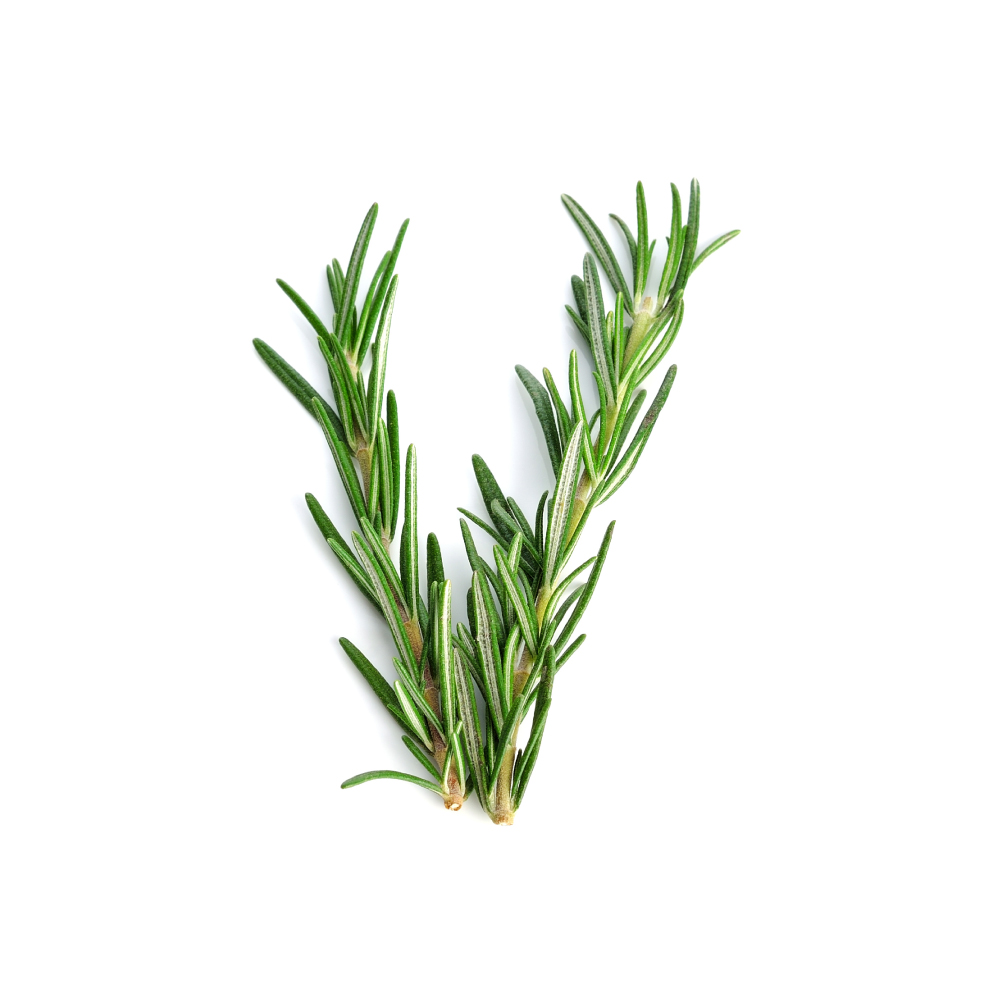
Rosmaricine has no verified natural source. It is recovered from rosemary leaf, but only when ammonia is used in the extraction — the working conclusion since 1965 is that the ammonia makes it. Rosemary appears here as the material it is generated from, not as a plant that contains it.
Concentration
Content by Source
Concentrations not reported. No percent-dry-weight or mg/g figures have been published for this compound in its source plants.
Rosmaricine at a Glance
Rosmaricine is an amino-abietane diterpene — the catechol-bearing tetracyclic frame shared by rosemary’s carnosic acid, carnosol and rosmanol, carrying a lactone and, unusually for a plant terpenoid, a free amino group at the benzylic C-7 position 3Reference 3Rosemary, the beneficial chemistry of a garden herbView study →. It is a discrete, well-defined molecule: C₂₀H₂₇NO₄, molecular weight 345.4, PubChem CID 148619119, CAS 3650-11-1.
Almost everything else about it comes with a caveat, and the caveat is the page.
It is very probably not a rosemary constituent. Rosmaricine is obtained from dried rosemary leaf treated with ammonia in the presence of air, and the current reading of that procedure is that the ammonia is where the nitrogen comes from: the molecule is formed by reaction between oxidation products of carnosic acid and the ammonia added to liberate the alkaloids the Soviet chemists believed were in the plant 2Reference 2New sulfurated derivatives of cinnamic acids and rosmaricine as inhibitors of STAT3 and NF-κB transcription factorsView study →. Wenkert, Fuchs and McChesney reached that conclusion in 1965, in a paper whose title says it plainly — Chemical Artifacts from the Family Labiatae 1Reference 1Chemical artifacts from the family LabiataeView study →. Sixty years later the standard review of rosemary chemistry still records rosmaricine as “an anomalous ‘alkaloid’” shown to be an artefact, with the C-7 amino group introduced from the isolation ammonia 3Reference 3Rosemary, the beneficial chemistry of a garden herbView study →.
Its literature is six PubMed records. Two of them have been retracted. One is a computational docking exercise. One is a 1994 anticancer screen that came back negative. One is a rosemary-extract paper. Exactly one study has measured what the isolated molecule does to anything — and that study made it in the lab, on purpose, to use as a synthetic scaffold 2Reference 2New sulfurated derivatives of cinnamic acids and rosmaricine as inhibitors of STAT3 and NF-κB transcription factorsView study →.
So the job is to close a loop, not to open one. Rosemary’s diterpene pharmacology belongs to carnosic acid and carnosol; rosmaricine is what happens when you go looking for alkaloids in a plant that does not have any.
Is It Actually in the Plant?
The honest answer is: nobody has shown that it is, and the people who work with it say it is not.
The case against natural occurrence rests on three things.
The chemistry. Rosmaricine is recovered only from leaf treated with ammonia and air. Carnosic acid is notoriously unstable and oxidises readily — to carnosol, and onward to rosmanol, epirosmanol, isorosmanol and methyl carnosate — so an ammoniacal extract of rosemary is a flask full of reactive quinone-type oxidation intermediates sitting in a nitrogen nucleophile 12Reference 12Carnosic acidView study →. Adding ammonia across such an intermediate at the benzylic position is an ordinary reaction, not a remarkable one. Wenkert and colleagues made exactly this argument in 1965 and grouped rosmaricine with other Labiatae “isolation products” that were never in the plant 1Reference 1Chemical artifacts from the family LabiataeView study →.
The attribution record. A PubMed search for rosmaricine AND "Rosmarinus officinalis" returns zero records. So does rosmaricine AND "Salvia rosmarinus". A search for rosmaricine AND rosemary returns one — a 2000 cosmetic-dermatology paper on an alcoholic rosemary extract whose substance indexing lists the compound 14Reference 14Biochemical studies of a natural antioxidant isolated from rosemary and its application in cosmetic dermatologyView study →. For a molecule that has been on rosemary constituent lists since the 1960s, that is a striking absence: sixty years of rosemary phytochemistry, including modern LC-MS profiling of the diterpene fraction, has not produced a paper that names it as something found in the plant.
What its own investigators say. The Milan group that has worked with rosmaricine longest describes it, in print and without hedging, as a compound “obtained from dry leaves of Rosmarinus officinalis L. treated with ammonia in the presence of air”, formed “through a complex reaction between some oxidation derivatives of carnosic acid and the ammonia used to liberate the alkaloids supposed to be present in the plant” 2Reference 2New sulfurated derivatives of cinnamic acids and rosmaricine as inhibitors of STAT3 and NF-κB transcription factorsView study →. They use it as a scaffold precisely because it is an unusual synthetic starting material, not because it is a phytochemical.
None of this is a proof of absence. A sensitive modern assay on ammonia-free extract has, as far as the indexed literature goes, never been run, so the possibility of a trace natural pool has not been formally excluded. But the burden of proof sits with the claim of natural occurrence, and there is nothing holding it up.
The Whole Literature, Listed
Six records. It is short enough to print.
| Year | Study | What it was | Ref |
|---|---|---|---|
| 1965 | Legchaev | Soviet cardiovascular pharmacology, Russian-language, abstract only | 7Reference 7Legchaev VYa (1965). [On the mechanism of action of rosmaricin on the cardiovascular system]. Farmakologiia i Toksikologiia 28:170–172. Russian. https://pubmed.ncbi.nlm.nih.gov/5849197/View study → |
| 1967 | Grishaenkov et al. | Soviet radiation-sickness study in mice, Russian-language, abstract only | 8Reference 8AnimalGrishaenkov VM, Ivanov MI, Legchaev VYa (1967). [The effect of rosmaricin on mice in acute radiation sickness]. Meditsinskaia Radiologiia 12:69–70. Russian. https://pubmed.ncbi.nlm.nih.gov/5621330/View study → |
| 1994 | Boido et al. | Rosmaricine derivatives vs. P388 leukaemia — inactive | 6Reference 6Rosmaricine derivatives as potential antitumoral agentsView study → |
| 2000 | Calabrese et al. | Rosemary extract in cosmetic dermatology; indexed to the compound | 14Reference 14Biochemical studies of a natural antioxidant isolated from rosemary and its application in cosmetic dermatologyView study → |
| 2011 | Chang et al. | Docking against influenza haemagglutinin | 11Reference 11Screening from the world’s largest TCM database against H1N1 virusView study → |
| 2011 | Yang et al. | Docking against EGFR — RETRACTED 2026 | 9Reference 9ReviewRETRACTED: Identification of potent EGFR inhibitors from TCM Database@TaiwanView study → |
| 2011 | Chang et al. | Docking against H1N1 — RETRACTED 2026 | 10Reference 10RETRACTED: Two birds with one stone? Possible dual-targeting H1N1 inhibitors from traditional Chinese medicineView study → |
| 2017 | Gabriele et al. | Sulfurated derivatives; the only measured pharmacology | 2Reference 2New sulfurated derivatives of cinnamic acids and rosmaricine as inhibitors of STAT3 and NF-κB transcription factorsView study → |
Two of the eight are retracted. Three of the eight are molecular docking. Two are Soviet abstracts from the 1960s that are not retrievable in full. That leaves one paper with a number in it that belongs to this molecule.
What It's Used For
Support is an experimental score — weighted by study type (human > animal > in vitro) and volume. A beta, not a validated metric. Every score here is capped very low by design: the literature is six records, there is no animal efficacy result, no human data, and a live question over whether the molecule occurs in nature at all.
The only measured pharmacology rosmaricine has. In a 2017 study designed to build sulfurated drug hybrids, the parent molecule was profiled alongside its three new N-acyl derivatives. Rosmaricine bound the STAT3-SH2 domain strongly in the cell-free AlphaScreen assay — 99.7% inhibition at 30 µM, IC₅₀ 1.9 ± 0.1 µM — and carried that through into cells, inhibiting a STAT3 reporter in HeLa at IC₅₀ 42.4 ± 2.4 µM and NF-κB promoter activity in HCT-116 at IC₅₀ 43.4 ± 6.9 µM, with antiproliferative activity against HCT-116 at IC₅₀ 65.2 ± 2.3 µM 2Reference 2New sulfurated derivatives of cinnamic acids and rosmaricine as inhibitors of STAT3 and NF-κB transcription factorsView study →.
Two things temper it. Selectivity is weak — STAT1, which shares 78% sequence homology with STAT3 and has tumour-suppressive roles, was inhibited at 10.0 µM, a selectivity index of only about five 2Reference 2New sulfurated derivatives of cinnamic acids and rosmaricine as inhibitors of STAT3 and NF-κB transcription factorsView study →. And the 30-fold gap between the cell-free IC₅₀ (1.9 µM) and the cellular reporter IC₅₀ (42 µM) is the usual signature of a compound that binds a purified domain far better than it reaches the same protein inside a cell.
The paper’s own interest was in the hybrids, not the parent. Amidifying rosmaricine with a methanesulfonylthio-pentanoic acid gave a 10-fold gain on STAT3 (IC₅₀ 0.2 µM), and the allyldisulfanyl derivative was 19-fold more antiproliferative than rosmaricine (IC₅₀ 3.5 µM on HCT-116, versus 21.2 µM on normal human smooth-muscle cells) 2Reference 2New sulfurated derivatives of cinnamic acids and rosmaricine as inhibitors of STAT3 and NF-κB transcription factorsView study →.
Those numbers belong to synthetic derivatives and must not be read back onto the parent, let alone onto rosemary.
Gap: one laboratory, one paper, no replication, no animal work, no pharmacokinetics. And the compound was synthesised for the study — this is medicinal chemistry on a scaffold, not phytopharmacology.
The oldest deliberate test, and it failed. Boido, Savelli and Sparatore prepared a set of N-(alkylaminoacyl)-O,O-dimethylrosmaricines and combined them with rosmaricine derivatives the group had described earlier, then had them evaluated against P388 lymphocytic leukaemia in mice by the US National Cancer Institute — injected intraperitoneally 24 hours after tumour implantation. Only one compound reached borderline activity; all the others were inactive 6Reference 6Rosmaricine derivatives as potential antitumoral agentsView study →.
The same group notes that rosmaricine had been examined for anticancer activity by Soviet authors soon after its first isolation, but the results were never published in a retrievable form — the only trace is a scanty Chemical Abstracts entry for Vermel and Kruglyak (1962), which their 2017 paper cites and describes as uninformative 2Reference 2New sulfurated derivatives of cinnamic acids and rosmaricine as inhibitors of STAT3 and NF-κB transcription factorsView study →.
The 2017 in-vitro cytotoxicity of 65 µM against HCT-116 cells 2Reference 2New sulfurated derivatives of cinnamic acids and rosmaricine as inhibitors of STAT3 and NF-κB transcription factorsView study → is consistent with the 1994 result rather than in tension with it: 65 µM is a weak, non-selective number of the kind most moderately lipophilic phenolics produce.
Gap: a negative in-vivo screen from 1994 and a weak in-vitro number from 2017 are the whole record. There is no tumour model in which this molecule works.
Three papers have proposed rosmaricine as a drug candidate purely on the basis of virtual screening of the TCM Database@Taiwan, and none of them tested it.
A 2011 study docking against influenza haemagglutinin H1 put two de novo rosmaricine derivatives (labelled rosmaricine_14 and rosmaricine_15) among its top three hits 11Reference 11Screening from the world’s largest TCM database against H1N1 virusView study →. A second 2011 paper named rosmaricine among four top candidates as a potential EGFR inhibitor, alongside emetine and two tartaric-acid esters 9Reference 9ReviewRETRACTED: Identification of potent EGFR inhibitors from TCM Database@TaiwanView study →. A third proposed de novo rosmaricine derivatives as dual H1/N1 inhibitors 10Reference 10RETRACTED: Two birds with one stone? Possible dual-targeting H1N1 inhibitors from traditional Chinese medicineView study →.
Both of the PLOS Computational Biology papers in that set were retracted on 9 June 2026, over concerns about compromised peer review 9,
Gap: total. Not one of these predictions has been followed by an assay. A docking score is a hypothesis about a pose, and none of these three ever became data.
Two Russian-language papers from the 1960s tested “rosmaricin” — the transliteration used in the Soviet literature — in animals. Legchaev studied its mechanism of action on the cardiovascular system 7Reference 7Legchaev VYa (1965). [On the mechanism of action of rosmaricin on the cardiovascular system]. Farmakologiia i Toksikologiia 28:170–172. Russian. https://pubmed.ncbi.nlm.nih.gov/5849197/View study →; Grishaenkov, Ivanov and Legchaev tested its effect on mice in acute radiation sickness 8Reference 8AnimalGrishaenkov VM, Ivanov MI, Legchaev VYa (1967). [The effect of rosmaricin on mice in acute radiation sickness]. Meditsinskaia Radiologiia 12:69–70. Russian. https://pubmed.ncbi.nlm.nih.gov/5621330/View study →.
Neither is available beyond its PubMed citation record; both are one- or two-page notes in journals whose 1960s back-content is not digitised, and PubMed carries no abstract for either.
They are listed for completeness and because this is where the vague reputation for cardiovascular and protective effects originates. Nothing here rests on them. What can be said is only that the work happened, and that it was not followed up in the sixty years since.
Gap: unrecoverable primary text. Anyone with library access to Farmakologiia i Toksikologiia 28 (1965) and Meditsinskaia Radiologiia 12 (1967) could close this.
Mechanisms
| Target / pathway | Effect | System | Relevance |
|---|---|---|---|
| STAT3-SH2 domain | binding inhibition, IC₅₀ 1.9 µM | cell-free AlphaScreen 2Reference 2New sulfurated derivatives of cinnamic acids and rosmaricine as inhibitors of STAT3 and NF-κB transcription factorsView study → | in vitro only |
| STAT1-SH2 domain | binding inhibition, IC₅₀ 10.0 µM | cell-free AlphaScreen 2Reference 2New sulfurated derivatives of cinnamic acids and rosmaricine as inhibitors of STAT3 and NF-κB transcription factorsView study → | selectivity index ~5 |
| STAT3 reporter | IC₅₀ 42.4 µM | HeLa cells 2Reference 2New sulfurated derivatives of cinnamic acids and rosmaricine as inhibitors of STAT3 and NF-κB transcription factorsView study → | in vitro only |
| NF-κB promoter | IC₅₀ 43.4 µM | HCT-116 cells 2Reference 2New sulfurated derivatives of cinnamic acids and rosmaricine as inhibitors of STAT3 and NF-κB transcription factorsView study → | in vitro only |
| Cell proliferation | IC₅₀ 65.2 µM | HCT-116 cells 2Reference 2New sulfurated derivatives of cinnamic acids and rosmaricine as inhibitors of STAT3 and NF-κB transcription factorsView study → | weak, non-selective |
| P388 leukaemia | inactive | mouse, i.p. 6Reference 6Rosmaricine derivatives as potential antitumoral agentsView study → | the only in-vivo efficacy test |
Pharmacokinetics
None. There is no absorption, distribution, metabolism or excretion study of rosmaricine in any species, and no analytical method for measuring it in a biological matrix. The question is also somewhat moot: a molecule that is not present in the plant is not something an oral rosemary preparation can deliver, so there is no dietary exposure to characterise.
Clinical Trials
None, under any name, at any time.
| Completed | Planned | Terminated | Preclinical |
|---|---|---|---|
| —(none) | — | — | 1in-vitro paper, 1 negative mouse screen |
Last checked: August 2026.
Where It Sits in the Rosemary Diterpene Cascade
Rosemary’s real diterpene story is one of instability. Carnosic acid is the plant’s principal phenolic diterpene and the active carried by food-grade rosemary extract, and it oxidises readily — first to carnosol, then onward to rosmanol, epirosmanol, isorosmanol and methyl carnosate. The composition of any given rosemary preparation is therefore a function of extraction solvent, heat, light and storage age as much as of the plant 12Reference 12Carnosic acidView study →.
Rosmaricine is best understood as a branch off that cascade that only opens in the laboratory. Where carnosol and rosmanol are what carnosic acid becomes in air, rosmaricine is what one of those oxidation intermediates becomes in air plus ammonia 1,
The Soviet group did not stop at one such compound: a fourth paper in the same series described isorosmaricine, a stereoisomeric partner recovered from the same kind of preparation 5Reference 5A study of Rosmarinus officinalis IVView study →, which is what one would expect if the amino group is being added non-stereospecifically to an oxidised intermediate rather than installed by an enzyme.
Discovery & Synthesis
The molecule was described in the early 1960s by L. D. Yakhontova and A. D. Kuzovkov at the All-Union Scientific Research Institute of Pharmaceutical Chemistry in Moscow, in a series titled Alkaloids of the Rosmarinus genus — the framing matters, because they were looking for alkaloids and used ammonia to liberate the free bases they expected to find. The third paper in the series, published in Chemistry of Natural Compounds in 1967, is titled The nature of rosmaricine from Rosmarinus officinalis 4Reference 4The nature of rosmaricine from Rosmarinus officinalisView study →; a fourth, in 1971, added isorosmaricine 5Reference 5A study of Rosmarinus officinalis IVView study →.
In between, Wenkert, Fuchs and McChesney published Chemical Artifacts from the Family Labiatae in the Journal of Organic Chemistry in 1965 1Reference 1Chemical artifacts from the family LabiataeView study → — the paper that is still cited, sixty years later, as the demonstration that the C-7 amino group came out of the ammonia bottle 2,
There is no biosynthetic route, because there is no biosynthesis. Preparative access is semi-synthetic in the loosest sense: ammoniacal extraction of rosemary leaf in air, followed by chromatography 2Reference 2New sulfurated derivatives of cinnamic acids and rosmaricine as inhibitors of STAT3 and NF-κB transcription factorsView study →. The only sustained chemistry on it has been derivatisation — the Genoa and Milan groups have made N-substituted, O,O-dimethylated, N-aminoacyl and sulfurated-hybrid derivatives across five decades 2,
Toxicity & Safety
Not characterised, and there is no exposure to characterise. No acute-toxicity study, no genotoxicity panel, no reproductive or developmental data, no repeat-dose work. The unknown grading is literal: nothing has been looked for.
The one practical point is reassuring in an unusual way. Because rosmaricine is an artefact of an ammoniacal laboratory procedure, no rosemary product delivers it — not the culinary herb, not a tea or tincture, not the essential oil, and not the food-grade rosemary diterpene extract used as an antioxidant. Whatever the safety questions about rosemary are, this molecule is not among them.
- No human exposure. Rosmaricine is not a constituent of rosemary food, tea, tincture, oil or extract 1,
2, .3Reference 1Chemical artifacts from the family LabiataeView study →Reference 2New sulfurated derivatives of cinnamic acids and rosmaricine as inhibitors of STAT3 and NF-κB transcription factorsView study →Reference 3Rosemary, the beneficial chemistry of a garden herbView study → - No adverse effect has been reported. It has also never been looked for — different statements.
- No toxicology of any kind exists. No acute, repeat-dose, genotoxicity or reproductive study has been published on the isolated compound.
- Two of the papers naming it have been retracted. Both 2011 PLOS Computational Biology docking papers were withdrawn in June 2026 9,
10Reference 9ReviewRETRACTED: Identification of potent EGFR inhibitors from TCM Database@TaiwanView study →Reference 10RETRACTED: Two birds with one stone? Possible dual-targeting H1N1 inhibitors from traditional Chinese medicineView study → . - Do not read carnosol’s or carnosic acid’s safety record onto it. They are related skeletons, not the same molecule, and only they are actually in the plant 12Reference 12Carnosic acidView study →.
- Treat any commercial “rosmaricine” as a research chemical. It is a laboratory scaffold with a single in-vitro dataset behind it, not a supplement ingredient.
Dosage
There is none. Rosmaricine has never been given to a human being, and there is no animal dosing study to extrapolate from. Every published number is an in-vitro concentration at a purified protein or a cultured cell line.
Nor is there an incidental dietary exposure to describe, which is the unusual part: unlike almost every other molecule here, you cannot obtain rosmaricine by consuming the plant it is named after. Nothing here is a recommendation, and nothing on it should be transferred to rosemary.
References
- Wenkert E, Fuchs A, McChesney JD (1965). Chemical artifacts from the family Labiatae. The Journal of Organic Chemistry 30:2931–2934. https://doi.org/10.1021/jo01020a012
- Gabriele E, Brambilla D, Ricci C, Regazzoni L, Taguchi K, Ferri N, Asai A, Sparatore A (2017). New sulfurated derivatives of cinnamic acids and rosmaricine as inhibitors of STAT3 and NF-κB transcription factors. Journal of Enzyme Inhibition and Medicinal Chemistry. https://pubmed.ncbi.nlm.nih.gov/28738705/
- Hanson JR (2016). Rosemary, the beneficial chemistry of a garden herb. Science Progress 99:83–91. https://pubmed.ncbi.nlm.nih.gov/27120816/
- Yakhontova LD, Kuzovkov AD (1967). The nature of rosmaricine from Rosmarinus officinalis. III. Chemistry of Natural Compounds 3:118. https://doi.org/10.1007/BF00567185
- Yakhontova LD, Sheichenko VI, Tolkachev ON (1971). A study of Rosmarinus officinalis IV. Isorosmaricine. Chemistry of Natural Compounds 7:396–398. https://doi.org/10.1007/BF00564722
- Boido A, Savelli F, Sparatore F (1994). Rosmaricine derivatives as potential antitumoral agents. Farmaco 49:111–114. https://pubmed.ncbi.nlm.nih.gov/8003178/
- Legchaev VYa (1965). [On the mechanism of action of rosmaricin on the cardiovascular system]. Farmakologiia i Toksikologiia 28:170–172. Russian. https://pubmed.ncbi.nlm.nih.gov/5849197/
- Grishaenkov VM, Ivanov MI, Legchaev VYa (1967). [The effect of rosmaricin on mice in acute radiation sickness]. Meditsinskaia Radiologiia 12:69–70. Russian. https://pubmed.ncbi.nlm.nih.gov/5621330/
- Yang SC, Chang SS, Chen HY, Chen CY (2011). RETRACTED: Identification of potent EGFR inhibitors from TCM Database@Taiwan. PLoS Computational Biology 7:e1002189. https://pubmed.ncbi.nlm.nih.gov/22022246/ — retracted 9 June 2026 over compromised peer review; do not cite as evidence.
- Chang SS, Huang HJ, Chen CY (2011). RETRACTED: Two birds with one stone? Possible dual-targeting H1N1 inhibitors from traditional Chinese medicine. PLoS Computational Biology 7:e1002315. https://pubmed.ncbi.nlm.nih.gov/22215997/ — retracted 9 June 2026; do not cite as evidence.
- Chang TT, Sun MF, Chen HY, Tsai FJ, Fisher M, Lin JG, Chen CY (2011). Screening from the world’s largest TCM database against H1N1 virus. Journal of Biomolecular Structure and Dynamics 28:773–786. https://pubmed.ncbi.nlm.nih.gov/21294588/
- Birtić S, Dussort P, Pierre FX, Bily AC, Roller M (2015). Carnosic acid. Phytochemistry 115:9–19. https://pubmed.ncbi.nlm.nih.gov/25639596/
- Brieskorn CH, Fuchs A, Bredenberg JB, McChesney JD, Wenkert E (1964). The structure of carnosol. The Journal of Organic Chemistry 29:2293–2298. https://doi.org/10.1021/jo01031a044
- Calabrese V, Scapagnini G, Catalano C, Dinotta F, Geraci D, Morganti P (2000). Biochemical studies of a natural antioxidant isolated from rosemary and its application in cosmetic dermatology. International Journal of Tissue Reactions 22:5–13. https://pubmed.ncbi.nlm.nih.gov/10937349/



