
Compound Monograph
Santin
Santin (5,7-dihydroxy-3,6,4′-trimethoxyflavone) is a lipophilic O-methylated flavonol of feverfew (Tanacetum parthenium) aerial parts and other Asteraceae — one of a family of sibling methylated flavonols whose ring methylation raises membrane permeability. It shows anti-inflammatory, antiproliferative and anti-influenza activity, but the evidence is entirely in-vitro on the isolated molecule.

Sources · 5
Where Does It Come From?
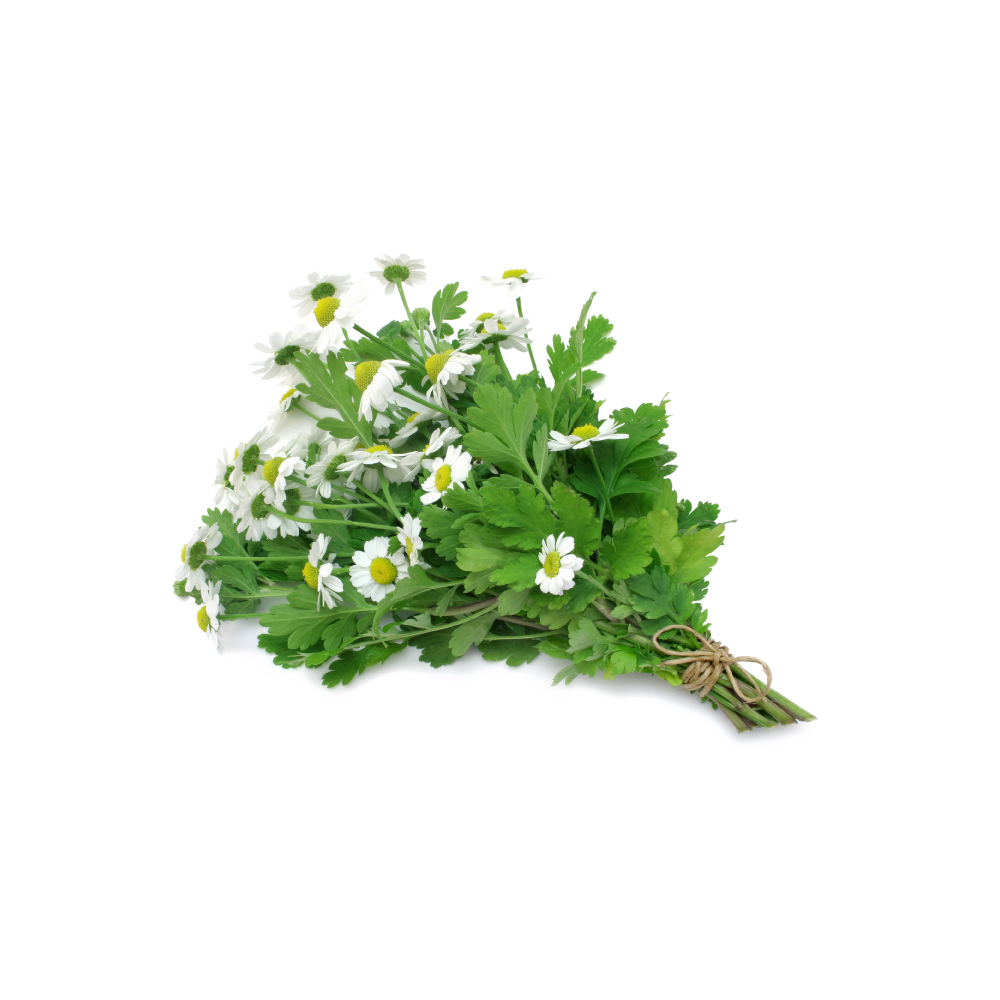
Santin is a naturally occurring o-methylated flavonol (6-hydroxykaempferol 3,6,4′-trimethyl ether), found in Feverfew, Tanacetum microphyllum and 3 other sources. It is well tolerated orally (low toxicity).
Concentration
Content by Source
Concentrations not reported. No percent-dry-weight or mg/g figures have been published for this compound in its source plants.
Santin at a Glance
Santin is a lipophilic O-methylated flavonol — systematically 5,7-dihydroxy-3,6,4′-trimethoxyflavone, or equivalently 6-hydroxykaempferol 3,6,4′-trimethyl ether. It is one of the small family of methylated flavonols that characterise the aerial parts of feverfew (Tanacetum parthenium), where it co-occurs with sibling flavonols such as tanetin and jaceidin 1,
In laboratory studies the isolated molecule shows three overlapping activities: anti-inflammatory (it suppresses inducible nitric-oxide synthase and cyclo-oxygenase-2 in stimulated macrophages) 3Reference 3Inhibition of inducible nitric oxide synthase and cyclooxygenase-2 expression by flavonoids isolated from Tanacetum microphyllumView study →, antiproliferative / pro-apoptotic in several cancer cell lines 4,
Because santin is a trace flavonol tested only at high in-vitro concentrations, its safety profile is best read as “no dedicated toxicology and no meaningful human exposure,” rather than as an established safe or active substance.
Structure: A Methylated Flavonol
Santin is the point where the entry earns its keep, because its methylation pattern is the whole story. A parent flavonol like kaempferol or quercetin carries free hydroxyl groups that make it relatively polar and prone to rapid phase-II conjugation. Santin is built on 6-hydroxykaempferol with three of those positions — the 3-, 6- and 4′-hydroxyls — capped as methyl ethers, leaving only the 5- and 7-hydroxyls free 1,
That O-methylation has two consequences that recur throughout the pharmacology below:
- Higher lipophilicity / membrane permeability. Methylating the hydroxyls removes hydrogen-bond donors and raises log P, so santin partitions into lipid membranes more readily than its unmethylated parents — the reason it is grouped with the “lipophilic flavonoids” of feverfew rather than the water-soluble flavone glycosides 1,
2Reference 1A biologically active lipophilic flavonol from Tanacetum partheniumView study →Reference 2The flavonoids of Tanacetum parthenium and T. vulgare and their anti-inflammatory propertiesView study → . - A distinct, easily-confused identity. Santin sits in a cluster of feverfew methylated flavonols that differ only in which positions are hydroxylated versus methylated — tanetin (a 6-hydroxykaempferol methyl ether) and the quercetagetin-derived jaceidin and centaureidin 1,
2Reference 1A biologically active lipophilic flavonol from Tanacetum partheniumView study →Reference 2The flavonoids of Tanacetum parthenium and T. vulgare and their anti-inflammatory propertiesView study → . These closely-related isomers form hard-to-resolve mixtures, which has caused real confusion in the older literature about which one is present and active. Santin itself is the fixed compound CAS 27782-63-4 (C₁₈H₁₆O₇, MW 344.3).
Note that santin is not the same molecule as jaceidin: jaceidin carries an extra 3′-hydroxyl (it is a quercetagetin, not a kaempferol, derivative). The two are siblings, not synonyms.
What It's Used For
Santin’s research base is small and uniform in kind: isolated-compound, in-vitro assays, spread across inflammation, cancer cell lines and influenza. There is no whole-animal or human work.
Support is an experimental score — weighted by study type (human > animal > in vitro) and volume. A beta, not a validated metric. Every santin application rests on isolated-compound in-vitro data only, so scores stay low by design.
Santin’s best-characterised activity, tested as the isolated compound. In LPS-stimulated RAW 264.7 macrophages, santin (one of four flavonoids from Tanacetum microphyllum) suppressed the induction of both iNOS and COX-2 on Western blot and lowered nitric oxide and prostaglandin E₂ concentration-dependently 3Reference 3Inhibition of inducible nitric oxide synthase and cyclooxygenase-2 expression by flavonoids isolated from Tanacetum microphyllumView study →.
This is mechanistically consistent with the older feverfew work, in which the plant’s methylated 6-hydroxykaempferol flavonols inhibited arachidonate metabolism (the eicosanoid-generating pathways) more potently than the corresponding tansy flavonoids 2Reference 2The flavonoids of Tanacetum parthenium and T. vulgare and their anti-inflammatory propertiesView study →.
Gap: in-vitro macrophage assays of the isolate only; no animal or human anti-inflammatory data, and in feverfew this flavonol acts within a fraction alongside apigenin, luteolin and others rather than alone 2,
A consistent isolated-compound signal across digestive-tract cancer lines. In human colon-cancer cells (SW480, SW620), santin at 25–100 µM potentiated TRAIL-induced apoptosis — raising apoptotic fractions well above TRAIL alone — by upregulating surface death receptors TRAIL-R1 and TRAIL-R2 and synergistically increasing loss of mitochondrial membrane potential 5Reference 5Santin (5,7-dihydroxy-3,6,4′-trimethoxyflavone) enhances TRAIL-mediated apoptosis in colon cancer cellsView study →.
Separately, santin isolated from Betula pubescens / B. pendula buds reduced viability, proliferation and clonogenicity of gastric (AGS), colon (DLD-1) and liver (HepG2) cells and induced apoptosis with activation of caspase-3, -7, -8 and -9 and upregulation of wild-type p53 4Reference 4Santin and cirsimaritin from Betula pubescens and Betula pendula buds induce apoptosis in human digestive system cancer cellsView study →.
Gap: entirely in-vitro on cultured cancer lines at 25–100 µM; one birch study included a normal-fibroblast control (a hint of selectivity) but there is no in-vivo tumour, pharmacokinetic or human data 4,
A single in-vitro study. In influenza-A-infected MDCK and THP-1 cells, santin inhibited viral replication and depressed phosphorylation of p38 MAPK, JNK/SAPK and ERK together with NF-κB, attenuating the downstream inflammatory-cytokine response 6Reference 6Santin inhibits influenza A virus replication through regulating MAPKs and NF-κB pathwaysView study →. The proposed action is therefore as much on the host inflammatory-signalling side as directly antiviral.
Gap: one cell-culture study, no animal challenge model, no potency/EC₅₀ context versus standard antivirals, and no human data 6Reference 6Santin inhibits influenza A virus replication through regulating MAPKs and NF-κB pathwaysView study →.
Mechanisms
| Target / pathway | Effect | Relevant to |
|---|---|---|
| Inducible NO synthase (iNOS) | suppresses LPS-induced expression → ↓ nitric oxide | anti-inflammatory |
| Cyclo-oxygenase-2 (COX-2) | suppresses LPS-induced expression → ↓ PGE₂ | anti-inflammatory |
| Arachidonate metabolism (COX / lipoxygenase) | feverfew methylated flavonols inhibit pro-inflammatory eicosanoid generation | anti-inflammatory |
| TRAIL death receptors (TRAIL-R1/DR4, TRAIL-R2/DR5) | upregulated on colon-cancer cells → sensitises to TRAIL apoptosis | antiproliferative |
| Mitochondrial membrane potential / caspase cascade | synergistic depolarisation with TRAIL; caspase-8/9/3/7 activation; p53 upregulation | antiproliferative |
| MAPK (p38, JNK/SAPK, ERK) & NF-κB | ↓ phosphorylation → ↓ cytokines and ↓ influenza-A replication in infected cells | antiviral |
The recurring theme is transcriptional/enzyme-expression damping — iNOS/COX-2 and NF-κB/MAPK — rather than one receptor. All of it is cell-based.
Pharmacokinetics
There is essentially no pharmacokinetic data on santin. What can be said is structural rather than measured: as a trimethylated flavonol it is more lipophilic and metabolically more stable than free-hydroxyl flavonols like quercetin, which in principle favours membrane permeation and slower phase-II conjugation. But no santin-specific absorption, oral bioavailability, distribution, metabolism or half-life figures exist, and the in-vitro active concentrations (25–100 µM) are far above anything a person would plausibly reach from dietary feverfew or birch exposure. This missing ADME layer is the single biggest caveat on every in-vitro claim above.
Clinical Trials
There are no clinical trials of santin, and no animal studies. The entire evidence base is isolated-compound cell culture.
| Completed | Planned | Terminated | Preclinical |
|---|---|---|---|
| — | — | — | In-vitro only: anti-inflammatory (iNOS/COX-2), anticancer (TRAIL / caspase apoptosis), anti-influenza (MAPK/NF-κB) |
Last checked: July 2026.
Isolate vs. Plant Studies
Unusually, every santin result is the isolated molecule — the RAW 264.7 anti-inflammatory assays 3Reference 3Inhibition of inducible nitric oxide synthase and cyclooxygenase-2 expression by flavonoids isolated from Tanacetum microphyllumView study →, the SW480/SW620 TRAIL work 5Reference 5Santin (5,7-dihydroxy-3,6,4′-trimethoxyflavone) enhances TRAIL-mediated apoptosis in colon cancer cellsView study →, the AGS/DLD-1/HepG2 birch-bud apoptosis study 4Reference 4Santin and cirsimaritin from Betula pubescens and Betula pendula buds induce apoptosis in human digestive system cancer cellsView study → and the MDCK/THP-1 influenza study 6Reference 6Santin inhibits influenza A virus replication through regulating MAPKs and NF-κB pathwaysView study → all test purified santin, not a whole extract. That removes the usual “which constituent did it?” ambiguity for the in-vitro claims.
The catch is the reverse: no whole-plant study isolates santin’s own contribution to a therapeutic effect. In feverfew, the herb’s documented anti-migraine and anti-inflammatory reputation rests on the sesquiterpene lactone parthenolide and the broader flavonoid fraction collectively 1,
Prevalence in Nature
Santin is a minor lipophilic flavonol of the Asteraceae. It is characterised in feverfew (Tanacetum parthenium) leaf, flower and seed, within the group of methylated 6-hydroxykaempferol / quercetagetin flavonols that also includes tanetin, jaceidin and centaureidin 1,
Discovery & Synthesis
Santin is a defined single compound (CAS 27782-63-4; C₁₈H₁₆O₇; molecular weight 344.3) corresponding to 6-hydroxykaempferol 3,6,4′-trimethyl ether. Its first-isolation history is not well documented in the readily accessible literature; it enters the record as one of the catalogued methylated flavonols of the Asteraceae, and its feverfew context was established through the Williams group’s characterisation of the herb’s lipophilic flavonols — the same work that named its sibling tanetin — in leaf, flower and seed 1,
Patents: not yet researched.
Toxicity & Safety
Santin carries a low flag, but that flag means “no toxicological signal because there is essentially no toxicological data,” not a demonstrated clean safety record. It is a trace dietary methylated flavonol, and human exposure from feverfew or birch is negligible compared with the 25–100 µM used in cell culture.
- Trace dietary flavonol. Real-world exposure from feverfew or birch is very low; there is no evidence of harm at dietary levels.
- A hint of cancer-cell selectivity. In one birch-bud study santin was cytotoxic to cancer lines while a normal-fibroblast control was included as comparison 4Reference 4Santin and cirsimaritin from Betula pubescens and Betula pendula buds induce apoptosis in human digestive system cancer cellsView study → — suggestive, not conclusive.
- No toxicology package. No repeat-dose, genotoxicity, reproductive or pharmacokinetic data exist for isolated santin; safety is unknown at the high concentrations used in vitro.
- In-vitro concentrations are not achievable from food. The active 25–100 µM levels far exceed plausible human exposure, so the cell-based activities do not translate to a dietary or supplemental effect.
- Pregnancy/lactation is a per-herb decision. Any caution belongs on the feverfew monograph (feverfew itself is traditionally avoided in pregnancy), not on this molecule page; there are no santin-specific reproductive data.
Dosage
There is no established or recommended human dose for santin. It has never been dosed in people or animals; the only figures in the literature are the 25–100 µM in-vitro concentrations used in cell-culture assays 4,
References
- Williams CA, Hoult JR, Harborne JB, Greenham J, Eagles J (1995). A biologically active lipophilic flavonol from Tanacetum parthenium. Phytochemistry. https://pubmed.ncbi.nlm.nih.gov/7766058/
- Williams CA, Harborne JB, Geiger H, Hoult JR (1999). The flavonoids of Tanacetum parthenium and T. vulgare and their anti-inflammatory properties. Phytochemistry. https://pubmed.ncbi.nlm.nih.gov/10382317/
- Guerra JA, Molina M, Abad MJ, Villar AM, Paulina B (2006). Inhibition of inducible nitric oxide synthase and cyclooxygenase-2 expression by flavonoids isolated from Tanacetum microphyllum. International Immunopharmacology. https://pubmed.ncbi.nlm.nih.gov/16979127/
- Szoka Ł, Nazaruk J, Stocki M, Isidorov V (2021). Santin and cirsimaritin from Betula pubescens and Betula pendula buds induce apoptosis in human digestive system cancer cells. Journal of Cellular and Molecular Medicine. https://pubmed.ncbi.nlm.nih.gov/34755444/
- Kłósek M, Jaworska D, Pietsz G, Szliszka E (2023). Santin (5,7-dihydroxy-3,6,4′-trimethoxyflavone) enhances TRAIL-mediated apoptosis in colon cancer cells. Life (Basel). https://pubmed.ncbi.nlm.nih.gov/36836951/
- Zhong M, Wang HQ, Yan HY, Wu S, Gu ZY, Li YH (2019). Santin inhibits influenza A virus replication through regulating MAPKs and NF-κB pathways. Journal of Asian Natural Products Research. https://pubmed.ncbi.nlm.nih.gov/30417663/



