
Compound Monograph
Tanetin
Tanetin is a lipophilic, methylated flavonol (6-hydroxykaempferol 3,7,4′-trimethyl ether) characteristic of feverfew (Tanacetum parthenium). It is a co-occurring surface-exudate flavonol that may add to feverfew's anti-inflammatory activity — but the headline anti-migraine molecule is the sesquiterpene lactone parthenolide, not tanetin.

Sources · 2
Where Does It Come From?
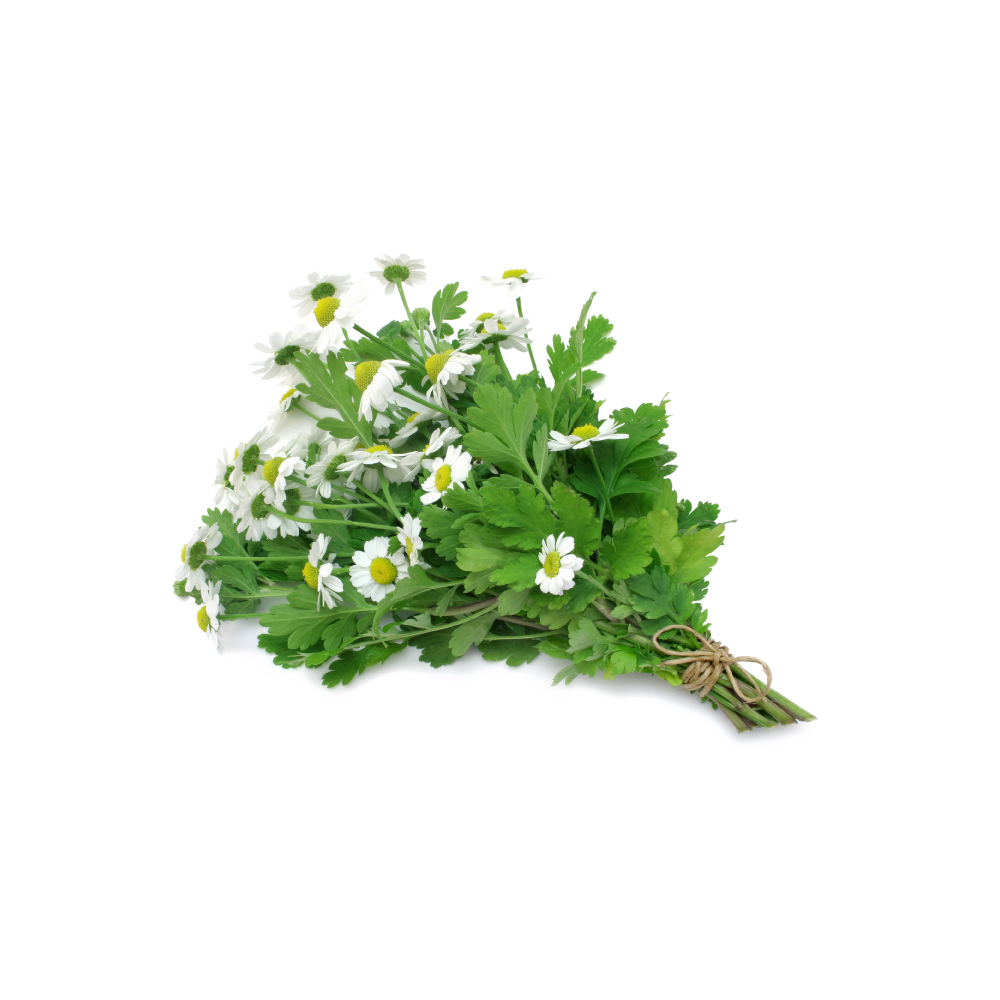
Tanetin is a naturally occurring methylated flavonol (6-hydroxykaempferol 3,7,4′-trimethyl ether), found in Feverfew — aerial parts and 1 other source. It is well tolerated orally (low toxicity).
Concentration
Content by Source
Concentrations not reported. No percent-dry-weight or mg/g figures have been published for this compound in its source plants.
Tanetin at a Glance
Tanetin is a lipophilic, methylated flavonol — chemically 6-hydroxykaempferol 3,7,4′-trimethyl ether — first characterised in 1995 from the surface exudate of feverfew (Tanacetum parthenium) 1Reference 1A biologically active lipophilic flavonol from Tanacetum partheniumView study →. Its name comes straight from the plant genus, Tanacetum.
Feverfew is famous as an anti-migraine herb, but that reputation rests on its sesquiterpene lactone parthenolide, not on its flavonols 3,
The honest headline: tanetin’s evidence is thin and in-vitro. Its structure is well characterised, but its bioactivity was measured as part of a flavonoid fraction, never as an isolate in any cell, animal or human model, and it has no pharmacokinetic data of its own. This page is deliberately lean.
Feverfew’s Surface-Flavonol Chemistry
This is the reason the page exists: tanetin only makes sense in the context of feverfew’s chemistry, where it is a bit-player alongside a much more famous molecule.
Feverfew’s medicinal signal is carried chiefly by sesquiterpene lactones — above all parthenolide, a germacranolide that binds cysteine-179 of IKKβ and suppresses NF-κB-driven inflammation, and which is the compound feverfew products are standardised to 3Reference 3The anti-inflammatory natural product parthenolide from the medicinal herb feverfew directly binds to and inhibits IκB kinaseView study →. Separately, the aerial parts carry a suite of lipophilic, methylated flavonoids concentrated in the plant’s surface exudate and glandular trichomes 2Reference 2The flavonoids of Tanacetum parthenium and T. vulgare and their anti-inflammatory propertiesView study →. Tanetin belongs to this second group.
Three features define this flavonol set:
- Heavy methylation. Tanetin is a 6-hydroxykaempferol trimethyl ether — a kaempferol skeleton with an extra 6-hydroxyl and three O-methyl groups 1Reference 1A biologically active lipophilic flavonol from Tanacetum partheniumView study →. Methylation makes these flavonols lipophilic (surface-exudate, not vacuolar) rather than the water-soluble glycosides that dominate inside the leaf cells.
- Co-occurrence with siblings. Tanetin is reported together with the closely related 6-hydroxyflavonol methyl ethers santin and jaceidin, plus the parent flavones apigenin and luteolin in the same tissues 2Reference 2The flavonoids of Tanacetum parthenium and T. vulgare and their anti-inflammatory propertiesView study →. These are structural cousins of the common dietary flavonols kaempferol and quercetin.
- A distinct anti-inflammatory route from parthenolide. Where parthenolide acts through IKKβ/NF-κB 3Reference 3The anti-inflammatory natural product parthenolide from the medicinal herb feverfew directly binds to and inhibits IκB kinaseView study →, the feverfew 6-hydroxyflavonols inhibit the arachidonate pathways — cyclo-oxygenase and 5-lipoxygenase — and did so more potently than the analogous 6-hydroxyflavones of tansy (T. vulgare) in the one comparative study 2Reference 2The flavonoids of Tanacetum parthenium and T. vulgare and their anti-inflammatory propertiesView study →. So tanetin’s proposed contribution is additive and mechanistically separate, not a duplicate of the lactone’s.
The load-bearing caveat: this is candidacy, not demonstrated efficacy. Tanetin’s contribution to feverfew’s clinical effect has never been isolated from parthenolide’s, and feverfew’s own migraine evidence is only low-quality 5Reference 5Systematic reviewFeverfew for preventing migraineView study →.
What It's Used For
Tanetin’s pharmacology is almost entirely inferred from two Williams-group phytochemistry papers on feverfew’s flavonoids 1,
Support is an experimental score — weighted by study type (human > animal > in vitro) and volume. A beta, not a validated metric. Both rows are thin, in-vitro, and fraction-level; read the per-row basis.
The one application with any direct data. When feverfew’s 6-hydroxyflavonol methyl ethers — the group tanetin belongs to — were tested, they inhibited the major arachidonate pathways in leukocytes, i.e. cyclo-oxygenase and 5-lipoxygenase, and were more potent than the 6-hydroxyflavones of tansy 2Reference 2The flavonoids of Tanacetum parthenium and T. vulgare and their anti-inflammatory propertiesView study →.
The discovery paper had already proposed that tanetin “could contribute to the anti-inflammatory properties of feverfew by inhibiting the generation of pro-inflammatory eicosanoids” 1Reference 1A biologically active lipophilic flavonol from Tanacetum partheniumView study →.
This is isolate-level in the narrow sense that the compounds were purified and their structures assigned, but the bioactivity was read on the flavonoid fraction/group, not on tanetin alone.
Gap: no potency figure (IC₅₀) is attributable to tanetin specifically, and there is no cellular, animal or human confirmation — only cell-free/leukocyte enzyme assays on a mixed 6-hydroxyflavonol set 1,
Tanetin’s second “application” is really a hypothesis: that feverfew’s clinical effect is not solely parthenolide’s and that the methylated flavonols add an independent anti-inflammatory increment 1,
The problem is attribution. Feverfew’s mechanistic story is dominated by parthenolide’s IKKβ/NF-κB inhibition 3Reference 3The anti-inflammatory natural product parthenolide from the medicinal herb feverfew directly binds to and inhibits IκB kinaseView study →, its products are standardised to parthenolide, and even feverfew’s broader anti-inflammatory profile is largely in-vitro without matching clinical efficacy — whole feverfew inhibits ICAM-1, TNF-α and IFN-γ expression in cell studies yet has not shown benefit in rheumatoid-arthritis trials 4Reference 4Herbal medications commonly used in the practice of rheumatology: mechanisms of action, efficacy, and side effectsView study →.
The whole-herb migraine evidence is itself only low-quality — a Cochrane review found roughly 0.6 fewer attacks per month versus placebo, needing confirmation 5Reference 5Systematic reviewFeverfew for preventing migraineView study →.
Gap: tanetin’s independent contribution has never been isolated from parthenolide’s or the rest of the flavonoid fraction in any efficacy model; this remains plausible chemistry, not shown pharmacology 3,
Mechanisms
| Target / pathway | Effect | Relevant to |
|---|---|---|
| Cyclo-oxygenase (COX) | inhibition, as part of feverfew’s 6-hydroxyflavonol fraction (in vitro) | anti-inflammatory / eicosanoid |
| 5-Lipoxygenase (5-LOX) | inhibition, as part of the same flavonol fraction (in vitro) | anti-inflammatory / eicosanoid |
| Pro-inflammatory eicosanoid generation | suppression of arachidonate-pathway products in leukocytes | anti-inflammatory |
| IKKβ / NF-κB (for contrast) | parthenolide’s route, not tanetin’s — the lactone, not the flavonol, carries this | feverfew pharmacology (contrast) |
The load-bearing point: tanetin’s proposed action (arachidonate/eicosanoid inhibition) is mechanistically separate from parthenolide’s NF-κB route, so any contribution would be additive — but it is measured only at the fraction level in vitro 1,
Pharmacokinetics
None characterised. No absorption, distribution, metabolism, bioavailability or half-life data exist for tanetin. From its structure one can only note that heavy O-methylation makes it lipophilic (hence its residence in the plant’s surface exudate rather than the aqueous vacuole) 2Reference 2The flavonoids of Tanacetum parthenium and T. vulgare and their anti-inflammatory propertiesView study →; methylated flavonols are, as a class, often better membrane-permeant but variably absorbed, and none of that has been measured for tanetin. Because there is no measured oral bioavailability, the in-vitro enzyme-inhibition findings cannot be assumed to reach any relevant concentration in a person.
Clinical Trials
There are no clinical trials of tanetin — as an isolate it has never entered human testing. The only human-level evidence in this vicinity is for whole feverfew in migraine prevention, which remains low-quality and inconclusive 5Reference 5Systematic reviewFeverfew for preventing migraineView study →.
| Completed | Planned | Terminated | Preclinical |
|---|---|---|---|
| — | — | — | In-vitro enzyme inhibition (COX/5-LOX), as part of a feverfew flavonol fraction 1, |
Last checked: July 2026.
Isolate vs. Plant Studies
For tanetin the isolate-vs-plant distinction cuts against the compound. Its structure was determined on the purified isolate 1Reference 1A biologically active lipophilic flavonol from Tanacetum partheniumView study →, but its bioactivity was only ever read on a feverfew 6-hydroxyflavonol group/fraction in cell-free and leukocyte assays 2Reference 2The flavonoids of Tanacetum parthenium and T. vulgare and their anti-inflammatory propertiesView study → — never on tanetin alone in a cell, animal or person. Meanwhile the human evidence belongs entirely to the whole herb, whose effect is attributed to parthenolide and standardised accordingly 3,
Prevalence in Nature
Tanetin was characterised in the leaf, flower and seed of feverfew (Tanacetum parthenium), where it occurs as a lipophilic constituent of the surface exudate rather than as an intracellular glycoside 1Reference 1A biologically active lipophilic flavonol from Tanacetum partheniumView study →. It is reported alongside the related 6-hydroxyflavonol methyl ethers santin and jaceidin and the parent flavones apigenin and luteolin in the same aerial tissues 2Reference 2The flavonoids of Tanacetum parthenium and T. vulgare and their anti-inflammatory propertiesView study →.
Its concentration has not been quantified in any accessible source, and it appears to be reported essentially only from Tanacetum parthenium — it is best treated as a feverfew marker flavonol rather than a widely distributed dietary compound. (The comparison species tansy, T. vulgare, carries the analogous 6-hydroxyflavones, a different sub-type 2Reference 2The flavonoids of Tanacetum parthenium and T. vulgare and their anti-inflammatory propertiesView study →.)
Discovery & Synthesis
Tanetin was first characterised and named in 1995 by Christine Williams, J. Robin Hoult, Jeffrey Harborne and colleagues at Reading, in Phytochemistry, as “a new lipophilic flavonol… 6-hydroxykaempferol 3,7,4′-trimethyl ether” isolated from feverfew’s leaf, flower and seed — the name deriving from the genus Tanacetum 1Reference 1A biologically active lipophilic flavonol from Tanacetum partheniumView study →. Their 1999 follow-up revised and placed several of feverfew’s 6-hydroxyflavonol methyl ethers and measured the fraction’s anti-inflammatory (COX/5-LOX) activity 2Reference 2The flavonoids of Tanacetum parthenium and T. vulgare and their anti-inflammatory propertiesView study →.
No total synthesis of tanetin is documented, and it is not produced commercially: the compound exists in the literature only as a research isolate extracted from feverfew. There is no isolation, semi-synthetic or industrial route to speak of.
Patents: not yet researched.
Toxicity & Safety
Tanetin carries a low flag — but this reflects the general low-concern profile of dietary-type methylated flavonols and the absence of any red flag, not a positive safety demonstration. There is no isolate toxicology for tanetin: no genotoxicity, repeat-dose, reproductive or interaction data. Do not read the badge as a clearance.
The relevant safety story is feverfew’s, at the herb level, and it belongs mostly to other constituents: the sesquiterpene lactones (parthenolide and relatives) drive feverfew’s known adverse effects — oral ulceration and “post-feverfew syndrome” on abrupt withdrawal, and contact dermatitis — while feverfew is contraindicated in pregnancy (a whole-herb caution tied to its lactones and traditional emmenagogue use). None of these are attributed to tanetin, and none are assessed for the isolated flavonol.
- No adverse effect is attributed to tanetin itself. As a minor dietary-type methylated flavonol it has no documented toxicity signal.
- No isolate safety data exist. Genotoxicity, reproductive and interaction toxicology for tanetin are simply uncharacterised — silence is not safety.
- Feverfew’s cautions are the herb’s, not this flavonol’s. Oral ulceration, contact dermatitis, post-feverfew withdrawal and the pregnancy contraindication belong to feverfew (largely its sesquiterpene lactones) and are decided at the herb level.
Dosage
There is no established dose for isolated tanetin — it is not sold or used as a stand-alone ingredient, and no human study has administered it. Human exposure is indirect, as one minor lipophilic flavonol inside whole feverfew, which is standardised to parthenolide (commonly a ≥0.2% target), not to its flavonols 3Reference 3The anti-inflammatory natural product parthenolide from the medicinal herb feverfew directly binds to and inhibits IκB kinaseView study →. Feverfew dosing therefore says nothing about a tanetin “dose.” These are research and standardisation facts, not a personal recommendation.
References
- Williams CA, Hoult JR, Harborne JB, Greenham J, Eagles J. (1995). A biologically active lipophilic flavonol from Tanacetum parthenium. Phytochemistry. https://pubmed.ncbi.nlm.nih.gov/7766058/
- Williams CA, Harborne JB, Geiger H, Hoult JR. (1999). The flavonoids of Tanacetum parthenium and T. vulgare and their anti-inflammatory properties. Phytochemistry. https://pubmed.ncbi.nlm.nih.gov/10382317/
- Kwok BH, Koh B, Ndubuisi MI, Elofsson M, Crews CM. (2001). The anti-inflammatory natural product parthenolide from the medicinal herb feverfew directly binds to and inhibits IκB kinase. Chemistry & Biology. https://pubmed.ncbi.nlm.nih.gov/11514225/
- Setty AR, Sigal LH. (2005). Herbal medications commonly used in the practice of rheumatology: mechanisms of action, efficacy, and side effects. Seminars in Arthritis and Rheumatism. https://pubmed.ncbi.nlm.nih.gov/15942912/
- Wider B, Pittler MH, Ernst E. (2015). Feverfew for preventing migraine. Cochrane Database of Systematic Reviews. https://pubmed.ncbi.nlm.nih.gov/25892430/



