
Vitamin B2 (Riboflavin) at a Glance
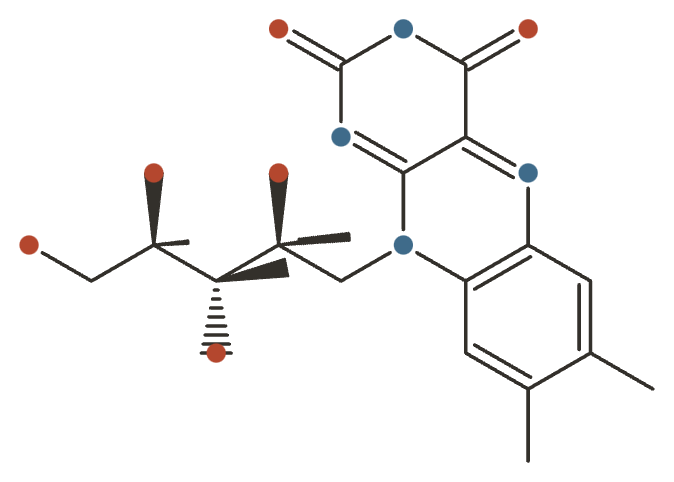
Vitamin B2, or riboflavin, is an essential water-soluble vitamin the body cannot make and must get from food. Its job is to serve as the raw material for two coenzymes — flavin mononucleotide (FMN) and flavin adenine dinucleotide (FAD) — that shuttle electrons through the reactions cells use to turn food into usable energy. Almost every cell depends on them, which is why a shortfall shows up as fatigue, cracked lips and a sore mouth rather than as one dramatic symptom.
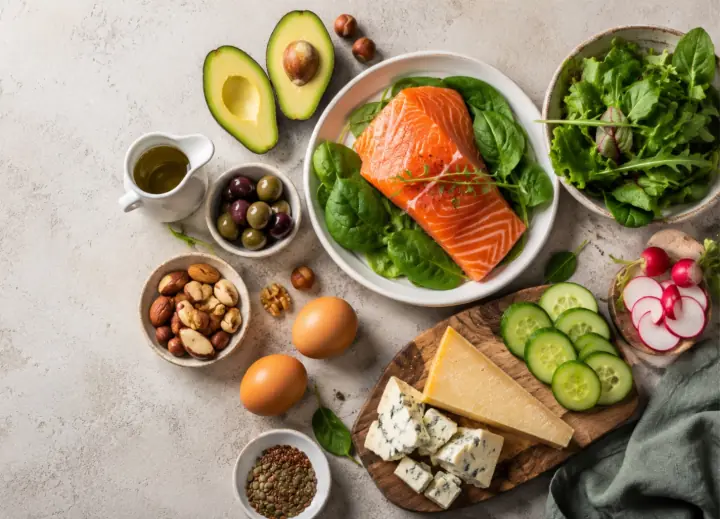
Dairy, eggs, lean and organ meats, and fortified cereals and flour are the main suppliers; green vegetables and some legumes add smaller amounts. The amount needed is small, and outright deficiency is uncommon wherever those foods are eaten.
For most people, then, there is no deficiency to correct — a normal diet already saturates the body’s stores. The interesting exception is migraine: at 400 mg a day, roughly 300 times the reference intake and far more than any diet or ordinary B-complex delivers, riboflavin has randomised-trial support as a preventive, working not by fixing a dietary shortfall but by topping up a suspected energy deficit in the migraine brain. That is a drug-like use of a vitamin, and it should be judged separately from its nutritional role. It is cheap, remarkably well tolerated, and backed by real if modestly sized trials — and the main reason people think it did not work is that they never took enough.
What It’s Used For
- Correcting riboflavin deficiency — restores the FMN and FAD coenzymes when intake is genuinely low, resolving the sore mouth, skin changes and anaemia of deficiency. Well established, but only relevant if you are actually deficient.
- Migraine prevention in adults — 400 mg/day reduces attack frequency in randomised trials; the best-evidenced non-nutritional use, though effect sizes are modest and heterogeneity between studies is high.
- Blood pressure in the MTHFR 677TT genotype — a targeted, repletion-type effect seen only in this roughly 10% of the population.
- Anaemia and iron status — improving low riboflavin status helps the body use iron, but the benefit appears only in deficient populations.
- Migraine prevention in children — mixed and largely negative at the low-to-medium doses tested; not a reliable use.
Be sceptical of riboflavin sold as a general energy, detox or antioxidant booster for well-nourished people, and of the idea that a standard B-complex delivers a migraine-relevant dose. It does not.
How It Works
Riboflavin’s entire importance flows from two molecules it is converted into: FMN and FAD. These are flavocoenzymes — helper molecules that latch onto enzymes and let them accept and hand off electrons. That makes riboflavin a linchpin of energy metabolism: FAD and FMN carry electrons into the mitochondrial respiratory chain, the assembly line that produces most of the cell’s ATP. The same chemistry supports fat breakdown, the recycling of the antioxidant glutathione via the FAD-dependent enzyme glutathione reductase, and the activation of vitamin B6 and folate — which is why a riboflavin shortfall ripples out into other nutrient systems.
For the nutritional role the logic is simple: no riboflavin, no functional flavocoenzymes, and the reactions that depend on them slow down. Restore intake and function returns. Because needs are modest and stores saturate quickly, there is a ceiling — beyond adequacy, extra riboflavin has little to add.
The migraine rationale is different, and is what justifies the enormous 400 mg dose. Some evidence points to impaired mitochondrial energy metabolism in the migraine brain between attacks. Because FAD is a cofactor for the respiratory chain, flooding the system with riboflavin is proposed to raise the ceiling on energy production and make the brain less prone to the instability that triggers attacks. This is a pharmacological, not a nutritional, effect — which is why food and ordinary supplements cannot reproduce it.
One wrinkle explains a lot of the confusion: riboflavin absorption is saturable. The gut can only take up a limited amount at once, on the order of tens of milligrams per dose, so most of a 400 mg dose is not absorbed and the excess is excreted — turning urine bright yellow. This is harmless, but it is also why single large doses are inefficient, and why the vitamin has essentially no toxicity even at very high intakes.
Pharmacology & Research
Riboflavin is an essential water-soluble vitamin and the precursor of the flavocoenzymes FMN and FAD. The evidence splits cleanly into two stories: a solid, unglamorous nutritional role where the only real question is whether someone is deficient, and a distinct high-dose therapeutic use in migraine prevention that has genuine randomised-trial support. Throughout, two caveats recur — most benefits appear only in people who start out deficient (repletion, not enhancement), and oral absorption is saturable, so the huge doses used in migraine trials are largely excreted and cannot be reached from food or standard B-complex products.
Support is an experimental score I’m building — a composite weighted by study type (human > animal > in vitro > review) and study volume. It’s a beta: a fast way to rank strength of evidence at a glance, not a validated metric. Each application links down to its write-up.
Riboflavin is essential, and restoring intake in deficient people reliably reverses the syndrome — cheilosis (cracked lips), angular stomatitis, glossitis, seborrhoeic dermatitis and a normocytic anaemia — because these all stem from loss of FMN and FAD-dependent enzyme activity 10Reference 10ReviewCauses and clinical sequelae of riboflavin deficiency — reviewView study →.
Severe deficiency is now largely confined to low-income settings, but subclinical, biomarker-detectable low status may be more common even in high-income countries and often goes unmeasured 10Reference 10ReviewCauses and clinical sequelae of riboflavin deficiency — reviewView study →.
Repletion also improves downstream handling of iron, vitamin B6 and folate, since those pathways depend on flavocoenzymes 9Reference 9ReviewRiboflavin and health: a review of recent human research — reviewView study →.
This is the clearest and most consistent use of riboflavin — with the important limit that it is a benefit of correcting a shortfall, not of adding riboflavin to an already-adequate diet.
Gap: the benefit is entirely deficiency-dependent; in replete people there is nothing to correct, and status is rarely measured, so supplementing “to be safe” has little demonstrated payoff.
The pivotal trial randomised 55 adults with migraine to 400 mg/day riboflavin or placebo for three months. Riboflavin was superior for attack frequency (p = 0.005) and headache days (p = 0.012), with 59% of the riboflavin group achieving at least 50% fewer attacks versus 15% on placebo — a number needed to treat of about 2.3 1Reference 1RCTEffectiveness of high-dose riboflavin in migraine prophylaxis — randomised controlled trialView study →.
A 2022 systematic review and meta-analysis of nine trials (673 subjects) found significant reductions in migraine days, duration, frequency and pain score, though with high statistical heterogeneity 2Reference 2Meta-analysisEffect of vitamin B2 supplementation on migraine prophylaxis — systematic review and meta-analysisView study →.
A 2024 dose-response meta-analysis of migraine supplements estimated a more modest reduction of roughly 1.3 attacks per month 3Reference 3Meta-analysisEffects of selected dietary supplements on migraine prophylaxis — systematic review and dose-response meta-analysis of randomised controlled trials. https://pubmed.ncbi.nlm.nih.gov/39404918/View study →.
The proposed mechanism is correction of a mitochondrial energy deficit rather than repletion of a dietary shortfall, and tolerability is excellent — the main adverse effect is bright-yellow urine 1Reference 1RCTEffectiveness of high-dose riboflavin in migraine prophylaxis — randomised controlled trialView study →.
Gap: the evidence rests heavily on one small pivotal RCT; pooled effects are modest, between-study heterogeneity is high, and the effective 400 mg dose is unreachable from food or ordinary B-complex products.
The methylenetetrahydrofolate reductase (MTHFR) enzyme uses FAD as a cofactor, and the common 677C→T variant produces a less stable enzyme whose activity is especially riboflavin-dependent. In a randomised trial, 181 premature cardiovascular-disease patients stratified by genotype received 1.6 mg/day riboflavin or placebo for 16 weeks; blood pressure fell specifically in those with the TT genotype, from 144/87 to 131/80 mmHg (p < 0.05 for both systolic and diastolic), with no response in CC or CT individuals — even though most were already on antihypertensive drugs 7Reference 7RCTRiboflavin lowers blood pressure in cardiovascular disease patients homozygous for the 677C→T polymorphism in MTHFR — randomised controlled trialView study →.
This is a striking, mechanism-consistent, repletion-type effect at an ordinary nutritional dose.
Gap: the effect is confined to the roughly 10% of people homozygous for 677TT, comes largely from a single research group, and has not been widely replicated or translated into routine practice.
Riboflavin status influences how well the body absorbs and mobilises iron, so correcting low riboflavin can improve the haemoglobin response in deficient populations 9Reference 9ReviewRiboflavin and health: a review of recent human research — reviewView study →.
Reviews of riboflavin and health consistently link poor status to anaemia and note improvements with repletion 9,
However, most supporting trials come from settings of combined micronutrient deficiency and often use multi-nutrient formulas, making it hard to isolate riboflavin’s specific contribution.
Gap: the effect is deficiency-dependent and usually confounded by concurrent iron and other micronutrients; there is little evidence that riboflavin improves iron status in replete, non-anaemic people.
Paediatric results are markedly weaker than in adults. A double-blind RCT of 200 mg/day in 48 children found no benefit over placebo for any outcome, with a high placebo response rate 4Reference 4RCTHigh-dose riboflavin for migraine prophylaxis in children — double-blind, randomised, placebo-controlled trialView study →.
A crossover trial of 50 mg/day in young children likewise showed no prophylactic effect 6Reference 6RCTMedium-dose riboflavin as a prophylactic agent in children with migraine — placebo-controlled, randomised, double-blind crossover trialView study →.
One Iranian RCT in 90 children did find that a high dose significantly reduced attack frequency and duration versus placebo, while a low dose did not 5Reference 5RCTProphylactic effect of riboflavin on pediatric migraine — randomised, double-blind, placebo-controlled trialView study →, suggesting dose may matter — but the overall picture is inconsistent.
Gap: the two better-controlled trials at 50–200 mg were negative; the single positive high-dose result needs replication before riboflavin can be recommended for children.
Some observational cohorts have associated higher riboflavin, and broader B-vitamin, intake with lower cataract risk — plausibly through the glutathione-reductase antioxidant pathway in the lens. A randomised trial embedded in an age-related eye-disease study population examined B vitamins and cataract with mixed, largely null findings 13Reference 13The association of dietary lutein plus zeaxanthin and B vitamins with cataracts in the Age-Related Eye Disease StudyView study →. The signal is weak, confounded by overall diet quality, and not supported by dedicated riboflavin trials.
Gap: the evidence is observational and inconsistent, with no purpose-built riboflavin RCT demonstrating cataract prevention.
Mechanisms
| Target / pathway | Effect | Relevant to |
|---|---|---|
| Conversion to FMN and FAD | Supplies the active flavocoenzymes | All applications |
| Mitochondrial respiratory chain | Supports electron transport and ATP production | Migraineenergy metabolism |
| Glutathione reductase (FAD-dependent) | Recycles reduced glutathione | Oxidative-stress and cataract rationale |
| MTHFR (FAD cofactor) | Stabilises the enzyme, supports the folate/homocysteine cycle | Blood pressure in 677TT |
| Iron mobilisation and handling | Improves iron utilisation when status is restored | Anaemia |
| Activation of vitamin B6 and folate | Enables downstream vitamin metabolism | Deficiency sequelae |
Pharmacokinetics
Riboflavin is absorbed in the proximal small intestine by a saturable, carrier-mediated transport system, so fractional absorption falls sharply as dose rises — the gut takes up only on the order of tens of milligrams from a single dose, which is why most of a 400 mg migraine dose is excreted and urine turns bright yellow 11,
Clinical trials
Riboflavin is off-patent and inexpensive, so industry-sponsored trial activity is limited; most migraine trials are small, investigator-initiated studies, and several use riboflavin inside multi-ingredient formulas — with magnesium, coenzyme Q10 or feverfew — which complicates attribution.
| Completed | Planned / recruiting | Terminated | Preclinical |
|---|---|---|---|
| ~15+ | Few | Few | Extensive(energy-metabolism mechanism) |
Last checked: August 2026.
Dietary Sources
Riboflavin is widely but unevenly distributed in food, concentrated in animal products and fortified grains. It is chemically stable to heat but rapidly destroyed by light — the historical reason milk is no longer sold in clear glass bottles. Cooking losses are modest, though the water-soluble vitamin can leach into cooking water.
| Food (typical serving) | Approx. riboflavin |
|---|---|
| Beef liver (85 g, cooked) | ~2.9 mg |
| Fortified breakfast cereal (1 serving) | ~1.3 mg |
| Milk (1 cup) | ~0.4 mg |
| Plain yoghurt (1 cup) | ~0.3–0.6 mg |
| Almonds (28 g) | ~0.3 mg |
| Egg (1 large) | ~0.2 mg |
| Lean beef / chicken (85 g) | ~0.1–0.2 mg |
| Fortified bread / grains (1 slice) | ~0.05–0.1 mg |
Milk, eggs, meat and enriched cereals and flour are the dominant contributors in typical Western diets
9Reference 9ReviewRiboflavin and health: a review of recent human research — reviewView study →. Refining grains removes much of the native riboflavin, which is why fortification of flour and
cereals is a major source. People who avoid dairy and animal products with little fortified food — some
vegans, and populations relying on unfortified staple grains — are at higher risk of low status 9,
Dosage
The figures below are reference intakes and doses used in research, not a personal recommendation.
- Reference intake: the US RDA is 1.3 mg/day for adult men and 1.1 mg/day for adult women, rising to 1.4 mg in pregnancy and 1.6 mg during lactation. EFSA derives a population reference intake of about 1.6 mg/day for adults 8Reference 8Dietary reference values for riboflavinView study →. These small amounts are readily met by a normal diet, and status saturates once intake is adequate.
- Upper limit: none established. Because oral absorption is saturable and excess is excreted, high intakes have not been associated with toxicity 8Reference 8Dietary reference values for riboflavinView study →.
- Migraine prophylaxis: trials use 400 mg/day in adults, typically for at least three months before judging response 1Reference 1RCTEffectiveness of high-dose riboflavin in migraine prophylaxis — randomised controlled trialView study →. This is roughly 300× the reference intake and cannot be reached from food or standard B-complex products — a common reason people conclude it did not work. Ordinary supplemental doses in B-complex or multivitamin products (5–25 mg) far exceed nutritional needs but are well below the migraine dose.
Take it with food to improve absorption, and because uptake is saturable, splitting a large daily dose — 200 mg twice daily, say — is more efficient than a single bolus. Expect harmless bright-yellow urine at high doses.
Safety
Riboflavin has one of the cleanest safety profiles of any vitamin: it is water-soluble, poorly absorbed above modest doses, and rapidly excreted, and no toxic dose has been identified even at the 400 mg used for migraine. The honest caveat is that very-high-dose use has not been studied for long-term outcomes or in pregnancy — “no signal” here means no toxicity seen, not extensively tested.
- Very low toxicity; no upper limit established. Excess is excreted rather than accumulated, and high oral doses have not been linked to harm.
- Well tolerated at the 400 mg migraine dose. The main effect is harmless bright-yellow urine; minor diarrhoea or increased urination are occasionally reported.
- Few but real interactions. Certain drugs affect riboflavin handling, and high doses can interfere with some urine and blood laboratory assays via the vitamin’s intense colour and fluorescence.
- High-dose use is not well studied in pregnancy. Nutritional intake is safe and requirements rise in pregnancy; the 400 mg migraine dose has not been formally evaluated.
- Bright-yellow urine can confuse a urinalysis. It is expected and benign, but worth mentioning to a clinician so it is not misread.
Full Safety & Interactions Detail
Adverse effects are minimal. In the pivotal migraine trial only two minor events occurred in the riboflavin group — diarrhoea and increased urination — and none were serious 1Reference 1RCTEffectiveness of high-dose riboflavin in migraine prophylaxis — randomised controlled trialView study →. The universal, expected effect at high doses is flavinuria, bright-yellow urine, which is harmless but can interfere with colorimetric and fluorometric laboratory assays.
Interactions are few and mostly modest. Anticholinergic drugs can slow gut motility and slightly increase riboflavin absorption; probenecid can reduce both its gastrointestinal absorption and its renal excretion. Some older psychotropics — certain tricyclic antidepressants, and phenothiazines such as chlorpromazine — may impair conversion of riboflavin to its active coenzymes. None of these is typically clinically important at nutritional doses. Riboflavin has no meaningful bleeding, sedative or serotonergic interactions.
Who should be cautious. People with malabsorption or on the drugs above may need attention to status, and anyone considering the 400 mg migraine dose in pregnancy should discuss it with a clinician given the absence of high-dose safety data.
Scope disclosure. Interactions assessed? Yes — anticholinergics, probenecid, tricyclics and phenothiazines, and laboratory-assay interference. Pregnancy/lactation assessed? Yes — nutritional intake safe and recommended; the high therapeutic dose is not formally studied. Upper limit established? No — none set; high intakes are not associated with toxicity.
Safe at nutritional intake; not established at the 400 mg migraine dose. Riboflavin is an essential nutrient whose requirement rises in pregnancy and lactation, and dietary and standard-supplement intakes are considered safe and beneficial. The very high dose used for migraine prophylaxis has not been formally evaluated in pregnancy, so it should only be used under medical supervision if at all. There is no evidence of teratogenicity at any intake, but absence of harm reports is not the same as evidence of safety at pharmacological doses.
References
- Schoenen J, Jacquy J, Lenaerts M (1998). Effectiveness of high-dose riboflavin in migraine prophylaxis — randomised controlled trial. Neurology. https://pubmed.ncbi.nlm.nih.gov/9484373/
- Chen YS, Lee HF, Tsai CH, et al. (2022). Effect of vitamin B2 supplementation on migraine prophylaxis — systematic review and meta-analysis. Nutritional Neuroscience. https://pubmed.ncbi.nlm.nih.gov/33779525/
- Talandashti MK, Shahinfar H, Delgarm P, et al. (2024). Effects of selected dietary supplements on migraine prophylaxis — systematic review and dose-response meta-analysis of randomised controlled trials. https://pubmed.ncbi.nlm.nih.gov/39404918/
- MacLennan SC, Wade FM, Forrest KM, et al. (2008). High-dose riboflavin for migraine prophylaxis in children — double-blind, randomised, placebo-controlled trial. Journal of Child Neurology. https://pubmed.ncbi.nlm.nih.gov/18984840/
- Talebian A, Soltani B, Banafshe HR, et al. (2018). Prophylactic effect of riboflavin on pediatric migraine — randomised, double-blind, placebo-controlled trial. Electronic Physician. https://pubmed.ncbi.nlm.nih.gov/29629048/
- Bruijn J, Duivenvoorden H, Passchier J, et al. (2010). Medium-dose riboflavin as a prophylactic agent in children with migraine — placebo-controlled, randomised, double-blind crossover trial. Cephalalgia. https://pubmed.ncbi.nlm.nih.gov/20974610/
- Horigan G, McNulty H, Ward M, et al. (2010). Riboflavin lowers blood pressure in cardiovascular disease patients homozygous for the 677C→T polymorphism in MTHFR — randomised controlled trial. Journal of Hypertension. https://pubmed.ncbi.nlm.nih.gov/19952781/
- EFSA Panel on Dietetic Products, Nutrition and Allergies (2017). Dietary reference values for riboflavin. EFSA Journal. https://pubmed.ncbi.nlm.nih.gov/32625611/
- Thakur K, Tomar SK, Singh AK, et al. (2017). Riboflavin and health: a review of recent human research — review. Critical Reviews in Food Science and Nutrition. https://pubmed.ncbi.nlm.nih.gov/27029320/
- McNulty H, Pentieva K, Ward M (2023). Causes and clinical sequelae of riboflavin deficiency — review. Annual Review of Nutrition. https://pubmed.ncbi.nlm.nih.gov/37603429/
- Zempleni J, Galloway JR, McCormick DB (1996). Pharmacokinetics of orally and intravenously administered riboflavin in healthy humans — randomised crossover pharmacokinetic trial. American Journal of Clinical Nutrition. https://pubmed.ncbi.nlm.nih.gov/8604671/
- Powers HJ (1997). Bioavailability of riboflavin — review. European Journal of Clinical Nutrition. https://pubmed.ncbi.nlm.nih.gov/9023479/
- Glaser TS, Doss LE, Shih G, et al. (2015). The association of dietary lutein plus zeaxanthin and B vitamins with cataracts in the Age-Related Eye Disease Study. Ophthalmology. https://pubmed.ncbi.nlm.nih.gov/25972257/