
Condition
Adrenal Insufficiency
Primary adrenal insufficiency is caused by destruction of the adrenal gland, while the secondary form arises from disruption of the HPA axis.

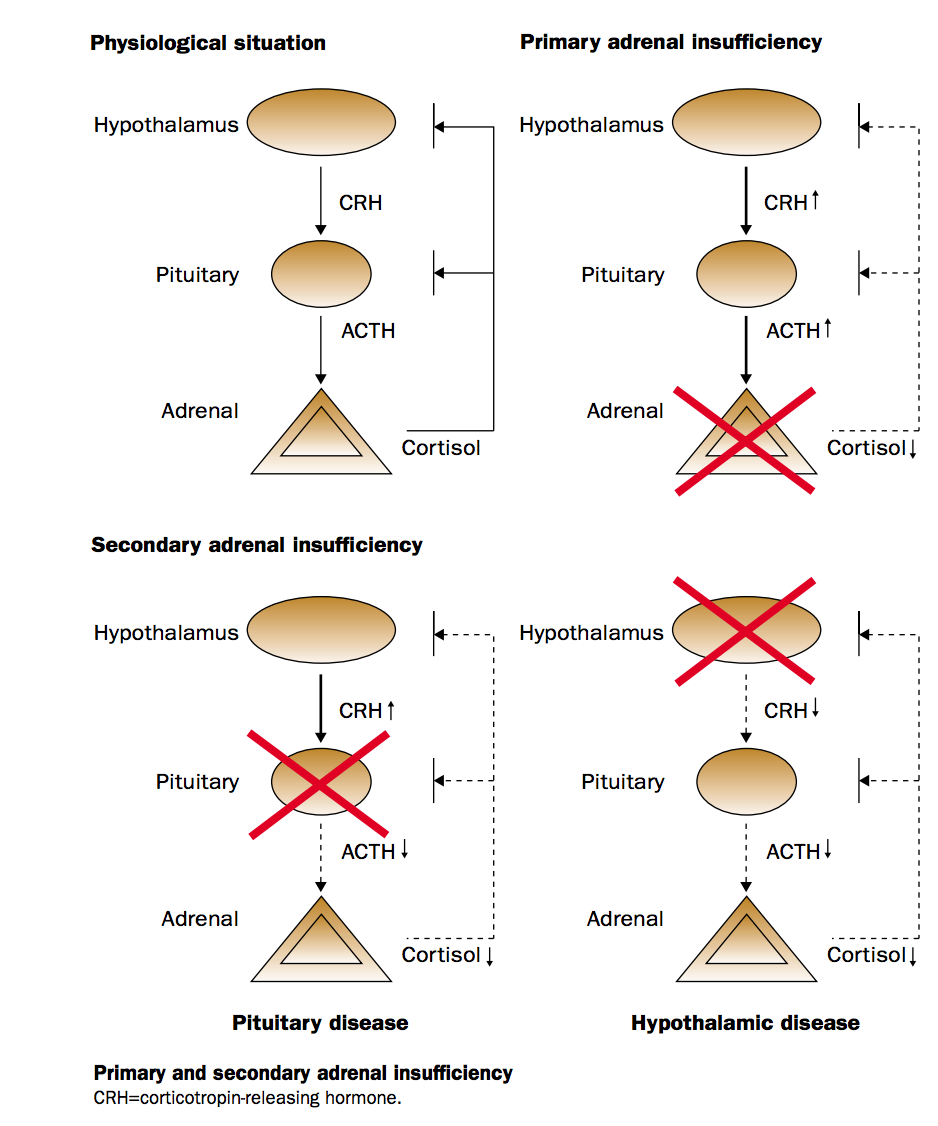
Overview
Aetiology
Primary Adrenal Insufficiency
Primary adrenal insufficiency is caused by a destruction of the adrenal gland (Addisons disease). It can also occur as resulting a surgical removal of adrenal glands, TB, HIV, or metasteses.
Congenital adrenal hyperplasia is an inherited enzymatic deficiency that presents in childhood with primary adrenal insufficiency.
The symptoms associated with primary adrenal insufficiency revolve around a deficiency in mineralcorticoids and glucocorticoids.
Glucocorticoids
Due to a lack of glucocorticoids, sufferers of Addison’s disease have a poor tolerance to stress.
Mineralcorticoids
Mineralcorticoid deficiencies lead to a loss of sodium and water through the kidneys. This can then lead to potassium buildup in the blood. It can cause hypoglycemia, lethargy, fevers, digestive system discomfort, weight loss, and general weakness.
ACTH
Elevated ACTH often results in hyperpigmentation of the skin.
Secondary Adrenal Insufficiency
Secondary adrenal insuficiency is the most common form of adrenal insuficiency. It’s the result of a disorder involving the HPA system, and is most commonly iatrogenic.
Diagnosis relies on histroy of corticosteroid use, of finding cushings syndrome symptoms on physical examination.
Presentation
Symptoms
Adrenal insufficiency typically develops gradually with chronic fatigue, muscle weakness, weight loss, and reduced appetite. Low blood pressure, dizziness on standing, salt craving, nausea, and abdominal discomfort are common, reflecting the loss of cortisol and aldosterone. Hyperpigmentation of the skin and mucous membranes is characteristic of the primary form. An acute adrenal crisis, with severe hypotension, vomiting, and collapse, can be life-threatening and is often precipitated by stress or illness.
Diagnostic Findings
Cortisol levels are decreased, and in primary insufficiency plasma ACTH levels are elevated as the pituitary attempts to stimulate the failing gland. X-rays may show adrenal calcification. To diagnose primary adrenal insufficiency, an inability of the adrenal glands to respond to ACTH must be demonstrated, whereas secondary adrenal insufficiency is diagnosed by investigating a history of corticosteroid use or looking for cushingoid features.
Assessment
Differential Diagnosis
Chronic fatigue syndrome, fibromyalgia, anxiety, depression, cancer, hypothyroidism.
Context
Considerations/Comorbidities
Increased cortisol levels can decrease the immune response (especially NK cell cytotoxicity) by as much as 50% 2Reference 2ReviewReduction of immune function in life stress and depression. Once cortisol levels have become depleted and adrenal insufficiency is reached, the immune system can respond with rebound immunological hyperactivity post cortisol drop off, leading to autoimmune conditions 3Reference 3Autoimmune thyroid disorders.
Herbs for Adrenal Insufficiency
- Glycyrhiza glabra
- Rehmannia glutinosa
- Astragalus membranaceus
- Eleutherococcus senticosus
- Ganoderma lucidum
The Herbs
Materia Medica (2)
Herbs traditionally or clinically used for adrenal insufficiency.


References:
- Arlt, W., & Allolio, B. (2003). Adrenal insufficiency. The Lancet, 361(9372), 1881-1893. Link
- Irwin, M., Patterson, T., Smith, T. L., Caldwell, C., Brown, S. A., Gillin, J. C., & Grant, I. (1990). Reduction of immune function in life stress and depression. Biological psychiatry, 27(1), 22-30. [review]
- Iddah, M. A., & Macharia, B. N. (2013). Autoimmune thyroid disorders. ISRN endocrinology, 2013.