
Condition
Hypothyroidism
An underactive thyroid — how it's diagnosed, why levothyroxine timing matters, what iodine and selenium really do, and the popular herbs that interfere with treatment.

Hypothyroidism is an underactive thyroid — the gland produces too little thyroid hormone, and because that hormone sets the metabolic pace of nearly every tissue, everything slows down. The result is a characteristic cluster of fatigue, weight gain, cold intolerance, dry skin and low mood. It is a condition of the endocrine system with an effective, cheap and precisely titratable treatment. Hypothyroidism is a hormone deficiency, and the established remedy is to replace the hormone.
“Thyroid support” is a large supplement category, but only three herbs have any thyroid indication at all: self-heal, with meta-analysed human trials as an adjuvant; ashwagandha, which cuts both ways; and burdock, which rests on tradition alone.
Presentation
Types & Variants
Hypothyroidism is classified by the level at which the problem arises:
- Primary hypothyroidism — disease of the thyroid gland itself, shown by a raised TSH with low free T4. The most common cause worldwide is iodine deficiency; in iodine-replete regions, Hashimoto’s thyroiditis — an autoimmune attack on the gland — predominates. Postpartum and subacute thyroiditis cause transient forms, sometimes preceded by a thyrotoxic phase.
- Secondary (central) hypothyroidism — an otherwise capable thyroid receiving inadequate stimulation because of a pituitary or hypothalamic problem (TSH or TRH deficiency). Rare, and important because TSH is not a reliable marker here — it may be normal or low despite genuine hypothyroidism.
- Subclinical hypothyroidism — a raised TSH with free thyroid hormone still in range. Common, often stable or self-resolving, and the form where treatment is most debated.
- Iatrogenic hypothyroidism — the result of thyroidectomy, radioiodine, neck radiotherapy, or drugs such as amiodarone and lithium. Extremely common, and easily overlooked in the history.
Overview
General Pathology
Thyroid hormone regulates the metabolic rate of nearly every tissue, so when it runs low the whole system slows. This produces fatigue, weight gain, cold intolerance, dry skin, hair loss, constipation, muscle aches, a slowed heart rate, hoarseness, depression, impaired memory and, in women, menstrual irregularity and reduced fertility. Untreated, it raises LDL cholesterol and contributes to dyslipidemia; severe untreated disease can progress to myxoedema.
In Hashimoto’s, autoantibodies — chiefly against thyroid peroxidase (TPO) — accompany lymphocytic infiltration and progressive destruction of thyroid tissue. As functional gland is lost, the pituitary raises TSH to compensate; TSH climbs first, and free T4 falls later, which is exactly why subclinical hypothyroidism is the earlier stage of the same process rather than a separate disease. Hashimoto’s clusters with other autoimmune conditions — celiac disease, type 1 diabetes, vitiligo, pernicious anemia — and having one raises the index of suspicion for the others.
Hypothyroidism is worth distinguishing from its counterpart hyperthyroidism, and from conditions that share its symptom profile: anemia, chronic fatigue syndrome, depression, adrenal insufficiency and sleep apnoea all present with fatigue, weight change and low mood.
Assessment
Diagnosis
Diagnosis is a blood test, and in primary hypothyroidism a straightforward one: TSH is elevated and free T4 is low. Raised TSH with a normal free T4 defines subclinical hypothyroidism. TPO antibodies identify Hashimoto’s as the cause and predict progression, which is why a positive antibody result changes how closely subclinical disease is followed.
Three things commonly distort thyroid results.
A single abnormal TSH is not a diagnosis. TSH varies with time of day, intercurrent illness, and recovery from thyroiditis, and it should be repeated — typically after several weeks — before committing to lifelong treatment.
Non-thyroidal illness distorts the picture. Acute illness, starvation and some medications produce abnormal thyroid results in people whose thyroids are fine. Testing during an acute illness is a common way to acquire a diagnosis that is not real.
High-dose biotin sabotages the assay. Biotin, sold at multi-milligram doses for hair and nails, interferes with the biotin-streptavidin immunoassays used to measure thyroid hormones — producing falsely low TSH and falsely high free T4, a pattern that mimics hyperthyroidism and can obscure genuine hypothyroidism. It is an analytical artefact, not a thyroid effect. Stopping biotin for a few days before testing resolves it.
Treatment
Conventional Treatment
Levothyroxine (synthetic T4) is the treatment, taken once daily and titrated against TSH until it sits in the target range. It is chemically identical to the hormone the gland makes, inexpensive, and among the most-prescribed drugs in the world. Combination T4/T3 therapy and desiccated thyroid extract are used by some, but trials have not shown consistent superiority over levothyroxine alone, and desiccated preparations have variable hormone content.
Whether to treat subclinical hypothyroidism is an open question. The TRUST trial randomized 737 adults over 65 with persistently raised TSH to levothyroxine or placebo and found no improvement in hypothyroid symptoms or tiredness 3Reference 3RCTThyroid hormone therapy for older adults with subclinical hypothyroidism — randomised placebo-controlled trial (TRUST, n=737)View study →. Treatment is more readily justified where TSH is substantially raised, TPO antibodies are positive, or pregnancy is planned; in mild cases, particularly in older people, watchful monitoring is defensible. Fatigue does not always mean the dose is wrong.
Absorption is where herbs and supplements intersect with this condition. Levothyroxine absorption is easily disrupted, and the resulting under-treatment looks exactly like a failure of the drug. Timing matters measurably: taken fasting, mean TSH was 1.06 mIU/L, compared with 2.93 mIU/L when taken with breakfast and 2.19 mIU/L at bedtime 4Reference 4RCTTiming of levothyroxine administration affects serum thyrotropin concentration — randomised crossover trialView study →. The standard advice — on an empty stomach, 30–60 minutes before food — is evidence-based.
Separate levothyroxine by at least four hours from:
- Iron and calcium supplements (including calcium-fortified foods and antacids)
- Magnesium and aluminium-containing antacids
- Concentrated soy products, and high-fibre supplements or bulk-forming laxatives
- Coffee, which measurably reduces absorption when taken close to the dose
Several of these are things people take because they are hypothyroid, which is precisely how the problem arises.
Iodine & Selenium — the Two Nutrients That Matter
Iodine is the raw material for thyroid hormone, and more is not better. Deficiency is the leading cause of hypothyroidism worldwide and remains a live issue in some populations. But in iodine-replete regions — where Hashimoto’s, not deficiency, is the usual cause — excess iodine can itself induce hypothyroidism, via the Wolff-Chaikoff effect, and it accelerates autoimmune thyroiditis in susceptible people. High-dose iodine and iodine-rich seaweed preparations (kelp, bladderwrack) are therefore a real hazard in Hashimoto’s rather than a supportive measure, and kelp products carry wildly variable and sometimes enormous iodine content. Correcting a documented deficiency is sound; supplementing without one is not.
Iodine excess cuts both ways, and which way depends on the gland. In hypothyroidism the risk is Wolff-Chaikoff — excess iodine suppressing an autoimmune gland into hypothyroidism. In a gland containing autonomously functioning nodules, the same iodine load does the opposite, precipitating hyperthyroidism (the Jod-Basedow effect); see thyroid nodules. Either way the practical rule is the same: test before supplementing.
Selenium is required by the deiodinase enzymes that convert T4 to active T3, and by the glutathione peroxidases that protect the gland from the oxidative stress of hormone synthesis — the reason selenium is heavily promoted for Hashimoto’s. The Cochrane review of selenium supplementation in Hashimoto’s thyroiditis concluded the evidence is incomplete, and neither supports nor refutes efficacy, calling for higher-quality trials 5Reference 5Systematic reviewSelenium supplementation for Hashimoto’s thyroiditis — Cochrane systematic reviewView study →; a 2024 systematic review and meta-analysis since then found selenium does reduce thyroid-peroxidase antibody levels 8Reference 8Meta-analysisSelenium supplementation in patients with Hashimoto thyroiditis — systematic review and meta-analysis of randomized clinical trialsView study →. Antibody titres are a surrogate, though: no trial has shown that lowering them alters symptoms, progression to overt hypothyroidism, or levothyroxine requirement. Selenium has a narrow window: the tolerable upper intake is 400 µg/day, and chronic excess causes selenosis.
Herbs & Supplements That Interfere
Because thyroid disease is managed by titrating a hormone against a lab value, anything that shifts either the hormone or the assay matters more than in most conditions. Several popular botanicals and supplements can interfere:
- Melissa (lemon balm) — anti-thyroid. It inhibits TSH binding to its receptor, which is the basis of its traditional use in hyperthyroidism. In hypothyroidism it works against the goal.
- Bacopa — an animal study found it raised T4 by around 41%, which makes it a possible thyroid stimulant. The concern is unpredictable interaction with a titrated dose, whatever the direction of effect.
- Arjuna — alters circulating thyroid hormone in rats, which the authors propose is part of its cardioprotective mechanism. Animal-only, unmeasured in any human trial, and an unstudied variable for anyone on levothyroxine.
- Maca — a Brassicaceae crop containing glucosinolates, with a specific caution against large amounts of raw powder in thyroid conditions.
- L-tyrosine — marketed for thyroid on the strength of being a thyroid-hormone precursor. Its actual evidence is for catecholamine repletion under acute stress, and it is cautioned against with thyroid medication and in hyperthyroidism. Precursor availability is not the limiting step in Hashimoto’s — destroyed gland tissue is.
- Goitrogenic foods (raw cruciferous vegetables, soy) — a much smaller issue than their reputation suggests. Cooking largely inactivates goitrogens, and normal dietary amounts are not a problem in iodine-sufficient people. The relevant concern is soy’s interference with levothyroxine absorption.
In hypothyroidism the botanical contribution is small, and avoiding interference with a treatment that works matters more.
Materia Medica
Materia Medica
None of the herbs used for hypothyroidism is a substitute for professional care.
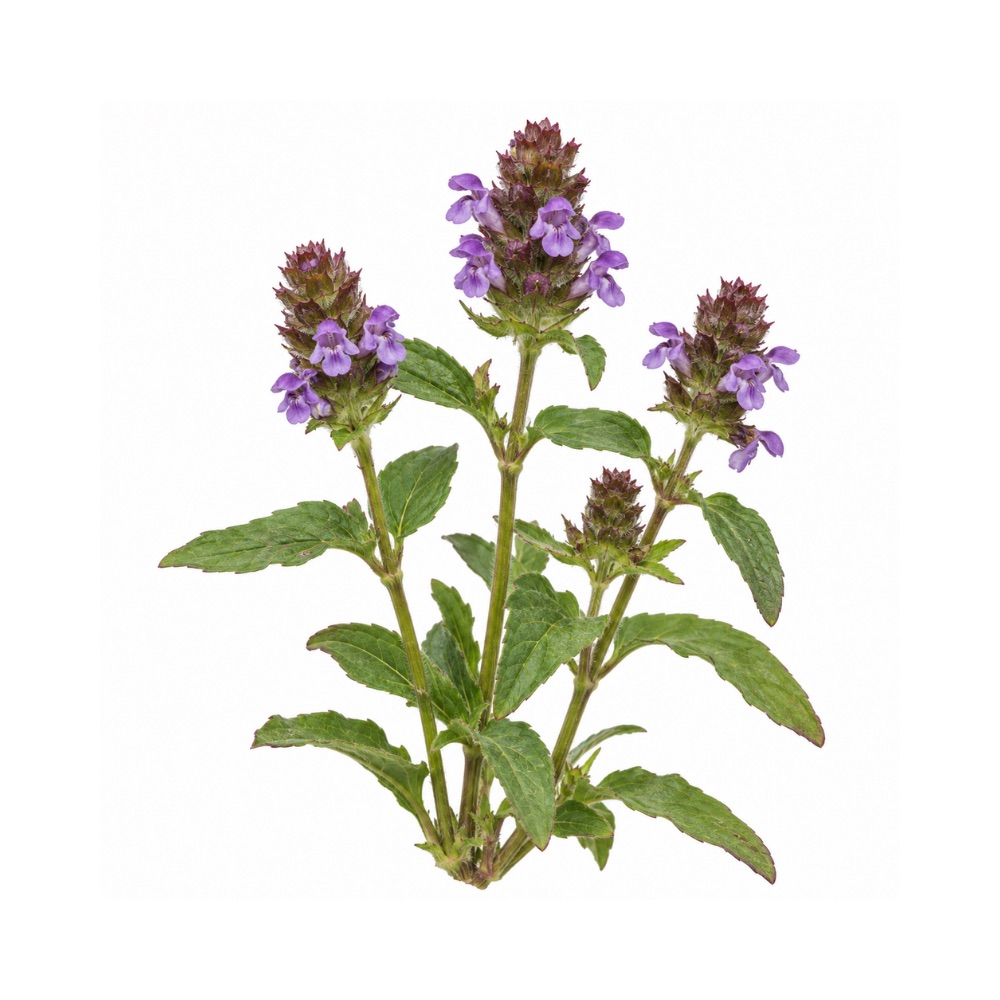 Self-HealPrunella vulgarisModerate
Self-heal is the one hypothyroidism herb whose thyroid data has been meta-analysed. In Chinese medicine Xia Ku Cao is the classical “dispersing nodules” herb, and it has been trialled in Hashimoto’s thyroiditis — the commonest cause of hypothyroidism in iodine-replete regions. A systematic review with trial-sequential analysis pooled 11 RCTs (1,215 patients): improved overall efficacy (RR 1.15, 95% CI 1.09–1.21) and lower thyroid-peroxidase antibody levels (SMD −0.91) 6Reference 6Meta-analysisSystematic review and trial sequential analysis of preparation of Xiakucao for Hashimoto’s thyroiditis — systematic review and meta-analysisView study →. A separate 2021 meta-analysis of 13 RCTs (1,468 patients) covers thyroid nodules, with no increase in adverse reactions 7Reference 7Meta-analysisSafety and efficacy of Prunella vulgaris preparation in adjuvant treatment of thyroid nodules — meta-analysis of randomised controlled trialsView study →.
Every trial used self-heal as an adjuvant, added to levothyroxine; none tested it alone, and none supports using it in place of hormone replacement. The trials are Chinese-registry studies using heterogeneous proprietary preparations at non-standardised doses, so the pooled result cannot be converted into a dose of dried herb. They were rated low to very-low quality by GRADE, with high risk of bias.
The antibody reduction is a surrogate, as it is for selenium: falling TPO antibodies have not been shown to change how anyone feels.
Self-heal’s characterised actives are water-soluble, so a decoction or hot-water extract is the right form, not an alcohol tincture.
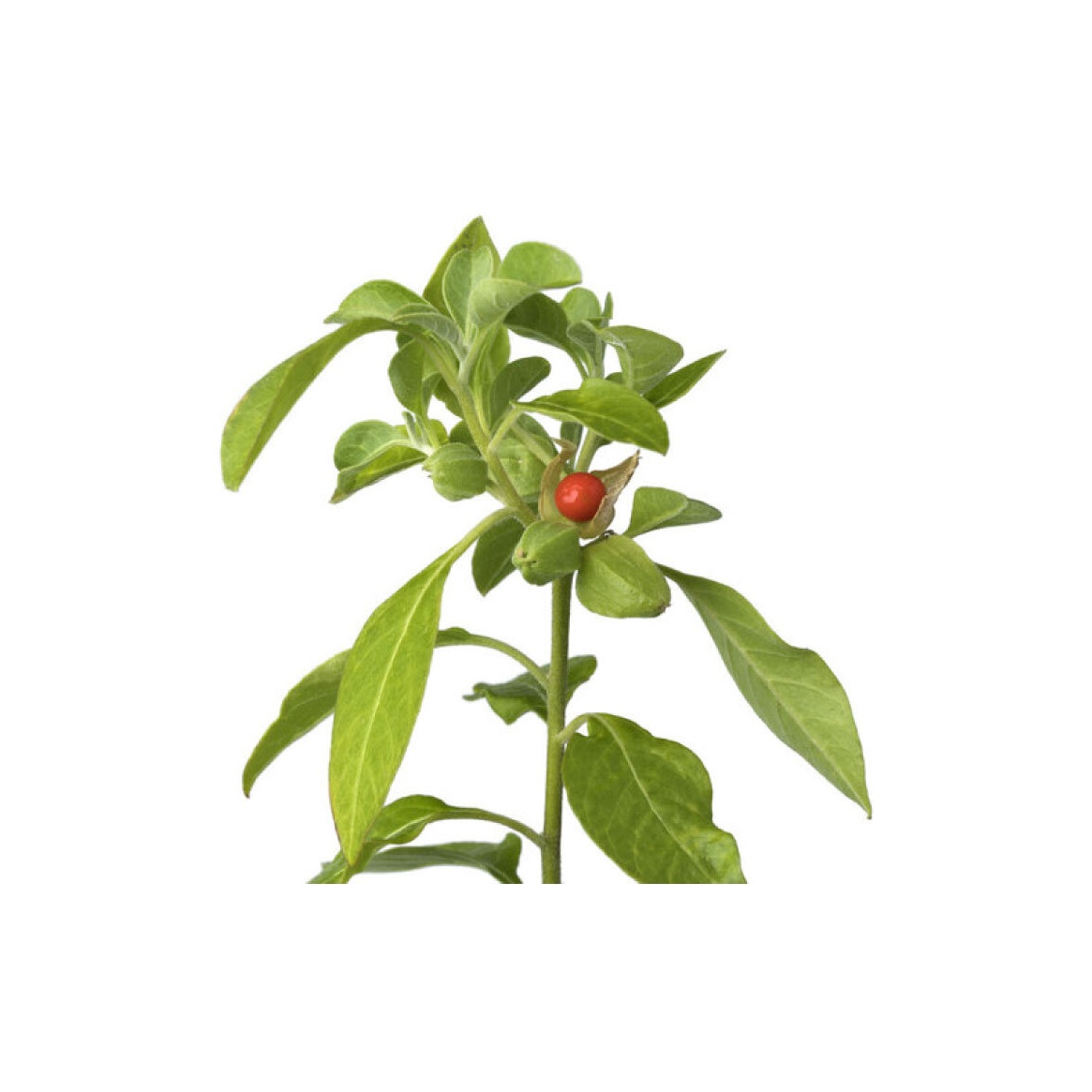 AshwagandhaWithania somniferaModerate
An 8-week RCT in subclinical hypothyroid adults (600 mg/day root extract) significantly lowered TSH and raised T3/T4 toward normal 1Reference 1RCTEfficacy and safety of ashwagandha root extract in subclinical hypothyroid patients — a double-blind, randomised placebo-controlled trialView study →. The direction is thyroid-stimulating: case reports describe ashwagandha precipitating thyrotoxicosis and painless thyroiditis 2Reference 2Case reportThyrotoxicosis following the use of ashwagandha — case reportView study →. The same effect that may help in hypothyroidism can harm in hyperthyroidism or with over-supplementation.
The efficacy evidence is one small RCT, with no data in overt hypothyroidism.
Full monograph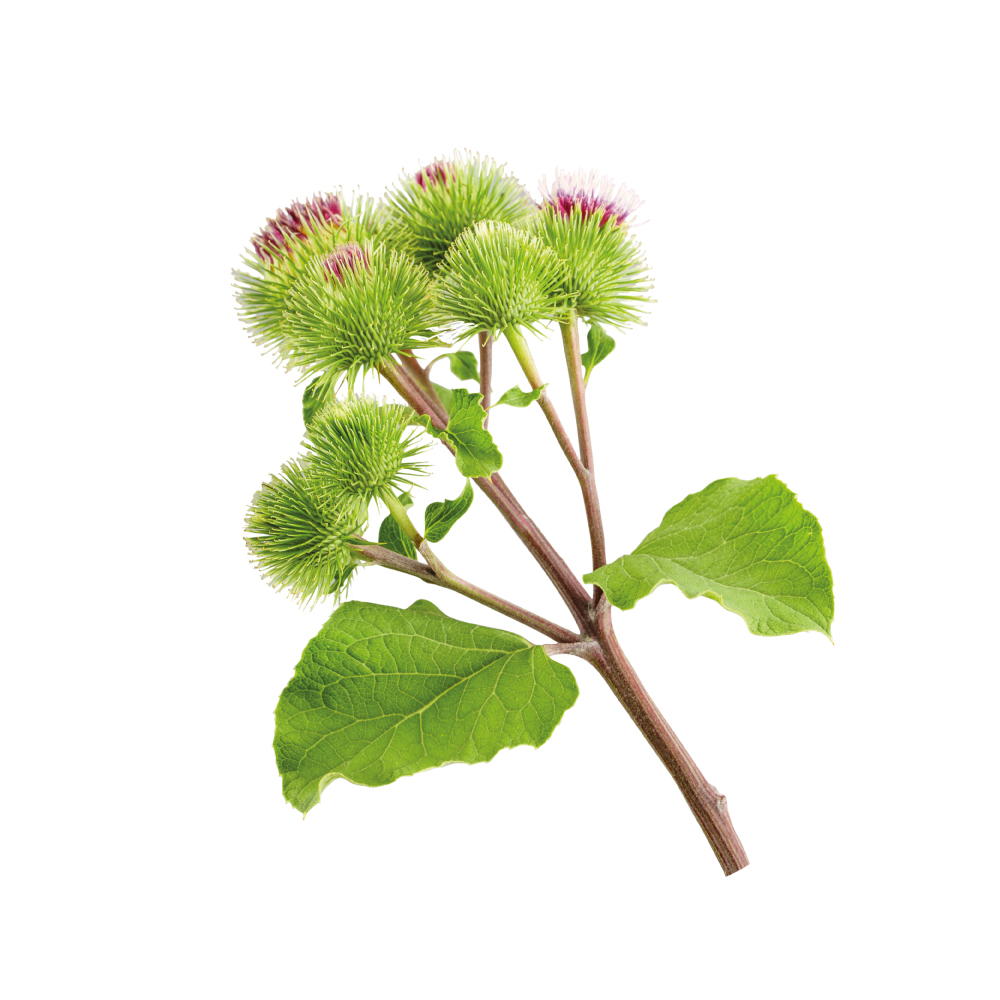 BurdockArctium lappaTraditional only
Burdock seed is used traditionally in hypothyroid and sluggish-metabolism presentations. There is no known thyroid mechanism and no trial.
Full monographSupplementation
Supplementation
References
- Sharma AK, et al. (2018). Efficacy and safety of ashwagandha root extract in subclinical hypothyroid patients — a double-blind, randomised placebo-controlled trial. Journal of Alternative and Complementary Medicine. https://pubmed.ncbi.nlm.nih.gov/28829155/
- van der Hooft CS, et al. (2005). Thyrotoxicosis following the use of ashwagandha — case report. Nederlands Tijdschrift voor Geneeskunde. https://pubmed.ncbi.nlm.nih.gov/16355578/
- Stott, D. J., Rodondi, N., Kearney, P. M., et al. (2017). Thyroid hormone therapy for older adults with subclinical hypothyroidism — randomised placebo-controlled trial (TRUST, n=737). New England Journal of Medicine, 376(26), 2534–2544. https://pubmed.ncbi.nlm.nih.gov/28402245/
- Bach-Huynh, T. G., Nayak, B., Loh, J., Soldin, S., & Jonklaas, J. (2009). Timing of levothyroxine administration affects serum thyrotropin concentration — randomised crossover trial. Journal of Clinical Endocrinology and Metabolism, 94(10), 3905–3912. https://pubmed.ncbi.nlm.nih.gov/19584184/
- van Zuuren, E. J., Albusta, A. Y., Fedorowicz, Z., Carter, B., & Pijl, H. (2013). Selenium supplementation for Hashimoto’s thyroiditis — Cochrane systematic review. Cochrane Database of Systematic Reviews, (6), CD010223. https://pubmed.ncbi.nlm.nih.gov/23744563/
- Zhang, Y. L., Hu, R. X., Zhao, H., et al. (2020). Systematic review and trial sequential analysis of preparation of Xiakucao for Hashimoto’s thyroiditis — systematic review and meta-analysis. Zhongguo Zhong Yao Za Zhi. https://pubmed.ncbi.nlm.nih.gov/33496119/
- Han, Q., Xu, N., Chen, B., et al. (2021). Safety and efficacy of Prunella vulgaris preparation in adjuvant treatment of thyroid nodules — meta-analysis of randomised controlled trials. Medicine (Baltimore). https://pubmed.ncbi.nlm.nih.gov/34731129/
- Huwiler, V. V., Maissen-Abgottspon, S., Stanga, Z., et al. (2024). Selenium supplementation in patients with Hashimoto thyroiditis — systematic review and meta-analysis of randomized clinical trials. Thyroid. https://pubmed.ncbi.nlm.nih.gov/38243784/