
Condition
Cardiomyopathy
Cardiomyopathy is a disease of the heart muscle that impairs its ability to pump blood effectively.

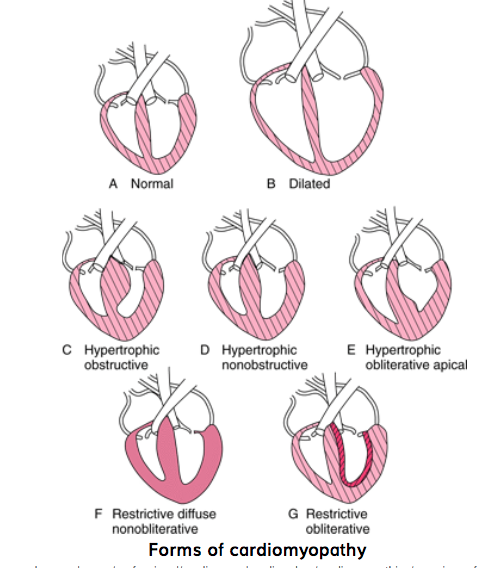
Overview
Aetiology
Dilated Cardiomyopathy
This form involves the stretching and thinning of the heart muscle, which weakens its pumping action. Causes may include:
- Alcoholism
- Infectious myocarditis
- Drug toxicity
- Nutritional deficiencies (especially thiamine)
- heavy metal toxicity
Hypertrophic Cardiomyopathy
This involves the enlargement of cardiac muscle cells. It’s a common cause of sudden myocardial arrest in younger people and athletes. Common causes include:
- Inherited gene mutations
- Diabetes
Restrictive Cardiomyopathy
Most common in older adults. This condition involves the gradual increase in rigidity of the heart as a result of scar tissue formation. Causes may include:
- Cytotoxic inflammatory diseases
- genetic sphingolipidosis (Fabry’s or Gaucher’s)
- Hemachromatosis
Presentation
Symptoms
Symptoms often develop gradually and include shortness of breath on exertion or at rest, fatigue, swelling of the legs and ankles, palpitations, dizziness, and in some cases fainting. The condition may be asymptomatic until heart failure or an arrhythmia develops.
Assessment
Diagnostic Considerations
Diagnosis is based on cardiac imaging, particularly echocardiography, supported by electrocardiography to detect rhythm and conduction abnormalities. Cardiac MRI, chest X-ray, blood tests, and sometimes genetic testing or biopsy are used to identify the type and underlying cause.
Assessment
Differential Diagnosis
- Chronic heart failure
Context
Comorbidities
- Stroke
Supplementation
Supplementation (1)
Supplements, nutrients and compounds used for cardiomyopathy.
SS-31 (Elamipretide)
Mitochondria-targeted peptide (cardiolipin binder)
A mitochondria-targeted, cardiolipin-binding tetrapeptide approved (accelerated, 2025) for muscle strength in Barth syndrome, and negative elsewhere.