
Black Ant
Polyrhachis spp.
Plant Family
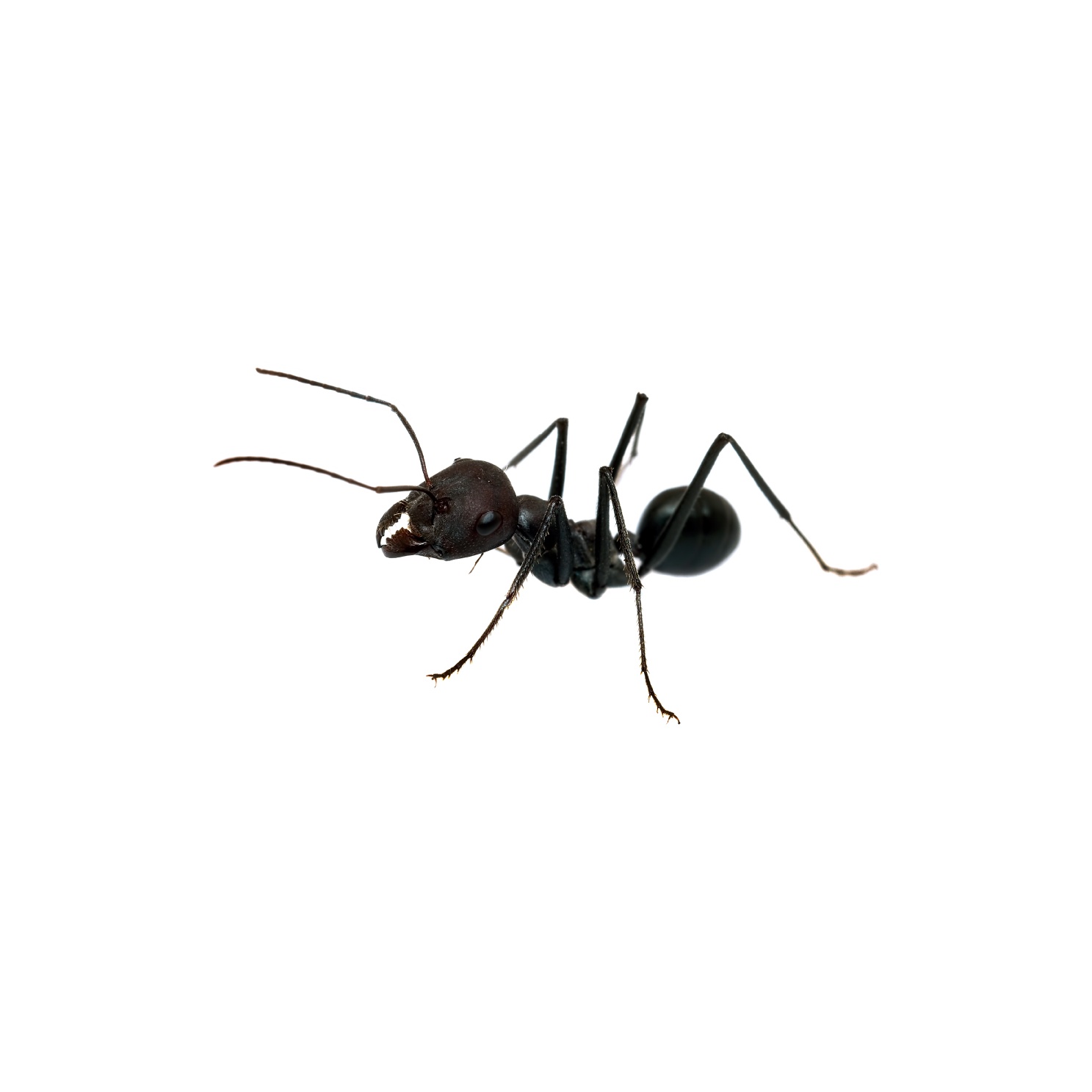
Pictured: Black Ant
The ants — the one animal family here, and the organism that gave formic acid its name.
An animal family, not a plant one. Ants enter materia medica through the Chinese Polyrhachis tonics, and through formic acid, first isolated by distilling them.
1 Herb // 24 Constituents // 5 Notable Members
Overview
This is an animal family in a collection otherwise made of plants and fungi, and that is worth stating plainly rather than quietly filing it alongside the botany. It is here because black ant — Polyrhachis species — has a real and long-standing place in Chinese tonic medicine, and a materia medica that includes it needs somewhere to put it.
Ants are eusocial insects of extraordinary ecological weight: some 14,000 described species, present on every continent but Antarctica, and by some estimates comparable in total biomass to all wild birds and mammals combined.
Shared Traits
In Practice
Two threads, and they are unrelated to each other.
The first is tonic use. Polyrhachis ants — the black mountain ants — have been used in Chinese medicine as a qi and kidney tonic, taken as powder, capsule or liquid extract for energy, stamina, joint complaints and vitality. The rationale is partly nutritional: the ants are genuinely protein-dense and unusually rich in zinc, and they carry the insect moulting hormone 20-hydroxyecdysone, an ecdysteroid also present in several adaptogenic plants and repeatedly proposed as an anabolic principle. The clinical evidence is thin, and much of the supporting literature is difficult to assess.
The second is formic acid, and it is a genuine footnote in the history of chemistry. The compound was first obtained in the seventeenth century by distilling ants — John Ray reported it in 1671 — and it takes its name directly from formica. Ant venom remains its natural home, and the old European practice of formication, deliberately exposing arthritic joints to ant bites or applying wood-ant preparations as a counterirritant, was an application of exactly this chemistry.
The ordinary cautions for insect-derived products apply and they are not trivial. Insect proteins and chitin are recognised allergens, with meaningful cross-reactivity to shellfish and dust-mite allergy, so anyone with those sensitivities should be cautious. Product identity and quality are harder to verify than for a plant, and wild-collected insect material carries contamination risk. Formic acid itself is corrosive and is not something to prepare or handle at home.
Materia Medica
The monograph in the database whose Formicidae membership is recorded on the herb itself — so this list keeps itself current as new herbs land.
Polyrhachis spp.
Phytochemistry
Formic acid is the family’s defining compound, sprayed as a defensive secretion by Formica and its relatives. Chitin forms the exoskeleton and is a substantial fraction of any whole-ant preparation. The nutritional profile is protein-dominated, with a full amino-acid complement including cysteine, methionine, phenylalanine, tryptophan and tyrosine, plus zinc, calcium and B vitamins. 20-Hydroxyecdysone is the ecdysteroid of interest. Alkaloid venoms occur in other lineages — the piperidine alkaloids of fire ants are the cause of their distinctive sting.
The compounds recorded for this family's single member, grouped by class.
Isolates
Sold as isolated compounds that occur in the herbs above.
Beyond the Database
Notable members without a monograph yet.
Keep Exploring