
Grape Seed Extract
Vitis vinifera
Plant Family
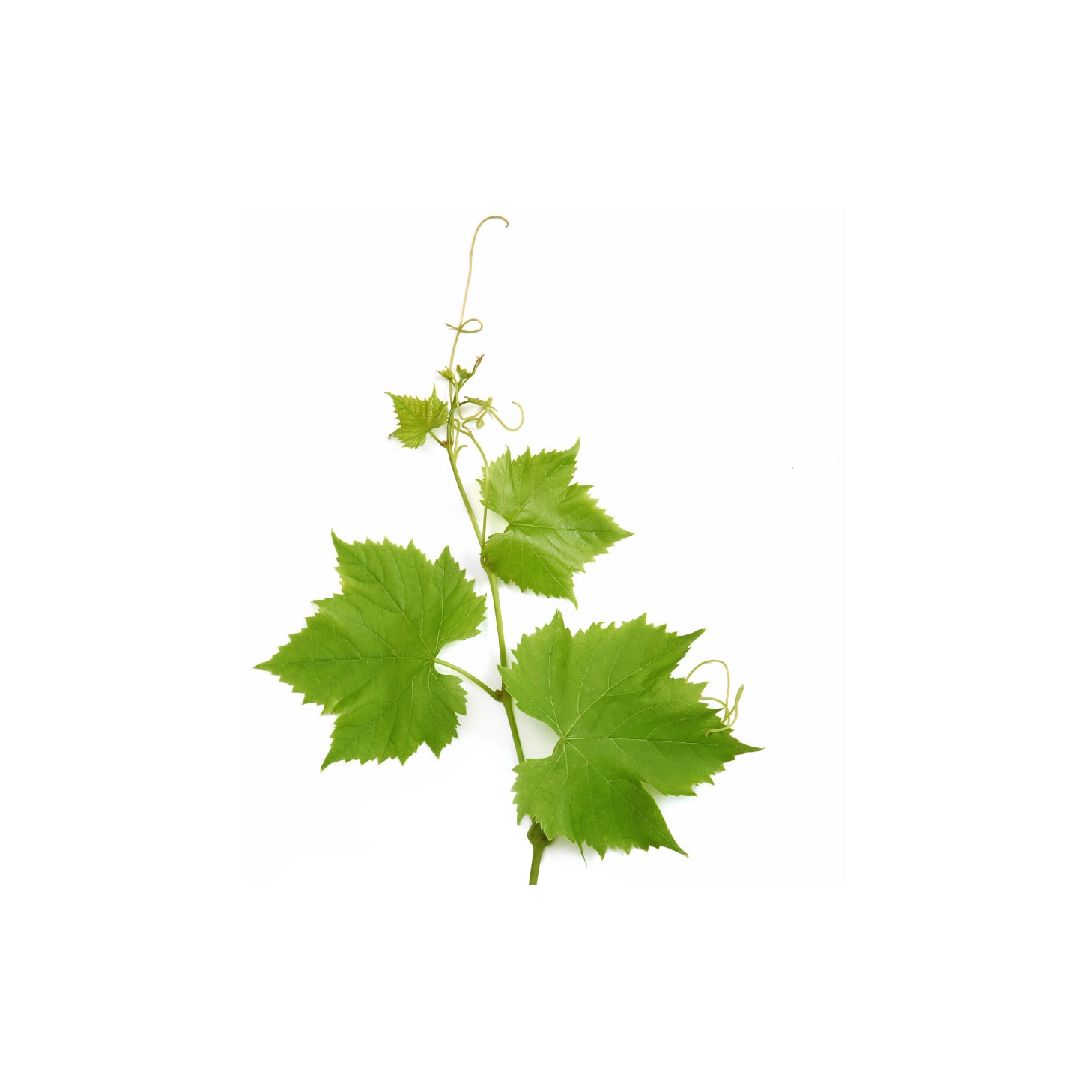
Pictured: Grape Seed Extract
Grape family
Tendril-climbing vines of the tropics and warm temperate zone, medicinally defined by two chemistries: condensed tannins concentrated in the seed, and stilbene phytoalexins in the skin.
1 Herb // 5 Constituents // 5 Notable Members
Overview
About 16 genera and 950 species of woody climbers, nearly all of them scrambling upward on leaf-opposed tendrils — a structural signature the family shares with almost nothing else. They are overwhelmingly tropical and warm-temperate; the one temperate genus, Vitis, is also the one that reshaped human agriculture.
Shared Traits
In Practice
The family’s medicinal profile is unusual in that its two active chemistries sit in two different parts of the same fruit, and are sold as two different products.
Grape seed extract (Vitis vinifera) is the concentrated seed fraction, and it is essentially a proanthocyanidin preparation — oligomeric proanthocyanidins alongside procyanidin B2, catechin and epicatechin. Its traditional and commercial positioning is vascular: varicose veins, chronic venous insufficiency, capillary fragility and blood pressure. That framing is chemically coherent — these are the same condensed tannins credited with vascular effects in hawthorn and pine bark — and the human evidence is real but mostly small and short.
Resveratrol occupies the skin, not the seed. It is a stilbene phytoalexin the vine produces under fungal attack, which is why it is far higher in thin-skinned and disease-pressured grapes than in table fruit. It is worth stating plainly that resveratrol’s reputation ran a long way ahead of its human data, and that grape seed extract and resveratrol are not interchangeable despite both being sold as “grape” antioxidants.
Cissus quadrangularis, a succulent-stemmed relative used in Ayurveda for fracture healing and joint complaints, is the family’s other medicinal member of note.
Materia Medica
The monograph in the database whose Vitaceae membership is recorded on the herb itself — so this list keeps itself current as new herbs land.
Vitis vinifera
Phytochemistry
The family runs on phenolics. Condensed tannins — proanthocyanidins and their catechin/epicatechin monomers — dominate seed and skin, with stilbenes (resveratrol, viniferins, piceid) as inducible defence compounds in the skin and vine. Skins also carry anthocyanins as pigment, and the fruit is distinctively high in tartaric acid, which is rare enough in plants to be a family marker in its own right. Raphides — needle crystals of calcium oxalate — are common in the vegetative tissue.
The compounds recorded for this family's single member, grouped by class.
Beyond the Database
Notable members without a monograph yet.
Keep Exploring