
Cramp Bark
Viburnum opulus
Plant Family
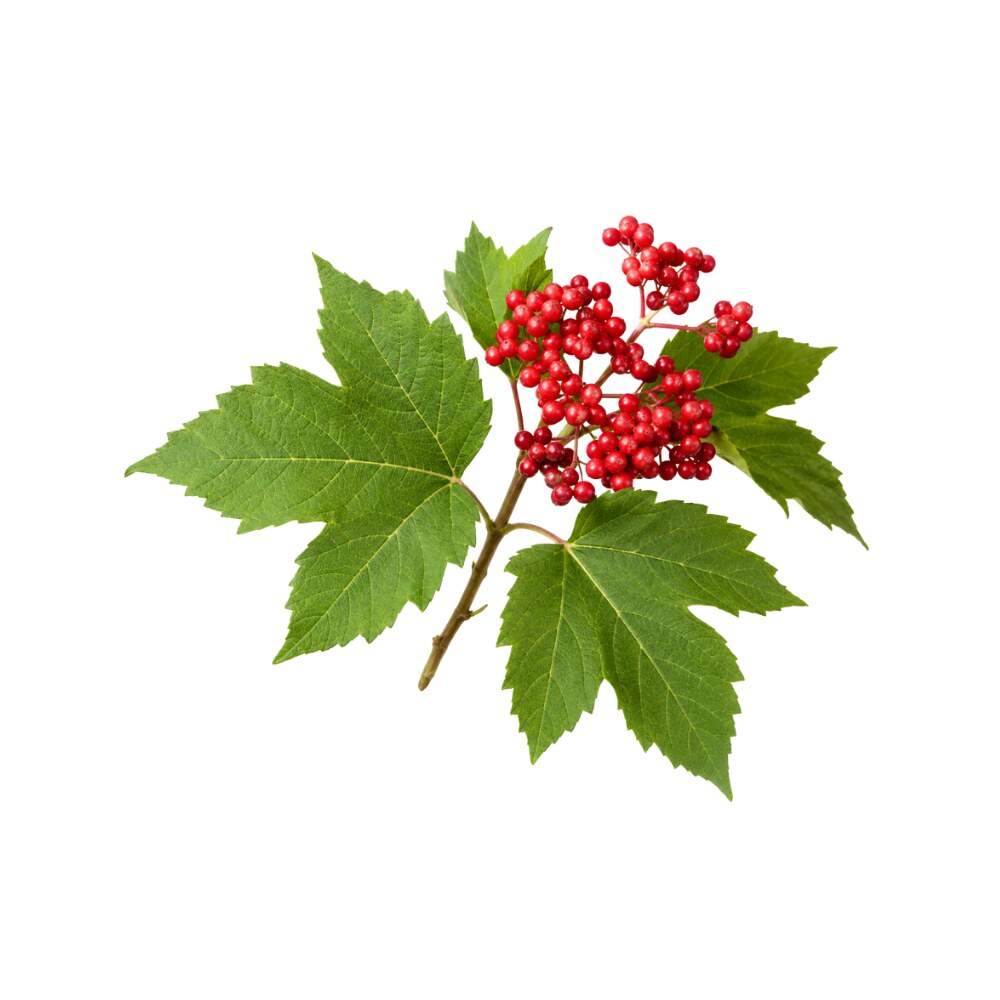
Pictured: Cramp Bark
Viburnum family
Temperate shrubs whose bark supplies the two classic Western antispasmodics, cramp bark and black haw, used for uterine and smooth-muscle cramping.
1 Herb // 22 Constituents // 5 Notable Members
Overview
A family whose circumscription has moved repeatedly: Viburnum and Sambucus (elder) were long placed in Caprifoliaceae, then in Adoxaceae, and are now widely treated as Viburnaceae. Around 5 genera and 200 species of temperate shrubs and small trees, recognisable by opposite leaves, flat-topped or domed flower clusters, and single-seeded drupes — many of them ornamental, several of them medicinal.
Shared Traits
In Practice
The family’s medicinal identity in Western herbalism is unusually focused: it supplies the two classic antispasmodics of the materia medica.
Cramp bark (Viburnum opulus) earns its name. The bark has been used since the 19th-century Eclectic period for uterine cramping and dysmenorrhoea, and by extension for muscular cramp, colic, and the spasmodic component of asthma and intestinal complaints. Its companion, black haw (V. prunifolium), was used for the same indications with an additional reputation for threatened miscarriage — a use that saw it listed in the US Pharmacopoeia into the 20th century.
The chemistry is less resolved than the tradition implies. The constituent long credited with the antispasmodic effect, scopoletin — a coumarin with documented smooth-muscle-relaxant activity — is present, alongside viburnin, valerianic acid esters, iridoids and tannins. But quantities are modest, and no controlled human trial supports the traditional use for any indication. Cramp bark is one of the most widely prescribed herbs in Western practice on the strength of clinical experience rather than published evidence, and that distinction is worth being explicit about.
Elder (Sambucus nigra), in the same family, has by contrast a reasonable clinical literature for influenza symptom duration, which shows the family is not inherently under-studied — cramp bark simply has not attracted the attention.
Safety: the bark is well tolerated. The raw berries of both Viburnum and Sambucus are emetic and mildly toxic uncooked, containing cyanogenic glycosides and, in elder, lectins — cooking destroys both. Salicylate-sensitive individuals should be cautious.
Materia Medica
The monograph in the database whose Viburnaceae membership is recorded on the herb itself — so this list keeps itself current as new herbs land.
Viburnum opulus
Phytochemistry
Coumarins (scopoletin, aesculetin), iridoid glycosides, valerianic acid esters, tannins and flavonoids; cyanogenic glycosides in the raw fruit.
The compounds recorded for this family's single member, grouped by class.
Beyond the Database
Notable members without a monograph yet.
Keep Exploring