
Blue Vervain
Verbena hastata
Plant Family
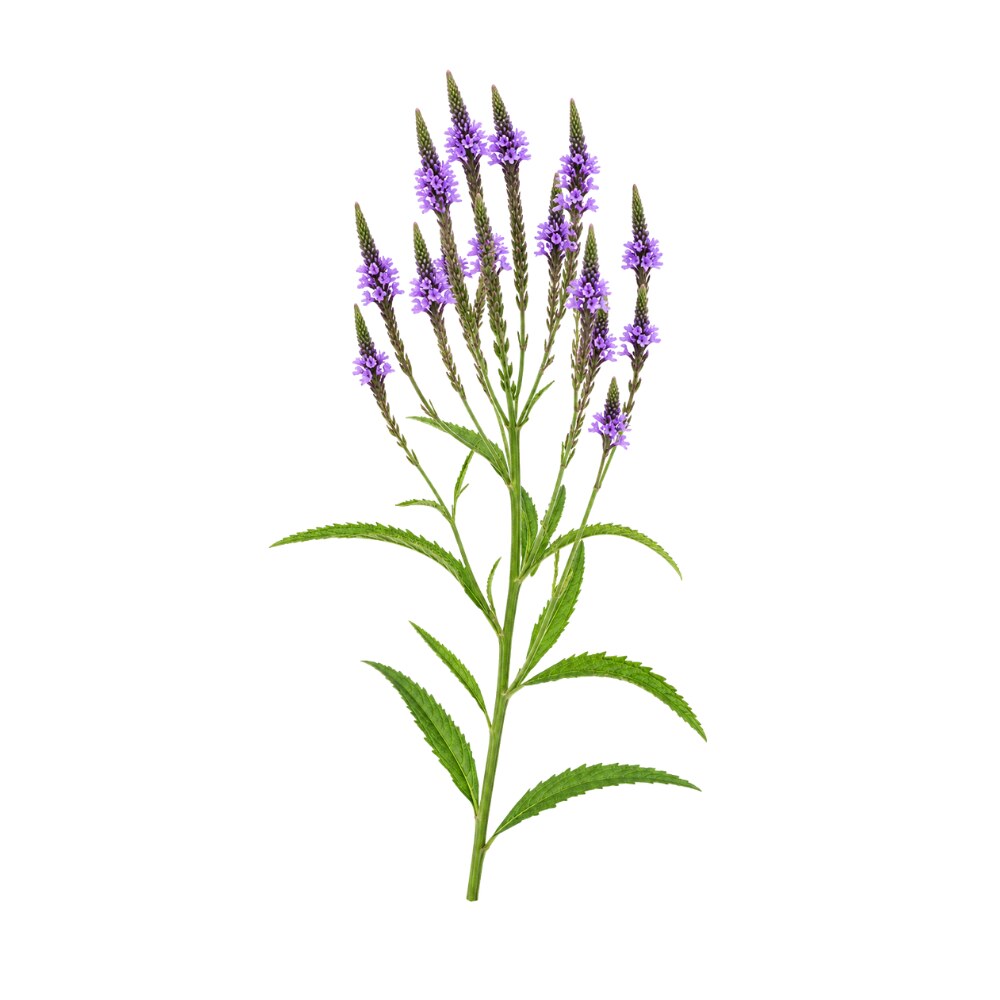
Pictured: Blue Vervain
Vervain family
Square-stemmed aromatic and bitter herbs and shrubs, whose iridoid glycosides underpin the vervains’ traditional use as nervines and digestive bitters.
1 Herb // 11 Constituents // 5 Notable Members
Overview
Around 30 genera and 1,000 species of herbs, shrubs and small trees, concentrated in the tropical Americas. The family has been substantially redrawn by molecular work — a great many genera formerly placed here, including Vitex and the teaks, moved to the mint family Lamiaceae. What remains is centred on Verbena, Lantana and Aloysia.
Verbenaceae shares square stems and opposite leaves with the mints, and the two are easily confused; the mints are usually far more strongly aromatic, while the vervains lean bitter.
Shared Traits
In Practice
Blue vervain (Verbena hastata) is the family’s entry here, a North American species used in Eclectic and Native American practice much as Verbena officinalis was used in Europe — as a nervine, bitter tonic, diaphoretic and mild sedative.
The traditional profile is coherent: a relaxing nervine for tension, irritability and the kind of nervous exhaustion that comes with an inability to let go, combined with a bitter action on digestion and a diaphoretic use in fevers. European vervain carried an additional galactagogue and uterine reputation, and a considerable ritual history — it was a sacred herb to Roman and Druidic practice alike, which is where its persistent presence in folk magic comes from.
The chemistry offers partial support. The iridoid glycosides verbenalin and hastatoside are the characteristic constituents, and hastatoside and verbenalin have been reported to promote sleep in animal models — a rare instance of a specific traditional claim finding a matching preclinical signal. Verbascoside (acteoside), a phenylethanoid glycoside, contributes antioxidant and anti-inflammatory activity and is widespread in the family.
Human evidence is essentially absent. There are no meaningful clinical trials of vervain for any indication, so the honest position is a well-attested traditional profile with plausible but unconfirmed pharmacology.
Safety: generally well tolerated as a tea. The uterine reputation makes pregnancy a sensible avoid. Lantana camara, in the same family, is genuinely hepatotoxic to livestock through its triterpenes and is a reminder that family membership is not a safety guarantee.
Materia Medica
The monograph in the database whose Verbenaceae membership is recorded on the herb itself — so this list keeps itself current as new herbs land.
Verbena hastata
Phytochemistry
Iridoid glycosides (verbenalin, hastatoside) and phenylethanoid glycosides (verbascoside) are the family markers, alongside flavonoids, triterpenes, and — in Aloysia — a citral-rich volatile oil.
The compounds recorded for this family's single member, grouped by class.
Beyond the Database
Notable members without a monograph yet.
Keep Exploring