
Materia Medica
Curare ☠️
Chondrodendron tomentosum
Curare vine (Chondrodendron tomentosum) is a large rainforest climber of South America and one of the main plants used to make curare, the Amazonian arrow poison. Its alkaloid tubocurarine paralyses muscle and became the first muscle relaxant used in surgical anaesthesia.
What Is Curare?
Curare vine is a large woody climber of the South American rainforest, and one of the main plants used to make curare, the arrow and dart poison of the Amazon. Its alkaloid (+)-tubocurarine paralyses skeletal muscle 22,
Chondrodendron tomentosum climbs up to 30 m into the forest canopy, from Panama to Peru, Bolivia and Brazil 24Reference 24Fern, K. (n.d.). Chondrodendron tomentosum — species database entry. Useful Tropical Plants Database. https://tropical.theferns.info/viewtropical.php?id=Chondrodendron+tomentosumView study →. Its root was also a pharmacy drug, sold in Europe and North America as pareira brava 23Reference 23Pareira (UView study →.
In 1935 the chemist H. King identified tubocurarine in museum samples of curare 22Reference 22ReviewNeuromuscular block — reviewView study →. In 1942 the Canadian anaesthetist Harold Griffith used Intocostrin, a standardised extract of C. tomentosum, as a muscle relaxant during surgery. It was the start of the routine use of muscle relaxants in anaesthesia 1,
“Curare” names the poison, not one plant. It was made mainly from Chondrodendron vines and from Strychnos species, which are unrelated plants with different alkaloids 22Reference 22ReviewNeuromuscular block — reviewView study →.
Identification & Lookalikes
The name is the main source of confusion. “Curare” covers poisons made from different plants, and “pareira” covers roots from more than one species 22,
| Confused with | How it actually differs |
|---|---|
| Calabash curare (Strychnos spp., especially S. toxifera) | Also sold as curare, but made from a different genus, with different alkaloids 22Reference 22ReviewNeuromuscular block — reviewView study → |
| Abuta (Cissampelos pareira) | A relative in the same family with a herbal tradition of its own. For more than a hundred years pareira brava was wrongly thought to come from this plant, until Hanbury traced it to Chondrodendron in 1873 23Reference 23Pareira (UView study → |
| False pareira brava | Roots and stems of other moonseed-family plants, sold in the nineteenth century in place of the true root 23Reference 23Pareira (UView study → |
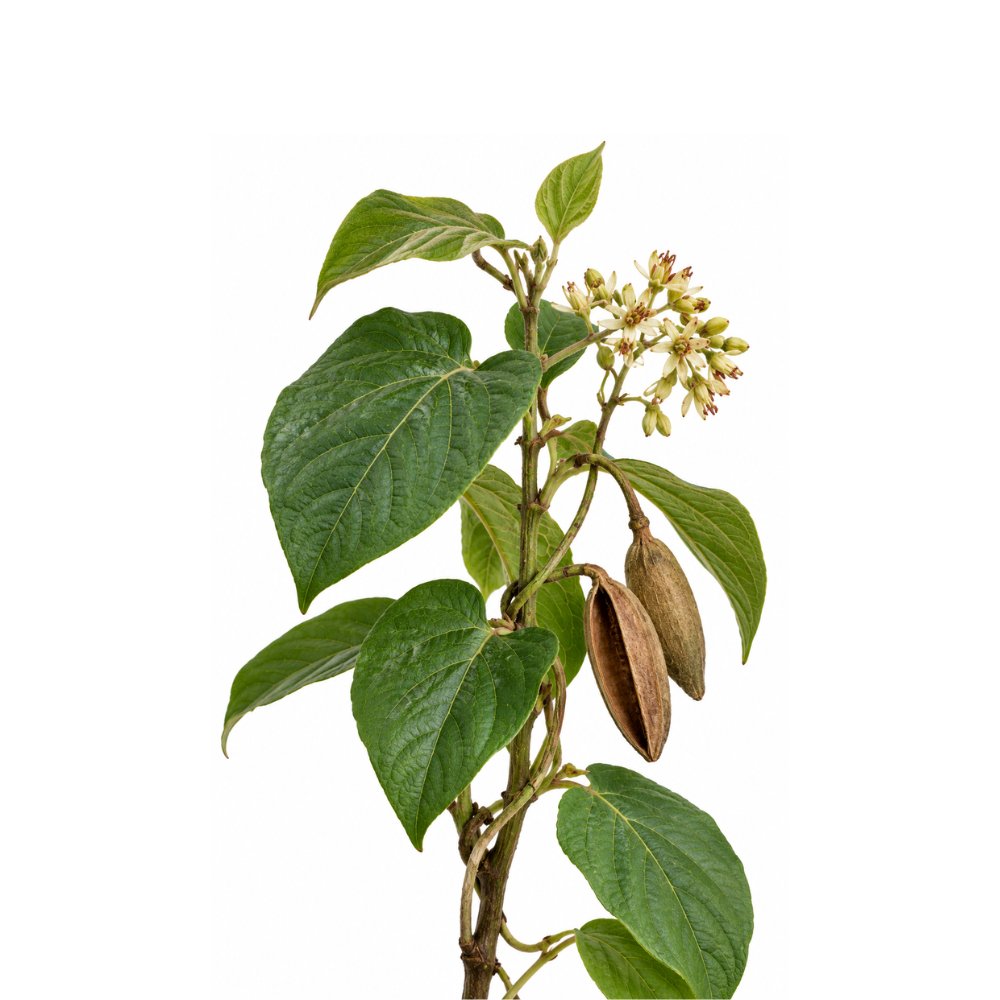
The leaves of C. tomentosum are large, up to about 30 cm long, broadly oval and slightly heart-shaped at the base, on long stalks. They are smooth above and covered beneath with a fine, pale felt between the veins, which is what the name tomentosum records 23,
Botany
Chondrodendron tomentosum is a large woody climbing vine of the moonseed family, Menispermaceae 23Reference 23Pareira (UView study →. Its stem can reach 10 cm thick at the base, and it climbs up to 30 m into the rainforest canopy 24Reference 24Fern, K. (n.d.). Chondrodendron tomentosum — species database entry. Useful Tropical Plants Database. https://tropical.theferns.info/viewtropical.php?id=Chondrodendron+tomentosumView study →.
The leaves are broadly oval, slightly heart-shaped at the base and up to about 30 cm long, on long leaf stalks. They are smooth on the upper side, with a fine, ash-coloured felt between the veins beneath 23,
The flowers are minute and either male or female. They grow in clusters from the young shoots or from the old woody stems 23Reference 23Pareira (UView study →. The fruits are oval, black and about 2 cm long, and hang in clusters like grapes 23Reference 23Pareira (UView study →.
The root is the part used in pharmacy 23Reference 23Pareira (UView study →. The moonseed family is a source of bisbenzylisoquinoline alkaloids, the class tubocurarine belongs to 9Reference 9In vitroInhibitory effect of bisbenzylisoquinoline alkaloids on nitric oxide production in activated macrophages — in vitroView study →.
Distribution
Curare vine grows in northern South America and Panama: in Brazil, Bolivia, Colombia, Ecuador, Peru and Panama 24Reference 24Fern, K. (n.d.). Chondrodendron tomentosum — species database entry. Useful Tropical Plants Database. https://tropical.theferns.info/viewtropical.php?id=Chondrodendron+tomentosumView study →. It is a climber of the rainforest canopy 24,
The IUCN lists the species as Least Concern 25Reference 25National Tropical Botanical Garden. (n.d.). Chondrodendron tomentosum — plant detail and conservation status. NTBG Tropical Plants Database. https://ntbg.org/database/plants/detail/chondrodendron-tomentosumView study →. The plant is gathered from the wild and is not cultivated 24Reference 24Fern, K. (n.d.). Chondrodendron tomentosum — species database entry. Useful Tropical Plants Database. https://tropical.theferns.info/viewtropical.php?id=Chondrodendron+tomentosumView study →. The root is wild-harvested, and taking it destroys the plant. Anyone buying pareira root may want to ask where and how it was collected.
Synthetic neuromuscular blockers replaced tubocurarine in anaesthesia, partly because it was difficult to obtain from its natural sources 22Reference 22ReviewNeuromuscular block — reviewView study →.
Phytochemistry
The alkaloids of curare vine are bisbenzylisoquinolines, large molecules built from two benzylisoquinoline units 2,
Tubocurarine is the best known. C. tomentosum is a rich source of it 22Reference 22ReviewNeuromuscular block — reviewView study →. One of its two nitrogens is quaternary and the other is tertiary, but at body pH that one is also usually protonated, so the molecule carries a positive charge at both ends 22Reference 22ReviewNeuromuscular block — reviewView study →.
The other documented alkaloids are curine (also called bebeerine), cycleanine, isochondodendrine and chondocurine 2Reference 2Curare alkaloids: examination of commercial curare, Chondrodendron tomentosum R. & P. and Anomospermum grandifolium EichlView study →. Curine is also the major alkaloid of the related C. platyphyllum 12Reference 12AnimalCurine inhibits mast cell-dependent responses in mice — in vivoView study →.
Much of the research on curine used material from C. platyphyllum or other plants, and should be read separately from studies of C. tomentosum 7,
Constituent Summary
Documented from C. tomentosum; amounts have not been measured.
Isoquinoline Alkaloid5 compounds1 with data
Chondocurarine, chondodine, cycleanine N-oxide and tomentocurine are also documented 2Reference 2Curare alkaloids: examination of commercial curare, Chondrodendron tomentosum R. & P. and Anomospermum grandifolium EichlView study →.
Toxicology
Class of poison. Bisbenzylisoquinoline alkaloid — competitive nicotinic acetylcholine receptor antagonist at the neuromuscular junction.
Mechanism. (+)-Tubocurarine occupies the nicotinic acetylcholine receptor of the motor endplate without activating it. The nerve fires and acetylcholine is released, but the muscle does not respond. This is a competitive block, so raising acetylcholine levels with a cholinesterase inhibitor can reverse it 22Reference 22ReviewNeuromuscular block — reviewView study →.
Course. Onset is rapid by injection, and the sequence is characteristic: small muscles first (face, eyes, fingers), then the limbs, then the diaphragm and intercostals. Death is by respiratory paralysis with the heart still beating.
No sedation and no pain relief. Neuromuscular blockers have no effect on consciousness or on pain. A paralysed person remains fully aware, and patients have woken during surgery while still completely paralysed 22Reference 22ReviewNeuromuscular block — reviewView study →.
Route dependence. The alkaloids are charged and poorly absorbed from the gut. The poison must enter through a wound, and meat from animals killed with curare is harmless to eat 22Reference 22ReviewNeuromuscular block — reviewView study →.
Potency. No figure exists for the crude poison. Hunters judged its strength by how far a monkey got before it fell: with a strong curare it dropped while climbing the first tree, and a weak one let it leap to two more. They spoke of one-, two- and three-tree curares 22Reference 22ReviewNeuromuscular block — reviewView study →.
Antidote — yes, in a clinical setting. A competitive block is reversed by cholinesterase inhibitors such as neostigmine, which raise acetylcholine levels enough to outcompete the alkaloid 22Reference 22ReviewNeuromuscular block — reviewView study →. The immediate priority in any real exposure is ventilation, because the paralysis kills long before it wears off.
Fatalities. Curare was made to kill game. Human poisoning outside that setting is rare, and most of the human record comes from anaesthesia.
Traditional & Historical Use
Amazonian Arrow Poison
Curare is one of the names South American peoples gave to the plant poisons they used to coat the tips of hunting arrows and blowpipe darts. The two main sources were Chondrodendron vines, especially C. tomentosum, and Strychnos species, especially S. toxifera 22Reference 22ReviewNeuromuscular block — reviewView study →.
The poison is little absorbed when swallowed, so the meat of animals killed with it is harmless 22Reference 22ReviewNeuromuscular block — reviewView study →. Hunters tested the strength of each batch by how far a struck monkey could flee, from one tree to three 22Reference 22ReviewNeuromuscular block — reviewView study →.
Bark and root are decocted and reduced to a thick paste, and the mix of plants varies between peoples and regions.
South American Folk Medicine
In South America the root is used as a bitter tonic, diuretic, fever remedy and emmenagogue. A root decoction is taken for oedema, kidney stones, persistent urinary tract infections, prostatitis and testicular inflammation 24Reference 24Fern, K. (n.d.). Chondrodendron tomentosum — species database entry. Useful Tropical Plants Database. https://tropical.theferns.info/viewtropical.php?id=Chondrodendron+tomentosumView study →.
Externally the plant is applied as a poultice to bruises and to poisonous snake bites 24Reference 24Fern, K. (n.d.). Chondrodendron tomentosum — species database entry. Useful Tropical Plants Database. https://tropical.theferns.info/viewtropical.php?id=Chondrodendron+tomentosumView study →.
Pareira Brava in Western Pharmacy
The Portuguese brought the root to Europe in the second half of the seventeenth century. It was sold as pareira brava, and in Brazil it was called abutua 23Reference 23Pareira (UView study →.
It was official in the United States Pharmacopoeia. King’s American Dispensatory (1898) describes it as a tonic, diuretic and mild laxative, used for chronic inflammation of the bladder and kidney, kidney stones, leucorrhoea, dropsy, rheumatism and jaundice 23Reference 23Pareira (UView study →.
The drug was often adulterated, most commonly by selling the weaker stem as the root 23Reference 23Pareira (UView study →.
Curare in Physiology and Anaesthesia
The French physiologist Magendie received curare samples from Alexander von Humboldt and used the poison to immobilise animals. In the mid-nineteenth century Claude Bernard and his pupil Vulpian showed that curare acts between the motor nerve and the muscle, at the motor endplate 22Reference 22ReviewNeuromuscular block — reviewView study →.
In 1912 the German surgeon Läwen used “curarine”, a partly purified material from calabash curare, alongside anaesthesia 22Reference 22ReviewNeuromuscular block — reviewView study →.
In 1938 the explorer Richard Gill brought back more than 11 kg of curare from the Amazon. Scientists at E. R. Squibb & Sons identified C. tomentosum as a plant source and made a stable extract of uniform strength, Intocostrin. Harold Griffith gave it in the operating room in 1942 1Reference 1The connection between DrView study →. Gill later disputed Squibb’s claim that curare came from C. tomentosum alone 1Reference 1The connection between DrView study →.
The Drug Derived From It
Every modern medical use of curare belongs to the purified alkaloid (+)-tubocurarine, given by intravenous injection under anaesthesia. It produces controlled muscle relaxation for surgery, with the airway secured and breathing supported 4,
The rest of the literature is preclinical and concerns the plant’s other bisbenzylisoquinolines. Most of it used curine from Chondrodendron platyphyllum or other plants, and cycleanine from Triclisia subcordata 7,
1. Skeletal Muscle Relaxation
(+)-Tubocurarine, the principal alkaloid of C. tomentosum, is a reversible competitive antagonist at the nicotinic acetylcholine receptor of the motor endplate. It produces flaccid paralysis of skeletal muscle 1,
Voltage-clamp work at the frog neuromuscular junction shows it binds both acetylcholine sites on the receptor with micromolar affinity, and with an association rate as fast as that of acetylcholine 3Reference 3In vitroKinetics of (+)-tubocurarine blockade at the neuromuscular junction — in vitroView study →.
In a comparison under enflurane anaesthesia, ten patients each received tubocurarine 0.5 mg/kg, vecuronium 0.1 mg/kg or atracurium 0.5 mg/kg. Recovery followed a similar pattern with all three drugs 4Reference 4RCTReappearance of the train-of-four after neuromuscular blockade induced with tubocurarine, vecuronium or atracurium — randomised controlled trialView study →.
Cholinesterase inhibitors such as neostigmine reverse the block 22Reference 22ReviewNeuromuscular block — reviewView study →.
The effect appears only when the alkaloid is injected. Curare is little absorbed when swallowed, which is why game killed with it can be eaten 22Reference 22ReviewNeuromuscular block — reviewView study →.
Gap: Every human result belongs to the purified alkaloid injected intravenously under anaesthesia, with the airway secured and breathing controlled. It paralyses the diaphragm along with every other muscle, and without ventilation the effect is fatal. No oral preparation of the plant produces it.
2. Anti-Inflammatory
Curine, a bisbenzylisoquinoline also called bebeerine, has anti-inflammatory activity in mice. The material studied came from the related C. platyphyllum. Taken by mouth, curine reduced paw swelling and vascular permeability, and in vitro it inhibited prostaglandin E2 production without changing COX-2 expression. Its effects resembled those of indomethacin 7Reference 7AnimalCurine, an alkaloid isolated from Chondrodendron platyphyllum, inhibits prostaglandin E2 in experimental models of inflammation and pain — mouse in vivoView study →.
In mice with LPS-induced pleurisy, curine reduced neutrophil recruitment and lowered TNF-α, IL-1β, IL-6, MCP-1 and leukotriene B4 8Reference 8AnimalCurine inhibits macrophage activation and neutrophil recruitment in a mouse model of lipopolysaccharide-induced inflammation — in vivoView study →.
Five bisbenzylisoquinolines, including cycleanine and chondocurine, suppressed nitric oxide production by activated mouse macrophages in vitro 9Reference 9In vitroInhibitory effect of bisbenzylisoquinoline alkaloids on nitric oxide production in activated macrophages — in vitroView study →.
Gap: The best-characterised work used curine from C. platyphyllum, a different species. Effects in C. tomentosum are inferred from shared chemistry, and no human data exist.
3. Anti-Allergic & Anti-Asthmatic
In ovalbumin-sensitised mice, oral curine reduced eosinophil recruitment and activation and airway hyper-responsiveness, and lowered IL-13 and eotaxin. The effect resembled that of the calcium-channel blocker verapamil and was linked to reduced calcium influx 11Reference 11AnimalCurine inhibits eosinophil activation and airway hyper-responsiveness in a mouse model of allergic asthma — in vivoView study →.
In mast-cell-dependent models, curine reduced scratching, paw swelling, anaphylaxis and production of cysteinyl leukotrienes and PGD2. It acted as a mast-cell stabiliser, comparable to cromoglycate 12Reference 12AnimalCurine inhibits mast cell-dependent responses in mice — in vivoView study →.
A review summarises curine’s anti-allergic effects in skin, lung and whole-body allergy models at non-toxic oral doses 10Reference 10ReviewAnti-allergic properties of curine, a bisbenzylisoquinoline alkaloid — reviewView study →.
This is preclinical work from one research group, using curine from C. platyphyllum. No clinical asthma or allergy trial exists for this plant.
4. Analgesic
In mice, curine reduced acetic-acid-induced writhing and carrageenan-induced pain sensitivity, and reduced the inflammatory but not the neurogenic phase of the formalin test. The pattern resembled indomethacin rather than morphine, which points to an effect through reduced prostaglandin E2 7Reference 7AnimalCurine, an alkaloid isolated from Chondrodendron platyphyllum, inhibits prostaglandin E2 in experimental models of inflammation and pain — mouse in vivoView study →.
This is one animal study, and the effect follows from the anti-inflammatory action.
5. Antiplasmodial
The potency data for this plant’s alkaloids come from other members of the moonseed family. Isochondodendrine, isolated from the root bark of Epinetrum villosum, was the most potent antiplasmodial alkaloid in that plant, with an in vitro IC50 of 0.10 µg/mL and a selectivity index of 175 against human colon cancer cells 13Reference 13In vitroBiologically active bisbenzylisoquinoline alkaloids from the root bark of Epinetrum villosum — in vitroView study →.
In a screen of 53 bisbenzylisoquinolines, more than half were at least 100 times more toxic to Plasmodium falciparum than to human cells, and (–)-cycleanine was among the most selective 14Reference 14In vitroAntiplasmodial and cytotoxic activity of natural bisbenzylisoquinoline alkaloids — in vitroView study →.
Docking studies suggest curine binds Plasmodium prolyl-tRNA synthetase and dihydrofolate reductase 15Reference 15Bisbenzylisoquinolines from Cissampelos pareira L. as antimalarial agents: molecular docking and molecular dynamics — in silicoView study →.
No antiplasmodial testing has been done on C. tomentosum material.
6. Anticancer
Cycleanine isolated from Triclisia subcordata inhibited ovarian cancer cell lines at 7–14 µM and triggered apoptosis through caspase-3/7 activation and PARP cleavage 16Reference 16In vitroCytotoxicity effects and apoptosis induction by bisbenzylisoquinoline alkaloids from Triclisia subcordata — in vitroView study →. A modelling study proposed PARP1 as a direct target 17Reference 17The impact of cycleanine in cancer research: a computational study — in silicoView study →.
Curine from C. platyphyllum caused G1 arrest and apoptosis in HL-60 leukaemia cells and was cytotoxic to K562 cells 18Reference 18In vitroEffects of curine in HL-60 leukemic cells: cell cycle arrest and apoptosis induction — in vitroView study →. (–)-Curine from Cyclea wattii killed liver cancer cells whatever their p53 status 19Reference 19In vitroGong, S., et al. (2017). (–)-Curine induces cell cycle arrest and cell death in hepatocellular carcinoma cells in a p53-independent way — in vitro. Biomedicine & Pharmacotherapy. https://pubmed.ncbi.nlm.nih.gov/28292017/View study →.
Gap: All in vitro, with alkaloids from other plants, no tumour model and no clinical work.
7. Vasodilatory & Antihypertensive
Curine relaxes vascular smooth muscle by blocking calcium channels. In rat aorta it inhibited contractions to high potassium and to Bay K8644. In A7r5 vascular smooth-muscle cells it reduced the L-type calcium current and shifted its inactivation toward more negative potentials, independently of cAMP and cGMP 20Reference 20In vitroCurine, a bisbenzylisoquinoline alkaloid, blocks L-type Ca²⁺ channels and decreases intracellular Ca²⁺ transients in A7r5 cells — in vitro/ex vivoView study →. The same calcium-channel block has been linked to curine’s anti-allergic effects 11Reference 11AnimalCurine inhibits eosinophil activation and airway hyper-responsiveness in a mouse model of allergic asthma — in vivoView study →.
This is a single line of ex vivo and in vitro work, with no whole-animal blood-pressure or human data.
8. Antitrypanosomal
In vitro, curine and cycleanine were among eleven bisbenzylisoquinolines tested against Trypanosoma cruzi, the parasite of Chagas disease. Both were active, and curine reached an LC50 of about 10 µM. The alkaloids were mixed inhibitors of trypanothione reductase, an enzyme the parasite depends on 21Reference 21In vitroTrypanocidal bisbenzylisoquinoline alkaloids are inhibitors of trypanothione reductase — in vitroView study →.
These are enzyme and parasite assays on purified alkaloids, not tests of the plant.
Mechanisms
(+)-Tubocurarine blocks the nicotinic acetylcholine receptor at the motor endplate by competing with acetylcholine. It binds and releases the receptor repeatedly, reducing the chance that acetylcholine opens it 3,
The other rows belong to curine and related bisbenzylisoquinolines, studied mostly in material from other species.
| Mechanism | Drives | Key compounds |
|---|---|---|
| Competitive nicotinic acetylcholine receptor antagonism (motor end-plate) | skeletal muscle relaxation | tubocurarine |
| L-type voltage-gated Ca²⁺ channel blockade → ↓ intracellular Ca²⁺ | vasodilationanti-allergicanti-asthmatic | curine |
| Mast-cell stabilisation; ↓ PGD2, cysteinyl-leukotrienes, IL-13, eotaxin | anti-allergicanti-asthmatic | curine |
| PGE2 ↓ (COX-independent), TNF-α/IL-1β/IL-6/MCP-1/LTB4 ↓, iNOS/NO ↓ | anti-inflammatoryanalgesic | curine, cycleanine, chondocurine |
| Caspase-3/7 activation, PARP cleavage, G1 arrest | anticancer (cytotoxic) | cycleanine, curine |
| Trypanothione reductase inhibition; antiplasmodial target binding | antitrypanosomalantiplasmodial | curine, cycleanine, isochondodendrine |
| Non-immunological mast-cell histamine release | (adverse effect) hypotension | tubocurarine |
Clinical Trials
No registered clinical trials of Chondrodendron tomentosum as a botanical have been identified. The human evidence belongs entirely to purified tubocurarine as a twentieth-century anaesthetic muscle relaxant, now largely retired.
| Completed | Planned | Terminated | Preclinical |
|---|---|---|---|
| 0(botanical) | 0 | 0 | ~20 |
Last checked: August 2026.
Pharmaceutical Doses — Not Herbal Ones
These are doses of purified tubocurarine, injected intravenously by anaesthetists with the airway secured and breathing controlled. There is no herbal dose.
| Setting | Preparation | Dose | Est. dried-herb equivalent | Source |
|---|---|---|---|---|
| Muscle relaxation under enflurane anaesthesia | Purified tubocurarine, intravenous | 0.5 mg/kg | Not derivable | 4Reference 4RCTReappearance of the train-of-four after neuromuscular blockade induced with tubocurarine, vecuronium or atracurium — randomised controlled trialView study → |
| Surgical patients, histamine study | Purified tubocurarine, intravenous | 0.25–0.75 mg/kg | Not derivable | 5Reference 5Role of histamine in the hypotensive action of d-tubocurarine in humansView study → |
Safety & Pregnancy
Curare vine is the source of a lethal arrow poison. Its alkaloids paralyse muscle and can kill by stopping breathing.
- Source of a lethal arrow poison. The plant yields curare; its alkaloids cause muscle paralysis 3,
22Reference 3In vitroKinetics of (+)-tubocurarine blockade at the neuromuscular junction — in vitroView study →Reference 22ReviewNeuromuscular block — reviewView study → and can kill by respiratory arrest. - Never inject, and never apply to broken skin. Toxicity is route-dependent, and this is the route where the danger lies.
- Poorly absorbed when swallowed, but not proven safe. The charged alkaloids are poorly absorbed from the gut 22Reference 22ReviewNeuromuscular block — reviewView study →; no oral safety data exist for herbal use.
- Histamine release. Tubocurarine releases histamine in a dose-dependent way, which lowers blood pressure 5,
6Reference 5Role of histamine in the hypotensive action of d-tubocurarine in humansView study →Reference 6In vitroEffects of tubocurarine on plasma histamine concentration in the rat; correlation with histamine release from isolated mast cells — animal/in vitroView study → . - Pregnancy and lactation: avoid. A toxic alkaloid-bearing plant with no reproductive safety data.
- Not a self-treatment herb under any circumstances. No standardised preparation, no dose, no human trial of the botanical.
Full Safety Detail
Paralysis. (+)-Tubocurarine is a potent skeletal-muscle relaxant 3,
Route. Curare does little when swallowed, because its charged alkaloids are poorly absorbed from the gut, and meat from curare-killed game is eaten safely 22Reference 22ReviewNeuromuscular block — reviewView study →. This is a pharmacokinetic fact, not a safety margin. It does not show that oral herbal doses are safe, and any injection or contact with broken skin is dangerous.
Histamine release. In 21 surgical patients, injected tubocurarine raised plasma histamine in proportion to the dose, and the rise tracked the fall in blood pressure 5Reference 5Role of histamine in the hypotensive action of d-tubocurarine in humansView study →. In rats it released histamine directly from mast cells 6Reference 6In vitroEffects of tubocurarine on plasma histamine concentration in the rat; correlation with histamine release from isolated mast cells — animal/in vitroView study →. Flushing and bronchospasm are also attributed to this release.
No herbal safety data. There are no toxicology or safety studies of oral herbal preparations of this plant, and no established therapeutic dose.
Avoid. Curare vine is the source of a paralysing arrow poison, and it has never been studied for safety in pregnancy or breastfeeding. It should not be used during pregnancy or breastfeeding, in any preparation.
References
- Elsherbini, N., & Backman, SB. (2024). The connection between Dr. Harold Griffith and Richard Gill: new insights into the history of curare use in anesthesia — historical article. Canadian Journal of Anaesthesia. https://pubmed.ncbi.nlm.nih.gov/38653929/
- King, H. (1948). Curare alkaloids: examination of commercial curare, Chondrodendron tomentosum R. & P. and Anomospermum grandifolium Eichl. Journal of the Chemical Society. https://pubmed.ncbi.nlm.nih.gov/18106014/
- Le Dain, AC., et al. (1991). Kinetics of (+)-tubocurarine blockade at the neuromuscular junction — in vitro. British Journal of Pharmacology. https://pubmed.ncbi.nlm.nih.gov/1884116/
- O’Hara, DA., et al. (1986). Reappearance of the train-of-four after neuromuscular blockade induced with tubocurarine, vecuronium or atracurium — randomised controlled trial. British Journal of Anaesthesia. https://pubmed.ncbi.nlm.nih.gov/2877682/
- Moss, J., et al. (1981). Role of histamine in the hypotensive action of d-tubocurarine in humans. Anesthesiology. https://pubmed.ncbi.nlm.nih.gov/6166217/
- Kubota, Y. (1986). Effects of tubocurarine on plasma histamine concentration in the rat; correlation with histamine release from isolated mast cells — animal/in vitro. British Journal of Anaesthesia. https://pubmed.ncbi.nlm.nih.gov/2431703/
- Leite, FC., et al. (2014). Curine, an alkaloid isolated from Chondrodendron platyphyllum, inhibits prostaglandin E2 in experimental models of inflammation and pain — mouse in vivo. Planta Medica. https://pubmed.ncbi.nlm.nih.gov/25197953/
- Ribeiro-Filho, J., et al. (2019). Curine inhibits macrophage activation and neutrophil recruitment in a mouse model of lipopolysaccharide-induced inflammation — in vivo. Toxins. https://pubmed.ncbi.nlm.nih.gov/31816942/
- Kondo, Y., et al. (1993). Inhibitory effect of bisbenzylisoquinoline alkaloids on nitric oxide production in activated macrophages — in vitro. Biochemical Pharmacology. https://pubmed.ncbi.nlm.nih.gov/7505581/
- Ribeiro-Filho, J., et al. (2015). Anti-allergic properties of curine, a bisbenzylisoquinoline alkaloid — review. Molecules. https://pubmed.ncbi.nlm.nih.gov/25781071/
- Ribeiro-Filho, J., et al. (2013). Curine inhibits eosinophil activation and airway hyper-responsiveness in a mouse model of allergic asthma — in vivo. Toxicology and Applied Pharmacology. https://pubmed.ncbi.nlm.nih.gov/23994558/
- Ribeiro-Filho, J., et al. (2014). Curine inhibits mast cell-dependent responses in mice — in vivo. Journal of Ethnopharmacology. https://pubmed.ncbi.nlm.nih.gov/24969825/
- Otshudi, AL., et al. (2005). Biologically active bisbenzylisoquinoline alkaloids from the root bark of Epinetrum villosum — in vitro. Journal of Ethnopharmacology. https://pubmed.ncbi.nlm.nih.gov/15996841/
- Angerhofer, CK., et al. (1999). Antiplasmodial and cytotoxic activity of natural bisbenzylisoquinoline alkaloids — in vitro. Journal of Natural Products. https://pubmed.ncbi.nlm.nih.gov/9917283/
- Suresh, PS., et al. (2023). Bisbenzylisoquinolines from Cissampelos pareira L. as antimalarial agents: molecular docking and molecular dynamics — in silico. Computational Biology and Chemistry. https://pubmed.ncbi.nlm.nih.gov/36848855/
- Uche, FI., et al. (2016). Cytotoxicity effects and apoptosis induction by bisbenzylisoquinoline alkaloids from Triclisia subcordata — in vitro. Phytotherapy Research. https://pubmed.ncbi.nlm.nih.gov/27270992/
- Nwaefulu, ON., et al. (2022). The impact of cycleanine in cancer research: a computational study — in silico. Journal of Molecular Modeling. https://pubmed.ncbi.nlm.nih.gov/36194315/
- Dantas, BB., et al. (2015). Effects of curine in HL-60 leukemic cells: cell cycle arrest and apoptosis induction — in vitro. Journal of Natural Medicines. https://pubmed.ncbi.nlm.nih.gov/25616501/
- Gong, S., et al. (2017). (–)-Curine induces cell cycle arrest and cell death in hepatocellular carcinoma cells in a p53-independent way — in vitro. Biomedicine & Pharmacotherapy. https://pubmed.ncbi.nlm.nih.gov/28292017/
- Medeiros, MA., et al. (2011). Curine, a bisbenzylisoquinoline alkaloid, blocks L-type Ca²⁺ channels and decreases intracellular Ca²⁺ transients in A7r5 cells — in vitro/ex vivo. European Journal of Pharmacology. https://pubmed.ncbi.nlm.nih.gov/21872583/
- Fournet, A., et al. (1998). Trypanocidal bisbenzylisoquinoline alkaloids are inhibitors of trypanothione reductase — in vitro. Journal of Enzyme Inhibition. https://pubmed.ncbi.nlm.nih.gov/9879510/
- Bowman, WC. (2006). Neuromuscular block — review. British Journal of Pharmacology, 147(Suppl 1), S277–S286. https://pubmed.ncbi.nlm.nih.gov/16402115/
- Felter, HW., & Lloyd, JU. (1898). Pareira (U. S. P.) — Pareira. King’s American Dispensatory. https://www.henriettes-herb.com/eclectic/kings/chondrodendron-tome.html
- Fern, K. (n.d.). Chondrodendron tomentosum — species database entry. Useful Tropical Plants Database. https://tropical.theferns.info/viewtropical.php?id=Chondrodendron+tomentosum
- National Tropical Botanical Garden. (n.d.). Chondrodendron tomentosum — plant detail and conservation status. NTBG Tropical Plants Database. https://ntbg.org/database/plants/detail/chondrodendron-tomentosum



