Overview
Leaf at a Glance
Leaves are where the plant manufactures rather than stores. Photosynthesis, the volatile-oil glands, and most flavonoid biosynthesis happen here.
That makes leaf medicine brighter and faster than the root of the same plant, and more forgiving at everyday doses.
The best leaf is cut just before flowering, on a dry morning once the dew has lifted. Once the plant is in bloom the harvest usually becomes an aerial-parts cut instead.
The chemistry sorts into a few families. Peppermint and thyme hold volatile oils in surface glands that rupture at a touch; hawthorn and hibiscus hold flavonoids such as rutin and vitexin.
The rest sort by what they do in water. Globe artichoke and andrographis carry the sesquiterpene and diterpene bitters; marshmallow and plantain carry mucilage; tea and yerba maté carry caffeine.
Not every leaf is gentle. Comfrey and coltsfoot carry pyrrolizidine alkaloids, and the liver injury those cause is cumulative and silent.
Working Notes
Harvest before the flowers open. — Once a plant commits to bloom its leaf oils drop, so mid-morning on a dry day, after the dew has gone and before the heat peaks, is the window worth waiting for.
Sun-dried leaf is inferior leaf. — Direct sun bleaches the chlorophyll, strips the aroma, and degrades the flavonoids: a batch that dries green and smells like the living plant was dried right, and khaki leaf was dried too hot.
Keep the lid on. — The commonest domestic mistake is steeping an aromatic leaf in an open mug, where the fragrant steam rising off the top is the medicine leaving.
Take the pyrrolizidine warnings seriously. — Comfrey and coltsfoot earned their reputations honestly, but PA hepatotoxicity is cumulative and silent, so external use and short courses only.
Preparation
How Leaf Is Prepared
Leaf is the easiest material in the dispensary to extract and the easiest to ruin. Nearly every rule here is about applying less heat, for less time, than instinct suggests.
01
Infusion
The default. Pour water just off the boil over 1–2 g of dried leaf per cup, cover, and steep 10–15 minutes.
The lid is not optional for aromatics — it condenses the volatile oils back into the cup instead of losing them to the room. Strain and drink hot.
02
Long or Overnight Infusion
For mineral-rich and mucilaginous leaves, steep 25–30 g of dried herb in a litre of hot water, capped, for 4–8 hours or overnight. It draws out far more than a short brew — and for tannic leaves it draws out too much, so keep the method to the mild ones.
03
Tincture
Fresh leaf tinctures at roughly 1:2 in 95% alcohol to overcome the plant’s own water; dried leaf at 1:5 in 25–40%. Low-percentage menstruums suit flavonoid-rich leaves; resinous or strongly aromatic leaves want the higher end.
04
Dry & Store
Spread a single layer in shade with moving air, below about 35 °C, until the leaf snaps rather than folds. Store whole and garble to size on the day of use — crumbled leaf loses its oils within months, whole leaf holds them for a year.
Leaf Medicines
Herbs Used for Their Leaf
97 herbs are used for their leaf, the everyday, infusible, gentlest-to-extract end of the materia medica.
Abuta Cissampelos pareira Abuta is a tropical climbing vine of the moonseed family, known in South America as the midwives' herb. Its root and vine are used for menstrual cramps, heavy bleeding and pain, and its alkaloids include curare-like muscle relaxants.
Acacia Acacia, Vachellia & Senegalia spp. Acacia is a large group of thorny trees and shrubs in the legume family, now divided between Acacia, Vachellia and Senegalia. Its medicines include gum arabic, a soluble fibre from the sap, and the tannin-rich astringent barks and heartwood extracts of babul and catechu.
Aloe Aloe vera Aloe vera is a succulent whose leaf holds a clear, soothing gel used on burns, wounds and irritated skin, and a bitter yellow latex that acts as a strong laxative. It is one of the oldest recorded medicinal plants.
Amaranth Amaranthus blitum Purple amaranth is a leafy annual eaten as a cooked green across the tropics and warm temperate regions. Its leaves are rich in β-carotene, vitamin C and minerals, and herbal traditions use it as a cooling, nourishing food.
Andrographis Andrographis paniculata Andrographis is an intensely bitter annual herb of India and Sri Lanka, known as the king of bitters and used for colds, sore throats, fevers and liver complaints. Its main active compound is andrographolide.
Angelica Angelica archangelica Angelica is a tall, aromatic plant of the carrot family whose root and seeds are used as a warming digestive bitter and antispasmodic, and to flavour gin and liqueurs. Its root is rich in coumarins such as osthole and imperatorin.
Babul Vachellia nilotica Babul is a thorny acacia tree of Africa, Arabia and South Asia whose tannin-rich bark is used as an astringent. It is a traditional gargle for bleeding gums, a wash for wounds and a remedy for loose stool, and its twigs are chewed as toothbrushes.
Bacopa Bacopa monnieri Bacopa (Bacopa monnieri), or brahmi, is a creeping wetland herb and a classic Ayurvedic brain tonic. Its extracts, rich in saponins called bacosides, are taken for memory, focus and stress.
Bael Aegle marmelos Bael is a thorny, sacred tree of the citrus family native to the Indian subcontinent. Its unripe fruit is one of Ayurveda's main remedies for diarrhoea and dysentery, and its ripe pulp is eaten as a cooling food and gentle laxative.
Bay Bean Canavalia rosea Bay bean is a sprawling legume of tropical beaches whose root, leaf and seed are used in coastal folk medicine for rheumatism, wounds, colds and constipation. Its dried leaf is also smoked as a mild relaxant and tobacco substitute.
Bearberry Arctostaphylos uva-ursi Bearberry is a low, trailing evergreen shrub of the heath family whose leaves are a traditional urinary antiseptic for bladder infections. The leaf's main constituent, arbutin, is turned into hydroquinone in the body and excreted in the urine.
Bilberry Vaccinium myrtillus Bilberry is a dwarf shrub of northern heaths and forests whose blue-black berries are rich in anthocyanins. The dried fruit is a traditional remedy for diarrhoea, and fruit extracts are used for eye fatigue and leg circulation.
Black Walnut Juglans nigra Black walnut is a large North American hardwood tree whose green nut hulls are used in herbal medicine as an astringent and a traditional remedy for intestinal worms and fungal skin infections. The hull is rich in juglone, a naphthoquinone pigment.
Black Wattle Acacia mearnsii Black wattle is a fast-growing Australian tree grown on plantations for its tannin-rich bark, which supplies the leather and adhesive industries. A polyphenol extract of the bark is sold as an antioxidant supplement, and the bark is a folk remedy for infections and diarrhoea in South Africa.
Blue Vervain Verbena hastata Blue vervain is a tall North American wetland wildflower with spikes of small violet-blue flowers. Its bitter aerial parts are used as a calming nervine and mild sedative, and they contain the iridoids verbenalin and hastatoside.
Buchu Agathosma betulina Buchu is an aromatic shrub from the mountains of South Africa's Western Cape whose leaf is a traditional remedy for the urinary tract. Its blackcurrant-scented essential oil, rich in diosphenol and menthone, is also a staple of the flavour industry.
Butterfly Bush (Petalostylis) Petalostylis cassioides Butterfly bush is a shrub of the pea family from arid inland Australia, with finely divided leaves and orange-yellow flowers. Aboriginal people rubbed its crushed leaves on the skin, and its leaves and stems contain tryptamine alkaloids, including DMT.
Cacao Theobroma cacao Cacao is a small tropical tree whose seeds are the source of cocoa and chocolate. The seeds carry theobromine and flavanols such as epicatechin, studied for blood-vessel function and blood pressure.
Calea zacatechichi Calea ternifolia Calea zacatechichi (Calea ternifolia) is a bitter shrub from Mexico and Central America, known as the Mexican dream herb. The Chontal of Oaxaca take the leaf as a tea and smoke it to bring on vivid dreams, and in Mexican folk medicine it is a bitter tonic for appetite, digestion and fevers.
Cannabis Cannabis sativa Cannabis is a resinous annual herb whose female flowers carry THC, CBD and more than a hundred related cannabinoids. It is used for pain, muscle spasm, nausea, sleep and anxiety, and purified CBD is a licensed medicine for rare forms of epilepsy.
Cashew Anacardium occidentale Cashew is a tropical American tree best known for its nut. Its astringent bark and leaves are a traditional medicine for diarrhoea, mouth ulcers, diabetes and skin complaints, and its shell oil is rich in anacardic acid.
Catnip Nepeta cataria Catnip is an aromatic perennial of the mint family, best known for its effect on cats. In people it is a gentle herbal tea for restlessness, indigestion and colic, and its essential oil, rich in nepetalactone, is used as an insect repellent.
Chá de Bugre Cordia salicifolia Chá de bugre is a small South American tree whose leaf is brewed as a tea for weight loss, fluid retention and fatigue. Its red fruit is roasted as a coffee substitute, and the plant contains caffeine.
Chacruna Psychotria viridis Chacruna is an Amazonian shrub of the coffee family whose leaves are the usual source of DMT in ayahuasca. Boiled with the ayahuasca vine, it gives the brew its visionary effect.
Chagro-Panga Diplopterys cabrerana Chagro-panga, or chaliponga, is a climbing vine of the western Amazon whose leaves are rich in N,N-DMT. They are brewed with the ayahuasca vine as a visionary admixture, in place of chacruna.
Chilca Baccharis latifolia Chilca is a resinous Andean shrub of the daisy family whose leaves are laid on as a warm poultice for sprains, bruises and aching muscles and joints. Its leaves contain the flavonoids quercetin and rutin and a limonene-rich essential oil.
Chinese Hibiscus Hibiscus rosa-sinensis Chinese hibiscus (Hibiscus rosa-sinensis) is a glossy evergreen shrub grown across the tropics for its large, showy flowers. Its flowers and leaves are used in folk medicine and hair care, and the red petals are rich in anthocyanins.
Coca Erythroxylum coca Coca is an Andean shrub whose leaf has been chewed for thousands of years against fatigue, hunger, cold and the effects of altitude. The leaf contains cocaine at under 1% of its dry weight, released slowly when it is chewed or drunk as tea.
Coffee Coffea arabica Coffee is an evergreen shrub from the Ethiopian highlands whose roasted seeds make one of the world's most widely drunk beverages. It is valued for caffeine, and its beans are rich in chlorogenic acids; coffee drinking has been studied for its links to blood sugar, liver health and longevity.
Coltsfoot Tussilago farfara Coltsfoot is a low, spring-flowering perennial of the daisy family whose leaves and flower buds are a traditional remedy for coughs and chest complaints. It also contains pyrrolizidine alkaloids that can damage the liver, and its internal use is now restricted.
Comfrey Symphytum officinale Comfrey is a large, bristly perennial of the borage family, long known as knitbone. Its root and leaf are made into ointments, creams and poultices for sprains, bruises, sore muscles and joints, and it is used on the skin only because it contains liver-toxic pyrrolizidine alkaloids.
Dagga Leonotis nepetifolia Dagga (Leonotis nepetifolia) is a tall African mint-family herb with spiky whorls of orange flowers. Its leaves are a folk remedy for coughs and colds, and the dried plant is sold as klip dagga for smoking.
Damiana Turnera diffusa Damiana is an aromatic shrub of Mexico and Central America whose leaves are brewed as a tea and used to flavour liqueurs. It is a traditional aphrodisiac and nerve tonic, used for low libido, anxiety and low mood.
Dandelion Taraxacum officinale Dandelion is a common perennial weed whose leaf and root are both food and medicine. The bitter root is taken for digestion and the liver, and the potassium-rich leaf as a gentle diuretic.
Elderberry Sambucus nigra Elder (Sambucus nigra) is a European shrub or small tree whose flowers and cooked berries are used for colds and influenza. Its dark berries are rich in anthocyanins, and a standardised berry extract has been tested in several influenza trials.
Epazote Dysphania ambrosioides Epazote is a strongly aromatic herb of the Americas, used both as a seasoning in Mexican cooking and as a traditional remedy for intestinal worms, which gives it the English name wormseed. Its essential oil is rich in ascaridole, a monoterpene peroxide.
Erva Tostão Boerhavia diffusa Erva tostão is a sprawling tropical herb whose root is used as a diuretic and a tonic for the liver and kidneys. In Ayurveda it is punarnava, a classical rejuvenating herb for swelling and fluid retention.
Eucalyptus Eucalyptus globulus Eucalyptus, or Tasmanian blue gum, is a tall Australian tree whose aromatic leaves are the main source of eucalyptus oil. The oil is rich in 1,8-cineole, which is inhaled or rubbed on the chest for congestion and has been tested as a capsule in bronchitis, sinusitis, asthma and COPD.
Fennel Foeniculum vulgare Fennel is a tall, anise-scented herb of the carrot family, grown for its seeds and leaves. The seed is a classic carminative for wind, bloating and digestive cramping, and a traditional aid to milk flow; its oil is rich in anethole.
Fenugreek Trigonella foenum-graecum Fenugreek is a Mediterranean and West Asian legume whose aromatic seed is used as both a spice and a medicine. The seed is rich in soluble fibre and steroidal saponins, and it is taken for blood sugar, cholesterol and breastfeeding support.
Feverfew Tanacetum parthenium Feverfew is a small, aromatic plant of the daisy family, taken daily to prevent migraine. Its leaves contain parthenolide, a sesquiterpene lactone studied for its anti-inflammatory activity.
Ginkgo Ginkgo biloba Ginkgo is an ancient deciduous tree, the last living species of its lineage, whose standardised leaf extract is taken for memory, circulation and dizziness. The extract is defined by its flavonol glycosides and its terpene lactones, the ginkgolides and bilobalide.
Globe Artichoke Cynara scolymus Globe artichoke is a thistle grown for its edible flower buds, and its bitter leaf is a traditional remedy for digestion and the liver. The leaf extract, rich in cynarin and other caffeoylquinic acids, is used to lower cholesterol.
Gotu Kola Centella asiatica Gotu kola is a creeping wetland herb of the carrot family, used in Ayurveda as a brain tonic and across Asia for skin and wound healing. Its triterpenes, asiaticoside and madecassoside, have been studied for venous circulation, wound repair and anxiety.
Graviola Annona muricata Graviola is the leaf of the soursop tree (Annona muricata), a tropical American fruit tree. The leaf is taken as a tea or extract for blood sugar, blood pressure, sleep and parasites, and its acetogenins, led by annonacin, are studied as anticancer agents and are linked to atypical parkinsonism.
Guamura Cecropia obtusifolia Guamura (Cecropia obtusifolia, formerly Cecropia mexicana) is a fast-growing trumpet tree of Mexico and Central America. Its leaf tea is a Mexican folk remedy for diabetes, high blood pressure and asthma.
Guayusa Ilex guayusa Guayusa is a caffeinated holly tree of the upper Amazon whose leaves are brewed as a stimulant tea. Drunk before dawn in Kichwa and Achuar households in Ecuador, it is rich in caffeine and chlorogenic acid, and is now sold as a tea and energy drink.
Gymnema Gymnema sylvestre Gymnema is a woody climbing vine of India and the Old World tropics whose leaf, when chewed, briefly blocks the taste of sweetness. Its Hindi name gurmar means "sugar destroyer", and the leaf is used in Ayurveda and modern herbal practice for diabetes and high blood sugar.
Gynostemma Gynostemma pentaphyllum Gynostemma is a climbing vine in the gourd family whose leaves are drunk as a daily tea in southern China, where it is called jiaogulan. Its leaves are rich in gypenosides, saponins related to those of ginseng, which have been studied for their effects on blood sugar, blood fats and fatty liver.
Hawthorn Crataegus oxyacantha Hawthorn is a thorny hedgerow shrub or small tree of the rose family whose leaves, flowers and berries are a traditional heart and circulation remedy. Its leaf-and-flower extracts, rich in procyanidins and flavonoids, have been tested for blood pressure and heart failure.
Holy Basil Ocimum tenuiflorum Holy basil, or tulsi, is a sacred aromatic herb of India in the mint family, taken as a daily tea and tonic for stress, mood and respiratory health. Its clove-scented leaf oil is rich in eugenol.
Horopito Pseudowintera colorata Horopito is a New Zealand shrub with peppery, red-blotched leaves, used in Māori medicine for skin complaints and toothache. Its leaves contain polygodial, a pungent compound with strong antifungal activity against Candida.
Hyssop Hyssopus officinalis Hyssop is an aromatic, semi-woody herb of the mint family, taken as a tea for coughs, colds and chest congestion and for sluggish digestion. Its essential oil is rich in the ketones pinocamphone and isopinocamphone.
Isatis Isatis indigotica Isatis is a yellow-flowered plant of the mustard family and the Chinese source of indigo dye. Its root, Ban Lan Gen, is one of the most widely used Chinese herbs for colds, sore throats and feverish viral illness.
Kratom Mitragyna speciosa Kratom is a Southeast Asian tree in the coffee family whose leaf is chewed or brewed as a working stimulant and, at higher doses, a pain reliever and sedative. Its main alkaloid, mitragynine, acts partly through the body's opioid receptors.
Lemongrass Cymbopogon citratus Lemongrass (Cymbopogon citratus) is an aromatic tropical grass grown as a culinary herb and brewed as a tea for digestion and calm. Its essential oil is rich in citral, the source of its lemon scent.
Maconha Brava Zornia latifolia Maconha brava is a low, creeping tropical legume of South America whose dried leaves are smoked in Brazil as a cannabis substitute. Its leaves are rich in flavonoids, and its cannabis-like effect has been traced to the rare flavone syzalterin.
Manuka Leptospermum scoparium Manuka is a New Zealand shrub in the myrtle family, valued for its aromatic leaf oil and as the source of manuka honey. The oil is rich in β-triketones such as leptospermone, and the honey owes its antibacterial strength to methylglyoxal.
Mapacho Nicotiana rustica Mapacho is a high-nicotine tobacco native to South America and the ceremonial tobacco of the Amazon, smoked, blown as smoke, taken as rapé snuff and drunk as a strong infusion. It is also the tobacco of the smokeless products toombak and Maraş powder.
Maritime Pine Pinus pinaster Maritime pine is a Mediterranean and Atlantic pine whose bark is the source of Pycnogenol, a standardised extract rich in procyanidins. The extract has been studied for venous insufficiency, blood pressure, blood sugar and joint pain.
Marjoram Origanum majorana Marjoram is a sweet, aromatic Mediterranean herb of the mint family, used in cooking and as a tea for digestion, cramps and nervous tension. Its essential oil is rich in terpinen-4-ol and sabinene hydrate, and its leaves in rosmarinic acid.
Marshmallow Althaea officinalis Marshmallow is a tall, soft-leaved perennial of damp and salty ground whose root is rich in mucilage. Herbalists use it as a soothing demulcent for a dry cough and sore throat, an irritated digestive tract, the urinary tract and inflamed skin.
Meadowsweet Filipendula ulmaria Meadowsweet is a tall perennial of damp meadows in Europe and northern Asia, with foaming heads of creamy flowers. Its flowering tops contain salicylates, flavonoids and tannins and are used for colds, minor joint pain and acid indigestion.
Melissa Melissa officinalis Melissa, or lemon balm, is a lemon-scented herb of the mint family used as a calming nervine for anxiety, low mood, poor sleep and nervous digestion. Its leaf is rich in rosmarinic acid, and a concentrated leaf cream is used for cold sores.
Mexican Tarragon Tagetes lucida Mexican tarragon is an aromatic marigold from Mexico and Central America whose anise-scented leaves are used as a tarragon substitute and brewed as a calming, digestive tea. Its oil is rich in estragole, and its coumarins, including herniarin and scoparone, have been studied for effects on mood, pain and inflammation.
Mugwort Artemisia vulgaris Mugwort is a tall, aromatic perennial of the daisy family, known in medieval Europe as the mother of herbs. It is used as a digestive bitter, a menstrual herb and a dream herb, and its dried leaves are the moxa burned in moxibustion.
Mullein Verbascum thapsus Mullein is a tall, woolly-leaved biennial whose flowers and leaves are a traditional remedy for dry coughs, sore throats and catarrh. Its soothing character comes from mucilage, alongside iridoids such as aucubin and the phenylethanoid verbascoside.
Neem Azadirachta indica Neem is a fast-growing evergreen tree of the mahogany family, regarded in India as a pharmacy in its own right. Its bitter leaf, bark and twigs are used in Ayurveda for skin disease, parasites and dental care, and its seed oil is a botanical insecticide rich in azadirachtin.
Olive Leaf Olea europaea Olive leaf is the leaf of the olive tree, used as a herbal medicine for blood pressure and heart health. Its main compound, oleuropein, is the marker for the standardised extracts studied for blood pressure, cholesterol and blood sugar.
Oregano Origanum vulgare Oregano is a Mediterranean herb of the mint family, used in cooking and in herbal medicine for digestion, coughs and sore throats. Its essential oil is rich in carvacrol, a compound studied for its antibacterial and antifungal activity.
Passionflower Passiflora incarnata Passionflower is a North American climbing vine whose leaves and stems are taken as a calming herb for anxiety, restlessness and poor sleep. Its main constituents are flavonoids such as vitexin and isovitexin.
Peppermint Mentha × piperita Peppermint is a cooling, aromatic mint, a natural hybrid of watermint and spearmint, used for digestive complaints. Its essential oil is rich in menthol, and enteric-coated capsules of the oil are used for irritable bowel syndrome.
Pine Pinus sylvestris Pine is a genus of about 130 evergreen conifers, and in European herbal medicine the name usually means Scots pine (Pinus sylvestris). Its needles, buds, resin and inner bark are used for coughs, wounds and aching joints, and its needle-and-twig oil is a European Pharmacopoeia article.
Plantain Plantago major Plantain is a common rosette-forming weed whose leaf is a classic soothing and wound-healing remedy, used fresh on bites, stings and cuts and taken as a tea for irritated throats and stomachs. The leaf carries the iridoid aucubin, mucilage and the phenylpropanoid plantamajoside.
Raspberry Leaf Rubus idaeus Raspberry leaf is the dried leaf of the red raspberry, an astringent tannin-rich herb taken as a tea. It is best known as a traditional preparation for labour, and is used in Europe for period cramps, mild diarrhoea and sore mouths and throats.
Rooibos Aspalathus linearis Rooibos is a needle-leaved South African shrub whose leaves and stems are brewed as a caffeine-free red tea. It is rich in aspalathin, an antioxidant flavonoid found in few other plants.
Rosemary Rosmarinus officinalis Rosemary is an evergreen Mediterranean shrub in the mint family, grown as a kitchen herb and used medicinally for digestion, circulation and memory. Its leaf carries an aromatic oil rich in 1,8-cineole and camphor, and the antioxidant diterpenes carnosic acid and carnosol.
Sage Salvia officinalis Sage is a grey-leaved Mediterranean shrublet of the mint family, grown as a kitchen herb and used as a tea and gargle for sore throats and digestion. Its leaf oil is rich in thujone, and its antioxidant phenolics include rosmarinic and carnosic acid.
Senna Cassia angustifolia Senna is a small shrub of the pea family whose dried leaves and pods are a widely used stimulant laxative for occasional constipation. Its action comes from the sennosides, glycosides that gut bacteria in the colon convert into the active laxative compound.
Sinicuichi Heimia salicifolia Sinicuichi is a willow-leaved shrub with bright yellow flowers, native from Texas and Mexico to Argentina. Its leaves are made into a lightly fermented drink with mild psychoactive effects, and it contains a family of alkaloids led by cryogenine, also called vertine.
Spearmint Mentha spicata Spearmint is the common garden mint, a sweet, aromatic culinary herb used for digestive upsets. Its oil is rich in carvone rather than menthol, and its tea has been studied for lowering testosterone in women with hirsutism and PCOS.
Stevia Stevia rebaudiana Stevia is a small South American shrub whose leaves are intensely sweet. Its steviol glycosides, chiefly stevioside and rebaudioside A, are used as a calorie-free sugar substitute in diabetes and weight control.
Stinging Nettle Urtica dioica Stinging nettle is a perennial herb covered in stinging hairs, valued as a mineral-rich food and medicine. Its leaf is used for hay fever, joint pain and blood sugar, and its root for an enlarged prostate.
Sweet Wormwood Artemisia annua Sweet wormwood is a sweetly aromatic annual herb of the daisy family, known in Chinese medicine as qinghao and used there for fevers. It is the plant from which artemisinin, the basis of today's front-line malaria drugs, was first isolated.
Tarragon Artemisia dracunculus Tarragon is an aromatic perennial of the daisy family whose narrow, anise-scented leaves are a classic culinary herb and a traditional digestive. Its flavour comes mainly from estragole in the essential oil.
Tea Camellia sinensis Tea is an evergreen shrub whose young leaves and buds make green, black, white and oolong tea, the most widely drunk beverage after water. The leaf carries caffeine, the calming amino acid L-theanine and catechins such as EGCG, studied for blood pressure, cholesterol and focus.
Thyme Thymus vulgaris Thyme is a small aromatic shrub of the mint family, grown worldwide as a kitchen herb. Its leaf and flowering tops are a traditional European remedy for coughs and chest colds, and its essential oil is rich in thymol.
Tick Trefoil Desmodium spp. Tick trefoil is the common name for Desmodium, a large genus of tropical legumes with clinging seed pods. Two species are used in medicine: D. adscendens, a West African and South American remedy for asthma, and D. gangeticum, the Ayurvedic root Salaparni.
Tobacco Nicotiana tabacum Tobacco is a large-leaved plant of the nightshade family, grown worldwide for its nicotine-rich leaves, which are smoked, chewed and taken as snuff. Nicotine makes it strongly addictive, and tobacco use is a leading cause of cancer, heart disease and lung disease.
Tribulus Tribulus terrestris Tribulus is a low, spreading annual herb known for its spiny fruit. In Ayurveda the fruit is gokshura, a urinary and reproductive tonic, and standardised extracts rich in the saponin protodioscin are studied for sexual function in men and women.
Warrior's Plume Pedicularis densiflora Warrior's plume is a red-flowered lousewort of California and Oregon whose leaves and flowers are used in teas and smoking blends as a gentle muscle relaxant. Like other louseworts it is a partial root parasite, and its genus is rich in phenylpropanoid and iridoid glycosides.
Wild Lettuce Lactuca virosa Wild lettuce is a tall, bitter relative of garden lettuce whose milky latex, dried as lactucarium, has long been used as a mild sedative and pain reliever. Its activity comes from bitter compounds called lactucin and lactucopicrin.
Wireweed Sida acuta Wireweed is a tough, wiry tropical weed of the mallow family, used across Africa, Asia and the Americas as a folk remedy for fever and malaria. It contains the alkaloid cryptolepine, which is active against malaria parasites in laboratory studies.
Witch Hazel Hamamelis virginiana Witch hazel is a North American shrub whose bark and leaves are rich in astringent tannins. It is the standard topical astringent of Western herbal medicine, used for hemorrhoids, bruises, insect bites and inflamed skin.
Wood Betony Stachys officinalis Wood betony is a European herb of the mint family with spikes of purple-red flowers. Its leaves and flowering tops are taken as a tea or tincture, as a gentle nervine for tension and headaches and as a digestive astringent.
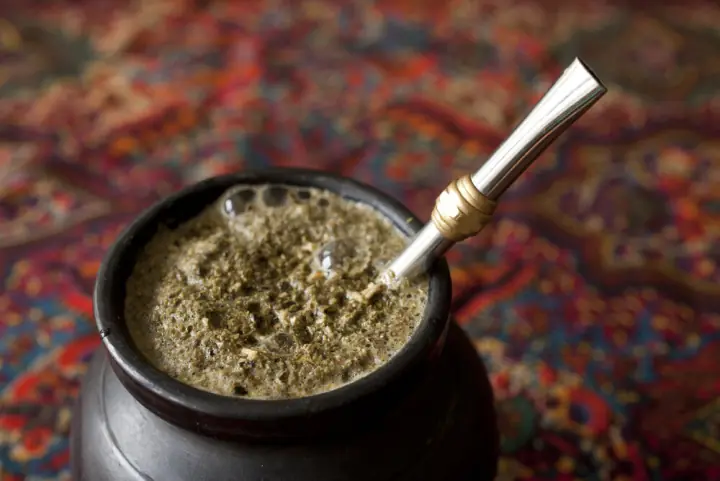
Yerba Maté Ilex paraguariensis Yerba maté is a South American holly whose dried leaves are brewed into maté, a caffeine-rich drink shared from a gourd. The leaf is rich in chlorogenic acids and has been studied for blood sugar, cholesterol and body fat.
Yerba Santa Eriodictyon californicum Yerba santa is a sticky-leaved evergreen shrub of California and southwestern Oregon, used by Native Californian peoples for coughs, colds and asthma. Its leaves hold the flavanone sterubin, studied for its effects on nerve cells.
No herbs match these filters.
Phytochemistry
Leaf Phytochemicals
Leaf chemistry is soluble, aromatic, and comparatively fragile. Most of it comes out in a covered cup of hot water in ten minutes, and most of it is damaged by anything harsher.
Volatile Oils Held in surface glands that rupture at a touch, which is why aromatic leaves smell strongest when bruised.
Carminative, antimicrobial, and the first thing lost to rough drying, long boiling, or an uncovered pot.
Found in LemongrassHoly BasilCatnip
Flavonoids Pigmented polyphenols — rutin, quercetin, vitexin and kin — behind much of the vascular, antioxidant, and mildly relaxant activity of leaf teas.
Water-soluble and forgiving, they are the backbone of a long infusion.
Sesquiterpene Lactones The sharp bitters of the daisy family.
They drive appetite, bile flow, and digestive secretion, and they are also the usual culprits in Asteraceae contact allergy — worth knowing before handling large amounts fresh.
Mucilage Long-chain polysaccharides that swell into a slick gel and coat irritated mucous membrane.
Heat and prolonged boiling degrade them, so demulcent leaves are the classic case for a cold or brief infusion.
Tannins Astringent polyphenols, present in almost every leaf to some degree and dominant in a few.
They tone lax tissue and firm the gut — and they are why a leaf tea left to steep half an hour turns bitter and dry on the tongue.
Purine Alkaloids Caffeine and its relatives, synthesized in the leaf as an insecticide and accumulating there.
Stimulant, diuretic, and dose-dependent in a way most leaf constituents are not — count cups, not grams.
Diterpene Lactones Larger terpene skeletons, often ferociously bitter, carrying immune and anti-inflammatory activity.
Andrographolide is the type example, and its bitterness is a fair predictor of the dose most people will actually tolerate.
Found in AndrographisDagga
Pyrrolizidine Alkaloids A liability rather than an active.
Certain leaves carry hepatotoxic PAs that accumulate with repeated internal use, which is why these herbs have moved firmly toward short-term and external application.
Keep Exploring