
Compound Monograph
8-p-Coumaroylharpagide
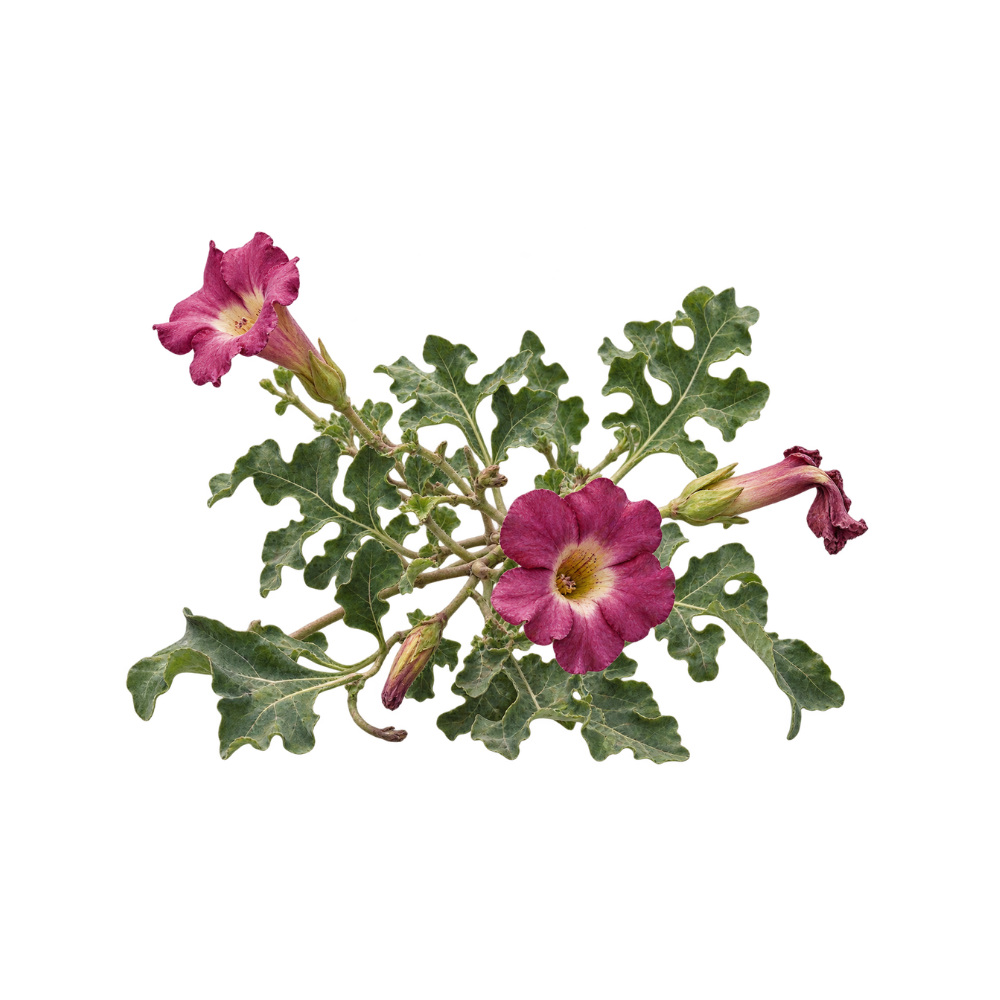
8-p-Coumaroylharpagide is a minor iridoid glycoside of devil's claw (Harpagophytum) — the p-coumaroyl ester of harpagide and a structural sibling of the marker iridoid harpagoside (which is the cinnamoyl ester). It reduces epidermal COX-2 in vitro comparably to harpagoside, but has no isolate human data; its clearest documented role is as a chemotaxonomic marker distinguishing Harpagophytum species.

Sources · 4
Where Does It Come From?
8-p-Coumaroylharpagide is a naturally occurring iridoid glycoside (harpagide ester), found in Devil's claw — secondary storage root, minor, Grapple plant — secondary storage root, principal iridoid and 2 other sources. It is well tolerated orally (low toxicity).
Concentration
Content by Source
Reported concentrations across the plants that contain 8-p-coumaroylharpagide — the bar marks the typical level, the line shows the reported range.
Literature figures for varying plant parts and preparations. Read them as a comparative guide, not exact assays.
8-p-Coumaroylharpagide at a Glance
8-p-Coumaroylharpagide is a minor iridoid glycoside of devil’s claw (Harpagophytum). Structurally it is the p-coumaroyl ester of harpagide — the same core molecule that, esterified with cinnamic acid, becomes harpagoside, the compound devil’s-claw extracts are standardised to. So it sits one acyl group away from the herb’s headline marker.
As an isolate it is data-thin. The little direct evidence there is comes from a small number of in-vitro studies: it lowers epidermal COX-2 expression about as much as harpagoside does 1Reference 1In vitroEffect of the major glycosides of Harpagophytum procumbens (Devil’s Claw) on epidermal cyclooxygenase-2 (COX-2) in vitroView study →, and it weakly inhibits human leukocyte elastase 2Reference 2In vitroNew and known iridoid- and phenylethanoid glycosides from Harpagophytum procumbens and their in vitro inhibition of human leukocyte elastaseView study →. There are no human trials of the isolated compound, and no pharmacokinetic dataset. Its best-documented practical role is not pharmacological at all but analytical — as a chemotaxonomic marker that helps distinguish Harpagophytum species 6Reference 6ReviewFrom Bush Medicine to Modern Phytopharmaceutical: A Bibliographic Review of Devil’s Claw (Harpagophytum spp.)View study →.
The anti-inflammatory reputation attached to “devil’s claw” belongs to the whole standardised root extract, and is attributed chiefly to the harpagoside-marked iridoid complex — not to this ester on its own 5,
8-Coumaroylharpagide Among the Devil’s-Claw Iridoids
This molecule is best understood by its family relationships, because almost everything documented about it is comparative.
It is an ester of harpagide. Harpagide is the parent iridoid; attaching different acyl groups to its 8-position gives the devil’s-claw ester series. Attach cinnamic acid and you get harpagoside (the standardisation marker); attach p-coumaric acid (a hydroxycinnamic acid) and you get 8-p-coumaroylharpagide; the ferulic-acid ester is 8-feruloylharpagide. They are near-isomers differing only in that acyl cap, which is why they co-occur and behave similarly in several assays.
A co-marker, not the marker. In the one in-vitro study to test the devil’s-claw glycosides side by side on skin, 8-p-coumaroylharpagide reduced epidermal COX-2 expression comparably to harpagoside, while the un-esterified parent harpagide did the opposite and raised COX-2 — leading the authors to conclude the extract’s effect depends on the ratio of these compounds rather than harpagoside content alone 1Reference 1In vitroEffect of the major glycosides of Harpagophytum procumbens (Devil’s Claw) on epidermal cyclooxygenase-2 (COX-2) in vitroView study →. That makes the coumaroyl ester a plausible positive contributor to the whole-extract effect, though the point rests on a single skin-model study.
A species fingerprint. Its most reliable documented use is chemotaxonomic. 8-p-Coumaroylharpagide runs at roughly 0.7–1.4% of dry weight in Harpagophytum zeyheri (the cheaper grapple plant) but is low to near-absent in H. procumbens, the species that carries the clinical evidence — so the harpagoside-to-8-PCHG ratio is used to tell authentic material from the zeyheri substitute 6Reference 6ReviewFrom Bush Medicine to Modern Phytopharmaceutical: A Bibliographic Review of Devil’s Claw (Harpagophytum spp.)View study →. In practice, then, a high 8-PCHG reading is a flag for the substitute species rather than a mark of quality.
The Ajuga connection. The harpagide esters are not unique to devil’s claw — they also occur in bugle (Ajuga spp., Lamiaceae), where iridoids of this family have documented ecological and cardiovascular-pharmacology roles. Importantly, most of that Ajuga work is on the closely related 8-O-acetylharpagide (the acetyl ester), not the p-coumaroyl ester specifically — see Its Role in Plants & Insects for that honesty caveat.
Isolate data on 8-p-coumaroylharpagide itself remain thin, and there is no human data on it at all; the anti-inflammatory story is the whole extract’s.
What It's Used For
Direct evidence for the isolated molecule is limited to a couple of in-vitro studies and comparisons with its siblings. There is no animal or human trial of the isolate.
Support is an experimental score — weighted by study type (human > animal > in vitro) and volume. A beta, not a validated metric. Every row here rests on in-vitro isolate or whole-extract data, so scores are low by design.
The main direct signal. In a human-skin (epidermal) model, 8-p-coumaroylharpagide reduced COX-2 expression comparably to harpagoside, while the parent harpagide significantly increased COX-2 after 6 h — which is why the authors concluded devil’s-claw efficacy depends on the ratio of these iridoids, not harpagoside alone 1Reference 1In vitroEffect of the major glycosides of Harpagophytum procumbens (Devil’s Claw) on epidermal cyclooxygenase-2 (COX-2) in vitroView study →. This is isolate in-vitro data, but its interpretive weight is about the whole extract: it suggests the coumaroyl ester is a positive contributor to the anti-inflammatory profile that whole-extract devils-claw trials measure, alongside the better-studied harpagoside route (NF-κB / iNOS-COX-2 suppression) 7Reference 7Harpagoside suppresses lipopolysaccharide-induced iNOS and COX-2 expression through inhibition of NF-kappaB activationView study →.
Gap: one in-vitro skin study; no animal or human confirmation, no dose-response beyond that model, and the extract’s clinical anti-inflammatory record is attributed to harpagoside, not to this ester.
When ten devil’s-claw storage-root glycosides were screened against human leukocyte (neutrophil) elastase, 8-p-coumaroylharpagide inhibited the enzyme with an IC₅₀ of about 179 µg/mL (331 µM) — dose-dependent but comparatively weak, and well short of the most active constituent in the same study (6′-O-acetylacteoside, IC₅₀ ≈ 47 µg/mL) 2Reference 2In vitroNew and known iridoid- and phenylethanoid glycosides from Harpagophytum procumbens and their in vitro inhibition of human leukocyte elastaseView study →.
Elastase inhibition is a mechanistically plausible anti-inflammatory action (elastase drives connective-tissue breakdown at inflamed sites), but the potency here is modest. This is isolate in-vitro data only.
Gap: a single enzyme assay; no cellular, animal or human follow-up, and the potency is too low to claim a physiological effect at achievable exposures.
Mechanisms
| Target / pathway | Effect | Relevant to |
|---|---|---|
| Epidermal COX-2 expression | reduces COX-2 in a skin model (comparable to harpagoside; opposite to parent harpagide) | anti-inflammatory (as extract co-marker) |
| Human leukocyte (neutrophil) elastase | weak, dose-dependent inhibition (IC₅₀ ≈ 179 µg/mL) | anti-inflammatory / connective-tissue protection |
| NF-κB / iNOS-COX-2 axis | the documented anti-inflammatory route of the sibling marker harpagoside, not shown for this ester itself | context for the whole-extract effect |
The load-bearing point is comparative: 8-p-coumaroylharpagide behaves like harpagoside (COX-2 down) and unlike its own parent harpagide (COX-2 up), so within the extract it reads as a positive contributor — but its individual mechanism is barely characterised, and the clinical anti-inflammatory record belongs to harpagoside and the whole extract.
Pharmacokinetics
No pharmacokinetic dataset exists for 8-p-coumaroylharpagide. As a polar iridoid glycoside, it is expected to share the class limitation seen across devil’s-claw iridoids — poor oral bioavailability, since the intact glycoside is largely not absorbed and is subject to gut-microbial hydrolysis of the sugar before any aglycone reaches circulation. Absorption, metabolism, active metabolites and half-life for this specific ester are all unstudied, which is itself a reason to treat in-vitro potencies cautiously: the concentrations used in the COX-2 and elastase assays are not shown to be reachable in tissue from oral extract dosing.
Clinical Trials
There are no clinical trials of isolated 8-p-coumaroylharpagide. Human evidence exists only for standardised whole devil’s-claw root extract (dosed to its harpagoside marker), within which this compound is a minor, un-isolated co-constituent 5,
| Completed | Planned | Terminated | Preclinical |
|---|---|---|---|
| None(isolate) — human data are whole-extract only | — | — | In-vitro COX-2 1Reference 1In vitroEffect of the major glycosides of Harpagophytum procumbens (Devil’s Claw) on epidermal cyclooxygenase-2 (COX-2) in vitroView study → + elastase 2Reference 2In vitroNew and known iridoid- and phenylethanoid glycosides from Harpagophytum procumbens and their in vitro inhibition of human leukocyte elastaseView study → |
Last checked: July 2026.
Isolate vs. Plant Studies
This molecule sits firmly on the plant/extract side of the ledger. Everything of clinical relevance about “devil’s claw” — the randomised trials in low-back pain and osteoarthritis — used standardised whole-root extracts dosed to harpagoside, not this ester 5,
Its Role in Plants & Insects
Iridoids of the harpagide-ester family function as plant chemical defences, and the bugle genus Ajuga is the classic case. The closely related 8-O-acetylharpagide, isolated from Ajuga reptans, is a nonsteroidal ecdysteroid agonist — it binds the insect ecdysteroid receptor and mimics the moulting hormone (EC₅₀ ≈ 22 µM in a transactivation assay), a mode of action that can disrupt insect development and underlies the use of Ajuga extracts as insect growth inhibitors 4Reference 4Elbrecht A, Chen Y, Jurgens T, Hensens OD, Zink DL, Beck HT, Balick MJ, Borris R (1996). 8-O-acetylharpagide is a nonsteroidal ecdysteroid agonist. Insect Biochemistry and Molecular Biology. https://pubmed.ncbi.nlm.nih.gov/8969463/View study →. The same acetyl ester also showed vasoconstrictor / smooth-muscle activity in guinea-pig tissue, offered as a rationale for Ajuga’s traditional uses 3Reference 3Vasoconstrictor activity of 8-O-acetylharpagide from Ajuga reptansView study →.
The honesty caveat matters here: those biological roles are documented for 8-O-acetylharpagide, not for the p-coumaroyl ester specifically. 8-p-Coumaroylharpagide is a plausible participant in the same defensive iridoid chemistry, but its own ecological or insect-hormone activity has not been separately demonstrated. As always, an insect-hormone or plant-defence role says nothing about human pharmacology.
Prevalence in Nature
8-p-Coumaroylharpagide is a root iridoid of devil’s claw (Harpagophytum), concentrated in the secondary storage roots (tubers) where the genus stores its bitter iridoids — alongside sibling iridoids such as harpagoside and procumbide 5Reference 5ReviewDevil’s Claw — a review of the ethnobotany, phytochemistry and biological activity of Harpagophytum procumbensView study →. Its distribution across the two commercial species is the headline fact: it reaches roughly 0.7–1.4% of dry weight in Harpagophytum zeyheri (the grapple plant) but is low to near-absent in H. procumbens, the species that carries the pharmacological evidence 6Reference 6ReviewFrom Bush Medicine to Modern Phytopharmaceutical: A Bibliographic Review of Devil’s Claw (Harpagophytum spp.)View study →. Because of that split it is a practical species marker — the harpagoside-to-8-PCHG ratio flags zeyheri substitution in traded material 6Reference 6ReviewFrom Bush Medicine to Modern Phytopharmaceutical: A Bibliographic Review of Devil’s Claw (Harpagophytum spp.)View study →.
Beyond Harpagophytum, harpagide esters of this family occur in bugle (Ajuga spp., Lamiaceae) 3,
Discovery & Synthesis
8-p-Coumaroylharpagide was characterised as part of the devil’s-claw iridoid complex during twentieth-century phytochemical study of Harpagophytum storage roots, and was profiled explicitly among the root’s iridoid and phenylethanoid glycosides in the elastase-screening work of Boje, Lechtenberg and Nahrstedt (2003) 2Reference 2In vitroNew and known iridoid- and phenylethanoid glycosides from Harpagophytum procumbens and their in vitro inhibition of human leukocyte elastaseView study →. Its name is purely descriptive: it is harpagide (the parent iridoid, itself named for Harpagophytum) bearing a p-coumaroyl ester at the 8-position — the p-coumaric-acid analogue of harpagoside’s cinnamoyl group.
There is no notable total synthesis on record; as a minor, un-commercialised iridoid it is obtained, when needed, by chromatographic isolation from devil’s-claw (or Ajuga) plant material for analytical and research use rather than manufactured. It is not produced as a stand-alone supplement ingredient.
Patents: not yet researched.
Toxicity & Safety
8-p-Coumaroylharpagide carries a low flag. It is a minor iridoid within a herb — devil’s claw — with a long record of use and generally good tolerability at customary extract doses, and there is no isolate-specific toxicity signal. The honest qualifier is that the isolated compound has not been characterised for safety: there is no isolate toxicology, genotoxicity or repeat-dose dataset, so the “low” rating is inferred from the whole herb’s safety profile, not measured for the molecule.
- No isolate-specific toxicity signal, and the parent herb (devil’s claw) is generally well tolerated at customary standardised-extract doses.
- Herb-level cautions carry over. Devil’s claw itself is cautioned in active peptic ulcer / gastritis (bitter iridoids stimulate gastric secretion) and its extracts have theoretical interaction potential — those decisions belong to the herb and product pages, where intake is decided.
- The isolate is uncharacterised. No dedicated toxicology, genotoxicity, pharmacokinetic or reproductive-toxicity data exist for 8-p-coumaroylharpagide specifically; absence of a signal is not evidence of safety.
Reproductive and pregnancy safety have not been assessed for this isolated compound; devil’s-claw preparations are conventionally avoided in pregnancy at the herb level as a precaution, and that decision belongs to the herb/product monograph rather than this molecule page.
Dosage
There is no established or recommended dose for isolated 8-p-coumaroylharpagide — it is not sold or used as an isolate. Human exposure is entirely indirect, as one minor iridoid inside a standardised devil’s-claw root extract, which is dosed to its harpagoside marker (commonly about 50–100 mg harpagoside per day, delivered by roughly 2–4.5 g of extract) 5,
These are research and standardisation figures for the parent extract, not a personal recommendation for the isolated molecule.
References
- Abdelouahab N, Heard C (2008). Effect of the major glycosides of Harpagophytum procumbens (Devil’s Claw) on epidermal cyclooxygenase-2 (COX-2) in vitro. Journal of Natural Products. https://pubmed.ncbi.nlm.nih.gov/18412394/
- Boje K, Lechtenberg M, Nahrstedt A (2003). New and known iridoid- and phenylethanoid glycosides from Harpagophytum procumbens and their in vitro inhibition of human leukocyte elastase. Planta Medica. https://pubmed.ncbi.nlm.nih.gov/14598207/
- Breschi MC, Martinotti E, Catalano S, Flamini G, Morelli I, Pagni AM (1992). Vasoconstrictor activity of 8-O-acetylharpagide from Ajuga reptans. Journal of Natural Products. https://pubmed.ncbi.nlm.nih.gov/1431938/
- Elbrecht A, Chen Y, Jurgens T, Hensens OD, Zink DL, Beck HT, Balick MJ, Borris R (1996). 8-O-acetylharpagide is a nonsteroidal ecdysteroid agonist. Insect Biochemistry and Molecular Biology. https://pubmed.ncbi.nlm.nih.gov/8969463/
- Mncwangi N, Chen W, Vermaak I, Viljoen AM, Gericke N (2012). Devil’s Claw — a review of the ethnobotany, phytochemistry and biological activity of Harpagophytum procumbens. Journal of Ethnopharmacology. https://pubmed.ncbi.nlm.nih.gov/22940241/
- Brendler T (2021). From Bush Medicine to Modern Phytopharmaceutical: A Bibliographic Review of Devil’s Claw (Harpagophytum spp.). Pharmaceuticals (Basel). https://pubmed.ncbi.nlm.nih.gov/34451822/
- Huang TH, Tran VH, Duke RK, Tan S, Chrubasik S, Roufogalis BD, Duke CC (2006). Harpagoside suppresses lipopolysaccharide-induced iNOS and COX-2 expression through inhibition of NF-kappaB activation. Journal of Ethnopharmacology. https://pubmed.ncbi.nlm.nih.gov/16203115/



