
Compound Monograph
Procumbide
Procumbide is a minor iridoid glycoside of devil's claw (Harpagophytum procumbens), listed alongside harpagoside and harpagide among the herb's characteristic iridoids. It functions mainly as a co-marker of the plant; it has essentially no pharmacology of its own, and devil's claw's anti-inflammatory reputation belongs to the whole extract and the dominant harpagoside — not to procumbide.

Sources · 1
Where Does It Come From?
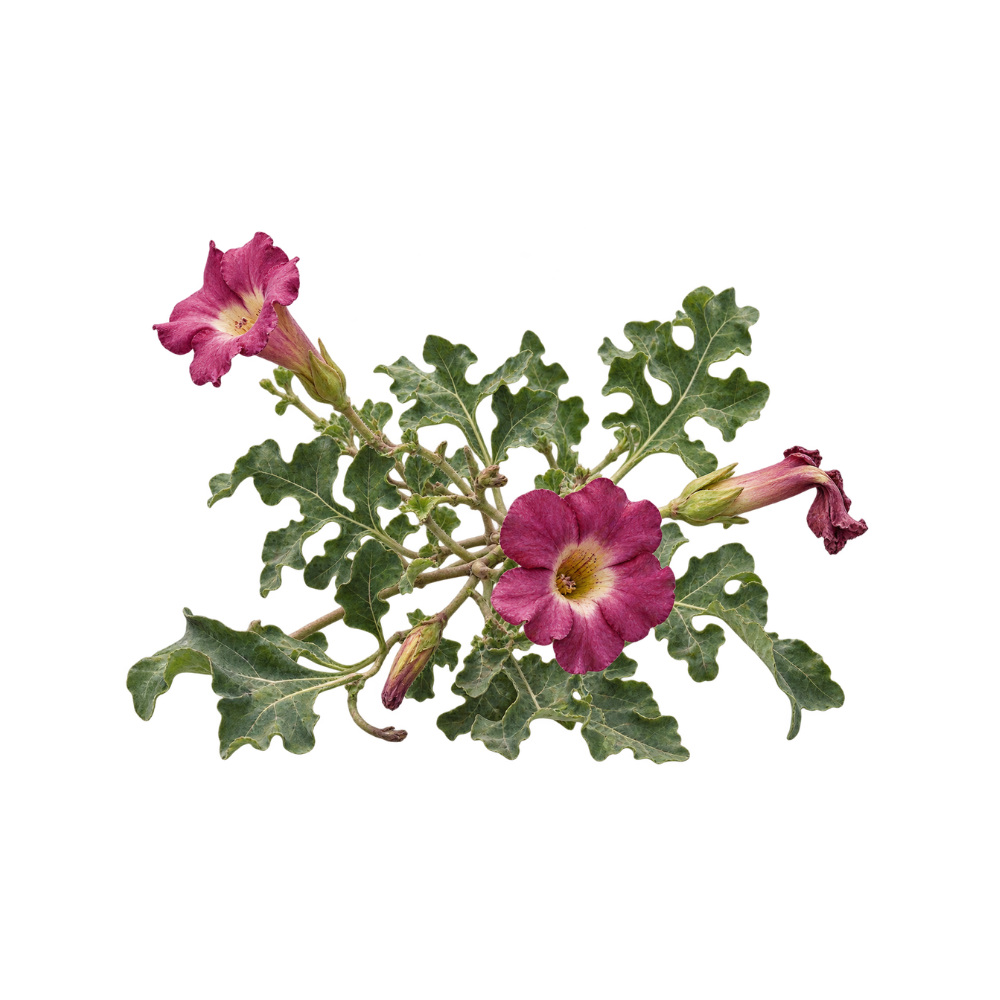
Procumbide is a naturally occurring iridoid glycoside, found in Devil's claw. It is well tolerated orally (low toxicity).
Concentration
Content by Source
Concentrations not reported. No percent-dry-weight or mg/g figures have been published for this compound in its source plants.
Procumbide at a Glance
Procumbide is a minor iridoid glycoside of devil’s claw (Harpagophytum procumbens), the Southern African herb whose secondary storage root (tuber) is used for inflammatory and musculoskeletal complaints. It is named for the plant and is routinely listed among the herb’s characteristic iridoids, alongside the dominant harpagoside, harpagide and 8-coumaroylharpagide 1,
Beyond that listing there is very little to say about the isolated molecule. Procumbide has essentially no dedicated pharmacology — it is not, on the current record, the compound tested in the studies that give devil’s claw its anti-inflammatory reputation. That reputation belongs to the whole standardised extract and, within it, chiefly to harpagoside 3,
A Minor Devil’s-Claw Iridoid
Devil’s claw stores a cluster of iridoid glycosides in its tuber, and procumbide is one of them. The set is dominated by harpagoside — the marker to which commercial extracts are standardised and the compound “most responsible for therapeutic activity” in reviews of the herb 1Reference 1Devil’s claw (Harpagophytum procumbens) and chronic inflammatory diseases: a concise overview on preclinical and clinical dataView study → — accompanied by harpagide, 8-coumaroylharpagide, and, as a minor member, procumbide 1,
Two honest points define procumbide’s place in this family:
- It is a co-marker, not a driver. Procumbide is named and quantified as part of the herb’s iridoid profile, but the plant’s biological activity is ascribed to the iridoid class as a whole and, specifically, to harpagoside 1,
2Reference 1Devil’s claw (Harpagophytum procumbens) and chronic inflammatory diseases: a concise overview on preclinical and clinical dataView study →Reference 2ReviewDevil’s claw — a review of the ethnobotany, phytochemistry and biological activity of Harpagophytum procumbensView study → . When researchers dissected the iridoids’ effects on epidermal COX-2, they tested harpagoside, harpagide, 8-coumaroylharpagide and verbascoside — procumbide was not among the compounds tested 3Reference 3In vitroEffect of the major glycosides of Harpagophytum procumbens (devil’s claw) on epidermal cyclooxygenase-2 (COX-2) in vitroView study →. Its pharmacology is therefore assumed from the class, not demonstrated for the molecule. - The whole-plant caveat cuts hard here. Devil’s claw’s clinical evidence — randomised trials in low-back pain and osteoarthritis — is for standardised whole-root extracts (e.g. WS 1531, standardised to harpagoside), not for any single iridoid, least of all this one 4,
5Reference 4RCTEffectiveness of Harpagophytum extract WS 1531 in the treatment of exacerbation of low back pain: a randomized, placebo-controlled, double-blind studyView study →Reference 5Efficacy and tolerance of Harpagophytum procumbens versus diacerhein in treatment of osteoarthritisView study → . Attributing the herb’s effect to procumbide would be a mistake in both directions: the isolate has no such data, and the extract’s effect is a composite the field still standardises to harpagoside.
Stated plainly: procumbide is a genuine, characteristic devil’s-claw iridoid with minimal isolate data, and the herb’s activity is not attributed to it.
Major Natural Sources
| Source | Part | Notes |
|---|---|---|
| Devil’s claw (Harpagophytum procumbens) | Secondary storage root (tuber) | Traded species; procumbide listed among its characteristic iridoids 1, |
| Devil’s claw (Harpagophytum zeyheri) | Root | Cheaper congener with a comparable harpagoside content but differing non-harpagoside iridoid profile 6Reference 6Harpagoside content in devil’s claw extractsView study → |
Procumbide has not been reported as a notable constituent outside the Harpagophytum genus in the sources reviewed. The related Stachys/Betonica-type iridoids (harpagide, 8-O-acetylharpagide) do appear in other herbs such as wood betony, but procumbide is treated as a devil’s-claw iridoid.
What It's Used For
There is no body of pharmacology for isolated procumbide. What follows is deliberately short: it records the two things procumbide is associated with — quality control and the anti-inflammatory iridoid class — and, in each case, states that the evidence is not the molecule’s own.
Support is an experimental score — weighted by study type (human > animal > in vitro) and volume. A beta, not a validated metric. Both rows are low by design: neither rests on data for isolated procumbide.
Procumbide’s only concrete role is phytochemical: it is one of the iridoid glycosides that define the Harpagophytum tuber and is reported alongside harpagoside, harpagide and 8-coumaroylharpagide in profiling and review work 1,
In practice, though, it is harpagoside — not procumbide — that serves as the quantitative marker to which extracts are standardised, because harpagoside content is the accepted (if incomplete) proxy for activity 1,
This is a plant-level datum: procumbide indexes the herb, not a pharmacological effect.
Gap: procumbide is not itself quantified in the sources reviewed here, so no source-content figures are given; its usefulness as an independent quality marker (versus harpagoside) has not been established.
Devil’s claw’s biological activity is ascribed chiefly to its iridoid glycosides as a class, with the hydrolysed forms more active than the parent glycosides 2Reference 2ReviewDevil’s claw — a review of the ethnobotany, phytochemistry and biological activity of Harpagophytum procumbensView study →.
But this is a class attribution built on specific molecules: the marquee mechanistic and clinical work concerns harpagoside (and the COX-2 study that dissected the iridoids used harpagoside, harpagide, 8-coumaroylharpagide and verbascoside) — procumbide was not tested in that work 2,
There is no isolate study, in vitro or in vivo, attributing an anti-inflammatory effect to procumbide specifically.
Gap: procumbide’s anti-inflammatory activity is assumed from the class, never demonstrated for the molecule; a dedicated isolate assay would be needed before any such claim could be made.
Mechanisms
No mechanism of action has been characterised for isolated procumbide. The table records only the class context — mechanisms established for other devil’s-claw iridoids — with the explicit caveat that none has been shown for procumbide.
| Target / pathway | Effect | Relevant to |
|---|---|---|
| NF-κB / iNOS / COX-2 | Suppression of inflammatory signalling — demonstrated for harpagoside, not procumbide | anti-inflammatory (class context) |
| Epidermal COX-2 (in vitro) | Iridoids modulate COX-2 (harpagide raised it; harpagoside and 8-coumaroylharpagide lowered it) — procumbide not tested 3Reference 3In vitroEffect of the major glycosides of Harpagophytum procumbens (devil’s claw) on epidermal cyclooxygenase-2 (COX-2) in vitroView study → | anti-inflammatory (class context) |
The load-bearing point is what the table does not contain: no row can be attributed to procumbide. The whole-extract effect is ratio-dependent across the iridoids, and even that story is written in harpagoside and harpagide, not this molecule 3Reference 3In vitroEffect of the major glycosides of Harpagophytum procumbens (devil’s claw) on epidermal cyclooxygenase-2 (COX-2) in vitroView study →.
Pharmacokinetics
There are no pharmacokinetic data for procumbide. As a polar iridoid glycoside it would be expected to share the class’s characteristic poor oral bioavailability — iridoid glycosides are large, hydrophilic molecules that are absorbed poorly intact and are extensively hydrolysed by gut microbiota to their aglycones before or instead of systemic absorption. This is a class-level expectation, not a measured value for procumbide; absorption, metabolism and half-life for the isolated compound are uncharacterised.
Clinical Trials
None for isolated procumbide. The human evidence in this area is for standardised devil’s-claw root extract, not for any single iridoid — for example a randomised, placebo-controlled trial of the harpagoside-standardised extract WS 1531 in low-back-pain exacerbations 4Reference 4RCTEffectiveness of Harpagophytum extract WS 1531 in the treatment of exacerbation of low back pain: a randomized, placebo-controlled, double-blind studyView study →, and a randomised comparison of Harpagophytum against diacerhein in hip/knee osteoarthritis 5Reference 5Efficacy and tolerance of Harpagophytum procumbens versus diacerhein in treatment of osteoarthritisView study →. Procumbide is present in those extracts only as one minor constituent.
| Completed | Planned | Terminated | Preclinical |
|---|---|---|---|
| None for the isolate (whole-extract RCTs only) 4, | — | — | None specific to procumbide |
Last checked: July 2026.
Prevalence in Nature
Procumbide occurs in the secondary storage root (tuber) of devil’s claw, the plant part that carries the herb’s active iridoid fraction; it is not a constituent of the aerial parts 2Reference 2ReviewDevil’s claw — a review of the ethnobotany, phytochemistry and biological activity of Harpagophytum procumbensView study →. It is reported for the traded species Harpagophytum procumbens and is expected in the cheaper congener H. zeyheri, whose overall harpagoside content is comparable to procumbens but whose non-harpagoside iridoid profile differs 6Reference 6Harpagoside content in devil’s claw extractsView study → — a reminder that minor iridoids like procumbide vary with species, provenance and preparation.
Concentrations of procumbide are not quantified in the sources reviewed here; harpagoside is the iridoid that gets measured, because it is the standardisation marker 1,
Discovery & Synthesis
Procumbide is documented as one of the characteristic iridoid glycosides of devil’s claw, but — unlike harpagoside, which has a well-developed literature — it has no clearly recorded first-isolation history or total synthesis in the sources reviewed. It is obtained, when needed, by extraction from Harpagophytum root as part of the iridoid fraction rather than by synthesis, and it is handled as a phytochemical marker rather than a manufactured or supplemented compound. Its name derives straightforwardly from the source species, H. procumbens.
Patents: not yet researched.
Toxicity & Safety
Procumbide carries a low flag. This reflects the absence of any specific toxicity signal rather than a positive safety dataset: the isolated molecule has not been characterised toxicologically, and the flag rests on the general tolerability of the parent herb, whose iridoids are regarded as low-toxicity constituents 2Reference 2ReviewDevil’s claw — a review of the ethnobotany, phytochemistry and biological activity of Harpagophytum procumbensView study →.
- Devil’s claw is generally well tolerated in customary use; its iridoids, including procumbide, are treated as low-toxicity constituents 2Reference 2ReviewDevil’s claw — a review of the ethnobotany, phytochemistry and biological activity of Harpagophytum procumbensView study →.
- Bitter iridoids can be gastric irritants. The main tolerability issue with devil’s-claw preparations is gastrointestinal (dyspepsia); this is a herb-level, dose-related effect, not one demonstrated for procumbide specifically.
- No isolate safety data. Procumbide has not been characterised for adverse effects, interactions or reproductive toxicity as a pure compound — do not read the low flag as a tested clean bill.
Devil’s-claw root is traditionally cautioned in pregnancy (on the basis of possible uterine/oxytocic activity of the whole herb) and is generally avoided in active peptic ulcer disease because of its bitter, secretion-stimulating nature. These are herb-level cautions decided where intake happens — on the devil’s-claw monograph — and are not established findings for isolated procumbide, for which no reproductive or interaction data exist. Any drug-interaction assessment for the isolate is likewise absent from the record.
References
- Menghini L, et al. (2019). Devil’s claw (Harpagophytum procumbens) and chronic inflammatory diseases: a concise overview on preclinical and clinical data. Phytotherapy Research. https://pubmed.ncbi.nlm.nih.gov/31273865/
- Mncwangi N, et al. (2012). Devil’s claw — a review of the ethnobotany, phytochemistry and biological activity of Harpagophytum procumbens. Journal of Ethnopharmacology. https://pubmed.ncbi.nlm.nih.gov/22940241/
- Abdelouahab N, Heard C (2008). Effect of the major glycosides of Harpagophytum procumbens (devil’s claw) on epidermal cyclooxygenase-2 (COX-2) in vitro. Journal of Natural Products. https://pubmed.ncbi.nlm.nih.gov/18412394/
- Chrubasik S, et al. (1999). Effectiveness of Harpagophytum extract WS 1531 in the treatment of exacerbation of low back pain: a randomized, placebo-controlled, double-blind study. European Journal of Anaesthesiology. https://pubmed.ncbi.nlm.nih.gov/10101629/
- Chantre P, et al. (2000). Efficacy and tolerance of Harpagophytum procumbens versus diacerhein in treatment of osteoarthritis. Phytomedicine. https://pubmed.ncbi.nlm.nih.gov/11185727/
- Kondamudi N, Turner MW, McDougal OM (2016). Harpagoside content in devil’s claw extracts. Natural Product Communications. https://pubmed.ncbi.nlm.nih.gov/30807002/



