
Compound Monograph
Harpagoside
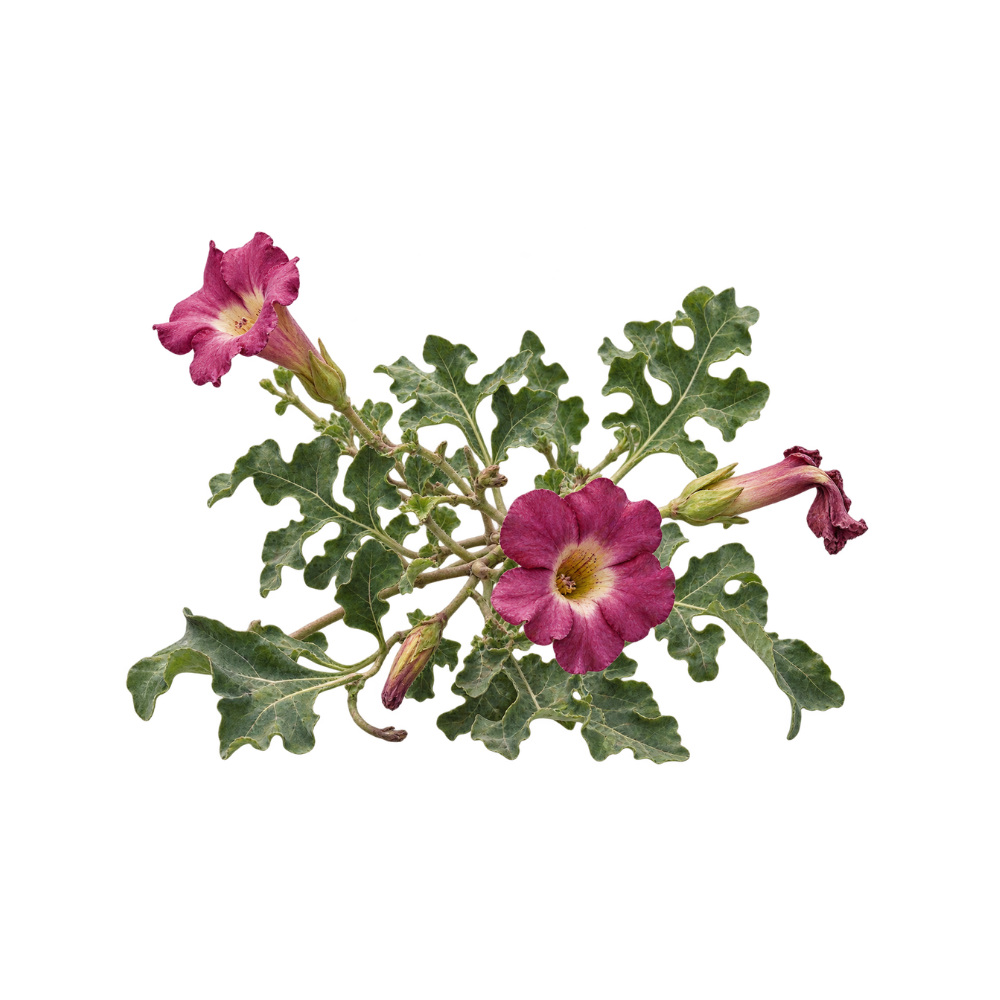
Harpagoside is the flagship iridoid glycoside of devil's claw (Harpagophytum procumbens) — the marker to which anti-inflammatory extracts are standardised and the putative active behind devil's claw's genuine human trials for osteoarthritis and low-back pain. Crucially, those trials test the whole standardised extract, not isolated harpagoside, which is poorly absorbed by mouth.

Sources · 3
Where Does It Come From?
Harpagoside is a naturally occurring iridoid glycoside (cinnamoyl ester of harpagide), found in Devil's claw, Devil's claw and 1 other source. It is well tolerated orally (low toxicity).
Concentration
Content by Source
Concentrations not reported. No percent-dry-weight or mg/g figures have been published for this compound in its source plants.
Harpagoside at a Glance
Harpagoside is an iridoid glycoside — chemically, the cinnamoyl ester of harpagide — and the signature bitter constituent of devil’s claw (Harpagophytum procumbens). It is the compound to which commercial devil’s-claw preparations are standardised, so it doubles as the plant’s quality marker and its putative active principle for inflammatory and musculoskeletal complaints.
What sets harpagoside apart from most plant molecules here is that it sits behind real human clinical evidence: randomised trials and a Cochrane review support devil’s claw for osteoarthritis and non-specific low-back pain 1,
Mechanistically the isolated molecule is a credible anti-inflammatory, suppressing NF-κB- and AP-1-driven signalling and lowering iNOS, COX-2 and inflammatory cytokines in cell studies 9,
Harpagoside as Harpagide’s Cinnamoyl Ester
Harpagoside and harpagide are the same iridoid skeleton in two states. Harpagide is the parent aglycone-glucoside; harpagoside is harpagide bearing an added (E)-cinnamoyl (trans-cinnamic acid) ester group. Under basic conditions harpagoside saponifies cleanly back to trans-cinnamic acid + harpagide — the reaction that first revealed the ester linkage and still defines the relationship between the two molecules. Devil’s claw contains both, along with minor relatives such as 8-coumaroylharpagide and procumbide, and it is the ratio of these iridoids — not harpagoside alone — that shapes an extract’s activity.
That distinction is more than nomenclature. In an epidermal-tissue assay of the four major devil’s-claw glycosides, harpagoside (and 8-coumaroylharpagide) reduced COX-2 expression, whereas harpagide raised it 12Reference 12In vitroEffect of the major glycosides of Harpagophytum procumbens (Devil’s Claw) on epidermal cyclooxygenase-2 (COX-2) in vitroView study →. So the two esters can act in opposite directions on the same enzyme, which is why harpagoside content alone is an incomplete quality marker: a batch rich in harpagoside but also rich in harpagide may be less anti-inflammatory than its headline standardisation figure suggests 12Reference 12In vitroEffect of the major glycosides of Harpagophytum procumbens (Devil’s Claw) on epidermal cyclooxygenase-2 (COX-2) in vitroView study →. In a monocyte model, by contrast, both iridoids lowered TNF-α secretion — so the antagonism is target-dependent, not universal 13Reference 13The influence of harpagoside and harpagide on TNFα-secretion and cell adhesion molecule mRNA-expression in IFNγ/LPS-stimulated THP-1 cellsView study →.
The anti-inflammatory action attributed to harpagoside runs mainly through transcription-factor suppression. In lipopolysaccharide-stimulated cells it inhibits NF-κB activation, cutting inducible nitric-oxide synthase (iNOS) and COX-2 expression 9Reference 9Harpagoside suppresses lipopolysaccharide-induced iNOS and COX-2 expression through inhibition of NF-κB activationView study →; devil’s-claw extract standardised to it also prevents AP-1 activation, lowering TNF-α and COX-2 gene transcription 10Reference 10Molecular targets of the anti-inflammatory Harpagophytum procumbens — inhibition of TNFα and COX-2 gene expression by preventing activation of AP-1View study →; and in primary human osteoarthritis chondrocytes harpagoside suppressed IL-6 and reshaped the chemokine profile via the c-Fos/AP-1 axis — the most directly joint-relevant of these studies 11Reference 11Harpagoside suppresses IL-6 expression in primary human osteoarthritis chondrocytesView study →.
Devil’s Claw & Harpagoside in Joint Pain
This is the section that makes harpagoside unusual: unlike most single plant molecules, it is the standardisation anchor of a botanical with a genuine controlled-trial record in two painful conditions. The honest framing throughout is that the evidence belongs to the standardised extract, dosed by its harpagoside content, not to the isolated compound.
Low-back pain is devil’s claw’s cleanest human signal. A randomised, placebo-controlled, double-blind trial of the aqueous extract WS 1531 in acute exacerbations of chronic low-back pain found dose-dependent relief, with more patients pain-free (without rescue analgesia) at 100 mg harpagoside/day than on placebo 3Reference 3RCTEffectiveness of Harpagophytum extract WS 1531 in the treatment of exacerbation of low back pain — a randomised, placebo-controlled, double-blind studyView study →; a double-blind pilot found Doloteffin (≈60 mg harpagoside/day) comparable to rofecoxib 12.5 mg/day over six weeks 4Reference 4RCTA randomised double-blind pilot study comparing Doloteffin and Vioxx in the treatment of low back painView study →; and the 2014 Cochrane review of herbal medicine for low-back pain concluded that H. procumbens standardised to 50–100 mg harpagoside may be better than placebo for short-term pain, at low-quality evidence 1Reference 1Systematic reviewHerbal medicine for low-back pain (Cochrane systematic review)View study →.
Osteoarthritis is the traditional indication. A multicentre double-blind RCT found powdered devil’s-claw root (≈60 mg harpagoside/day) equal to the slow-acting drug diacerhein on pain and function over four months, with less rescue-analgesic use and fewer adverse events 5Reference 5Efficacy and tolerance of Harpagophytum procumbens versus diacerhein in treatment of osteoarthritisView study →; an open trial in general rheumatic disorders and independent efficacy/safety reviews point the same way while flagging the methodological limits 6,
The reasonable read: useful symptomatic, analgesic-sparing relief, demonstrated for standardised extracts over trials of ≤4 months — with harpagoside as the dosing yardstick rather than the proven sole active. Rodent work adds a distinct non-inflammatory analgesic signal for the extract — activity in post-operative and neuropathic-pain models, potentiation of morphine, and a heme-oxygenase-dependent mechanism 19,
What It's Used For
The evidence divides sharply. The human efficacy data are whole-extract, standardised to harpagoside; the isolated-molecule data are mechanistic (cell and rodent), where harpagoside is a real anti-inflammatory but bumps against poor oral bioavailability.
Support is an experimental score — weighted by study type (human > animal > in vitro) and volume. A beta, not a validated metric. The top rows score a standardised-extract human use in which harpagoside is the marker, not the isolate tested — read the per-row basis.
Devil’s claw’s strongest human data — and squarely an extract result. A placebo-controlled, double-blind RCT of the aqueous extract WS 1531 in acute exacerbations of chronic low-back pain showed dose-dependent benefit, with more patients pain-free without rescue tramadol on 100 mg harpagoside/day than on placebo 3Reference 3RCTEffectiveness of Harpagophytum extract WS 1531 in the treatment of exacerbation of low back pain — a randomised, placebo-controlled, double-blind studyView study →.
A double-blind pilot found Doloteffin (≈60 mg harpagoside/day) comparable to rofecoxib over six weeks 4Reference 4RCTA randomised double-blind pilot study comparing Doloteffin and Vioxx in the treatment of low back painView study →.
The 2014 Cochrane review concluded the herb, standardised to 50–100 mg harpagoside, is likely better than placebo short-term at low certainty 1,
Gap: all trials use the standardised whole extract with harpagoside as the dosing unit, not isolated harpagoside; they are small, short (≤6 weeks for the acute RCTs), and tied to specific proprietary preparations 1,
The traditional indication and the second human pillar — again the extract. A multicentre double-blind RCT found powdered devil’s-claw root (≈60 mg harpagoside/day) equal to diacerhein on pain and Lequesne function over four months, with less NSAID/rescue-analgesic use and fewer adverse events 5Reference 5Efficacy and tolerance of Harpagophytum procumbens versus diacerhein in treatment of osteoarthritisView study →; an open trial in general rheumatic disorders and independent reviews concur while noting the methodological limits 6,
A pooled review judged the overall OA/LBP evidence moderate but constrained by active-comparator and uncontrolled designs 2Reference 2Systematic reviewHarpagophytum procumbens for osteoarthritis and low back pain — a systematic reviewView study →.
Gap: the headline trial is active-comparator (non-inferiority to a slow-acting drug), other supportive data are open/uncontrolled, follow-up caps at four months, and the result is for standardised extract, not isolated harpagoside 2,
Where the isolated molecule earns its reputation — mechanistically. Harpagoside inhibits LPS-induced NF-κB activation, suppressing iNOS and COX-2 9Reference 9Harpagoside suppresses lipopolysaccharide-induced iNOS and COX-2 expression through inhibition of NF-κB activationView study →; devil’s-claw extract standardised to it prevents AP-1 activation, lowering TNF-α and COX-2 gene transcription 10Reference 10Molecular targets of the anti-inflammatory Harpagophytum procumbens — inhibition of TNFα and COX-2 gene expression by preventing activation of AP-1View study →; in primary human OA chondrocytes it suppresses IL-6 via c-Fos/AP-1 11Reference 11Harpagoside suppresses IL-6 expression in primary human osteoarthritis chondrocytesView study →; and isolated iridoid fractions inhibit COX-2 and nitric-oxide production in a whole-blood assay 14Reference 14Effect of isolated fractions of Harpagophytum procumbens on COX-1, COX-2 activity and nitric-oxide production on whole-blood assayView study →.
In a monocyte model it (and harpagide) reduced TNF-α secretion 13Reference 13The influence of harpagoside and harpagide on TNFα-secretion and cell adhesion molecule mRNA-expression in IFNγ/LPS-stimulated THP-1 cellsView study →.
Gap: all in-vitro, at concentrations that may exceed achievable plasma levels (see Pharmacokinetics); harpagoside’s own COX-2 suppression is opposed by harpagide in the same tissue, so isolated-molecule potency does not transfer cleanly to a whole extract 12,
A mechanistically coherent but preclinical signal specific to the isolate. In mice, harpagoside inhibits RANKL-induced osteoclastogenesis via the Syk-Btk-PLCγ2-Ca²⁺/NFATc1 pathway and prevents inflammation-driven bone loss 15Reference 15Harpagoside inhibits RANKL-induced osteoclastogenesis via the Syk-Btk-PLCγ2-Ca²⁺ signaling pathway and prevents inflammation-mediated bone lossView study →; in collagen-induced arthritis it attenuated local bone erosion and systemic osteoporosis, lowering arthritis scores and inflammatory cytokines 16Reference 16AnimalHarpagoside attenuates local bone erosion and systemic osteoporosis in collagen-induced arthritis in miceView study →.
Gap: isolated harpagoside in mice only, with an inflammation-specific action — it was ineffective against oestrogen-deficiency (post-menopausal-type) osteoporosis 15Reference 15Harpagoside inhibits RANKL-induced osteoclastogenesis via the Syk-Btk-PLCγ2-Ca²⁺ signaling pathway and prevents inflammation-mediated bone lossView study → — and no human bone endpoint exists.
A secondary, extract-level property. Devil’s-claw preparations show radical-scavenging and iron-chelating antioxidant activity in vitro, alongside cholinesterase inhibition 21Reference 21In vitroCholinesterases inhibitory and antioxidant activities of Harpagophytum procumbens from in vitro systemsView study →; comparative work reports antioxidant and anti-inflammatory activity approaching diclofenac in some assays 22Reference 22In vitroIn vitro antioxidant activity of crude extracts of Harpagophytum zeyheri and their anti-inflammatory and cytotoxicity activity compared with diclofenacView study →. Much of this activity is carried by phenylethanoid glycosides (e.g. verbascoside/acteoside) rather than harpagoside itself.
Gap: in-vitro whole-extract assays in which harpagoside is one contributor among many, and a large share of the comparative antioxidant work used H. zeyheri, not the traded H. procumbens 21,
Mechanisms
| Target / pathway | Effect | Relevant to |
|---|---|---|
| NF-κB signalling | inhibits LPS-induced activation → ↓ iNOS, ↓ COX-2 | anti-inflammatory |
| AP-1 signalling | prevents activation → ↓ TNF-α, ↓ COX-2 gene transcription | anti-inflammatory |
| IL-6 / c-Fos–AP-1 (human OA chondrocytes) | suppresses IL-6 and reshapes the chemokine profile | joint inflammation |
| COX-2 (epidermal) | reduces expression — opposite to harpagide, which raises it | anti-inflammatory / quality-marker caveat |
| RANKL–Syk–Btk–PLCγ2–Ca²⁺ / NFATc1 | inhibits osteoclastogenesis → less inflammatory bone loss | bone protection (mice) |
| Leukotriene / eicosanoid biosynthesis | serum harpagoside correlates with leukotriene inhibition ex vivo | anti-inflammatory / PK link |
| Radical scavenging (extract) | contributes to the antioxidant capacity of the whole extract | antioxidant |
The load-bearing point is the harpagide contrast 12Reference 12In vitroEffect of the major glycosides of Harpagophytum procumbens (Devil’s Claw) on epidermal cyclooxygenase-2 (COX-2) in vitroView study →: harpagoside’s isolated anti-COX-2 action can be antagonised inside the same plant, so extract activity is a ratio property, not a harpagoside-content property.
Pharmacokinetics
Harpagoside is a large, polar iridoid glycoside, and its pharmacokinetics are the main brake on its in-vitro promise. After oral dosing of a standardised extract, plasma harpagoside is measurable — Cmax at roughly 1.3–2.5 h, rising linearly with dose, and serum levels track the ex-vivo inhibition of leukotriene biosynthesis 17Reference 17In vitroInvestigations on the pharmacokinetic properties of Harpagophytum extracts and their effects on eicosanoid biosynthesis in vitro and ex vivoView study →. But absorption is limited and the molecule is labile: it is cleaved (chemically and by gut/gastric processing) to harpagide + trans-cinnamic acid, and a rat study tracks harpagoside alongside its cinnamic-acid appearance in plasma, with a short (a few hours) half-life 18Reference 18AnimalSimultaneous determination of harpagoside and cinnamic acid in rat plasma by high-performance liquid chromatography — application to a pharmacokinetic studyView study →. Two consequences follow: (1) the concentrations that suppress NF-κB/COX-2 in vitro may exceed what oral dosing achieves systemically, so isolate potency should not be read as clinical potency 9,
Clinical Trials
Every controlled human trial is of a standardised whole devil’s-claw extract (WS 1531, Doloteffin, Harpadol) standardised to harpagoside — there are no controlled trials of isolated harpagoside 1,
| Completed | Planned | Terminated | Preclinical |
|---|---|---|---|
| Extract RCTs for low-back pain & OA (harpagoside as marker) 3, | — | — | Isolate: NF-κB/AP-1/COX-2, human-chondrocyte IL-6, RANKL-osteoclast, arthritis bone loss 9, |
Last checked: July 2026.
Isolate vs. Plant Studies
This is the crux of the harpagoside file, and the split is unusually clean. Every human efficacy result is a whole standardised extract, with harpagoside serving as the standardisation and dosing marker rather than the substance actually administered 1,
The bridge between the two is weaker than it looks, for a reason specific to this plant: harpagide can antagonise harpagoside’s anti-COX-2 effect within the same extract 12Reference 12In vitroEffect of the major glycosides of Harpagophytum procumbens (Devil’s Claw) on epidermal cyclooxygenase-2 (COX-2) in vitroView study →. So an extract’s activity is a property of its iridoid ratio (and its phenylethanoid glycosides for the antioxidant fraction), not of harpagoside content alone — and there is an ongoing debate that harpagoside is a convenient marker more than a complete active. Add the poor oral bioavailability of the intact glycoside 17,
Prevalence in Nature
Harpagoside is the principal iridoid glycoside of the devil’s-claw secondary storage tuber — importantly the tuber, not the primary root or aerial parts, which is where the medicinal activity and the marker both concentrate. Commercial material is standardised to it, commonly around 1–3% of the dry tuber, though published assays vary with species, provenance and preparation.
Two occurrence caveats matter. First, the closely related Harpagophytum zeyheri can carry comparable harpagoside but a different overall iridoid/phenylethanoid profile, and it is frequently substituted for H. procumbens in the trade and in in-vitro studies — so activity shown for zeyheri should not be attributed to procumbens without noting the swap 22Reference 22In vitroIn vitro antioxidant activity of crude extracts of Harpagophytum zeyheri and their anti-inflammatory and cytotoxicity activity compared with diclofenacView study →. Second, harpagoside is not unique to Harpagophytum: it also occurs in some Scrophularia (figwort) species, notably Scrophularia ningpoensis, where the same molecule is studied under a different botanical banner.
As an iridoid glycoside, harpagoside belongs to the same broad family as harpagide (its parent), loganin and the olive secoiridoid oleuropein — bitter, glucose-bearing monoterpene-derived molecules that recur across unrelated medicinal plants.
Devil’s claw is wild-harvested from the Kalahari, and unsustainable digging of the tubers has made supply a conservation concern; the trade has drawn CITES and range-state regulatory attention 23Reference 23The commercial harvest of devil’s claw (Harpagophytum spp.) in southern Africa — the devil’s in the detailsView study →.
Discovery & Synthesis
Harpagoside was first isolated in 1962 by Tunmann and Lux from dried devil’s-claw tubers — the first glycoside obtained from Harpagophytum procumbens, and the source of its name. Its structure as the cinnamoyl ester of harpagide was established by Lichti and von Wartburg in 1966, through degradation chemistry and early NMR: basic saponification releases trans-cinnamic acid and harpagide, while acid hydrolysis of the glycoside yields glucose plus decomposition products in the manner of other iridoids such as aucubin (CAS 19210-12-9).
There is no commercial total synthesis of harpagoside; as a complex, stereochemically dense iridoid glycoside it is obtained by extraction from the plant, and standardised devil’s-claw preparations are made by aqueous or hydro-ethanolic extraction of the tuber. Because the plant is wild-harvested, manufacture is bound up with the same sustainability and species-authentication questions that attend the raw material 22,
Patents: not yet researched.
Toxicity & Safety
Harpagoside carries a low toxicity flag: it is a bitter iridoid glycoside with a good short-term tolerability record in the many devil’s-claw trials that were standardised to it, where minor gastrointestinal upset is the main adverse event, at rates close to placebo in blinded studies 8Reference 8Systematic reviewSystematic review on the safety of Harpagophytum preparations for osteoarthritic and low back painView study →. The cautions below are largely inherited from the whole herb, since that is how the molecule is consumed.
- Good short-term tolerability. Across standardised-extract trials, adverse events were mostly minor and gastrointestinal, near placebo rates over ≤4-month use 8Reference 8Systematic reviewSystematic review on the safety of Harpagophytum preparations for osteoarthritic and low back painView study →.
- A bitter gastric secretagogue. As a bitter iridoid it stimulates gastric secretion; devil’s-claw preparations carry peptic-ulcer cautions and isolated case reports of ulcer aggravation / GI bleeding 8,
24Reference 8Systematic reviewSystematic review on the safety of Harpagophytum preparations for osteoarthritic and low back painView study →Reference 24Devil’s claw root — ulcers and gastrointestinal bleeding? Prescrire International. https://pubmed.ncbi.nlm.nih.gov/24600731/View study → . - Pregnancy caution (prose). Devil’s-claw secondary-root extract showed uterotonic activity on isolated rat uterus 25Reference 25AnimalUterotonic effect of Harpagophytum procumbens secondary-root aqueous extract on rat isolated uterine hornsView study →, consistent with a traditional labour-inducing use; harpagoside-standardised material is best avoided in pregnancy, and lactation is unstudied. The intake decision belongs to the herb/product page, not this molecule page.
- Interactions are theoretical. No human drug interaction is demonstrated; theoretical caution alongside anticoagulants, antidiabetics, and drugs cleared by an irritable stomach is prudent but unproven.
Full Safety & Interactions Detail
Gastrointestinal. The dominant real-world signal is mild GI upset. A systematic review of Harpagophytum safety across ~28 clinical trials put minor adverse events at around 3%, chiefly gastrointestinal, and generally placebo-comparable in blinded trials 8Reference 8Systematic reviewSystematic review on the safety of Harpagophytum preparations for osteoarthritic and low back painView study →. Because harpagoside and its co-iridoids are bitter secretagogues that increase gastric secretion, devil’s-claw products carry an active-peptic-ulcer caution, and there are isolated case reports linking use to ulcer aggravation or gastrointestinal bleeding 24Reference 24Devil’s claw root — ulcers and gastrointestinal bleeding? Prescrire International. https://pubmed.ncbi.nlm.nih.gov/24600731/View study →.
Reproductive (prose only). Devil’s-claw secondary-root aqueous extract produced uterotonic (uterine-contracting) activity on isolated rat uterine horns 25Reference 25AnimalUterotonic effect of Harpagophytum procumbens secondary-root aqueous extract on rat isolated uterine hornsView study →, which aligns with a traditional Southern African use to assist labour. No human reproductive-safety dataset exists for isolated harpagoside; on this signal, harpagoside-standardised material is best avoided in pregnancy, and its safety in lactation is not established. Per site policy, the pregnancy/lactation verdict is made on the herb or supplement page where intake is decided, not on this molecule page.
Interactions & scope. No specific human CYP450 or transporter interaction has been demonstrated for harpagoside. Theoretical concerns — additive effects with anticoagulants/antiplatelets, additive glucose-lowering with antidiabetics, and irritation stacking with gastric irritants — are reasonable to flag but are not shown in humans. Long-term safety beyond ~4 months is uncharacterised, since that is the ceiling of the trial evidence 8Reference 8Systematic reviewSystematic review on the safety of Harpagophytum preparations for osteoarthritic and low back painView study →.
Dosage
There is no established dose for isolated harpagoside, and it is not sold as a stand-alone drug. Human dosing is entirely of standardised devil’s-claw extract, prescribed by its harpagoside content — which is exactly why the molecule is the marker rather than the medicine:
| Application | Form | Harpagoside delivered |
|---|---|---|
| Low-back pain (acute exacerbation) | Aqueous extract WS 1531 | ~50–100 mg/day 3Reference 3RCTEffectiveness of Harpagophytum extract WS 1531 in the treatment of exacerbation of low back pain — a randomised, placebo-controlled, double-blind studyView study → |
| Low-back pain | Doloteffin extract | ~60 mg/day 4Reference 4RCTA randomised double-blind pilot study comparing Doloteffin and Vioxx in the treatment of low back painView study → |
| Osteoarthritis | Powdered/cryoground root | ~50–60 mg/day 5Reference 5Efficacy and tolerance of Harpagophytum procumbens versus diacerhein in treatment of osteoarthritisView study → |
These figures are the harpagoside dose within a whole standardised extract, not a dose of the purified compound, and they are research figures — not a personal recommendation.
References
- Oltean H, Robbins C, van Tulder MW, Berman BM, Bombardier C, Gagnier JJ (2014). Herbal medicine for low-back pain (Cochrane systematic review). Cochrane Database of Systematic Reviews. https://pubmed.ncbi.nlm.nih.gov/25536022/
- Gagnier JJ, Chrubasik S, Manheimer E (2004). Harpagophytum procumbens for osteoarthritis and low back pain — a systematic review. BMC Complementary and Alternative Medicine. https://pubmed.ncbi.nlm.nih.gov/15369596/
- Chrubasik S, Junck H, Breitschwerdt H, Conradt C, Zappe H (1999). Effectiveness of Harpagophytum extract WS 1531 in the treatment of exacerbation of low back pain — a randomised, placebo-controlled, double-blind study. European Journal of Anaesthesiology. https://pubmed.ncbi.nlm.nih.gov/10101629/
- Chrubasik S, Model A, Black A, Pollak S (2003). A randomised double-blind pilot study comparing Doloteffin and Vioxx in the treatment of low back pain. Rheumatology (Oxford). https://pubmed.ncbi.nlm.nih.gov/12509627/
- Chantre P, Cappelaere A, Leblan D, Guedon D, Vandermander J, Fournie B (2000). Efficacy and tolerance of Harpagophytum procumbens versus diacerhein in treatment of osteoarthritis. Phytomedicine. https://pubmed.ncbi.nlm.nih.gov/11185727/
- Brien S, Lewith GT, McGregor G (2006). Devil’s Claw (Harpagophytum procumbens) as a treatment for osteoarthritis — a review of efficacy and safety. Journal of Alternative and Complementary Medicine. https://pubmed.ncbi.nlm.nih.gov/17212570/
- Warnock M, McBean D, Suter A, Tan J, Whittaker P (2007). Effectiveness and safety of Devil’s Claw tablets in patients with general rheumatic disorders. Phytotherapy Research. https://pubmed.ncbi.nlm.nih.gov/17886223/
- Vlachojannis J, Roufogalis BD, Chrubasik S (2008). Systematic review on the safety of Harpagophytum preparations for osteoarthritic and low back pain. Phytotherapy Research. https://pubmed.ncbi.nlm.nih.gov/18236448/
- Huang TH, Tran VH, Duke RK, Tan S, Chrubasik S, Roufogalis BD, Duke CC (2006). Harpagoside suppresses lipopolysaccharide-induced iNOS and COX-2 expression through inhibition of NF-κB activation. Journal of Ethnopharmacology. https://pubmed.ncbi.nlm.nih.gov/16203115/
- Fiebich BL, Muñoz E, Rose T, Weiss G, McGregor GP (2012). Molecular targets of the anti-inflammatory Harpagophytum procumbens — inhibition of TNFα and COX-2 gene expression by preventing activation of AP-1. Phytotherapy Research. https://pubmed.ncbi.nlm.nih.gov/22072539/
- Haseeb A, Ansari MY, Haqqi TM (2017). Harpagoside suppresses IL-6 expression in primary human osteoarthritis chondrocytes. Journal of Orthopaedic Research. https://pubmed.ncbi.nlm.nih.gov/27082319/
- Abdelouahab N, Heard C (2008). Effect of the major glycosides of Harpagophytum procumbens (Devil’s Claw) on epidermal cyclooxygenase-2 (COX-2) in vitro. Journal of Natural Products. https://pubmed.ncbi.nlm.nih.gov/18412394/
- Schopohl P, Grüneberg P, Melzig MF (2016). The influence of harpagoside and harpagide on TNFα-secretion and cell adhesion molecule mRNA-expression in IFNγ/LPS-stimulated THP-1 cells. Fitoterapia. https://pubmed.ncbi.nlm.nih.gov/26979254/
- Anauate MC, Torres LM, de Mello SB (2010). Effect of isolated fractions of Harpagophytum procumbens on COX-1, COX-2 activity and nitric-oxide production on whole-blood assay. Phytotherapy Research. https://pubmed.ncbi.nlm.nih.gov/20812280/
- Kim JY, Park SH, Baek JM, Erkhembaatar M, Kim MS, Yoon KH, Oh J, Lee MS (2015). Harpagoside inhibits RANKL-induced osteoclastogenesis via the Syk-Btk-PLCγ2-Ca²⁺ signaling pathway and prevents inflammation-mediated bone loss. Journal of Natural Products. https://pubmed.ncbi.nlm.nih.gov/26308264/
- Kim JY, Cheon YH, Ahn SJ, Kwak SC, Chung CH, Lee CH, Lee MS (2022). Harpagoside attenuates local bone erosion and systemic osteoporosis in collagen-induced arthritis in mice. BMC Complementary Medicine and Therapies. https://pubmed.ncbi.nlm.nih.gov/35948905/
- Loew D, Möllerfeld J, Schrödter A, Puttkammer S, Kaszkin M (2001). Investigations on the pharmacokinetic properties of Harpagophytum extracts and their effects on eicosanoid biosynthesis in vitro and ex vivo. Clinical Pharmacology and Therapeutics. https://pubmed.ncbi.nlm.nih.gov/11372004/
- Li P, Zhang Y, Xiao L, Jin X, Yang K (2007). Simultaneous determination of harpagoside and cinnamic acid in rat plasma by high-performance liquid chromatography — application to a pharmacokinetic study. Analytical and Bioanalytical Chemistry. https://pubmed.ncbi.nlm.nih.gov/17899026/
- Lim DW, Kim JG, Han D, Kim YT (2014). Analgesic effect of Harpagophytum procumbens on postoperative and neuropathic pain in rats. Molecules. https://pubmed.ncbi.nlm.nih.gov/24441655/
- Parenti C, Aricò G, Pennisi M, Venditti A, Scoto GM (2016). Harpagophytum procumbens extract potentiates morphine antinociception in neuropathic rats. Natural Product Research. https://pubmed.ncbi.nlm.nih.gov/26189616/
- Georgiev MI, Alipieva K, Orhan IE (2012). Cholinesterases inhibitory and antioxidant activities of Harpagophytum procumbens from in vitro systems. Phytotherapy Research. https://pubmed.ncbi.nlm.nih.gov/21721061/
- Ncube SF, McGaw LJ, Njoya EM, Ndagurwa HGT, Mundy PJ, Sibanda S (2021). In vitro antioxidant activity of crude extracts of Harpagophytum zeyheri and their anti-inflammatory and cytotoxicity activity compared with diclofenac. BMC Complementary Medicine and Therapies. https://pubmed.ncbi.nlm.nih.gov/34556115/
- Stewart KM, Cole D (2005). The commercial harvest of devil’s claw (Harpagophytum spp.) in southern Africa — the devil’s in the details. Journal of Ethnopharmacology. https://pubmed.ncbi.nlm.nih.gov/16112533/
- Prescrire International (2013). Devil’s claw root — ulcers and gastrointestinal bleeding? Prescrire International. https://pubmed.ncbi.nlm.nih.gov/24600731/
- Mahomed IM, Ojewole JAO (2009). Uterotonic effect of Harpagophytum procumbens secondary-root aqueous extract on rat isolated uterine horns. Journal of Smooth Muscle Research. https://pubmed.ncbi.nlm.nih.gov/19907121/



