
Compound Monograph
Baicalin
Baicalin is the dominant flavone glucuronide of skullcap (Scutellaria) root — an NF-κB / COX-2 anti-inflammatory and hepatoprotective flavonoid whose oral activity depends on gut bacteria stripping off its sugar to release the absorbable aglycone baicalein, and which meaningfully inhibits CYP3A and the OATP1B1 drug transporter.

Sources · 4
Where Does It Come From?
Baicalin is a naturally occurring flavonoid (flavone 7-o-glucuronide), found in Chinese skullcap, American skullcap and 2 other sources. It is well tolerated orally (low toxicity).
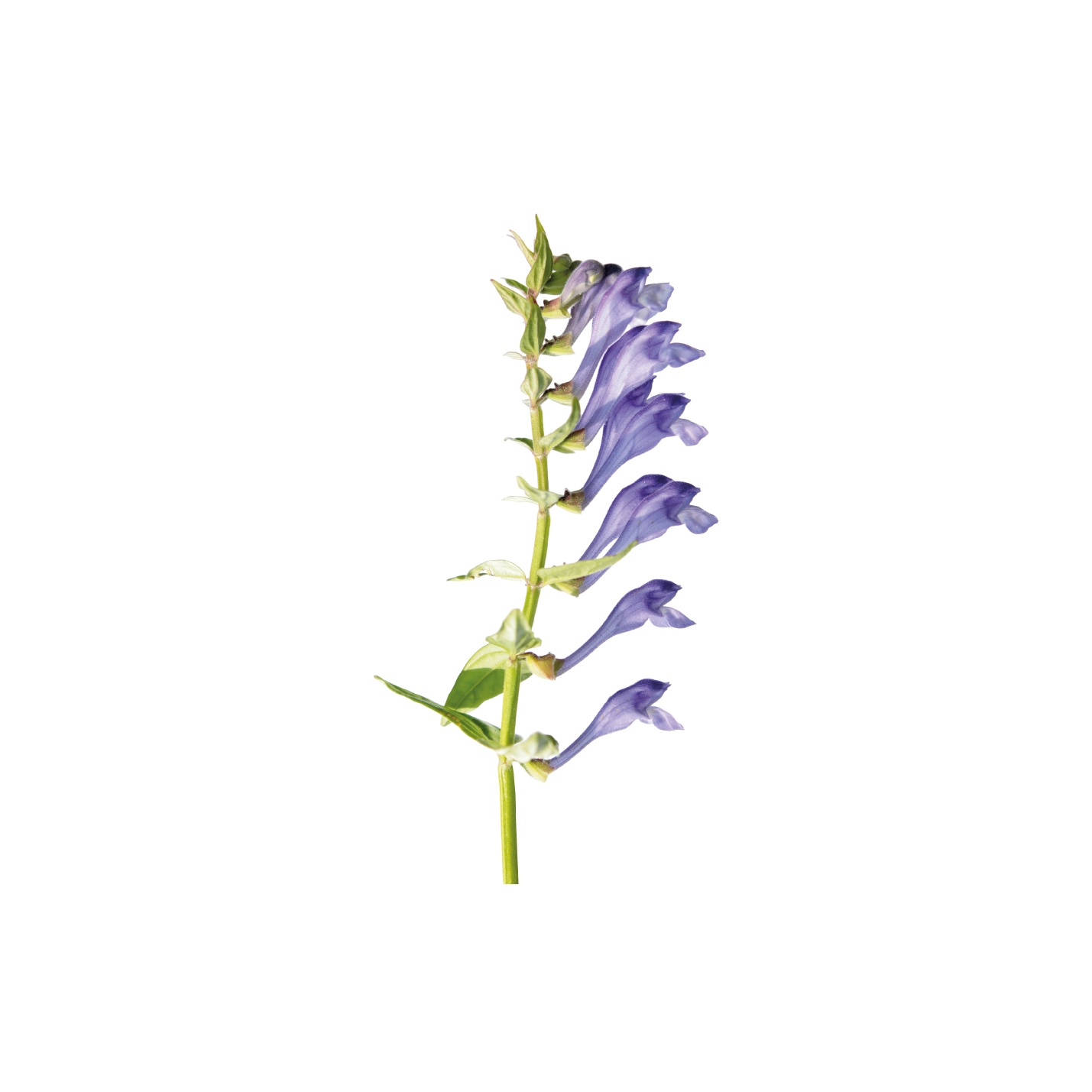 Principal source Chinese Skullcap Scutellaria baicalensis Herb monograph →
Photo coming soon
Source American Skullcap Scutellaria lateriflora Herb monograph →
Concentration
Content by Source
Reported concentrations across the plants that contain baicalin — the bar marks the typical level, the line shows the reported range.
Literature figures for varying plant parts and preparations. Read them as a comparative guide, not exact assays.
Baicalin at a Glance
Baicalin is a flavone glucuronide — the 7-O-glucuronide of the aglycone baicalein — and the single most abundant flavonoid in the root of Chinese skullcap (Scutellaria baicalensis, Huang Qin). It is also the major flavone glycoside of American skullcap (S. lateriflora), and it is the compound most extracts of either herb are standardised to. In practice it behaves as a prodrug: the attached sugar makes intact baicalin too polar to cross the gut wall well, so its oral activity depends on gut bacteria cleaving that sugar back off 13,
The isolated molecule has a broad, mechanistically coherent preclinical profile — anti-inflammatory through NF-κB and COX-2 suppression, hepatoprotective across several liver-injury models, and antiviral in vitro — and one genuinely human data point: a small placebo-controlled trial in which oral baicalin lowered blood lipids and inflammatory markers 1,
Its most practically important property may not be an effect at all but an interaction: baicalin inhibits the drug-metabolising enzyme CYP3A and the liver-uptake transporter OATP1B1, so it can alter the levels of co-administered medicines 18,
The Baicalin–Baicalein Bioavailability Problem
The defining fact about baicalin is that the molecule you swallow is largely not the molecule that acts. Baicalin is a glucuronide — baicalein with a glucuronic-acid sugar bolted onto its 7-position — and that sugar makes it hydrophilic and poorly permeable, giving intact baicalin a very low oral bioavailability (commonly reported in the low single-digit percent range) 13Reference 13ReviewPharmacokinetics and bioavailability enhancement of baicalin — reviewView study →.
What rescues its activity is the gut microbiome. Orally administered baicalin is hydrolysed in the intestine by bacterial β-glucuronidase (from E. coli and other commensals), which strips the glucuronide to release the lipophilic aglycone baicalein — and it is baicalein, not baicalin, that is efficiently absorbed across the intestinal wall 14,
Two consequences follow, and they govern everything else about baicalin:
- The gut flora are part of the pharmacology. Antibiotic-pretreated rats, whose intestinal bacteria are suppressed, show markedly altered baicalin pharmacokinetics — changed Cmax, half-life and AUC — because the deglucuronidation step is impaired 15,
16Reference 15Role of metabolism by intestinal microbiota in pharmacokinetics of oral baicalin — animal studyView study →Reference 16Effects of intestinal microecology on the metabolism and pharmacokinetics of oral wogonoside and baicalin — animal studyView study → . Inter-individual differences in microbiome composition are a plausible source of the variable response seen with skullcap products. - Enterohepatic recycling stretches out exposure. Glucuronidated baicalin excreted in bile is re-hydrolysed by gut bacteria and re-absorbed, producing enterohepatic recirculation and the double-peak plasma profiles typical of this compound 13Reference 13ReviewPharmacokinetics and bioavailability enhancement of baicalin — reviewView study →.
The take-home is that in-vitro potency figures for baicalin should be read against this poor, microbiome-dependent, recycling-heavy delivery — a strong effect in a dish does not guarantee a meaningful concentration in a person.
What It's Used For
Baicalin’s preclinical signal is real and reasonably consistent, but the compound-page discipline is the load-bearing caveat: the great majority is in-vitro or rodent work, on the isolate or on whole skullcap extract, with a single small controlled human efficacy trial 2Reference 2RCTBaicalin reduces blood lipids and inflammation in patients with coronary artery disease and rheumatoid arthritis — randomised, double-blind, placebo-controlled trialView study →.
Support is an experimental score — weighted by study type (human > animal > in vitro) and volume. A beta, not a validated metric. Only the anti-inflammatory row has any controlled human efficacy data; the rest are preclinical, so read the per-row basis.
Baicalin’s strongest and best-replicated application. In vitro and in vivo, baicalin (alongside its aglycone baicalein and wogonin) suppresses lipopolysaccharide-induced inflammation — reducing NF-κB-driven cell-adhesion molecules and monocyte adhesion/transendothelial migration 1Reference 1In vitroAnti-inflammatory effects of baicalin, baicalein and wogonin in vitro and in vivo — in vitro and animal studyView study → — and it modulates LPS-activated macrophages through a calcium–CHOP pathway, lowering inflammatory cytokine output 3Reference 3In vitroBaicalin modulates the inflammatory response of macrophages activated by LPS via the calcium-CHOP pathway — in vitro studyView study →.
Uniquely for this molecule, there is one controlled human trial: 500 mg/day of oral baicalin for 12 weeks significantly improved triglycerides, cholesterol, LDL and inflammatory markers (hs-CRP, cardiotrophin-1) in patients with coexisting coronary artery disease and rheumatoid arthritis, with a better EULAR response rate than placebo 2Reference 2RCTBaicalin reduces blood lipids and inflammation in patients with coronary artery disease and rheumatoid arthritis — randomised, double-blind, placebo-controlled trialView study →.
Gap: the human trial is single, small and in a specific comorbid population; the mechanistic work is isolate/extract in vitro and rodent, so the anti-inflammatory claim is well-motivated but not yet clinically established at scale 1,
A coherent animal-model story. Baicalin protects the liver across alcohol-associated and xenobiotic/toxin injury models, working in part by up-regulating microRNA-205 to repress NF-κB activation and through antioxidant pathways 4,
On the metabolic side, chemoproteomics showed baicalin directly binds and activates hepatic carnitine palmitoyltransferase 1 (CPT1), accelerating fatty-acid entry into mitochondria for oxidation and thereby reducing diet-induced obesity and hepatic steatosis in mice 7Reference 7Chemoproteomics reveals baicalin activates hepatic CPT1 to ameliorate diet-induced obesity and hepatic steatosis — animal studyView study →; reviews collate anti-dyslipidaemic, anti-lipogenic and anti-diabetic effects for baicalin and its aglycone 6Reference 6Systematic reviewBaicalin and its aglycone: a novel approach for the treatment of metabolic disorders — systematic reviewView study →.
Gap: almost entirely rodent and review-level — the CPT1 and miR-205 mechanisms are elegant but unconfirmed in humans, where the only outcome data are the lipid changes from the single anti-inflammatory trial 2,
A broad but strictly preclinical antiviral signal. Baicalin inhibits HIV-1 at the level of viral entry, interfering with the interaction between HIV-1 envelope and chemokine co-receptors 8Reference 8In vitroFlavonoid baicalin inhibits HIV-1 infection at the level of viral entry — in vitro studyView study →; suppresses hepatitis B virus replication by targeting the TRIM25/JAK-STAT axis 9Reference 9In vitroBaicalin inhibits the replication of the hepatitis B virus by targeting TRIM25 — in vitro studyView study →; and inhibits respiratory syncytial virus by inducing a type-I-interferon innate-immune response that blocks viral NS1/matrix RNA 10Reference 10In vitroBaicalin induces a potent innate immune response to inhibit respiratory syncytial virus replication — in vitro and mouse studyView study →. The activity is mechanistically varied rather than a single antiviral action.
Gap: all in-vitro or mouse work on the isolate, at bench concentrations that the compound’s poor oral bioavailability (see above) may never reach systemically; no human antiviral trials of baicalin 8,
The application tied to skullcap’s traditional calming reputation. Baicalin (and baicalein) bind the benzodiazepine site of the GABA-A receptor in vitro, the proposed basis for S. lateriflora’s anxiolytic use 11Reference 11In vitroPhytochemical and biological analysis of skullcap (Scutellaria lateriflora L.): a medicinal plant with anxiolytic properties — in vitro studyView study →, and a meta-analysis of rodent depression models found baicalin improved depressive-type behaviour, largely through anti-inflammatory and antioxidant routes 12Reference 12Meta-analysisThe effects of baicalin in depression: preclinical evidence construction based on meta-analysis of animal studies — systematic review and meta-analysisView study →.
Gap: the GABA-A finding is an in-vitro binding affinity, not a demonstrated central effect at achievable exposures, and the antidepressant evidence is a synthesis of animal studies — there are no controlled human neuropsychiatric trials of isolated baicalin 11,
Mechanisms
| Target / Pathway | Effect | Relevant To |
|---|---|---|
| NF-κB signalling | suppressed (directly and via miR-205), lowering inflammatory transcription | anti-inflammatory / hepatoprotective |
| COX-2 & inflammatory cytokines (TNF-α, IL-6) | down-regulated | anti-inflammatory |
| Calcium–CHOP pathway (macrophages) | modulated, reducing LPS-driven cytokine output | anti-inflammatory |
| Hepatic CPT1 | directly bound and activated → increased mitochondrial fatty-acid oxidation | metabolic / anti-steatotic |
| GABA-A receptor (benzodiazepine site) | ligand binding in vitro | anxiolytic / sedative |
| Viral targets (HIV-1 entry; HBV/TRIM25; RSV innate immunity) | inhibition of entry/replication in vitro | antiviral |
| CYP3A (cytochrome P450 3A) | inhibited → raises exposure of CYP3A substrates | drug interactions |
| OATP1B1 (hepatic uptake transporter) | inhibited → alters disposition of transporter substrates (e.g. statins) | drug interactions |
The two rows that matter most in a real person are the bottom two: baicalin’s clearest human-relevant pharmacology is its effect on how other drugs are handled.
Clinical Trials
Human efficacy evidence for isolated baicalin is essentially a single small randomised controlled trial — 500 mg/day for 12 weeks improving lipids and inflammatory markers in comorbid cardiovascular/rheumatoid patients 2Reference 2RCTBaicalin reduces blood lipids and inflammation in patients with coronary artery disease and rheumatoid arthritis — randomised, double-blind, placebo-controlled trialView study →. (The much larger clinical programme in this chemical family belongs to the aglycone, baicalein, which has completed Phase I safety/PK studies as an oral tablet — a different molecule on a different page.) Everything else for baicalin is preclinical.
| Completed | Planned | Terminated | Preclinical |
|---|---|---|---|
| One small anti-inflammatory/lipid RCT 2Reference 2RCTBaicalin reduces blood lipids and inflammation in patients with coronary artery disease and rheumatoid arthritis — randomised, double-blind, placebo-controlled trialView study → | — | — | Anti-inflammatory, hepatoprotective, metabolic, antiviral, neuroactive (in-vitro + rodent) |
Last checked: July 2026.
Pharmacokinetics
Baicalin’s pharmacokinetics are dominated by the glycoside/aglycone shuttle described above. Intact baicalin is hydrophilic and poorly permeable, giving low oral bioavailability; efficient absorption requires gut-bacterial β-glucuronidase to convert it to the lipophilic aglycone baicalein, which is then largely re-glucuronidated by host UGTs back to circulating baicalin 13,
Drug Interactions
The interaction profile is the part of baicalin’s pharmacology with the clearest human relevance, and it names specific enzymes and transporters:
- CYP3A inhibition. Baicalin inhibits cytochrome-P450 3A activity and, in rats, raised exposure to the CYP3A substrate nifedipine both by inhibiting the enzyme and by displacing the drug from plasma proteins 18Reference 18AnimalContribution of baicalin to plasma protein binding displacement and CYP3A inhibition in the pharmacokinetics of nifedipine in rats — animal studyView study →. CYP3A handles a large share of clinical drugs, so this is a broad theoretical-interaction flag.
- OATP1B1 inhibition. Baicalin affects the hepatic uptake transporter OATP1B1: in a human study it altered the pharmacokinetics of rosuvastatin, an OATP1B1 substrate, in a transporter-genotype-dependent way 19Reference 19Clinical trialThe effect of herbal medicine baicalin on the pharmacokinetics of rosuvastatin, a substrate of OATP1B1 — human studyView study →.
- Mixed and sometimes null effects. The direction is not uniformly “raises drug levels” — a controlled human study found a single dose of baicalin had no clinically significant effect on cyclosporine A pharmacokinetics 17Reference 17A single dose of baicalin has no clinically significant effect on the pharmacokinetics of cyclosporine A in healthy Chinese volunteers — human pharmacokinetic studyView study → — and a dedicated review catalogues both inhibitory and inductive skullcap-flavonoid effects on P450s and efflux pumps, some of which are synergistic rather than harmful 20Reference 20ReviewDrug-herb interactions between Scutellaria baicalensis and pharmaceutical drugs — reviewView study →.
The practical reading: baicalin is not an inert dietary flavonoid where medicines are concerned. Anyone on narrow-therapeutic-index CYP3A or OATP1B1 substrates (many statins, immunosuppressants, some calcium-channel blockers) should treat concentrated skullcap/baicalin products as a possible interactant 18,
Isolate vs. Plant Studies
The evidence base splits about evenly, and the split is informative. The mechanistic and antiviral work is overwhelmingly the isolated molecule — the NF-κB/COX-2, calcium-CHOP, CPT1, GABA-A, HIV/HBV/RSV and transporter studies all test purified baicalin (or baicalein) directly 1,
The whole-plant thread runs alongside it: baicalin is the standardisation marker for Scutellaria extracts, and much traditional use is of the decoction/extract, where baicalin co-occurs with baicalein, wogonin, wogonoside, oroxylin-a and scutellarein. The single human efficacy trial used isolated baicalin (500 mg/day) rather than an extract 2Reference 2RCTBaicalin reduces blood lipids and inflammation in patients with coronary artery disease and rheumatoid arthritis — randomised, double-blind, placebo-controlled trialView study → — a point in the isolate’s favour — but it stands almost alone, so the honest posture is: strong isolate mechanism, thin isolate clinical evidence, and a large body of extract-level traditional use that cannot be reduced to this one molecule.
Prevalence in Nature
Baicalin is, for practical purposes, a genus marker for Scutellaria. It is the dominant flavonoid of Chinese skullcap (S. baicalensis) root, where it is the single most abundant constituent, and the major flavone glycoside of American skullcap (S. lateriflora) — but with a striking difference in where the plant puts it: in S. baicalensis the flavones accumulate in the root, whereas in S. lateriflora they concentrate in the leaves and aerial parts, an evolutionary divergence in the flavone-biosynthesis pathway mapped across native Scutellaria species 21Reference 21Exploring native Scutellaria species provides insight into the differential accumulation of flavones with medicinal properties — phytochemical and phylogenetic studyView study →. It occurs alongside its biosynthetic relatives — baicalein (its aglycone), wogonin, wogonoside, oroxylin A and scutellarein — and is reported more sparingly outside the genus (e.g. in Oroxylum indicum). Reported content is high for a specialised flavonoid: on the order of several-to-low-double-digit percent of dry tissue in the richest sources 11,
Major Natural Sources
| Source | Plant part | Reported baicalin content |
|---|---|---|
| Chinese skullcap (Scutellaria baicalensis) | root | ~5–12% dry weight (dominant flavonoid) |
| American skullcap (Scutellaria lateriflora) | leaf / aerial parts | ~4–5% dry weight (≈11.7 mg/g freeze-dried) |
| Other Scutellaria species | root / aerial | variable; present as a genus-characteristic flavone |
| Oroxylum indicum | seed / bark | reported minor source |
Figures are percentage of dry plant tissue and vary two- to three-fold with species, geographic origin, plant age and post-harvest processing, which is a major driver of product-to-product potency differences 21Reference 21Exploring native Scutellaria species provides insight into the differential accumulation of flavones with medicinal properties — phytochemical and phylogenetic studyView study →.
Discovery & Synthesis
Baicalin was isolated from the root of Scutellaria baicalensis — the source that gives it its name (from the species epithet baicalensis, after Lake Baikal) — and characterised as the plant’s principal flavone, structurally the 7-O-glucuronide of baicalein. Because it is a naturally abundant glycoside, commercial baicalin is obtained overwhelmingly by extraction and purification from Chinese skullcap root rather than by synthesis: the root’s high native content (often around a tenth of its dry weight) makes isolation the economical route, and baicalin is the assay marker to which standardised extracts are pegged 21,
Patents: not yet researched.
Toxicity & Safety
Baicalin carries a low toxicity flag: it is a flavonoid from herbs with a long history of use, it was well tolerated at 500 mg/day for 12 weeks in the one controlled human trial 2Reference 2RCTBaicalin reduces blood lipids and inflammation in patients with coronary artery disease and rheumatoid arthritis — randomised, double-blind, placebo-controlled trialView study →, and multiple reviews describe minimal cellular toxicity 6Reference 6Systematic reviewBaicalin and its aglycone: a novel approach for the treatment of metabolic disorders — systematic reviewView study →. The meaningful cautions are about interactions and concentrated exposure, not intrinsic poison.
- Low intrinsic toxicity at studied intakes. Oral baicalin 500 mg/day for 12 weeks was well tolerated in a controlled trial, and reviews report minimal cytotoxicity 2,
6Reference 2RCTBaicalin reduces blood lipids and inflammation in patients with coronary artery disease and rheumatoid arthritis — randomised, double-blind, placebo-controlled trialView study →Reference 6Systematic reviewBaicalin and its aglycone: a novel approach for the treatment of metabolic disorders — systematic reviewView study → . - Drug-interaction potential is the real concern. Baicalin inhibits CYP3A and OATP1B1, so concentrated skullcap/baicalin products can alter levels of statins, immunosuppressants, calcium-channel blockers and other substrates 18,
19, .20Reference 18AnimalContribution of baicalin to plasma protein binding displacement and CYP3A inhibition in the pharmacokinetics of nifedipine in rats — animal studyView study →Reference 19Clinical trialThe effect of herbal medicine baicalin on the pharmacokinetics of rosuvastatin, a substrate of OATP1B1 — human studyView study →Reference 20ReviewDrug-herb interactions between Scutellaria baicalensis and pharmaceutical drugs — reviewView study → - Additive sedation, in principle. Baicalin binds the GABA-A benzodiazepine site in vitro, so a theoretical additive effect with sedatives/CNS depressants applies to concentrated skullcap products 11Reference 11In vitroPhytochemical and biological analysis of skullcap (Scutellaria lateriflora L.): a medicinal plant with anxiolytic properties — in vitro studyView study →.
- Concentrated extracts ≠ ordinary herbal use, and the microbiome shapes the dose. Standardised high-baicalin products are a different exposure from a mild infusion, and absorption depends on individual gut flora 13,
15Reference 13ReviewPharmacokinetics and bioavailability enhancement of baicalin — reviewView study →Reference 15Role of metabolism by intestinal microbiota in pharmacokinetics of oral baicalin — animal studyView study → .
A reproductive note, prose-only: a review of Scutellaria baicalensis in pregnancy-related conditions catalogues experimental (not clinical) activity of its root flavonoids, and does not establish safety of isolated baicalin in pregnancy 22Reference 22ReviewEffectiveness of Scutellaria baicalensis Georgi root in pregnancy-related diseases — reviewView study →. Any pregnancy or lactation decision belongs to the herb or product page where intake is decided, not to this molecule page; no isolate-level verdict is issued here.
Dosage
There is no established or recommended dose for isolated baicalin. The one controlled human trial used 500 mg/day orally for 12 weeks 2Reference 2RCTBaicalin reduces blood lipids and inflammation in patients with coronary artery disease and rheumatoid arthritis — randomised, double-blind, placebo-controlled trialView study →; all other efficacy figures are preclinical rodent or in-vitro doses that do not convert to human self-dosing. In herbal practice, exposure comes from Chinese skullcap root standardised to its baicalin content rather than from the pure compound.
| Context | Form | Amount studied |
|---|---|---|
| Anti-inflammatory / lipid RCT | isolated oral baicalin | 500 mg/day, 12 weeks 2Reference 2RCTBaicalin reduces blood lipids and inflammation in patients with coronary artery disease and rheumatoid arthritis — randomised, double-blind, placebo-controlled trialView study → |
| Herbal exposure | Scutellaria root extract | product-dependent; standardised to baicalin |
| Preclinical mechanism work | isolate, in vitro / rodent | not human-convertible |
Two framing points specific to this molecule: because intact baicalin is poorly absorbed and must be converted to baicalein by gut bacteria, milligram-for-milligram comparisons across products and to in-vitro potencies are unreliable 13,
References
- Lee, W., et al. (2015). Anti-inflammatory effects of baicalin, baicalein and wogonin in vitro and in vivo — in vitro and animal study. Inflammation. https://pubmed.ncbi.nlm.nih.gov/25249339/
- Hang, Y., et al. (2018). Baicalin reduces blood lipids and inflammation in patients with coronary artery disease and rheumatoid arthritis — randomised, double-blind, placebo-controlled trial. Lipids in Health and Disease. https://pubmed.ncbi.nlm.nih.gov/29935544/
- An, H. J., et al. (2022). Baicalin modulates the inflammatory response of macrophages activated by LPS via the calcium-CHOP pathway — in vitro study. Cells. https://pubmed.ncbi.nlm.nih.gov/36231038/
- Fang, L., et al. (2022). Baicalin confers hepatoprotective effect against alcohol-associated liver disease by upregulating microRNA-205 — animal study. International Immunopharmacology. https://pubmed.ncbi.nlm.nih.gov/35358777/
- Yang, J. Y., et al. (2021). Pharmacological properties of baicalin on liver diseases — narrative review. Pharmacological Reports. https://pubmed.ncbi.nlm.nih.gov/33595821/
- Fang, P., et al. (2020). Baicalin and its aglycone: a novel approach for the treatment of metabolic disorders — systematic review. Pharmacological Reports. https://pubmed.ncbi.nlm.nih.gov/32016847/
- Dai, J., et al. (2018). Chemoproteomics reveals baicalin activates hepatic CPT1 to ameliorate diet-induced obesity and hepatic steatosis — animal study. Proceedings of the National Academy of Sciences USA. https://pubmed.ncbi.nlm.nih.gov/29891721/
- Li, B. Q., et al. (2000). Flavonoid baicalin inhibits HIV-1 infection at the level of viral entry — in vitro study. Biochemical and Biophysical Research Communications. https://pubmed.ncbi.nlm.nih.gov/11027509/
- Fan, X., et al. (2023). Baicalin inhibits the replication of the hepatitis B virus by targeting TRIM25 — in vitro study. Journal of Traditional and Complementary Medicine. https://pubmed.ncbi.nlm.nih.gov/38020548/
- Qin, S., et al. (2022). Baicalin induces a potent innate immune response to inhibit respiratory syncytial virus replication — in vitro and mouse study. Frontiers in Immunology. https://pubmed.ncbi.nlm.nih.gov/35812414/
- Awad, R., et al. (2003). Phytochemical and biological analysis of skullcap (Scutellaria lateriflora L.): a medicinal plant with anxiolytic properties — in vitro study. Phytomedicine. https://pubmed.ncbi.nlm.nih.gov/14692724/
- Wang, D., et al. (2024). The effects of baicalin in depression: preclinical evidence construction based on meta-analysis of animal studies — systematic review and meta-analysis. Frontiers in Pharmacology. https://pubmed.ncbi.nlm.nih.gov/39114351/
- Huang, T., et al. (2019). Pharmacokinetics and bioavailability enhancement of baicalin — review. European Journal of Drug Metabolism and Pharmacokinetics. https://pubmed.ncbi.nlm.nih.gov/30209794/
- Noh, K., et al. (2016). Role of intestinal microbiota in baicalin-induced drug interaction and its pharmacokinetics — review. Molecules. https://pubmed.ncbi.nlm.nih.gov/26978333/
- Kang, M. J., et al. (2014). Role of metabolism by intestinal microbiota in pharmacokinetics of oral baicalin — animal study. Archives of Pharmacal Research. https://pubmed.ncbi.nlm.nih.gov/23771520/
- Xing, S., et al. (2017). Effects of intestinal microecology on the metabolism and pharmacokinetics of oral wogonoside and baicalin — animal study. Natural Product Communications. https://pubmed.ncbi.nlm.nih.gov/30520584/
- Liu, R., et al. (2019). A single dose of baicalin has no clinically significant effect on the pharmacokinetics of cyclosporine A in healthy Chinese volunteers — human pharmacokinetic study. Frontiers in Pharmacology. https://pubmed.ncbi.nlm.nih.gov/31156436/
- Cheng, Z. Y., et al. (2014). Contribution of baicalin to plasma protein binding displacement and CYP3A inhibition in the pharmacokinetics of nifedipine in rats — animal study. PLoS ONE. https://pubmed.ncbi.nlm.nih.gov/24498050/
- Fan, L., et al. (2008). The effect of herbal medicine baicalin on the pharmacokinetics of rosuvastatin, a substrate of OATP1B1 — human study. Clinical Pharmacology & Therapeutics. https://pubmed.ncbi.nlm.nih.gov/17851565/
- Zhou, X., et al. (2021). Drug-herb interactions between Scutellaria baicalensis and pharmaceutical drugs — review. Biomedicine & Pharmacotherapy. https://pubmed.ncbi.nlm.nih.gov/33711551/
- Costine, B., et al. (2022). Exploring native Scutellaria species provides insight into the differential accumulation of flavones with medicinal properties — phytochemical and phylogenetic study. Scientific Reports. https://pubmed.ncbi.nlm.nih.gov/35915209/
- Fang, D. N., et al. (2023). Effectiveness of Scutellaria baicalensis Georgi root in pregnancy-related diseases — review. Journal of Integrative Medicine. https://pubmed.ncbi.nlm.nih.gov/36216728/
- Qiu, X., et al. (2025). Recent advances in the therapeutic effects and molecular mechanisms of baicalin — review. Biology (Basel). https://pubmed.ncbi.nlm.nih.gov/40563888/



