
Compound Monograph
Berberastine
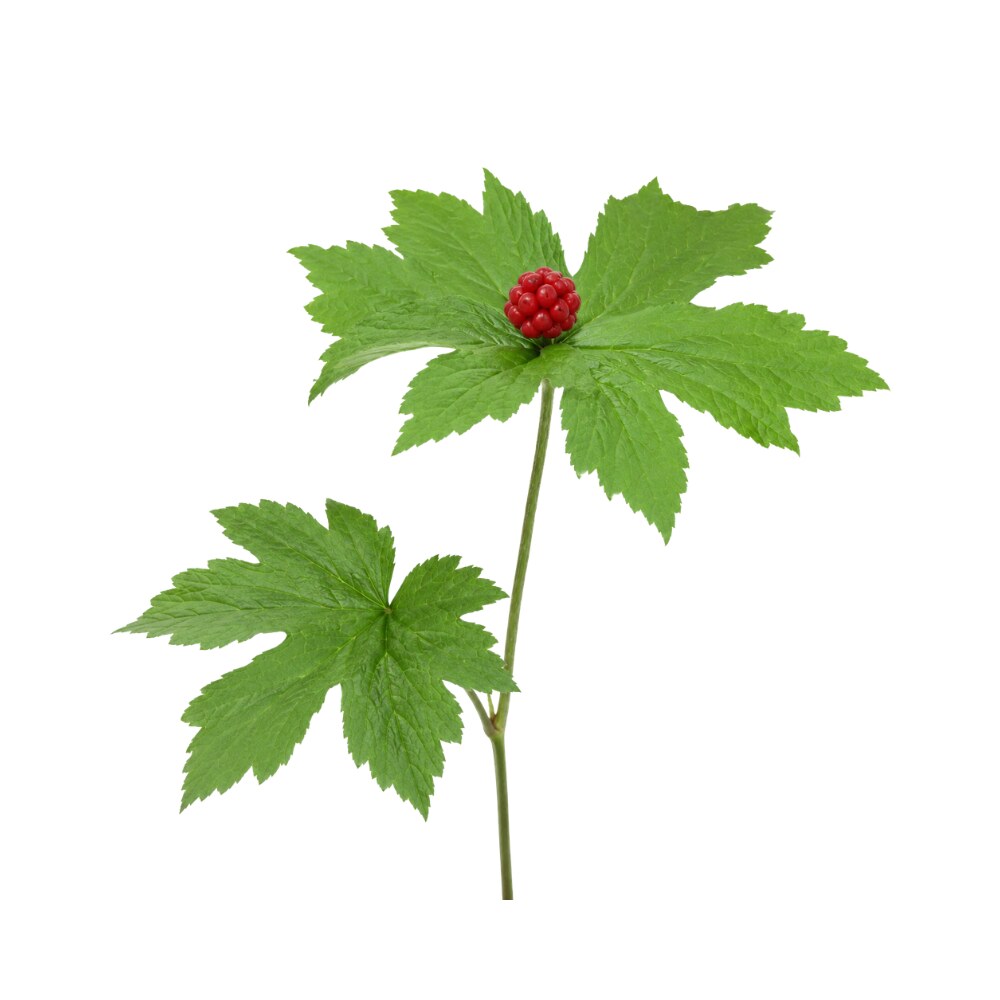
Berberastine is a minor, hydroxylated protoberberine alkaloid of goldenseal (Hydrastis canadensis) — a 5-hydroxy congener of berberine. Its real documented role is as an HPLC marker used to authenticate goldenseal; dedicated pharmacology of the isolated compound is minimal, and there is no human data.

Sources · 1
Where Does It Come From?
Berberastine is a naturally occurring isoquinoline alkaloid (protoberberine group), found in Goldenseal. It is well tolerated orally (low toxicity).
Concentration
Content by Source
Concentrations not reported. No percent-dry-weight or mg/g figures have been published for this compound in its source plants.
Berberastine at a Glance
Berberastine is a minor isoquinoline (protoberberine) alkaloid of goldenseal (Hydrastis canadensis) — structurally a hydroxylated (5-hydroxy) congener of berberine, the plant’s bright-yellow flagship alkaloid. It occurs in the root and rhizome alongside berberine, hydrastine, canadine and several other trace alkaloids.
Its honest status is that of a chemotaxonomic and analytical marker, not a studied medicine. Berberastine is one of the fingerprint alkaloids that analysts quantify to confirm a sample really is goldenseal and to screen for adulteration — that is where essentially all of the literature on it lives 1,
Dedicated pharmacology of the isolated compound is minimal, and there is no human data. What activity is sometimes attributed to it is inferred by analogy to berberine rather than demonstrated for berberastine itself — a distinction worth keeping in front throughout.
A Goldenseal Marker Alkaloid
The one thing berberastine is genuinely known and used for is authenticating goldenseal. Goldenseal is an expensive, historically over-harvested root, which makes it a target for adulteration and substitution — so quality-control chemists profile its alkaloid “fingerprint” by HPLC and confirm that the characteristic minor alkaloids are present in the right pattern.
When Weber and colleagues chemically compared goldenseal root powder from three commercial suppliers, they found each lot contained the same suite of alkaloids — hydrastinine, berberastine, tetrahydroberberastine, canadaline, berberine, hydrastine and canadine — and concluded that alkaloid content is the best biomarker for goldenseal, with the profile also useful for spotting adulterants such as palmatine 1Reference 1Chemical comparison of goldenseal (Hydrastis canadensis L.) root powder from three commercial suppliersView study →. Later HPLC/UPLC methods for Hydrastis work the same way: they resolve the goldenseal alkaloids and use “wrong” alkaloids (coptisine, jatrorrhizine, palmatine) as red flags for cheaper protoberberine-rich substitutes like Coptis or Phellodendron 2Reference 2Quantitative determination of alkaloids from roots of Hydrastis canadensis L. and dietary supplements using ultra-performance liquid chromatography with UV detectionView study →.
Berberastine’s value here is precisely that it is characteristic of Hydrastis and sits at a predictable, low level — a supporting peak in the fingerprint rather than a headline constituent. Commercial goldenseal is standardised to its two major alkaloids (berberine and hydrastine), not to berberastine, so berberastine functions as an identity/quality signal rather than a dose target.
What It's Used For
There is no body of pharmacology on isolated berberastine — no human trials, and essentially no isolate animal or in-vitro studies of its own. Any pharmacological expectation rests on it being a close structural relative of berberine, and on whole-goldenseal studies in which berberastine was present but never tested separately.
Support is an experimental score — weighted by study type (human > animal > in vitro) and volume. A beta, not a validated metric. For berberastine the scores are near-floor because there is essentially no isolate evidence; the single row below reflects analogy and whole-plant context, not data on the pure compound.
Goldenseal’s best-evidenced activity is in-vitro antibacterial action, and it is tempting to assume every protoberberine in the root contributes. But when Scazzocchio and colleagues isolated single goldenseal alkaloids to test them, the compounds assayed were berberine, β-hydrastine, canadine and canadaline — berberastine was not among them 3Reference 3Antibacterial activity of Hydrastis canadensis extract and its major isolated alkaloidsView study →.
So even within goldenseal’s own antimicrobial literature, berberastine has no measured activity of its own; the inference is purely that a 5-hydroxy berberine relative might behave similarly.
Gap: no minimum inhibitory concentration, no isolate assay, and no human data exist for berberastine — this row is analogy, not evidence 3Reference 3Antibacterial activity of Hydrastis canadensis extract and its major isolated alkaloidsView study →.
Mechanisms
No molecular target has been demonstrated for berberastine. The entries below are inferred from berberine and are explicitly not established for this compound.
| Target / pathway | Effect | Relevant to |
|---|---|---|
| (By analogy to berberine only) bacterial / membrane targets | hypothesised, not demonstrated for berberastine | antimicrobial (inferred) |
Pharmacokinetics
None characterised. No absorption, bioavailability, metabolism or half-life data exist for berberastine specifically. The only reasonable prior is structural: like berberine and other quaternary protoberberines, berberastine carries a permanent positive charge, so it would be expected to be poorly absorbed orally — but this is an expectation from the compound class, not a measurement of berberastine.
Clinical Trials
There are no clinical trials of berberastine, and none registered. It has never been administered as an isolated compound to humans; the only human exposure is incidental, as a trace constituent of whole goldenseal.
| Completed | Planned | Terminated | Preclinical |
|---|---|---|---|
| — | — | — | — |
Last checked: July 2026.
Isolate vs. Plant Studies
For berberastine this distinction is stark and one-sided: all of the relevant evidence is whole-plant or analytical, and none is on the isolate. Berberastine appears in the Hydrastis alkaloid profile 1,
Prevalence in Nature
Berberastine is best understood as a goldenseal-characteristic trace alkaloid. It is a consistent, minor component of the Hydrastis canadensis alkaloid fingerprint, reported across independently sourced commercial root lots 1Reference 1Chemical comparison of goldenseal (Hydrastis canadensis L.) root powder from three commercial suppliersView study →, and concentrated (like the other goldenseal alkaloids) in the root and rhizome rather than the leaf.
Its abundance is not reliably quantified in the public literature — it is documented as present in the goldenseal profile rather than as a measured percentage of dry weight, sitting well below the two dominant alkaloids (hydrastine at roughly 1.5–5% and berberine at roughly 0.5–6% of dry root) 1,
Major Natural Sources
| Source | Part | Notes |
|---|---|---|
| Goldenseal (Hydrastis canadensis) | Root & rhizome | The one well-documented source; a characteristic minor alkaloid of the goldenseal fingerprint 1Reference 1Chemical comparison of goldenseal (Hydrastis canadensis L.) root powder from three commercial suppliersView study →. Level not reliably quantified. |
Occurrence in other protoberberine-producing plants has not been clearly documented, so berberastine is treated here as essentially a Hydrastis marker rather than a widespread alkaloid.
Discovery & Synthesis
Berberastine entered the literature as one of the minor alkaloids catalogued during the phytochemical work-up of goldenseal; a precise first-isolation date and author are not well documented in the accessible record, which is itself a sign of how little dedicated attention the compound has received. Structurally it is described as a 5-hydroxy derivative of berberine (hence the synonym 5-hydroxyberberine).
No total synthesis of berberastine appears to have been pursued for its own sake, and it is not produced commercially — it exists only as a natural trace constituent of goldenseal and, where needed, as an analytical reference peak in alkaloid-profiling work 1,
Patents: not yet researched.
Toxicity & Safety
Berberastine carries a low flag, but this rating is by analogy and exposure, not by direct study — there is no isolate toxicology for berberastine. Two facts set the honest context: human exposure is only ever at trace levels inside whole goldenseal, and its close relative berberine is generally well tolerated. Against that sits a whole-plant safety signal worth stating plainly.
- Only trace, incidental exposure. Berberastine is a minor alkaloid of goldenseal root, not a stand-alone supplement; nobody is dosing berberastine itself.
- Whole goldenseal root powder is a rodent liver carcinogen. A two-year US National Toxicology Program feed study found clear evidence of liver tumours in rats (and some evidence in male mice); the mechanism is unknown and the finding is for the whole root, with berberine — not berberastine — the alkaloid usually implicated 5Reference 5AnimalToxicology and carcinogenesis studies of goldenseal root powder (Hydrastis canadensis) in F344/N rats and B6C3F1 mice (feed studies)View study →.
- No isolate safety data. Berberastine has no dedicated toxicology, genotoxicity or interaction studies of its own; its safety is inferred, and reviews note possible neuro-, hepato- and phototoxicity for goldenseal and its alkaloids generally 4Reference 4ReviewGoldenseal (Hydrastis canadensis L.) and its active constituents: a critical review of their efficacy and toxicological issues — reviewView study →.
Dosage
There is no dose for berberastine — it is neither sold nor studied as an isolated compound. Any intake is incidental, as a trace alkaloid within whole goldenseal root, and goldenseal products are standardised to berberine and hydrastine, not to berberastine 1,
References
- Weber HA, Zart MK, Hodges AE, Molloy HM, O’Brien BM, Moody LA, et al. (2003). Chemical comparison of goldenseal (Hydrastis canadensis L.) root powder from three commercial suppliers. Journal of Agricultural and Food Chemistry, 51(25), 7352–7358. https://pubmed.ncbi.nlm.nih.gov/14640583/
- Avula B, Wang YH, Khan IA (2012). Quantitative determination of alkaloids from roots of Hydrastis canadensis L. and dietary supplements using ultra-performance liquid chromatography with UV detection. Journal of AOAC International, 95(5), 1398–1405. https://pubmed.ncbi.nlm.nih.gov/23175972/
- Scazzocchio F, Cometa MF, Tomassini L, Palmery M (2001). Antibacterial activity of Hydrastis canadensis extract and its major isolated alkaloids. Planta Medica, 67(6), 561–564. https://pubmed.ncbi.nlm.nih.gov/11509983/
- Mandal SK, Maji AK, Mishra SK, Ishfaq PM, Devkota HP, Silva AS, Das N (2020). Goldenseal (Hydrastis canadensis L.) and its active constituents: a critical review of their efficacy and toxicological issues — review. Pharmacological Research, 160, 105085. https://pubmed.ncbi.nlm.nih.gov/32683037/
- National Toxicology Program (2010). Toxicology and carcinogenesis studies of goldenseal root powder (Hydrastis canadensis) in F344/N rats and B6C3F1 mice (feed studies). NTP Technical Report Series, No. 562. https://pubmed.ncbi.nlm.nih.gov/21372858/



