
Compound Monograph
Columbamine
Columbamine is a minor protoberberine isoquinoline alkaloid of barberry and goldthread roots — a positional isomer of jatrorrhizine and a co-occurring congener of berberine, known almost entirely from in-vitro anticancer and enzyme studies rather than any human data.

Sources · 5
Where Does It Come From?
Columbamine is a naturally occurring isoquinoline alkaloid (protoberberine group), found in Barberry, Chinese goldthread, Calumba and 2 other sources. It is well tolerated orally (low toxicity).
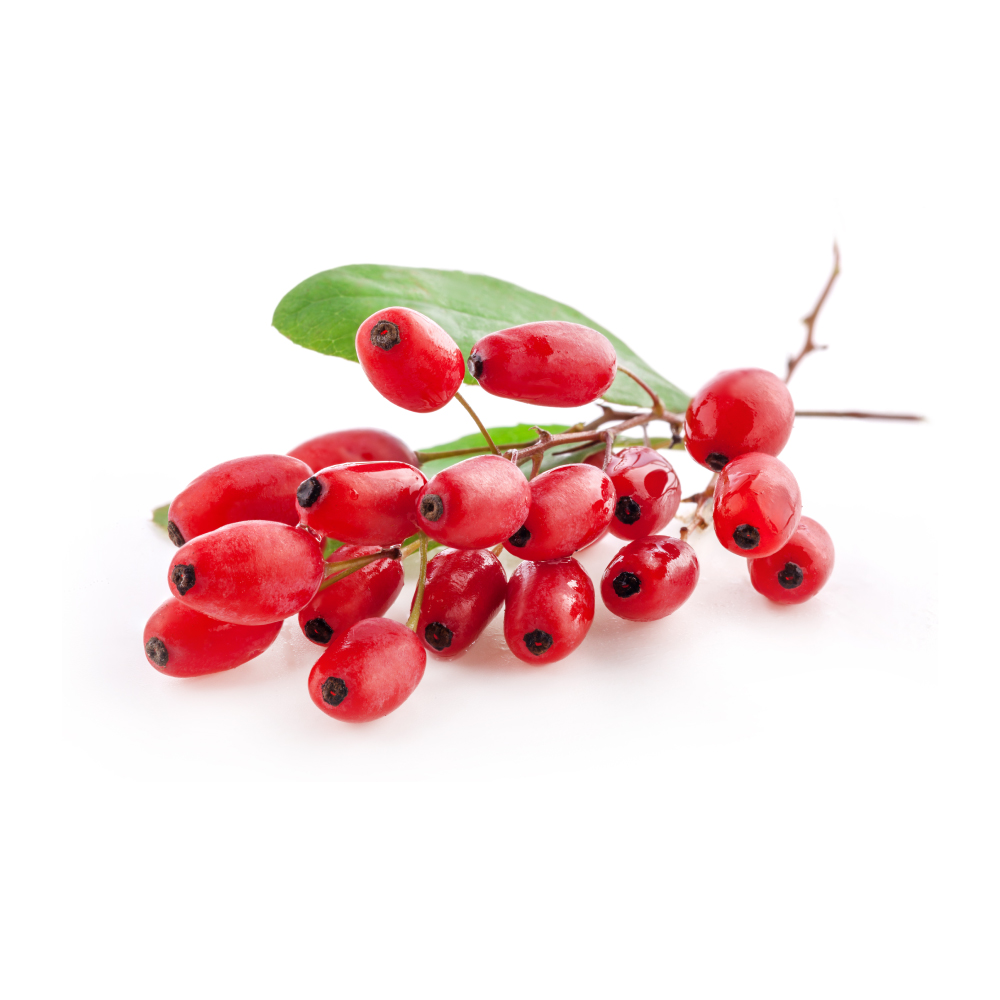 Principal source Barberry Berberis spp. Herb monograph →
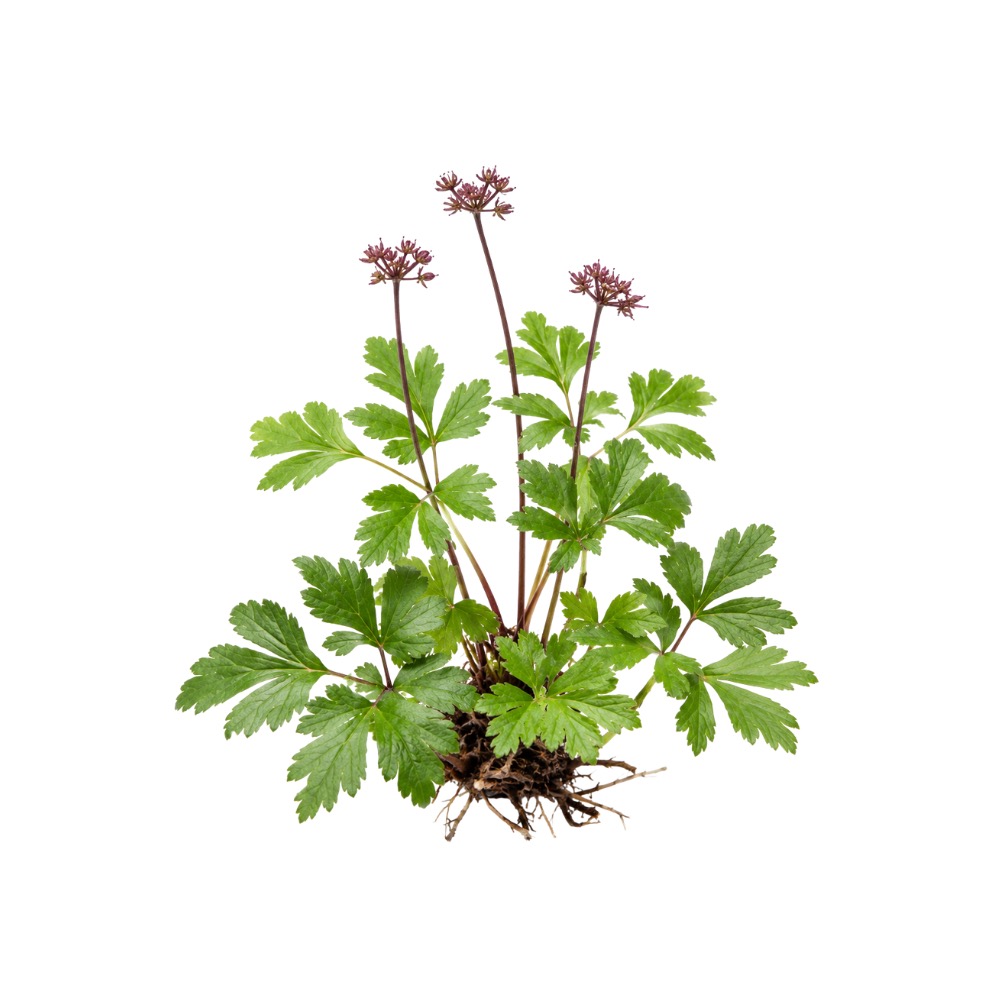 Source Coptis Coptis chinensis Herb monograph →
Concentration
Content by Source
Concentrations not reported. No percent-dry-weight or mg/g figures have been published for this compound in its source plants.
Columbamine at a Glance
Columbamine is a minor protoberberine alkaloid — one of the yellow isoquinoline alkaloids that colour the roots and rhizomes of barberry, goldthread (coptis) and related plants. It is a close structural relative of berberine, and in every plant that makes it, it occurs as a low-abundance companion to berberine rather than a lead compound.
Almost everything known about columbamine comes from isolated-compound laboratory studies — mostly in-vitro anticancer screens, one old rodent liver study, and an enzyme-inhibition assay. There are no human trials of columbamine, and, like berberine, it is a quaternary alkaloid cation with poor expected oral absorption, so the concentrations used in cell work should not be assumed reachable in people. This is a data-thin molecule, and the honest posture below reflects that.
Columbamine vs. Jatrorrhizine
The single most useful thing to know about columbamine’s structure is that it is a positional isomer of jatrorrhizine — the two molecules share the same formula (C₂₀H₂₀NO₄⁺, ~338 g/mol) and the same three methoxy groups, and differ only in where the one free hydroxyl sits on the A-ring:
- Columbamine — hydroxyl at C-2, methoxy groups at C-3, C-9 and C-10 (2-hydroxy-3,9,10-trimethoxy).
- Jatrorrhizine — hydroxyl at C-3, methoxy groups at C-2, C-9 and C-10 (3-hydroxy-2,9,10-trimethoxy).
That single swapped position is the entire chemical difference. Both are, in turn, near-relatives of berberine (which closes the same C-2/C-3 oxygens into a methylenedioxy ring) and of palmatine (which methylates columbamine’s free hydroxyl). Because the isomers are so similar, they routinely co-occur, co-elute and are studied together, and much of the older “Coptis alkaloid” literature does not cleanly separate their individual contributions.
What It's Used For
Columbamine’s evidence base is small and preclinical: a cluster of in-vitro (and a few xenograft) cancer-cell studies, a single 1988 rodent hepatoprotective report on a three-alkaloid extract, and one cholinesterase-inhibition assay.
Support is an experimental score — weighted by study type (human > animal > in vitro) and volume. A beta, not a validated metric. Every row here rests on isolated-compound, non-human data, so the scores are deliberately low.
Columbamine’s most-studied activity, and always as the isolated compound in cell culture (occasionally with a mouse xenograft), never in people. In metastatic osteosarcoma U2OS cells it arrested the cell cycle at the G2/M transition — lowering CDK6 and STAT3 phosphorylation — and cut neovascularization by down-regulating MMP-2 and reducing migration, adhesion and invasion, all at low-micromolar concentrations (IC₅₀ ≈ 21 µM) and with low general cytotoxicity 1Reference 1Columbamine suppresses the proliferation and neovascularization of metastatic osteosarcoma U2OS cells with low cytotoxicityView study →.
In colon-cancer lines (HCT116, LoVo, SW480) it suppressed growth, invasion and migration and promoted apoptosis by abolishing Wnt/β-catenin signalling (lowering β-catenin and DVL), an effect reversed when β-catenin was restored 2Reference 2Columbamine suppresses the proliferation and malignization of colon cancer cells via abolishing Wnt/β-catenin signaling pathwayView study →.
In hepatocellular-carcinoma lines (SMMC-7721, HepG2, Hep3B) it induced apoptosis and shrank xenograft tumours via down-regulation of PI3K/AKT, p38 and ERK1/2 MAPK signalling 3Reference 3Columbamine suppresses hepatocellular carcinoma cells through down-regulation of PI3K/AKT, p38 and ERK1/2 MAPK signaling pathwaysView study →.
Gap: every result is in-vitro or mouse; there are no human data, the mechanisms differ between studies, and the active concentrations sit against columbamine’s poor expected oral bioavailability — so the cell-line potency may not translate to systemic exposure 3,
The oldest and thinnest thread. A 1988 study gave thioacetamide-injured rats “Hepasor,” a plant extract containing columbamine together with palmatine and jatrorrhizine (from Enantia chlorantha), and reported improved blood flow and mitotic activity in the damaged livers, with effects on serum ALT and hydroxyproline that were clearer in female than male animals 5Reference 5AnimalNatural protoberberine alkaloids from Enantia chlorantha: palmatine, columbamine and jatrorrhizine for thioacetamide-traumatized rat liverView study →.
Gap: this is a single, decades-old animal study of a three-alkaloid mixture, not isolated columbamine — nothing can be attributed to the molecule specifically, and it has not been replicated 5Reference 5AnimalNatural protoberberine alkaloids from Enantia chlorantha: palmatine, columbamine and jatrorrhizine for thioacetamide-traumatized rat liverView study →.
Of seven quaternary alkaloids isolated from Tinospora crispa, columbamine was the only one with strong acetylcholinesterase inhibition (IC₅₀ ≈ 48 µM); the authors attributed the activity to its high degree of methoxylation more than to the quaternary nitrogen 4Reference 4Anticholinesterase inhibitory activity of quaternary alkaloids from Tinospora crispaView study →.
Gap: a single in-vitro assay at a fairly high IC₅₀, with no cellular, animal or cognitive follow-up — a chemistry observation, not a demonstrated neurological effect 4Reference 4Anticholinesterase inhibitory activity of quaternary alkaloids from Tinospora crispaView study →.
Mechanisms
| Target / pathway | Effect | Relevant to |
|---|---|---|
| STAT3 phosphorylation / CDK6 | ↓ → G2/M cell-cycle arrest | anticancer (osteosarcoma) |
| Matrix metalloproteinase-2 (MMP-2) | ↓ → reduced migration, invasion, neovascularization | anticancer (anti-metastatic) |
| Wnt/β-catenin (β-catenin, DVL) | suppression → apoptosis | anticancer (colon) |
| PI3K/AKT, p38, ERK1/2 MAPK | down-regulation → apoptosis | anticancer (hepatocellular) |
| Acetylcholinesterase | inhibition (IC₅₀ ≈ 48 µM, in vitro) | cholinesterase inhibition |
| P-glycoprotein (efflux transporter) | substrate → active intestinal efflux, poor oral absorption | pharmacokinetics |
The mechanisms are real observations but scattered across different cell systems; no unifying, replicated pathway has been established for columbamine, and none has been tested in humans.
Pharmacokinetics
Columbamine is a quaternary protoberberine cation, the same physicochemical class as berberine, and it has been confirmed in vivo as a P-glycoprotein substrate — ranked alongside jatrorrhizine in efflux capacity among six protoberberines, using P-gp-knockout mice 6Reference 6Different structures of berberine and five other protoberberine alkaloids that affect P-glycoprotein-mediated efflux capacityView study →. Active intestinal efflux, together with the low solubility and extensive first-pass metabolism typical of this alkaloid class, predicts poor oral bioavailability in the berberine mould, though no dedicated human pharmacokinetic study of columbamine exists. The practical caveat is the same one that dogs berberine: micromolar potency in a dish does not imply those concentrations are reachable in blood after an oral dose 6Reference 6Different structures of berberine and five other protoberberine alkaloids that affect P-glycoprotein-mediated efflux capacityView study →.
Clinical Trials
There are no clinical trials of columbamine — completed, ongoing or registered. Its entire evidence base is in-vitro and rodent.
| Completed | Planned | Terminated | Preclinical |
|---|---|---|---|
| — | — | — | Anticancer(cell lines + xenograft), hepatoprotective (rat), cholinesterase (in vitro) |
Last checked: July 2026.
Isolate vs. Plant Studies
Columbamine sits at the difficult end of the isolate-vs-plant spectrum. Its anticancer and enzyme studies do use the isolated molecule 1,
Prevalence in Nature
Columbamine occurs across the same berberine-producing plant families that make the other protoberberines, always as a minor constituent of the yellow root/rhizome alkaloid fraction. Documented sources include several Berberis (barberry) species 8Reference 8Phytochemistry and pharmacology of Berberis speciesView study →, Coptis chinensis (Chinese goldthread) 7Reference 7A biosynthetic network for protoberberine production in Coptis chinensisView study →, and the calumba vine Jateorhiza palmata — the plant that gave the molecule its name. It also turns up in Tinospora crispa 4Reference 4Anticholinesterase inhibitory activity of quaternary alkaloids from Tinospora crispaView study → and the African tree Enantia chlorantha 5Reference 5AnimalNatural protoberberine alkaloids from Enantia chlorantha: palmatine, columbamine and jatrorrhizine for thioacetamide-traumatized rat liverView study →. In every case it accompanies the dominant berberine rather than replacing it, and most phytochemical surveys report it qualitatively; a clean, quantified concentration for columbamine is rarely given, so no per-source figures are tabulated here (see the gaps tracker).
Biosynthetically, columbamine is a branch point in the benzylisoquinoline pathway: it is formed by oxidation of (S)-tetrahydrocolumbamine, and a dedicated columbamine O-methyltransferase methylates its free hydroxyl to make palmatine 7Reference 7A biosynthetic network for protoberberine production in Coptis chinensisView study →. Notably, columbamine is not converted onward to berberine in Coptis — berberine is built by a separate methylenedioxy-bridge route from the same tetrahydro precursor — so columbamine and berberine are parallel end-products, not sequential ones 7Reference 7A biosynthetic network for protoberberine production in Coptis chinensisView study →.
Discovery & Synthesis
Columbamine takes its name from calumba (columbo) root, Jateorhiza palmata, one of the plants from which it was obtained; the precise date of first isolation is not well documented in the modern literature. Its biosynthesis in plants is comparatively well characterised — the (S)-tetrahydrocolumbamine oxidation and the columbamine O-methyltransferase step have been mapped in Coptis chinensis 7Reference 7A biosynthetic network for protoberberine production in Coptis chinensisView study → — but there is no notable total synthesis on record, and it is not manufactured commercially. When columbamine is needed it is obtained by chromatographic isolation from berberine-rich root material as a minor fraction, which is one reason it remains so lightly studied.
Patents: not yet researched.
Toxicity & Safety
Columbamine carries a low flag — a cautious call rather than a clean bill of health. It is a minor congener of well-tolerated berberine, its poor oral absorption limits systemic exposure, and no specific toxicity signal has been reported for it. But that “low” rests largely on the absence of testing: there is no human safety data, no isolate genotoxicity or repeat-dose package, and its interaction and reproductive profiles are simply uncharacterised.
- No specific toxicity signal reported, and only minor amounts are ever ingested from berberine-rich herbs.
- A P-glycoprotein substrate 6Reference 6Different structures of berberine and five other protoberberine alkaloids that affect P-glycoprotein-mediated efflux capacityView study → — like other protoberberines it could, in principle, participate in transporter-level drug interactions, though this has not been studied for columbamine specifically.
- Protoberberine class-cautions may apply but are untested here. Berberine’s known cautions (drug-metabolising-enzyme interactions; bilirubin displacement / neonatal risk) have not been characterised for columbamine — treat its safety as unknown rather than proven benign.
- No human data at all — every finding is in-vitro or rodent.
Dosage
There is no established or studied human dose for columbamine. Laboratory work has used low-micromolar concentrations in cell culture (for example, an anti-osteosarcoma IC₅₀ near 21 µM 1Reference 1Columbamine suppresses the proliferation and neovascularization of metastatic osteosarcoma U2OS cells with low cytotoxicityView study →) and undocumented extract doses in rodents 5Reference 5AnimalNatural protoberberine alkaloids from Enantia chlorantha: palmatine, columbamine and jatrorrhizine for thioacetamide-traumatized rat liverView study → — figures that describe experiments, not intake. Human exposure is limited to the trace amounts present in berberine-rich herbs such as barberry and goldthread, where columbamine is a minor alkaloid. These are research figures and are not a personal recommendation.
References
- Bao M, Cao Z, Yu D, Fu S, Zhang G, Yang P, et al. (2012). Columbamine suppresses the proliferation and neovascularization of metastatic osteosarcoma U2OS cells with low cytotoxicity. Toxicology Letters, 215(3), 174–180. https://pubmed.ncbi.nlm.nih.gov/23124089/
- Lei C, Yao Y, Shen B, Liu J, Pan Q, Liu N, et al. (2019). Columbamine suppresses the proliferation and malignization of colon cancer cells via abolishing Wnt/β-catenin signaling pathway. Cancer Management and Research, 11, 8635–8645. https://pubmed.ncbi.nlm.nih.gov/31572013/
- Lin Z, Li S, Guo P, Wang L, Zheng L, Yan Z, et al. (2019). Columbamine suppresses hepatocellular carcinoma cells through down-regulation of PI3K/AKT, p38 and ERK1/2 MAPK signaling pathways. Life Sciences, 218, 197–204. https://pubmed.ncbi.nlm.nih.gov/30582951/
- Yusoff M, Hamid H, Houghton P (2014). Anticholinesterase inhibitory activity of quaternary alkaloids from Tinospora crispa. Molecules, 19(1), 1201–1211. https://pubmed.ncbi.nlm.nih.gov/24448061/
- Virtanen P, Lassila V, Njimi T, Mengata DE (1988). Natural protoberberine alkaloids from Enantia chlorantha: palmatine, columbamine and jatrorrhizine for thioacetamide-traumatized rat liver. Acta Anatomica, 131(2), 166–170. https://pubmed.ncbi.nlm.nih.gov/3369286/
- Zhang YT, Yu YQ, Yan XX, Wang WJ, Tian XT, Wang L, et al. (2019). Different structures of berberine and five other protoberberine alkaloids that affect P-glycoprotein-mediated efflux capacity. Acta Pharmacologica Sinica, 40(1), 133–142. https://pubmed.ncbi.nlm.nih.gov/30442987/
- Wu L, Zhao B, Deng Z, Wang B, Yu Y (2024). A biosynthetic network for protoberberine production in Coptis chinensis. Horticulture Research, 11(2), uhad259. https://pubmed.ncbi.nlm.nih.gov/38282690/
- Mokhber-Dezfuli N, Saeidnia S, Gohari AR, Kurepaz-Mahmoodabadi M (2014). Phytochemistry and pharmacology of Berberis species. Pharmacognosy Reviews, 8(15), 8–15. https://pubmed.ncbi.nlm.nih.gov/24600191/



