
Compound Monograph
Jatrorrhizine
Jatrorrhizine is a protoberberine isoquinoline alkaloid — a partially-demethylated congener of berberine and palmatine found in goldthread, barberry and Phellodendron. Its distinctive literature is preclinical: a hypolipidemic/cholesterol-lowering signal, an unusually potent monoamine-oxidase-A inhibition with antidepressant-like behaviour in mice, and antimicrobial/antifungal activity. There are no human trials of the isolate.

Sources · 8
Where Does It Come From?
Jatrorrhizine is a naturally occurring isoquinoline alkaloid (protoberberine group), found in Chinese goldthread, Barberry, Amur cork tree and 5 other sources. It is well tolerated orally (low toxicity).
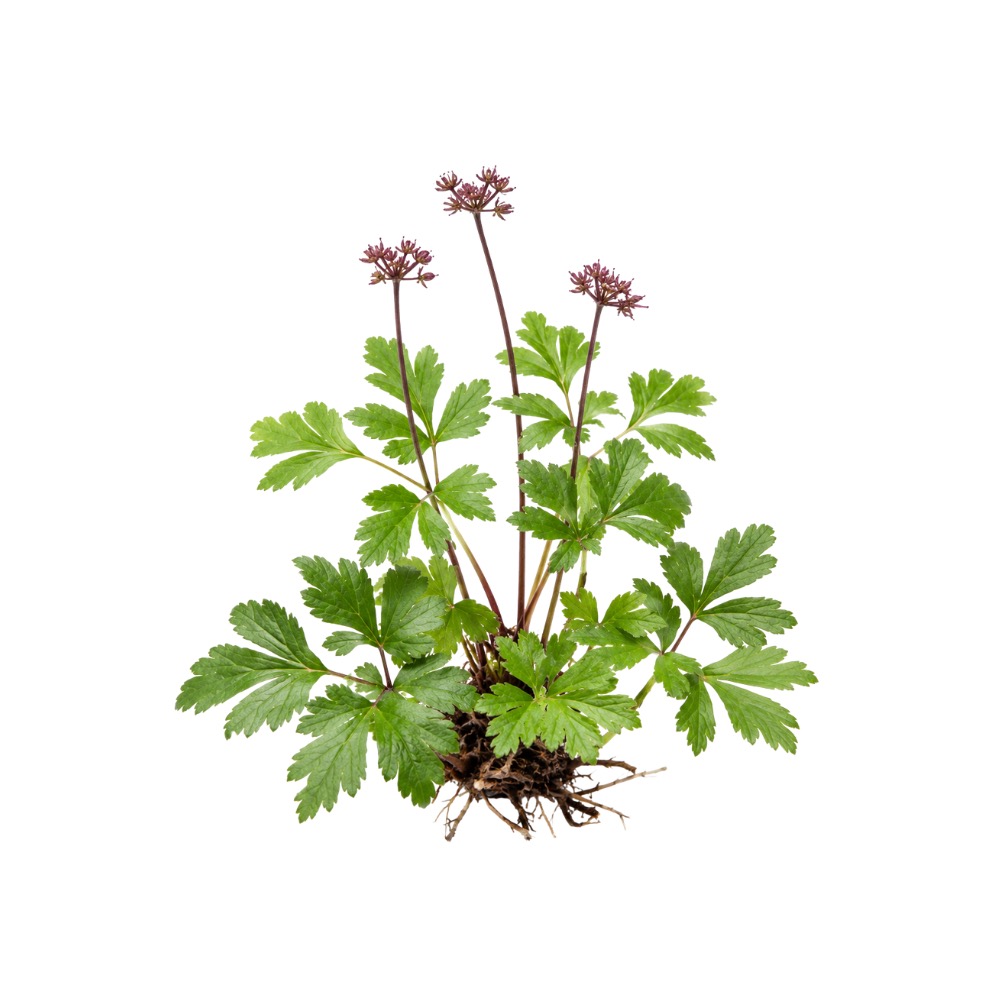 Principal source Coptis Coptis chinensis Herb monograph →
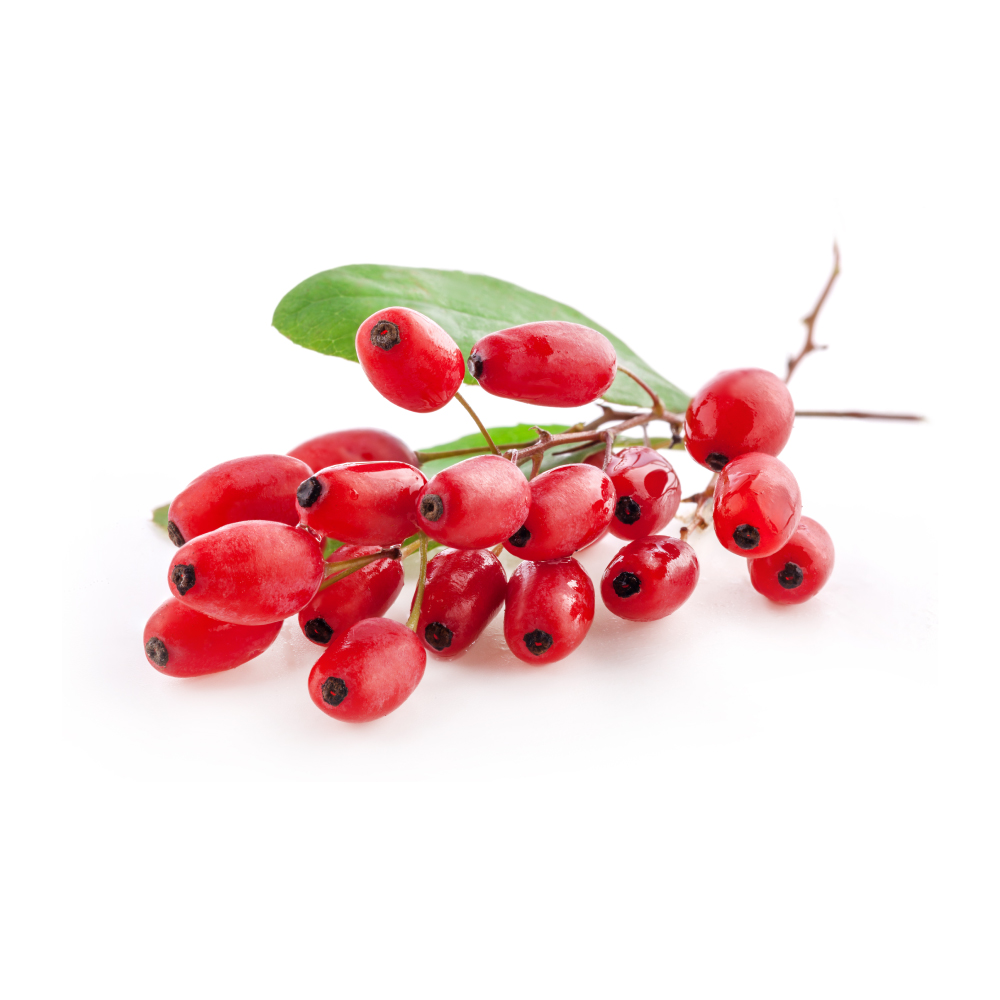 Source Barberry Berberis spp. Herb monograph →
Concentration
Content by Source
Concentrations not reported. No percent-dry-weight or mg/g figures have been published for this compound in its source plants.
Jatrorrhizine at a Glance
Jatrorrhizine is a protoberberine isoquinoline alkaloid — one of the yellow alkaloids that travels with berberine in the roots and bark of Chinese goldthread, barberry and the Amur cork tree. Structurally it is a partially-demethylated congener of berberine and palmatine, and it is also one of berberine’s own metabolites, so much of its interest is as “berberine’s quieter relative.”
Its research profile is entirely preclinical but has a few genuinely distinctive threads. The best-developed is a hypolipidemic / cholesterol-lowering signal in rodents, running through the same LDL-receptor and bile-acid machinery as berberine 1,
The honest headline is the one that frames the whole page: there are no clinical trials of isolated jatrorrhizine. Its human exposure is indirect — a minor constituent of goldthread/barberry preparations whose effects are usually attributed to berberine — and its own poor oral absorption tempers the in-vitro numbers 1,
Structure & Relationship to Berberine
Jatrorrhizine belongs to the protoberberine subclass of isoquinoline alkaloids, the same quaternary, planar, positively-charged scaffold as berberine, palmatine, columbamine and coptisine. The differences between these relatives are small substitutions on the aromatic rings: where berberine carries a methylenedioxy bridge and palmatine carries two methoxy groups on the A-ring, jatrorrhizine carries a free hydroxyl plus a methoxy — it is, in effect, a partially-demethylated protoberberine, the demethyl/hydroxy congener of palmatine and columbamine.
That free phenolic hydroxyl is not just bookkeeping. It changes the molecule’s polarity and metabolism, and it is the reason jatrorrhizine turns up as one of the metabolites of berberine in the body 1Reference 1ReviewJatrorrhizine: a review of sources, pharmacology, pharmacokinetics and toxicityView study →. Like all the quaternary protoberberines, its permanent positive charge makes it poorly absorbed orally — a caveat that recurs throughout its pharmacology 1,
Hypolipidemic & Cholesterol-Lowering Activity
The strongest and most reproduced part of jatrorrhizine’s literature is lipid- and cholesterol-lowering, studied distinctly from berberine and mostly in rodent models.
In a high-fat-diet obesity model, jatrorrhizine hydrochloride (20–100 mg/kg) lowered body weight, total cholesterol, triglycerides and LDL-cholesterol in mice, while raising HDL — an effect the authors traced to suppressed lipogenesis (SREBP-1c, FAS) and enhanced fatty-acid β-oxidation (PPAR-α, CPT1A) in the liver 6Reference 6AnimalJatrorrhizine hydrochloride attenuates hyperlipidemia in a high-fat diet-induced obesity mouse modelView study →. In Syrian hamsters, oral jatrorrhizine (~70 mg/kg) cut total cholesterol, triglycerides and LDL-C by roughly 20%, 43% and 19% respectively and raised faecal bile-acid excretion 5Reference 5The antihypercholesterolemic effect of jatrorrhizine isolated from Rhizoma CoptidisView study →. Mechanistic work in HepG2 liver cells shows the route: jatrorrhizine up-regulates the hepatic LDL receptor and CYP7A1 while down-regulating HMG-CoA reductase, i.e. it both slows cholesterol synthesis and speeds its clearance into bile — the same triad demonstrated for berberine and the other Coptis alkaloids 5,
This is mechanistically the most “berberine-like” of jatrorrhizine’s activities, which is telling: the two molecules likely contribute to the metabolic effects historically credited to whole goldthread. The unavoidable caveat is that all of it is rodent/cell work on the isolate, and jatrorrhizine’s oral absorption is poor — so how much of a whole-herb metabolic effect it accounts for in humans is unknown 1,
MAO Inhibition & Antidepressant-Like Activity
The single most distinctive fact about jatrorrhizine is a reversal of the usual berberine hierarchy. In the rhizome of Coptis chinensis, three protoberberines were tested as monoamine-oxidase inhibitors, and jatrorrhizine was by far the most potent: it inhibited MAO-A with an IC₅₀ of ~4 µM and MAO-B at ~62 µM (both non-competitive), whereas berberine was weak (MAO-A IC₅₀ ~126 µM) and palmatine was inactive up to 200 µM 3Reference 3Monoamine oxidase inhibitors from rhizoma of Coptis chinensisView study →. So on this axis the quiet relative outperforms berberine roughly thirty-fold.
That enzyme finding is backed by a behavioural study. In mice, jatrorrhizine (5–20 mg/kg i.p.) shortened immobility in the tail-suspension test — a classic antidepressant-like readout — and in transfected cells it inhibited the “uptake-2” monoamine transporters (OCT2, OCT3 and PMAT), reducing serotonin and noradrenaline uptake at low-micromolar potency 4Reference 4AnimalJatrorrhizine reduces 5-HT and NE uptake via inhibition of uptake-2 transporters and produces antidepressant-like action in miceView study →. In other words, jatrorrhizine has two complementary monoaminergic mechanisms — it slows the breakdown of monoamines (MAO-A) and slows a route of their re-uptake (uptake-2) — a combination not shared by berberine.
Gap: this is genuinely interesting but entirely preclinical, and it comes with a real safety flag rather than a therapeutic promise — a meaningful MAO-A inhibitor raises the theoretical concern about tyramine and serotonergic drug interactions (see Toxicity). No human antidepressant data exist 3,
Antimicrobial & Antifungal Activity
Jatrorrhizine carries the protoberberine family’s broad, in-vitro antimicrobial activity. In the classic bioassay-guided study of the West African tree Enantia chlorantha, jatrorrhizine chloride and palmatine chloride were isolated as the major antimicrobial constituents, and their minimum inhibitory concentrations were reported as superior to several established broad-spectrum antibiotics against some test organisms 8Reference 8In-vitro evaluation of the antimicrobial activities of Enantia chlorantha Oliv. extractivesView study →. Reviews add activity against Staphylococcus aureus (including MRSA), Propionibacterium acnes, and — the antifungal thread — Candida albicans, C. tropicalis and the emerging pathogen C. auris, where jatrorrhizine drives cell-wall remodelling at low microgram levels though its outright MIC is high (~256 µg/mL) 1Reference 1ReviewJatrorrhizine: a review of sources, pharmacology, pharmacokinetics and toxicityView study →.
Gap: these are in-vitro MICs, often at concentrations far above anything jatrorrhizine’s poor absorption could achieve systemically — so the plausible relevance is topical/enteric or as a chemical lead, not a systemic antibiotic or antifungal 1,
What It's Used For
Beyond the three signals above, jatrorrhizine has a scattering of antidiabetic, vascular and antimalarial preclinical data. The whole evidence base is rodent or in-vitro, on the isolated molecule, with no human trials — so the ranking below is deliberately modest.
Support is an experimental score — weighted by study type (human > animal > in vitro) and volume, tempered for isolate-vs-plant match and bioavailability. A beta, not a validated metric. There is no human data for jatrorrhizine, so every score stays modest by design.
Jatrorrhizine’s most-reproduced application, all in rodents on the isolate. Jatrorrhizine hydrochloride (20–100 mg/kg) reduced weight, total cholesterol, triglycerides and LDL-C and raised HDL in high-fat-diet mice, suppressing hepatic lipogenesis (SREBP-1c, FAS) and boosting β-oxidation (PPAR-α, CPT1A) 6Reference 6AnimalJatrorrhizine hydrochloride attenuates hyperlipidemia in a high-fat diet-induced obesity mouse modelView study →; in hamsters (~70 mg/kg) it lowered TC/TG/LDL-C and increased faecal bile acids 5Reference 5The antihypercholesterolemic effect of jatrorrhizine isolated from Rhizoma CoptidisView study →; and in HepG2 cells it up-regulated the LDL receptor and CYP7A1 while down-regulating HMG-CoA reductase, alongside the other Coptis alkaloids 5,
Isolate throughout.
Gap: rodent and cell models only, and jatrorrhizine’s poor oral absorption leaves its real human contribution — versus co-occurring berberine — unquantified 1,
The molecule’s signature. Among Coptis protoberberines, jatrorrhizine was the strongest MAO inhibitor (MAO-A IC₅₀ ~4 µM; MAO-B ~62 µM), ~30× more potent on MAO-A than berberine (~126 µM), while palmatine was inactive 3Reference 3Monoamine oxidase inhibitors from rhizoma of Coptis chinensisView study →. In mice, jatrorrhizine (5–20 mg/kg) shortened tail-suspension immobility and inhibited the uptake-2 transporters OCT2/OCT3/PMAT, cutting 5-HT and NE uptake 4Reference 4AnimalJatrorrhizine reduces 5-HT and NE uptake via inhibition of uptake-2 transporters and produces antidepressant-like action in miceView study →. Isolate; two convergent monoaminergic mechanisms.
Gap: entirely preclinical; the MAO-A potency is also a caution flag (tyramine / serotonergic interactions), not a green light, and no human mood data exist 3,
A coherent metabolic-vascular thread. In diabetic/obese rodents jatrorrhizine improved glucose tolerance and insulin signalling (IRS2, p-AKT, p-AMPK, GLUT4) and modulated the gut microbiota 1,
Gap: rodent isolate models; overlaps the hypolipidemic story and, like it, is untested in humans and constrained by bioavailability 1,
A protoberberine class activity. Jatrorrhizine chloride was isolated as one of the two major antimicrobial constituents of Enantia chlorantha, with MICs reported as better than several standard antibiotics against some organisms 8Reference 8In-vitro evaluation of the antimicrobial activities of Enantia chlorantha Oliv. extractivesView study →.
Broader reviews record activity against S. aureus/MRSA and P. acnes, and antifungal effects on Candida albicans, C. tropicalis and C. auris (cell-wall remodelling at low doses, high absolute MIC) 1Reference 1ReviewJatrorrhizine: a review of sources, pharmacology, pharmacokinetics and toxicityView study →.
Gap: in-vitro MICs that exceed achievable systemic levels — relevant to topical/enteric use or as a lead, not a systemic anti-infective 1,
A cautionary in-vitro-vs-in-vivo case. Isolated from Enantia chlorantha alongside palmatine, jatrorrhizine showed in-vitro antiplasmodial potency comparable to quinine — but, like the other protoberberines tested, was inactive in vivo in the malaria model 9Reference 9Protoberberine alkaloids as antimalarialsView study →.
Gap: the in-vivo failure is the point — in-vitro potency did not translate, a caution that applies to several of jatrorrhizine’s cell-based claims 9Reference 9Protoberberine alkaloids as antimalarialsView study →.
Mechanisms
| Target / pathway | Effect | Relevant to |
|---|---|---|
| Hepatic LDL receptor & CYP7A1 | up-regulated → ↑ LDL clearance & bile-acid synthesis | hypolipidemic / cholesterol |
| HMG-CoA reductase | down-regulated → ↓ cholesterol synthesis | hypolipidemic / cholesterol |
| SREBP-1c / FAS; PPAR-α / CPT1A | ↓ lipogenesis, ↑ fatty-acid β-oxidation | hypolipidemic |
| Monoamine oxidase A | potent non-competitive inhibition (IC₅₀ ~4 µM) | antidepressant-like; interaction caution |
| Uptake-2 transporters (OCT2, OCT3, PMAT) | inhibition → ↓ 5-HT / NE re-uptake | antidepressant-like |
| Insulin signalling (IRS2, p-AKT, p-AMPK, GLUT4) | enhanced glucose uptake | antidiabetic |
| Akt/eNOS + ER-stress markers | ↑ NO bioavailability, ↓ ER stress | endothelial / vascular |
| Microbial membranes / cell wall; NorA efflux | growth inhibition, cell-wall remodelling | antimicrobial / antifungal |
Pharmacokinetics
Jatrorrhizine is a quaternary, permanently-charged protoberberine, and its defining pharmacokinetic fact is poor oral absorption — a low apparent membrane-permeability coefficient and P-glycoprotein efflux keep systemic exposure low 1Reference 1ReviewJatrorrhizine: a review of sources, pharmacology, pharmacokinetics and toxicityView study →. After intravenous dosing in rats it shows a biphasic decline with a large volume of distribution; elimination is by demethylation (via CYP3A1/2 and CYP2D2) and glucuronidation (UGT1A1, UGT1A3) 10Reference 10Pharmacokinetics and metabolism of jatrorrhizine, a gastric prokinetic drug candidateView study →. Reported terminal half-lives span a wide ~3.9–18 h depending on route and formulation, and brain penetration is limited but measurable 1,
Clinical Trials
There are no clinical trials of isolated jatrorrhizine for any indication. The entire evidence base is preclinical; the closest development activity is its exploration as a gastric-prokinetic drug candidate, still at the pharmacokinetic/animal stage 10Reference 10Pharmacokinetics and metabolism of jatrorrhizine, a gastric prokinetic drug candidateView study →. Human exposure to jatrorrhizine occurs only as a minor alkaloid within whole goldthread/barberry/Phellodendron preparations, where berberine dominates.
| Completed | Planned | Terminated | Preclinical |
|---|---|---|---|
| — | — | — | Extensive(metabolic, monoaminergic, anti-infective) |
Last checked: July 2026.
Isolate vs. Plant Studies
Jatrorrhizine sits firmly on the isolate side — but with an important twist. Almost all of its data (hypolipidemic, MAO/antidepressant, antimicrobial, antimalarial) come from the purified molecule in rodents or cells 4,
Prevalence in Nature
Jatrorrhizine occurs across the same alkaloid-rich families as berberine — Ranunculaceae (Coptis chinensis, C. deltoidea, C. teeta), Berberidaceae (Berberis and Mahonia species), Rutaceae (Phellodendron amurense, P. chinense), Menispermaceae (Tinospora sagittata, and Jateorhiza palmata, from which it is named) and Papaveraceae (Corydalis yanhusuo) 1Reference 1ReviewJatrorrhizine: a review of sources, pharmacology, pharmacokinetics and toxicityView study →. It concentrates in roots, rhizomes and bark rather than leaves.
In practice it is a minor co-alkaloid: in the goldthread and cork-tree sources it accompanies far larger amounts of berberine, and its content as a percentage of dry weight is not well quantified in the literature 1Reference 1ReviewJatrorrhizine: a review of sources, pharmacology, pharmacokinetics and toxicityView study →. It is also notable as a principal alkaloid — with palmatine — of the West African tree African yellowwood (Enantia chlorantha), where it was studied as an antimicrobial and antimalarial constituent 8,
Discovery & Synthesis
Jatrorrhizine takes its name from the genus Jateorhiza (calumba, Jateorhiza palmata), an East-African climbing plant whose root — a long-used bitter and digestive remedy — carries jatrorrhizine alongside palmatine and columbamine; the older spelling jateorhizine and the synonym neprotin both survive 1Reference 1ReviewJatrorrhizine: a review of sources, pharmacology, pharmacokinetics and toxicityView study →. As with the wider protoberberine family, it was characterised in the era of nineteenth-/twentieth-century alkaloid chemistry as one of the yellow bases of these bitter roots.
Commercially, jatrorrhizine is not manufactured in any meaningful quantity: like berberine it is far cheaper to obtain by extraction from alkaloid-rich plants (Coptis, Phellodendron, Berberis) than to synthesise, and demand is limited to research quantities. It is most often encountered as a reference standard and as a natural constituent of goldthread-based products rather than as a stand-alone ingredient.
Patents: not yet researched (future patent-loop pass).
Toxicity & Safety
Jatrorrhizine carries a low toxicity flag on the available data — but that “low” rests on a thin, mostly-preclinical base, and one pharmacological property (potent MAO-A inhibition) makes drug interactions the more important consideration than direct toxicity.
- Low acute toxicity in animals. Reported acute oral LD₅₀ around ~5,500 mg/kg in mice — several-fold higher (less toxic) than berberine — and a 90-day rodent study at ~70 mg/kg/day found no organ, haematology or histology abnormalities 1Reference 1ReviewJatrorrhizine: a review of sources, pharmacology, pharmacokinetics and toxicityView study →.
- Potent MAO-A inhibition is a real interaction flag. As a low-micromolar MAO-A inhibitor with additional uptake-2 blockade, jatrorrhizine could in principle interact with tyramine-rich foods and with serotonergic/monoaminergic drugs — a theoretical but mechanistically grounded concern, not established in humans 3,
4Reference 3Monoamine oxidase inhibitors from rhizoma of Coptis chinensisView study →Reference 4AnimalJatrorrhizine reduces 5-HT and NE uptake via inhibition of uptake-2 transporters and produces antidepressant-like action in miceView study → . - Protoberberine-class cautions carry over. As a berberine relative it shares the family’s context — poor oral absorption, potential drug-metabolism interactions, and the class’s general caution around pregnancy and the newborn (adjudicated on the herb/product page, not here).
- No human safety data for the isolate. Silence is not safety: interactions, chronic use and reproductive effects of isolated jatrorrhizine are uncharacterised in people 1Reference 1ReviewJatrorrhizine: a review of sources, pharmacology, pharmacokinetics and toxicityView study →.
Direct adverse-effect data for jatrorrhizine are limited to animal toxicology, where it reads as well tolerated at the doses studied 1Reference 1ReviewJatrorrhizine: a review of sources, pharmacology, pharmacokinetics and toxicityView study →. The most defensible caution is pharmacological rather than toxicological: its MAO-A inhibition is potent enough (IC₅₀ ~4 µM) that a monoamine-oxidase-inhibitor interaction profile is plausible in principle, even though it has never been tested clinically 3Reference 3Monoamine oxidase inhibitors from rhizoma of Coptis chinensisView study →. Reproductive and developmental effects of the isolated molecule are not characterised; as a plant constituent, any pregnancy/lactation decision belongs to the herb or product page where intake is actually decided, and the protoberberine class as a whole is treated cautiously there.
Dosage
There is no established or recommended human dose for isolated jatrorrhizine — it has never been through a clinical trial. The figures in the literature are preclinical research doses and do not convert to human self-dosing:
| Context (all preclinical) | Model | Dose studied |
|---|---|---|
| Hyperlipidemia / obesity | Mouse (oral) | ~20–100 mg/kg 6Reference 6AnimalJatrorrhizine hydrochloride attenuates hyperlipidemia in a high-fat diet-induced obesity mouse modelView study → |
| Cholesterol-lowering | Hamster (oral) | ~70 mg/kg 5Reference 5The antihypercholesterolemic effect of jatrorrhizine isolated from Rhizoma CoptidisView study → |
| Antidepressant-like behaviour | Mouse (i.p.) | ~5–20 mg/kg 4Reference 4AnimalJatrorrhizine reduces 5-HT and NE uptake via inhibition of uptake-2 transporters and produces antidepressant-like action in miceView study → |
| Endothelial / antidiabetic | Diabetic-obese mouse | rodent mg/kg 7Reference 7Jatrorrhizine improves endothelial function in diabetes and obesity through suppression of endoplasmic reticulum stressView study → |
In real-world terms, human exposure to jatrorrhizine is indirect — as a minor alkaloid inside standardised goldthread, barberry or Phellodendron products that are dosed and studied for their berberine content, not for jatrorrhizine 1Reference 1ReviewJatrorrhizine: a review of sources, pharmacology, pharmacokinetics and toxicityView study →. These are doses studied in research and are not a personal recommendation.
References
- Zhong F, Chen Y, Chen J, Liao H, Li Y, Ma Y. (2021). Jatrorrhizine: a review of sources, pharmacology, pharmacokinetics and toxicity. Frontiers in Pharmacology, 12, 783127. https://pubmed.ncbi.nlm.nih.gov/35095493/
- Rolle J, Asante DO, Kok-Fong LL, Boucetta H, Seidu TA, Tai LLK, Alolga RN. (2021). Jatrorrhizine: a review of its pharmacological effects. Journal of Pharmacy and Pharmacology, 73(6), 709–719. https://pubmed.ncbi.nlm.nih.gov/33822109/
- Kong LD, Cheng CHK, Tan RX. (2001). Monoamine oxidase inhibitors from rhizoma of Coptis chinensis. Planta Medica, 67(1), 74–76. https://pubmed.ncbi.nlm.nih.gov/11270727/
- Sun S, Zhou S, Lei S, Zhu S, Wang K, Jiang H, Zhou H. (2019). Jatrorrhizine reduces 5-HT and NE uptake via inhibition of uptake-2 transporters and produces antidepressant-like action in mice. Xenobiotica, 49(10), 1237–1243. https://pubmed.ncbi.nlm.nih.gov/30472912/
- Wu H, He K, Wang Y, Xue D, Ning N, Zou Z, Ye X, Li X, Wang D, Pang J. (2014). The antihypercholesterolemic effect of jatrorrhizine isolated from Rhizoma Coptidis. Phytomedicine, 21(11), 1373–1381. https://pubmed.ncbi.nlm.nih.gov/24894270/
- Yang W, She L, Yu K, Yan S, Zhang X, Tian X, Ma S, Zhang X. (2016). Jatrorrhizine hydrochloride attenuates hyperlipidemia in a high-fat diet-induced obesity mouse model. Molecular Medicine Reports, 14(4), 3277–3284. https://pubmed.ncbi.nlm.nih.gov/27573054/
- Zhou Y, Wang Y, Vong CT, et al. (2022). Jatrorrhizine improves endothelial function in diabetes and obesity through suppression of endoplasmic reticulum stress. International Journal of Molecular Sciences, 23(20), 12064. https://pubmed.ncbi.nlm.nih.gov/36292919/
- Moody JO, Bloomfield SF, Hylands PJ. (1995). In-vitro evaluation of the antimicrobial activities of Enantia chlorantha Oliv. extractives. African Journal of Medicine and Medical Sciences, 24(3), 269–273. https://pubmed.ncbi.nlm.nih.gov/8798963/
- Vennerstrom JL, Klayman DL. (1988). Protoberberine alkaloids as antimalarials. Journal of Medicinal Chemistry, 31(6), 1084–1087. https://pubmed.ncbi.nlm.nih.gov/3286870/
- Shi R, Zhou H, Ma B, Ma Y, Wu D, Wang X, Luo H, Cheng N. (2012). Pharmacokinetics and metabolism of jatrorrhizine, a gastric prokinetic drug candidate. Biopharmaceutics & Drug Disposition, 33(3), 135–145. https://pubmed.ncbi.nlm.nih.gov/22344858/
- Kou S, Han B, Wang Y, Huang T, He K, Han Y, Zhou X, Ye X, Li X. (2016). Synergetic cholesterol-lowering effects of main alkaloids from Rhizoma Coptidis in HepG2 cells and hypercholesterolemia hamsters. Life Sciences, 151, 50–60. https://pubmed.ncbi.nlm.nih.gov/26876917/



