Materia Medica
Coptis
Coptis chinensis
Coptis is a small Chinese woodland plant whose intensely bitter yellow rhizome, huang lian, is a classical remedy for dysentery and inflammatory 'heat'. It is a major plant source of berberine, an alkaloid studied for blood sugar, blood lipids and gut infections.
What Is Coptis?
Coptis is a small perennial herb whose yellow rhizome, huang lian, is one of the most bitter herbs in Chinese medicine. It belongs to the “clear heat, dry dampness” group of cold, bitter herbs, and its classical use is for dysentery and other acute gut infections.
Coptis chinensis grows in shaded mountain forests and valleys of central and southern China, between about 500 and 2,000 m 30Reference 30Fu, D., & Robinson, O. R. (n.d.). Coptis chinensis Franchet — species description, habitat and distribution — flora. In Flora of China, Vol. 6 (Ranunculaceae). http://www.efloras.org/florataxon.aspx?flora_id=2&taxon_id=200007765View study →. It is widely grown as a crop 32Reference 32Altitudinal changes induce responses in Coptis chinensis Franch. rhizomes: endophytic communities, metabolite types, and alkaloid contents — cultivation and analytical studyView study →.
The rhizome’s colour and bitterness come from isoquinoline alkaloids, chiefly berberine, which it shares with barberry and goldenseal. Research has looked most at blood sugar, blood lipids, fatty liver and gut infections, mostly using isolated berberine rather than the whole rhizome 2,
Several Coptis species are sold under the same names, “huang lian” and “Coptidis Rhizoma”. C. chinensis is the species described here.
How Is Coptis Used?
Coptis is used as the dried rhizome, usually decocted as part of a formula rather than on its own. It is given in small amounts and short courses, and in Chinese practice it is almost always balanced with warming or moistening herbs.
- Decoction — dried rhizome simmered in water, usually within a multi-herb formula.
- Tincture or fluid extract — used in Western herbal practice.
- Berberine supplements — a purified alkaloid made from coptis and other berberine plants. They are a separate product from the herb.
Traditional Uses
Traditional Chinese Medicine
Huang lian belongs to the qing re zao shi (“clear heat, dry dampness”) category, the cold, bitter herbs used for damp-heat patterns in the gut. Its classical indication is xia li, dysentery-type diarrhoea with urgency and with blood or mucus in the stool 12Reference 12AnimalCoptis chinensis and berberine ameliorate chronic ulcerative colitis — microbiome-metabolomics mouse studyView study →.
It is also used for damp-heat jaundice, mouth ulcers, burning in the stomach and irritability with insomnia, and for red eyes, toothache, boils and skin complaints 20Reference 20ReviewCoptisine, the characteristic constituent from Coptis chinensis, exhibits therapeutic potential in cancers, metabolic and inflammatory diseases — reviewView study →. It was a traditional remedy for xiao ke, the “wasting-thirst” pattern associated with diabetes 12Reference 12AnimalCoptis chinensis and berberine ameliorate chronic ulcerative colitis — microbiome-metabolomics mouse studyView study →.
It appears in many classical formulas, usually in small amounts and balanced by warming or moistening herbs to offset its cold, drying character.
Indications
- Dysentery and acute diarrhoea [rhizome; TCM]
- Damp-heat jaundice [rhizome; TCM]
- Mouth ulcers and burning in the stomach [rhizome; TCM]
- Irritability with insomnia [rhizome; TCM]
- Type 2 diabetes [rhizome; TCM; isolated berberine] Caution: The human trials tested isolated berberine, or coptis-containing formulas added to metformin. No trial has tested the rhizome on its own 1,
2, .3 - High cholesterol and triglycerides [isolated berberine; rhizome alkaloids]
- Fatty liver disease [isolated berberine; rhizome extract]
- Helicobacter pylori infection [rhizome extract]
- Irritable bowel syndrome with diarrhoea [isolated berberine]
Botany
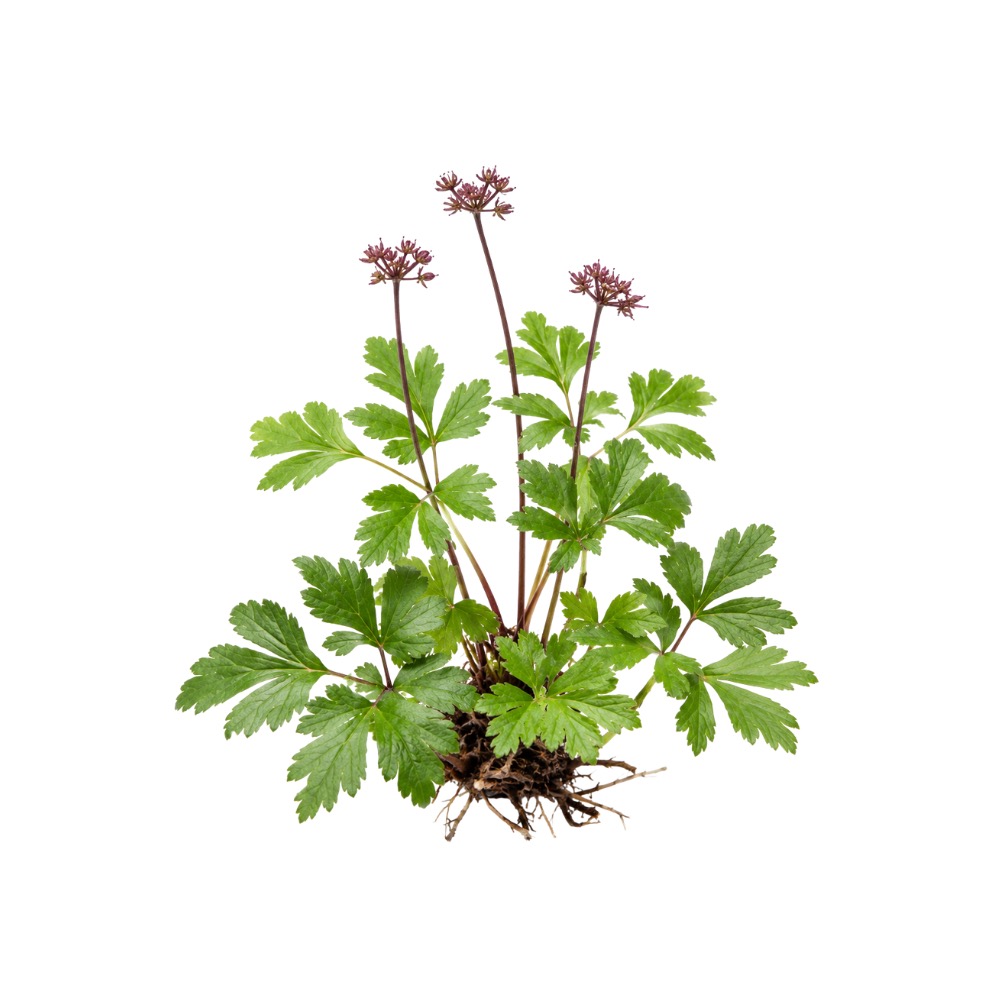
Coptis is a low perennial herb in the buttercup family (Ranunculaceae) 30Reference 30Fu, D., & Robinson, O. R. (n.d.). Coptis chinensis Franchet — species description, habitat and distribution — flora. In Flora of China, Vol. 6 (Ranunculaceae). http://www.efloras.org/florataxon.aspx?flora_id=2&taxon_id=200007765View study →. Its yellow rhizome is branched, and all its leaves grow from the base 30Reference 30Fu, D., & Robinson, O. R. (n.d.). Coptis chinensis Franchet — species description, habitat and distribution — flora. In Flora of China, Vol. 6 (Ranunculaceae). http://www.efloras.org/florataxon.aspx?flora_id=2&taxon_id=200007765View study →.
The leaves are long-stalked, papery to slightly leathery, and ovate-triangular in outline, 4–10 cm long. Each is cut into three segments, and the central segment is deeply lobed with sharply toothed margins 30Reference 30Fu, D., & Robinson, O. R. (n.d.). Coptis chinensis Franchet — species description, habitat and distribution — flora. In Flora of China, Vol. 6 (Ranunculaceae). http://www.efloras.org/florataxon.aspx?flora_id=2&taxon_id=200007765View study →.
One or two leafless flowering stems, 12–25 cm tall, each carry three to eight small flowers 30Reference 30Fu, D., & Robinson, O. R. (n.d.). Coptis chinensis Franchet — species description, habitat and distribution — flora. In Flora of China, Vol. 6 (Ranunculaceae). http://www.efloras.org/florataxon.aspx?flora_id=2&taxon_id=200007765View study →. The flowers have five narrow, greenish-yellow sepals and shorter, linear petals 30Reference 30Fu, D., & Robinson, O. R. (n.d.). Coptis chinensis Franchet — species description, habitat and distribution — flora. In Flora of China, Vol. 6 (Ranunculaceae). http://www.efloras.org/florataxon.aspx?flora_id=2&taxon_id=200007765View study →. Flowering is in February and March, and the fruits are small stalked pods 6–8 mm long, ripening from April to June 30Reference 30Fu, D., & Robinson, O. R. (n.d.). Coptis chinensis Franchet — species description, habitat and distribution — flora. In Flora of China, Vol. 6 (Ranunculaceae). http://www.efloras.org/florataxon.aspx?flora_id=2&taxon_id=200007765View study →.
Coptis is related to goldenseal, black cohosh and nigella, which belong to the same family.
Several Coptis species are traded as huang lian. In China the drug comes from C. chinensis, C. deltoidea and C. teeta, and their alkaloid make-up differs 28Reference 28AnimalSimultaneous Determination of Eight Alkaloids in Rat Plasma by UHPLC-MS/MS after Oral Administration of Coptis deltoidea CView study →. Palmatine was found in C. chinensis but not in goldenseal or the American goldthread C. trifolia 27Reference 27Significant differences in alkaloid content of Coptis chinensis (Huanglian), from its related American species — comparative analytical study. https://pubmed.ncbi.nlm.nih.gov/19703289/View study →. C. teeta is an endangered species whose wild populations have declined through collection for medicine 29Reference 29A haplotype-resolved genome assembly of Coptis teeta, an endangered plant of significant medicinal value — genome resourceView study →.
Distribution
Coptis chinensis grows in forests and shaded valleys at 500–2,000 m in central and southern China. It is recorded from Sichuan, Hubei, Hunan, Guizhou, southern Shaanxi, southern Anhui, Zhejiang, Fujian and the north of Guangdong and Guangxi 30Reference 30Fu, D., & Robinson, O. R. (n.d.). Coptis chinensis Franchet — species description, habitat and distribution — flora. In Flora of China, Vol. 6 (Ranunculaceae). http://www.efloras.org/florataxon.aspx?flora_id=2&taxon_id=200007765View study →.
The rhizome is grown as a crop, for example at Shizhu in Chongqing 32Reference 32Altitudinal changes induce responses in Coptis chinensis Franch. rhizomes: endophytic communities, metabolite types, and alkaloid contents — cultivation and analytical studyView study →. The related C. teeta, also sold as huang lian, is endangered, and its wild populations have declined through collection 29Reference 29A haplotype-resolved genome assembly of Coptis teeta, an endangered plant of significant medicinal value — genome resourceView study →. It is worth asking which species a product contains and whether it was cultivated.
Growing Conditions
Cultivation snapshot for Coptis
Grow it yourself
Farm Wiki is our cultivation-focused sister site, also run by Justin Cooke.
Pharmacology & Research
Most human research on coptis concerns berberine, its main alkaloid. Dozens of randomised trials and several meta-analyses have tested isolated berberine hydrochloride for blood sugar, blood lipids and fatty liver 2,
Human data on the rhizome itself come from coptis-containing traditional formulas given alongside metformin 1Reference 1Meta-analysisSystematic review and meta-analysis of Coptis chinensis Franch.-containing traditional Chinese medicine as an adjunct therapy to metformin in type 2 diabetes — systematic review and meta-analysisView study →. Other work on the whole rhizome is in animals and cell cultures 6,
The rhizome contains berberine together with coptisine, palmatine, epiberberine and jatrorrhizine. In one comparison, whole coptis extract inhibited H. pylori urease more strongly than purified berberine 10Reference 10In vitroComparison of Helicobacter pylori urease inhibition by Rhizoma Coptidis, Cortex Phellodendri and berberine — in vitroView study →.
-
Best-supported: glucose-lowering and lipid-lowering effects, backed by human RCT meta-analyses of berberine and a meta-analysis of coptis formulas in type 2 diabetes 1,
2, ; improvement of liver enzymes and steatosis markers in NAFLD 5Reference 5Meta-analysisThe clinical efficacy and safety of berberine in the treatment of non-alcoholic fatty liver disease — meta-analysis and systematic reviewView study →.3, 4Reference 1Meta-analysisSystematic review and meta-analysis of Coptis chinensis Franch.-containing traditional Chinese medicine as an adjunct therapy to metformin in type 2 diabetes — systematic review and meta-analysisView study →Reference 2Meta-analysisGlucose-lowering effect of berberine on type 2 diabetes — systematic review and meta-analysis of randomised controlled trialsView study →Reference 3Meta-analysisMeta-analysis of the effect and safety of berberine in the treatment of type 2 diabetes mellitus, hyperlipaemia and hypertension — meta-analysisView study →Reference 4Meta-analysisEfficacy and safety of berberine for dyslipidaemias — systematic review and meta-analysis of randomised clinical trialsView study → -
Emerging, worth watching: direct anti-Helicobacter pylori and anti-colitis activity of whole-rhizome alkaloids (coptisine, epiberberine) in preclinical models 11,
13Reference 11In vitroEpiberberine inhibits Helicobacter pylori and reduces host apoptosis and inflammatory damage by down-regulating urease expression — in vitro and mouse modelView study →Reference 13AnimalCoptisine alleviates colitis through modulating gut microbiota and inhibiting the TXNIP/NLRP3 inflammasome — mouse modelView study → ; a berberine RCT in diarrhoea-predominant IBS 9Reference 9RCTA randomised clinical trial of berberine hydrochloride in patients with diarrhoea-predominant irritable bowel syndrome — randomised, double-blind, placebo-controlled trialView study →. -
Mechanistically thin: neuroprotective and anticancer claims rest on cell-line and animal work only 17,
18, ; antioxidant activity is largely in vitro and at the constituent level 26Reference 26ReviewProgress in study of antioxidant effects of Coptis chinensis and its contributions to diabetes treatment — reviewView study →.19, 20Reference 17In vitroCoptis chinensis Franch. exhibits neuroprotective properties against oxidative stress in human neuroblastoma cells — in vitroView study →Reference 18AnimalNeuroprotective effects of Coptis chinensis Franch polysaccharide on amyloid-β-induced toxicity in a transgenic Caenorhabditis elegans model of Alzheimer’s disease — in vivo invertebrate modelView study →Reference 19ReviewCoptidis rhizoma and berberine as anti-cancer drugs — a 10-year update reviewView study →Reference 20ReviewCoptisine, the characteristic constituent from Coptis chinensis, exhibits therapeutic potential in cancers, metabolic and inflammatory diseases — reviewView study → - The caveat: the headline human evidence is for isolated berberine, not coptis rhizome.
The human trials tested isolated berberine, not the rhizome. They gave 0.5–1.5 g of purified berberine a day. Coptis rhizome is a mixture of several alkaloids, and its berberine content varies with species, growing site and method of analysis 27,
1. Glycemic Control
Meta-analyses of berberine, the main coptis alkaloid, in type 2 diabetes report reductions in fasting glucose, 2-hour post-meal glucose and HbA1c. One analysis of 37 RCTs (3,048 patients) found fasting glucose down about 0.82 mmol/L and HbA1c down about 0.63%. The effect was larger in people with higher baseline glucose, and berberine did not significantly raise the risk of hypoglycaemia 2,
At the whole-herb level, a meta-analysis of 33 RCTs (2,846 patients) of coptis-containing formulas added to metformin found further improvements in fasting glucose (MD −1.16), HbA1c (MD −0.78%) and HOMA-IR. The authors rated the evidence moderate for fasting glucose and low for the other outcomes 1Reference 1Meta-analysisSystematic review and meta-analysis of Coptis chinensis Franch.-containing traditional Chinese medicine as an adjunct therapy to metformin in type 2 diabetes — systematic review and meta-analysisView study →.
Coptis polysaccharides also inhibited the formation of advanced glycation end products, in vitro and in diabetic mice 21Reference 21In vitroCoptis chinensis polysaccharides inhibit advanced-glycation-end-product formation — in vitro and diabetic mouse modelView study →.
Gap: No RCT has tested coptis rhizome on its own in humans. The glucose data come from isolated berberine or from multi-herb formulas.
2. Lipid-Lowering
Berberine improves the lipid panel in dyslipidaemia. A meta-analysis of 16 RCTs (2,147 patients) reported total cholesterol down about 0.47 mmol/L, LDL-C down about 0.38 mmol/L and triglycerides down about 0.28 mmol/L, with a small rise in HDL-C when berberine was used alone and no serious adverse effects 4Reference 4Meta-analysisEfficacy and safety of berberine for dyslipidaemias — systematic review and meta-analysis of randomised clinical trialsView study →.
Combined diabetes-and-lipid analyses agree 3Reference 3Meta-analysisMeta-analysis of the effect and safety of berberine in the treatment of type 2 diabetes mellitus, hyperlipaemia and hypertension — meta-analysisView study →.
At the herb level, total alkaloids from coptis reduced body weight, blood glucose and liver fat in a dose-dependent way in high-fat-diet mice, through AMPK/SREBP-1c and PPARα/LXRα 6Reference 6AnimalTotal alkaloids from Coptis chinensis Franch ameliorate hyperlipidaemia and hepatic steatosis via AMPK/SREBP-1c and PPARα/LXRα in mice — animal modelView study →. A whole-rhizome water extract lowered serum and liver lipids in hyperlipidaemic mice, with changes in gut bacteria 22Reference 22AnimalCoptis chinensis shows distinct effects on hyperlipidaemia and gut microbiota in high-fat-diet mice with cold or hot syndrome — animal modelView study →.
The human lipid data are for isolated berberine only, and the coptis-extract evidence is preclinical.
3. Hepatoprotective (NAFLD)
Berberine shows a consistent signal in non-alcoholic fatty liver disease. A meta-analysis of 10 RCTs (811 patients) found reductions in ALT, AST and GGT, with improved triglycerides, LDL-C, insulin resistance and BMI and only mild digestive side effects 5Reference 5Meta-analysisThe clinical efficacy and safety of berberine in the treatment of non-alcoholic fatty liver disease — meta-analysis and systematic reviewView study →.
A coptis decoction reduced diabetes-related steatohepatitis in mice by downregulating IL-17RA/NF-κB signalling, and epiberberine was involved in the effect 7Reference 7AnimalCoptidis rhizoma ameliorates type 2 diabetes-related metabolic-dysfunction-associated steatohepatitis by downregulating IL-17RA/NF-κB — mouse modelView study →. Coptis total alkaloids reduced liver fat through AMPK/SREBP-1c and PPARα/LXRα 6Reference 6AnimalTotal alkaloids from Coptis chinensis Franch ameliorate hyperlipidaemia and hepatic steatosis via AMPK/SREBP-1c and PPARα/LXRα in mice — animal modelView study →.
No human trial of coptis extract in fatty liver disease exists. Efficacy is inferred from berberine RCTs and rodent whole-herb data.
4. Antimicrobial & Antidiarrheal
Against Helicobacter pylori, whole Rhizoma Coptidis extract was a stronger urease inhibitor than purified berberine. The authors linked the effect to the total alkaloid content rather than berberine alone 10Reference 10In vitroComparison of Helicobacter pylori urease inhibition by Rhizoma Coptidis, Cortex Phellodendri and berberine — in vitroView study →.
The minor alkaloids have their own activity. Epiberberine inhibited H. pylori and reduced gastric inflammation in vitro and in mice by suppressing urease 11Reference 11In vitroEpiberberine inhibits Helicobacter pylori and reduces host apoptosis and inflammatory damage by down-regulating urease expression — in vitro and mouse modelView study →, and palmatine and coptisine also show anti-urease action.
In acute diarrhoea, a controlled trial in 165 adults found a single 400 mg dose of berberine sulfate significantly reduced stool volume in enterotoxigenic E. coli diarrhoea, with only a slight effect in cholera 8Reference 8RCTRandomised controlled trial of berberine sulfate therapy for diarrhoea due to enterotoxigenic Escherichia coli and Vibrio cholerae — randomised controlled trialView study →. In a randomised, double-blind, placebo-controlled trial (n=132), 400 mg/day of berberine hydrochloride reduced diarrhoea, abdominal pain and urgency in diarrhoea-predominant IBS 9Reference 9RCTA randomised clinical trial of berberine hydrochloride in patients with diarrhoea-predominant irritable bowel syndrome — randomised, double-blind, placebo-controlled trialView study →.
Gap: The human diarrhoea and IBS trials used isolated berberine salts. The whole-herb antimicrobial data come from cell and animal studies.
5. Anti-Inflammatory & IBD
Coptis and its alkaloids are anti-inflammatory across gut models. In dextran-sulfate-sodium colitis, whole-rhizome total alkaloids and berberine both reversed colon shortening, restored the mucosal barrier (claudin-1, occludin) and reshaped the gut bacteria, and the total alkaloids worked better than berberine 12Reference 12AnimalCoptis chinensis and berberine ameliorate chronic ulcerative colitis — microbiome-metabolomics mouse studyView study →.
Coptisine relieved colitis by modulating gut bacteria and inhibiting the TXNIP/NLRP3 inflammasome 13Reference 13AnimalCoptisine alleviates colitis through modulating gut microbiota and inhibiting the TXNIP/NLRP3 inflammasome — mouse modelView study →.
Berberine reduced colonic inflammation via IRGM1 14Reference 14AnimalBerberine alleviates ulcerative colitis by inhibiting inflammation through targeting IRGM1 — mouse modelView study →.
The shared mechanism is suppression of NF-κB and inflammasome signalling 20Reference 20ReviewCoptisine, the characteristic constituent from Coptis chinensis, exhibits therapeutic potential in cancers, metabolic and inflammatory diseases — reviewView study →.
Every colitis result comes from mice or cell lines. No human trial of coptis or its alkaloids in inflammatory bowel disease exists.
6. PCOS & Metabolic-Reproductive
Berberine is an insulin sensitiser and has been trialled in polycystic ovary syndrome. A systematic review found it improved waist-to-hip ratio, insulin resistance (HOMA-IR) and androstenedione. It did not reduce body weight, results for waist and BMI conflicted, and it had no significant effect on FSH or LH 15Reference 15Systematic reviewThe effect and safety of berberine on polycystic ovary syndrome — systematic reviewView study →.
In a randomised trial of 150 women with PCOS before IVF, berberine and metformin both improved hormonal and metabolic markers and pregnancy rates compared with placebo 16Reference 16RCTThe use of berberine for women with polycystic ovary syndrome undergoing IVF treatment — randomised controlled trialView study →.
Gap: PCOS is not a traditional use of coptis. The trials tested isolated berberine, and the results are mixed.
7. Antioxidant
A water extract of coptis rhizome protected human neuroblastoma cells from oxidative damage, preserving viability and mitochondrial membrane potential, with downregulation of TXNIP. It did not lower the cells’ production of reactive oxygen species 17Reference 17In vitroCoptis chinensis Franch. exhibits neuroprotective properties against oxidative stress in human neuroblastoma cells — in vitroView study →. Review-level work lists antioxidant activity as a contributor to the herb’s antidiabetic effect 26Reference 26ReviewProgress in study of antioxidant effects of Coptis chinensis and its contributions to diabetes treatment — reviewView study →.
Antioxidant effects are shown only in cells and at the constituent level. No clinical oxidative-stress endpoint has been measured for coptis.
8. Neuroprotective
Coptis rhizome water extract protected human neuroblastoma cells against oxidative damage 17Reference 17In vitroCoptis chinensis Franch. exhibits neuroprotective properties against oxidative stress in human neuroblastoma cells — in vitroView study →. A coptis polysaccharide reduced amyloid-β toxicity and extended lifespan in a transgenic C. elegans Alzheimer’s model 18Reference 18AnimalNeuroprotective effects of Coptis chinensis Franch polysaccharide on amyloid-β-induced toxicity in a transgenic Caenorhabditis elegans model of Alzheimer’s disease — in vivo invertebrate modelView study →.
The evidence is from cell lines and a worm model, with no animal or clinical data on the whole herb.
9. Anticancer
Coptidis rhizoma, berberine and coptisine show anti-proliferative, pro-apoptotic and anti-metastatic activity against many cancer cell lines and xenografts, including ovarian, breast, lung, gastric, liver, colorectal, cervical and prostate cancers. The mechanisms include cell-cycle arrest, apoptosis and autophagy 19,
The evidence is entirely preclinical. No clinical oncology trial of coptis exists.
Mechanisms
Berberine and the other protoberberine alkaloids are poorly absorbed from the gut. In rats, the absolute oral bioavailability of berberine was 0.68% 33Reference 33AnimalBioavailability study of berberine and the enhancing effects of TPGS on intestinal absorption in rats — rat pharmacokineticsView study →. Much of their action on diarrhoea and gut infection takes place in the intestine, where berberine reduces fluid secretion and the alkaloids inhibit bacterial urease 8,
The metabolic findings, including AMPK activation and changes in lipid-regulating genes, come from berberine trials and from rodent studies of coptis total alkaloids 6Reference 6AnimalTotal alkaloids from Coptis chinensis Franch ameliorate hyperlipidaemia and hepatic steatosis via AMPK/SREBP-1c and PPARα/LXRα in mice — animal modelView study →. Coptisine, palmatine, epiberberine and jatrorrhizine also contribute, and their proportions differ between Coptis species 27,
| Mechanism | Drives | Key compounds |
|---|---|---|
| AMPK activation, SREBP-1c ↓, PPARα/LXRα modulation | glycemic controllipid-loweringhepatoprotective | berberine, coptisine |
| NF-κB ↓, NLRP3/TXNIP inflammasome ↓ | anti-inflammatoryIBDhepatoprotective | coptisine, berberine, epiberberine |
| Bacterial urease inhibition | antimicrobialanti-H. pylori | epiberberine, palmatine, berberine |
| Intestinal secretion ↓ (antisecretory) | antidiarrheal | berberine |
| Mitochondrial protection, TXNIP ↓ | antioxidantneuroprotective | berberine, jatrorrhizine |
| Cell-cycle arrest, apoptosis & autophagy induction | anticancer | berberine, coptisine |
Clinical Trials
Registered and published human trials exist in quantity, but almost all study isolated berberine (diabetes, dyslipidaemia, NAFLD, IBS, PCOS). Human trials of the herb itself are limited to coptis-containing traditional formulas used as add-on therapy.
| Completed | Planned | Terminated | Preclinical |
|---|---|---|---|
| ~40+(berberine + Coptis-formula RCTs) | several(berberine ongoing) | 0identified | ~hundreds |
Last checked: July 2026.
Phytochemistry
The rhizome is rich in protoberberine-type isoquinoline alkaloids, which give the cut rhizome its yellow colour and its bitterness. Berberine is the main one. In one analysis of commercial rhizome it measured 10.6 mg/g, with 2.9 mg/g of palmatine and 2.4 mg/g of coptisine 27Reference 27Significant differences in alkaloid content of Coptis chinensis (Huanglian), from its related American species — comparative analytical study. https://pubmed.ncbi.nlm.nih.gov/19703289/View study →.
Coptisine is the alkaloid most characteristic of the genus 20Reference 20ReviewCoptisine, the characteristic constituent from Coptis chinensis, exhibits therapeutic potential in cancers, metabolic and inflammatory diseases — reviewView study →. The rhizome also contains epiberberine, jatrorrhizine and columbamine, and the aporphine alkaloid magnoflorine 28Reference 28AnimalSimultaneous Determination of Eight Alkaloids in Rat Plasma by UHPLC-MS/MS after Oral Administration of Coptis deltoidea CView study →.
Alkaloid levels vary with growing conditions. In rhizomes cultivated at four altitudes in Chongqing, total alkaloids rose from 15.97% at 907 m to 17.82% at 1,698 m 32Reference 32Altitudinal changes induce responses in Coptis chinensis Franch. rhizomes: endophytic communities, metabolite types, and alkaloid contents — cultivation and analytical studyView study →.
Coptis polysaccharides are a separate fraction, studied for antiglycation and neuroprotective activity in models 18,
The alkaloid make-up differs between Coptis species, so results for C. deltoidea, C. teeta or American goldthread should be read separately from those for C. chinensis 27,
Constituent Summary
Amounts are per gram of dried rhizome, from one analysis of commercial material 27Reference 27Significant differences in alkaloid content of Coptis chinensis (Huanglian), from its related American species — comparative analytical study. https://pubmed.ncbi.nlm.nih.gov/19703289/View study →.
Isoquinoline Alkaloid7 compounds3 with data
Dosage
The human trials behind coptis’s metabolic reputation gave isolated berberine, not the rhizome. Traditional practice gives the whole rhizome in small doses for gut complaints.
Research doses
| Indication | Preparation | Dose | Est. dried-herb equivalent | Source |
|---|---|---|---|---|
| Type 2 diabetes | Berberine (isolated) | 0.5 g three times daily (1.5 g/day) | Not derivable — isolated alkaloid | 2, |
| Dyslipidemia | Berberine (isolated) | ~0.5–1.5 g/day | Not derivable — isolated alkaloid | 4Reference 4Meta-analysisEfficacy and safety of berberine for dyslipidaemias — systematic review and meta-analysis of randomised clinical trialsView study → |
| NAFLD | Berberine (isolated) | ~0.5–1.5 g/day | Not derivable — isolated alkaloid | 5Reference 5Meta-analysisThe clinical efficacy and safety of berberine in the treatment of non-alcoholic fatty liver disease — meta-analysis and systematic reviewView study → |
| Acute ETEC diarrhea | Berberine sulfate | 400 mg single oral dose | Not derivable — isolated alkaloid | 8Reference 8RCTRandomised controlled trial of berberine sulfate therapy for diarrhoea due to enterotoxigenic Escherichia coli and Vibrio cholerae — randomised controlled trialView study → |
| Diarrhea-predominant IBS | Berberine hydrochloride | 400 mg/day (200 mg twice daily), 8 weeks | Not derivable — isolated alkaloid | 9Reference 9RCTA randomised clinical trial of berberine hydrochloride in patients with diarrhoea-predominant irritable bowel syndrome — randomised, double-blind, placebo-controlled trialView study → |
| Type 2 diabetes (as formula) | Coptis-containing TCM + metformin | herb dose not standardized across 33 RCTs | — | 1Reference 1Meta-analysisSystematic review and meta-analysis of Coptis chinensis Franch.-containing traditional Chinese medicine as an adjunct therapy to metformin in type 2 diabetes — systematic review and meta-analysisView study → |
Traditional Dosage
| System | Preparation | Dose |
|---|---|---|
| TCM (Chinese Pharmacopoeia) | Dried rhizome, decoction | 2–5 g/day |
| Western herbal medicine | Tincture 1:5 (45% ethanol) | 1–3 mL, three times daily |
| Western herbal medicine | Fluid extract 1:1 | 0.5–1 mL, three times daily |
Coptis is a small-dose herb used in short courses. In traditional practice it is nearly always combined with warming or moistening herbs, because its cold, drying character is poorly tolerated over long periods.
Safety & Pregnancy
Coptis is generally well tolerated by adults at customary doses. Its two main cautions both come from berberine: it must not be given to newborns, and it can interact with medicines.
- Never give to newborns. Berberine displaces bilirubin from albumin and can worsen newborn jaundice, with a risk of kernicterus 31Reference 31In vitroDisplacement of bilirubin from albumin by berberine — in vitro and rat in vivoView study →.
- Avoid in pregnancy and breastfeeding. Berberine-rich herbs are best avoided in pregnancy, and newborns should not be exposed through breast milk 31,
34Reference 31In vitroDisplacement of bilirubin from albumin by berberine — in vitro and rat in vivoView study →Reference 34Goldenseal — Drugs and Lactation Database (LactMed). https://pubmed.ncbi.nlm.nih.gov/30000926/View study → . - Drug interactions. Isolated berberine slowed CYP3A4, CYP2D6 and CYP2C9 in healthy volunteers and can raise levels of other drugs; adverse events are recorded with antidepressants 25,
35Reference 25ObservationalRetrospective chart review of adverse events of interactions between adaptogens and antidepressant drugs — observational chart reviewView study →Reference 35Repeated administration of berberine inhibits cytochromes P450 in humans — healthy-volunteer studyView study → . - Short-term use. Intensely cold and drying; prolonged high-dose use is traditionally avoided in people with weak digestion.
- Mild adverse-effect profile in adults. Most reported effects are digestive: nausea, constipation or diarrhoea 4,
5, .23Reference 4Meta-analysisEfficacy and safety of berberine for dyslipidaemias — systematic review and meta-analysis of randomised clinical trialsView study →Reference 5Meta-analysisThe clinical efficacy and safety of berberine in the treatment of non-alcoholic fatty liver disease — meta-analysis and systematic reviewView study →Reference 23ReviewBerberine and health outcomes — umbrella reviewView study →
Full Safety & Interactions Detail
Adults. Coptis is generally well tolerated at customary doses. The most common adverse effects are mild and digestive, the same nausea, constipation and diarrhoea reported across berberine trials 4,
Newborns. Berberine displaces bilirubin from albumin in vitro, about ten times more strongly than phenylbutazone, and raised unbound and total bilirubin in rats. Huang lian has been linked to a risk of kernicterus in jaundiced newborns, so coptis and other berberine-rich herbs must not be given to newborns 31Reference 31In vitroDisplacement of bilirubin from albumin by berberine — in vitro and rat in vivoView study →.
Drug interactions. In healthy volunteers, berberine 300 mg three times daily for two weeks slowed CYP2D6, CYP2C9 and CYP3A4, raising midazolam exposure by about 40% 35Reference 35Repeated administration of berberine inhibits cytochromes P450 in humans — healthy-volunteer studyView study →. It may therefore raise blood levels of drugs cleared by these enzymes, such as some immunosuppressants and antidepressants. In another volunteer study, berberine had no clinically relevant effect on simvastatin or fenofibrate 36Reference 36RCTPharmacokinetic interactions and tolerability of berberine chloride with simvastatin and fenofibrate: an open-label, randomized, parallel study in healthy Chinese subjects — randomised healthy-volunteer studyView study →.
A chart review of adverse drug events recorded arrhythmia with mianserin, leg oedema and muscle pain with mirtazapine, and gynaecomastia with fluoxetine when coptis was taken alongside 25Reference 25ObservationalRetrospective chart review of adverse events of interactions between adaptogens and antidepressant drugs — observational chart reviewView study →.
Whole coptis may not act like isolated berberine. In rats, a coptis decoction lowered ciclosporin levels by more than half by activating P-glycoprotein and CYP3A 37Reference 37AnimalActivation of P-glycoprotein and CYP 3A by Coptidis Rhizoma in vivo: using cyclosporine as a probe substrate in rats — rat pharmacokineticsView study →. Interaction studies on whole coptis extract in people are few.
Long-term use. Its bitterness and cold, drying nature make prolonged high-dose use inadvisable in people with weak digestion, in keeping with its traditional small-dose, short-course use.
Avoid. Berberine displaces bilirubin from albumin, and the study that showed this concluded that huang lian and other berberine-rich medicines are best avoided in pregnant women and jaundiced newborns 31Reference 31In vitroDisplacement of bilirubin from albumin by berberine — in vitro and rat in vivoView study →.
Whether berberine passes into breast milk is not known. Because of the bilirubin risk, newborns should not be exposed to it, so coptis is best avoided while breastfeeding 34Reference 34Goldenseal — Drugs and Lactation Database (LactMed). https://pubmed.ncbi.nlm.nih.gov/30000926/View study →.
References
- Pan, L., Zhai, X., Duan, Z., et al. (2022). Systematic review and meta-analysis of Coptis chinensis Franch.-containing traditional Chinese medicine as an adjunct therapy to metformin in type 2 diabetes — systematic review and meta-analysis. Frontiers in Pharmacology. https://pubmed.ncbi.nlm.nih.gov/36160405/
- Xie, W., Su, F., Wang, G., et al. (2022). Glucose-lowering effect of berberine on type 2 diabetes — systematic review and meta-analysis of randomised controlled trials. Frontiers in Pharmacology. https://pubmed.ncbi.nlm.nih.gov/36467075/
- Lan, J., Zhao, Y., Dong, F., et al. (2015). Meta-analysis of the effect and safety of berberine in the treatment of type 2 diabetes mellitus, hyperlipaemia and hypertension — meta-analysis. Journal of Ethnopharmacology. https://pubmed.ncbi.nlm.nih.gov/25498346/
- Ju, J., Li, J., Lin, Q., & Xu, H. (2018). Efficacy and safety of berberine for dyslipidaemias — systematic review and meta-analysis of randomised clinical trials. Phytomedicine. https://pubmed.ncbi.nlm.nih.gov/30466986/
- Nie, Q., Li, M., Huang, C., et al. (2024). The clinical efficacy and safety of berberine in the treatment of non-alcoholic fatty liver disease — meta-analysis and systematic review. Journal of Translational Medicine. https://pubmed.ncbi.nlm.nih.gov/38429794/
- Li, X., Zhang, X., Wei, N., et al. (2025). Total alkaloids from Coptis chinensis Franch ameliorate hyperlipidaemia and hepatic steatosis via AMPK/SREBP-1c and PPARα/LXRα in mice — animal model. Frontiers in Pharmacology. https://pubmed.ncbi.nlm.nih.gov/41244823/
- Yao, N., Wang, X., Chen, Y., et al. (2025). Coptidis rhizoma ameliorates type 2 diabetes-related metabolic-dysfunction-associated steatohepatitis by downregulating IL-17RA/NF-κB — mouse model. Frontiers in Pharmacology. https://pubmed.ncbi.nlm.nih.gov/41089852/
- Rabbani, G. H., Butler, T., Knight, J., et al. (1987). Randomised controlled trial of berberine sulfate therapy for diarrhoea due to enterotoxigenic Escherichia coli and Vibrio cholerae — randomised controlled trial. Journal of Infectious Diseases. https://pubmed.ncbi.nlm.nih.gov/3549923/
- Chen, C., Tao, C., Liu, Z., et al. (2015). A randomised clinical trial of berberine hydrochloride in patients with diarrhoea-predominant irritable bowel syndrome — randomised, double-blind, placebo-controlled trial. Phytotherapy Research. https://pubmed.ncbi.nlm.nih.gov/26400188/
- Li, C., Xie, J., Chen, X., et al. (2016). Comparison of Helicobacter pylori urease inhibition by Rhizoma Coptidis, Cortex Phellodendri and berberine — in vitro. Planta Medica. https://pubmed.ncbi.nlm.nih.gov/26669678/
- Wu, H., Xie, X., Tang, Q., et al. (2024). Epiberberine inhibits Helicobacter pylori and reduces host apoptosis and inflammatory damage by down-regulating urease expression — in vitro and mouse model. Journal of Ethnopharmacology. https://pubmed.ncbi.nlm.nih.gov/37586440/
- Zhou, R., Huang, Y., Tian, C., et al. (2023). Coptis chinensis and berberine ameliorate chronic ulcerative colitis — microbiome-metabolomics mouse study. American Journal of Chinese Medicine. https://pubmed.ncbi.nlm.nih.gov/37930330/
- Li, C., Deng, L., Pu, M., Ye, X., & Lu, Q. (2024). Coptisine alleviates colitis through modulating gut microbiota and inhibiting the TXNIP/NLRP3 inflammasome — mouse model. Journal of Ethnopharmacology. https://pubmed.ncbi.nlm.nih.gov/39117021/
- Meng, G., et al. (2024). Berberine alleviates ulcerative colitis by inhibiting inflammation through targeting IRGM1 — mouse model. Phytomedicine. https://pubmed.ncbi.nlm.nih.gov/39068762/
- Mirzaee, F., Razmjouei, P., Shahrahmani, H., et al. (2021). The effect and safety of berberine on polycystic ovary syndrome — systematic review. Journal of Obstetrics and Gynaecology. https://pubmed.ncbi.nlm.nih.gov/32811221/
- An, Y., Sun, Z., Zhang, Y., et al. (2014). The use of berberine for women with polycystic ovary syndrome undergoing IVF treatment — randomised controlled trial. Clinical Endocrinology. https://pubmed.ncbi.nlm.nih.gov/23869585/
- Friedemann, T., Otto, B., Klätschke, K., et al. (2014). Coptis chinensis Franch. exhibits neuroprotective properties against oxidative stress in human neuroblastoma cells — in vitro. Journal of Ethnopharmacology. https://pubmed.ncbi.nlm.nih.gov/24929105/
- Li, Y., et al. (2018). Neuroprotective effects of Coptis chinensis Franch polysaccharide on amyloid-β-induced toxicity in a transgenic Caenorhabditis elegans model of Alzheimer’s disease — in vivo invertebrate model. International Journal of Biological Macromolecules. https://pubmed.ncbi.nlm.nih.gov/29524490/
- Chen, G., Zhang, C., Zou, J., et al. (2025). Coptidis rhizoma and berberine as anti-cancer drugs — a 10-year update review. Pharmacological Research. https://pubmed.ncbi.nlm.nih.gov/40258505/
- Lu, Q., Tang, Y., Luo, S., Gong, Q., & Li, C. (2023). Coptisine, the characteristic constituent from Coptis chinensis, exhibits therapeutic potential in cancers, metabolic and inflammatory diseases — review. American Journal of Chinese Medicine. https://pubmed.ncbi.nlm.nih.gov/37930333/
- Yang, Y., Li, Y., Yin, D., Chen, S., & Gao, X. (2016). Coptis chinensis polysaccharides inhibit advanced-glycation-end-product formation — in vitro and diabetic mouse model. Journal of Medicinal Food. https://pubmed.ncbi.nlm.nih.gov/27093269/
- Yang, Y., Zhan, J., Cheng, J., Cao, Y., & Wu, C. (2025). Coptis chinensis shows distinct effects on hyperlipidaemia and gut microbiota in high-fat-diet mice with cold or hot syndrome — animal model. Chinese Herbal Medicines. https://pubmed.ncbi.nlm.nih.gov/40734903/
- Li, Z., Wang, Y., Xu, Q., et al. (2023). Berberine and health outcomes — umbrella review. Phytotherapy Research. https://pubmed.ncbi.nlm.nih.gov/36999891/
- Shi, L., Wang, W., Jing, C., Hu, J., & Liao, X. (2025). Berberine and health outcomes — an overview of systematic reviews. BMC Complementary Medicine and Therapies. https://pubmed.ncbi.nlm.nih.gov/40269802/
- Siwek, M., Woroń, J., Wrzosek, A., Gupało, J., & Chrobak, A. A. (2023). Retrospective chart review of adverse events of interactions between adaptogens and antidepressant drugs — observational chart review. Frontiers in Pharmacology. https://pubmed.ncbi.nlm.nih.gov/37829299/
- Zhang, Q., et al. (2015). Progress in study of antioxidant effects of Coptis chinensis and its contributions to diabetes treatment — review. China Journal of Chinese Materia Medica. https://pubmed.ncbi.nlm.nih.gov/26591510/
- Kamath, S., Skeels, M., Pai, A. (2009). Significant differences in alkaloid content of Coptis chinensis (Huanglian), from its related American species — comparative analytical study. https://pubmed.ncbi.nlm.nih.gov/19703289/
- Liu L, Wang ZB, Song Y, et al. (2016). Simultaneous Determination of Eight Alkaloids in Rat Plasma by UHPLC-MS/MS after Oral Administration of Coptis deltoidea C. Y. Cheng et Hsiao and Coptis chinensis Franch. Molecules. https://pubmed.ncbi.nlm.nih.gov/27428938/
- Wang, Y., Liu, Y., Miao, K., Hou, L., Guo, X., & Ji, Y. (2024). A haplotype-resolved genome assembly of Coptis teeta, an endangered plant of significant medicinal value — genome resource. Scientific Data. https://www.nature.com/articles/s41597-024-03861-5
- Fu, D., & Robinson, O. R. (n.d.). Coptis chinensis Franchet — species description, habitat and distribution — flora. In Flora of China, Vol. 6 (Ranunculaceae). http://www.efloras.org/florataxon.aspx?flora_id=2&taxon_id=200007765
- Chan, E. (1993). Displacement of bilirubin from albumin by berberine — in vitro and rat in vivo. Biology of the Neonate, 63(4), 201–208. https://pubmed.ncbi.nlm.nih.gov/8513024/
- Zhang, W., Tang, Y., Luo, R., He, J., Yan, J., Long, F., & Li, L. (2026). Altitudinal changes induce responses in Coptis chinensis Franch. rhizomes: endophytic communities, metabolite types, and alkaloid contents — cultivation and analytical study. Frontiers in Plant Science, 17, 1777206. https://pubmed.ncbi.nlm.nih.gov/41809628/
- Chen, W., Miao, Y. Q., Fan, D. J., Yang, S. S., Lin, X., Meng, L. K., & Tang, X. (2011). Bioavailability study of berberine and the enhancing effects of TPGS on intestinal absorption in rats — rat pharmacokinetics. AAPS PharmSciTech, 12(2), 705–711. https://pubmed.ncbi.nlm.nih.gov/21637946/
- National Institute of Child Health and Human Development (2025). Goldenseal — Drugs and Lactation Database (LactMed). https://pubmed.ncbi.nlm.nih.gov/30000926/
- Guo, Y., Chen, Y., Tan, Z. R., et al. (2012). Repeated administration of berberine inhibits cytochromes P450 in humans — healthy-volunteer study. European Journal of Clinical Pharmacology. https://pubmed.ncbi.nlm.nih.gov/21870106/
- Li, G., Zhao, M., Qiu, F., et al. (2019). Pharmacokinetic interactions and tolerability of berberine chloride with simvastatin and fenofibrate: an open-label, randomized, parallel study in healthy Chinese subjects — randomised healthy-volunteer study. Drug Design, Development and Therapy. https://pubmed.ncbi.nlm.nih.gov/30587933/
- Yu, C. P., Huang, C. Y., Lin, S. P., et al. (2018). Activation of P-glycoprotein and CYP 3A by Coptidis Rhizoma in vivo: using cyclosporine as a probe substrate in rats — rat pharmacokinetics. Journal of Food and Drug Analysis. https://pubmed.ncbi.nlm.nih.gov/29703381/