
Compound Monograph
Ephedrannin B
Ephedrannin B is a dimeric A-type proanthocyanidin from the roots of Ephedra sinica — a flavan-kaempferol bis-flavonoid that is consistently the more potent of the two ephedrannins in vitro, with anti-inflammatory, antiviral and tyrosinase-inhibiting activity. It is a root polyphenol, chemically and pharmacologically unrelated to the ephedrine alkaloids of the stem.

Sources · 3
Where Does It Come From?
Ephedrannin B is a naturally occurring dimeric a-type proanthocyanidin (flavan-flavonol bis-flavonoid / condensed tannin), found in Ephedra roots and 2 other sources. It is well tolerated orally (low toxicity).
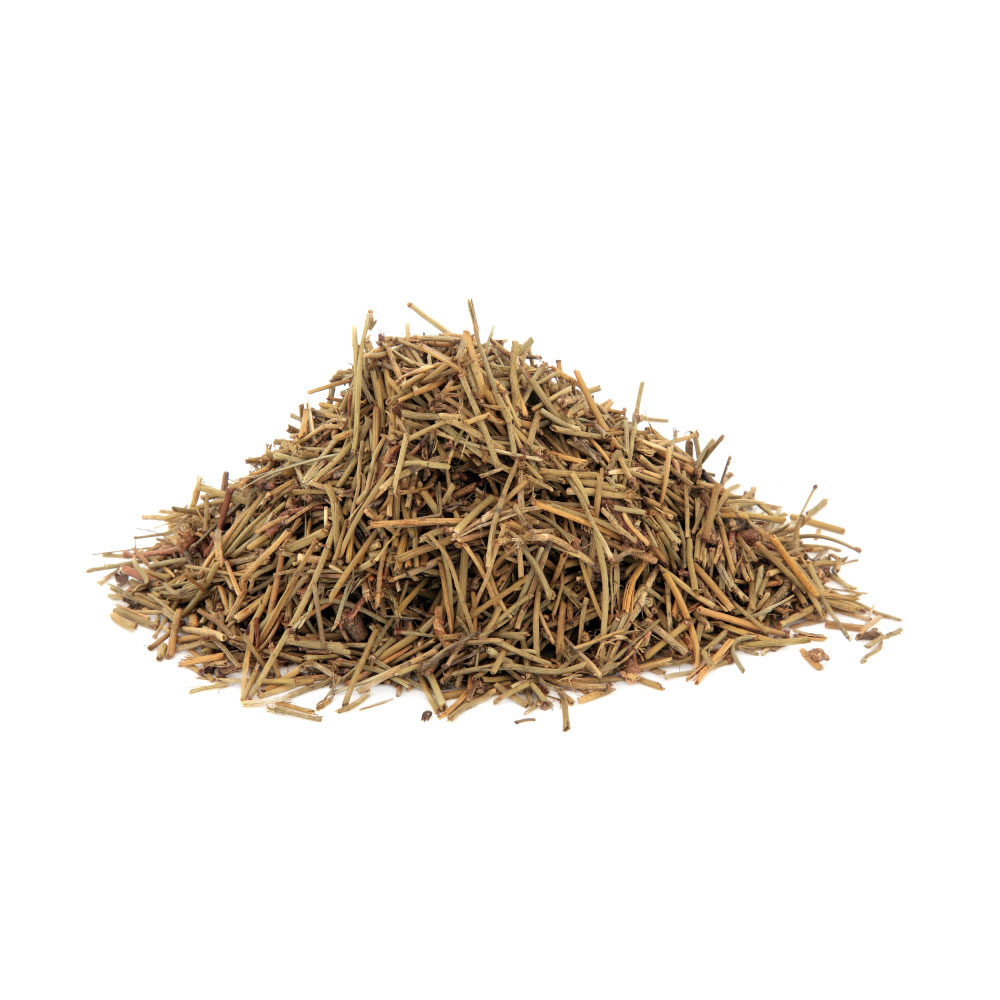
Concentration
Content by Source
Concentrations not reported. No percent-dry-weight or mg/g figures have been published for this compound in its source plants.
Ephedrannin B at a Glance
Ephedrannin B is a dimeric A-type proanthocyanidin — a condensed tannin built from two flavonoid units — isolated from the roots of Ephedra sinica. It belongs to ephedra’s non-alkaloid chemistry: a polyphenol from the root, not a phenylpropylamine from the alkaloid-bearing green stem 1Reference 1Dimeric proanthocyanidins from the roots of Ephedra sinicaView study →.
It is the younger and, in every head-to-head test so far, the stronger of the two ephedrannins. Where ephedrannin A was named in 1982, ephedrannin B was not described until 2008 1,
The honest headline: every one of those findings is in vitro. There is no animal study of the isolate, no pharmacokinetics, no human data, and no toxicology. Do not read ephedrine’s pharmacology — or its cardiovascular risk — onto this molecule; it is a different compound from a different part of the plant.
The Root, Not The Stem
Ephedra is famous for two molecules: ephedrine and pseudoephedrine, the sympathomimetic alkaloids of the green stem that together account for the large majority of the plant’s alkaloid fraction 11Reference 11Chemical composition of various Ephedra speciesView study → and drive its bronchodilator, decongestant and stimulant actions — along with its cardiovascular risk and its regulatory bans. Ephedrannin B is none of that.
The root, má huáng gēn, is treated in traditional Chinese practice as a separate crude drug with an action opposite to the stem’s: the stem is a diaphoretic used to promote sweating, the root an antihidrotic used to stop it. Japanese phytochemists working on the root in the early 1980s under the crude-drug name “maō-kon” isolated a set of hypotensive principles from it — the macrocyclic spermine alkaloids called ephedradines 8Reference 8Hypotensive actions of ephedradines, macrocyclic spermine alkaloids of Ephedra rootsView study →, the imidazole alkaloid feruloylhistamine 9Reference 9Structure of feruloylhistamine, a hypotensive principle of Ephedra rootsView study →, and ephedrannin A 7Reference 7Structure of ephedrannin A, a hypotensive principle of Ephedra rootsView study →. That is the direction the root’s pharmacology points, and it is the reverse of the pressor alkaloids of the stem.
Two honest qualifications, though, and they both cut against over-telling this story:
- Ephedrannin B was not part of that hypotensive work. It was not discovered until 2008, twenty-six years after ephedrannin A 1,
7Reference 1Dimeric proanthocyanidins from the roots of Ephedra sinicaView study →Reference 7Structure of ephedrannin A, a hypotensive principle of Ephedra rootsView study → . No blood-pressure study of ephedrannin B exists — the “root hypotensive principle” billing belongs to its sibling and to the ephedradines, not to it. It would be a straightforward error to inherit that claim by family resemblance. - A-type proanthocyanidins are not exclusive to the root. A 2013 survey isolated twelve of them — dimers, trimers and tetramers, including compounds the authors named ephedrannin D₁, Tr₁ and Te₁ — from the stems of E. sinica 6Reference 6A-type proanthocyanidins from the stems of Ephedra sinica (Ephedraceae) and their antimicrobial activitiesView study →. So the clean split is alkaloids in the stem vs. alkaloids absent from the root, not “tannins are a root thing.” Ephedrannin B specifically has only ever been reported from root material 1,
2Reference 1Dimeric proanthocyanidins from the roots of Ephedra sinicaView study →Reference 2Ephedrannin A and B from roots of Ephedra sinica inhibit lipopolysaccharide-induced inflammatory mediators by suppressing nuclear factor-κB activation in RAW 264.7 macrophagesView study → .
What does transfer cleanly is the negative point. The 2004 US ban and the ongoing restrictions on ephedra attach to the ephedrine alkaloids and the stimulant stem. Interest in ephedra’s non-alkaloid fraction is in fact partly motivated by stripping the alkaloids out: an ephedrine-alkaloid-free Ephedra Herb extract retains analgesic, anti-inflammatory and antiviral activity attributed to non-alkaloid constituents, and is framed explicitly as a safer alternative to the crude herb 10Reference 10Ephedrine alkaloids-free Ephedra Herb extract: a safer alternative to ephedra with comparable analgesic, anticancer, and anti-influenza activitiesView study →. Ephedrannin B sits on that side of the plant.
A Flavan-Kaempferol A-Type Dimer
Structurally, ephedrannin B is a bis-flavonoid: two flavonoid units fused into one dimer. Tao and colleagues determined it as 5,7,4’-trihydroxyflavan-[4α→8,2α→O→7]-kaempferol 1Reference 1Dimeric proanthocyanidins from the roots of Ephedra sinicaView study → — a flavan unit joined to a kaempferol unit. Two things are worth pulling out of that formula:
- It is A-type. The bracketed notation describes a double interflavan linkage — a C–C bond (4α→8) plus an additional C–O–C ether bond (2α→O→7). That second, ether bond closes an extra ring and defines the A-type proanthocyanidins, as opposed to the singly-linked B-type dimers that dominate grape seed and pine bark.
- The upper unit is a flavonol, not a flavan-3-ol. Most condensed tannins are polymers of catechin-type flavan-3-ols. Ephedrannin B pairs a flavan with kaempferol, a flavonol — a less common construction that makes it a flavan-flavonol hybrid rather than a textbook proanthocyanidin.
Its immediate relatives in the same root tissue are ephedrannin A and the mahuannins (A–E), all A-type dimers of the same family 1,
Ephedrannin B Vs. Ephedrannin A
The two ephedrannins are usually studied side by side, and in each comparison B is the more active molecule. This is the most reproducible finding about it:
| Assay | Result | Source |
|---|---|---|
| NF-κB / TNF-α / IL-1β in LPS-stimulated RAW 264.7 macrophages | Both active; ephedrannin B’s optimal dose was 10× lower than ephedrannin A’s | 2Reference 2Ephedrannin A and B from roots of Ephedra sinica inhibit lipopolysaccharide-induced inflammatory mediators by suppressing nuclear factor-κB activation in RAW 264.7 macrophagesView study → |
| Mushroom tyrosinase inhibition + melanin production in B16F10 cells | Both active; inhibition by ephedrannin B “much more effective” than by A | 4Reference 4Inhibitory effect of ephedrannins A and B from roots of Ephedra sinica STAPF on melanogenesisView study → |
| Cytotoxicity vs. SGC-7901, HepG2 and HeLa cells | Of the four root dimers screened, only ephedrannin B was significantly active | 1Reference 1Dimeric proanthocyanidins from the roots of Ephedra sinicaView study → |
The authors of the macrophage study singled it out on that basis, calling ephedrannin B “a good candidate for delaying the progression of human inflammatory diseases” and asking for further work 2Reference 2Ephedrannin A and B from roots of Ephedra sinica inhibit lipopolysaccharide-induced inflammatory mediators by suppressing nuclear factor-κB activation in RAW 264.7 macrophagesView study →. That further work has not happened — in the eighteen years since its isolation the molecule has accumulated four primary papers and no in-vivo study of the purified compound. Being the more potent sibling in cell culture is a reason to test it, not evidence that it works.
What It's Used For
The research base is small and entirely in vitro. Four primary studies test the purified molecule in cell culture; one animal study used a whole-root proanthocyanidin extract in which ephedrannin B is one component among several. There are no human data.
Support is an experimental score — weighted by study type (human > animal > in vitro) and volume. A beta, not a validated metric. Every row here is preclinical and most are single studies; read the per-row basis.
The best-defined result. In LPS-stimulated RAW 264.7 macrophages, ephedrannin B (tested alongside ephedrannin A, both as purified isolates) suppressed the transcription of TNF-α and IL-1β by blocking NF-κB translocation and the phosphorylation of p38 MAP kinase 2Reference 2Ephedrannin A and B from roots of Ephedra sinica inhibit lipopolysaccharide-induced inflammatory mediators by suppressing nuclear factor-κB activation in RAW 264.7 macrophagesView study →.
Both compounds worked; ephedrannin B’s optimal dose was about ten times lower, which is why the authors flagged it specifically as the candidate worth developing 2Reference 2Ephedrannin A and B from roots of Ephedra sinica inhibit lipopolysaccharide-induced inflammatory mediators by suppressing nuclear factor-κB activation in RAW 264.7 macrophagesView study →.
Gap: a single in-vitro study in one cell line. No animal or human confirmation, no in-vivo dose-response, and no evidence that an orally-dosed tannin ever reaches macrophages at the concentrations used. 2Reference 2Ephedrannin A and B from roots of Ephedra sinica inhibit lipopolysaccharide-induced inflammatory mediators by suppressing nuclear factor-κB activation in RAW 264.7 macrophagesView study →
The one study of ephedrannin B on its own, and the only place its activity has been shown against a pathogen. In BEAS-2B human bronchial epithelial cells infected with respiratory syncytial virus, the isolate concentration-dependently reduced the production of IL-6, IL-8, IL-1β and TNF-α, lowered expression of the RSV fusion gene, and inhibited viral replication measured by plaque assay — with suppression of RSV-induced MAPK / NF-κB signalling as the proposed mechanism 3Reference 3Ephedrannin B exerts anti-viral and anti-inflammatory properties in BEAS-2B cells infected with respiratory syncytial virusView study →.
That it reproduces the macrophage pathway finding in a completely different cell type is the most useful thing about it.
Gap: in-vitro only, one laboratory, one virus, one cell line; no animal infection model, no measure of whether systemic or inhaled exposure could reach the active concentration, and no replication. 3Reference 3Ephedrannin B exerts anti-viral and anti-inflammatory properties in BEAS-2B cells infected with respiratory syncytial virusView study →
A distinct, cosmetic-facing line of work. Ephedrannins A and B, as isolates, inhibited L-tyrosine oxidation by mushroom tyrosinase in a competitive and reversible manner, and suppressed melanin production in α-MSH-stimulated B16F10 melanoma cells by lowering tyrosinase transcription — without measurable effect on cell proliferation at the concentrations tested 4Reference 4Inhibitory effect of ephedrannins A and B from roots of Ephedra sinica STAPF on melanogenesisView study →.
Inhibition by ephedrannin B was “much more effective” than by A, and the authors proposed both as skin-whitening agent candidates 4Reference 4Inhibitory effect of ephedrannins A and B from roots of Ephedra sinica STAPF on melanogenesisView study →.
Gap: mushroom tyrosinase is a convenient proxy, not human tyrosinase, and B16F10 is a mouse melanoma line; there is no human skin, reconstructed-epidermis or clinical work, and no data on whether the molecule penetrates skin at all. 4Reference 4Inhibitory effect of ephedrannins A and B from roots of Ephedra sinica STAPF on melanogenesisView study →
Extends the anti-inflammatory theme to a living animal, but with a whole-root extract rather than the purified compound. An ethyl-acetate extract of Ephedra sinica roots, screened by high-resolution mass spectrometry and found to contain monomeric and A-type dimeric proanthocyanidins (identified tentatively, by fragmentation pattern), inhibited nitric-oxide production in LPS-stimulated macrophages in vitro and, given to mice for 21 days, reduced disease-activity scores, spleen index, and colonic TNF-α and IL-6 in dextran-sulfate-sodium colitis while raising IL-10 5Reference 5Rapid screening of proanthocyanidins from the roots of Ephedra sinica Stapf and its preventative effects on dextran-sulfate-sodium-induced ulcerative colitisView study →.
Gap: extract data, not isolate data. Ephedrannin B is at best one of several dimers in that fraction, its presence was inferred from MS fragments rather than confirmed by isolation, and its individual contribution was never separated. Animal model, no human follow-up. 5Reference 5Rapid screening of proanthocyanidins from the roots of Ephedra sinica Stapf and its preventative effects on dextran-sulfate-sodium-induced ulcerative colitisView study →
The thinnest row, and included only because it is one of the few things ever measured on the isolate. In the paper that first described it, ephedrannin B and three companion root dimers were screened against SGC-7901 (gastric), HepG2 (liver) and HeLa (cervical) cell lines; ephedrannin B was reported as “significantly active” and the other three were not 1Reference 1Dimeric proanthocyanidins from the roots of Ephedra sinicaView study →.
Gap: a one-line sentence in a phytochemistry paper — no IC₅₀ values, no mechanism, no selectivity against normal cells, no replication in eighteen years, and no animal work. Treat it as a screening hit, not an anticancer finding. 1Reference 1Dimeric proanthocyanidins from the roots of Ephedra sinicaView study →
Mechanisms
| Target / pathway | Effect | Relevant to |
|---|---|---|
| NF-κB translocation; p38 MAPK phosphorylation | suppressed → lower TNF-α and IL-1β transcription in LPS-stimulated macrophages, at ~10× lower dose than ephedrannin A | anti-inflammatory (isolate) |
| RSV-induced MAPK / NF-κB signalling | suppressed → lower IL-6, IL-8, IL-1β, TNF-α; reduced RSV fusion-gene expression and viral titre | antiviral / airway inflammation (isolate) |
| Tyrosinase (competitive, reversible vs. L-tyrosine); tyrosinase transcription | inhibited → reduced melanin synthesis in α-MSH-stimulated melanoma cells | depigmenting (isolate) |
| Unspecified — cytotoxic mechanism not investigated | activity against three tumour cell lines in a screen | cytotoxicity (isolate) |
| Root A-type proanthocyanidin fraction (mixed) | reduced colonic TNF-α and IL-6, raised IL-10, lowered disease-activity index in DSS colitis | anti-inflammatory / gut (extract) |
The load-bearing point: every mechanism here is non-adrenergic. Ephedrannin B does not act on the α/β-adrenergic receptors that define the ephedrine alkaloids, so its pharmacology neither overlaps nor competes with theirs.
Pharmacokinetics
No pharmacokinetic data exist for ephedrannin B. No study in any species reports its absorption, oral bioavailability, distribution, metabolism, or half-life. As a large, polar, doubly-linked A-type proanthocyanidin, it would be expected to be poorly absorbed from the gut on general condensed-tannin grounds — an assumption, not a measurement, and one that directly undercuts extrapolating the cell-culture potency 2,
Clinical Trials
There are no clinical trials of ephedrannin B — no human study of the isolate, and none registered or planned. The only human-adjacent work anywhere near it concerns whole ephedrine-alkaloid-free ephedra extracts 10Reference 10Ephedrine alkaloids-free Ephedra Herb extract: a safer alternative to ephedra with comparable analgesic, anticancer, and anti-influenza activitiesView study →, not this molecule.
| Completed | Planned | Terminated | Preclinical |
|---|---|---|---|
| — | — | — | In-vitro macrophage anti-inflammatory 2Reference 2Ephedrannin A and B from roots of Ephedra sinica inhibit lipopolysaccharide-induced inflammatory mediators by suppressing nuclear factor-κB activation in RAW 264.7 macrophagesView study →; in-vitro RSV antiviral 3Reference 3Ephedrannin B exerts anti-viral and anti-inflammatory properties in BEAS-2B cells infected with respiratory syncytial virusView study →; in-vitro tyrosinase/melanogenesis 4Reference 4Inhibitory effect of ephedrannins A and B from roots of Ephedra sinica STAPF on melanogenesisView study →; tumour-line cytotoxicity screen 1Reference 1Dimeric proanthocyanidins from the roots of Ephedra sinicaView study →; animal colitis (root extract) 5Reference 5Rapid screening of proanthocyanidins from the roots of Ephedra sinica Stapf and its preventative effects on dextran-sulfate-sodium-induced ulcerative colitisView study → |
Last checked: July 2026.
Isolate vs. Plant Studies
Unusually for a compound this obscure, most of the evidence is isolate evidence — which is a genuine strength as far as it goes. The macrophage anti-inflammatory work 2Reference 2Ephedrannin A and B from roots of Ephedra sinica inhibit lipopolysaccharide-induced inflammatory mediators by suppressing nuclear factor-κB activation in RAW 264.7 macrophagesView study →, the RSV antiviral work 3Reference 3Ephedrannin B exerts anti-viral and anti-inflammatory properties in BEAS-2B cells infected with respiratory syncytial virusView study →, the tyrosinase work 4Reference 4Inhibitory effect of ephedrannins A and B from roots of Ephedra sinica STAPF on melanogenesisView study → and the cytotoxicity screen 1Reference 1Dimeric proanthocyanidins from the roots of Ephedra sinicaView study → all used purified ephedrannin B, so the activity is attributable to the molecule rather than to a mixture. The catch is that “isolate” here always means isolate in a dish: not one of those studies moved into an animal.
The only in-vivo data are plant-extract data — the root proanthocyanidin fraction in mouse colitis, where the dimers were identified only tentatively by mass spectrometry and no individual contribution was resolved 5Reference 5Rapid screening of proanthocyanidins from the roots of Ephedra sinica Stapf and its preventative effects on dextran-sulfate-sodium-induced ulcerative colitisView study →. The broader “ephedra’s non-alkaloid fraction is useful” case likewise rests on whole alkaloid-free herb extracts whose activity is attributed to a mix of tannins and polysaccharides, not to ephedrannin B specifically 10Reference 10Ephedrine alkaloids-free Ephedra Herb extract: a safer alternative to ephedra with comparable analgesic, anticancer, and anti-influenza activitiesView study →. So the honest position is a clean isolate signal that has never been tested in a living organism, sitting beside extract-level animal data that cannot be pinned to it.
Prevalence in Nature
Ephedrannin B is a narrowly-distributed compound. It is documented in the roots of Ephedra sinica (ma huang gen), where it was first isolated alongside ephedrannin A, mahuannin D and mahuannin E 1Reference 1Dimeric proanthocyanidins from the roots of Ephedra sinicaView study →, and from which it was re-isolated for the anti-inflammatory work 2Reference 2Ephedrannin A and B from roots of Ephedra sinica inhibit lipopolysaccharide-induced inflammatory mediators by suppressing nuclear factor-κB activation in RAW 264.7 macrophagesView study →. Every confirmed report is root material.
Its co-occurring relatives in that tissue are ephedrannin A and the mahuannins (A–E), the other A-type dimeric proanthocyanidins of the root 1,
One outlying report deserves a caveat rather than a claim: a 2024 metabolite-profiling study of Garcinia dulcis fruit peel listed ephedrannin B among the compounds detected by UPLC-QToF-MS/MS 12Reference 12Garcinia dulcis and Garcinia forbesii King fruit peel extract: secondary metabolite composition, antioxidant, and elastase inhibitory activity evaluationView study →. That is a tentative annotation from a mass spectrum, not an isolation, and A-type dimers are notoriously easy to confuse by fragmentation alone; treat it as unconfirmed until someone isolates it from Garcinia.
Absolute concentrations have never been quantified. There is no reported percent-dry-weight or mg/g figure for ephedrannin B in ephedra root anywhere in the accessible literature.
Major Natural Sources
| Source (botanical) | Part | Notes |
|---|---|---|
| Ephedra / ma huang (Ephedra sinica) | Root (ma huang gen) | Type source; where it was first isolated and every confirmed report since 1, |
| Garcinia dulcis | Fruit peel | Tentative LC-MS annotation only; not isolated or confirmed 12Reference 12Garcinia dulcis and Garcinia forbesii King fruit peel extract: secondary metabolite composition, antioxidant, and elastase inhibitory activity evaluationView study → |
Not reported from the alkaloid-bearing green stem, though other A-type proanthocyanidins of the same series are 6Reference 6A-type proanthocyanidins from the stems of Ephedra sinica (Ephedraceae) and their antimicrobial activitiesView study →.
Discovery & Synthesis
Ephedrannin B was first isolated in 2008, by Tao and colleagues at Jilin University, from the roots of Ephedra sinica Stapf. It was published in Planta Medica as one of two new dimeric proanthocyanidins — the other being mahuannin E — alongside the already-known ephedrannin A and mahuannin D, with the structure deduced from NMR, MS and circular-dichroism analysis as 5,7,4’-trihydroxyflavan-[4α→8,2α→O→7]-kaempferol 1Reference 1Dimeric proanthocyanidins from the roots of Ephedra sinicaView study →. Its name follows ephedrannin A, which Hikino, Takahashi and Konno had characterised twenty-six years earlier from the same root 7Reference 7Structure of ephedrannin A, a hypotensive principle of Ephedra rootsView study →; the gap between the two is why the older hypotensive literature on ephedra root says nothing about B.
It is obtained by extraction and chromatographic isolation from ephedra root, not by synthesis. No total synthesis of ephedrannin B is documented in the accessible literature — unsurprising for a doubly-linked A-type proanthocyanidin, a synthetically demanding class. There is no commercial production; what exists is milligram-scale isolation for research.
Patents: not yet researched.
Toxicity & Safety
Ephedrannin B carries a low flag, consistent with its class — dietary A-type proanthocyanidins are generally low-toxicity, poorly-absorbed polyphenols — but that rating is class inference plus the absence of any alarming finding, not the output of a toxicology package. No safety, genotoxicity, or repeat-dose study of ephedrannin B exists in any species. The one relevant data point is incidental: in the melanogenesis study it did not measurably affect proliferation of B16F10 cells at the concentrations tested 4Reference 4Inhibitory effect of ephedrannins A and B from roots of Ephedra sinica STAPF on melanogenesisView study → — a narrow observation in one cell line, not a safety margin.
The most important safety point is a negative one. Ephedrannin B is not ephedrine. It has no adrenergic or pressor pharmacology, so the cardiovascular and CNS risks that attach to ephedra’s stimulant alkaloids — and the regulatory bans built on them — do not transfer to this molecule. Nor should the opposite claim transfer: the root’s historical hypotensive billing was established for the ephedradines, feruloylhistamine and ephedrannin A 7,
- Non-alkaloid, non-stimulant. A root condensed tannin with no adrenergic or pressor activity — the alkaloid cardiovascular risks and the ephedra bans do not apply to it.
- Low-toxicity class. Dietary A-type proanthocyanidins are generally well-tolerated, poorly-absorbed polyphenols.
- No safety data at all. No toxicology, genotoxicity, repeat-dose or interaction study exists for ephedrannin B; the low rating is class inference, not evidence.
- Don’t inherit sibling claims. The hypotensive activity reported for other ephedra-root compounds has never been measured for this one, in either direction.
- Root-material caveat. Exposure only ever happens through whole ephedra-root preparations; the safety and dosing of those products are decided on the herb page, not here.
Dosage
There is no dose for ephedrannin B. It is not sold as a supplement, has never been given to a human, and has never been administered to an animal as a purified compound — so there is nothing to convert into an intake.
The literature’s only quantitative statements are cell-culture ones, and even those are mostly relative rather than absolute: ephedrannin B was effective in LPS-stimulated macrophages at an optimal concentration roughly ten times lower than ephedrannin A’s 2Reference 2Ephedrannin A and B from roots of Ephedra sinica inhibit lipopolysaccharide-induced inflammatory mediators by suppressing nuclear factor-κB activation in RAW 264.7 macrophagesView study →, and it acted concentration-dependently in RSV-infected bronchial cells 3Reference 3Ephedrannin B exerts anti-viral and anti-inflammatory properties in BEAS-2B cells infected with respiratory syncytial virusView study → and in tyrosinase and melanin assays 4Reference 4Inhibitory effect of ephedrannins A and B from roots of Ephedra sinica STAPF on melanogenesisView study →. No IC₅₀ or EC₅₀ for ephedrannin B is reported in the accessible record for any of these, and no in-vivo dose exists in any species.
For context on real-world exposure: the only route by which anyone encounters this molecule is a whole Ephedra sinica root preparation, in which its concentration has never been measured — so even an approximate intake cannot be estimated. Dosing decisions for ephedra root belong on the ephedra herb page.
These are laboratory concentrations reported in research and are not a personal recommendation.
References
- Tao H, Wang L, Cui Z, Zhao D, Liu Y (2008). Dimeric proanthocyanidins from the roots of Ephedra sinica. Planta Medica, 74(15), 1823-1825. https://pubmed.ncbi.nlm.nih.gov/18975262/
- Kim IS, Park YJ, Yoon SJ, Lee HB (2010). Ephedrannin A and B from roots of Ephedra sinica inhibit lipopolysaccharide-induced inflammatory mediators by suppressing nuclear factor-κB activation in RAW 264.7 macrophages. International Immunopharmacology, 10(12), 1616-1625. https://pubmed.ncbi.nlm.nih.gov/20939997/
- Hou S, Xu X, Wang Y, Yang Y (2020). Ephedrannin B exerts anti-viral and anti-inflammatory properties in BEAS-2B cells infected with respiratory syncytial virus. Journal of Biosciences, 45, 46. https://pubmed.ncbi.nlm.nih.gov/32345772/
- Kim IS, Yoon SJ, Park YJ, Lee HB (2015). Inhibitory effect of ephedrannins A and B from roots of Ephedra sinica STAPF on melanogenesis. Biochimica et Biophysica Acta, 1850(7), 1389-1396. https://pubmed.ncbi.nlm.nih.gov/25857772/
- Lv M, Wang Y, Wan X, et al. (2022). Rapid screening of proanthocyanidins from the roots of Ephedra sinica Stapf and its preventative effects on dextran-sulfate-sodium-induced ulcerative colitis. Metabolites, 12(10), 957. https://pubmed.ncbi.nlm.nih.gov/36295859/
- Zang X, Shang M, Xu F, et al. (2013). A-type proanthocyanidins from the stems of Ephedra sinica (Ephedraceae) and their antimicrobial activities. Molecules, 18(5), 5172-5189. https://pubmed.ncbi.nlm.nih.gov/23648595/
- Hikino H, Takahashi M, Konno C (1982). Structure of ephedrannin A, a hypotensive principle of Ephedra roots. Tetrahedron Letters, 23(6), 673-676. https://doi.org/10.1016/S0040-4039(00)86919-1
- Hikino H, Ogata K, Konno C, Sato S (1983). Hypotensive actions of ephedradines, macrocyclic spermine alkaloids of Ephedra roots. Planta Medica, 48(4), 290-293. https://pubmed.ncbi.nlm.nih.gov/6635014/
- Hikino H, Ogata M, Konno C (1983). Structure of feruloylhistamine, a hypotensive principle of Ephedra roots. Planta Medica, 48(2), 108-110. https://pubmed.ncbi.nlm.nih.gov/17404964/
- Hyuga S, Hyuga M, Oshima N, et al. (2016). Ephedrine alkaloids-free Ephedra Herb extract: a safer alternative to ephedra with comparable analgesic, anticancer, and anti-influenza activities. Journal of Natural Medicines, 70(3), 571-583. https://pubmed.ncbi.nlm.nih.gov/26943796/
- Ibragic S, Sofić E (2015). Chemical composition of various Ephedra species. Bosnian Journal of Basic Medical Sciences, 15(3), 21-27. https://pubmed.ncbi.nlm.nih.gov/26295290/
- Ambarwati NSS, Sukma NT, Desmiaty Y, et al. (2024). Garcinia dulcis and Garcinia forbesii King fruit peel extract: secondary metabolite composition, antioxidant, and elastase inhibitory activity evaluation. Journal of Advanced Pharmaceutical Technology & Research, 15(1), 8-12. https://pubmed.ncbi.nlm.nih.gov/38389969/



