
Compound Monograph
Epiberberine
A minor quaternary protoberberine alkaloid of goldthread (Coptis) — one of the five signature Coptis alkaloids used as HPLC quality-control markers for Huanglian. Its own research is entirely preclinical (anti-Helicobacter pylori, anti-diabetic, acetylcholinesterase inhibition), and, unlike its isomer berberine, it is reasonably well absorbed by mouth.

Sources · 2
Where Does It Come From?
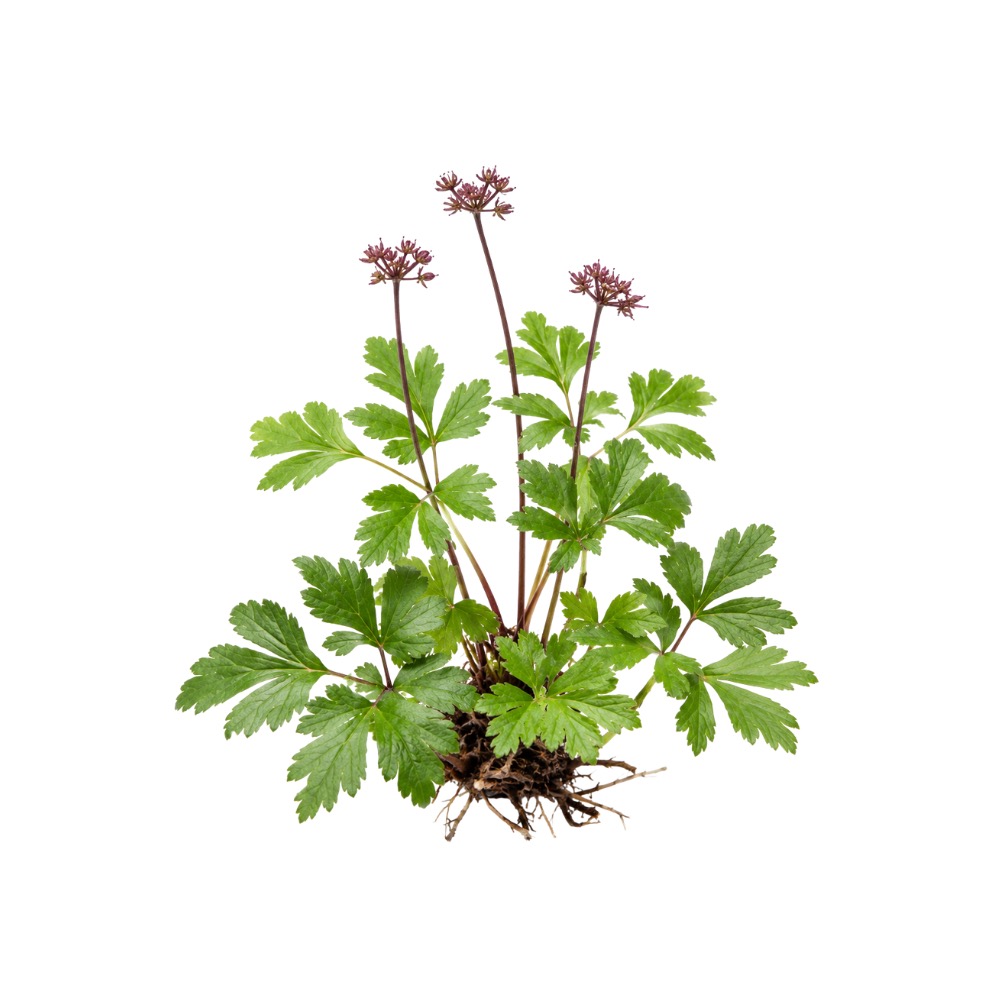
Epiberberine is a naturally occurring isoquinoline alkaloid (protoberberine group), found in Chinese goldthread, Coptis and Yunnan goldthread. It is well tolerated orally (low toxicity).
Concentration
Content by Source
Reported concentrations across the plants that contain epiberberine — the bar marks the typical level, the line shows the reported range.
Literature figures for varying plant parts and preparations. Read them as a comparative guide, not exact assays.
Epiberberine at a Glance
Epiberberine is a quaternary protoberberine isoquinoline alkaloid and a minor constituent of goldthread (Coptis, Huanglian) rhizome. It is one of the five signature Coptis alkaloids — with berberine, coptisine, palmatine and jatrorrhizine — that together define the plant’s chemistry and are routinely quantified to assess the quality of Rhizoma Coptidis 7,
Its own pharmacology is entirely preclinical. Isolated epiberberine shows anti-Helicobacter pylori, anti-diabetic, kidney-protective, anti-steatotic and acetylcholinesterase-inhibiting activity in cell and rodent studies 1,
One pharmacokinetic point sets it apart from berberine: epiberberine is a positional isomer that is reasonably well absorbed by mouth (absolute oral bioavailability ~14% in rats) and, importantly, does not convert to berberine in the body — so the two isomers are genuinely distinct molecules with distinct behaviour, not interchangeable labels 6Reference 6In vitroThe oral bioavailability, excretion and cytochrome P450 inhibition properties of epiberberine: an in vivo and in vitro evaluationView study →.
One of Coptis’s Five Alkaloids
Epiberberine’s most established real-world role is analytical, not therapeutic. Goldthread rhizome (Huanglian) is a multi-alkaloid crude drug, and its quality is judged by the combined content of berberine, coptisine, palmatine, epiberberine and jatrorrhizine — the five protoberberine-type alkaloids measured together by HPLC (and by UPLC, near-infrared and other methods) to authenticate the botanical species, distinguish geographical origins, and grade commercial material 7,
In that five-marker panel, epiberberine is a minor component: in Coptis chinensis rhizome it runs at roughly 1.1–1.4% of dry weight (~11–14 mg/g), well below berberine, which can reach ~5–8% 7Reference 7Integration of HPLC-based fingerprint and quantitative analyses for differentiating botanical species and geographical growing origins of Rhizoma coptidisView study →. Its ratio to the other alkaloids varies by Coptis species (C. chinensis, C. deltoidea, C. teeta), plant part and growing region, which is exactly why the marker panel is useful for telling sources apart 7Reference 7Integration of HPLC-based fingerprint and quantitative analyses for differentiating botanical species and geographical growing origins of Rhizoma coptidisView study →.
The practical takeaway: whenever you see epiberberine named, it is almost always as one line in a Coptis alkaloid profile — a chemical fingerprint of the plant — rather than as a stand-alone ingredient.
What It's Used For
Epiberberine’s research base is small, mechanism-focused and preclinical throughout — cell lines and mice, all on the isolated molecule. The honest frame is that these are early signals for a minor Coptis alkaloid, not an established therapy; where Coptis has genuine human data, that data is for berberine.
Support is an experimental score — weighted by study type (human > animal > in vitro) and volume. A beta, not a validated metric. Every row here is preclinical (cell/rodent, isolated molecule), so scores stay low by design; there is no human column to earn.
Epiberberine’s most compound-specific finding, and the one that best matches how Coptis is traditionally used (gastrointestinal “damp-heat” complaints). Isolated epiberberine inhibited H. pylori and, in both infected cells and a mouse model, reduced host-cell apoptosis and inflammatory damage by down-regulating the bacterial urease — specifically lowering ureB expression 1Reference 1In vitroEpiberberine inhibits Helicobacter pylori and reduces host apoptosis and inflammatory damage by down-regulating urease expression — in vitro and mouse modelView study →.
Urease is central to how H. pylori survives stomach acid, so suppressing it is a coherent antibacterial mechanism, and it parallels the anti-urease action reported for berberine, palmatine and coptisine — supporting the view that whole-Coptis anti-H. pylori activity is a multi-alkaloid effect rather than berberine alone 1Reference 1In vitroEpiberberine inhibits Helicobacter pylori and reduces host apoptosis and inflammatory damage by down-regulating urease expression — in vitro and mouse modelView study →.
Gap: in-vitro plus a single mouse model on the isolate — no human eradication data, and the relative contribution of epiberberine within the whole-rhizome alkaloid mix is not quantified 1Reference 1In vitroEpiberberine inhibits Helicobacter pylori and reduces host apoptosis and inflammatory damage by down-regulating urease expression — in vitro and mouse modelView study →.
A rodent-plus-cell metabolic signal. In type-2-diabetic mice and insulin-resistant HepG2 cells, epiberberine improved hyperglycaemia and insulin sensitivity and reduced oxidative stress by activating an NRF2–AMPK pathway 2Reference 2AnimalActivation of NRF2 by epiberberine improves oxidative stress and insulin resistance in T2DM mice and IR-HepG2 cells in an AMPK-dependent mannerView study →. AMPK activation is the same broad hub through which berberine is thought to act metabolically, so epiberberine reads as a lower-abundance alkaloid working along familiar lines.
Gap: mouse and cell-culture only, on the isolate, at research doses; no human glycaemic trials of epiberberine, and Coptis’s human metabolic evidence is for berberine 2Reference 2AnimalActivation of NRF2 by epiberberine improves oxidative stress and insulin resistance in T2DM mice and IR-HepG2 cells in an AMPK-dependent mannerView study →.
A kidney-protection signal in diabetic mice. Epiberberine alleviated diabetes-related renal dysfunction and fibrosis in db/db mice, acting by inactivating angiotensinogen (Agt) to repress the TGFβ/Smad2 pro-fibrotic pathway; silencing Agt blunted the benefit, tying the effect to that axis 3Reference 3Epiberberine ameliorated diabetic nephropathy by inactivating the angiotensinogen (Agt) to repress TGFβ/Smad2 pathwayView study →. This is mechanistically distinct from the glycaemic work — a tissue-protection rather than glucose-lowering story.
Gap: a single rodent/cell study on the isolate; no human renal-outcome data 3Reference 3Epiberberine ameliorated diabetic nephropathy by inactivating the angiotensinogen (Agt) to repress TGFβ/Smad2 pathwayView study →.
An anti-steatotic signal. In mice fed a methionine-/choline-deficient (MCD) diet and in fatty-acid-loaded HepG2 cells, epiberberine raised the orphan nuclear receptor SHP (NR0B2), which in turn lowered the lipogenic transcription factor SREBP-1c and the fat-synthesis enzyme FASN, reducing hepatic lipid synthesis and improving non-alcoholic steatohepatitis markers 4Reference 4Epiberberine regulates lipid synthesis through SHP (NR0B2) to improve non-alcoholic steatohepatitisView study →.
Gap: MCD-model mice and hepatoma cells only, on the isolate; MCD is a mechanistic (not metabolically representative) NASH model, and there is no human liver data 4Reference 4Epiberberine regulates lipid synthesis through SHP (NR0B2) to improve non-alcoholic steatohepatitisView study →.
An enzyme-level neuropharmacology signal. Epiberberine is one of the Coptis isoquinoline alkaloids that inhibit acetylcholinesterase (AChE) — relevant to the cholinergic strategy in Alzheimer’s disease — but in a head-to-head assay of Coptidis alkaloids it was a moderate inhibitor, weaker than berberine, palmatine and coptisine 5Reference 5Synergistic inhibition of acetylcholinesterase by alkaloids derived from Stephaniae Tetrandrae Radix, Coptidis Rhizoma and Phellodendri Chinensis CortexView study →. The same line of work explores synergy between Coptis alkaloids and Stephania alkaloids on AChE 5Reference 5Synergistic inhibition of acetylcholinesterase by alkaloids derived from Stephaniae Tetrandrae Radix, Coptidis Rhizoma and Phellodendri Chinensis CortexView study →.
Gap: purified-enzyme (and docking) work only — no cellular, animal or human cognitive outcomes for isolated epiberberine 5Reference 5Synergistic inhibition of acetylcholinesterase by alkaloids derived from Stephaniae Tetrandrae Radix, Coptidis Rhizoma and Phellodendri Chinensis CortexView study →.
Mechanisms
| Target / pathway | Effect | Relevant to |
|---|---|---|
| Bacterial urease (ureB expression) | down-regulated → impaired H. pylori acid survival; ↓ host apoptosis & inflammation | anti-H. pylori |
| NRF2 → AMPK | activation → ↓ oxidative stress, ↑ insulin sensitivity | glycaemic control |
| Angiotensinogen (Agt) → TGFβ/Smad2 | suppressed → ↓ renal fibrosis | diabetic nephropathy |
| SHP (NR0B2) → SREBP-1c / FASN | ↑ SHP → ↓ lipogenesis | fatty liver / steatohepatitis |
| Acetylcholinesterase | inhibition (moderate among Coptis alkaloids) | cognition / AChE |
| CYP2C9, CYP2D6 | inhibition (noncompetitive; stronger in human than rat microsomes) | drug-interaction risk |
The metabolic mechanisms (AMPK, SREBP-1c/FASN) echo berberine’s, which is unsurprising for a co-occurring protoberberine; the urease and Agt/TGFβ findings are the more epiberberine-specific results.
Pharmacokinetics
This is where epiberberine most clearly diverges from its famous isomer. In rats, epiberberine is rapidly absorbed (Tmax ~0.4 h) and has an absolute oral bioavailability of about 14% — an order of magnitude higher than berberine’s <1% — and it is stable in vivo, not metabolised into berberine 6Reference 6In vitroThe oral bioavailability, excretion and cytochrome P450 inhibition properties of epiberberine: an in vivo and in vitro evaluationView study →. It is eliminated largely via bile/faeces and the kidneys, with possible enterohepatic recycling 6Reference 6In vitroThe oral bioavailability, excretion and cytochrome P450 inhibition properties of epiberberine: an in vivo and in vitro evaluationView study →. In the same work epiberberine inhibited CYP2C9 and CYP2D6 (noncompetitively, and more strongly in human than rat liver microsomes), which is the basis of its main theoretical drug-interaction caution 6Reference 6In vitroThe oral bioavailability, excretion and cytochrome P450 inhibition properties of epiberberine: an in vivo and in vitro evaluationView study →. The practical reading: unlike berberine — whose story is dominated by poor absorption and gut/liver-local action — epiberberine actually reaches the circulation to a meaningful degree, though what that means clinically is untested.
Clinical Trials
There are no clinical trials of isolated epiberberine — completed, ongoing or registered. All human-relevant Coptis trial evidence is for berberine (metabolic and gastrointestinal indications), where epiberberine is only a minor co-occurring alkaloid.
| Completed | Planned | Terminated | Preclinical |
|---|---|---|---|
| — | — | — | Anti-H. pylori, anti-diabetic, anti-nephropathy, anti-steatotic, AChE (all isolate, cell/rodent) |
Last checked: July 2026.
Isolate vs. Plant Studies
Every epiberberine finding above is on the isolated molecule in cells or mice 1,
Prevalence in Nature
Epiberberine is largely restricted to the genus Coptis (Ranunculaceae) — the goldthreads / Huanglian — where it is a minor member of the protoberberine alkaloid pool alongside berberine, coptisine, palmatine and jatrorrhizine 7,
Quantitatively it is well below berberine: in Coptis chinensis rhizome, HPLC studies report epiberberine at roughly 1.1–1.4% of dry weight (~11–14 mg/g), versus berberine’s ~5–8% 7Reference 7Integration of HPLC-based fingerprint and quantitative analyses for differentiating botanical species and geographical growing origins of Rhizoma coptidisView study →. Its content — and its ratio to the other four marker alkaloids — shifts with Coptis species (C. chinensis, C. deltoidea, C. teeta), plant part and geographical origin, which is precisely what makes the five-alkaloid fingerprint useful for authenticating and grading the crude drug 7,
Major Natural Sources
| Source | Plant part | Reported epiberberine content |
|---|---|---|
| Chinese goldthread (Coptis chinensis) | rhizome | ~1.1–1.4% dry wt (~11–14 mg/g) |
| Coptis deltoidea | rhizome | present; species-dependent ratio |
| Yunnan goldthread (Coptis teeta) | rhizome | present; species-dependent ratio |
These are figures for the Coptis rhizome (Huanglian), and the exact levels vary with species, origin and analytical method 7,
Discovery & Synthesis
Epiberberine is a long-recognised minor alkaloid of Coptis (Huanglian), catalogued as one of the genus’s characteristic protoberberines (CAS 6873-09-2); a specific first-isolation date and discoverer are not well pinned in the accessible literature, and it entered modern research chiefly as one of the alkaloids resolved by chromatographic study of Rhizoma Coptidis 7,
Patents: not yet researched.
Toxicity & Safety
Epiberberine carries a low toxicity flag: it is a food-adjacent Coptis alkaloid consumed for centuries as a minor component of goldthread, and no isolate-specific toxicity syndrome is described. The badge is low with a caveat — the dedicated safety dataset is thin, and the clearest concern is a drug-interaction signal rather than direct organ toxicity.
- No isolate-specific toxicity syndrome described. A minor alkaloid of a long-used botanical, studied so far only at research doses in cells and rodents.
- CYP2C9 / CYP2D6 inhibition. Epiberberine noncompetitively inhibits these drug-metabolising enzymes (more strongly in human than rat microsomes), so it could in principle raise levels of drugs cleared by them 6Reference 6In vitroThe oral bioavailability, excretion and cytochrome P450 inhibition properties of epiberberine: an in vivo and in vitro evaluationView study →.
- Data are preclinical and sparse. No human safety studies of isolated epiberberine; absence of reported harm is not evidence of safety.
- Protoberberine-class caution by analogy. Its isomer berberine is contraindicated in pregnancy/neonates (bilirubin displacement); epiberberine has not been tested for this, so class caution is prudent — the pregnancy decision belongs to the herb/product page, not this molecule page.
Dosage
There is no established or recommended human dose for isolated epiberberine. The cited efficacy figures are preclinical research doses — commonly around 50–200 mg/kg in mice for the metabolic and anti-H. pylori work 2,
References
- Wu H, Xie X, Tang Q, Huang T, Tang X, Jiao B, Wang R, Zhu X, Ye X, Ma H, Li X. (2024). Epiberberine inhibits Helicobacter pylori and reduces host apoptosis and inflammatory damage by down-regulating urease expression — in vitro and mouse model. Journal of Ethnopharmacology. https://pubmed.ncbi.nlm.nih.gov/37586440/
- Zhang S, Zhang S, Zhang Y, Wang H, Chen Y, Lu H. (2024). Activation of NRF2 by epiberberine improves oxidative stress and insulin resistance in T2DM mice and IR-HepG2 cells in an AMPK-dependent manner. Journal of Ethnopharmacology. https://pubmed.ncbi.nlm.nih.gov/38382657/
- Xiao Y, Deng J, Li C, Gong X, Gui Z, Huang J, Zhang Y, Liu Y, Ye X, Li X. (2021). Epiberberine ameliorated diabetic nephropathy by inactivating the angiotensinogen (Agt) to repress TGFβ/Smad2 pathway. Phytomedicine. https://pubmed.ncbi.nlm.nih.gov/33571918/
- Zhou LM, Fan JH, Xu MM, Xiong MY, Wang QJ, Chai X, Li XD, Li XG, Ye XL. (2023). Epiberberine regulates lipid synthesis through SHP (NR0B2) to improve non-alcoholic steatohepatitis. Biochimica et Biophysica Acta — Molecular Basis of Disease. https://pubmed.ncbi.nlm.nih.gov/36638873/
- Kong XP, Liu EYL, Chen ZC, Xu ML, Yu AXD, Wu QY, Xia YJ, Duan R, Dong TTX, Tsim KWK. (2019). Synergistic inhibition of acetylcholinesterase by alkaloids derived from Stephaniae Tetrandrae Radix, Coptidis Rhizoma and Phellodendri Chinensis Cortex. Molecules. https://pubmed.ncbi.nlm.nih.gov/31847089/
- Chen N, Yang XY, Guo CE, Bi XN, Chen JH, Chen HY, Li HP, Lin HY, Zhang YJ. (2018). The oral bioavailability, excretion and cytochrome P450 inhibition properties of epiberberine: an in vivo and in vitro evaluation. Drug Design, Development and Therapy. https://pubmed.ncbi.nlm.nih.gov/29343943/
- Lv X, Li Y, Tang C, Zhang Y, Zhang J, Fan G. (2016). Integration of HPLC-based fingerprint and quantitative analyses for differentiating botanical species and geographical growing origins of Rhizoma coptidis. Pharmaceutical Biology. https://pubmed.ncbi.nlm.nih.gov/27569515/
- Meng FC, Wu ZF, Yin ZQ, Lin LG, Wang R, Zhang QW. (2018). Coptidis rhizoma and its main bioactive components: recent advances in chemical investigation, quality evaluation and pharmacological activity. Chinese Medicine. https://pubmed.ncbi.nlm.nih.gov/29541156/



